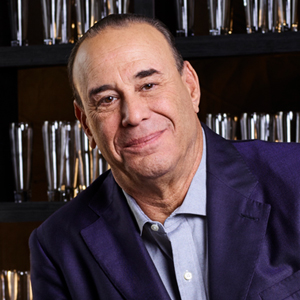
[00:00:10] Ray Latif: Hello, and thanks for tuning in to Taste Radio, the number one podcast for the food and beverage industry. I'm producer and host Ray Latif, and you're listening to episode 217, which features an interview with Jon Taffer, the host of popular reality TV show Bar Rescue, and the creator Jon Taffer's Mixologist, a brand of handcrafted cocktail mixes and hard seltzers. Just a reminder, if you like what you hear on Taste Radio, please share the podcast with friends and colleagues. And of course, we'd love it if you could review us on the Apple Podcasts app or your listening platform of choice. At a time when bar owners across America are searching for advice on how to save their businesses, who else would you call besides Jon Taffer? Having produced seven seasons of Bar Rescue, the hit show in which he helped struggling bars from closing, Taffer, himself a bar owner, opened up our conversation with thoughts on how bars can persevere in the COVID era. And amid challenging times, there is opportunity, as with Taffer's brand of simple, high-quality mixers. Sales of his Taffer's Mixologist products have surged during the pandemic, and as part of our conversation, he discusses the creation of the mixers, along with the launch of a new line of hard seltzers, and how each is crafted to stand out within their respective categories. Taffer also discussed the importance of authenticity in leveraging his fame and celebrity, and why he's personally involved in buyer meetings and sales visits. Hey folks, it's Ray with Taste Radio. I'm gonna call right now with the one and only Jon Taffer, the host of Bar Rescue and the founder Jon Taffer's Mixologist. John, how are you?
[00:01:42] Jon Taffer: Good to be here, Ray. Nice to talk to you, buddy.
[00:01:44] Ray Latif: Great to talk to you as well. Bar Rescue, a program I've watched since its inception, really entertaining. And it's just been so amazing to see all the bars and restaurants that you've helped over the years. Now, bars and restaurants need a lot of help these days. Of all the businesses affected by the COVID crisis, they've been hit the hardest for sure. What advice do you have for owners, chefs, bartenders about how to navigate this situation?
[00:02:11] Jon Taffer: Well, you know, first thing is restaurants are very different than bars, and I hate when the media sort of clumps them together.
[00:02:16] Ray Latif: I apologize.
[00:02:17] Jon Taffer: I'm not referring to you. I'm just referring to the general pandemic period. But, you know, restaurants have meal periods, have delivery opportunities, you know, built-in lunches, dinners. There's a whole bunch of traffic assets and things that restaurants have that typically bars don't. You know, restaurants can do well when they're not completely full because people sometimes prefer the intimacy of a nice restaurant experience. Whereas bars, when they lose their capacity, they lose their energy levels. And so they're very different business models. And I think, you know, we go with them very differently. What concerns me the most right now, honestly, is not the bar operators, it's customers. And I'm in Las Vegas now, and we opened Thursday. And I'm pleased to say there's a good amount of people, but the average casino in Las Vegas, just to use an example, has 800 procedural changes. to open, from taking temperature when you went in, to screening, to how glassware is handled, what employees wear, how often they wash their hands, what chemicals they use, how do utensils, how does glasswashing, packaging of silverware. It's 800 policy changes. Of that, about 60 impact bars. Think about that, 60 operational changes post-pandemic. Here's what worries me. I'm concerned that a bar does everything right. They put in disposable glassware. They're washing their hands like crazy. They're establishing social distancing. These guys are doing everything they're supposed to do. They're perfect. But then there's six or eight customers standing out in front of that bar and none of them wearing masks. Who's going to go in that bar now? So what concerns me And we've seen this with some tourist destinations where when we see photographs of customers being irresponsible, you know, too close to each other, not wearing masks, things like that, it alienates a certain element of the customer mix not to come in that bar. So I'm concerned that bars can do everything right and the customer behavior can take them down. And that puts forth a very, very serious set of decisions that bar operators should be good at. You know, for example, do I require people to wear masks in my bar or not? Some people will say, well, gee, John, if you require them to wear masks, there are some customers that won't come. I get it. If I tell them they don't have to wear a mask, there are some customers who won't come also. Ray, so it goes both ways. When I look at the bar industry, I can give you another analogy. Ray, let's say you had a bar, Ray's bar. and you choose to play rock and roll music. Okay, that's a choice. That means people who are looking for a country bar won't come to your bar. Let's say the next week you flip it. I'm going to play country music from now on. Well, all your rock and roll people are going to walk away. Now you're going to only have a country crowd. My point is this. We as the bar industry make decisions like this all the time to target ourselves. We target our music. We target our price point. We target the types of drinks we have. We target the type of food we have. Today, we need to target the kind of safety standards that we're going to have from a marketing and demographic standpoint. And that's very different, right? And if I can just ramble for a second, please do. Let's say you're a hamburger guy and there's a place in town and they have the best hamburger you've ever had. And you've been eating that hamburger for years, right? You just love that fricking hamburger. Well, now post pandemic, you go to that place and there's no distancing. Maybe it seems a little disorganized. You're not sure you trust it. Now you're going to go to the place that has your second favorite burger. So think about this. You're now choosing your second favorite burger over your first favorite burger because of safety and sanitary concerns. That's a complete change to the whole dynamic of our industry. So now if you look at boxes that we check to go to a place where you would check Good Burger, you might check parking or convenient or EV access, you might check that they have the beer that you like or the drink that you like. Today the first check is, is it safe? Can I go there? Do I want to go there? So that's a complete shift to the entire business model that we have. People are going to look at what we do differently because they're going to be focused on how we do it. And that's a real change from the way we used to do business. And if I can just keep adding one more thing, if you don't mind, that is who's going to come. And in four months ago, when this all started and I did all the news channels, and I said that a third of the population will come a third and a third, I cut it in thirds. And now research I just read last week, it's 31%. So I wasn't far off. Here's what I've been saying. And I believe it's true today. A third of the population is going to come out right away. They're the younger people. They're the ones that are sort of fearless, you know, they'll go out they'll party We've seen some of them now at parties and places. They're gonna come out right away The second third is the reserved third. They're gonna be a little reserved. They're gonna reserve their Chance to come out after a couple weeks. They want to see what's gonna happen. So they're gonna watch the first third How do they behave are the restaurants and bars safe? Is there any surge and if things look good in a few weeks we get the second third and The third third, on the other hand, is the certain third, and they're not coming out at all until they are certain they're safe, whether it be by vaccine or by other means. The problem is, Ray, that that third third has the money. They tend to be an older demo. So all of these things change the demographic of the bar industry as we go forward. Am I going to be a mask on or mask off place? I might have to choose one or the other to survive. I might have to make that hard decision. If I make that decision, that if I say I'm not a mask place, then I probably have to accept that my customer mix is going to skew younger. I also probably have to accept that disposable income is going to skew less. So if I'm going to run a no mask place, and I'm assuming here, Ray, just as examples, that I might have to lower prices. I might have to have a more youthful environment. I might have to shift my music all because I chose not to have masks. Now the other hand, if I chose to have masks, I'm not saying one's more right than the other, it's all an individual choice, that once I choose to have those masks, then I'm probably not going to have a younger demo. That might change my music. It might change my pricing. Maybe I can increase prices by $2 because I have that older demo, that more reserved demo or the third certain demo. So these decisions, Mask, no mask. How do I communicate safety? Am I going to be perceived as safe? Are the most critical decisions that any bar operator is going to make in the next few months. And I really believe if they don't walk up to these decisions and make them, if they're loose about it, ah, let some wear masks, let others not. If they go at this loosely, I truly believe they're going to fail. They have to pick a side and then build their business around that side. And that's very different.
[00:09:22] of popular: guessing your margins, that's risky. Belay Financial gives CPG brands the clarity to scale smarter, faster, stronger. Get your free inventory ebook by texting TASTE to 55123 and start making data work for you.
[00:09:42] Bar Rescue: Tune in at the end of this episode for an exclusive interview with Matt Lynn of Belay Solutions. He sits down with Melissa Traverse to break down the biggest inventory and accounting mistakes CPG founders often make. You'll learn how to bring clarity to your numbers so you can scale with confidence.
[00:10:00] Ray Latif: And a lot of those folks who are not going to the bars are making cocktails and drinking at home. And unintentionally, perhaps, you're a beneficiary of that with your line of products. Taffer's Mixologist makes a line of mixers as well as a line of hard seltzers. Let's start with the mixers because there's dozens, if not hundreds of mixer brands on the market. There's hundreds more that have been discontinued. Given this challenging landscape, why did you get into the space?
[00:10:30] Jon Taffer: Well, I got into the space about, originally started working in it about two years ago. And I really felt when I look at mixers out there that, you know, it's my view that 8 out of 10 of them aren't good. And let me give an example. Anytime you have a juice product in a plastic bottle, It has preservatives and stuff in it. Quality mixers, whether it's mine or somebody else's, must come in a glass bottle. End of discussion. If it's in a glass bottle, it's hot filled. When it's hot filled, it doesn't need the chemicals, the stabilizers, the preservatives, these kinds of things. It becomes a much better and far superior product. Eight out of 10 of them are in plastic bottles. Right out of the gate, that knocks it off the shelf as anything that's really a wonderful product. Then when you take a look at many of the ones now that go into the glass bottle, which is the only ones that personally I would buy, you know, you look at a bunch of those and there's all different price points and a lot of them are filled with sugar and a lot of them are still filled with artificial ingredients and many of them are put in glass bottles just because it creates a value perception or price perception. They can charge two or three dollars more because it's in a glass bottle. I didn't go at it that way. We tried to create the best mixers that we possibly could. I worked with great mixologists, great flavor profiles, worked on them for a year. Each one must have had maybe 30 different recipes before we signed off. Then we use all natural sweeteners and then we wound up with such an incredible product that then I learned, oh, we got to put this in a glass bottle. I didn't even know that when we started the process. So, you know, I think it's a different kind of product. I think that the quality sort of speaks for itself, honestly. And we're doing well. Since the pandemic, Ray, our sales are up about 160 percent.
[00:12:11] Ray Latif: Congratulations, I mean, as would be expected. I haven't tried the mixes yet, but I'd love to. I think the strawberry margarita is right up my alley. The products you have are pretty straightforward and familiar to most consumers. Is that your target consumer, the average person who knows what the cocktail is and can mix it pretty easily? Or were you looking at all consumers who drink cocktails?
[00:12:37] Jon Taffer: Well, you know, what we did is we created a product that has a flavor profile that I think the most discerning palate will like. So, you know, somebody who's looking for quality mixers to, you know, to do their own mixology with, I think these fit the bill really, really nicely. But the beauty of it is, is, you know, it's, it's, it's three and a half ounces mixed to an ounce and a half of booze, no matter which one you use. So it's very easy to go ahead and use these. You know, I'm this way in the bar business too, right? The problem with a trend, and I'll be poetic here, every trend ends. So end and trend walk hand in hand. When you walk the mainstream of the marketplace, for example, the oldest restaurant in any city is always the steakhouse. It'll also probably be the last one in that city. And you think about all the trends that have come and gone while that steakhouse has just sat there. So there are those that ride trends, you know, and try to ride, you know, I'm much more of a mass market promoter. And I think that my success, whether it be bars, restaurants, or products has been understanding that I want to have a broad footprint. And the trendier you are, the smaller footprint typically becomes.
[00:13:49] Ray Latif: That's a great point. Now, you are also in a very trendy category, however, with hard seltzers.
[00:13:56] Jon Taffer: Yep.
[00:13:57] Ray Latif: For as many mixer brands as there are, there's probably double the number of hard seltzers at this point. The category is just bursting at the seams with new products. How do you stand out from the competition?
[00:14:08] Jon Taffer: That's an easy one. Again, we started with taste. And I don't want to mention brands, I'm not going to go there. Most seltzers, and the of popular brands, seltzers are malt-based products. In essence, they're flavored beer. but they are malt-based. And when you drink a malt-based product, the finish on your tongue and in your mouth, it's a malt-based product. When we went to create taffers, I did not want it to be a malt-based product. So we use actually an orange wine base. And orange wine adds a bit of a citrus flavor to the product, which we really, really like, but it's incredibly light. So it doesn't have the heaviness of a malt product. So if you taste my seltzer next to a malt-based seltzer, the difference between the two will actually blow you away. Scientifically, the malt product fills you more and is less likely to be consumed to a second can, whereas the lighter seltzer, which is the taffers, the wine-based seltzer, it's less filling, so you're much more likely to order a second can. And third, BuzzFeed did a seltzer test a couple months ago, and I'm sure it's online still. They tested 71 brands of seltzer, and my strawberry basil out of 71 came out second. So, you know, I'm driven by product quality always. And when you taste it, the lightness, the flavor profile, because it isn't malt based, I don't have to add all the sugars and all the flavor to a higher intensity to overcome the impact of the malt. It's a very different product.
[00:15:42] Ray Latif: This is all assuming that the customer is trying your product and it's not always easy to get to trial. And in a lot of ways, when you go to a bar, the people who are drinking a particular product are trying to align themselves with a particular brand. I won't mention any names of brands, but how do you get people to want to pick up your product? I'm looking at a can right now and it has Taffer's Mixologist on the top. sparkling craft cocktail and a depiction of the fruit in the middle and then the flavor name. How did you think about the hierarchy of your label?
[00:16:16] Jon Taffer: Well, some of it is based upon my brand. When my agents and the marketing people around me do market research, you know, I have an overall audience of about 91 million. That's a, that's a hell of an audience. Then when we take a look at certain characteristics of my brand, I have extremely high trustability numbers as a brand. I have extremely high integrity numbers as a brand. So people trust me. And, you know, I take that very, very seriously. So that trust creates curiosity. You know, what the hell would Taffer do with this? Boy, Taffer made one of these. I want to try that. And then I'm going to make the big fat claim, which is the way I think you market any of these. And I'll say it right today. You try a Taffer seltzer, I guarantee you, you will not taste a better one ever. And when I make a fat claim like that, where you're going to cross your arms, you're going to say, oh yeah, we'll see about that. And then what do you got to do? You got to go drink a taffy seltzer. So I want to make big fat claims because the product is that good. And right now we're in, I believe, 17 states and we go national always in the next few months. And Southern Wine and Spirits is our national distributor. And we're launching in Louisiana as we speak. We launched in Texas recently. We're in over 400 outlets in Nevada. And it's also a product that has unique flavor profiles compared to the competition. So I'm banking on my brand to answer your question to some degree. And I'm banking on product quality. But I think curiosity what the hell would Taffer make and would it be good will drive some of the trials you're talking about.
[00:17:44] Ray Latif: A lot of brands would love to have a celebrity promoting their products. And as you mentioned, with your brand, the founder is a celebrity, but authenticity is everything. How do you leverage your fame, your brand, in a way that's authentic to Tavris Mixologist and its positioning?
[00:17:59] Jon Taffer: Well, it's easy. I just don't think in an unauthentic way. I really am who I am, and I really do what I do. And I'm not that different from the guy you see on TV. Now, the guy you see on TV is in a pressure cooker. I'm doing 60 days work in four days. So there's a clock ticking in my head every freaking second, right? So I'm pushing, pushing, pushing, pushing, pushing, getting angry, pushing. I don't have time for people to get on the bus. You better get on the freaking bus right now. You know, I don't have time for you to make up your own mind. You do. So it's a very different taffer in a high compression state like that. But I am who I am, and I never really think about being anything about who I am. So authenticity is something that comes pretty well to me. Now, I say no to things because I don't think that I would do it or it's real, but I just don't really think that way.
[00:18:45] Ray Latif: When you're thinking about expanding the brand, you say no to a bunch of things. You started with the mixers, you're into the hard seltzers, or more specifically sparkling craft cocktails as you describe them. How do you think about aligning the brand with additional product lines that make sense for you as Jon Taffer the brand Jon Taffer's Mixologist?
[00:19:07] Jon Taffer: Well, I got two coming. It's interesting that you mentioned that. Taffer's Tavern is my restaurant franchise. And about two years ago, I started creating the casual dining concept of the future. And when I started this, Ray, it's interesting. I started because we had no labor pool. We were hitting $15 an hour minimum wages. And since we had no labor pool, almost all of the labor pool we had were new Americans that didn't speak English so well. So I said the casual restaurant of the future, A, needs to have less people in the kitchen, because we don't have a labor pool. Two, if we have less people in the kitchen, it'll cost less per hour. And three, I need really simplistic training systems so that new Americans can work there pretty efficiently. So I started creating what I believe was the kitchen of the future. So I worked with the number one sous vide company in America, creating very, very high end sous vide products. We put together this entire kitchen that's completely robotic using all combi ovens. There's no raw proteins. There's no hoods. The quality is exceptional. We put this whole thing together. And as we're building the first unit in Atlanta, Georgia, COVID happens. Suddenly we realized we have the safest kitchen in America. No human hand touches the food. It's cooked by robotic cooking in combi ovens. There's no raw food to mix with cooked food or protein. There's no cross-contamination opportunities. We've created the kitchen of the future. So we modified it slightly, and it opens in August in suburban Atlanta. Second unit opens in Washington, D.C. Third unit opens in Boston. And we're probably the only restaurant concept in the country that's actually selling franchises right now, because everybody's so excited about the fact that it's less than 50% of traditional labor costs. The food quality is incredible. It's all robotic. It's COVID safe. So, that brand extension is rolling out right now, Ray, and we're selling other franchises, Jon Taffer's Tavern is opening in August. We're very excited about that. We just completed a deal Jon Taffer's Tavern frozen foods. And now we're working on a whole line. We're doing it with a company out of Washington, D.C. called Cuisine Solutions, who produces most of the sous vide and frozen food products you see in many supermarkets. And we're producing a whole line of bar appetizers with them now under the brand Taffer's Tavern. So there's a lot of brand extensions going on right now, and I'm open to all of them as long as they fit who I am and have the quality expectations that I would demand.
[00:21:40] Bar Rescue: Do you want more repeat buyers on Amazon? Well, this free resource in collaboration with Straight Up Growth will help your brand turn first-time buyers into long-term subscribers. Download Winning the Repeat Purchase Game on Amazon now at Taste Radio slash SUG. That's Taste Radio slash S-U-G to start building retention-driven growth for your brand on Amazon. Scaling a beverage brand into major retail comes down to operational readiness. From packaging lead times to co-manufacturing strategy, the details can make or break a launch. In a new ebook in collaboration with Octopi and Asahi Beer USA, industry leaders share what they've learned in helping brands scale. Download it now at Taste Radio slash octopi. Do you need to scale your team faster without compromising on talent? Join Oceans for a live webinar on April 20th and learn how leading companies are hiring top global professionals who are ready to grow with your business. Register for the webinar now at Taste Radio slash oceans. That's Taste Radio slash oceans.
[00:22:51] Ray Latif: What if it wasn't called Taffer's? What if it was called something else that was a more established brand or a brand that's new to the market? Because I have a feeling that of all the entrepreneurs listening right now, I think there's probably more than a few that would say, Hey, Jon Taffer would be a great investor or ambassador for my brand. How do you evaluate those opportunities?
[00:23:10] Jon Taffer: It always starts with the individual. If there's anything I've learned from 186, no, I think I'm over 196 Bar Rescue. is that every failing business is a failing owner, period. And every winning business is a winning owner. So to me, it all starts with the individual. You show me somebody who's never worked in a bar business in their life with the right personality and dynamic, and I'll get you a great bar owner in two months. You show me a guy who doesn't have those dynamic elements in 20 years, and he still won't be good. So it all starts with the person for me. I have to believe in the individual. The business plans mean nothing to me. If I don't connect and believe in the individual, the marketplace, none of that means anything to me. If the individual has the dynamics and then the plan works, I'm in.
[00:23:59] Ray Latif: The brand is also a big part of it, though, I have to imagine. And, you know, having done 196 episodes of Bar Rescue, I can imagine that you've seen and worked with some outstanding brands. What to you represents a great brand?
[00:24:14] Jon Taffer: I would maybe, he happens to be a friend of mine, but I would say, you know, a great brand, you know, when you look at the brand itself, I'm not talking about personal aspects of brands, but you know, I think a brand like Wynn in a hotel space is an excellent brand. You know, I think that brands that personalize themselves can be very powerful. And Steve, of course, has had some, a me too issue. So I'm not making any personal judgment. I'm talking about a sign on a building. You know, when you take a look at a brand and you can personalize it, And you can make it an individual, not just a corporate entity. I think that's always a winner. So when you take a look at brands like Wynn that are somebody, there's a name that's based upon them. You know, when you take a look at brands that you can personalize, I think there's always a great advantage to that. Worked pretty well for Colonel Sanders too, by the way.
[00:25:01] Ray Latif: For sure it did. Although it's not called Colonel Sanders fried chicken.
[00:25:05] Jon Taffer: It was KFC now, but still he's still at the face of every TV commercial. It's an actor now, but it's still Colonel Sanders.
[00:25:12] Ray Latif: That is true. You know, John, it's been so great speaking with you and I can tell that you are elbows deep in everything that you do. I mean, you're speaking with me right now for this podcast. Are you as involved in other parts of the business? I mean, you know, we've seen athletes and celebrities with equity and food and beverage companies. support business initiatives in a variety of ways, including ad campaigns, but also participation in retailer and distributor meetings. Do you do that? Would you go into a liquor store and say, hey, I'm Jon Taffer, you know, I'm signing autographs for folks and getting folks to buy my brand. Are you in those retailer meetings convincing buyers to stock your product?
[00:25:51] Jon Taffer: Absolutely to both. I love doing activations. I do them in Lee's liquor stores and stuff here in Vegas. When I'm home, I do them around the country and almost every store that carries Taffer's products. I've gone to those corporate meetings and I've pitched them these days. We tend to do it more in zoom calls the past few months, but yeah, I'm very involved in it. This is my name and I don't just license my name out to somebody. These aren't licensing deals that I've done by the way. I'm, I'm partners in all of these or I own these companies. So it isn't me doing some kind of a licensing deal. You might find this interesting, right? I'm very involved in the product, the packaging, the quality, all that stuff. I'll support it. I'm not as involved in sometimes the day-to-day marketing. That I'll dedicate to the team. And I find being the brand itself Sometimes I actually, and I bet other celebrities would say this to you too, sometimes being the brand, you diminish the value of the brand to yourself. And what I mean by that is if I say this brand Taffer brand is unbelievable, it's the greatest brand and above, I start to think of myself as an egomaniac. Even when I say those things to myself. So I don't sit by myself saying, boy, my brand is freaking huge and I'm a millions. I don't think that way. So I find that the marketing people around me have a greater respect for the size of the brand than I do. Does that make sense?
[00:27:15] Ray Latif: It does. It does. And I also noticed that you don't put your face on the front of your cans or bottles. So that might indicate a little bit of an ego.
[00:27:24] Jon Taffer: Yeah, but but it's it's you know, I try not to let myself go there a matter of fact, I'll tell you the truth, right? I think being on TV is humbled me Maybe maybe I had a bigger ego before TV because it makes me very appreciative of the people around me who have made me successful Do you watch your shows after the facts?
[00:27:41] SPEAKER_??: Sure.
[00:27:42] Jon Taffer: I watch them. They're on all the time now So sometimes I'll sit home and it depends upon the episode There are certain episodes if they're on, I'll try to catch them, you know, certain ones that are particularly emotional to me. I tend not to watch the, uh, dirty bar ones as much. I mean, I've been there, I've seen them, but you know, some of the emotional ones like big Mike's right to hurricanes, bars, operation Puerto Rico, uh, when those are on, sometimes I'll try to watch them and I still tear up when I watch them.
[00:28:07] Ray Latif: I can imagine you do. Those are emotional episodes. Yeah. Well, you know what? I need to catch up on the ones with bars you've done in Boston because this is my neck of the woods and I have a feeling they'd be pretty entertaining to watch, especially now.
[00:28:19] Jon Taffer: Yeah. Well, my buddy Jason Santos just reopened. And of course, one of his restaurants was damaged in the demonstrations, but he just opened the other day. So anybody in Boston, a shout out to Jason Santos and his restaurants, which if you haven't been to, Ray, you should. They're terrific.
[00:28:36] Ray Latif: I will go to them as soon as I have an opportunity. John, it's been so wonderful speaking with you. Thank you so much for taking the time. Good luck with everything going forward, and I gotta get my hands on some of your product.
[00:28:47] Jon Taffer: It's a deal.
[00:28:48] Ray Latif: All right.
[00:28:49] Jon Taffer: Take care, Ray.
[00:28:53] Ray Latif: That brings us to the end of episode 217. Thank you for listening, and thanks to our guest, Jon Taffer. You can catch both Taste Radio and Taste Radio Insider on Taste Radio, the Apple Podcasts app, Stitcher, Google Podcasts, and Spotify. As always, for questions, comments, ideas for future podcasts, please send us an email to askatasteradio.com. On behalf of the entire Taste Radio team, thank you for listening, and we'll talk to you next time.