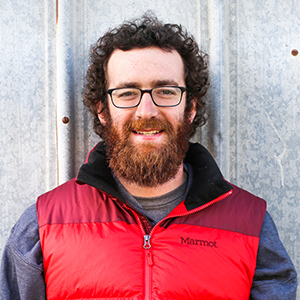
[00:00:10] Ray Latif: Hey everyone, I'm Ray Latif and you're listening to the Top Podcast for the food and beverage industry, Taste Radio. This episode features an interview with Benjamin Chesler, the co-founder of Imperfect Foods, a pioneering online grocery service that specializes in selling produce and surplus food that would otherwise be discarded. Just a reminder to our listeners, if you like what you hear on Taste Radio, please share the podcast with friends and colleagues. And of course, we would love it if you could review us on the Apple Podcasts app or your listening platform of choice. How many companies do you know of that operated at a $500 million run rate within 5 years of their launch? I'm guessing it's a handful at most. Now factor into that group companies whose business model is centered around food waste and you'll have a list of one. Imperfect Foods. Launched in 2015, Imperfect Foods is a bonafide unicorn. The San Francisco-based sells misshapen or mildly flawed, but otherwise healthy produce, along with overstocked packaged food and beverages, to consumers via a subscription-based online delivery service. Imperfect claims that its prices are 30% less than conventional grocers, and that in 2020, it rescued over 52 million pounds of food. Last year marked the fourth consecutive year of triple-digit growth according to Imperfect Foods, which counts a subscriber base of over 350,000 customers. Investors have taken notice. Earlier this year, the company announced a $115 million Series D funding round, just nine months after Imperfect picked up $72 million in new capital, the total of which is intended to bolster its production capacity, accelerate its private label program, and enhance customer experience. In the following interview, I sat down with Imperfect Foods co-founder Benjamin Chesler, who along with former CEO Ben Simon established the business. Our conversation explores the roots of the company and its mission to reduce food waste on a massive scale, their initial business plan and pitch to early investors, and how the company attempts to equally manage social focus and profitability. Ben also discussed Imperfect's pricing and UX strategies and its process for incorporating branded items into its product selection. Hey folks, it's Ray with Taste Radio. Right now, I am honored to be speaking with Benjamin Chesler, who is the co-founder of Imperfect Foods. Ben, how are you?
[00:02:41] Benjamin Chesler: I'm good. Thanks for having me on today.
[00:02:43] Ray Latif: Thanks so much for joining me. I really appreciate it. It's kind of surreal speaking with you because Imperfect Foods has been a savior for me and my family over the past year. You know, at the outset of COVID, it was really hard to get access to fresh organic produce and Imperfect Foods has just been this incredible resource for me. So I really appreciate what you guys do. The thing we order most is the dried pineapple bits that you guys sell. What is the best selling item for Imperfect Foods?
[00:03:17] Benjamin Chesler: Yeah, first of all, I love the dried pineapple bit. So you made it, you made a good choice there. I would say our most popular items and bestseller items are pretty much what you'd find in a grocery store. So chicken breast, oat milk, pasta, black beans. But we have some special items that are really customer favorites. We have the dark chocolate covered broken pretzels, which are pretzels that normally kind of wouldn't go to the grocery store because they're broken. We just cover them in chocolate and send them out. And that's my personal favorite item. So a lot of bestsellers depending on the week.
[00:03:46] Ray Latif: Yeah, your dried banana bites. Maybe it's just all of your dried fruit is great, but your dried banana bites too are really amazing. Don't tell the folks from Barnana, but I mean, I like both, but yours are really, really great as well. And they're organic too, which I really appreciate.
[00:03:59] Benjamin Chesler: Yeah, our sourcing team has done a really good job over the last year, kind of bringing those innovative products and looking in kind of the nooks and crannies of the food system for items that would go to waste and coming up with creative
[00:04:11] Ray Latif: you've done such a great job, you and your team. It's pretty incredible because you're a pretty young guy. And you graduated from high school, was it 10 years ago?
[00:04:20] Benjamin Chesler: Yeah, it makes me feel old. But yeah, I did graduate actually, 11 years ago now.
[00:04:25] Ray Latif: Oh, my goodness. So this is incredible. You're the co founder of a company that had a run rate in 2020 of $500 million. You're only 11 years out of high school. It's incredible. And the high school you went to, is in the town that BevNET Headquarters is located in, Newton, Massachusetts, which is really cool. You graduated from Newton South High. How was your experience? Are you originally from Newton?
[00:04:47] Benjamin Chesler: Yep, grew up in Newton. Both parents still living in Newton, and I go back there frequently. It was a pretty amazing place to grow up.
[00:04:53] Ray Latif: Your activism in high school, it feels like you were sort of ahead of the curve with community activism and getting into the game, so to speak.
[00:05:03] Benjamin Chesler: Yeah, I mean, I would say, you know, I think my parents and I was involved in some political and nonprofit work in high school. But it was really actually, I took a year after high school, I guess they'd call it a gap year now, before I went to college. And that's where kind of the roots of Imperfect Foods the Food Recovery Network, which I'll talk about were born. I ended up in the DC, Maryland area, and somehow ended up on the campus of the University of Maryland. And that's where I kind of collided paths coincidentally. And that's another long story with my future co-founder, Ben Simon. And he was a student at University of Maryland and had basically noticed that there was a huge amount of food going to waste on the college dining hall, like trays of pasta, like salad, pizza, lasagna, bread was all just going to waste and getting thrown out at the end of the day. At the same time, there was a huge amount of kind of insecurity, food insecurity in the community. And it seems silly that these two problems existed side by side. And so he kind of approached me with the idea, what if we recovered this food that would normally go to waste? and instead had students package it up and donate it down to meal sites in the community. And I said, that's a great idea. And we helped him get started. And then I got to Brown University the next year, and he gave me a call and said, we've recovered 50,000 pounds of produce. This has been super successful. Do you want to start something at Brown? said sure. And so we started chapter Brown and then kind of the next is a little bit of history. But over the next four years we grew that nonprofit the Food Recovery Network to 250 colleges across the country. And I can talk a little bit more if you want. But that's kind of where we got our start in food waste activism and eventually through a chain of events led to the founding of Imperfect Foods.
[00:06:46] Ray Latif: And to be clear you're talking about good usable food. You're not talking about food that was close to its expiration date or that in any way, it was just food on college campuses that was served in dining halls and just not consumed by students, right?
[00:07:01] Benjamin Chesler: Yeah. And this wasn't even food. This wasn't food that went onto your plate. We had to accomplish that. This was like, they're forecasting a pretty complex demand problem of how many students are going to eat at the dining hall today. And the last thing you want to do like at any buffet is run out of food. And so they might have baked, you know, 10 trays of And what do you do with those two trays? And sometimes they try and reuse it. But a lot of times, at the end of the day, they just toss it out. And so this was perfectly good, usually ready-to-eat food, which actually the soup kitchens and homeless shelters really loved because they could just serve it right up after heating it up. So yeah, perfectly good food that was getting thrown out.
[00:07:35] Ray Latif: Can I just ask what might sound like a dumb question? Why was no one doing this before?
[00:07:40] Benjamin Chesler: Yeah there were a few reasons and actually I remember when I told some other students at Brown that I was going to talk to dining services about this. I got all sorts of responses like oh someone had tried that before and it didn't work or there's liability like they could get sued or like we don't trust students to do it. And I remember when I walked into dining services and said here's the pitch, here's how we're going to do it. They said, this is awesome. We'd love to do it, but we don't have the resources and no one's ever approached us. So now that you're bringing like the power of student volunteers to do it, we can do it. I think a lot of it was just misinformation and an action bias problem where no one wanted to be the person to do it.
[00:08:17] Ray Latif: So how much of the work that you were doing with Food Recovery Network allowed you to understand the sort of operational challenges of running a company or at least starting a company like Imperfect Foods?
[00:08:31] Benjamin Chesler: I'd say we got some experience from the operational perspective of just how to safely transport food. But also back then I like to say it was it was before food waste was really a sexy topic. And so we'd we'd fly to these conferences all over the world and there'd be like the same 10 people showing up no matter where you were. It was a very we called ourselves the food waste warriors. It was a very small group of people. And so we got to know some of the, I guess I say experts, right? You know, and authors in the field because it was a small community and they were the ones who originally pointed us to the problem of food going to waste on the farms. And so it was through our involvement in that community that we got to know the problem of produce going to waste.
[00:09:11] Imperfect Foods: Guessing your margins? That's risky. Belay Financial gives CPG brands the clarity to scale smarter, faster, stronger. Get your free inventory ebook by texting TASTE to 55123 and start making data work for you. Vibrant Ingredients is the natural ingredient partner powering food and beverage innovation, delivering flavor, function, and protection through a science-backed portfolio. Vibrant delivers purpose-driven solutions that help brands create extraordinary experiences. Discover what's possible with Vibrant today. Visit VibrantIngredients.com.
[00:09:57] Ray Latif: It's one thing to go to the head of dining services and say, hey, I have this idea, and it's a good one, and we have the resources, we have the capability to execute upon this idea. It's another thing to go to investors and ask for hundreds of thousands, if not millions of dollars and say, hey, we have this idea to commercialize, essentially, the problem of food waste. That's a pretty ambitious mission, and it's a pretty ambitious business concept. What was your initial pitch? Like, how did you start? What was the first thing that you had to do to get this thing off the ground?
[00:10:35] Benjamin Chesler: Yeah, for sure. And that first round of capital was definitely the hardest round of capital we've ever raised, partly because we had no idea what we were doing. But if you look at it from someone else's perspective, I mean, we were a bunch of 22-year-old college kids that said, hey, we're raising $500,000 to take ugly produce and sell it to people, right? And I'm not sure if I would have funded that, to be honest. We probably pitched 50, 100 people. I vividly remember we had this pitch meeting that a friend of a friend had set up, and it was virtual. I was in Providence. I think the investor was in Napa Valley in California, and it was a Friday afternoon. The first mini had gone well, and I won't name who this is, but the first mini had gone well, and we were super excited for this. He's sitting on a porch, beautiful sunny day, sipping wine. And we're pitching him and he just goes, it's just not interesting to me. He's like, I just don't think it's an interesting idea. Like, you know, I'm sorry. And so like, we're like, okay, this is going to be harder than we thought it was going to be. But we were very lucky to have a group called gratitude railroad, which is kind of a socially conscious investing group. That was our very first check and believed in us. But we done the things you do. We put together a deck, we entered some pitch competitions. We made lists of investors. I would say if I had a piece of advice on early stage investing is every time you get a no ask for referrals. I would say every investor who invested us was somebody who got referred to us by somebody who said no said I can't. No it's not a fit for our fund. But why don't you talk to these three people. And one of them invested. So that that's the advice I would give.
[00:12:06] Ray Latif: That's great advice and thank you for sharing it. When you finally got a yes, what was the part of the pitch that really resonated most with that investor? What was the quote unquote sexiest part of your deck?
[00:12:20] Benjamin Chesler: Yeah, I think it was this kind of like arbitrage opportunity where we could get produce that tasted the same and was the same quality as where you could find a grocery store, was better for the planet because it was reducing food waste, and it was 30% more affordable than you'd find at the grocery store. So it was like this win-win-win, where the farmers win, the planet wins, and the customer wins. And I think the fact that you have that, you don't have to choose, is really what got the investors excited.
[00:12:50] Ray Latif: So you were not just one of the co-founders, you were the first chief operating officer of Imperfect Foods. Given the complexities of the business, I wonder how you went about creating systems that would provide a solid foundation for the company as it scaled.
[00:13:11] Benjamin Chesler: Yeah, it was definitely a challenge, especially because like, we were fairly young and, you know, first time people managers. And so I would say, it's all about finding what works and then implementing a system behind that I don't, I don't really subscribe to the belief that you should put in software, and that's going to solve your problems. I think you should figure out what happens naturally. So like, okay, well, we have to label the racks in the warehouse, okay, or like, we have to have three shifts for this into a process to operationalize it and systemize it. I will say, I don't think we were always the best in the early days at creating these scalable processes, but you're forced to when you go through hyper growth, because we went from managing five people where everyone's in a room together to managing a thousand people across six facilities. And all of a sudden, all right, well, how do you get the messages out? What's the standard operating procedure? So a lot of it is really finding best practices and then making sure you document them.
[00:14:02] Ray Latif: Speaking with many entrepreneurs, operations can sometimes be the most challenging part of what they do. And yes, a lot of it is sort of rinse and repeat. But in the case of Imperfect Foods, I feel like the complexity was coming from the fact that this had not been done before, that you hadn't had sort of a blueprint, you hadn't been able to sort of lean, I assume lean on other ways of running this type of company. Were you able to draw upon how other companies approach the kind of systems that you put in place? I mean, did you have any influences that really helped you as you were starting out?
[00:14:42] Benjamin Chesler: Yeah I would say sometimes we were able to draw on other companies because what we were doing was similar and sometimes it was new. So like we're not the first people to handle produce for example. Right. And so we could draw on some of those experienced produce companies that we really did in terms of how to maintain the cold chain and keep the product fresh. But at the same time we were also dealing with things that were new which is like We weren't buying oranges every week. We were talking to the farms in real time in terms of what do they have that was going to be wasted that week. And so we had to deal with supply chain that was changing every week. So we had to develop new systems, for example, to figure out how to get that information concisely from the farmer and build it into a demand plan and get it out to the customer. And so certain things we relied on kind of companies that were out there and certain things we had to build from the ground up. I would say we had a few main influences although we can talk about a little bit later. You know Trader Joe's was one of our big influencers when it comes to how we think about product assortment especially once we went beyond produce to grocery and also just how to treat customers right.
[00:15:39] Ray Latif: Well, treating customers right, a lot of times means being consistent in how you service those customers.
[00:15:46] Benjamin Chesler: Yeah, I really think it was that combination of sustainability and affordability that you didn't have to compromise. And I think also food waste was having its kind of day in the sun in the media in terms of people becoming aware that it was a big problem that was contributing to climate change. And so we were one of the only places offering a tangible solution where you could, you know, do something good without having to sacrifice. You know, you talk about, OK, maybe you can buy an electric car, but it costs a little bit more. It can't go as far. Right. You get solar panels, but they're expensive. This was, I think, a solution that was attainable to anybody because it was more affordable, but it was something you could do from your home to really improve the planet. And when you talk about the consistency, I think one of the things we really tried to work on is, for example, like there might not be oranges every week, but there's always going to be two citruses and three greens, leafy greens, for example. And how can we provide that consistency to customers within a changing product array? Or we even might have like 10 suppliers of oranges so that we can guarantee there's oranges every week, even if they're coming from different farms. And so that looked very different from a grocery store and those types of systems we have to build from the ground up.
[00:16:51] Ray Latif: I mentioned earlier that Imperfect Foods is not a small company. In a very short amount of time, you guys have created a business that, as I mentioned, generates $500 million annually, or at least it did in 2020, which is really remarkable. Your last two funding rounds totaled $162 million, and that took place between May 2020 and January 2021. Just insane numbers. How do you do it? How do you approach profitability and the social mission in a way that addresses both equally? Do they have to be addressed equally?
[00:17:29] Benjamin Chesler: Yeah, I would say one of the things that we thought was so beautiful about the way that we set up the business is we really didn't have to choose in most cases. So every time someone purchased product from us, we were helping reduce food waste and helping prevent food from going to waste in the farms. And so it was basically this mission, which like just the more we sell, the more profitable we could be. the more we can help the environment. And I think that was what was so great about it is it wasn't like this charitable thing we did on the side. It was built into the core of the business. And I think actually the best social enterprises and businesses with a mission do better for the kind of the triple bottom line where people profit planet all together. Because when you do have to choose, it gets kind of ugly and it forces some really hard decisions. But I would also say that, you know, one of the things we subscribe to here is is no margin, no mission, we say, which is like, our number one goal is to stay in business and keep doing the good we're doing for the world. And so if we can't be profitable, and we can't be growing, we're not going to be doing any good for anybody. And so a great example is like, packaging right. We've often had to put more packaging in the boxes and it would obviously be the most environmentally sustainable if we put nothing in the boxes right just a cardboard box. But if you're getting rotten peaches or they're getting smushed that's creating food waste in its own right. Right. And so we have to put the customer experience first in order to preserve emissions.
[00:18:52] Ray Latif: Yeah, and that customer experience is so important. Since the time I started using Imperfect Foods, I've had to reach out to your customer relations department a few times, nothing significant. Maybe, you know, some eggplant wasn't as good as I thought it might've been, or my eggs were broken, you know, once or twice or something like that, no big deal. But the thing that really impressed me was that your customer service was phenomenal. It was very fast, addressed the answer or addressed the problem very, very quickly. How long did it take you to realize that customer experience and customer relations had to be at the forefront of what you do? And I'm guessing it's at the forefront of what you do because it is, in my experience, it has been so great.
[00:19:35] Benjamin Chesler: Yeah, for sure. I think it was probably part of our ethos early on. There were definitely times where we were growing really fast, where we weren't able to keep up the standard we wanted. But it was always our goal to be the best in customer service. we're delivering your gro a pretty essential staple right? Like it's a real t not like a package is oka late, right? If your orde it's got to come on Wednes is real. Like they have t They can't feed their fam stuff doesn't come on tim could trust. And I think the second thing is with imperfect produce people were skeptical. Right. Like is this is this going to taste as good. You know this is ugly but it's also bad quality. And so by having that level of service that was top notch we could assure people that if there was a problem, we did care of it. I mean, I think the things that broke my heart, I remember early on, someone would say, oh, this peach was rotten, but that's because it's imperfect. And it's like, no, I want you to write in and tell me about that, because the whole point is it looks different on the outside, but it tastes the same on the inside. And if you're getting produce that doesn't live up to your standards, we want to hear about it so we can improve.
[00:20:44] Ray Latif: Yeah, I mean, I think that's a really great point, which is, you know, that consumers are expecting high quality, regardless of the fact that it might be a little ugly, or it might be misshapen or missized or whatnot, just because that watermelon has a scar in it, the inside of the watermelon is still going to be beautiful, or at least it should be. So communicating quality, as you mentioned, I think is a foremost, you know, is a priority for the company. doubling down on that quality as people are choosing between Imperfect Foods say a Whole Foods or Trader Joe's or what have you, do you find yourself now at this point, competing might be the wrong word, but having your customers choose between an established player on the market and Imperfect Foods?
[00:21:26] Benjamin Chesler: Yeah, I think that was always the choice. I mean, we weren't going to increase the amount of money spent on groceries in the world, right? So if you were buying from us, you were buying from somewhere else beforehand. And so we always have seen the major grocery players as our competition. And I don't think that's any different today.
[00:21:43] Ray Latif: When the pandemic hit, a lot of people were wary of going to grocery stores. And Imperfect Foods offered this solution in that groceries could be delivered to your house. And on a subscription level, it would be delivered on a regular basis and in the kind of manner that people were comfortable with. That being said, that must have been a huge logistical challenge for you. Talk about how you navigated those first few months of COVID and how you were able to get to a point where it actually ended up benefiting the company.
[00:22:22] Benjamin Chesler: Yeah, I mean, COVID was a crazy time for all businesses and Imperfect Foods was no exception. I think when the reality of the pandemic set in, the first thing we thought about was, okay, how do we keep our employees safe? And the second thing was, oh my God, we have become a lifeline for people's food. And I think we were always a grocery company, but it's not until COVID hit and we were getting these messages like, oh my God, my order's a day late, what's going on, that we realized how much we really were essential service and people depended on us. And I would say, so, you know, the first thing is it was incredibly hard to operate. You know, we had to redesign all of our warehouses to keep people safe, space people out. I don't even want to tell you what the cost of the hand sanitizer was during those early days of the pandemic. I mean, it was, it was... Why don't you share that? How much was that? How much did you guys have to spend? I don't know the exact number, but hundreds of thousands of dollars, right? You know, I think we knew that not only for our customers, but for our employees, we had to keep everybody safe. And obviously we willingly paid that expense. But it definitely made operating a little bit hard. All of a sudden, you know, somebody was sick and you had to quarantine. And it was, you know, it was a tough logistical challenge. But I would say the two things that really benefited us are, one, with customers not feeling comfortable going into grocery stores, you know, we were an online contactless solution that people could utilize to get their groceries. And so we saw a huge influx of new customers. But two, it really highlighted how broken our food system was, and we were able to take advantage of some opportunities from industries that really hit hard. So for example, we recovered 250,000 pounds of fresh fish fillets from cruise ships that were supposed to go to cruise ships that weren't happening, or 250,000 pounds of popcorn from movie theaters. I think there was some press article about it, but 30,000 snack trays from JetBlue, the cheese and crackers. And so we were able actually to step in and take this food that would have gone to waste and said, hey, we can get it out to customers instead.
[00:24:19] Ray Latif: And that is so amazing to hear. I never ever would have thought of that, you know, all the popcorn that was going to be uneaten or the cheese plates on an airline. Were you reaching out? Were you actively reaching out to some of these companies and ministries saying, hey, we have a solution for this waste or this food waste that you're going to encounter?
[00:24:39] Benjamin Chesler: Yeah, some of it we reached out through existing relationships we had and some reached out to us because we've been known as a place where you can be a clearinghouse for product that would go to waste. but was still perfectly good for consumers. It was kind of a two-way street.
[00:25:16] San Francisco-based: Scaling a beverage brand into major retail comes down to operational readiness. From packaging lead times to co-manufacturing strategy, the details can make or break a launch. In a new e-book in collaboration with Octopi and Asahi Beer USA, industry leaders share what they've learned in helping brands scale. Download it now at Taste Radio slash octopi.
[00:25:40] Ray Latif: Earlier you had mentioned that as the company evolved, as the brand evolved, it evolved from produce to meats and poultry to branded items as well. Talk about the evolution of your product selection and how you think about incorporating branded items into your product selection.
[00:26:02] Benjamin Chesler: The reason for expanding into items beyond produce was twofold. One was that we always knew that there was a huge amount of food going to waste in other parts of the food system beyond just the produce. And I mentioned like the broken pretzels as one example. But two is customers were starting to tell us hey if you just care period, X, Y, Z, right? Like chicken, eggs, milk, I wouldn't have to go to the grocery store at all. And it's kind of silly that I'm making a trip every week to get those items when I could just be sitting home. And because of the way we do our routing, it's kind of intricate with our delivery vans, we deliver to a whole neighborhood all in one day. It's actually, according to the EPA, 50% more efficient than if everybody drove to the store individually. And so part of it was just customers telling us like, I want to do all my shopping with And I think the thing that really prompted the branded items is that they trusted imperfect, right? Like they didn't trust us to sell other brands. They really trusted us to sell our brand and to go out there and know what was being wasted in the marketplace and know that it was going to be good quality. And so that's why we really expanded kind of the imperfect line of products.
[00:27:06] Ray Latif: Someone might say, well, if you're aligned with imperfect, that must mean that your brand is Imperfect Foods yes, your products are Imperfect Foods I think that can be kind of difficult to convince a brand to sign on with you guys, maybe not. Has there ever been that sort of disconnect between, hey, we're working with Organic Valley selling their half and half, is this half and half, you know, going to expire in a week? Or is there something wrong with the package, et cetera? Have you run into that problem?
[00:27:35] Benjamin Chesler: We haven't run into it too much and we try and be really clear on our website and in description what is kind of an imperfect item and what just might be a first quality item that we carry because we want to have it like half and half every week. But it's a lot of the reasons why we also work through the imperfect brand because sometimes these companies want to kind of stay in the background a little bit. Right. And they worked hard to cultivate The idea of their brand is that first quality stuff, but they also recognize that food's going to waste and there needs to be a market for it. And so they'd rather work through the imperfect brand than their own brand of product. And that's why you see a lot of our brand products.
[00:28:06] Ray Latif: A lot of the products you're carrying now, though, are not necessarily big brands. I mean, some of them are very, very new, early stage disruptive brands have some sort of innovation component to them. And you know, the variety that you carry is pretty remarkable. How do you work with early stage brands to get their products into your portfolio?
[00:28:30] Benjamin Chesler: Yeah, I would say it definitely goes both directions. And I would say that one of the inefficiencies of the food system that is not often known is that the bar for getting into grocery stores has become really high and you basically have to pay to play at this point. And so you have to pay to get on the shelf. And so new brands have a really hard time. And they also really are a time when they're innovating with new flavors that might not sell as well as they expected. And so we've kind of tried to reach out to the community to tell them that we are a place where you can innovate with new flavors. You can get on the shelf without having to pay and you can give us products that might be getting close to expiration because they didn't sell as well as you thought. And so we've definitely made product outreach to that community.
[00:29:09] Ray Latif: And in some cases, they're a little bit more established brands that I've seen, you know, some of their new products and they, you know, I've bought them from Emperor Foods where, you know, the expiration date was fine for months. It wasn't even closer except for expiration date. I'm thinking of Nona Lim in particular with their Pad Thai kit. And Nona Lim has been a brand that's been on your product selection for a long time. Are they looking at Imperfect Foods as a way or some of these brands looking at Imperfect Foods as a way to bring awareness to new products, to bring awareness to their innovation?
[00:29:41] Benjamin Chesler: I would say sometimes yes, and sometimes similarly, they're working with new flavors that didn't sell as well as they could. But but also sometimes we just work with kind of really sustainable brands and the mainstream that align with our values. And it's another outlet for them to sell out. And it gives our customers some consistency to know that that will be there every week.
[00:29:59] Ray Latif: Yeah, on the former, I think it's, I remember Brew Doctor, you guys working closely with them on a new kombucha flavor where they had already pre-printed the cans or they pre-labeled these cans of products that they had discontinued. And they just took another label, what do they call it? Pressure-sensitive label, also known as a sticker, that they put around the can for this new Imperfect Foods and Brew Doctor collaboration, which was amazing. Amazing to Taste Radio amazing that you guys were able to do that together. That being said, The pricing model is something where I don't fully understand the pricing matrix and how you guys go about determining what you should be charging for, say, peaches versus a four pack of kombucha. Can you talk about your pricing strategy?
[00:30:43] Benjamin Chesler: Yeah, for sure. I mean, I think it's a combination of a few different factors. So one is, you know, what we're able to get that product from. from the farmer or from the manufacturer. But we also are doing store checks on a pretty weekly basis in every market with the local grocery stores to make sure we're price competitive. Because one of our value propositions is that we're going to be affordable. And so we're always looking at the grocery stores to say hey can we be more affordable. And can we really beat them on price these items. Because that's part of our promise to our customer. And sometimes it's also a conversation with brands where we say look We're going to have to be the best price out there because we're known as a discount store where you can get products at a really affordable price. Let's position this price, let's both work together to position this price that's going to be really unbeatable.
[00:31:26] Ray Latif: Well, I'm going to challenge you there, Ben. Go for it. Because just this past week, I was looking at prices at Whole Foods versus Imperfect Foods. And in a couple of cases, Whole Foods was less expensive. And I was okay with that. And I was okay with that because A, the products were going to be delivered to my home and it was going to be essentially all the groceries, as you mentioned, I could get everything at once, you know, in one box. and B, that you guys had proved to me that the quality was going to be there. Whole Foods is known for great quality produce. And so I think over time, I just realized that, well, Imperfect Foods Whole Foods are pretty close, if not the same in terms of the quality I'm going to get. But some of the items were a little bit more expensive on your site.
[00:32:13] Benjamin Chesler: Yeah. And without knowing the specifics, I imagine it was not intentional, to be honest. And we can never be perfect in the pricing, but we're always working to make sure we're sharpening our pricing because we don't want that experience, to be totally honest. We always want to be beating Whole Foods. And to be honest, since they got taken over by Amazon, they've been driving down prices pretty consistently and even potentially taking a loss in some of those items. But we want to be more affordable than Whole Foods, for sure. And so that's what we're striving towards.
[00:32:39] Ray Latif: When I think about the sort of overall mission of your company, I think about what the potential is versus, oh, will Imperfect be acquired by Amazon? I think about Imperfect Foods being able to, can you replicate this type of business in Europe or South America or Asia? What would you say is the overall goal here? How do you build this company so that it achieves the things that you wanted to achieve at the outset without the assistance of M&A?
[00:33:16] Benjamin Chesler: We never thought about acquisition. We built this company. I'm not sure we even thought about exit to be honest. We just thought about building a great company that was going to endure. And so we designed everything the way we wanted to do it. Right. So we have our own drivers that are our employees that deliver the box to your door every week. And that's not really right for an acquisition, but we knew that was going to be providing the best service to the customer. And we tried outsourcing, and it couldn't maintain our quality standards. And so we basically focused on how to build a great company and not worry about what was going to happen in the end. But I think you kind of hit it that this was not like we were getting really good at technology, so we get acquired by Amazon, or really good at operations, so we get acquired by Walmart. We built everything. We operate our own warehouses. We operate our own software. We operate our own drivers. I mean, pretty much as soon as it leaves the farm, we're in control of it to your door. And that was really meant to be a standalone company.
[00:34:06] Ray Latif: A lot of times when companies are acquired, the new owner will take a look at everything and say, we can be more efficient here, or we can streamline this part of the business with that part of the business, or we can achieve greater economies of scale based on our buying power. Are there ways that you're learning from the big guys, how to implement those efficiencies now in a way that keeps you competitive with the big guys so that you don't necessarily have to look at them as being a potential acquirer?
[00:34:34] Benjamin Chesler: Yeah I would say I mean we're always we're always looking at what what competitors are doing. And I'd say as we've grown and brought over people to our team who have experienced those bigger companies we've learned some of the kind of tricks of the trade in terms of how to compete on scale. And as we've grown as well we've been able to kind of realize those efficiencies of scale and negotiate better with suppliers as well. So I would say we're getting close. But You know, we knew we were never going to be able to compete on scale with certain retailers like Walmart, for example. And so as a result, like that's why we did things like having a very limited product offering so we could have higher volume on a per SKU basis, for example. And so we had to do other things to get creative, to kind of manufacture those efficiencies at scale, I would say.
[00:35:13] Ray Latif: What was an example or what's an example?
[00:35:15] Benjamin Chesler: Yeah, the limited skews is a really good example there. And so, you know, typical grocery store carries 40,000 items. The Trader Joe's carries about 5,000. We carry about 300, although we're growing that and it'll be at about 1,000 pretty soon. And what that means is that every item turns over really quickly. And so we're actually like a certain manufacturer might sell six units per store, like literally like six bags of chips per store per week. And that's a good week for them. And we can move through 2,000, you know, a whole pile of By working with, we might carry one milk brand or one egg brand, for example. By working with those limited SKUs, we're able to get the buying power of a much larger company from each producer because we're not spreading it out.
[00:36:01] Ray Latif: As you are increasing your product selection from 300 to 1000, how many of those products are going to be branded items versus in-house private label, Imperfect Foods offerings?
[00:36:11] Benjamin Chesler: Yeah, I would say within five years, we want around 70 or 80% of those to be our own label. We're currently at about, don't hold me to this, we're currently about 15 or 20% and we're trying to grow that to about 30 to 40% over the next year. But of all the new items, most of them are going to be coming in with the imperfect brand on them.
[00:36:29] Ray Latif: You had until recently been the chief innovation officer of the company as well. What does innovation mean to you? Does it mean really focusing on ways that you can introduce new private label items to your customers or is it working with innovative brands?
[00:36:44] Benjamin Chesler: I would say it's a little bit of both innovation for us meant getting out of the day to day and thinking more in the six month two year three year time frame and really planning for projects that cut across departments. So like launching grocery for example was one of the projects we did. We will launch with innovative partner with innovative brands when we think they're doing something really special in the market. But we always have a bias for doing it ourselves just because we've built up that customer trust. And we actually we heard from customers that they prefer when it when it's under our brand. You know if there is a standout company that really resonates with our values and aligns with our values and our customers we'll obviously work with them. But we really do prefer to do it under our brand.
[00:37:21] Ray Latif: Ben, you come across as a really confident leader and someone who has a strong commitment to their vision. How does that jive with raising the amounts of money that you've raised from private equity firms that are looking for an return on investment that might not be in line with that mission that you have, that drive that you have to change the world, to do good on a very, very big scale?
[00:37:51] Benjamin Chesler: Yeah, I mean, I would say, you know, actually, despite being a strong willed person, I like to think myself as someone who's willing to compromise. But we did look for investors that were very much aligned in our social mission. And while they might not all be altruistic, I would say, they all understood that our social mission was part of what attracted customers to us. And if they were going to make a lot of money, we were going to have to stay true to that social mission. And so I think that's really how we bettered our investors on both the venture capital and private equity side. And if anyone said, hey, I think you should get rid of the social mission. It's not good for customers. We just knew they didn't understand the business. And so that was kind of a natural gate for us.
[00:38:28] Ray Latif: Well, that would be a strange thing for them to ask. Let's get rid of social mission, given that that's why you started the company in the first place. So that being said, how do you see yourself as continuing upon this mission of eradicating or at least greatly reducing food waste as it relates to your own personal goals and then that of the company?
[00:38:47] Benjamin Chesler: Yeah for sure. I mean I think from the company perspective continuing to focus on fighting food waste and obviously the more we grow the more food we can prevent from going to waste. And we've also started to take on kind of single use plastics as one of the things we're trying to reduce in the long run. It's not going to be a short term journey but another impact we can have on the environment on a personal perspective. I mean I think I'm going to fight food waste in my personal life. But I also there's a few causes I'm passionate about actually currently work for a graduate school affiliated with Northeastern where I live and focus on helping underrepresented founders start ventures and so passing on to the next generation entrepreneurs. So I think that there's a few causes I want to continue to pursue in my life and I'm lucky enough to have hopefully a long life ahead of me to be able to pursue those passions beyond just food waste.
[00:39:31] Ray Latif: Well, Ben, as I mentioned at the top of our conversation, you are still quite young and it seems like there's a great runway for you to do whatever you want to do going forward. But in the meantime, I just want to say thank you so much for taking the time to sit down with me. Really appreciate that. Thank you.
[00:39:45] Benjamin Chesler: Yeah, right. Thanks for having me on. It's been a pleasure talking about our journey and always enjoy sharing the story.
[00:39:55] Ray Latif: That brings us to the end of this episode. Thank you so much for listening, and thanks to our guest, Benjamin Chesler. As always, for questions, comments, ideas for future podcasts, please send us an email to askatasteradio.com. On behalf of the entire Taste Radio team, thank you for listening, and we'll talk to you next time.