[00:00:10] Ray Latif: Hello, and thanks for tuning into Taste Radio, the number one podcast for the food New Beverage industry. I'm Ray Latif, the editor and producer of Taste Radio, and with my BevNET Nosh colleagues, Mike Schneider and Erin Cabrey. In this episode, we're joined by Alexander Harik, the founder and CEO of Zesty Z, a platform brand of Mediterranean-inspired snacks and seasonings, who discusses his strategy for mainstreaming ethnic foods and the challenges of entrepreneurship as a minority founder. Just a reminder, if you like Want Your hear on Taste Radio, please share the podcast with friends and colleagues. Of course, we would love it if you could review us on the Apple Podcasts app or your listening platform of choice. Erin Cabrey, welcome back to Taste Radio. It's been a while since you've been on the show.
[00:00:52] Alexander Harik: Thanks for asking me back, Ray.
[00:00:55] Ray Latif: Yeah, it's great to see you. I think I'm going to be seeing a lot more of you this week or in the next week or so as you are a judge for the upcoming Nosh Pitch Slam 10 competition.
[00:01:06] Alexander Harik: I am.
[00:01:06] Ray Latif: Exciting stuff. You're going to be the judge in the final round of the competition. This is your first time in the final round. Are you excited?
[00:01:14] Alexander Harik: I'm excited. I'm a little nervous.
[00:01:15] Ray Latif: It's going to be fun.
[00:01:17] Alexander Harik: I've been getting samples all week, so I'm excited to try everything.
[00:01:21] Erin Cabrey: Have you anointed your pen of judgment yet? I always, before every contest, I anoint the pen of judgment. What does that even mean? What is a pen of judgment? You have to have a special pen that you write down your comments with. It's the pen of judgment. You have to be very judgmental.
[00:01:35] Alexander Harik: Should it be a BevNET pen?
[00:01:37] Ray Latif: It should be, yes. Or a Nosh pen. Yeah, exactly. In your case, Erin, it should be a Nosh pen.
[00:01:42] Alexander Harik: No, I don't have any Nosh pens. I need to grab one.
[00:01:45] Ray Latif: We got to get our events team on that ASAP. The last thing, what do they call that stuff that they give you for free at conventions and trade shows? Swag? Swag, yeah. The last swag that we gave away at BevNet Live and Nosh Live, if you can believe it, was a small packet of hand sanitizer. How apropos for the coming year. That was back in December of 2019. So I'm sure we'll be giving a lot more of that stuff out in December of 2021. But in the meantime, we are in the midst of BevNET and Nosh Virtually Live summer 2021 happening right now, happening this week, the 22nd, 23rd of June. Really exciting stuff. So many amazing speakers, panels, presentations. We've got included in the lineup, Todd Carmichael, the co-founder and CEO of La Colombe, Monisha Dabek, who's the Chief Commercial Officer and General Manager USA of Ocean Spray, along with some pretty remarkable entrepreneurs, including Ibrahim Bashir, who's the founder and CEO of Dozen Cousins, David Lester, the co-founder of Olipop, Those guys are going to be talking about how they were able to scale and grow in pretty remarkable ways during the pandemic. Aaron, you've got an incredible influencer panel coming out to talk a little bit about that.
[00:03:08] Alexander Harik: It's a great panel about influencer marketing with Shannon Race from Kabu and Courtney Murfeld at Thrive Market. And we chatted kind of all about the ins and outs of utilizing influencers and measuring success and which platforms are the most effective from TikTok to Instagram Stories versus Grid versus Reels. So a lot of interesting stuff there.
[00:03:29] Erin Cabrey: Did you cover MySpace? No. What? You didn't. Did you cover Friendster? No.
[00:03:36] Alexander Harik: No, I think they're a little out.
[00:03:39] Ray Latif: Wait, you know what Friendster is, Erin?
[00:03:41] Alexander Harik: I've heard of it. I can't say I ever used it.
[00:03:46] Ray Latif: Friendster was like the original Facebook, I wanna say. And then I think they were offered a ton of money to sell and they didn't. Same thing with Myspace, they were offered at least a billion dollars to sell. And they're like, no, no, no, we're holding out. And whoops, whoops, indeed. But yeah, I have a feeling that you're probably the right person to moderate that panel, Erin, given that I don't think anyone in the company knows how to use TikTok. I'm assuming you do. Maybe that's a stretch for me to assume that.
[00:04:15] Alexander Harik: I've never made a video on TikTok. I have it to watch other videos, but I myself have never made one. I probably never will.
[00:04:22] Erin Cabrey: Imagine Ray doing like Marvel superhero cosplay on TikTok. That's huge, Ray. I mean, we'll get you, we'll get you dressed up like Captain America or Falcon, Scarlet Witch. Scarlet Witch Ray will be huge on TikTok.
[00:04:38] Ray Latif: Anyhow, big news. We have crowned the latest champion of Bevinette's New Beverage Showdown competition. This edition was edition number 21. We're legal. We're legal now. The winner is a brand of Aguas Frescas, canned Aguas Frescas, known as Agua Bonita. Congratulations to Agua Bonita. Congratulations to Kayla Castaneda, who presented over the two days, a grueling two days of semifinal and final round pitches. Tons of feedback, advice, constructive criticism from the judging panel. Mike, you're in the semifinal judging panel. I'm sure you're proud of this brand and all the brands, but what really stood out for these guys? What really stood out for Agua Bonita for them to win this competition?
[00:05:22] Erin Cabrey: They did a great job of finding white space in a market and making a product that's authentic and better and has differentiation. So I think Aguas Frescas are well known and theirs is really expertly crafted. The branding, it's Rev1, but it's really good for Rev1. And what's in the can really pays off. You look at it and you think, oh, this is authentic as anything I've had. And then you look at the label and you're like, only eight grams of sugar. And you're just like so happy because you can just crush those.
[00:05:55] Ray Latif: Yeah, the one I'm holding in my hand is their real cucumber agua fresca. This is their tart and sweet. I have not cracked this open yet. I'm going to do that probably this afternoon sitting outside. I feel like this is a perfect treat over some ice to sip on a warm summer day. I am excited. You know, I was really proud of all the participants because you could tell how much they worked on their presentations, their pitches, their whole business strategy, and it really shined through. And we always say, you know, this competition gets better and better with each edition. And it's so true because, you know, when we saw folks up on stage or, you know, on Zoom, It was something where, you know, you could see these folks really doing well in front of a retail buyer or an investor. And I think it's something that folks who are listening, who are entrepreneurs and want to know some of the tips and tricks of being successful at those pitches should really pay attention to. All this content is available if you are a BevNET and Notch insider. It's really, really valuable. I would highly recommend anyone to watch these pitches and see how these folks did it, because it is, as I mentioned, pretty compelling stuff if you are trying to get in touch with retail buyers and investors like I know everyone listening is. Just a note that we mentioned the Nosh Pitch Slam 10 competition. That is beginning on Monday, June 29th with the semi-final round. Some pretty awesome brands, as Aaron mentioned, some awesome judges as well. As I mentioned, the semi-final round is on Monday. The final round is on Wednesday, July 1st, and we'll be announcing the winner at 5.30 p.m. Eastern time on July 1st. Do not miss it. Speaking of innovative brands, one that is not participating in the Pitch Slam, but is brand spanking new and pretty awesome, in my opinion, is a brand called Opopop. Talk about an opportunity to disrupt a legacy category. Aaron, you just wrote a great story about this brand. What is it all about?
[00:08:10] Alexander Harik: Yeah, this was a really cool brand that was started by two music entrepreneurs and they kind of rounded out their team with some General Mills veterans and tech experts and had a lot of different investors from like Peter Hall to Tiesto, so a wide range of people. And they're basically trying to like take a fresh take on Microwave For. So they basically do something called flavor wrapping where they wrap their kernel in flavor rather than having like a flavor powder that's inside the popcorn bag that kind of disperses when it heats. and it can be popped in like a reusable silicone bowl. I actually have it here. So you just kind of... There it is. Put the kernels in the bowl, throw it in the Microwave For a couple of minutes, and you have a family-sized bowl of popcorn. And they have like a bunch of flavors, like there's like cinna-licious and fancy butter. I have a couple here. Got some fancy butter. umami, like a good range of flavors, sweet and savory. And I was able to try a couple this weekend and they're pretty good.
[00:09:08] Erin Cabrey: Yeah. When you said flavor wrapping, I thought, you know, I was thinking, oh, it gets stuck in your teeth. You can savor the flavor for later. But that's not Want Your meant.
[00:09:18] Ray Latif: What is going on with you today, Mike? I think Mike was just salivating at the idea of a better version of Microwave For, because I know I did. That's why I really wanted to know more about this brand. I mean, when you've got flavors like Maui Heat, which is described as hot like lava. sweet like pineapple. I mean, this sounds pretty awesome. And it comes in these really cool little bags too. I think, you know, talk about great branding and great packaging. It's definitely popcorn for the modern consumer. And it wasn'Not Just a little bit of money they raised from Peter Rahal, the co-founder of RX Bar and Tiesto, the international DJ. They raised a ton of money actually for an early stage brand. How much was it, Erin?
[00:10:00] Alexander Harik: Yeah, they just recently raised $5 million and they in total have raised $11.6.
[00:10:06] Erin Cabrey: Wow. Wow. Incredible. Yeah. For a huge mission. I have a question about the branding Opopop. For me, I was like, is it New Beverage? And I just saw it written down. So, you know, there's Olipop and Poppy and well, Health Aid just changed theirs from Boojpop, but it used to be called Boojpop for like five minutes. What do you think of the, what do you think of the name here?
[00:10:27] Alexander Harik: I have to admit, I did have to ask the team to pronounce it for me because I was like, what, what is this? I think they actually asked them about where the name came from. And they basically said they had like a spreadsheet of like hundreds of names. And then one day they're like, oh, pop, pop. And then Not Just stuck.
[00:10:42] Erin Cabrey: It sounds cool. And I think pop is, you know, more closely associated with popcorn than it is with soda at this point too. Unless you're in the Midwest, then it could be confusing.
[00:10:52] Ray Latif: I was just going to say that you're from Ohio, right? So you grew up calling soda pop. I did. And now it's interesting, the tables have turned. You're much more pop is popcorn and soda is soda.
[00:11:06] Erin Cabrey: Yeah. I don't say pop anymore. I used to say, I find when I hear pop, I get a little bit triggered, but I know where someone's from if they call it pop.
[00:11:14] Ray Latif: Don't get triggered, Mike. We're trying to avoid that, at least on the podcast. I think I know what could make you happy, though. Maybe a little bit of ice cream with your popcorn, Mike. Everyone knows I have a discerning palate when it comes to ice cream. I love my ice cream.
[00:11:28] Erin Cabrey: And you're very good at hoarding the ice cream. Of course.
[00:11:31] Ray Latif: That's an ongoing thing. If you don't hoard ice cream, then you really don't love ice cream, right? Like you have to keep this in a secret safe place. You have to actually have a separate freezer if you're really a discerning ice cream consumer. And I, for the first time, was exposed to a brand called High Road. Now High Road is a maker of really high quality, no pun intended, ice cream with flavors that are just really out of this world. So they sent me a few things, and I was particularly looking for one item that they produce, but let me just discuss this one first of all. They sent me this chocolate and fresh mint ice cream sandwich.
[00:12:10] Erin Cabrey: What? Look at the size of that.
[00:12:13] Ray Latif: Yeah, it's pretty awesome. Now, I don't have any pints to show you. They make some killer pints of ice cream, too, because I ate all the pints. I've talked about Van Leeuwen ice cream a number of times on this podcast. Yeah, that's definitely your favorite. That's your honey mamas. Well, that's the thing. I think High Road and Van Leeuwen now are like A plus, A plus. They are side by side in terms of how delicious this ice cream is, how delicious these products are. But High Road has also now come out with a product that Van Leeuwen does not have, and I don't think I've seen any Brad Avery, and they won a Sophie Award for this, the Specialty Food Association Award. awarded this product, one of their best new products of 2021. It's their brownie stuffed cookie dough, which is a remarkable product that I have had to, and I will, I'm sorry, I'm not going to share this with anyone, because this stuff looks and tastes incredible.
[00:13:07] Erin Cabrey: I wrote, if you could just send some to 65 Chat Lab.
[00:13:11] Ray Latif: Newton, Massachusetts, 02458. I saw a look of anger in Aaron's face. This is the first time Aaron's been exposed to my hoarding. And Aaron's like, what the heck?
[00:13:21] Alexander Harik: It's not the first. I've seen your Instagram. I know that you hoard.
[00:13:25] Erin Cabrey: Hey, Rae, I can't take the High Road here. I have to ask, any THC in that product?
[00:13:31] Ray Latif: No, I'm reading, I'm reading the side of the package here and it gives a little bit of a description about the team. It says that High Road were a motley crew of world-class chefs, mad scientists, and wacky creatives united under one obsessive calling to create culinary-inspired, handcrafted treats for those with a passion for the good stuff. That, a passion for the good stuff, that's me. The good stuff, see? They made this for me. They called it the good stuff. That could be weed. What is it with you and me? Something's going on with Mike today, folks.
[00:14:00] Alexander Harik: He's fishing here.
[00:14:01] Ray Latif: I don't know what's happening. Aaron, anything interesting come across your desk that is not Pitch Slam related? Because we don't want to skew people's perceptions of Want Your think of these products. But I'm sure working at Nosh and reporting on things that are coming into the office, you've probably enjoyed a few things, yes?
[00:14:21] Alexander Harik: I have enjoyed a few things. Unfortunately, I don't get as many samples working remote all the way up here in New Hampshire. They don't always make it my way. But speaking of ice cream, I recently, I think within the last month or so, was able to try the new flavors from Dolcezza Gelato. I don't know if you guys have ever tried them, but they're so good. It was really hard Not Just not eat an entire pint in one sitting.
[00:14:45] Erin Cabrey: You're supposed to.
[00:14:45] Alexander Harik: Yeah, I guess. I could just do it.
[00:14:49] Erin Cabrey: Mike, anything on your desk of note? I have a few things on my desk. One is I've got, I'm crushing Electra, a New Beverage Showdown contestant who, great brand, the name Electra is phenomenal. You know, a couple of package tweaks, I think this thing could go. Also another one of my favorites from the, well, I like them all. I mean, all 12, it was a really hard contest. It was super hard to judge. Unlit, I'm drinking some, I'm getting unlit, which I think she's gonna make some, branding and package tweaks to this. Then maybe the weed is because I've got some CBD on my desk, which I've got. I already drank it, the new Black Bear Hibiscus Limited Edition Vibes. This stuff is lit. It's tasty. Vibes, V-I-B-E-S, for mind and body function. Good stuff. Yeah. I'm sad that this is limited edition because I would like this to be unlimited edition.
[00:15:45] Ray Latif: Yeah. I've also got on my desk this pretty interesting hazelnut cocoa spread that is made with an ingredient called Incredo sugar. Incredo sounds like incredible, but imagine I-N-C-R-E-D-O. Sugar.
[00:16:04] Erin Cabrey: Incredosugar! It is. What the heck is Incredosugar, Ray?
[00:16:09] Ray Latif: Well, it's described as a first-of-its-kind sugar-based sugar reduction solution that improves the efficiency of sugar delivery to the sweet taste receptors and enhances the perception of sweetness, enabling substantial sugar reduction without compromising taste, mouthfeel, or texture. It's based on real cane sugar.
[00:16:26] Erin Cabrey: Oh, it's still sugar though. Okay. Awesome.
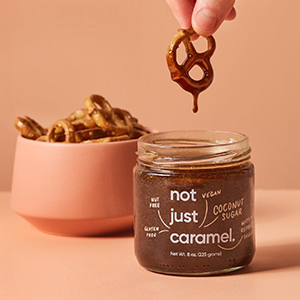
[00:16:29] Ray Latif: Yeah. I'm pretty happy about this stuff because I really do, I love Nutella, but I think Nutella, it's pretty well known that there's some not so great things in there. And if you look at the ingredient panel on this, what's known as an Incredo Spreads, it's probably got like seven ingredients, including organic hazelnuts, Incredo cane sugar, chicory root, sunflower oil, cocoa powder, a couple other things in there too. A couple other things being all good stuff. So well done in credo sugar. How much in credo sugar per serving, right? What's that? How much in credo sugar per serving? Oh, a good question, Mike. So two tablespoons is a serving and total sugars is 11 grams. There's eight grams of added sugar in this too. So significantly less, I believe, than your standard Nutella. Last but certainly not least is a brand that's near and dear to my heart and us at Taste Radio, and that's a brand called Not Just. The company's called Not Just Company. It was founded by our dear friend, Catherine Smart. Catherine was good enough to send me some of her latest products, which include their flagship, Not Just Pasta Sauce. They're Not Just caramel, which is made with coconut sugar, a little bit of Not Just pesto, notable because it is made with zero sugar. Pesto's got sugar in it, folks. Pay attention. And Not Just salad dressing. This is their miso, I'm sorry, lemon miso variety, no refined sugar in this one. She describes the brand- How much Incredo sugar?
[00:18:05] Erin Cabrey: I stop.
[00:18:07] Ray Latif: She describes the brand and the company as making modern pantry staples. And this is a really remarkable, this is a really remarkable brand. You know, when you open up a jar of pasta sauce, do you realize how much sugar is in the average pasta? I mean, you can taste it. And their pasta sauce right here, the nachos pasta sauce, There are only five grams of sugar and no added sugar per serving, which is a serving is a half cup. And to make it taste as good as Catherine does, it's a real achievement. So well done, Catherine. Folks, if you haven't had a chance to check out this brand, do it. The website is notjust.co.
[00:18:50] Pitch Slam: Guessing your margins? That's risky. Belay Financial gives CPG brands the clarity to scale smarter, faster, stronger. Get your free inventory ebook by texting TASTE to 55123 and start making data work for you. Vibrant Ingredients is the natural ingredient partner powering food New Beverage innovation, delivering flavor, function, and protection through a science-backed portfolio. Vibrant delivers purpose-driven solutions that help brands create extraordinary experiences. Discover what's possible with Vibrant today. Visit VibrantIngredients.com.
[00:19:37] Ray Latif: All right, it's time to get to our interview with Alexander Harik, who, as I mentioned at the top of the show, is the founder and CEO of Zesty Z, a brand of condiments, popcorn, and seasonings inspired by the Mediterranean diet. Born in Brooklyn, Zesty Z debuted in 2017 and has attempted to introduce Middle Eastern flavors to American households via easily understood and accessible products beginning with its flagship za'atar and olive oil blend, one that gained national distribution at Whole Foods within a year of its launch. The company has since extended the brand via a three-skew line of air-pop snacks infused with Mediterranean flavors such as thyme and feta, and a line of table seasonings, which includes everything bagel and za'atar varieties. In the following interview, Alex discussed the duality of Zesty Z as an authentic Mediterranean food brand, one whose products are designed to reach a broad set of consumers, how he initially won over independent retailers on his way to coast-to-coast distribution, the process of scaling from a single product to a platform brand, and how he's navigated challenges and surprising roadblocks as an Arab-American food entrepreneur. Hey folks, it's Ray with Taste Radio. Right now I'm on a call with Alexander Harik, who's the founder and CEO of Zesty Z. Alex, how are you? Yo, yo, what's up, Ray? I'm great. Thank you for having me. How are you? I'm doing great. So great to see you. Hopefully we can see you in person pretty soon by we, I mean the royal we, I mean me, because it's been a while. It has been.
[00:21:11] Middle Eastern: The last time I saw you was Winter Fancy last year, I believe.
[00:21:16] Ray Latif: Yeah, in January of 2020 in San Francisco, which feels like it was maybe five, six years ago, even though it was only like, what, 14, 15 months ago.
[00:21:25] Middle Eastern: So yes, yeah, I remember you buzzing by the booth and you were on your way. But and then you came back and we and that's where you met my mom.
[00:21:33] Ray Latif: I did meet your mom, yes, who was very involved in the company as well. And I wanted to know and I wanted to share with our audience a lot more about your company. Cool. I've admired you guys for a time, amazed at everything you guys have accomplished to date.
[00:21:47] Middle Eastern: Well, before I jump into that, I've got to say this is a special session. I've known you for about three years and the rest of the Nosh family has been really supportive of Zesty. from even pre-launch in 2016, when I was just this boisterous person on the pitch stage as a finalist. So everybody has been super awesome at Notch, and it's always nice seeing everybody. I just had to get that out of the way. And I definitely might call you Habibi during this, you know, podcast, which, you know, in Arabic is just, you know, like a dear friend, like a homie. So it might slip out. Not Just wanted to give you the heads up on that.
[00:22:26] Ray Latif: Thank you. Thank you. It is a term of endearment, so I'm not offended. I'm overjoyed, actually, to hear the term, so thank you. Thank you. Where did the name Zesty Z come from, by the way?
[00:22:37] Middle Eastern: So Zesty Z came from Zesty Zatar, and I just cut it down short. You know, I don't have a background in food or marketing or sales, like nothing. I had no background in this at all. It was sheer force and determination, you know, and passion that led me along this way. I always thought the name would be Zesty Zatar and we would only sell Zatar products and that would be great and we would become famous. Little did I know that wasn't really the path and how it really works, but zesty zaatar I thought was a little too hard for people to say. And so I just chopped it down to zesty zee, which connotates something a little bit more fun, a little more playful. And people love the word zesty. And quite frankly, within the food space too, and in our community world, literally people just say, yo zesty, you know. And so they know that's who I am. So I'm sometimes called just Zesty or the Zatar guy. I was born and raised here in America, so my lens is different. I want to do something modern and different than no one's ever done before. I'm appreciative of the culture, and I understand where that comes from. But I'm not that past generation. I want to move things forward. And I also want to educate people and bring people into the culture to kind of help with those stereotypes. So how do you bring people in? You got to meet them where they're at. You got to make it like approachable. So when they think of Lebanese food, you know, or they think of zaatar or Arabic food, oh zesty zee. Like, yeah, there's that super energetic founder from Brooklyn. He's really loud, but his flavors are great. You know, like that's Want Your want them to say, not something else, you know, and not pigeonhole you or not grab your item on the shelf because it has a certain look and a feel to it. You want to educate people by bringing them into the culture to change those norms and kind of change those perceptions. And I felt the best way to do that was partially meet folks where they're at.
[00:24:37] Ray Latif: So if they don't have an opportunity to meet Alex from Zesty Z, Zesty being your nickname, when you're talking about approachability and education, a lot of times all you do have is your product on shelf. So what does approachability mean in terms of package design? You got to stand out.
[00:24:55] Middle Eastern: I think that you need to be super descriptive and do something really contrarian versus Want Your competition is doing. And I think we do that for all of our products. So our popcorn, our seasonings, and now the condiments, everything we do is meant to stand out. Also on each of our packaging, there's a little bit of story, which great brands do this already. Add a little bit of heritage to that, talk about it, and then also ways to enjoy. I think that's super helpful, too. We have QR codes on the back of our products that take them to recipes. So I think with all three of those things, it's not rocket science, but I'm super proud of our designs. They are really bold and colorful, and they definitely stand out. They also match my personality.
[00:25:41] Ray Latif: So you knew Want Your wanted to say from a label standpoint. In terms of formulation of the product, how did you know that you had a viable brand? How did you know that you were ready to go to market? What were the key elements?
[00:25:53] Middle Eastern: So I think the key things that we looked for was, and this is talking about our Zatar condiment, was, did it taste great to me and mom? It was her recipe. She's my co-founder. The demo feedback we got from strangers and retailers we sold into, was it unique and did it stand out? And if folks bought again. So those are the key elements we looked at. Now, What happened for us is in 2016, I quit my finance job to start working on Zesty Z, the product launched in 2017. We were operating in Bed-Stuy, Brooklyn at a factory there with a really wonderful community of other food entrepreneurs and startup brands there. And we would manufacture the condiment. you know, drying this out to our blending and figuring all that out, which is probably a story for a whole other day. But once you figure that out, you know, what did you do? So we would manufacture on weekdays in the evenings. And then the other days during the week, I would literally take a blue IKEA bag, with little gift bags that were green, with little pita chips, recipe cards I had designed, little info sheet. And I researched the top 30 independent stores in Brooklyn and Manhattan. And I would walk into their stores and sell hand-to-hand combat, and offer to do a demo. Hey, this is a Zatar condiment. You've never tried anything like it. X, Y, and Z are the reasons why you should do it, and I'll do a demo for you.
[00:27:24] Ray Latif: What went into that research when you said you researched the top 30 independent stores? What were you looking for?
[00:27:29] Middle Eastern: I was just looking for independent stores that sold specialty type of products. I mean, it was a lot of Google Maps and Yelp. You know, there's not a lot of rocket science, you know, or anything fancy. It's just these are the stores. And a lot of those stores were pretty well known. So you would walk in and they would be willing to take a meeting or at least sample the product.
[00:27:50] Ray Latif: Did you have to know the buyers, the retail buyers ahead of time or the founder or the owners of the retail stores? Or was it something where you could just walk in and say, hey, I'm Alex with ZestDZ, I'd like for you to try my product?
[00:28:02] Middle Eastern: That, I mean, you could just walk in. I walked in most of the time. But also, cause these specialty stores, there was a bit of a food renaissance in Brooklyn around that time. So a lot of these independent specialty stores and cheese shops were getting written about in local press. So I would do some research. I'd figure out who the manager is. Sometimes it wouldn't be accurate, but I would write a personal note and I would leave it and then follow up. And that's how we got into our first 30 stores. I mean, it was, I'm lugging this blue IKEA bag around in the middle of the hot heat, riding subways, and you had to do it. And that's how we got our first 30 accounts.
[00:28:40] Ray Latif: Your first major retailer was Whole Foods, like a lot of brands. Talk about that story. Talk about how you got into your first few Whole Foods stores.
[00:28:48] Middle Eastern: So this is before we had any product. There were a lot of trade shows going on in Brooklyn. And at the time, Ellie Truesdale was the local forager. She's pretty well known in like the food. I call it like, I think of her sometimes when I see a reminder, like the godfather of like so many like brands or like, you know, the godmother, whatever, like, you know, like, I think it was like Vito Corleone, right?
[00:29:12] Ray Latif: Ellie has definitely moved onward and upward as a partner with Almanac Investments now. Yes. But yes, her name pops up in so many different ways. It's really amazing to see the impact she's had on our industry.
[00:29:24] Middle Eastern: Absolutely. And so, you know, I met with her at an event and she was super cool. You know, she could tell I was passionate and it was like one of these one-on-one mentor things. She looked at the product and saw this is really interesting and different. I really like it. You know, global flavors, Mediterranean diet, and za'atar were the kind of trends that she identified. But she told me, she goes, your label's not that sweet, so you should try to fix X, Y, and Z things. And I remember what it was I had, you know, enjoy with on the side of it, how to enjoy it. And instead of listing out how to do it, I had these graphics that were printed on it. She's like, yeah, take those graphics off. So I did that. And I went back to her and I got her information. And she saw I was hustling pretty hard and gave us a shot, put us in the local Brooklyn Whole Foods. the one in Williamsburg and the one in Gowanus. And so, we demoed our hearts out, the response was great, we were generating some buzz in New York. And then at one of the trade shows, Summer Fancy, we got a chance to meet people on the global team, Christina in particular. And again, people who knew Zatar, and she certainly knows a lot about it. They were all like, what the heck are you doing? Like I've never seen anything like this before. And so I think for a chain and a partner like Whole Foods that embraces local and innovation, we've had a tremendous experience with them. And they really saw what we were doing. And then she asked me and then other folks there too, is like, where do you want to take this?
[00:30:58] Ray Latif: Want Your za'atar seasoning is in Whole Foods nationally at this point, correct?
[00:31:03] Middle Eastern: Right, so we jumped from 13 New York City stores of our Zatar condiment in the beginning of 2018 to over 400 less than 12 months later.
[00:31:13] Ray Latif: Well, you know, I think being in 400 plus Whole Foods stores is an amazing accomplishment. And you and I have talked about this in the past. There's a question about velocity, right? If you have one product in the convent aisle that not a lot of people are familiar with in terms of what it is, as in za'atar, you might only get a handful of turns, a handful of products sold per week. So in order to really get Zesty Z where it needs to be, I think this is where the question of how do we turn a product into a platform is something that I think a lot of entrepreneurs question and try to figure out. So what were the first steps? What were the initial thoughts in terms of how to get there, how to get to that platform of Zesty Z?
[00:31:55] Middle Eastern: So you're absolutely correct. I mean, you know, that first phase, that first inning was like my MBA program. You know, like that was me going to grad school. Like, wow. Now it's like, okay, I've got this living, breathing company. People are taking us seriously. How do you get to the next level? So I studied. I studied what Dang and Siete did. And I looked at some other brands and just generally what works in food. And so I looked at the velocities and I saw that beverages, snacks, and like bars, are generally always in the top velocity moving products. So now taking this Mediterranean idea and flavor experience, bringing it to all of that, how could I do that? Well, by process of elimination, I wasn't gonna make a protein bar or like a grain bar. That was not my thing.
[00:32:47] Ray Latif: Is STZ protein bar? I think that was probably a good move, Alex. I don't know how many people would have bought that.
[00:32:52] Middle Eastern: Yeah, no, Not Just wasn't going to work, right? So like, okay, beverages. Okay, sure. Is there something you can do? I was like, man, I don't want to do beverages because I had learned through the condiment in my MBA program, basically, transportation, refrigerated and frozen. So I didn't know that going in. So I was like, okay, wow. So I don't want to do this. And I don't want to compete for space in the refrigerator or frozen section just yet. I'll leave it with that. And so I said, okay, snacks, snacks, snacks, snacks. I was like, okay, snacks. And then I just would walk down aisles and I was walking down, you know, the snack aisle and I went to, you know, see what Siete and Dang were doing and great inspirations again. But then I looked in some of the other areas, pulled some IRI data to the first time I started looking at data. And I just thought to myself, I'm like, okay, if you're going to do this the right way, you're a flavor brand and you have bright packaging and you want to do the Mediterranean diet. So it's got to be slightly better for you. So I walked down the aisle and I, you start with like the chips, so many great brands, so many great brands, but like the kettle chips, I didn't want to do anything fried and they already have great flavors. Then you would go down to the puffs, you know, at the time there were some other great brands really doing puffs. And I was like, oh hell no, like I'm not doing puffs. And so then I was standing in front of the popcorn section and Not Just slapped me right in the face, this wall of cheddar. And I said to myself, why on earth are there six types of cheddar popcorn, five types of salt, and like four types of, you know, sweet something kettle? All great brands, they're very big CPGs, they're obviously doing something great, but using my innovator lens and knowing my disruptor kind of DNA, I like to call it, I was like, you have got to be kidding me that somebody has not innovated in this space and it's a healthy snack. And so that was the original inspiration. And I knew that the two bigger brands, they're kettle cooked, so oil cooked, they're popcorn. So I was like, wait a second, if I can air pop this, and then I had flashbacks to when my mom used to air pop at home. with the air popper machine. It was like this yellow kind of thing. You put the kernels in and the air pops. We'd have our blockbuster videos. Sure. Mom didn't let us get like the buttered popcorn that you'd Microwave For like the candy. So I had just these really beautiful memories of my childhood and really authentic is honest to God. Like, I mean, this is how we would have movie nights. And I just was like, wow, what if we did an air pop popcorn? and use Zatar to start. And so that was where the inspiration first hit. And I went on a year and a half R&D journey. trying to build this product and to actually create a seasoning that is za'atar, that is Not Just the dry herbs and seasonings you sprinkle on it, an actual real seasoning, and then two other flavors, which eventually came out to our Mediterranean popcorn. We have a spicy Mediterranean, we have a cheesy feta, and we have a savory herbs, which is za'atar. And so that was kind of my moment where I was like, wait a second, this has some legs. I bet you there's a lot of people who don't like eating snacks that taste like foam and salt. And who knows what the difference between white cheddar and yellow cheddar is. I mean, like, give me a break. Like, it's 2020. I mean, it was 2018, right? I mean, it's like, look at this age of technology, you know. We're sending people to Mars and even now we're sending people to Mars and doing things and we're still eating the same popcorn flavors from years ago. It's like, come on, like you got to be joking. So that's kind of the approach and kind of the attitude I took.
[00:36:50] Ray Latif: Well, we haven't sent anyone to Mars just yet. So maybe that's the reason we haven't seen a real shift in the amount, in the quality.
[00:36:56] Middle Eastern: You know what I mean, like Perseverance, the Rovers. I mean, come on, we're doing cool stuff like this. And we're still eating, you know, like the same old cheddar popcorn from, you know, 2004, 2005. I mean, like, come on. it's like the scene from what's that movie with crazy stupid love it's with Ryan Galang and sure yeah and he's like you're better than the gap like you know and he like slaps them like he's like clothes shopping and it's just like come on you're better than eating the same old like cheddar popcorn come on you're better than eating just salt like wake up your taste buds so that's kind of the spirit i went into r&d with
[00:37:32] Whole Foods: Do you want more repeat buyers on Amazon? Well, this free resource in collaboration with Straight Up Growth will help your brand turn first-time buyers into long-term subscribers. Download Winning the Repeat Purchase Game on Amazon now at Taste Radio slash SUG. That's Taste Radio slash S-U-G to start building retention-driven growth for your brand on Amazon. Scaling New Beverage brand into major retail comes down to operational readiness. From packaging lead times to co-manufacturing strategy, the details can make or break a launch. In a new e-book in collaboration with Octopi and Asahi Beer USA, industry leaders share what they've learned in helping brands scale. Download it now at Taste Radio slash octopi.
[00:38:22] Ray Latif: I want to go back to your heritage Want Your experience as a minority founder in the food industry. You know, you touched on some issues with discrimination on a personal level that's at all carried into the food industry. Certainly, I hope not. But I mean, what has been your experience as an Arab American minority founder?
[00:38:45] Middle Eastern: Well, it's been overall positive within the food community, you know, being in particular Lebanese, but then part of the larger audience of being Arab, you know, food is really part of the culture. And you grow up with that hospitality where like a guest comes to your home, it's like their home, you know, my house is your house type of philosophy. And showing, you know, food is love is something on all of our packaging as well. It's something my mother and grandmother taught me growing up. So that's like the first piece. People are really interested in our food and there are some cultural reasons why people in this industry know Lebanese food and Arabic food. The second piece is there's actually quite a bit of Lebanese and other Arab business owners in food and CPG. We're known as, I guess, as a group, you know, to be very entrepreneurial. And so it's been awesome connecting with folks on that level as well. So in particular, within food, it's been really overwhelmingly positive. And I think especially with the trends of global flavors and Mediterranean diets, people are certainly more open to it. Now, stepping out of the food CPG microcosm, where maybe that is, you know, our culture and our foods and our flavors are more embraced, you know, naturally, because this is a hot take. Most immigrants brought Whole Foods to America that we love. So, of course, they're going to be more open to it in this industry. You think of like sushi, tacos, you know, I think at a very high level, you know, hummus, you know, things like that came from other cultures.
[00:40:25] Ray Latif: outside of indigenous food or Native American food. Yeah, it's all immigrant food, right?
[00:40:30] Middle Eastern: Yeah, I mean, that's what it is. I mean, you could go back and take a look at it. So my one friend Amrit and I were talking about this and we were joking about it. You know, immigrants brought flavor to America. So again, reiterating that point within this community, it's been great. At a larger level, just as an adult, and then as a business owner, yeah, of course, there has been discrimination. I think I mentioned it when we were chatting earlier offline. I get stopped every time I go to the airport still. There have been certain comments that I've worked as a business owner, knowing that we import and do business in that region of the world, people making assumptions or comments about that. So it has not been completely pleasant. And I never shy away from letting people know about my identity and my culture and my heritage. There's a wonderful saying in Arabic, and it's up in our office. It's, he who denies his heritage has no heritage. And so while I'm so grateful and I love, you know, the American side of my identity, the Lebanese Arab side has given me so much. And we were raised that way. And so because of 9-11 and subsequently after, you know, the wars in that part of the world, you know, and living in the New York tri-state area, unfortunately, you know, me and members of my family and friends, you know, have had to deal with some nonsense. So, I mean, that's just that's just the way it is.
[00:41:55] Ray Latif: Well, Alex, you know, I think the best way to beat back discrimination and racism is to educate and inform. I agree. People are often scared of what they don't understand. And the more that we can share the cuisine of the Middle Eastern with people, it might be the easiest way to introduce them to a culture in a really compelling way. And I congratulate you on doing that.
[00:42:21] Middle Eastern: Thank you for that. And you know we are working outside of Zesty. There's a couple initiatives that I've partnered up with and I know you know I'm going to be asking you for some of your help. So I know I can count on you. But absolutely. Bringing people together to encourage entrepreneurship within the Arab-American community especially with the younger adults. who are born here and raised here like us that represent both aspects, the American side and the Arab side, is something I'm really passionate about and didn't exist when I started Zesty. And so filling that void and being a positive role model for generations younger, and older within the Arab American community is something I'm really excited about doing and passionate about. And I will just share this piece of it. My grandfather on my mother's side is my inspiration because his name was Minor George and grew up in Cleveland, the son of Lebanese immigrants. But he was an Arab American leader there and actually helped Danny Thomas who was a Lebanese actor and famous celebrity, but actually now probably more known for his work with St. Jude Children's Hospital. So Danny Thomas was actually from Toledo, Ohio, and my grandfather was born and raised in Cleveland. And so in the mid to late 50s, my grandfather helped Danny Thomas raise the initial funds to build St. Jude's Children's Hospital. The full story is on our website, and I'm super proud of it, but my grandfather, Minor George, was on the first board of St. Jude's Children's Hospital. His name and pictures are all down in Tennessee. It's with that legacy, you know, hope and heritage, you know, as I like to call it, that I'm trying to build something a little bit bigger than just.
[00:44:06] Ray Latif: So, Alex, you know, I think you and I and most people would classify Arab Americans and people of Middle Eastern descent as part of a minority group. But it was interesting. You mentioned to me that industry groups and other organizations don't necessarily see it that way.
[00:44:26] Middle Eastern: No. Right. No, they don't. And this has been a point of frustration for me. And I want to make a certain caveat. There's a difference between race and when you're filling out a questionnaire like a census and a government document for a classification on race. That is different than talking about diversity and minority, which over the past couple of years is an effort I really believe in. The world needs to be more flavorful. Immigrants bring a lot of value to this country and from a historic point of view, as well as from a culinary point of view. And so promoting diversity and being inclusive is in the DNA of Zest-E-Z and quite frankly, our heritage. You invite everyone to the table. So I just want to make that clear distinction. We're talking about diversity and minority status, not like a racial status or question. And so as a minority, I do identify as that. I would say that Arab and Middle Eastern are a minority. When you're filling out applications, whether it be for category reviews, incubators, accelerators, financing things, And also for these third party certifying agencies, you look at the criteria and it talks about minority status and it lists out, and I wrote one, one of the biggest ones, which I contacted, says you have to be 51% Asian Pacific, Asian Indian, Hispanic, Black, and Native American. So I contacted them and I said, what about Arab and Middle Eastern? And they said to me that they don't recognize that, you know, as a minority. And I said on the phone to the woman and it wasn't obviously the right contact. I said, you're joking. You know, and I was almost incredulous. I mean, it was almost, you know, like shocked. And then, you know, when you see these wonderful initiatives for diversity, you know, I'm kind of stuck in a pinch because they either ask you, are you minority certified? Which means you have to use one of these certifying agencies. Well, they don't recognize me as a minority, so I can't do that. So I'm in a pickle, right? You know, to use the food pun there. And then in some of the questions where they specifically ask, are you a minority and list out various options or part of a diverse community? There's nothing there for Middle Eastern or Arab. And so you're kind of stuck. So like, what am I supposed to choose? Am I supposed to choose African? Because Egypt is in North Africa. You have Morocco, you have Algeria, you have Tunisia. I don't do that. But I mean, could you logically go that route by six degrees of separation? Am I supposed to, you know, select Caucasian, which obviously is never there? And there's not a section for others. So, you know, I want to be part of this diverse conversation. And it is very frustrating for me. You know, we're talking about minorities here. And you feel that Middle Eastern and Arab, I mean, are not being recognized out here. And for God's sakes, we gave you hummus, right? I mean, put some respect on our name. I mean, come on, you're joking here. I mean, you got Lebanese that's trending. I mean, Zatar, it's trending. There's that joke. It's like, there's that funny poster at one protest I saw. It's like, you know, give us respect. We gave you hummus, you know. You know, we give you falafel, we give you shawarma. So how is it, I find it very, not hypocritical, but it's just like ironic. It's like, how are you embracing and really loving? And I love that people love those elements of our culture, but you're not giving us a seat at the table to have those conversations. You know, we're not being represented accurately and we're not asking for anything. And I'm not asking for anything. other minority groups don't already have. I would just love a seat at the table and to be properly identified in this wonderful conversation about diversity.
[00:48:31] Ray Latif: Well, there's a lot of logic in Want Your're saying, Alex. I really enjoy speaking with you all the time. And this has been a real pleasure for me. I know our audience is really going to enjoy hearing from you and the inspiration that you bring to the industry. So once again, really appreciate the time. Good luck with everything going forward. And hopefully, very soon, we will connect in person. And I owe you a big hug for this. So thank you.
[00:48:56] Middle Eastern: You're most welcome. Thank you so much for having me on this show and giving us the chance and always being positive and embracing everybody at Nosh, but you in particular. I know mom and I really appreciate it. Thank you for helping make the world a little bit more flavorful.
[00:49:15] Ray Latif: That brings us to the end of this episode of Taste Radio. Thank you so much for listening and thanks to our guest, Alexander Harik. Please subscribe to Taste Radio on the Apple Podcasts app, Spotify, Stitcher, or Google Podcasts. As always, for questions, comments, ideas for future podcasts, please send us an email to ask at Taste Radio. On behalf of the entire Taste Radio team, thank you for listening, and we'll talk to you next time.