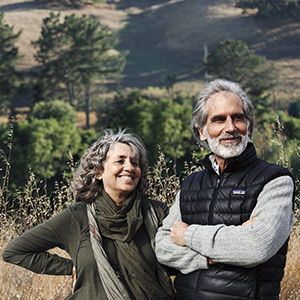
[00:00:10] Ray Latif: Hey everyone, I'm Ray Latif, and you're listening to the Top Podcast for the food and beverage industry, Taste Radio. This episode features an interview with Andy and Rachel Berliners, the co-founders of pioneering food company, Amy's Kitchen. Just a reminder to our listeners, if you like what you hear on Taste Radio, please share the podcast with friends and colleagues. And of course, we'd love it if you could review us on the Apple Podcasts app or your listening platform of choice. How did Amy's Kitchen become a globally recognized and trusted brand that generates over $600 million in annual revenue while remaining independently owned? In a word, commitment. Founded in 1987, Amy's Kitchen launched with a single product and has since evolved into an organic-centric platform brand that markets over 250 food items, including its popular soups, frozen burritos, and wraps. A family-owned and self-described as, quote, fiercely independent, the Sonoma County-based prides itself on making accessible and affordable food, all of which is produced at four facilities located across the U.S. Amy's co-founders, Andy and Rachel Berliners, characterize these facilities as, quote, large kitchens, a depiction in line with their dedication to create homestyle and authentic meals. As might be expected, industry conglomerates have made dozens of offers to acquire Amy's over the years, but The Berliners have remained steadfast in their commitment to independence and operating the company on their own terms. In the following interview, I spoke with The Berliners about how they've maintained their vision and focus for Amy's, why a retirement-aged accountant was the company's most significant hire and responsible for Amy's emphasis on financial responsibility, and why they are extremely patient when it comes to new product development. They also discussed how they managed the company during the pandemic, how they envision the next stage of development for Amy's, and why their happiness has never been tied to financial gain. Hey folks, it's Ray with Taste Radio. Right now, I'm honored to be on a call with Andy and Rachel Berliners, the co-founders of Amy's Kitchen. Andy, Rachel, thank you so much for being with me today.
[00:02:25] The Berliners: Yes, so happy to be here.
[00:02:27] Andy Berliner: Nice to meet you online, on video.
[00:02:31] Ray Latif: For sure, I've been eating your products for years now, as I'm sure a lot of Americans have. You guys have so many amazing products and so many offerings. The one thing I didn't know until I was doing a little bit of research, and I was on your website, and I saw, I think it was the last thing that you have offered, the last thing that you have in your portfolio was candy bars. I had never seen an Amy's candy bar before. Tell us, what's the story behind the candy bars?
[00:02:55] Andy Berliner: They are so good. I'll send you something right away. But I think the idea was that I have a sweet tooth, basically. And so over the years, we've come out with desserts for a while that didn't work out too well, but... Always tasty. Always great. So there was no, at the time, there was no natural organic candy bars. There are plenty of candy bars in the world and plenty of chocolates, you know, premium chocolates, 70 percent, 60 percent, 95 percent, whatever, but not real candy bars. So we came out with a line of candy bars that we haven't really promoted heavily yet or pushed, but it's on our plans. When did you launch them? We launched them a few years ago, but more in a local way and a little bit across the country and online. But then when COVID hit, we actually stopped making candy because we were impacted by the number of employees that we could bring in. Our orders went way, way up. So we had the conflict of more orders, less people able to work. Because even though we had never had any COVID spread within the plants, if one person got it outside the plant and came to work with it, then anyone who came in contact, you know, had to stay home. But we had a constant stress on employment. And so we just decided to stop making candy because it was a small part of our business. But we're ready to start up again very soon.
[00:04:26] Ray Latif: Well, I'm excited for you to start up again soon. Your dad, Andy, do I have this correct? Your dad was a chocolate maker for a time? He ran a candy kitchen and a bakery, yeah. Wow. So is that where you sort of cut your teeth in the food business? Was that your first experience, exposure to food?
[00:04:44] Andy Berliner: Yeah, I got, I ate a lot of samples, yeah. I would just sit, stand there right on the line as the chocolates were coming along and pick them off, you know.
[00:04:55] The Berliners: He still has a sweet tooth.
[00:04:57] Ray Latif: I still have a sweet tooth, too. I was so excited because, frankly, as delicious as Twix bars and Snickers and those kinds of products taste, I know that they're not the best for me. And I prefer an organic, natural option, one made with ingredients that everyone can pronounce and just, you know, higher quality chocolate. It just tastes better. So there's nothing like it.
[00:05:19] The Berliners: That was our decision is that We all like sweets and we were all eating that chocolate and those candies, Snickers and Mars and whatever else we do. And we decided to make an organic, clean version.
[00:05:35] Andy Berliner: Once you have ours, you'll never taste the other again. Okay.
[00:05:40] The Berliners: There's a certain feeling that you get after you eat candy. It's just kind of, I call it the yuck factor of candy, but you don't get with our candy. So it makes it extra nice.
[00:05:51] Ray Latif: Well, it's like a lot of products, but there's something specific about chocolate and candy. When you have the good stuff, as you mentioned, Andy, you can't go back. So I'm a little excited, but also a little worried that you might have to just keep sending me candy bars because I'll just be so addicted to your products. So, yeah.
[00:06:09] The Berliners: Yeah. I take them with me when I travel and people always, once you taste it, you want it, and then they can't get it in their country. So they'll see me and they say, oh, do you have any of those candies?
[00:06:22] Ray Latif: Andy, I mentioned your background with your dad being in the food business. Rachel, you have roots and experience in the food business as well. Talk a bit about that.
[00:06:31] The Berliners: Well, I have roots in the organic world and very, very early age, my parents had, there were health food people in the fifties, 1950s, early fifties. And we lived in Compton, LA, you know, not the rich part of the world. And we had an organic garden in the backyard. And so, they always taught me how to eat, you know, never eat anything that had words in it that you couldn't pronounce and just eat wholesome food. So that background, when we started Amy's, that was how we lived. We weren't doing it as a trend. Oh, look, organic is a trend. It's just a natural progression of how we lived. And then I'm an art major in school. And so the packaging and, you know, all that comes from my background. And then my mother was a great cook. And somehow I just, both of us, we kind of know what people like. My mother's Jewish. She always liked to feed people and that's in my nature. I like, if somebody says they're hungry, I just kind of bring them something to eat. And so what the business is, is I get to take care of and feed so many people, all different people with different, some people can't eat dairy, some people can't eat wheat. And You know, I love to cook for them. That's our motto. I love to do that.
[00:07:51] Ray Latif: Is there anything better than feeding people? There are few higher callings than preparing food and giving people food to eat.
[00:08:01] The Berliners: It's so gratifying and like I'll meet somebody and they'll, very often in front of the freezer case, and I tell them who I am, and there's this thing that everybody says, everybody, in the same tone of voice, oh, you're from Amy's, oh, I love Amy's, that, oh, I love Amy's, is consistent. And then I get, oh, good, I get to meet this person, they like the food, oh, I'm happy I've fed that person.
[00:08:29] Ray Latif: I think you found a new motto. I love Amy's. I think you need to trademark that. Has that been trademarked yet?
[00:08:38] The Berliners: And also the way it's spoken. We're working on a video taking forever, but one of my thoughts is to just be talking to people and say, oh, we're familiar, so that everyone could hear how consistently people say that.
[00:08:54] Ray Latif: Yeah. And Andy, you had a lot of experience as an executive in the food industry prior to launching Amy's, but did you both feel prepared when you were launching the brand? Did you both feel prepared to get into entrepreneurship at the time?
[00:09:09] Andy Berliner: I don't think we felt prepared, no. And we never expected to have a large company. We thought it would be two or $3 million business that would provide enough income to live on and help Amy go through college. We never envisioned it growing the way it did. So there was no fear. If someone told us it was gonna be a business of the size it has become, we probably would have felt unprepared.
[00:09:37] Ray Latif: There was something in 2010 that really struck with me, or there was a press release from 2010 that really struck me. And it was highlighting a Huffington Post article in which Amy's was praised as, quote, a prime example of spotting a trend and pouncing on it. spotting and pouncing. And then I've seen videos of you guys. It doesn't really feel like you're spotting and pouncing people.
[00:09:59] Andy Berliner: No, no, it didn't. I read that. I said, that's not true at all. You know, we didn't spot a trend and we didn't bounce on the trend. We just, we felt that there are other people like us that would like organic convenience, great tasting food. And it wasn't a trend when we started. I mean, there was one door frozen in a health food store. or natural, nothing organic when we started. So it wasn't a trend yet. It didn't become a trend for 10 years, maybe started to really kind of gain momentum. So it was just an extension of our lifestyle and trying to provide service.
[00:10:36] The Berliners: And we also just looked at what the need is. You know, what do people want? And also, it's just making good food. It's sort of like having a restaurant. You know, you come up with a new recipe, put it on the menu. And that's how we pretty much have done it is, you know, we we need pizzas. There's no good pizzas out there. So we'll make this. We found this great crust. We make these wonderful pizzas. And I think it's the way we make our food and the ingredients that we put into our food that make it successful and stand out because it's a different process than the typical frozen food companies.
[00:11:15] Ray Latif: And I definitely want to get into that because your way of food manufacturing doesn't even use the word manufacturing. You guys are cooking. It's such a different way of talking about a brand and talking about a packaged food brand. I don't know if you guys could have gotten to the point where you are right now, or it seems like you may not have been able to get to the point where you are now without some help via your first CFO, who was a 70 year old accountant when he joined the company. Is that accurate?
[00:11:42] Andy Berliner: Well, he was 72, I think. And he was retired, but consulting for companies. And he had been a president of a public company. He'd been in the lumber business, the freight business, and a very experienced fellow that I stumbled on, because we needed to buy a pot pie machine, because our first product was pot pies. And he was the part-time consulting controller for this bakery in East Bay that was selling a pot pie machine. We were always late with our payments in those early months. So he'd always call me and say, where's my $300? So we became friends over those collection calls. And I asked him if he had any free time to take a look at our books. We might need a little help. So he came over. He looked. He says, you don't need a little help. You need a lot of help. And that's the way it started. And he guided us through. financial wisdom, and particularly helpful with banking relationships. When I go into a bank, I'd be shaking, and he'd be in there like, he didn't have a cigar, but it's always like that. What can you do for me? It changed the whole thing around and allowed us to grow without taking investors in. and have financial conservatism and focus on margins and learn that important part of the business.
[00:13:06] Ray Latif: There's a lot of amazing parts to that story. I think the most amazing part is that you became friends with a guy who was trying to collect money from you. That rarely happens. Clearly there were some key values that he instilled in you and in the company. Let's talk about a few of them. One of them, the one that really stood out to me, and I read about this in an article about the company, was financial conservatism. What does financial conservatism mean to you? What did it mean then, and does it still mean the same thing now?
[00:13:36] Andy Berliner: Well, I have to say it was much easier to be financially conservative when we're small. As you grow, and there's you know, so many departments and so many people, it's much harder to instill that throughout the whole company. It's definitely a challenge. But it just means that, we were just talking about this morning, that we put our money into the food, into the product, when people, we hire a lot of people from the food industry. And when they join AMB's, they say, this is not a food manufacturing facility, this is a big restaurant. They see all these people making, preparing meals, instead of these machines preparing meals. And nobody's ever seen that before. So we don't spend much money on marketing or nearly as much on promotion as other companies. We always tell the buyers that our investment is in the food and consumers respond to that. But it only works if our approach to business only works if everybody is financially conservative.
[00:14:37] Sonoma County-based: Guessing your margins? That's risky. Belay Financial gives CPG brands the clarity to scale smarter, faster, stronger. Get your free inventory ebook by texting TASTE to 55123 and start making data work for you. Vibrant Ingredients is the natural ingredient partner powering food and beverage innovation, delivering flavor, function, and protection through a science-backed portfolio. Vibrant delivers purpose-driven solutions that help brands create extraordinary experiences. Discover what's possible with Vibrant today. Visit VibrantIngredients.com
[00:15:24] Ray Latif: How do you get everyone on the same page? And this goes to the next value that I want to talk about, which is operating lean, because I think there might be a tendency among different departments to spend more than other departments, you know, because they think, well, this is the way we get bigger. But if everyone's on the same page about financial conservatism and operating lean, well, that's great, but that seems a little difficult.
[00:15:50] Andy Berliner: It's very challenging. I mean, the fellow who are talking about Don Watts, our former CFO, who retired from Amy's when he was 92 because he passed away. Otherwise, he wouldn't have retired. But he used to tell the story that early in his career, he was an accountant at the lumberyard. And this forklift driver drove over a two-by-four and it broke. And the owner of the lumberyard went up to him and said, do you have a dollar in your pocket? And the driver said, yes. And he took the dollar and he ripped it in half and threw it in the ground. And he said, that's what you just did. You just wasted money by running over that piece of wood and breaking it over. So that kind of philosophy is something we've tried to preach, but it gets much more difficult as we grow. And that's one of our big objectives now is to create financial conservatism.
[00:16:39] Ray Latif: What you just said kind of reminds me of a standing rule at restaurants, which is don't waste food. And in a facility where everything seems like a big kitchen, like a big restaurant kitchen, don't waste food seems like it has to be a key tenet, once again, of the way you do things. And that plays into profitability as well, something that Don also instilled upon the company and upon you both. But profitability is one of those terms that doesn't really stick as much these days as it might have back then. How do you keep your eye on the ball when it comes to, let's just call it what it is, making money?
[00:17:16] Andy Berliner: Well, it starts with, you know, the products we come out with have to have a reasonable profit margin. You know, we design products and we say, well, for every one we sell, we're going to lose another dollar. So we never come out with that product. Because one of our goals is to be affordable to people. We're not inexpensive, but we don't want to be available only to the wealthy. So one thing is to come up with products that are affordable in the first place. And then to just not waste, not waste in food, not waste in overhead is a huge place where you can, they always say you have this creeping overhead. And we were just talking about this morning, 50 people, or you could have 100 people, and 100 people are all busy. But how much of that work is important and needs to be done? Could you do the same with 50 people and do the important things? So it's a very challenging thing, but that's our goal, is to stay financially conservative.
[00:18:17] Ray Latif: One of the other interesting things for a company of your size is that you say you don't come out with something until it's right. Was that always the mantra? Because I've spoken with entrepreneurs who will say, don't let great get in the way of good. And that doesn't sound like that's your mantra.
[00:18:34] Andy Berliner: No, we're not that way. We really want somebody perfect. A great example, quick story is our enchilada verde. I don't know if you've ever had it, but it has to be made with tomatillos. And we experienced it in Mexico and loved it. And we tried growing them in California with our tomato growers five years in a row and we never got the same flavor. So we finally, found a tomato process that could make puree out of the tomatoes in Mexico that had never been organic, and we got them to convert to organic and make product for us. But we waited five years to come out with the product until it was right. Our Thai food, we waited four years of experimenting in four weeks, and something we're really happy with.
[00:19:17] The Berliners: And the Indian meals too?
[00:19:19] Andy Berliner: And the Indian meals too. We take a long time sometimes, but we're not under pressure, which is the value of being a privately owned business. We only want to do things that are right. It's the only thing we can do. It's just the way we are.
[00:19:32] Ray Latif: What does the word right mean to you, especially when it comes to your ethnic issues? Authentic foods that taste great.
[00:19:42] The Berliners: Right, we'll taste something and we're making a meal and I'll just give an example. So the sweet potatoes, they were not right. They were too hard. So then we had them cook them longer. And then I said, let's just roast them. So maybe the roasting wasn't done correctly. So they had to go back. So we constantly are going back with our ingredients till we get the right taste profile and texture profile and, you know, cheeses. So we, But it passes our taste test. We have a very good palate, and we know I like to please people, so I'm always keeping in mind who's going to like this. But we've never done a lot of testing of the food outside of the family. We do a little bit now when we're not sure. We send it to the office. We have a lot of different people with different palates, and it's been helpful. It's just knowing what people like and wanting to feed them to make them happy.
[00:20:42] Andy Berliner: And we taste something so often, so many times before coming out with it, that we don't want to eat it anymore.
[00:20:50] The Berliners: I'm the only one that can't eat these foods sometimes.
[00:20:53] Ray Latif: Yeah. Yeah. Well, I mean, I love your lentil soup, but I got to think at a certain point, you're like, okay, no more lentil soup. You know, we've eaten it so many times.
[00:21:02] Andy Berliner: That was a home soup actually. And Rachel used to make that. all the time before we have the business.
[00:21:09] Ray Latif: It's a really, really great product as are all your products. and you sell a lot of products. I don't know too many brands that have a portfolio the size of yours. And Andy, you mentioned at the beginning that you've trimmed a bunch of products because of COVID and really focusing on the most, the highest velocity products, but you still sell a lot. Why do you have such a broad array of products? And what is it about these products that have helped make Amy's what it is today?
[00:21:41] Andy Berliner: Well, there's different categories, and we started with kind of American with pot pie and mac and cheese, and we went to Mexican foods, which filled a big niche, and some Italian foods. We have lasagnas and tortellinis and raviolis. In recent years, we've gotten into other ethnic areas. Partially, I think just because there's been so much growth in that, particularly in the young kids who eat a lot, young kids, not so young anymore, the millennials, and that international flavors have become a part of people's diet. So that gave us the opportunity to branch out into those areas and have a lot of fun.
[00:22:22] The Berliners: And also, people always like new. They always want something new. You know, like you go to a restaurant and you always look for the special. or favorites, and then they always want something different in the stores themselves. Well, what's new? What do you have that's new? You know, they always want different and new. So that eggs us on too.
[00:22:40] Andy Berliner: I always say to our sales, you know, maybe we'll skip new products this year, because we have so many. And they say, no, no, no, you've got, that's what keeps the energy alive. You know, the buyers want to hear what's coming new. And we used to, when we used to do the natural, national, Expo West. Yeah. We used to always kind of keep secret what we were coming out with and tell the show and people would go, you know, go by Amy's booth and see what they're doing.
[00:23:08] Ray Latif: Yeah. Well, when you go to Expo West, you've got to have something new. I mean, that's the reason people go to the show is to find the most innovative stuff. And sometimes the innovations, you know, under a table and they'll be announced, you know, the next month or whatnot. But how many products, I mean, how, I guess, how would you market your entire portfolio at Expo West? I wouldn't even know. How many products do you currently sell?
[00:23:27] Andy Berliner: We sell a couple hundred. I'm not currently, but as we come out of this, as we're getting back into production, it'll be a couple hundred. A couple hundred. How do you manage that kind of portfolio? It's pretty crazy. You know, if you think about, I think we're the only company using primarily 95%, 97% organic ingredients. So all these organic ingredients coming from all over, folks getting to one of our manufacturing or cooking facilities at the right day, at the right place. and then making all this wonderful food. It's kind of a miracle. I don't understand it myself how it happens, but it does. It's very complex. Anyone who joins our businesses, there's nothing as complex as that.
[00:24:10] Ray Latif: I mean, do you have just a team of operations folks that are part of the corporate office that help to run this? Or is everything much more localized in terms of how operations get run from your different facilities?
[00:24:23] Andy Berliner: It's both, but the coordination is corporate. You know, even getting down to like, as far as our cooking of food, like our Indian meals, we roast our own spices. We don't buy some Indian spice mix. We roast things fresh. We do everything in an authentic way and it takes time to train people on new products. I mean, we get really excited about new products. The people in the kitchens don't get so excited because it means a lot of learning and a lot of new things, you know. And for sourcing it means, well, do I really have to find this ingredient?
[00:24:59] Ray Latif: Yeah. You mentioned earlier that you would take up to five years, as you did with your enchiladas, to actually get a product right. The pace of innovation though has increased pretty dramatically in consumer products. Does that affect how you think about innovation, things like that?
[00:25:17] Andy Berliner: It doesn't. I mean, we've gone the other way. We used to be more nimble and we come out with products pretty quickly once we have the idea. Now it seems to take quite a bit longer and the distribution and the time to get it up into the shelf takes longer as well.
[00:25:32] The Berliners: For instance, a market, a store will say, well, we're only looking at products in the fall and in the spring. So twice a year, they might take new products where we used to just come out with them and they would just take them. There was never any timing of.
[00:25:47] Andy Berliner: Yeah. So yeah, we are trying to, but you know, we got long and I think we're trying to shorten it somewhat, but it doesn't really affect us in terms of worrying about competition because we're just trying to do what's right. And you know, the key to it is really, I think is not organic, though that's a plus is that it tastes really great. And if you skip that step as part of innovation, then ultimately you won't be successful. You might get 20 products on the shelf for next year, but then two years later, we've had so many times these huge competition would come with all these products in the natural frozen section. And then two years later, somebody else doing it because the core is getting the product right.
[00:26:31] The Berliners: And it's also clean. The ingredients are clean. Maybe they're not so concerned about organic, but they care that there's not chemicals in it, that it's a clean product. Because there's a lot of tasty products out there in grocery, but they have a lot of unclean ingredients. So it's really the combination.
[00:26:51] Ray Latif: Yeah, and I feel like this goes back to the point of that Amy's doesn't manufacture Amy's Cooks. Some of us have been lucky enough to go visit a food manufacturing facility, a large food manufacturing facility, you know, owned by Kraft or Campbell Soup Company. I haven't been to your facilities. I have a feeling they're quite different. What would I, what should I expect if I walked into an Amy's Kitchen?
[00:27:15] Andy Berliner: I can tell you, some years ago, we had the Whole Foods Austin team out, you know, pretty much their whole management, corporate office team. And they toured Amy's, they said, We've been in a lot of plants, we've never seen anything like this, you have to tell the story. I said, well, how do we tell the story. But it's very different. It's, you know, where most food facilities, you're going to see a lot of machines and a few people running machines. and a little handwork. At Amy's you see mostly people doing things by hand and then packaging equipment and depositories, but it's the exact reverse of most food facilities you've been in.
[00:27:54] Ray Latif: So humongous pots with gigantic fires underneath them, is this what I'm
[00:28:00] Andy Berliner: Well, we do do some gas fire, but primarily it's steamed kettle, but we cook the same way you do at home. We don't do anything miracle, but we make a roux, we marinate things, we don't run things through a stainless steel pipe and inject starch into the pipe, and then some flavorings into the pipe, and then out comes this supposed sauce. We make sauce just the way you would at home. in your kitchen or the way the restaurant would, and that's unique on the kitchen side. We have big pots instead of the little pots, but we make food the same way with the same care and attention. And then on The Berliners, instead of these, everything, we carefully place the food so it looks nice and it tastes right.
[00:28:43] The Berliners: One of our, I think it was a distributor, somebody that
[00:28:48] Andy Berliner: about this lady. She was a consultant that was brought in by one of the big companies to duplicate Amy's and she researched and she came back and said, well, you'd have to kind of like start over because everything you're doing is different than what they do.
[00:29:05] The Berliners: You just explain the process to them of what we were just explaining to you. And the thing said, well, we can't do that. Let's just buy them. And of course, we have never been for sale. And they've been trying for maybe after the first three years, we've been approached by every company and every big company and all the venture capital people. And we knowing that if we sold at any point, the product would change. So we have been sticking to that.
[00:29:34] Andy Berliner: We've had the benefit of growing up in the natural food industry and watching entrepreneurs sell and seeing what happens to the brand often and the quality of the food. So we hopefully don't want to follow that same fate.
[00:29:49] The Berliners: Do you want more repeat buyers on Amazon? Well, this free resource in collaboration with Straight Up Growth will help your brand turn first-time buyers into long-term subscribers. Download Winning the Repeat Purchase Game on Amazon now at Taste Radio slash SUG. That's Taste Radio slash S-U-G to start building retention-driven growth for your brand on Amazon. Scaling a beverage brand into major retail comes down to operational readiness. From packaging lead times to co-manufacturing strategy, the details can make or break a launch. In a new ebook in collaboration with Octopi and Asahi Beer USA, industry leaders share what they've learned in helping brands scale. Download it now at Taste Radio slash octopi.
[00:30:39] Ray Latif: It's true. It's often we see when brands are acquired that quality or perception at the very least changes about that brand. That being said, when you think about Amy's as a company, You know, the things that you talk about and the things that we're talking about right now are not sometimes as easily translated to the end consumer. And I think you both alluded to that, is how do we tell the story about our kitchens? How do we tell the story about something that's produced at a huge company, a huge, essentially food processing company, and what we do? Have you been able to at least share some of that with your consumers or is that just a process?
[00:31:23] Andy Berliner: That's our goal is to start telling our story. That's probably we just hired a full-time PR person this year within 12 months. And that's our goal. One of our real goals is to tell Amy's story. We've been too busy to tell our story.
[00:31:39] The Berliners: We just made food. That's all we cared about.
[00:31:40] Andy Berliner: And we never thought we could do it very well because advertising was so expensive and, you know, and cost. But now with things like your program and social media, there's an opportunity to start telling our story.
[00:31:54] The Berliners: One of the things I think about with the product, they like it, it tastes so good, and there's a reason for that. And it's affordable. So many companies like that company that I said, when they heard what you had to do to make food that tastes as good as ours, they couldn't do that. If people understood that we just pick the most beautiful vegetables possible and that we pick them and freeze them right at the moment, they're right away so that they are holding all the nutrients in it. and that the way we make it in the, I mean, it's expensive to do things that way. And yet we're selling it at an affordable price that we're choosing not to.
[00:32:34] Andy Berliner: But it resonates with consumers. I mean, we didn't, weren't aware of this and that how much so, I guess COVID probably helped us, but did you see that thing that's called brand relevance index?
[00:32:48] Ray Latif: I'm familiar with it, but please, how does it relate to Amy's?
[00:32:52] Andy Berliner: Well, this year, we'd never heard of it. And it came out that they surveyed 13,000 consumers, and we were the most number one food brand in their whole survey, and number 21 of all brands, including Nike, Apple, we're out there with all the big, big leagues. Yeah, so we suddenly got catapulted into more people's awareness. The fellow, we called the fellow who did the one of the VPs at the company who does this market research. And he said, we've always been Amy's fans. We've always loved Amy's, as Rachel said. But the COVID crisis has accelerated the awareness of people. We've gotten a lot of new people aware of it. There's people who are eating more at home, eating more prepared meals, eating more soup.
[00:33:40] Ray Latif: Yeah, reliable brands, trustworthy brands seem to do really well during COVID. And when I think about Amy's, my first thought goes to Lentil Soup. But Lentil Soup was my introduction to the brand, I think, and it allowed me to believe or at least trust that other Amy's products would be just as good. So when you're selling to a consumer, when you're meeting a consumer with that first product, is it about an introduction to the rest of their portfolio? I guess, how do you introduce the rest of your product lines to that consumer who is just trying that one product?
[00:34:18] Andy Berliner: Yeah, we're probably not very good at that, I would say. Though I know it's a tendency, even among our close friends who we sample all of our new products with, They have their favorites, like your lentil soup. Someone, our close friends, they love the chili green, you know, and that's what they eat mostly, you know, so it's hard. People seem to pick a favorite, but we could do better at trying to cross, you know, get our existing numbers to try more things, you know.
[00:34:47] The Berliners: Well, I think that COVID, people go to the store and their favorite meals were gone.
[00:34:51] Taste Radio: Yeah, that was a big thing.
[00:34:52] The Berliners: So they would try other things and they loved them. They'd write us, you know, we never tried this before. We only used to eat the lasagna and it's so delicious. And thank you for feeding us.
[00:35:02] Andy Berliner: Yeah, people have tried a lot of new things this year.
[00:35:05] Ray Latif: When I think about transparency or when I think about transparency as related to Amy's, there was something really beautiful about the note that you put on your website about some of the products that you had to take off the market because of COVID and because of the fact that you had to focus on higher velocity, higher demand items. I wonder, however, if that may have hurt you in any way and open the door up to other competition in that you couldn't fulfill, you know, a particular want or need for a consumer. So that consumer went to another brand and that went to another product. Does that concern you at all? Do you think that consumer is going to come back or is that consumer, are you going to have to work hard?
[00:35:49] Andy Berliner: I think our biggest challenge, our biggest challenge is to, as our director of sales says, claw back distribution. because where in a store you'd have 100 Amy's on the shelf, you might only have 43 or 50 now. So I think the consumers are waiting for it and the stores are waiting for it, but it's space that's been lost because we had to consolidate. So it'll be the next, over the next year, we will be regaining a lot of distribution that we lost. And then probably in 2022, we'll see the fruit of regaining all that.
[00:36:23] The Berliners: And, you know, we we've got many letters, consumer letters, I read all the consumer letters. And they all said, well, you know, we couldn't get your lasagna. So we try to competitors and it didn't compare. So mostly we got people. They tried it, they'll buy it, but they always say, ours is so much better. We didn't get somebody saying, so I tried this other brand and it was so much better than what you make. I never got one letter like that.
[00:36:49] Andy Berliner: There's no question. I'm sure we have. I did a store survey a week ago. We didn't look very good on the shelf. I mean even the ones we're making weren't we're not in good stock. People people wait for it to get there and then they just buy it and then it's gone for the next person. Right. So I think we have a lot to a lot to work on. We're catching up.
[00:37:13] Ray Latif: That might be eye-opening for some people to hear that you guys are still doing store checks at this point. And well, I don't know. I mean, maybe CEOs are going out and doing store checks all the time, but has that been a big part of what you do on a regular basis is keeping an eye on your products on shelf? Yeah, for sure.
[00:37:29] The Berliners: We're a big company, but we're still a small company at heart.
[00:37:32] Andy Berliner: We still do the tastings at the same little table.
[00:37:35] The Berliners: You know, our chef brings samples in and we taste it here in my kitchen.
[00:37:40] Andy Berliner: The head of R&D at Amy's is the son of our original head of R&D. And we still, when we have small tasting, we still do it at the same table his dad did 30 years ago.
[00:37:52] Ray Latif: Wow.
[00:37:52] The Berliners: We don't have a lab. We don't have an R&D lab.
[00:37:56] Ray Latif: That's good because that would seem out of place for Amy's for sure. So we talked about how COVID impacted Amy's from a demand perspective. And I'd love to hear how you address the pandemic internally as a company, because there was so much confusion and there was so much chaos going on, particularly at the beginning of the pandemic. How did you lead? How did you think about addressing your employees during that time and through today? Because I can't imagine what it was like for you to feel that kind of weight and responsibility.
[00:38:33] Andy Berliner: Well, it's interesting. It's a very interesting story because, you know, when it was first starting to say that this pandemic may come to the United States and, you know, maybe we should start taking precautions. Most of the management of the company didn't really believe or couldn't envision what might be. So our daughter Amy was on a group call. She said, you know, we've got to act first and do everything possible. If we can save a single illness, if we can save a single life, it's all going to be worth it. So before anyone else, I think, probably in the country, we started taking temperatures, separating people, wearing masks. I spent, I can't tell you how many hours getting masks, which I didn't even know I was supposed to be getting them. and wearing gloves and spreading our people out. And we bought thousands and thousands of feet of plastic to create separation. And we rented tents for our employees to have set so they could outside the plants so they could, everyone could have a separate table to eat at. And we did everything possible to prevent COVID. And as a result, We never had a single case of contagion spread within an Amy's plant. And we work so closely with the counties about cases, because obviously some of our employees got COVID on contact tracing. And that when it came time, when the vaccine became available, we had such a close relationship, for example, here in Sonoma County-based, California, that we were able to become a vaccination center for our own employees, which is really unique. And as a result, we ended up with 97%, 98% vaccination rate.
[00:40:20] The Berliners: And we sent everyone home, like all the elder people. And we paid them, so everybody was paid.
[00:40:26] Andy Berliner: Immediately, we sent people over 65 or people with conditions, 65 or older, home. And that was before there was any government support for this type of activity. So it was a huge financial burden on the company.
[00:40:40] Ray Latif: A huge financial burden, but it turns out that your actions probably saved lives.
[00:40:45] The Berliners: Oh yes. You look at so many of the big companies, especially the meatpacking companies, where they weren't even providing masks and gloves and separating for their employees, separating, social distancing. They had desks and- A lot of desks.
[00:41:03] Ray Latif: Yeah. Yeah. You know, every time I hear these stories from you about the care that you put into your products, the care you have for your employees, the thoughtfulness that goes into the overall outlook and vision for Amy's, the more I think about a phrase I often see associated with the company, which is a family business. And it also helps that the namesake of the company is that of your daughter. I mean, that to me, when I see things like that, feels like a family operation in that you made these products, essentially a lot of these products for your daughter when she was growing up. Speaking of which, I wonder how is she now? Is she involved in the company? Andy, you mentioned she's involved.
[00:41:45] Andy Berliner: She did grow up.
[00:41:47] Ray Latif: Yeah.
[00:41:48] Andy Berliner: You know, it says I'm the father of two Amy's.
[00:41:53] Ray Latif: How is she involved in the company right now? Is she keen on taking the reins at this point?
[00:41:58] Andy Berliner: No, she doesn't want to be CEO, but she wants the company to continue. So she and business herself eventually being chairman. Okay. And we're, you know, we're trying to gradually form a board and she's right now very involved with being a mom, but at the same time, she devotes time to Amy's and her main areas of focus are sustainability and JEDI. And now we're gonna call it DEI.
[00:42:24] The Berliners: Yeah, diversity, equity and inclusion. So we have a whole program that we're working with within the company.
[00:42:30] Ray Latif: And I have to think that staying independent all this time has allowed you to be able to make those kinds of strategic decisions without a huge internal process or huge internal decision-making process. You have rebuffed, as you mentioned, offers to buy the company for over 30 years. Has your resistance waned at all? Because it's a long time to stay independent. It's a long time to say, we're going to be neck deep, as I'm sure you both are, in the day-to-day operations of this massive organization.
[00:43:07] Andy Berliner: Yeah, well, as long as we feel we're doing good, as long as we're providing good service, And it's nice for us to have something productive and enjoyable to do. There's no real motivation to sell. I mean, we're not the kind of people that want to buy a big yacht or, you know, live on some island somewhere. It's just not who we are. You know, we're happy in our little former dairy farm here.
[00:43:31] The Berliners: We're really working on creating an organization that really can carry on, you know, so Amy will have grown up with this team of people. So that's our hope. that it will continue.
[00:43:46] Ray Latif: Yeah. Yeah, that's such a beautiful thing. You told me something interesting before we got on the mics, which is the home you're in right now, it's the same home you've owned for forever, right? Well, not forever, but for your entire marriage. Before I was married, I was here as a single person. So I've been here. I hate to tell you how many years I've been here. But that's, I mean, that's pretty remarkable. I think there are some people who would say, oh yeah, Amy is there living in a gilded, a gilded castle. And, you know, they probably have four yachts and so on and so forth. I mean, there are some other corporations that are like that where, you know, the founders are still deeply involved. It's still a privately held company. I'm thinking of one right now. And those owners are a lot different than you guys for sure.
[00:44:25] The Berliners: We had somebody come into our house one time that was painting and he came into my kitchen. I have a very small, funky kitchen. And he said, he's laughing, I said, what are you laughing about? He said, this is the kitchen, the kitchen of the owner of Amy's Kitchen. Just started laughing uproariously, so.
[00:44:42] Andy Berliner: Yeah, so it's an old farmhouse that was built in the 1870s and we've remodeled it. I did when I first got the place, the additions to it, the biggest addition I built myself during a break between my tea business and this business. You'll come visit us sometime and you'll see.
[00:45:02] Ray Latif: I would love to, I would love to, because it's, like I said, it's pretty remarkable to see, you know, you guys happy and just content in the home that you've been in for so long. What is the key to happiness for you guys? I mean, how have you been able to maintain this contentedness that I see in you right now?
[00:45:22] Andy Berliner: A lot of it has to do with, I would have to say, our meditation and our philosophy of life. And what is your philosophy about life? Well, we don't usually talk about it, but we follow a path of meditation. But basically, I think the tenets are that to be a good human being, to devote part of your time every day to quiet meditation, to follow a vegetarian diet with the purpose being to create as little harm as possible on living things. That's the gist of it, I'd say.
[00:45:57] Ray Latif: That's beautiful. And I appreciate you sharing that with me. Thank you.
[00:46:01] The Berliners: And also we think, you know, we're not looking at, to get our happiness from the things of the world. You know, that happiness is more with family, with caring. It's not the new car or the better house and more jewelry and.
[00:46:17] Andy Berliner: Yeah, we have some friends that have a really expensive jewelry store in Carmela. And I'm always grateful when we go in there that Rachel doesn't like diamonds.
[00:46:30] Ray Latif: This has been such a fantastic conversation. I've had so much fun, I've learned so much, and I know our listeners feel the same way. Thank you so, so much for taking the time to be with me today. Thank you very much for all the great work you've done on behalf of the food industry, particularly as it relates to organic food, and thanks for all the things you've been doing during the pandemic. vaccinating your employees and finding ways to keep them safe is an extraordinary thing. And you should all be commended for it. So thank you.
[00:47:02] Taste Radio: Thank you.
[00:47:02] Ray Latif: Thank you very much. And we look forward to your coming to visit us someday. I would love to. I would love to. Let's make that happen as soon as possible. OK. All right. Thank you so much again.
[00:47:13] The Berliners: Bye.
[00:47:14] Ray Latif: Bye now. That brings us to the end of this episode. Thank you for listening, and thanks to our guests, Andy and Rachel Berliners. As always, for questions, comments, ideas for future podcasts, please send us an email to askatasteradio.com. On behalf of the entire Taste Radio team, thank you for listening, and we'll talk to you next time.