[00:00:10] Ray Latif: Hello, and thanks for tuning in to Taste Radio, the number one podcast for the food New Beverage industry. I'm Ray Latif, the editor and producer of Taste Radio, and I'm with my BevNET and Nosh colleagues, Mike Schneider and Jacqui Brugliera. In this episode, we're joined by Chris Fanucchi and Samantha Citro Alexander, the co-founders of nutrition-focused restaurant and grocery delivery platform, Bitewell. Just a reminder, if you like what you hear on Taste Radio, please share the podcast with friends and colleagues. And of course, we would love it if you could review us on the Apple Podcasts app or your listening platform of choice. Mike, you might still be on vacation mode. You returned on Monday. How are things? How are you feeling? Rested, I hope. I'm actually feeling super tired, right? Because I did go pretty far away. No one's going to feel sorry for me, though. I went to the Big Island. It was great. I got to eat a lot of musubi, which is one of my favorite things. You know, a lot of spam. Who goes away to eat spam, Mike? Saw a lot of fish, did some snorkeling, got to try some great products. I gotta say, I'm really impressed with the beer scene in Hawaii now. I haven't been there in seven years and some great breweries have popped up with some great, great local tastes. Ola Brewing, Ola Brewing, Honolulu Beerworks, so many good ones. That was much better than I remembered it being. Well, actually it's evolved since I was last there. And also some good kombucha companies there. Big Island Booch is one of them. They're still kind of formulating old school, so their bottles erupt, which I think is very Hawaii on brand. Oh, nice, nice. Yeah. Their bottles erupt. Definite chance of explosion when you open a Big Island Booch. Part of the experience. They probably need to talk to their lawyers about that. That's not necessarily a good thing. It's a kombucha, man. I mean, that just happens. Yeah. I've never been to Hawaii. I'd love to go at some point. Jackie, have you been?
[00:02:04] Chris Fanucchi: I have not, but I mean, ever since I moved to San Diego, it's a lot easier for me. So that's going to be number one on the list once I'm traveling again.
[00:02:11] Ray Latif: I'm going to make Jackie go. She needs a vacation after she spent two weeks running the show.
[00:02:19] Chris Fanucchi: Maybe it's in the cards for this summer.
[00:02:22] Ray Latif: Yeah, everyone's everyone's talking about What The're going to do for this summer. If you're, I guess, in a privileged position as someone like myself is in, I can say I'm looking forward to trying to get some rest and relaxation this summer. You know, lucky to have gotten my second shot this past week. I'm really happy, but I'm really happy about the progress that we're seeing in this country. And, you know, hopefully we will be getting back to traveling sooner than later. Yeah, Ray, especially with all everybody has been, you know, work, work, work, work, work. And I just want to remind everyone, especially founders that, you know, leisure time, taking some time off is really important for your mental health and also for coming up with the next big idea, sometimes stepping away from the problems in front of you. helps to solve them. And I know that for a founder that can be really hard to do. But a lot of the hustle culture that we see now is pretty toxic. And you have to at some point take a step away for your own safety and your own mental health. And I think we always hear work hard work hard work hard. And you don't need to work hard. You need to work smart working hard and smart. That's great if you can get people who do that. But you want people who work smart not people who work hard. I think I've heard that in a company meeting before, Mike. I think it was you that actually said that. So thank you for sharing that with us and for our audience. It's a really good point. Entrepreneurs are under pressure every single minute of The Dairy, and you definitely need that release. You definitely need time to yourself and to your family and time to relax. It's invaluable for sure. I can imagine that some entrepreneurs, though, are feeling a little bit of extra stress of late, and those are the founders of plant-based dairy brands. The bill is called The Dairy Pride Act, and it was reintroduced by federal legislators who believe that consumers are being misled and confused by the nutritional benefits of plant-based dairy brands, the bill would, quote, prohibit the sale of any food that uses the market name of a dairy product, is not the milk of a hooved animal, is not derived from such milk, and does not contain such milk as a primary ingredient, Note What The FDA defines milk as the lactical secretion practically free from colostrum obtained by the complete milking of one or more healthy cows along with goats and sheep. You guys, I've made Ray read that three or four times just because it's so amazing. We're like, can we get another take of that? Oh boy. But the bill claims What The agency has not enforced that definition, and this bill is calling on it to do just that. As reported by our colleague, Nosh editor Aaron Cabry, this bill, if passed, would prevent companies producing milk, cheese, yogurt, and ice cream alternatives from nuts, seeds, plants, or algae from using those terms. This is an interesting development and one that I think a lot of folks are keeping a very close eye on, again, particularly plant-based dairy producers. Totally subjectively, I think the timing is a little strange given that we've had soy milk and almond milk for decades at this point, and for it to come to the forefront at this point, a little strange in terms of timing. Why is that, Ray? I think Jackie knows. Well, I mean, according to Aaron's article, you know, the plant-based milk sales are growing pretty dramatically. Yes. There might be a correlation. Yeah. They now make up 15% of all milk sales, bringing in $2.5 billion last year. And that's the thing about laws, Ray, is that when laws are created, somebody has to decide What The want to litigate in order for them to be enforced. And if there isn't a lot of pressure to do so, there are other priorities out there like making new products or new marketing campaigns or things like that, that stand in the way of you being litigious.
[00:06:41] Chris Fanucchi: Yeah. And I think it's interesting because even the technical definition that you just read and that we made you read three times is so specific. Like they are literally calling out, you know, cows and animals and that it needs to come from an animal when like, I think of it as a use case. Like I'm using these products. as a milk. I'm using it in cereal. I'm using it in my coffee, just like a nut butter.
[00:07:07] Ray Latif: That's What The lobbyists want, Jackie. They want to write legislation that takes care of that use case, essentially. So you can tell who wrote this. Well, I mean, you know, these legislators claim that consumers are being legitimately confused and misled. They're saying that if you look What The nutrition Well, they're saying that if you look What The nutritional benefits of, say, dairy-based milk, cow-based milk versus almond milk, there are significant differences in the nutritional value. I mean, if you look at almond milk, the protein levels are almost non-existent. The calcium levels are pretty low compared to cow's milk. So there are real differences. Right. Oat milk has a lot of sugars and it's more of a treat than something that What The protein value of milk. Yes, I 100% understand why they would do What The're doing and would want to protect themselves. It's just interesting because it just feels like there's two different markets for it. What must be happening is What The're really eating into the omnivore market essentially, because vegans, vegetarians, they're avoiding MILK anyway. Well, the Plant-Based Food Association, which represents plant-based producers of food New Beverage, had a pretty stern response. You can read about it on Nosh.com and continue reading about developments as related to this bill on Nosh as well, Nosh and BebNet for that matter. I feel like it's something that could be a pretty major story in 2021. Switching gears, I know a bunch of folks tune in to our regular weekly Clubhouse chats, and I'm excited to announce that we'll be back on Clubhouse this Thursday, May 6th, with a pretty interesting theme-related conversation that's about how brands got into their dream retailer. We'll be sitting down with entrepreneurs representing three different innovative brands, talking about how they got into places like Target, Wegmans, Whole Foods, etc. It's something you don't want to miss. We'll be on once again on Thursday, May 6th, from noon to 1 p.m. Eastern Time. Tune in, participate, ask questions of these entrepreneurs. It should be a pretty exciting chat. Speaking of innovative brands, we have our pitch competitions coming up pretty soon. That's New Beverage Showdown 21 and Pitch Slam 10. The application deadlines for these competitions are also coming up. Jackie, we have New Beverage Showdown deadlines in just, what, about three weeks?
[00:09:43] Chris Fanucchi: Yeah, so a new member showdown deadline is May 17th and pitch time is May 31st. So quickly approaching, but it really takes no more than 10 minutes. So if you're interested in applying, highly recommend filling out the application. It is a virtual competition, so you don't have to travel anymore. You can pitch from your couch.
[00:10:03] Ray Latif: could be the last virtual competition though, Jackie, hopefully fingers crossed. This is the last chance you'll have to pitch virtually. So like you said, it's a good opportunity to take advantage of if you, you know, if you're not planning to come to Santa Monica in the winter. Yeah. If you like pitching in your boxers or briefs, uh, you know, it's definitely pitching, you know, on stage with pants. It's like when Ray does the show, I mean, He's hosting. You'll never know. You'll never know. Thank goodness. Yes. Uh, if you are looking to apply, if you are planning, how do I get Taste Radio boxers again, Ray? Do I just review on iTunes? You, you, you will get two pairs of boxers. If you review on iTunes and on another platform, there you go, right? Because there's no iTunes anymore. Therefore you can never get, excuse me, Apple, Apple podcasts. Yes, I'm a mess today. To apply, look to find the applications, head to Taste Radio slash New Beverage Showdown for beverages or Taste Radio slash Pitch Slam for food brands. And we're looking forward to seeing those applications, reviewing them and hopefully seeing you participate in the competition in June. Yes. Now, you know, perhaps one brand that might actually benefit from, or one of a number of brands that might benefit from The Dairy Pride Act is a brand called Siggy's. Siggy's is the Icelandic skier brand founded by Siggy Helmarsson, who we featured on Taste Radio in 2019, an excellent episode, in my opinion. They're all excellent episodes, but that one, I really enjoyed my time with Siggy at his office in New York City. And recently they launched this new line of lower sugar yogurts. And in the midst of a war on sugar, a continuing war on sugar, they've really doubling down on this new product line by introducing a tagline called, appropriately, fuck sugar. Now, for the folks not watching the video, I'm holding, folks not watching the video, My microphone was muffled by the sweatshirt I'm holding up. Siggy sent me this sweatshirt that says F-O-K-K sugar. F-O-K-K in Icelandic, in the Icelandic language, means the same thing as F-U-C-K in the English language, essentially. Does it mean no? No, no, no. It essentially means no. Yeah. Yeah. It essentially means no. Yeah. So, uh, yeah, they're, they're going, uh, full steam ahead, uh, and, and pretty provocatively with this new tagline. I'm excited to see how this all plays out. Excited to see if, uh, consumers really relate to, uh, this tagline.
[00:12:55] Chris Fanucchi: Yeah, I think it's interesting What The're using such a provocative tagline, and I think it is going to get people's attention. Because myself, I've kind of gotten away from the yogurt part of the store because of sugar. Everything I pick up is full of sugar, so something provocative might get me back there to try something.
[00:13:13] Ray Latif: And a fun fact about Siggy's, you know who's responsible for the logistics, making sure that Siggy's gets to your local retailer? No. No. No. Dan Schneider, my brother.
[00:13:22] Chris Fanucchi: Oh, wow. Family connection.
[00:13:25] Ray Latif: Family connection. How about that? For some reason, when I think of the name Dan Schneider, I think of head of the class. Remember that TV show, Head of the Class? You should think of that, Dan Schneider. He sometimes goes by Schneider Dan as well because of that. Same reason as me, cannot own Dan Schneider in SEO. Yeah, we're really dating ourselves, Mike, because Jackie has no idea What The're talking about. No, no idea. I think head of the class came out, I think that was late 80s, early 90s, something like that. Dan Schneider makes all kinds of terrible TV shows now. I mean, he's like a head producer. If you haven't seen Dan Schneider's name in a TV show, you're watching, I think you're probably watching all the right TV if you haven't seen his name.
[00:14:05] Samantha Citro: Okay.
[00:14:07] Ray Latif: I know he was a producer and a showrunner for a lot of kids shows, but he was an actor on the show, Head of the Class, along with Robin Givens. That's right. And Howard Hessman. So yeah, that's right. Do some research. Yeah, it wasn't a great show. It was okay. It was about a show of like gifted high school students from like all walks of life. It was, it was, you know, fishhook, all that stuff. Anyway, great job, Siggy's. And once again, thank you for sending me the sweatshirt, Falk Sugar. I appreciate it. Ray won't say fuck, but he'll say fuck. No, come on. This is a family show.
[00:14:45] Chris Fanucchi: Have you seen The Good Place? Oh, I say fork. It's the best.
[00:14:48] Ray Latif: The Good Place. Ray won't say fork, but he'll say fuck. What The heck? I got Good Place. All right, moving right along. Thank you to the folks from Sattva Vida, which makes these fantastic nut and date energy balls, energy bites. Sattva Vida means pure life in Sanskrit and in Spanish. Again, these are made with natural ingredients, vegans, gluten-free, no added sugar. The one I'm holding in my hand is called Peanut Envy. It's made with roasted peanuts, dates, and sea salt. It's five per pack. These are pretty delicious stuff. All these little energy bites, I see so many of them coming out and they're all great. This one is particularly good, I feel like, because it's differentiated in terms of the amount of nuts that are in here. And I'm, especially when it comes to peanuts, I'm a nut lover for sure.
[00:15:38] Estee Lauder: Guessing your margins? That's risky. Belay Financial gives CPG brands the clarity to scale smarter, faster, stronger. Get your free inventory ebook by texting TASTE to 55123 and start making data work for you. Vibrant Ingredients is the natural ingredient partner powering food New Beverage innovation, delivering flavor, function, and protection through a science-backed portfolio. Vibrant delivers purpose-driven solutions that help brands create extraordinary experiences. Discover what's possible with Vibrant today. Visit vibrantingredients.com.
[00:16:25] Ray Latif: Jackie, you've got a pretty interesting new product that's gotten a lot of buzz of late, yes?
[00:16:30] Chris Fanucchi: Yes, I have a limited edition orange cream Ollipop. Speaking of throwbacks and throwback flavors, I know a lot of people are cream soda fans. I mean, I've had cream soda in the past. I was more of a sun-kissed person, but my parents had cream soda.
[00:16:48] Ray Latif: Yeah, but this is orange cream, which is like even more of a throwback than cream soda.
[00:16:53] Chris Fanucchi: Yeah.
[00:16:53] Ray Latif: That kind of throws back to the old drugstore float days of you could get a root beer float or you get an orange cream float, right? Yeah. Now you're really dating yourself. Mike, you're like dating yourself. I never could get those. I mean, I saw them back to the future. Yeah, exactly. You're, you're in the diner and from back to the future, ordering an orange cream soda and it's getting like, you know, thrown to you from one end of the counter to the other in a, uh, in a soda glass. Yeah, exactly. And I, yeah. Watch out for Biff. Watch out for Biff. He came in.
[00:17:26] Estee Lauder: Yeah.
[00:17:27] Ray Latif: But it's interesting because there's a lot of vintage flavors out there right now. It seems to be hot and we were trying to figure out before what What The, you know, the tipping point, if you like Malcolm Gladwell, the tipping point for this stuff. And I guess I could point to Ugly with their limited edition flavors. They had a Cherry Cola and also The Dairy. Ugly flavor, and they had success there. And some of those have become regular flavors now. Orange Soda is one of those flavors, not Orange Cream, but it's Orange Soda. They've also just recently launched some new energy seltzers that are soda flavored too, like Mountain Ugly is one of them. people seem to like mountain ugly. I love it. Tell me what you come up with a Fox soda.
[00:18:12] Samantha Citro: Hey, I'm going to take that.
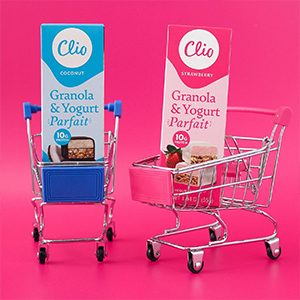
[00:18:15] Ray Latif: I got to trademark that right now. Stop the show. I'm getting into the business for real dad. So yeah, watch out. Only pop and poppy Ray's coming after you. Oh boy. Ah, Before I go completely crazy, I want to mention Clio. Clio, the maker of yogurt bars. So good. Yes. These are these fantastic yogurt bars that you can eat for breakfast, dessert, whatever, What The you. At any given moment, Ray, there are 50 of those in my freezer. There you go. My family can't get enough of Clio bars. C-L-I-O is how you spell the brand name. They came out with these new granola and yogurt parfait bars. Each of them have 10 grams of protein. They come in two flavors, coconut and strawberry. I wasn't a big consumer just because of Clio prior to me getting these samples. Not because I didn't like the brand, just because I'd never really thought about eating a yogurt bar, but these are phenomenal. Literally, you could eat them once in the morning for breakfast and then once in the evening for dessert. Yeah.
[00:19:18] SPEAKER_??: He's guilty.
[00:19:20] Ray Latif: I'm guilty. He's like, yes, I'm definitely guilty of doing just that. And also, I'm guilty of putting them in the freezer for a freezer snack because their recommended use case is refrigerated, which also tasty, but I like it better as an ice cream alternative. Yeah, that's a good point, actually. It's funny you say that, because I put a few bars in the fridge for my wife to try, and she's been eating them in the evening. I'm like, these aren't for dessert. She's like, no, this is like a cheesecake bar, and these are fantastic. Of course I'm going to have this after dinner. She's absolutely right. Yeah, but it's just that's how you that's how you tackle a market. It's like they were smart to initially say this is the use case and focus on said use case and then let consumers define other use cases before they said, hey, this thing's for everybody. You know, like there's a lot of brands out there that'll go. Oh, you know, we're the, we're whatever we are, we're the teleportation soda for everybody. And no, you're not, you're, you can't, like, you just don't have enough marketing dollars to define a new use case and then be that for everybody. Initially, you got to figure out who to market to. That's going to get you that core audience and build that brand up for you. Well, I think in this case with these new granola and yogurt parfait bars, you know, between Greek yogurt and granola, for me, you think about the eating opportunity or the consumption opportunity as in the morning. That's typically when people eat granola and yogurt, but I'm sure I'll be snacking on these in the evening as well. It works. Also, just a quick shout out to Essentia. Now, I mentioned I got my second shot earlier this week, and I was really worried about the side effects. I am not a doctor. I'm not promoting. I'm just saying... You're not making claims? No, I'm not making any claims. I'm just saying thank you to Essentia because I had some on hand, and I was crushing these. And, you know, I think the most I got was brain fog and a little bit of tiredness from the second shot. So, a regular Thursday? for you. Exactly. Right. But once again, I'm not making any claims. I'm just happy I had this on hand. Also, Essentia in the news this week because it achieved carbon neutral packaging status under the carbon neutral protocol, which certifies packaging for carbon neutral programs or brands and companies that are attempting to incorporate carbon neutral programs into their business models. So great job, Essentia. I am a second use case for Cure Hydration thing to Ray, but for me, it wasn't essential because I didn't have a central on hand. I, I drank a lot of good sport and also Cure Hydration. And I think I probably did four X my normal hydration, but I, I did my hydration played soccer. then got shot, then did Cure Hydration, then got on a plane. And I, my second, I felt fine. I mean, I wasn't like, I was a little bit like, like you, regular Thursday, you know, brain fog and a little bit of fatigue, but I did not feel terrible. I was really worried about getting a shot and then getting on a plane.
[00:22:31] Chris Fanucchi: Good to know. I'm taking notes. I have my second shot in a week, so I'll start hydrating now.
[00:22:36] Ray Latif: Jackie's super hydrate. Yeah, you can always do that. I mean, but like Cure Hydration beforehand might be, obviously it can't hurt you. Not overkill. Have some salt too. Cause you don't want to over hydrate without having salt, but yeah, maybe, maybe some extra hydration helps. Got it. Alright, it's time to get to our featured interview for this episode. That's with Chris Fanucchi and Samantha Citro Alexander, the co-founders of Bitewell, an ambitious platform company that aims to make healthy purchasing decisions easier for consumers via curated options for grocery and restaurant delivery. Chris, a serial entrepreneur who is also the co-founder of both plant-based protein beverage brand Koya and caffeinated sparkling water brand Limitless, launched Bitewell in January of 2020 and was joined by Samantha, who is a former marketing executive for Estee Lauder, in December. With Bitewell, they're attempting to merge shopping and food trends, along with dietetics and data, to create a one-stop solution for consumers who want to improve The Dairy eating habits. As part of our conversation, Fanucchi and Samantha discussed the origins of Bitewell, how the concept has evolved since its inception, and why at its core, it's a data company. They also spoke about Bitewell's multi-pronged business model, why competition isn't easily defined, and how the company works with emerging food New Beverage brands. Hey folks, it's Ray with Taste Radio. Right now I'm on a call with Chris Fanucchi and Samantha Citro Alexander, the co-founders of Bitewell. Chris, Samantha, how are you? awesome and great thanks so much for being with me today your team sent over one of your bite well boxes it was uh of the gluten-free variety these things are amazing they come in a but i don't know how many What The What The dimensions of these boxes are chris samantha what's the size of these boxes yeah so they're roughly eight by ten by four inches so
[00:24:37] Samantha Citro: Not very big at all, but we try to pack as much as we can in there.
[00:24:40] Ray Latif: And that's What The is that 8 by 10 by four listeners. That's not very big, but the number of products that you guys pack in there is unbelievable and nothing is broken. Nothing is crushed. How do you do it? How long did it take you to figure out how many products you could fit in there?
[00:24:54] Samantha Citro: Yeah, it's years of experience. Packing sample boxes for retailers certainly helps over the last 10 years. I've done. It's been a lot of time doing that. But for us, it was really helping our brands get a chance to put their best foot forward and get as much awareness as possible. Because as you know, it's been really hard for brands to get that awareness, especially over the last 12 months with COVID. So yeah, the fact that we can get so many in there, we are super excited about and did some rigorous testing to make sure that when things do arrive, they arrive hopefully in one piece for our consumers.
[00:25:27] Ray Latif: And just for context, we're talking about chicken chips, that is chips that are made out of chicken pieces, along with a 16 ounce bottle of Super Coffee and a 12 ounce can of healthy spooch pop. And nothing was broken, nothing was dented, nothing. It was all in perfect condition. So I was pretty impressed. And that's just one of the small reasons I wanted to chat with you guys. Bitewell, certainly a very interesting concept and What The potential to be a pretty amazing company. You know, when I first encountered Bitewell, I heard it described in a variety of ways. When we chatted last, you guys described it in a couple of different ways. dietitian curated small businesses delivered to your door, making healthy eating simple accessible for everyone. The first nutrition focused restaurant and grocery delivery platform, a personalized food strategy for consumers. And that's just four of the ways it's been described. But the concept has evolved quite a bit since its inception. So how would you now on Taste Radio, describe it in 10 words or less?
[00:26:36] Samantha Citro: Yeah, I think you hit it perfectly on that, right? What The really are is the first nutrition and diet forward restaurant and food delivery platform. So we are working on a mission to support every food decision you make in a day and help you make a little bit healthier decisions along that journey.
[00:26:54] Ray Latif: Chris, you had a personal interest in this concept. Can you talk about the origins of the company?
[00:27:00] Samantha Citro: Yeah, absolutely. I've spent the better. I mean most of my career in the emerging health and wellness space developing two different beverage companies and While doing that I was largely the guy traveling from city to city state to state selling drinks to retailers and doing the ride-alongs with distributors trying to get our brand out there in the market and I was going through the traveling for the last seven eight plus years and I found it really hard to find places around me in the cities that I was traveling to that would support my fitness goals. I, of course, wanted to indulge in the local food and really get to experience the culture, but found myself constantly defaulting to Chipotle or my favorite pizza company that was a national chain because the information on what is healthy and what is best for me is so fragmented and sporadic all throughout the Internet. And of course, I thought to myself, there had to be a better way. And that's really what kicked me off on this journey about two years ago. And over the last two years, it's continued to develop into truly a data company. We are here to collect the data from all the major food delivery sources, provide a personalized experience to our consumers in one place on one application, again, to support all those food decisions that you make in a day.
[00:28:18] Ray Latif: Isn't Chipotle healthy? I see a lot of advertisers telling me it is. No?
[00:28:23] Samantha Citro: You know, it depends on how you how you make your meals. Anything could be healthy as long as you are taking into consideration what is best suited for your body. And when you're really listening to your body, your body knows best. And Chipotle can certainly support those goals if you don't add two different servings of cheese. Very true.
[00:28:46] Chris Fanucchi: Unless you're calcium deficient, in which case go for it. It's a very interesting use case to look at someone like Chipotle or another large restaurant chain because what's healthy for one person isn't necessarily healthy for another person. And what matters to one person doesn't necessarily matter for someone else. And our filtering capability and our personalized recommendation engine really allows us to serve up to you what matters for you when you're thinking about food.
[00:29:19] Ray Latif: And we'll get into the personalized nutrition engine and how you customize eating for your consumers. But again, you know, this is a relatively complex business and it seems like there's a lot of moving parts. And so I got to ask Chris, you know, why didn't you do something easier? Why don't you try to choose something a little bit easier? Like, I don't know, maybe start New Beverage company.
[00:29:43] Samantha Citro: It's a great question. And you're not the first to ask me. I've always had a personal passion and love for technology and its ability to enable us to do amazing things bigger, faster, and stronger. And the reason I didn't dig straight into a New Beverage company after my last exit, Limitless, is really, really surrounds something my old partner told me. Two things, really. The first one being this notion What The best idea in the world is the one that you're obsessed with. you'll come to find pretty quickly that there's no shortage of obsession from me on What The're working on and from Sam, frankly. And the other thing What The really instilled in me as we were building our business together was we have to go out into the world and solve a real problem. And it's really hard today in a world where emerging brands are everywhere to figure out what is that next big problem that you need to go out and solve. And we feel that democratizing healthy eating is truly a mountain worth climbing. And I think my experience with Coya really early and growing that business really speaks to the fact that solving a real problem matters. We started that business, vegan protein drinks didn't exist, yet veganism and vegetarianism was on the rise. And we saw this as a real opportunity to go into the market, put a protein drink together and solve a real problem. And the products caught fire very quickly because the market told us, yeah, you're right, this is a problem. And we're hoping to buy a lot of your products to solve it. So all that to say, I could go out and start New Beverage company because I have tons of experience in doing so. But I don't know that I'm going to solve a real problem like what Sam and I are working on today.
[00:31:28] Ray Latif: Well said. Samantha, you joined Bitewell as a co-founder in December. How and why did you sign on?
[00:31:35] Chris Fanucchi: So I have spent the majority of my career in the beauty and wellness space, most recently What The Estee Lauder companies, where I led global brand strategy and ops for Clinique and then worked on North America marketing for Smashbox. And so I'm really a marketer, an operator at my core, but I'm also a major foodie, food lover. I grew up in New Jersey, Italian family, food is everything. But my family has had tons of food allergies. I personally, I'm lactose intolerant and I developed a shellfish allergy later in life in my 20s. And I had a really interesting experience when I first developed the allergy. I went to a restaurant in New York, I ordered some churros, and I had a terrible allergic reaction. And I came to realize What The had fried the churros in the same oil What The fried their shellfish dishes, which led me down this whole rabbit hole around ingredient transparency and how restaurants prepare meals. really sparked my passion. And so when I was connected with Chris through a mutual friend and he explained to me the vision for Bitewell and What The was trying to build, I knew that this is what I wanted to spend the next however many years it takes working on.
[00:32:50] Ray Latif: As you filled out your team, how did you map out who you needed for the business and what roles to fill?
[00:32:59] Chris Fanucchi: It's a good question and it's something that we are still actively evolving today. I think for Chris and I, the most important thing is getting the product right. And I know that we'll dive into this in a little bit, but there are several aspects of our business. There is an app product that we are currently developing. There is an online marketplace. there is a subscription box that you mentioned What The beginning of the call, and it all comes together to create this integrated food platform. And so there are lots of different skill sets needed, right? We need product skill set, we need tech skill set, we need data skill set, we need marketers, we need salespeople, we kind of need everyone to run this giant machine that we're building. And so We really think about hiring from a values-first perspective, knowing that we're going to need all skill sets at some point. We're really looking for people, first and foremost, who share our passion for the mission, who share our values around the importance of food transparency and putting the decision-making ability back into the consumer's hands, and are ready to really dig in with us and build something really tough from scratch. Those are the things we look for first, and then we think about skill set and abilities after that.
[00:34:22] Ray Latif: When we chatted last, you talked about not just your team as in your staff, but your service and supplier partners and how important they are to the business now and going forward. How do you lock in those partnerships? How do you nail down those relationships when the business is still in its infancy?
[00:34:43] Samantha Citro: So we see partnerships in two major aspects. One, major retail, major food delivery partners. And then two, of course, our brand suppliers, our vendors that we're selling on a daily basis on bitewell.com. Now, when I started working on this product about two years ago, it was all about creating an integrated food solution that democratizes healthy eating. And with the emergence of COVID back in March and my ties to the emerging brand space, I thought that was a really great opportunity for us to get the Bitewell brand in the market, even though we're still working on our app What The time. to try and support the emerging brands who were What The time really struggling to gain that awareness and trial. Obviously, you're not doing demos in grocery stores now, so what can you possibly do to get awareness for your new brand? And it's really hard to buy digital ads right now because everyone and their mother is going online and buying Facebook ads and Instagram ads. So we thought it would be a really good opportunity to build a support system of brands around our e-commerce platform and leverage our cash to go market and hopefully get them some more awareness. So we really dove in headfirst there. And now we've created a streamlined process that allows emerging brands to sign up for BuyWell at any point in their brand's lifecycle. They can go right on BuyWell.com, fill out a form, and we can get them rolling. But on the larger partnership side of things, What The're working on for our integrated food solution is partnering with the Walmarts, Kroger's, Kahee's, Uber Eats, Grubhub's, Postmates, all of the major players right now that are taking food from one point to another, from point A to point B. And we're going to them and saying, hey, we're here to help personalize your consumers' eating experience. We're here to help people understand what is best suited for them. so What The can make an educated choice on buying the products that are going to help them live their healthiest life. And that sales pitch is really resonating with retailers who don't have the time to focus on the data and personalize it the way we can and we are doing right now.
[00:36:44] What The: Do you want more repeat buyers on Amazon? Well, this free resource in collaboration with Straight Up Growth will help your brand turn first-time buyers into long-term subscribers. Download Winning the Repeat Purchase Game on Amazon now at Taste Radio slash SUG. That's Taste Radio slash S-U-G to start building retention-driven growth for your brand on Amazon. Scaling New Beverage brand into major retail comes down to operational readiness. From packaging lead times to co-manufacturing strategy, the details can make or break a launch. In a new e-book in collaboration with Octopi and Asahi Beer USA, industry leaders share What The've learned in helping brands scale. Download it now at Taste Radio slash octopi.
[00:37:34] Ray Latif: Again, the concept has evolved quite a bit since the initial idea And given this evolution, Chris, did you have to rethink the business plan and what your goals for the company are? And don't mean to limit it to Chris, but I'm assuming that you were the one who wrote out the initial business plan.
[00:37:51] Samantha Citro: Yeah, I think my last experience working in building Limitless really taught me the importance of pivoting, especially for an emerging brand. And it really illustrates, again, the fact that you need to go out and solve a real problem. And if you start to realize that Your product may not be turning or you're not getting the customers on board. Well, you better really think hard about why you better figure that answer out and then make the necessary adjustments to pivot or you're going to be spinning your tires, so to speak, so. When we got things rolling about two years ago, it was really all about tying nutritional and ingredient visibility to restaurant food. Because right now in the world, unless you're talking about a major chain, your local restaurants don't tell you what nutrition their food has. They don't tell you what ingredients they use. You see this much more in cities like LA. But even here in Chicago, where I'm What The restaurant supply chain visibility is few and far between. So that What The first problem we were going out and solving. And then, of course, COVID hit. So we had to rethink very quickly how we were planning on getting into market so that we didn't miss the wave of all of the consumers that were going online to buy their groceries back in March, April, May. So we had to make a last minute adjustment and had a product in the market in under two months, which is our simple e-commerce platform. But that allowed us to get the consumers around the table. That also allowed us to secure our first investment. before moving into refining our application that we plan to launch this year. So you have to be willing to be nimble, you have to be willing to adjust, and you have to be willing to attest to new things to make sure you're keeping your consumers as happy as possible, because if you're not, your business isn't going to survive.
[00:39:33] Ray Latif: So the last time we spoke, Chris, you had said something that really stuck with me, which was, you said, at our core, we are a data company. Was that always something you knew or did it take you some time to figure it out?
[00:39:48] Samantha Citro: It definitely wasn't something that I always knew. Frankly, it wasn't until this year that I realized how important data was to our business. And then I later came to realize that data is really the only thing that we do as a business. I certainly do not want to be a food delivery company. I don't think that we're going to win in the battle of getting groceries or meals from point A to point B. There's already companies and experts out there that do that way better than we ever can But what I know that we can be and what few others in fact, we may be the only one doing it now Is take the data from every food delivery source Put it into one place Aggregate that data then personalize that data and send it back to our consumers in a digestible experience What The're already used to interacting with. But at our core, everything we do from the bottom up and top down is either enriched by or driven by our data. Even from our algorithms that filter our products, we had to have dieticians go through thousands of ingredients, thousands of ingredient data and assign more data to those ingredients so that we would be able to filter, recommend, and create the best product experience possible for our users. So data is really everything that we do.
[00:41:06] Ray Latif: And when you say data is everything that you do, is there a balance between how important data is to your consumers and then to say your investors, to say your service partners? I mean, I guess, how do you aggregate data in a way that is going to give you the best results and what you need for different parts of your business?
[00:41:32] Samantha Citro: In the world of healthy food, there is no shortage of data. There is no shortage of recommendation platforms, healthy influencers, great recipe platforms. There's no shortage of places telling you what's good to eat, what's healthy. But there's no thought leadership there. So our ability to aggregate all of that data around what is healthy, what I should be eating, and consolidate it into a very simple, intuitive experience that, again, supports every food decision you make in a day, You're taking something really complex that exists in the market, this fragmented data set and bringing it all together in a way that a consumer can just take a glance at, understand exactly what's going on and make a decision at a glance. And I think that notion in and of itself is so powerful. To be able to make a decision on what you want to eat faster than pushing a button to get that food delivered is a really, really powerful tool. And the only way to accomplish that is through our use of data.
[00:42:31] Chris Fanucchi: You see this in movies, right? So Netflix does a very similar thing to What The're doing with food, but they do it for movies. They aggregate all of the different movies and they show you What The think you'll love. It's the same thing with Spotify, right? They aggregate across all of the different music production houses, studios, artists. They pull it all together and they recommend music they think that you should listen to. But it doesn't really exist in food. And it certainly isn't connected to action. And so that's What The do, right? We aggregate across all of the different places where you could get food delivered or find food. We put our lens over top of it through our dieticians. And we say, this is the food that we think is right for you. And then we allow you to take action directly in the app. And that's how we're using data to unlock something new for the consumer that doesn't exist in the food space today.
[00:43:24] Ray Latif: for the end user, how do you talk about Bitewell? I mean, there are words that I've seen like algorithms and dieticians and optimized. And so that seems to be speaking to a specific consumer demographic, but how do you do it in a way that is a little bit more simplified and in a way that's going to eventually broaden your base?
[00:43:46] Chris Fanucchi: Right, this is the question that keeps me up at night every night. No, it's a great question because going back to what you talked about What The beginning of the call, there are 500 different ways that someone could explain what Bitewell is because this problem that Bitewell is solving is so large and expansive. And what's exciting to me about working on Bitewell is that we can envision a road map of what Bitewell looks like 15, 20 years from now, if we project into the future and work with futurologists to figure out how connected health will all come together and how we can play a part in that. But translating that to something very simple that speaks to who we are as a business today has been a challenge. And so What The've landed on is, okay, we have a vision and we have a mission. Our vision is to democratize healthy eating. Our mission is to make healthy eating simple and actionable for everyone. And the way that we do that is by being the first nutrition focused restaurant and grocery delivery platform. That's where we're starting today in terms of consumer communication. And then when you peel back the layers of that onion, You can learn more you can dive into whatever it is that you're interested in if you're interested in the nutrition focus, you can peel back the onion and learn about our dietetic council and all the people who we have around the table who are helping to build the bite well nutrition perspective, you can unpeel. the way that we have built our recommendation engine and our algorithms based on a specific dietetic method. And that's how we give you your macro recommendation breakdown. You can unpeel the onion and you can see all of the different diets and ingredients and even values that we allow you to sort by if you're interested in the nutrition focused area. If you're interested in the restaurant and grocery delivery and the product arena, you can unpeel the onion there and be like, OK, what are all of the restaurants What The can tap into? What are their grocery partners? I want to learn about all of the different protein bars that exist in the market. Where should I go? I'm going to go to Bitewell. And I know What The will show them to me and allow me to find the right protein bar for me. And you can do that through our filtering and sorting tools. So that's how we're thinking about communication today. And then as we build our product universe and expand that integrated platform, that communication strategy will grow and evolve.
[00:46:26] Ray Latif: Part of the way this works is that consumers, you're relying on consumers to give you information about themselves. You need to know more about them. for you to be able to give the best information and advice. And I think there's a quote on your website, grounded in the science of nutrition and dietetics, Bitewell knows what you need to eat to achieve your goals. Again, that requires sharing a bit of info. Are you finding that consumers today are more or less inclined to give out those details?
[00:46:58] Chris Fanucchi: So to date, we haven't really seen any resistance. And I think that's because consumers are primed to provide information if there's value provided back. So if you're asking me for my email and my phone number and my age and my gender so that you can send me spam emails about something I'm not interested in, I'm not going to give it to you. But if you're asking me how many glasses of water I drink a day, how many hours of sleep I get a night, because you're going to provide value back to me that makes my life easier, then I'm willing to give you that information. That's What The've encountered thus far. And data privacy and protection is also paramount to us and very important in our business model going forward. And so that will, as we grow and scale, also enter our communication strategy, the way that we protect people's data and make sure that we're using it in a way that's effective.
[00:47:50] Ray Latif: Let's talk about your work with packaged food New Beverage brands. As I mentioned What The top of our conversation, the gluten-free Bitewell subscription box that I received had at least a dozen brands in there, maybe a couple more. What is your pitch to them? And is product Discovery Boxes awareness the primary benefit?
[00:48:11] Samantha Citro: Yeah, definitely. Again, going back to March when COVID hit, I have tons of friends in this space, right? The constant conversation was, what are you doing now to get your brand out there? How are you getting awareness? How are you going to get the retailer to keep you in the shelves, even though their foot traffic is completely different and people aren't discovering new things? That What The real purpose of the beginning of the emerging brands market, was to give those brands a platform to make some noise and get their brand out there, establish a great selling story What The can take to the major retailers driving all the volume. That's today the value that we want to continue to bring to the brands. And as we add new levers and new bells and new whistles to our business, as we start to roll out our restaurant delivery platform and grocery delivery platform, we're going to find new, creative, compelling ways to raise the awareness of those brands by creating add-on opportunities to meals you'd already be buying during the week. or a little surprising delight in your grocery bag for a new brand that you may have never heard of or ordered otherwise, but now you get to discover because it's a gift in your bag and it's a, you know, it's a fun little surprise. So we are constantly thinking of new ways to get our brands more awareness, more trial, while also solving our real consumer problem again with just keeping healthy eating easy.
[00:49:29] Ray Latif: Let's stick with your direct-to-consumer business. I mean, we've seen more than a few online health-focused marketplaces pop up in recent years. Clearly, Bitewell is a little different, if not a lot different. That being said, who do you see as your primary competitors in this space?
[00:49:46] Chris Fanucchi: Taking a step back and just thinking about the three aspects of Bitewell's business, we have shop, which is the Bitewell Pantry emerging brands marketplace that we've been talking about, the core D2C piece of our business, where you can shop emerging brands in bulk. Then we have Subscribe, which is our Bitewell box program. For the consumer, this is like a subscription box for food. It's like Birchbox or Ipsy or any of the others, but for food. And this becomes another discovery opportunity for emerging brands. And then we have Subscribe as our third pillar, which is the app and kind of the core of What The've been talking about today. It is interesting when we think about the Bitewell business as a whole when we do our competitive mapping because we have many tangential competitors. But most of our competitors we actually think about as future partners because we don't touch for the most part the delivery part of the business. Even our emerging brands marketplace has been a drop ship opportunity. And so when we look at Thrive, for example, we could think of them as a competitor, but we could also think of them as a partner as we grow and evolve.
[00:51:00] Samantha Citro: These major food delivery players aren't necessarily who we believe is going to be our major competitors. We're creating a completely new business that uses those partners to enable us to fulfill the goods and meals for our consumers. So when you look at a grubhub or you look at an Uber Eats, you look at a walmart.com and you can think to yourself, oh, this could this business could easily do what Bitewell's doing. Well, because we're so data enriched and because we've been backed and built by dietitians, it's really, really tedious and cumbersome to do. So we actually help our competitors in most instances by going to them and saying, hey, not only do we want to work with you to deliver our food, but we want to help you personalize your consumers eating experience. How would you like Uber Eats to be able to have your users sort and filter for over 150 diets and lifestyle choices? And they look at us and they're like, oh, that would be awesome. So really, this is a win-win-win scenario. It's a win for us because we get to add more food, more meals, more products to our marketplace. It's a win for them because it's adding new consumers to their operation. Not only that, adding a new lens to be able to put over their products to help personalize their eating experience for their users. And then finally, we get to win for our consumers because now all of the options What The love are all in one place. And because food delivery platforms have been built on delivery efficiencies versus consumer efficiencies, that gives us a really great opportunity to focus only on the consumer, only on what is important to the consumer when they're making their food choices and optimizing that experience for them. So again, ordering your healthy food is as easy as ordering your favorite pizza.
[00:52:48] Ray Latif: Well, that would be really nice because it's not that easy right now, no. That's right. Chris, you touched on something earlier and I recall something you said last time we spoke, which was that your tangential competitors or the folks that could potentially get into this business is What The're looking for us as in Bitewell to screw it up enough before they can come in and do it themselves. But why screw it up for them? I mean, why make it easy for them?
[00:53:19] Samantha Citro: Oh, you touched on something interesting. It's not What The couldn't do it. It's that it's very, very complicated. to be able to go through 1.2 million meals and assign over 150 diet and lifestyle choices to those meals, not only meals, we're talking about ingredients, we're talking about grocery items. So in all actuality, we're talking about millions of products that we have to assign this diet and lifestyle information to and nutrition information too. And to do that in a way that's trustworthy is the only thing that matters to us. And to be able to do it in a trustworthy manner is extremely expensive I mean we have dieticians that are going through laundry lists of data assigning manually all of this information and the reason we're doing it like that is because It is so important to us to be able to call something gluten-free and have it actually be gluten-free Or to be able to call something diabetic friendly and for it to actually not have an impact on your blood sugar levels And the liability that these retailers or food delivery platforms would have to take on to be able to accomplish What The're working on is a huge risk. So they're not necessarily looking for us to screw it up. They're probably looking to us to do it really, really well so they could figure out how we did it so well and maybe learn a thing or two from it. But the reality is we're doing it from the ground up the right way. That way, we can instill the trust in our consumers and give them the confidence in their food decisions, knowing that we could be that thought leader for healthy food. And that's really the ultimate goal that we're putting together. And we think it'd be really challenging for a retailer like a Walmart, perhaps, or a Grubhub, perhaps, to be able to allocate the same resources to this task, especially because they're focusing on making sure that food gets from A to B as efficiently as possible. And that's the core of their business.
[00:55:16] Ray Latif: So 2020 was a year in which you sort of found yourself. Is 2021 the year that you show yourself to the world? Is that kind of what I'm seeing in terms of what's next for Bitewell?
[00:55:30] Samantha Citro: Yeah, you've got the Bitewell market in the world today. That's the teaser, right? We're in the midst of rolling out our app beta. And we're testing it with our internal folks, our friends and family. And now we're developing a pretty big signup list of people who want to get on board and experience the product themselves. So this year absolutely will kind of be our coming of age year where we'll put our products in the market that support not only pantry, but restaurant and grocery delivery as well. And we're going to be swinging for the fences, man. Going for a grand slam.
[00:56:03] Ray Latif: Fantastic. Well, I'm really looking forward to seeing how this all unfolds.
[00:56:08] Chris Fanucchi: And Ray, we would love to open up our app beta sign up list to all of your listeners. If anyone wants to sign up and be a part of our process for growth and learning and try out the app before anyone else, they can head to bytewell.com and you'll see a sign up right What The top of the page.
[00:56:25] Ray Latif: Outstanding. Well, thank you so much for extending that offer and thank you so much again for taking the time to speak with me today.
[00:56:31] Chris Fanucchi: Absolutely. Thank you. Thanks for it.
[00:56:33] Ray Latif: All right. That brings us to the end of this episode of Taste Radio. Thank you so much for listening, and thanks to our guests, Chris Fanucchi and Samantha Citro Alexander. Please subscribe to Taste Radio on the Apple Podcasts app, Spotify, Stitcher, or Google Podcasts. As always, for questions, comments, ideas for future podcasts, please send us an email to askatasteradio.com. On behalf of the entire Taste Radio team, thank you for listening, and we'll talk to you next time.