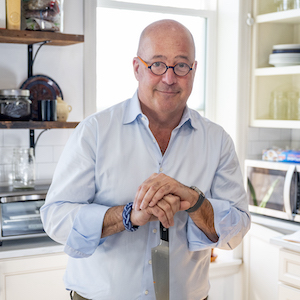
[00:00:10] Ray Latif: Hey, folks, I'm Ray Latif and you're tuning into the number one podcast for the food and beverage industry, Taste Radio. In this episode, we feature an interview with award winning television host, chef and writer, Andrew Zimmern. Just a reminder, if you like what you hear on Taste Radio, please share the podcast with friends and colleagues. And of course, we would love it if you could review us on the Apple Podcasts app or your listening platform of choice. Certainly, shock value played a role in the popularity of Andrew Zimmern's Bizarre Foods television series. Andrew's consumption of salted tuna sperm, dung beetle, and cow urine, among hundreds of other peculiar delicacies, helped draw millions of viewers across 22 seasons of the show. But at its core, Bizarre Foods was an exploration in how people of different cultures gather, eat, and drink. It's a theme that extends to his latest series, Family Dinner, in which Andrew breaks bread with families across the U.S. in an effort to better understand the cultural, regional, and historical facets of what and how Americans eat. In many ways, Family Dinner is the culmination of Andrew's culinary journey as a chef, food writer, and media personality. His travels and exposure to global cultures and cuisines have provided him with compelling insight into the underpinnings of modern society, one that he shares with others at dining tables across America, and in an interview for this episode. As part of an expansive conversation, Andrew spoke about takeaways from his recent travels and meals at Americans Homes, how COVID has changed at-home dining and traditions, and his work as a mentor to early-stage entrepreneurs in his home state of Minnesota. He also explained why he believes that great brands don't necessarily need to be the best brands, addressed criticism for a promoted Instagram post in which he featured a legacy meat brand, why he condemns organic labeling, and why he's bullish on the benefits of some genetically modified ingredients. Hey, folks, it's Ray with Taste Radio. Right now, I'm honored to be sitting down with the one and only Andrew Zimmern. Andrew, how are you? I'm good. How are you, my friend? I'm doing quite well. Thank you for asking. Folks who are listening and not watching the video, they will not be seeing your beautiful beard, which I asked you about before we got started. Why are you growing a beard now?
[00:02:31] Andrew Zimmern: Well, I had grown one before. I really liked it. There's something sort of Hemingway-esque about it. Hemingway-esque, rakish rabbinical is another look that I'm cultivating. Aging hip-hop impresario is another one, you know, with the balding and the beard. I look like a much older Rick Ross. Rick Rubin, I think you mean. Yes, thank you. and don't look like Rick Ross or Rick Ross. I mean, you know, it's, I mean, we, we have certain differences, but I have the, the head shape and the beard is very similar, you know, and, and I have a couple of other obligations in which I need to appear bearded, but mostly because I like it. It's winter in Minnesota, starting to be winter in Minnesota. And it's, it's good to have a nice, big, fluffy white beard.
[00:03:17] Ray Latif: Do you ever dress up as Santa Claus?
[00:03:19] Andrew Zimmern: Never. Never. Nice Jewish kid from New York. But I do, I do like to think of myself as sort of like an aging Sean Connery. Okay, I can see that for sure, yeah.
[00:03:30] Ray Latif: Yeah, you're a little Bond-ish, a little post-Bond, Sean Connery. In that Catherine Zeta-Jones jewelry heist movie, or when he did The Rock. Yes, yes. I forget the name of the Catherine Zeta-Jones movie. The Rock, he was, you know, post-Bond, you know, action star.
[00:03:48] Andrew Zimmern: That was her first film, when she started dating Michael Douglas right after that. He found her appealing when he saw that movie.
[00:03:58] Ray Latif: Minnesota, you know, we've had you on Taste Radio before, right, three years ago. You sat down with my colleague, Carol Ortenburg. You gave a keynote speech at the University of Minnesota as part of their MN Cup competition. And, you know, I asked you earlier about living in that state. What is it about Minnesota that has drawn you there?
[00:04:20] Andrew Zimmern: I thrive here. I was challenged when I moved here and had told someone that I might, you know, I was choosing to leave. They said, why? And, you know, they said, you know, you're not. I came here to get. Well, I didn't. I should backtrack a second. I had my umpteenth intervention. in January of 1992 and got a one-way plane ticket and a one-way car ride to Hazelden, now Hazelden Betty Ford, which is located here in Minnesota, got sober, stayed sober, and move into my 31st year of sobriety, I guess this January, coming January 28th. And the idea was put to me, you know, are you going to move back to New York City? And I was like, well, sure. This is very early on. And they said, well, when you have a year that's worse than the year beforehand, go ahead and do it. And I've yet to have one that's been worse over the last 30 years. And over that time, you know, I've built a family and friends and community here, and it's a wonderful place to live. I adore Minnesota. Minnesota loved me up and loved me before I learned to love myself. So, yes, I very proudly choose to live here.
[00:05:30] Ray Latif: I have never been, but I hear so many great things about the state. I hope to visit some point soon. It's incredible.
[00:05:36] Andrew Zimmern: It truly is incredible. And the cold weather in the wintertime is sincerely overblown. We have a week or two every year where the highs are below zero because we had an Arctic clipper that comes in and then it blows away and it goes back up into the 20s. So our winters are, with the exception of one or two weeks a year, are very much like New England winters. And I grew up in New York. So, you know, it's just not that bad. And as someone said to me a long time ago, you will be very miserable here in the wintertime if you don't develop any outdoor winter hobbies. But I already had a bunch. I ski. I snowboard. I now cross-country ski. I now ice fish. You know, I enjoy winters. You know, I like, I developed another hobby, building a big fire in the fireplace. And since I always like cooking, it's, you know, winter flashes by, it's everything is lovely through January 1st. And then January and February is an eight week period where you sort of, you know, it gets a little rugged and then March, it starts to warm up and the next thing you know, it's spring.
[00:06:39] Ray Latif: Well, for someone who lives in Boston, I would never criticize you for living in Minnesota because of some cold weather. We have our very, very cold days here in the wintertime. Yes, you do. We also have a pretty incredible carbonated water company called Spindrift that's based here in the Boston area. In fact, they sit I want to say about a half a block away from us here at BevNET headquarters down the street. And what a remarkable brand. What a remarkable company. One of your favorite brands, I know just from judging the praise that you've heaped on them on Instagram.
[00:07:13] Andrew Zimmern: I have a personal relationship with those folks. I first encountered the brand. Yeah, well I should say, you know you're Boston based I'm a entrepreneur in residence emeritus at the Lewis Institute at Babson College, and I work with students there in different capacities to help them develop food brands and food companies and I've been doing that for Yikes, probably eight or nine years now. And the first year out there, I encountered Spindrift, a very young brand. I think they were part of one of our quickfire incubators. I met the people who were running the company. I met one of the chief investors in the company. And as somebody who is al I don't drink alcohol, I' an interesting non alcoh like ones that are dry. that are sweet and spin d low glycemic, you know, I think three, their pine at like eight or 9, 10% f their sugar content is ex most of their products ar I just adore it and I dri it's healthy and it's goo It's not a diet soda loaded with artificial sweeteners. It's just naturally sweetened with a little bit of fruit juice. And it's spectacular. So I love them. And there are lots of brands. I've gotten into the habit over the last two years of saying, you know, just stuff I love, not sponsored. Just so people know that these are things that I have no affiliation with. I just happen to love them. I was just talking about a line of Asian condiments under the brand Fly By Jing. Outstanding brand. A young entrepreneur named Jing Gao, who's an old friend of mine. She's been in several episodes of Bizarre Foods. I've traveled in China with her. in New York. I just had dinner with her in Los Angeles pre-COVID. I love her products. I have absolutely no relationship financially with that company. It's just, you know, her Xiong dumpling sauce with the fermented mushrooms in there, I think is the best over-the-counter dipping sauce for dumplings I've encountered. Her other products are absolutely spectacular. So, you know, I put that on my Instagram. It's just stuff that I encounter that I love. And luckily, I get to encounter a lot of cool things.
[00:09:35] Ray Latif: I think the other brand that I see the most posts for in terms of brands you love is Jenny's, Jenny's Ice Cream.
[00:09:43] Andrew Zimmern: Oh, yeah. Jenny Britton Bauer is, I think, an amazing human being, incredible entrepreneur. You know, to start with one little scoop shop in Columbus, Ohio, I believe, and now have a national network of scoop shops, along with a global presence in supermarkets is incredible. She is a force. At the same time, she has maintained insanely high quality in her product and does quarterly flavor change outs and seasonal change outs. And I've known her for 15 years. She's become a good friend of mine. So, yeah, I have no personal relationship with the company other than I adore the product and I adore her. So she sends me these, you know, I get all these new flavors sort of ahead of time. And I think my fans and followers enjoy seeing what the new flavor is going to be. So I just got the winter. I haven't looked at it yet. Otherwise, I'd tell you what they are. But I just got the new winter special ice creams delivered to the office a couple of days ago, and I haven't been able to look in the freezer yet. I was out out of town. But, you know, it's the first thing I'm doing tonight is transferring those home into the freezer at my house.
[00:10:56] Ray Latif: Did you get to try the Everything Bagel ice cream that they had? I think it was in March or April this year.
[00:11:01] Andrew Zimmern: I did. It was actually quite good, surprisingly so. My favorite that is, I don't think, regularly available is something called Pluto Bleu, B-L-E-U. It's an electric blue ice cream that tastes like a combination of citrus and berry, but I love all those acidic things in her sherberts. Her, I want to say it was banana. It's a banana thing that came in the fall that was in her vape. She uses coconut cream to make a vegan ice cream that I think is just spectacular. I like the pumpkin roll in the fall. I'm praying when I open up the wintertime that there's some sort of candy cane. I love her peppermint, her green pepper, you know, mint chip with the green ice cream. I love that. But I love peppermint ice cream with peppermint stick crunchies in it.
[00:11:53] John Craven: And I'm fingers crossed that's in there. We'll see. Vibrant Ingredients is the natural ingredient partner powering food and beverage innovation, delivering flavor, function, and protection through a science-backed portfolio. Vibrant delivers purpose-driven solutions that help brands create extraordinary experiences. Discover what's possible with Vibrant today. Visit VibrantIngredients.com.
[00:12:44] Ray Latif: It sounds like quality and differentiation of product are pretty high on your list of how you evaluate packaged food and beverages. Is that accurate or is there something else that comes to the top of that list? It's accurate, but I would refine it.
[00:12:59] Andrew Zimmern: I really believe you don't need to be the best. It's better to be the only. And I think in many ways, Just thinking of companies that I really admire, in a sense, even in a crowded genre or segment of the marketplace, in a sense, they're the only. You know, Spindrift is the only one just to use flavoring of natural fruit juice and be very low in glycemic intake and still really good for you and refreshing and dry. I love that. Jenny's has been able to find a way to be a mass market product, right, but still retain that, you know, neighborhood scoop shop ability to make an extra rich flavor or a unique flavor or something that is really only doable if you are managing a very small, small company, even though Jenny manages a very, very large international one. So, I mean, those are the types of things that truly appeal to me. What Jing Gao has done with Fly By Jing, I think also makes her the only, you know, a woman owned and operated business from scratch. She had two or three setbacks with restaurant partnerships she was trying to do both in the States and in back in China, I can't say more about it than that, but she overcame two really big setbacks in her business life and just kept forging ahead and said, you know something, I'm going to move to LA, I'm going to start this food company. And to do it the way she has with premium product and to place herself in a very unique segment of the marketplace, I think has been absolutely brilliant and fantastic. I admire that. I admire her tremendously for that. Her fortitude and her perseverance has been incredible.
[00:14:41] Ray Latif: Yeah, I mean, the mass market opportunity for Flyby Jing is still, I think, to be determined. Cheney's and Spindrift, definitely mass market right now, or at least available mass market retailers, but at a different pricing tier, at a different price tier for then, say, everyday products.
[00:14:55] Andrew Zimmern: That's right. And that, quite frankly, is the problem with most new products to market is getting the price point down to the place where people will just pick it up off the shelves and try it, right? You can't be everywhere sampling people. I can't tell you how many products come to my attention. And because of price point, I think to myself, wow, if they don't cut that in half within year one, they can't survive because there aren't enough premium people to do it. There was a a sauce product coming out of Southern California. I think it's called Cham, C-H-A-A-M. I put them up on my Instagram as well. It's sold in the refrigerator in the vegetable section of supermarkets around the country. And it's a Vietnamese dipping sauce made with fish sauce and garlic and ginger and coriander and all these young lime juice, sugar. And it's fantastic. It's that Vietnamese dipping sauce that everyone loves in restaurants and no one knows how to make at home. The minute I saw that product, I fell in love with it. When I tasted it, I loved it even more. When I saw the price point, I loved it even more. Because the young woman who owns that company, again, a female-owned company out of Southern California, it is priced so that people will look at it on the shelf and go, well, wow, it's in the same price point as these salad dressings and these other condiments that I buy in that category. Is it as cheap as Heinz ketchup? No. but it's also not in that specialty foods high end here. So I really think that's going to do very well because it's one of those, you know, that I don't think I'm getting their tagline right, but essentially poured on as a dressing, dip things into it, and you're bringing Vietnamese flavors into your home. And it really achieves that. And I find that the ability of certain things to do that really, really, really smart.
[00:16:47] Ray Latif: Well, in the meantime, I do want to ask you about another brand that you recently highlighted on your Instagram account, and that's Hillshire Farm. And this was a collaboration or at least a partnership, a sponsored partnership with the company and you. You were highlighting their smoked sausage specifically as a versatile protein staple. You caught some flack for that. In the comments section, there were some people who said some things that might be obvious to our listeners in terms of partnerships like that. Number one, why did you take them on as a sponsored partner? And number two, what do you think of the criticism you got?
[00:17:26] Andrew Zimmern: Well, I think the criticism is anyone's entitled to it. I think it's a little short-sighted. I think it's a little selfish. I think some of it is a little elitist. And I will tell you that I took on the Hillshire Farm smoke sausage activation for the same reason that I took on my relationship, the activation six months earlier with Aldi Supermarket. Because the activation was designed not so much to move sausage links as it was to improve the lives of Americans who are trying in the case of Aldi to waste less food in their refrigerator. Now this is a supermarket that was willing to have me get out there front and center and say buy less. shrink the size of your s refrigerator. Now that se to a supermarket brand. R and I think very smartly the home cooks, the home you get brand affinity a will earn the love and praise of the people that you are trying to encourage to shop in your store. And I was so blown away by their willingness to let me talk about the real issues about hunger and waste and provide real solutions for people that I eagerly took on the position of endorsing their product during the course of that activation. And I think they're a very smart, forward-thinking company. Hillshire Farm, the same thing. During COVID, 20% of the population that was right above the poverty line fell below it. We have more people struggling with hunger in America than ever before. So if we're able to find a reliable protein source that has stability fresh and frozen, and I can show people three or four recipes by which they can use this product and enjoy it, in what I'll call the non You don't need just brown breakfast or put it on a right? It is something th to diversify their offeri I made a comment a long time ago about General Mills that I stand by. They make a product called Hamburger Helper. And I said the idea of Hamburger Helper to put a skillet dinner that costs whatever, $1.75 or $2 a portion or whatever it is, that you can put meat and vegetables because you can add your own vegetables into it and bake it in oven that's fast and convenient and easy at a time where most people in America are struggling to make it work. Right. There's dollar poverty and time poverty. The idea of Hamburger Helper is fantastic. I wish that they would take some of the chemicals and stabilizers and other things out of it. And I know it would cost them another dollar a box to have some of their things be sourced a little smarter. And I encourage General Mills to do that every time that I can. But the idea is right. Not everyone, I mean, look, I put a post about slicing Wagyu brisket and 200,000 people click on it. I love it. I know there are not even that many people in America that are buying Wagyu brisket. I think that there is an aspirational element to that kind of stuff. And everyone's like, ooh, Wagyu and it's fun food and all the rest of that. But it's really, really expensive. And I believe that aligning myself with certain brands who are trying to make good food accessible to more people, it's the right thing to do. I don't look at it as a deal. I look at it as an opportunity to talk to people. And in the case of Hillshire Farm, talk about not only their product and develop some recipes for it, but I got to talk about how to reduce waste in your kitchen by using stuff in your freezer and how to freeze things smartly. And it was that part of the campaign. The recipe development was nice. You know, I put on three recipes that was easy. but being able to make a video that spends two or three minutes in there trying to show people how to freeze and save foods in a more reasonable and responsible way that will allow them to get more bang for their buck and will allow them to eliminate waste in their household was the real reason that I did the deal in the first place. We have a saying here, all of our companies, I have three little companies here in Minnesota, a production company, a marketing group and a hospitality company. And we have one common mission statement for all three. And that is that we believe that any project that we touch needs to leave the world a better place and should ideally center around what we call internally adventure learning, right? So adventure learning in this case was going in and learning how to reorganize your freezer. And I do believe that that relationship with Hillshire Farm leaves the world a better place had I not done it. And so, you know, critics have at it. I got a thick skin. You want more salads? You want more Wagyu beef? Believe me, we got plenty of that on my social media. But I believe it's my responsibility given the platform that I have to do things that allow me at a mass market level to send a message to people all over this country that they too can have a food life. And I think that's more important.
[00:23:04] Ray Latif: I wanted to ask one more question about this and then we'll move on. I think some folks might say, well, you know, the mission is great. And your philosophy is great. The product and the brand is the issue that I have. And someone might say, well, there's better for you smoke sausage out there. There's better for you Hamburger Helper out there. Why aren't you endorsing those brands?
[00:23:26] Andrew Zimmern: I do endorse those brands when they come to me or we're able to make a deal. I also endorse those brands when I find them in the unaffiliated, you know, where I literally, on my Instagram, we were talking about this, I think before we went live, where I say, you know, not sponsored, but just stuff I love, right? Whether it's a great mustard, whether it's a great stir fry thing, whether it's, you know, any of the brands that we had talked about earlier that certainly I have no financial relationship with. You know, look, it's a real balancing act. If you remember during those early days of the development of the idea of the carbon footprint, people were saying, well, we shouldn't eat, you know, tomatoes have no carbon footprint. Oh, wait a minute. In wintertime, they're flown all over the country out of Florida and Southern California and, you know, Texas, Alabama, Mississippi, and wherever in the wintertime people are growing tomatoes. And, you know, then we started to develop the hydroponic movement in here. And they were like, well, those are trucked you know, 8, 10, 12 hours, you know, with diesel fumes going out. And what we really need to do is go back to eating seasonally the way we did 300 years ago. If anyone can show me how to move the culture knob back to 300 years ago, I'm all for it. I make it a point in my own home of trying to eat as seasonally and as healthily and as naturally. I don't use the word organic. I use the word natural. Organic is a paid and bought for label these days. And as naturally as possible. And I would put my food life up against, you know, any average human beings. You know, I don't know how some people do it. Otherwise, they have a lot more willpower than I do. You know, I still buy those cherry tomatoes from the luckily there's a Minnesota company that has a local hothouse tomato that is available in the wintertime here that comes up from a little town about an hour away and delivers to my supermarket. That's the only tomato that I buy in the summertime are those little local hothouse tomatoes. So of course, we're all trying to do our part. And of course, you know, some people are against big food. And some of the complaints about a company like Hillshire is that they're part of the big food system. But I will, I will posit this, and it's the reason that I enjoy working with some of these big food companies that are often derided. General Mills being in my hometown, often derided. You know, General Mills, they're the people who make sugary cereals that are killing our kids. Well, it's a little bit of an exaggeration. It's not killing our kids. And it is a parental decision to buy that cereal. I did not buy sugar cereals for my son when he was young. We just didn't put them in the house. However, People don't know that companies like General Mills and I have no I have no relationship with them. I want to be completely transparent about this. This is just my personal feeling as a consumer. General Mills spends more money than any other company in the world researching and trying to establish marketplaces for drought resistant grain. The reason is, is that General Mills most profitable unit is the big G division. That's the division that has all those cereals. So it's in their best interest to figure that out. But General Mills at a time when everybody is screaming at the top of their lungs, including me, that the most one of the most important existential issues other than voting rights for all Americans is the climate crisis we're in. It is literally our existence depends on solving that. and working to make sure that we don't increase our temperature 1.5 degrees by 2050. That's the death sentence, right? So companies like General Mills that are throwing $500 million plus a year into drought-resistant grain research are the people that are going to save us. And I would encourage people to think about some big companies, not all, some big companies that are doing a lot of work in that area to be the ones that have the distribution, the production capability to help us solve hunger problems in America as well. Now, would I like some of those companies to pay a little more attention to food waste? Would I like them to stop using white sugar? Absolutely. If I could wave my magic wand food-wise, the one thing that I would do other than solving hunger or waste problems, if I had to eliminate an ingredient in the world it probably would be white sugar, right? I just think it's, you know, just the overuse of it, you know, right, it's right up there with corn syrup and stuff, probably try to eliminate both, probably cheat and try to figure out if the genie came out of the bottle said you have one food wish, try to combo plate it. No one believes in wellness more than I do. However, It is very important to look on balance about what you can achieve, and sometimes that comes at a certain cost. As long as the net experience is positive, I think it's better than deriding those companies than to support a company that makes a product that's out of the league financially for 99% of Americans to buy. I'm very, very lucky. I can't lie to you. I mean, you know, technically, I believe I'm a one percenter, right? I mean, I, you know, make over a certain number of dollars per year that puts me in the upper one percent of Americans. Can I afford to buy some all natural, fantastic sausage at fifteen dollars a pound from a bespoke butchery in rural Virginia that's doing an incredible job? Absolutely. Do I have some of those in my fridge? Absolutely. Do I have Hillshire Farm smoked sausage in my fridge? And have I in the past? Absolutely. So it's an extremely, extremely important thing, I think, to be transparent and make sure that we're addressing all the issues and not just trying to create food solutions for one part of America. We need to create food solutions for all of America.
[00:29:15] Ray Latif: You said a lot there, Andrew, and I thank you for that. And, you know, a lot of what you're talking about is for the greater good. And I want to go back to something you mentioned about organic, because drought-resistant crops, my understanding would be that they are genetically modified crops. And people in the organic space would say, that's not okay. When you called organic food, or at least the designation of organic, a label that's bought and paid for, Yes. Explain what you mean by that or explain why you feel that way and where GMO or genetically modified ingredients fit into your diet lifestyle purview.
[00:29:49] Andrew Zimmern: Fantastic question. And thank you for calling me back to that because I think most people don't really understand the mechanisms of it. First of all, let's just start. I may take these out of order in which you asked about them. Drought resistant grain. So there's a grain called Kernza that tastes, literally performs the same way that red winter wheat does, right? I mean, we make most of our breads and things like that here in America with traditional red winter wheat, right? It's the wheat species of choice. So right now, what companies, not just General Mills, but a lot of people are doing is they're taking Kernza, which is a very, it's a natural plant, but it doesn't yield enough grain seed off of its stalk, right, to make the dollars work. In other words, you can plant an acre of it, the yield is smaller, so the price of the loaf of bread made with currants or the cereal would be higher, right? So they're trying to drop that down by increasing, through genetics, how much seed this plant generates. It's no different than what Mendel did 150 years ago by trying to splice pea shoots together. It's no different than what we did with broccoli when we took broccoli rabe and monkeyed around by joining different seeds and by weeding out different seeds that had low growth and it's flowering. space to create what we now know as modern day broccoli by only selecting the seeds that were developing these larger head plants. Right. We've been doing this for centuries. We all know that a and by the way, the honey crisp apple, probably the biggest and most popular example of genetically modified organisms in the sense that they spliced two tree varietals together to yield an apple that was was bigger, crisper, sweeter. So it would have more saleability. Invented here, by the way, in Minnesota, at the University of Minnesota's Arboretum, if I remember correctly. Interesting Minnesota tie-in. But my point is that injecting chemicals into something to create a six-foot-tall salmon with legs that can walk to your supermarket and freeze itself is dangerous. I would say so. Yeah. OK. Genetically modifying cattle so that certain breeds don't grow horns so that they are less aggressive. So there's less violence in the farm where it's being raised allows us to let those cattle roam free and not in these factory farms. Right. So I support that kind of thing as well because it's net net effect is better. I'd rather do away with these factory farms and all of the horrible chemicals and fecal matter that's going into our river systems and creating these horrific algae blooms and things like that. I think a lot of people, and I'm just, I'm lucky, I'm 60, I've been around a couple years longer than most people who are in this arena, and I try to listen to everyone and synthesize what I believe is my best choice as a consumer. So I'm okay with hornless cows. I am not okay with a giant 10-foot walking salmon marauding through town with a machete trying to extract revenge on humankind. And I know I'm exaggerating and trying to be funny to make a point, but when we start messing around too much in a laboratory is where we have problems. When we're splicing two apple trees together to try to create a new apple with a bigger yield that we can have more people eating a healthy fruit, I'm for that. And I think you have to be very, very careful in the world of GMO. I think you have to be taking it category by category. And I think you have to be very, very, very, very careful with how we use science in the food system. However, we've been using science in the food system for hundreds of years. And I think people need to realize that there are some very safe ways to use very good science for our benefit as our planet becomes hungrier and hungrier and hungrier. My reference to organic was when you and I are talking about organic or natural foods, we're thinking of something that's been untouched by chemicals and pesticides in land that has been allowed to get fallow coming from healthy soil created by real farmers for real people to eat. Those foods in America are designated legally, and I believe they shouldn't be, by the way, as specialty crops, right? Which means they don't qualify for federal insurance rebates and things like that, which is an extremely controversial topic. I'd rather see us paying attention to not allowing those farm-to-freighter grain economies, people who are growing feed corn and cotton and soybeans to benefit solely from these insurance rebates and protections. I would rather see those rebates and protections also include people who are growing specialty crops, right? The stuff that's picked by hand, grown by real farmers in real soil under natural conditions for human consumption. We detailed this in my MSNBC series, What's Eating America? I would encourage people to go on Peacock and take a look at some of that and learn what the issues are. My point being when it comes to the label organic to call yourself organic and let's just use the strawberry. For example if you want to label your product as organic when it comes to strawberries it's not that you can't use pesticides. for example, on those plants. You can't use pesticides once the plant has flowered, okay? The flower eventually turns into the fruit, right? That really doesn't make it organic. You're still using pesticides on that plant. There's still pesticide damage in the soil. There's still pesticide residual in the plant itself. It's the same thing with boxes of cereal on our shelves that are allowed to be, I think it's four or 5% not what's labeled on the box. In other words, bugs and larva and stuff like that, that's ground up just, you know, if you take a healthy piece of organic corn, it's going to have microscopic organisms in it. It's going to have very, it looks delicious. You eat it all the time, corn on the cob in the summertime, but it does have little things in there, right? So things aren't always as they appear to be. And I think labels, and by the way, You have to pay to have someone come out to your farm and certify it as organic. Hence my reference to the title being bought and paid for. I think that program net net is really good because I think it helps create consumer awareness. But people should understand that when you and I are talking about something that's organic what we're really talking about is that farm stand in the summertime. something that comes from a family farm, as opposed to a label that says organic in a supermarket, which yes, is better than it not being organic, my opinion, but it's still not a perfect system. We didn't give that law enough teeth, in my opinion. I think we need to remake our farming system in America. Our supply chain has been suffering from it. Our distribution channels have been suffering because of it. I think we're subsidizing the wrong people. And I think one of the biggest solutions to it is actually, you know, if we want to go all the way forward, we actually need to go back and fix our immigration system. I think the single greatest benefit to fixing our food system in America, well, one of two is fixing immigration reform, something that seven presidents now in a row, if we include the 46th president, have all kicked that can down the road. Without immigration reform, we don't have enough people to actually harvest food for human consumption. It all has to be done by hand. All of that farm to freighter stuff is harvested by machine. Five, six people can farm 10,000 acres. I mean, we went down to Corpus Christi, Texas and went to one of those farms and showed people and had the farmers talk to us. And they were very, very honest and open about what they were doing. They had nothing to hide. They're harvesting feed corn and cotton and soybeans. And they're doing it with giant, giant machines and five to 10 employees. You go to a two acre farm in Tennessee trying to grow tomatoes and they need 10 employees, but they can't find them. And if they find them and pay them what they're worth, then that price of tomato goes up. It's extremely expensive to grow a real tomato in real soil. In other words, the true organic that we're talking about. It's a very, very complex issue. And I encourage people to get involved, even if it's on the side that's different than mine. we need to get involved in our food life. We need, you know, our food life and all this talk of brands and tomatoes and who's picking all the different things we touched on. This makes up our food life and there are political choices involved. They're often local and municipal ones, statewide ones that affect rules and regulations about how farming is done. I think we need to support groups like Arcadia Farms in Virginia, and others all around the country like it. They're actually training a new generation of farmers. I just want people to get involved. Don't sit on the sidelines and lob verbal grenades on social media at people who are trying to work in the trenches to do good things. I'm not talking about myself. I don't need defending. I'm a big enough boy, I can handle what's lobbed my way. There are a lot of people who unfairly take a lot of abuse who are out there trying to fight the good fight and make sure we actually have farm fresh food to feed our children, not 50 days from now, but 50 years from now. And we need to start thinking about 50 years from now, now.
[00:39:33] Ray Latif: And you have to have the discussion about it. It can't just be a talking point that you heard or that you read about. It has to be discussed among people. And I think one of the ways or one of the most common ways that people discuss these topics is over the dinner table, over a family meal. And that's what's your, a lot of what your new series is all about, Family Dinner.
[00:39:55] Andrew Zimmern: That was a very professional segue.
[00:39:59] Ray Latif: I've been doing this awhi saying that Family Dinner departure from your other Bizarre Foods. Talk about a relatively new show.
[00:40:11] Andrew Zimmern: Th So it's actually, and when I explain it to you, and first of all, thank you for mentioning that and asking the question. And yes, Family Dinner, those mealtimes are a place for us to talk to our kids, talk about issues, learn stuff from them, exchange ideas. We don't do enough of that in America, right? We're not exchanging ideas civilly. We've never seen a more divisive time in our country's history or globally. The same divisiveness is occurring in countries all around the world. So you can make the argument that even the day and age we live in globally is more divisive than ever. I think we need to sit down and carve out times for, you know, we've lost that Family Dinner. We've lost that family meal. You know, we no longer have three generations of Americans living under the same roof. That's a very rare exception. I think it was a lot easier to parent when we had three generations living under one roof. It was easier to cook, spend time together. We were able to pursue the things that we all know are healthier for us. Bizarre Foods, I made about a gazillion episodes of them over 12 and a half years. We never had an episode of Bizarre Foods that didn't have a family meal in it. We never put a circle around it or stuck a lower third against it and said, pay attention, we're having a family meal. I just wanted people who were living in Finland to see how people in Japan or Kansas or Uruguay ate together. My intent with those family meal episodes or family meal scenes in Bizarre Foods was to show people that despite appearances to the contrary, we had way more in common than we had things that divided us. In a world where we're increasingly defining ourselves by our differences, I was like, come on, we all sit down and tell our kids to be quiet and finish everything on their plates and ask them how their day was. I mean, we did that in 70 languages in Bizarre Foods. So when Magnolia approached me and said, we want an intuitive content show, that's my production company. We make a lot of digital and linear TV for a lot of different groups. they wanted an intuitive content show, I immediately blurted out Family Dinner. Chip and Joanna Gaines are friends of mine. I knew what their brand was about. And we had always had this scene. I said, let's take that six minute idea and make it a half hour show in 22, 24 minutes. Let's go and visit families around America and show people how America eats, really eats. Let's show them families that are still holding on to that tradition. Some do it every night, some once a week, some once a month. We have one family this season that does it once every quarter, but they take it really, really seriously. To a family, they all espouse the same dictum, which is, oh my God, we can't lose this. This is how we teach our culture to our kids, it's how we share time together, it's how we learn what's going on, it's how we parent, it's how we connect. And Magnolia said yes. Then they came back a couple of weeks later and said, would you host it? And I said, sure. And I love doing this program for that reason. It is a very specific way in which I can very prescriptively show America a way of living and eating and sharing with each other that I believe in very strongly. Sadly, I also have to work just as hard away from the camera, making sure that the 50%, 60% of Americans that are both time poor and too cash poor to be able to have a Family Dinner, have a Family Dinner. So I'm working at it on both ends.
[00:43:49] Bizarre Foods: Do you want more repeat buyers on Amazon? Well, this free resource in collaboration with Straight Up Growth will help your brand turn first-time buyers into long-term subscribers. Download Winning the Repeat Purchase Game on Amazon now at Taste Radio slash SUG. That's Taste Radio slash S-U-G to start building retention-driven growth for your brand on Amazon. Scaling a beverage brand into major retail comes down to operational readiness. From packaging lead times to co-manufacturing strategy, the details can make or break a launch. In a new e-book in collaboration with Octopi and Asahi Beer USA, industry leaders share what they've learned in helping brands scale. Download it now at Taste Radio slash octopi.
[00:44:39] Ray Latif: You're doing this throughout or you've been producing this show throughout COVID. And COVID has certainly made it more difficult for people to get together, particularly families that you just, you know, you don't know who might be ill or how it might affect different people in the family. And it's changed the way people eat together. Have you seen that? I mean, has there been a significant departure in how people cook together, eat together, the traditions that they've had over time?
[00:45:05] Andrew Zimmern: Sure. Well, I mean, we haven't seen the full effects of COVID yet on long-term choices, because we don't know what's going to last, right? It's the argument about Zoom. Are we just going to always be on Zoom? We're going to go back to some in-person meetings? You see a lot of groups and companies coming back to in-person meetings. Over the course of the year shooting the show, well, two years, we made two seasons, we had some families that typically were 20 people, but we only got to eat with six or eight of them. We had some families that, when COVID started, immediately all started living in the same house, brought grandma and grandpa out of a living situation, away from the home and into the home. We had to do a really, really... I mean, the people in my company who do casting are the real stars of this particular show. You know, we found families in Georgia where sisters lived across the street from each other, essentially creating their own micro-bubble, right? so that we were able to show what both families do. We had families who got vaccinated. We had families that quarantined for weeks. And, you know, obviously, we're doing massive testing on set all the time. And at various times, we actually had to suspend shooting when there were spikes above a certain level in certain places. But we found a way, thanks to our incredible casting team and, by the way, an incredible crew that was willing to quarantine at times, for a lot of time and obviously masks and social distancing on set. But we were able to avoid having issues with C-19 itself because we had very, very smart production management. And our casting people found really great families. I think the question that you're coming at is do I see trends of dining? I actually think being separated for so long is going to have a rebound effect. I think what are we at now nationally? Is it 68 percent of vaccination rate nationally? Yeah. We're getting there, you know, and now with the CDC and the FDA saying that young kids can now get the Pfizer or Moderna, I forget which one was just approved for kids five to 11. We're getting there. When we get to a point, and we will get to a point, where the current variants are manageable, we will always be living this the same way we always live with mumps and measles and chickenpox. we've eradicated those diseases to a large extent. So we don't have these outbreaks that we had before polio. It still means that some people get sick. Right. So this is this is a horrific virus. Right. And so we are going to always be dealing in some way with this. However, things are going to, at some point, six months, nine months from now, be a little more free-flowing. And I really believe, based on everything, because I'm asking this question of families all over the country, from all different walks of life, this isn't a red or blue issue, a left or right issue, this is a forward issue. What are families doing? Every single person has said, we cannot wait to be reconvening the way that we were. You remember there are families that have pregnant moms or someone with an autoimmune disease or a senior that's getting chemotherapy, you know, where they don't want to take the risk of getting someone exposed right now and having them go into a hospital where the outcomes are really bad. People are really trying to still protect themselves, I hope. over the next coming months as we make our way through this cold and flu season and hopefully in spring we emerge to a time where we can gather in groups a little more safely and I believe that human beings are going to want to do that because we saw the value of it. I don't know what you heard from your friends but my friends you know March 2020 What? I have to stay inside with my family? It was like a death. People were talking about it like a death sentence. I'm like, these are the people you love the most. This is your family. It's like, yeah, but I don't want to spend 24 hours a day with them seven days a week. Then two months later, it was like, I'm miserable. I want to kill my spouse. I want to murder my children. Children were like, I hate my parents. Parents were forced to be teachers and monitor remote learning. I mean, it was the stories were in my friends group, which just each one was crazier than the other. And then we got to a point about nine months in where people are like, well, you know something, I'm changing my job. And people were making changes to spend more time with them because they saw the value of sharing space and time with the people that they love the most. And I just think that those changes will be the ones that have the long term and lasting effect. Look, there's a lot of people who went to work nine to five outside of the home. We're not going to return 100% of those people back to an office. It's just not going to happen. So we're going to have more people living at home. A lot of folks took grandma and grandpa out of a home and said, we're not putting them in that riskiest of places. Remember, at one point, senior centers and other places that older folks were gathering were the hotspots in this country. And I think a lot of people have learned, wow, living three generations to a household is really cool. Grandma and grandpa have a lot to teach the kids, right? Kids love being around their grandparents. It's nice to have built-in babysitters and all the rest of that kind of stuff. I think people are seeing, at least I am, and I hope other people do, a tremendous amount of benefit to that. Culturally in America, sending our seniors off to be alone in their last years of their life is a terrible idea. It's an awful idea. Overscheduling our kids, an awful idea. You know, I mean, we now have kids in America who are going back to school, but after school activities are limited to other public places. And I think parents are seeing that there's an increased value to having more balance in their kids' lives. We're also seeing huge spikes in mental health illness issues, suicide, alcoholism, drug addiction, and all of that is brought on by a lot of these problems as well. So we have to address the negative side of what's been going on in COVID as well, that free-floating anxiety, And some of the circumstances of modern life are weighing heavy on a population that was already susceptible. So we have to address that, too. It's not just the good. We've got to address the problems that are within our family systems. But I think having people together is a better way to start to solve those problems. You talked about that time over the table. We can talk about those things and we can offer our loved ones help if we're around them. If we ignore them and we're halfway across town from them and don't see them, we can't really help someone.
[00:51:40] Ray Latif: That conversation over the dinner table and that multi-generational discussion that's happening, are you seeing as much education passing from younger folks to older folks as it is the other way around?
[00:51:52] Andrew Zimmern: It's so funny that you say that. Yes, I finally learned how to operate my remote control. That's an important thing to learn. Let me tell you something. Five years ago, the big joke or meme on Instagram or Twitter was, oh my God, my 70-year-old mother is calling me to ask me about how to operate her iPhone or Microsoft Word. I mean, there were all those jokes about that kind of thing. I'm so glad that I have young people in my life to help teach me the tech. expose me to new music, interest me in other ideas, prove to me that there is a young generation out there that believes that transparency is the number one issue for them. We're talking about brands before. The kids in my house are the ones that are asking more questions at the grocery store, the shoe store, at Target, everywhere than I ever could. I still tell people, ask someone at the fish counter or the meat counter where the fish or meat comes from or don't buy it. Right. I mean, I think that's just good advice. Grocers, even big box stores now on their shelf, talkers will tell you where a product is from because they know that consumers want to hear that. You know, I asked that question. I'll make it up five times a week. My kid asked it 15 times a week. I think that's good. I think that's good. And we can learn a lot from young people. Those new ideas that young people come are the ones that are going to save us. I believe it is the generation that I don't know what we call them 16 to 30 whatever it is in that 15 year chunk. Those are the people that are going to save this planet. We better start investing in them.
[00:53:37] Ray Latif: A lot of those people are on TikTok. Are the younger folks in your life teaching about TikTok? There's a lot of cooking videos that are happening on that platform.
[00:53:44] Andrew Zimmern: There are a ton and we started doing TikTok and we're still trying to figure out what my fans like me to do on TikTok. I'm fascinated by it. I'm fascinated by any mechanism that allows you, and by the way, in a not lecturing, not pandering, not writing a 200 word essay and taking a picture of it and posting it, but just through your actions. I mean, you said yourself, you just said there's so much cooking on TikTok. Just that statement alone is just so fantastic. More people cooking, therefore means they have to find people to eat it.
[00:54:21] Family Dinner: Mm hmm.
[00:54:22] Andrew Zimmern: Which means people are gathering more which means people are sharing time over food together. And I believe that is a solution. So just when I hear it makes me smile just hearing that. So yeah I am. And yes tick tock is a is a big thing with young people both in my home and in my office.
[00:54:38] Ray Latif: I think it's a great trend as well, like seeing younger people involved in cooking, cooking at home. I think one of the harder things, though, for me is this idea that cooking has to be perfect, because a lot of what you see on these social platforms is really beautiful food. And, you know, I think that unfortunately has become the sensationalized part of eating.
[00:54:59] Andrew Zimmern: But also expensive, also expensive food. I mean, it used to be that the centerfold of all these magazines was a 20 million dollar house in Nantucket, a huge pile of lobster in the middle of the table, a golden retriever leaping, everybody's in J. Crew clothing. It used to be just an unattainable, I mean, talk about one percent or that was a one tenth of one percenter, you know, centerfold. And it's funny that you brought up the ugly food thing. I mean, a lot of us, myself included, are very much into this concept of people buying ugly food, bruised things, maybe things that have blemishes that don't look great, and utilizing them in cooking. But also this idea that not everything has to look or be perfect. I got, you talk about flack for one of my activations with a brand. I put up a video the other day of a dish I burned. because I ignored it. And it was one of those things where I tell people, don't walk away from the broiler because the fat on the top of your pork can burn. You want to get it when it's browned and crispy, not when it's burnt. And of course, I turned to the camera while recording this thing and fell in love with the sound of my own voice for 30 seconds too long. And I pulled it out and it was burnt. And we finished the taping and it came up at our meeting the next week with the people who are responsible for then taking those things and posting them on YouTube and some of my other social media channels. And they said, do you still want to post it? And I said, of course I do. And they sort of looked at me surprised. I said, I still and we're posting it with the blurb. Everyone burns food. Everyone. including people who've been cooking professionally for 45 years. I took my first paycheck when I was 14 years old in a restaurant in Long Island. It was my first job, and I started working restaurants in summers when I was 14. So I've been cooking professionally, taking money for cooking since I was 14. I'm 60. I still burn stuff, not as much as I used to. A lot of my stuff turns out, and I've learned over the years how to make things look good, even when they're Not, but it's okay if the food doesn't come out perfectly. It's just food. It's just food. And I wish people would think about that when they're about to throw something in the garbage can.
[00:57:21] Ray Latif: Before I let you go, I got to ask you about one trend that we've been seeing a lot of the past few years, and that's plant-based meat and talk about social media. I think, you know, a lot of the interest in plant-based meat came from this disgust with the mass meat system in America and globally as well. But there's been a little bit of a backlash. I've started to see more and more posts on LinkedIn, Instagram, et cetera, that this notion of plant-based meat is kind of weird and stupid. In some cases, people have pointed out this idea that there's no such thing as plant-based meat. There's meat and there's not meat. Where do you stand on the trend?
[00:58:00] Andrew Zimmern: Well, I believe that names are silly and the processes are gonna change. Remember, we're at the infancy of an industry, right? And we're sitting there from glass houses throwing rocks at it. I mean, it is the stupidest, stupidest thing. When you look at it, if you squinted it, instead of look at it under a microscope, you see an industry that is going to disrupt industries that we know are poisoning our environment and harming our food system, right? So if those plant-based meats can be produced safely and used to feed people, I mean, remember, everywhere the public dollar intersects with food, we are underserving people. There's no national school lunch program where all kids eat for free. We are serving people in institutions and prisons the worst food imaginable, public hospitals, public senior centers. Imagine if we had healthy proteins, plant-based or otherwise, that we could feed those people and give them the warm hug that food deserves at a reasonable price. Man, oh man, am I for that. If we had a product that could disrupt the food industry, the part of it that's harming people, let's just say factory farm meat, pork, chicken, beef, et cetera, boy, oh boy, do I think that's important and vital. And kind of like the folks that were throwing me shade for my Hillshire Farm post, I would caution those people throwing shade at the plant-based meat companies to wait and see what happens. Is it too expensive right now? In some cases, yes. Do all of them taste good? No, I don't think so. Are some of them on the right track? You better believe it. Are some better than others? Yes. This is how long is it? What was the first company to be on retail shelves? Was it Impossible?
[00:59:54] Ray Latif: I think it was Beyond and Impossible Foods more on the food service side, but they're both available now.
[00:59:59] Andrew Zimmern: Take either one of them. How long ago was that? Three years ago? About three years ago. They went on into a supermarket? This is the beginning of something. We're not even in the middle of it. Can you imagine in 10 years what those products are going to look and taste like. I believe we have more solutions than problems in this silo of food. And I think we need to pursue all of these silos as long as they are helpful to us. All of this stuff is coming, whether we like it or not. And what we have to do is make sure that we're keeping what works and getting rid of what doesn't. That's the notion of progress. It's not cutting something off the knees just because we don't like a piece of it. We have to look at these things holistically. And I think when you look at the idea of plant based meat, even though I agree with you 100 percent, it's a ridiculous thing.
[01:00:53] Ray Latif: That's not that's not me talking. That's some some other people. I have no.
[01:00:56] Andrew Zimmern: It is, it confuses people and it's just, but at the same time, it's very accurate in a way, right? I mean, it's not meat, it's a plant-based food. But you look at companies like Just, J-U-S-T, when you look at some of the other people who are doing some really incredible stuff using vegan ingredients as food replacements for other things that are harmful in our industry, oh my gosh, the disruption there is absolutely fantastic. Absolutely fantastic. And I think the pluses outweigh the minuses. I just think we still have so many more years to cover before we can even really take a look at how this industry is interrelated with us. You know I mean look. I'd rather see people paying attention to things like outlawing cigarettes and white sugar and vape juice, you know, and things that we know are really, really, really bad for us. I mean, really bad, with no societal benefit. Let's spend our energy on other things. I'm not saying that plant-based alternative foods should be unregulated. Please don't misunderstand me. We have to be looking at that very, very carefully. But for the people who are jumping up and down and screaming about problems with that, let's talk about some of the other things that we know are really, really, really hurting us.
[01:02:09] Ray Latif: That's a really good point, and I think one that most of our listeners would agree with. I wish our listeners could have another hour with you, Andrew, because I know I want it, but perhaps another time in the future, because this has been such a fascinating conversation.
[01:02:23] Andrew Zimmern: Look, I'm thrilled, and I'm sure I'm going to get lots of nasty letters. about things that I said. No, I mean, I know because a lot of people disagree with me, but I wanted to compliment you all to have an outlet where people are asking smart questions about real issues in food and having real conversations is so vitally important. The conversation that you're having with me and other people is so, so vitally important. Anytime you want to converse about anything, ring me up. I'm so proud of what you guys are doing. So thank you for the opportunity to share.
[01:02:54] Ray Latif: Thank you very much, Andrew. Once again, a fantastic conversation. And I really appreciate everything that you do. And hopefully once again, we'll get another chance to sit down and chat.
[01:03:05] Andrew Zimmern: I hope so. And for anyone who's interested in all those crazy things that I talk about, Andrew at Andrew Zimmern is the best place to get a hold of me.
[01:03:14] Ray Latif: There you go. Andrew, we'll see you soon. Take it easy. Bye bye. Bye now. That brings us to the end of this episode of Taste Radio. Thank you so much for listening, and thanks to our guest, Andrew Zimmern. As always, for questions, comments, ideas for future podcasts, please send us an email to ask at Taste Radio. On behalf of the entire Taste Radio team, thank you for listening, and we'll talk to you next time.