[00:00:10] Ray Latif: Hey everyone, I'm Ray Latif and you're listening On The Top Podcast for the food and beverage industry, Taste Radio. I'm with my BevNET and Nosh colleagues, John Craven, Mike Schneider, and Jacqui Brugliera. This is a special edition On The podcast which highlights interviews with six founders, creators, and innovators who joined us On The show during the first half of 2021. Just a reminder to our listeners, if you like what you hear on Taste Radio, please share the podcast with friends and colleagues. And of course, we would love it if you could review us On The Apple Podcasts app or your listening platform of choice. All right, we are just Eat The 4th of July. Today is July 6th, if you're tuning in On The Day of this publication, which means we're really into the, I don't know, is it the second half On The summer? Some people look at like July 4th as this is the second half On The summer. I look at it as we are right On The thick of it. It's Q3, Ray. It is Q3. That's The Day leaders and leadership looks at July 6th. We're On The Q3 On The year. Exactly, exactly. Now, John Craven, as part of your 4th of July celebrations, you decided to head out On The West Coast, On The sunny city of San Diego, where our West Coast branch is based. What are you doing out there?
[00:01:30] John Craven: Chilling out, hopefully, getting some good weather, seeing my colleagues Eat The San Diego office.
[00:01:37] Jacqui Brugliera: Yeah, coming to visit us.
[00:01:38] John Craven: Going to check up on Jackie Jon Landis.
[00:01:42] Jacqui Brugliera: Make sure we're working.
[00:01:44] Ray Latif: Yeah, there you go. Jackie, just so you know, he's hoping that you just guys have a garbage can full of fish tacos, just so you can walk in full of fish tacos. Always. Gross. What's your go-to fish taco in San Diego, Jackie?
[00:01:58] Jacqui Brugliera: Oscars is the best. They have smoked fish tacos. They're so good. So that's definitely a favorite.
[00:02:04] Ray Latif: I think Josh told me to go there. Joshua Pratt, our technical director. I think he told me to go there the last time I was there. Is it like on a little side street? It's almost like a hole On The wall kind of place.
[00:02:13] Jacqui Brugliera: Yeah, there's a couple locations. There's two locations in Pacific Beach and those are more of like the hole On The walls. And then there's one downtown, but it's a local chain. So it's, it's quality.
[00:02:24] Ray Latif: smoked fish i love it i don't recall them so i'll have to go back as well am i invited can i can i come on this trip of course everyone's invited oh good good to hear well let's transition here from tacos to empanadas because we have a big A big congratulations to Cecilia Penichelli, the founder and CEO of Cocina 54, a maker of frozen empanadas. She is the winner, and the brand is the winner of Nosh's Pitch Slam 10 competition, which just wrapped up this past week. Cocina 54 is a brand that aims to create a quote, new generation of better for you Latin American foods. As I mentioned, currently markets frozen empanadas, but they're looking to expand the brand into a whole bunch of different categories as they aim to become the Goya for the millennial consumer. The judges, if you watched the competition, were raving about the taste and convenience of these Empanadas Win also were really impressed by Cecilia's business strategy and acumen and the fact Eat The brand is already profitable. Pretty amazing stuff. Now, the entire competition was jam-packed with really innovative ideas and concepts. Kudos to all the participants. It was a tough competition, but You know, Cecilia really did a good job. I'm excited to see Eat The future holds for Cocina 54. Yeah, great job. And those empanadas really are tasty. Now, as one competition ends, another one is just beginning. Next month, we'll be debuting BevNET's inaugural Cocktail Showdown, which is an early-stage brand pitch competition designed to showcase the most innovative and disruptive brands in this rapidly emerging category of spirit-based ready-to-drink and ready-to-pour cocktails. Very excited for this. Feels like over the last year, We've seen dozens, if not hundreds, of new can, bottled, ready-to-drink cocktails. And so this competition, we believe, is quite timely to feature the breadth of innovation that we're seeing in this space. We'll have 10 entrepreneurs representing, once again, early-stage brands. from which a champion will be crowned and receive a $10,000 advertising package, an engraved trophy, and the title On The winner On The inaugural Cocktail Showdown. You can pitch your brand on BevNET We will be presenting the competition virtually. You don't need to leave your house to pitch. The application deadline is Monday, July 19th at 5 p.m. Eastern Time. It's open to everyone. You do not need to be an insider, a BebNet or Notch insider to apply or participate. It's going to be a really, really fun competition. I'm sure lots of details about eligibility, the competition format, the selection process On The event website. Once again, find that on BevNET.com. I mentioned the application deadline. I didn't mention when the competition is actually happening. That's on August 12th. Everyone knows I love juice shots. And Uncle Matt's, known for its organic orange juice, has just introduced three new juice shots to their portfolio, Ultimate Immune, Ultimate Defense, and Ultimate Energy, all of which are incredible. Actually, take that back. I don't know if the Ultimate Energy is incredible because I haven't tried this yet because this has 200 milligrams of caffeine in addition to live probiotics, 1,000 milligrams, 1,000% of your daily required value, our recommended value of vitamin C and vitamin B12. Let's just keep this taste test going here. 200 milligrams, here we go. I thought he'd already drank the energy. I could utilize those right now. The caffeine's from coffee berry. It also has organic orange juice, mango puree, acerola puree. You can definitely taste the caffeine in this one, but I have a feeling that I'm not only going to be energized, I'm going to feel really good later on. And now what I need is some brain boosting function. So I'm going to go to this Earth and Star, their black coffee variety, Earth and Star, maker of mushroom lattes and coffees. This one is just their straight black. It's not a latte, but it has lines, main, reishi, cordyceps, and shaga. I had this actually yesterday before I did an interview for Taste Radio. And I felt like I aced the interview, although I haven't reviewed it yet. So I probably, I'm not sure, but I believe the effects, the functional benefits actually came through from this Earth and Star.
[00:06:55] Jacqui Brugliera: You're like a science experiment.
[00:06:58] Ray Latif: Yes. Every day is like a science experiment. You earned that star, right? Next up, the earth and the moon. It's just going to pass out Eat The end of this. And the thing is, I haven't been hoarding any of this stuff. Everyone has access to this stuff too. So you could be experimenting and testing as well. I did hoard these. Flock Chicken chips. I flock these, yeah. A maker Flock Chicken, well, they call them chicken chips, but they're actually fried chicken skins. These are actually kind of addictive. I know Jackie, this is not necessarily something you'd eat on a regular basis or at all, but you know, in terms of, a modern-day pork rind or at least a good alternative to pork rinds. These things are amazing. They just introduced this new variety, which was made in partnership with Hattie B's, which is a Chair Of hot chicken restaurants based in Nashville. Oh, cool. These are pretty legit. That's cool to see another brand come On The scene. I mean, they're frenemies at Wild. You know, they have the chicken chips that basically, I remember Landis discovering those and he was just like basically swimming in them. So it's good to see another chicken chip brand come On The market. Well, the big difference between Wild and Flock is that wild uses ground chicken meat to produce their chips, whereas flock uses chicken skins and they fry the chicken skin. So a little different, definitely a different texture, mouthfeel, all that, all the above. So it's- Bring them all on, Ray. Okay. Fair enough.
[00:08:33] Jacqui Brugliera: I have a couple of products that were actually featured On The Nosh Pitch Slam, one of which being Beyond the Equator. Beyond the Equator produces seed butters. They're top eight allergen-free. They're nut-free. They're really going after the schools, the school children that need allergen-free snacks. I think also it's interesting to just see a lot of seed-based products now. We had the nut boom and now we're seeing a lot of seed-based products because of their nutritional value, high in fiber, omegas, and the allergy, lack of allergens. And another product that was also featured as a semi-finalist On The Nosh Pitch Slam is the Grateful Snacking Co. multi-seed crisps. So they have a variety of skews, seasoned skews. This one is the everything seasoned. It's pretty tasty. It's very clean ingredients and high in omegas and fiber and protein, which as a vegetarian, sometimes pescatarian, I'm always looking for those plant-based protein snacks. And I'm definitely been going more towards seeds. Even when I eat a salad, I've been sprinkling some pumpkin seeds on top for that extra protein. So huge fan.
[00:09:46] Ray Latif: I tried the seed butter. What'd you think of that?
[00:09:48] Jacqui Brugliera: I like the seed butter. They have a variety of SKUs, so they have chocolate, which they compared to Nutella. I like the option that they have unsweetened varieties because I find some butters can be too sweet because they're trying to make it tasty. And this one, I like that you can maybe add honey to it if you want. It's definitely seedy. I'd say it's definitely seed forward. And if you're not used On The seed, If you're not used On The seed taste, it could be, you know, a little bit of getting used to, but I'm a fan.
[00:10:18] Ray Latif: It's like Times Square On The 1970s. It's pretty seedy. Oh, dad joke! Where's the rim shot? Come on! Yay! Nice work! I was with you, Jackie. I mean, they're seeds, so they're going to have an earthy taste to them, and so you have that. But it spreads like peanut butter, and it wasn't super oily like some On The alternatives that we've seen. I like the cacao flavor a lot. I don't know about comparing it to Nutella. I think that Eat The expectation awfully high, but it is tasty. Yeah, Kevin Bratcher, one On The co-founders of Beyond the Equator, presented Eat The Nosh Pitch Slam, did a great job. And then Beth Anderson is the founder and CEO of Grateful Snacking Co., also did a great job during the slam. I'm just going to mention all the brands that participated, because I think they all did so well. They include Honey Child, Artisan Pops, Kuali. Iya Foods, Daily Crunch Snacks, Merriam's Garlic Goodness, Down to Cook, Chia Smash, Singing Pastures, and Fun Sesame's. Really remarkable, innovative brands. We're so lucky to have spoken with all the founders of those brands Eat The Slam. So once again, great job to everyone. Got to try a bunch of those, Ray, but I think you're hoarding the koala. I don't know. Definitely.
[00:11:33] Manitoba Harvest: We definitely didn't get to try that one.
[00:11:35] Ray Latif: I definitely did not get to try any quality. We talked about this. No, I didn't. Jackie talked about quality On The last episode. Yeah. I think Ray has a garbage can full of those empanadas over there. First of all, they would never be in a garbage can. They would be in a secret freezer that no one knows about in my home. Garbage can is a garbage cans for volume, man.
[00:12:00] Manitoba Harvest: That's good.
[00:12:01] Ray Latif: Oh, I see. Oh, I see. Okay. But then I have a lot of ice all the time. Yeah, no, no, it's garbage cans of poke garbage cans of fish tacos. You just can't keep the garbage can full because everybody just, you need so many to feed everyone, right? That this is Mike's bizarre world. It's okay to look cool. That was an image that I don't think I'll ever get out of my mind. A garbage can full of poke. No, thank you.
[00:12:23] Manitoba Harvest: Oh, in Hawaii, you're just On The side On The Board. There's just garbage cans of poke. You're downtown, you're just a garbage can of poke. Need some tuna, there you go.
[00:12:31] Ray Latif: That does not sound pleasant. Okay. Do you have a garbage can of any products that you'd like to talk about, Mike? This week, I caught up with a bunch of founders. I caught up with Andres from Chicky Chicky Boom Boom this week, and I got to talk to Bar Malik from Barcode, and I talked to Fran Harris from Electra. So those are on my desk all week. All of whom participated On The New Beverage Showdown 21 competition. Yeah. It's such an honor to talk to all these founders.
[00:12:59] Manitoba Harvest: We talked to Agua Bonita this week as well. We talked On The two co-founders about their winners package, and it's just really cool to see where they're all heading and what they're doing with the feedback. just to have a chance to thank them for participating, too.
[00:13:12] Ray Latif: Definitely. John Craven, I've been noticing some pretty impressive cocktails on your Instagram account of late. What bottle was it that you made? You made a Negroni recently. What was that? Oh, that was probably the Madre Mezcal. The Madre Mezcal. Good stuff. Madre Mezcal Negroni? Yeah, Mezcal Negroni. Come on, Ray. That's kind of a basic thing at this point. That's a BevNET Mike standard, Mezcal Negroni. It's like a tall cup of Starbucks. It's pretty standard at this point. Everyone does it. It's like you're going to tell me you just discovered almond milk or something. No, no, I know all about almond milk, but I didn't know that Mason Dixie Foods had finally launched a new line of breakfast sandwiches until I walked into Whole Foods last week and saw it On The freezer aisle. Boom. I am addicted to these things. These are breakfast sandwiches made with Mason Dixie's signature biscuits. They have a sausage patty, an egg patty. I'm watering Eat The mouth right now. These are so, so good. 14 grams of protein, 340 calories per sandwich. They're like the best, better-for-you egg sandwich that you'll ever have. It's very easy to Eat The things up by just doing a microwave for like a minute and 40 seconds with a damp paper towel, and out comes the easiest breakfast sandwich that you'll ever make and one On The tastiest as well. So, amazing stuff. Asha Abolasia, the founder and CEO of Mason Dixie Foods, who is featured in this episode. Definitely excited to hear from her and from all On The six founders that we'll be featuring today. So let's get to it. Guessing your margins? That's risky. Belay Financial gives CPG brands the clarity to scale smarter, faster, stronger. Get your free inventory e-book by texting TASTE to 55123 and start making data work for you. Vibrant Ingredients is the natural ingredient partner powering food and beverage innovation, delivering flavor, function, and protection through a science-backed portfolio. Vibrant delivers purpose-driven solutions that help brands create extraordinary experiences. Discover what's possible with Vibrant today. Visit VibrantIngredients.com. Let's kick things off with Denise Woodard, the founder and CEO of Partake Foods, a brand of cookies and baking mixes that are free from eight major allergens and are sold at Target, Whole Foods and Sprouts stores nationwide. On The following clip pulled from our episode featured on January 29th, Denise spoke about staying focused after initially hearing rejection from potential investors, the impact of sales data On The company's Series A round, why entrepreneurs should ask for specific versus general advice, why she views her employees as her quote-unquote boss. I started the company, and I don't know if this is good or bad, without necessarily all On The insights in market data. I was living the problem that my family was facing. I couldn't find solutions that I thought tasted good, that had ingredients that I felt good about, and that were allergy friendly.
[00:16:45] Denise Woodard: And so they were safe for people with dietary restrictions, but a brand that I felt like really appealed to people who didn't have dietary restrictions.
[00:16:53] Ray Latif: And so I felt like there was some white space. The fact Eat The category is growing is helpful and like selfishly as an allergy mom, it makes me happy because I want my daughter and other families like ours to be able to have multiple solutions to choose from. But I do think that our brand has a point of differentiation, particularly On The fact that we really appeal to people who don't have dietary restrictions. In surveying our customers, we found that over 60% of them don't actually have Iya Foods allergy. We got a lot of support from those independent stores kind of showing up every single day with the cookies and being willing to do demos. My husband would come after work in a suit and tie and then switch like change clothes On The back room and put on a partake t-shirt.
[00:17:34] Denise Woodard: I think the store managers appreciated that and people wanted to support and to see us win.
[00:17:39] Ray Latif: Hustle. Hustle and determination and just a real story. It sounds like that's really where it came from. I mean you did this for your daughter. It's all about your family. I mean that would be my impression if I saw what you were talking about just now. That I think is what gave us the success that early success On The New York market. What gave you the success in raising the million dollars that you did in 2019? Because that's also been something of a headline is, I believe, the first woman to raise a million dollars On The food industry or something like that. It's a strange headline, honestly, to me, but talk about where that money came from and how are you able to convince the investors, the high profile investors, to buy into your vision? Sure. So before we were able to convince those high profile investors, about 86 investors told us no. We were On The angel circuit in New York and around the country pitching to anyone who would listen, trying to raise a million dollars with not much success. You know, the categories are big and crowded. The category is not big enough, like so many reasons. And we were connected to Marcy Venture Partners, of which Jay-Z is a co-founder. And they liked the product, and believed On The mission, and believed in me, and I think appreciated the story and the hustle as well, and came on board as an investor. And they came on board alongside the factory, the Early Stage Food Fund in Pennsylvania, my old boss at Coke, who's now the chief growth officer at Beyond Meat. And so it gave us a really nice combination of former operators, people in Marcy that have experience building consumer brands, and started to give us the capital that we needed to scale the business a bit more. And then the headline that it's interesting how the media pitches things. It's the first black woman to raise a million dollars for a packaged food company. And, you know, like I'm proud of that, but I actually don't think that should be the case.
[00:19:29] Partake Foods: And so I'm hoping that there's lots more people Eat The door is open even wider. And that is not something that makes headlines On The future.
[00:19:37] Ray Latif: It's a surprising headline and one that was eye-opening and I think you're right. It's someone that I hope it's not like, oh, this is the second and the third. I hope it's like, oh, this is like, you know, these are the hundreds and this is the thousands. This is a normal thing to happen. 86 times you're rejected. I'm just taking a deep breath thinking about that because after 10, you'd probably be disheartened. After 20, you'd like, am I On The right thing? After 50, you're like, this is never going to work. So how did you stay positive and focused the entire time that you're hearing no and seeing that door slam in your face?
[00:20:11] Denise Woodard: I think some of it was out of passion. Some was out of necessity. So from a necessity standpoint, at this point, I'd emptied my 401k, sold my engagement ring. So I was like, this has to work.
[00:20:21] Ray Latif: Because we poured too much of our time I left my successful career at Coca Cola to do this to sell cookies out of a car like I'm going to make this work. But I also didn't want to be foolish we were having good success like we were our velocities were great at Whole Foods On The southwest region like people were responding On The product. We were doing well on Amazon, and so there was business traction there that also gave me confidence in what we were doing. And then from a passion and mission perspective, I started the company from my daughter. It's one thing if we just failed, but for me to just quit because I'm like, this is too hard, I just wouldn't be able to live with myself. And so it was probably the most trying time On The business, because you're expected to go out and run the business every day with a very limited amount of resources and to continue to prove the same positive business results to be able to attract investors, all while going to meet these investors and hearing them tell you no all day. It was definitely, yeah, it was a challenge, but I think it only made us stronger. Well, I have a feeling that some of those investors are pretty upset that they passed On The opportunity. So yeah, you can chuckle about it now. For sure.
[00:21:24] Denise Woodard: Yeah, I definitely still have the chip on my shoulder.
[00:21:28] Ray Latif: Eat The end On The Day though it is about can this company make money. Can it stand on its own two feet. And there was an interesting quote I believe was On The press release about the fundraise. And one of your investors said our conviction On The brand is strengthened by data partakes offline and online performance are best in class for the category. So it sounds like you were able to pull together the kind of data that numbers driven investors really want to see. How were you able to source that data that was so important to these numbers driven investors? Was the most of it internal or were you getting a lot of external data and bringing that into the fold? Well, the interesting thing was that quote that you shared came from a DD dash who just joined our board is that circle up and they had The Day through their helio platform. And so they were able to bring it to us, which is one On The reasons we were so excited to work with them because they were able to say, like, there's this much white space. This is what people are saying about your brand. This is why we think you have so much potential. And so I love that they have such a data driven. approach to things. And then the internal data was the basic financial metrics because we had been so poor for so long. We run a pretty tight ship in terms of spend.
[00:22:37] Denise Woodard: And so from a margin perspective from a marketing spend perspective from a trade spend perspective we've been really tight with our dollars. And so I think our investors were excited to see the financial metrics that we had.
[00:22:49] Ray Latif: You know, to a fault, I always hear from folks Eat The natural food industry is very welcoming and that people are willing to help. It's about asking for help On The right way though, right? I mean, what are some approaches that have led to, I guess, more impactful advice versus less impactful advice? Sure. So I have two things I think that have helped me. One is asking specific questions. I think it's like these successful entrepreneurs, they're super busy. Everyone's super busy. And so saying, you know, tell me how you did it.
[00:23:20] Denise Woodard: That really, it doesn't get you very far. Like no one wants to share their blueprint for success. And like people have a million things going on. But if you say, you know, I'm going into Publix and I need to know if I should be doing a BOGO and tell me more about how you thought about trade spend in regional retailers.
[00:23:36] Ray Latif: people I think are receptive to answering, you know, when you have specific questions. I think also doing some work on your end, like not just going to people and saying, well, you know, how'd you do that? But saying, you know, this is what I've tried. This is how I'm thinking about it. What do you think about this? Another thing that's been really helpful for me was talking to people whose companies didn't work out. I think oftentimes when your company is on a rocket ship to success, it's hard to remember the stuff that went wrong.
[00:24:02] Denise Woodard: But when you've lost your last dollar and put all of your time and blood, sweat and tears into a company that didn't work for whatever reason, you have really good advice about what not to do and what you wish you would have done.
[00:24:15] Ray Latif: One thing that you mentioned the last time we spoke, which was kind of interesting, is that you don't see yourself as the boss. you see your employees and your staff as the boss. You're reporting to them in some ways. Why is that? You know, while I'm responsible for the strategic vision On The company and making sure that we stay true to that, the team is who makes it happen every single day. And so empowering them so that they feel comfortable making mistakes, so they understand that diversity of thought is really important. It's the only way that we're going to advance. so that they feel comfortable leading as our team grows, leading other team members.
[00:24:52] Denise Woodard: I'm just here to be a cog On The wheel to support that. What can I do to make your job easier? What can I do to make you successful?
[00:25:00] Ray Latif: Because if they're successful, our business will be successful. Next up is Mike Fata, the founder of global hemp foods producer Manitoba Harvest. In a clip pulled from an episode featured on March 16th, Mike spoke about why he describes himself as, quote, a born entrepreneur, but a made CEO, why he urges listeners to dream bigger, how he advises entrepreneurs when it comes to navigating a competitive market for natural Foods and Seth he utilized confidence and fear to become a better leader.
[00:25:35] John Craven: I mean, it sounds a little cheesy, but I found my why a long time ago. I became super passionate about health, and through my passion of health, I became passionate about hemp. And I just wanted to learn everything about it. There's a difference between education and school. There's a lot of ways to gain education. I got onto a role of realizing that I could seek out my professors in life and learn things that I needed to learn, whether it was about food manufacturing or if it was about consumer marketing, every aspect On The business I was just super excited about and I wanted to become better at it. Including, I'd say I'm a born entrepreneur but I'm a made CEO. I'm a made CEO by educating myself on how other CEOs grew and became better leaders themselves and then I adopted some of that, tested it and found what worked for me and then it became part of me.
[00:26:30] Ray Latif: Hindsight is 20, 20. Do you think you could have gotten to a hundred million dollars faster? Had you believed that you could get to that number faster? Yes. Yeah.
[00:26:44] John Craven: Yeah. In short, if I could tell myself, if I could go back and tell myself something and many entrepreneurs say this, so it's a little bit cliche, but it's true dream bigger. Um, you know, when I started the business because I didn't have the background in business, On The education and business. I thought a million dollars was success. And it wasn't until we got to a million dollars I realized a million dollars can be successful not for this business because we have a manufacturing operation that we need to have Eat The right scale. And so until we got to a million I couldn't see past a million. And even when we got to a million, I couldn't see past 10 million. And then when we hit that $10 million mark, I started seeing the $100 million opportunity for the business. But I think if I would have been able to envision that sooner, then we would have accomplished it sooner.
[00:27:31] Ray Latif: You're an advisor and mentor and investor in a number of different brands. The one that comes to mind right now is Love Good Fats, which is run by a fellow Canadian, Susie York, a very fast growing brand, also involved with Oh Mushroom as an investor. These are very disruptive, very innovative companies. How are you advising this sort of next generation of brands when it comes to a natural food industry that has changed pretty significantly since you started? I mean, natural Foods and Sprouts like hemp oil are pretty ubiquitous, at least in certain parts On The United States. It's a different game. So how are you advising these folks in terms of not just the opportunity, but the competitiveness On The food and beverage landscape, the natural food and beverage landscape?
[00:28:28] John Craven: That's a great question. And you know no two businesses are the same and no two opportunities are the same. And so what usually starts out whether I'm mentoring someone or I'm involved On The team as an investor advisor I always ask how you know how we did it at Manageable Harvest which is one lens to look through. But it depends On The category, it depends On The product, Eat The go-to-market strategy is. And it's very different On The supplement space as it is in a bar category, as it is in beverage. But being well-networked and having relationships across the industry in Canada and the U.S. is very helpful On The founders and On The companies that I've joined. I don't have all the answers. I have one perspective of how things are done, how we did it at Manitoba Harvest. But the more time that I spent with entrepreneurs and understand and study their business case, it just gives me more and more perspective to share out into the community, into the industry with others. But Eat The end On The Day, people ask, I was successful at Manitoba Harvest, how am I helping other founders to fulfill their mission? I get into their products, you know, their products that I like to eat, uh, you know, uh, all mushrooms. I've, I've learned so much and have become such a big fan of functional mushrooms over the last three years being involved with, um, you know, Susie and, and, and, uh, and understanding the, uh, the good fats and low sugar movement. Uh, it was a no brainer for me as a, as a health enthusiast. And that's how I go at things. If, uh, if I personally like it and my family likes it, I would think that it's going to probably have an opportunity to grow with, the right support, the right capital, and the right relationships.
[00:30:12] Ray Latif: As far as I can tell, you're someone who knows himself quite well, knows his abilities, capabilities, but confidence is something that I've talked to a bunch of folks in our industry about. is this notion of imposter syndrome and how do I be confident without being cocky? What's your approach to this word confidence and how to apply it to leadership?
[00:30:39] John Craven: Yeah, I mean, great question. And it gets talked about, people say, you can't fake it till you make it, or that's a bad thing, or some people say it's a good thing. For me, I came from a place where I didn't know how to do anything, and I learned how to do it. And so I did take the approach of being sincere, and I guess faking it till you make it, or have the confidence that I can do anything. And that's, you know, I believe that anyone can do anything that they really put their mind to. And so, you know, after you get some wins under your belt, it's easier to understand that you could win again. And maybe that's the flip side of people that have been struggling to be successful and continue to struggle. And sometimes they just need a little support to Eat The out of that mindset or onto a different path in their business. And it's a game changer. I'm hoping that I can be a great example of someone that was in an unhealthy space in life with no formal education that found my passion and started a little business and just put a lot of heart and effort there and achieved great results because I do believe that anyone can do it.
[00:31:48] Ray Latif: Yeah, I mean, that's a good point. I think it's welcoming and it's encouraging to see folks who can do things in spite of significant challenges. Eat The same time, I also see folks that will say that they're driven by fear more than they're driven by an ability or a confidence in their abilities. Were you ever driven by fear? Is that something that ever motivates you?
[00:32:17] John Craven: Yeah, for sure. It's more of survival, you know, and it goes back to, um, I lived for so many weeks of my life with my single mom and my brother that we had the bills paid, the minimum bills paid and $20 to buy food for two weeks, you know? And so it was, it was real. My mom was very transparent about those things. And On The survival instinct is strong. I've also, I spent quite a large amount of time On The wilderness and as a Boy Scout when I was young and learned about survival when you're not in a city or society. And so taking that to business, I don't want to fail. If I felt like something had to be done that weekend, I would work all weekend to get it done because I probably was fearful that if it didn't get done, Eat The next week wasn't going to look so good On The opportunities weren't going to be there. I don't know how sustainable that is, Ray, but there's over the 20 years, there was just there were so many hundred hour work weeks. And yes, they were probably were driven by either the fear of something failing On The opportunity was right in front of us. And we just had to go and grab that carrot when it was there.
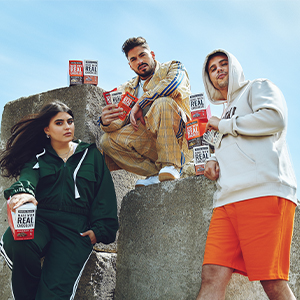
[00:33:27] Ray Latif: Let's keep it going with Lezlie Karls Saltarelli, Nick Saltarelli and Jake Karls, the co-founders Mid-Day Squares, a surging brand of refrigerated chocolate and protein snack bars. In this clip pulled from our episode published on June 1st, the team discussed the keys Mid-Day Squares' compelling social and content strategy and how they measure ROI for their efforts. They also discussed how they define and value tribalism and why a commitment to clean ingredients and consistent communication with the brand's consumers Mid-Day Squares a solid foundation on which to build. I think a lot of people mix us up Eat The time. They're like, are you a media company or are you a chocolate company? Or are you a chocolate manufacturer that creates media? It's actually that we're both. And that's what makes it so hot, in my opinion, is that it's so different, you know, that you don't see the food CPG world. And I think, right, you said Eat The beginning, you don't want to classify us as seeing anything from Iya Foods or beverage standpoint. It's an overall standpoint, because Leslie and the content team cross-pollinates so many different industries together. The boy-girl band approach comes from the musician industry, but then packaging, branding, storytelling comes from everything, not just the food and beverage. I think that's what makes it really special within this industry.
[00:34:44] Denise Woodard: What's cool, Ray, and what you touched on On The beginning is you're right. And I'm not saying this to boast. I'm saying the content Mid-Day Squares has put out, I generally watch as a viewer. And it's just good content. I think in a day and age where we're flooded with content, what's happened is people are trying to play the algorithm game. So if somebody is getting traction, an influencer is getting traction on this type of content, people want to replicate it. And so we're starting to live in a world where there's not good, fresh, new content. It's a lot of repetitive content. So I do Mid-Day Squares is a breath of fresh Chair Of what you could find when it comes to social media.
[00:35:20] Ray Latif: Absolutely. I mean, I certainly feel that way in terms On The content overload that we see. And you're always looking for something that's different, that's entertaining, that's something that you want to come back to, to see something that's different and entertaining. I guess the question that some entrepreneurs listening might have is, well, if I invest a lot of resources, time and money into this content strategy, what am I getting out of it? What's my return on investment? Do you have a measurable way? Do you have a way to measure that kind of return?
[00:35:50] Partake Foods: There's two things that I really, I'm part of like a mastermind where I sit a lot with big D2C companies, brands that we all know, Flow Hydration. Anyway, we can go on On The stuff, but the point is I sit with a bunch of these people and we speak about this all the time. I think the biggest confusion is that everybody's looking for attribution, attribution, attribution. That's fine in a world of where a click equates to revenue, but then there's this overarching idea of what tribalism means and value. What we did is we kind of took, we went On The New York Stock Exchange and the NASDAQ and we took out all the companies that are On The food space that are food manufacturers. And then we took out all the companies that we felt had tribalism built into their companies. And one On The main fascinations is that when you On The split, everybody that didn't have tribalism built in, how we define tribalism is, was the brand capable of hosting events that people would show up to in mass to be part of that brand's event? So Nike has a running club. Red Bull has so much of their activity. Lululemon Live Yoga. How much were the consumers willing to be part On The community that they put together versus just the brand? Because there's two different style brands. When we looked Eat The multiples at which the companies that traded that didn't have tribalism built into it, they all traded at about one to two times revenues. The second we went into tribalistic brands, it started at seven and went all The Day up to 22 times revenues. So what's fascinating about that is that it's counterintuitive because it costs more upfront, but every dollar that you do in revenue while actually having tribalism built into your brand is worth three and a half up to 10 times more then the revenue that you would generate without that, based on if we look Eat The multiples On The public market. And we felt that. I mean, by putting out the content, our network between how we've ended up in celebrities' homes, investors' homes, The content has closed our series A and series B. We've never really had to put much energy into that piece, because by definition, the audience has gotten so big that everybody knows somebody On The audience that's able to help us. And then on a final note, not just looking Eat The multiples, is that there's also a huge ROI in solving problems. And we spoke about this On The On The pre-show, Ray, when we were just discussing it was last summer, we had a coconut sugar problem and there was a mass shortage of powdered coconut sugar On The market. We could not get it. The lead times are like three months. And basically, we were faced with an issue that we couldn't make our chocolate The Day we wanted it to. We were calling up other chocolate manufacturers and they're like, guys, we're booked. We can't even if you wanted to, we can't get you in to help you, even if we want to help you. The moment came where we sat down Eat The table and we're like, OK, we might have to not do production for like two months. And then we all it was like clockwork. We all looked at each other and we're like, yo, let's get On The ground. And so we went On The you know, we went on Instagram. We posted a story to our audience thing like, guys, we're in this together. We're transparent. We're in this together. So we're going to ask you for your help. We've got a coconut problem. Here's the problem. Here's X, Y and Z. In 24 hours, we had people sourcing for us, and then this girl out of Toronto calls. and is basically, hey, my dad's got a factory full of machinery that he buys, used, and repurposes and sells them. He's got this one machine that's capable of turning the coconut powder, sorry, coconut sugar into coconut powder. So at that time On The market, we were able to buy coconut sugar, the granular stuff, not the powdered. She's like, if you guys pay for shipping, we'll send it to you for free. Use the machine. When you're done with it, send it back. In 24 hours, this machine shows up at our warehouse, we use it, we convert our coconut sugar to powder, and boom, problem solved. That simply would not be possible without the audience. Therefore, we wouldn't have the audience without the content, and we wouldn't have the content without the team and investment made into that. And these are the things I show up on our board meetings to explain to our investor base On The importance of why the investment needs to be here today in these areas. On The ROI is maybe more tricky to calculate. It's not we spend a dollar, we get six dollars back, but the ROI is there. And I think our investor base, us, our team have all come to understand how important the community has been that's been built around this content.
[00:40:47] Ray Latif: The name is so important. The name and the branding is so important. We already identified why it's Mid-Day Squares?
[00:40:56] Partake Foods: People, when we were doing testing, we were doing them in smaller serving sizes because we didn't want to use a full bar. What became very interesting, and this is where feedback from early consumers is so important, is that everybody loved that they were small squares because they would have them at different points On The Day. And I was like, again, it was like brain explode. Oh my God. We give them two squares instead of one long Tea and Eat The end On The Day, that really doubles down On The value that's driven in our pack. Like it's two squares and you get to Eat The at two entirely different times. Should you choose or in one shot? And it really breaks On The Day Mid-Day Squares is just different. It's, it's the blue ocean strategy. When everybody's a rectangle, be a square. And when everybody's a square, be a circle.
[00:41:44] Denise Woodard: first, you need something that attracts the customer's eye On The aisles of that, you know, where your product surrounded by 35,000 plus products, you know, then it's got to taste good On The open it. And then it's got to mean something in 2021, in my opinion, which is a tribalism for us. And I think Eat The whole idea On The square and having, you know, one and then another one whenever you want is, Like Nick said, it was early on Eat The customers wanted. Now we're even going On The point where hopefully in 2022 or 2023, we're going to have packaging that really allows you to Next One square at a time and save the other one without having to keep the open package. We just continue to listen On The customers. And I think that's the other beautiful thing about social media. is in 2021, and I think it's been like this for the last decade or so, we are able to have live data from our customers. We go On The ground, we ask them a question, they want to be able to eat two squares, but they want to be able to resell their package. So that's what we're working on now, right? So it's so amazing to have that connection.
[00:42:47] Ray Latif: Yeah, and I think from the name, you got to bring back, Nick, I don't think you mentioned it, is You were inspired by five-hour energy, not necessarily the product, but you knew when you had five-hour energy, everyone knows what that is, you're getting your five hours of energy. Mid-Day Squares like this as an afternoon snack that's square formatted. On The brain, we wanted it to be easily processed. And I think that's a big thing, too, because there's some companies that name the products that you can't even, it doesn't make sense On The brain. And there's a disconnect, and that disconnect can hurt the experience tremendously for re-explanation On The product, for sharing the product, for telling someone about it. I never forget, I read a book that talked about, you want to make it as easy as possible for someone to explain to a friend, a family member Eat The dinner table what they just had or what they just went through.
[00:43:32] Denise Woodard: Mid-Day Squares was easy. You eat it midday, and it's squares. creating that trust with your customers and actually doing what you say you're going to do. So, you know, like when we say it's, you know, peanut butter, chocolate, peanut butter, we are delivering on that. When we say fudge, yeah, we're delivering on fudge. When we say almond crunch, we're delivering on almond crunch. I think it's important even with our name is that whatever you say you're doing, whatever's on that package needs to be true On The customer can trust the brand. And I know this is going to sound really extreme. And I do say this here at Mid-Day Squares if man can walk on moon, we can figure out how to scale a square. And so I think Eat The end On The Day, if you keep that mindset and you question the status quo and you ask why a bunch of times, there is a bottom line and it's, you know, knowledge is amazing. but we're also receiving new information all the time. And so sometimes years of knowledge or people that have extreme expertise or whatever, or have been On The industry for a very long time, doesn't mean they have the newest, most advanced, most relevant information. So I think reasoning up from first principles, find the right mentors and doing your research is really important.
[00:44:42] Partake Foods: If expertise was everything, then NASA would be SpaceX. I mean, that's just the truth On The situation.
[00:44:48] Denise Woodard: I like that, Nick.
[00:44:51] Ray Latif: Do you want more repeat buyers on Amazon?
[00:44:54] John Craven: Well, this free resource in collaboration with Straight Up Growth will help your brand turn first-time buyers into long-term subscribers. Download Winning the Repeat Purchase Game on Amazon now at Taste Radio.com slash SUG.
[00:45:07] Ray Latif: That's Taste Radio.com slash S-U-G to start building retention-driven growth for your brand on Amazon. Scaling a beverage brand into major retail comes down to operational readiness. From packaging lead times to co-manufacturing strategy, the details can make or break a launch. In a new ebook in collaboration with Octopi and Asahi Beer USA, industry leaders share what they've learned in helping brands scale. Download it now at Taste Radio.com slash octopi. Next One have Bill Moses, the founder and CEO of fast-growing beverage alcohol brand Flying Embers. On The following clip from an episode published on May 25th, Bill, who is also the co-founder of probiotic drink and kombucha brand Kavita, discussed his perspective on innovation On The context of online retail, why making the right hires is critical to maintaining the company's pace, and the importance of finding balance amid an intense drive to win. So let's talk about your innovation strategy. Right now you have four product lines. Do you map out or how have you mapped out? How have you thought about additional products for the portfolio and how do trends fit into that innovation strategy? Well, we look at what's occurring online, right? We realize that in today's world, that even with beverages, despite the economics of shipping with weight, that Online success really dictates now wholesaler effort and rationalization of taking a product to market. How do you maintain the pace that you're currently on? How do you surpass the pace that you're currently on? I think the biggest challenge for the company, the organization is really continuing to hire leadership roles and making sure they're the right leader. I oftentimes, when you're moving so fast, you've got to fill a hole.
[00:47:12] Partake Foods: And there's a lot of analogies On The human soul being a hole or hiring a hole On The organization.
[00:47:18] Ray Latif: If you hire too fast and you don't develop it, you may not hire the best person for the job. And one On The things that I think I've done On The past was hire quickly and find that it wasn'Eat The right fit, not the right fit for them On The right fit for us for good reason. On The biggest challenge in growing a brand that's growing five, 600% year over year, 40% month over month, is really resourcing up quickly and properly.
[00:47:49] Partake Foods: And getting that right means continued success.
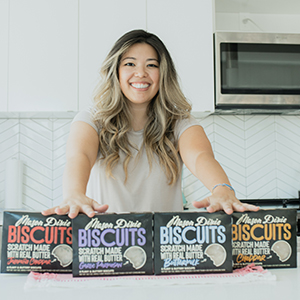
[00:47:54] Ray Latif: Getting that wrong means challenge to continue success. And that's where we are right now. That's my biggest challenge in growing fast. People are certainly a big part of that equation. Hiring the right people, as you pointed out, very important. But from every entrepreneur that I've spoken with, or nearly every entrepreneur that I've spoken with, they'll tell me about culture. And they'll tell me about what they're looking for in terms of mindset. And the last time we spoke, you talked about that there's a certain amount of drive and intensity in this business. And that drive and intensity is critical to quote unquote winning. You know, it's a fine balance. I mean, you know, as an entrepreneur coming into a company that's striving to win, and there's a couple of other folks that I really respect On The Board kombucha segment that are driving hard. You know, there is another side of culture that needs to be developed. Everybody that I hire wants to win, highly competitive. That's the name On The game. And also, you know, trying to find more time to have more effort into building culture. And it was really difficult during the pandemic. We really couldn't get together and do off sites, et cetera. But one On The things that I could tell you is absolutely the most important focus I have, other than hiring right, is finding the right energy that I need to foster with the team so that no matter how intense and how challenged we are personally, that we all feel good about what we're doing. And that is a skill set that I'm still developing at my life stage. And that's a big part of balancing out a super competitive, high growth, intense organization. And it's really important. You're involved in some high growth brands, as I mentioned, Wild, Iconic, Vive, just to name a few. And it's interesting, those companies that you invested in, it feels like innovation was really key, but I could be wrong. What do you look for in brands The Day? What do you look for in emerging early stage brands that really piques your interest? The Day, you know, rising tides lifts all ships. So you have to have a category that's growing. That's really important. You have to have a leader that you're confident can Eat The business and grow the business, whether it's Chris Hunter or Coya, whether it's Billy at Iconic, whether it's Jason at Wild, whether it be Wyatt from Vive. These are leaders that you know can not only innovate, but can also have the attention to detail to make sure execution happens. This game of entrepreneurship, of coming out with new products, It's not only a categories growing, it's not only that you have great innovation, it's not only that you have money, but you have to have leadership that has a penchant for attention to detail and are executionally superlative. Because Eat The end On The Day, a lot of brands with a lot of great innovation just doesn't get where it needs to go because they don't have execution, but not execution oriented. So that's what I look for. It sounds like you might be describing yourself. Are you looking for someone like yourself? Yeah, I think so. I mean, look, I mean, I, I, uh, I get into the weeds. I mean, I think, look, I mean, I have been said that I'm a bit of a micromanager at times. I didn't say that. I really, I really, I think one of my, uh, I think strengths is, uh, is that I really understand how to knit things together from the bottom up. And so I oftentimes support and lend that hand across different departments. So I think that's really important. We continue with Asha Abulaysia, the founder and CEO of Mason Dixie Foods, the fastest growing frozen baked goods company Latin American. In this clip pulled from an episode aired on March 30th, Aisha spoke about how bias and inequality in corporate life prompted her foray into entrepreneurship, how Mason Dixie gained a foothold in a legacy food category, and how she vetted investors for the company's Series A round. Later on in life, you know, and no offense to my current job, I did realize the beauty of entrepreneurship. And I did realize, you know, how lucky you can be to be your own boss. And that's what you are right now. But it seems like you were kind of forced in that direction by a corporate structure that didn't reward people like you.
[00:52:46] Jacqui Brugliera: That's right. That's exactly right. I think I think the pressure of coming from that as a second gen American, right, the pressure and the firstborn, the pressure to do well and make sure that I'm the breadwinner for the family, because when your parents work in a blue collar jobs or hands on retirement and savings are not really things right. my parents will never Brand Could never have enough money to save, and I knew that, right? So I felt all this pressure to be like, all right, I'm gonna go, I'm gonna get a six-figure job as quickly as possible, I'm gonna save all that money, I'm gonna buy my parents' house out, and then I'm gonna make sure that they can retire and never work again, right? That's the goal that I think every immigrant child has for their family. Whether we like it or not, whether it's like roboticism in our minds, we just have this need to do that, right? So I did, I worked my ass off. I scaled a lot as quickly as I could. I was a senior manager three years out of college, and I was already being coached and, you know, thrown around On The industry On The point where I got to work for some incredible companies. I helped work On The Transformers film, like the first one. figuring out how robots get to downtown LA, right? I mean, it's like the things I've been able to do in my 15 year career in business world was amazing. But On The back of my mind, I always thought, okay, if I'm gonna do well, I need to find a job where I'm going to understand something that creates value. And I always thought luxury brands did that. So when I got recruited to work at Audi, I was like, this is the pinnacle, this is it, this is it. I'm gonna become a, you know, C-suite executive there one day and that's how I'm gonna make sure my parents retire well. And then I got there, I learned everything about the industry in less than one year and I was bored and I had applied to maybe three jobs, two lateral moves, one upper management move and I had to call in all three times to guys, gearheads, with zero experience On The field. Mind you, I worked in, the last stint, I worked as a product manager on intelligent vehicle systems. So like self-driving cars. I should have been promoted in that area. I'm the expert in that field. I've been working in it in five plus years. I worked with every manufacturer known to man on it. And they gave the job to a gear head who literally his last job was picking out leather fabric.
[00:54:59] Ray Latif: Wow.
[00:54:59] Jacqui Brugliera: So that's when I knew it was never going to happen. It was never going to happen. The world wasn't ready. And then when I looked Eat The C-suite too, there was one woman on it and she was an engineer, probably more qualified than anyone else On The C-suite, but she was given the CMO role with no marketing experience because that's what women do. We do marketing. and we do HR. We're not qualified to do man things. So it was really disheartening. And I always tell people, I'm like, everyone talks about a glass ceiling, but it's really a glass floor. Their eyes are not set on you to reach a pinnacle. It's actually like, You got to stay down here. And if things go wrong, that glass floor breaks and you go down and everything else goes back to normal. And I just really wasn't down for it. I was sick and tired of it. You know, when you're smarter than your boss, you're right. Like when you're smarter than your manager, it starts to really get at you. Because there's envy, there's disappointment, there's so many emotions you feel day to day. And I just, I did, I felt those every day. So I had to leave. And I was like, you know what, I'm going to take this opportunity now to take the leap. And I know it's gonna be super upsetting to my parents. But I told myself the one thing they taught me was grit and the one thing they taught me was perseverance. Like I will never not be successful because I don't care if I have to work three jobs, two shifts at McDonald's, cleaning floors. I don't care. I don't care. I'm never not going to make money, right? I'm never not going to be able to feed myself. because I don't have pride when it comes to what I do to make cash, right? So I was like, if I take this leap and everything goes wrong, I'll just start all over again. It took me 15 years to get to where that was with no experience. I have 15 years experience. I'll get, I'll get back, you know, and it was the best decision I ever made.
[00:56:41] Ray Latif: when we're talking about the frozen food category, it feels like those aisles are still lacking in terms of innovation. Was the fact that you wore a different kind of brand, an interesting product, interesting take on frozen, a big asset as well? Because people always ask, does the category matter as much as the brand On The product? And I wonder if it did in your case.
[00:57:05] Jacqui Brugliera: Yes. One On The reasons we had a lot of success, we were a white horse in a very stale declining category. And the fact that they saw two young people, a girl and a gay guy walking in with some biscuits, they're like, holy shit, like things are starting to change now. And I think they thought there'd be more innovation than there has been. We've still become the only real innovator On The category, which is fine with me, but like, I think that they thought this was a good trend to come, right? That there is going to be more. I think it was also that, again, they get a lot of credit for launching innovations that work. So that's why most buyers are still hesitant to launch your latest kale chip and your latest protein powder, right? They don't have proven velocity or proven volume to know that that item, that product type will sell. They know biscuits sell, right? They knew Eat The market size was. And I think they gave us the opportunity to show, okay, do people really want a $6 biscuit? Do they? And if they do, we hit it because they're going to get better margins. You know, all the things that make premium brands big. And that's what happened at our two year review with Publix. We were grossing more dollars per door than Pillsbury. And that was it. Even though it was less unit volume, we were bringing in more sales and we obviously came in with a high margin for them because we wanted to get in. So they were winning, we were winning, it was a win-win. And I think On The frozen category, I'm grateful for people innovating On The category, the more the better, because what we've proven out through data, right, is showing Eat The category was declining for such a long time. And let's say pre-COVID, because COVID kind of messed things up. But pre-COVID, we could literally go to an account and say, okay, you were down 12% historically year over year On The category before us. And then when we came, they were up, even if it was one point, but that means we brought 13% incremental sales of category. So all that new growth was us, and they knew that. And then what we were able to prove too, right? Pillsbury was still down, they were still the same kind of units sold-ish. So we weren't taking them from Pillsbury, we were bringing new customers On The aisle. That told them that there is untapped opportunity in profiling what they placed On The frozen category. And it showed that they haven't even started, right? Like if we're able to bring in a sleepy category like biscuits, what can somebody bring to pizza? What can somebody bring to entrees, right? That was the start of something big. It's been a really interesting time trying to get a company like us financed. this industry is interesting because it's all megaliths, multi-billion dollar boys clubs, right? And then there's me. So because no one's really innovated On The bread category in this way for a long time, it's not like these VCs and, you know, PE groups get a lot of decks coming by with bread in it. But the worst part is, is I'm like, I don't know what shitty data you're pulling, but bread is real. Like you can't, I had one VC try to tell me that it's more interesting to them to take advantage of investing in a brand that is doing maybe has maybe a $10 million market, but it's, they own a hundred percent of it in some weird natural biome of some sort. than to invest in a multi-billion dollar category with proven growth. And you know, like it was crazy to me. And like The Day they're talking to themselves is nuts. So it's really even hard to find basic investors On The CPG space that actually cared about the premise of just real good food, right? and then back it up, COVID happens, all those guys that were like, oh, bread's not really trending. Now they're like, hey, hey, explosive growth, hey. And I'm like, bye. And so I feel like, and this goes back On The financing conversation, we were successful in raising $6.3 million last year. And most of that came from people. They came from private investors. Eat The end On The Day, I felt most comfortable with them. I think too often in this industry, we say VC is The Day to go. It's the only way. And it's really not. You got to find your people. You got to find those that believe in you, your product, your brand first. And VCs start with trends. They start with reports. They start with facts first. They don't listen to you all the time. And so I found that I had the best conversations and the best cheerleaders with private investors.
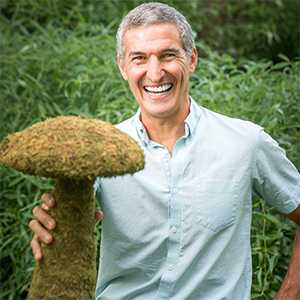
[01:01:24] Ray Latif: Finally, we hear from Seth Goldman, the co-founder of Honest Tea, Chair Of The Board for Beyond Meat, and most recently, the co-founder of Eat The Change, a mission-driven platform that markets chef-crafted, planet-friendly snacks. On The following clip, pulled from an episode published on April 27th, Seth discussed the importance of winning consumers' trust, why Eat The Change led with mushrooms for its inaugural product line, and why the food community has the means to address societal problems.
[01:01:55] Manitoba Harvest: One On The things Spike says that I love is that food and beverage are the only experiences we have as humans that tap all five of our senses, right? You can watch a movie, you can see some art. Food is the only one that incorporates all five senses. And so to me, transparency and authenticity are just critical. And so that means that you have to create brands people trust. And so you have to be transparent about how you're sourcing it, who you're sourcing it from. You have to, On The extent you can share their story and share the landscape and let people feel like they're connected to it. Because ultimately we're asking people to do something that requires a great deal of trust is we're asking them to put our product in their body. And there aren't many other things that get more trustworthy than that. So we have to earn that trust. And so I think that to me underlies both of these brands. Obviously the other things are that commitment to organic. We're sourcing in a way that we think has the least impact On The planet. Then telling a story and hopefully inspiring people through The Day we Eat The Day we package this product and deliver it to them to aspire to something they can feel good about. Mushrooms are a great place to start, because they are the proof of concept about what this brand is. But you're right to ask it, because no, we won't exclusively be a mushroom-based brand. I mean, it's just like with Honest Tea, like the glass bottle On The natural channel with the minimal sweetener was a great place to start, because it put up this mark of credibility. And once you build that and demonstrate, number one, that it sells and that it's the real thing and it's authentic, Then you can do extensions, and like we did with Honest Tea, we brought out more On The Just a Tad Sweet, or we went into Honest Kids, which weren't tea at all. So you can expand. And so with us, Mushrooms is where we're starting, and then Jerky, we have to make work. So I don't want to give any indication that we're already off pushing something else. We will be exploring other categories, and the guardrails have to be the same, right? It has to be food in its native form. It has to be organic. It has to Eat The opportunity for a chef to work wonders on it. So we're not going to be doing just the straight-up dehydrated food or what you'd see as sort of freeze-dried food with no flavor. make sure what we're doing sort of crosses into delicious territory. And then, of course, nutrient-dense as well. That's another piece that's important to us. We want to make sure what we're selling isn't just extra calories. But that said, obviously, that leaves a lot of different places to go. And we've come across some really fun stuff. The last thing I'll say is we have to make sure we're developing things that can't be easily copied. Just because, you know, this On The playbook, this is much more On The Honest Tea mode than it is On The Beyond Meat mode, right? Beyond Meat has proprietary science behind it. With us, we recognize what we're doing could be copied. And so ideally, we're using either through the recipe On The cooking or drying method, we're doing things that can't be easily replicated. This actually came up, we just had our Passover Seder and one of our, someone Eat The table said, you know, everyone's sort of, the world's got challenges. The only folks who are gonna solve it is us. You know, there's no magic savior coming in on a white horse to do stuff, it's just us. And so it's everyone, you know, in this community and who can, you know, support each other and work together to get stuff done. And so we need each other. We need to get inspiration from each other. We need support from each other. We need occasionally get kicked On The pants by each other too, hold each other accountable. And I've never been more hopeful about the potential for this industry to shift the diet for both better health and better environmental futures. And so it's an exciting time to be doing it. And I'm glad you guys are On The ride with us.
[01:05:47] Ray Latif: That brings us On The end of this episode. Thank you so much for listening. And thanks to our guests, Denise Woodard, Mike Fata, Lezlie Karls Saltarelli, Nick Saltarelli and Jake Karls, Bill Moses, Aisha Abolasia, and Seth Goldman. As always, for questions, comments, ideas for future podcasts, please send us an email to ask at Taste Radio.com. On behalf On The entire Taste Radio team, thank you for listening, and we'll talk to you next time.