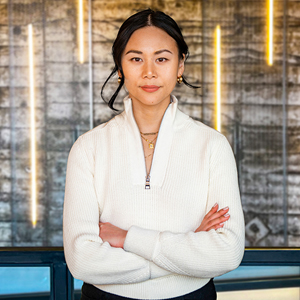
[00:00:10] Ray Latif: Hey, folks, I'm Ray Latif, and you're listening to the number one podcast for the food and beverage industry, Taste Radio. This episode features an interview with Sahra Nguyen, the founder and CEO of groundbreaking specialty coffee brand, Nguyen Coffee Supply. Just a reminder to our listeners, if you like what you hear on Taste Radio, please share the podcast with friends and colleagues. And of course, we would love it if you could review us on the Apple Podcasts app or your listening platform of choice. An award-winning documentarian, Sahra Nguyen knows how to tell a good story. Her latest opus is about changing the way the world perceives Vietnamese coffee. Sahra is the founder of Nguyen Coffee Supply, a direct-trade specialty coffee company based in New York City. Launched in 2018, the company describes its mission as quote, to diversify the coffee industry, increase the visibility of Vietnamese producers, and transform the landscape through sustainable coffee farming. Nguyen Coffee Supply buys certified organic coffee beans directly from a fourth-generation coffee farmer in Vietnam and roasts them in small batches in Brooklyn. The company primarily markets whole, robusta beans in a variety of styles and taste profiles, along with brewing tools and a recently launched line of ready-to-drink coffee. The products are almost entirely sold direct to consumer via the company's website. However, the brand is gradually making its way into brick-and-mortar retail. Earlier this year, Nguyen Coffee Supply raised $2.6 million in a seed round in support of new distribution and innovation initiatives focused on educating consumers about Vietnamese coffee and, in particular, Robusta beans. In the following interview, I spoke with Sahra about the company's origins and why she is adamant about changing the narrative around RobustaBeans, why incorporating her personality and background into communication about the brand and products is both challenging and highly effective, and the one word that drives the company's innovation strategy. Hey folks, it's Ray with Taste Radio. Right now, I'm honored to be sitting down with Sahra Nguyen, the founder and CEO of Nguyen Coffee Supply. Sarah, so great to see you.
[00:02:31] Sahra Nguyen: Ray, thank you so much for coming all the way to Brooklyn.
[00:02:34] Ray Latif: I came here for you. You know that, right?
[00:02:35] Sahra Nguyen: Oh my gosh, I'm so honored. Thank you so much.
[00:02:38] Ray Latif: Well, it's an honor for me to be speaking with you. We're big fans at BevNET. As you know, my colleague, Mike Schneider, he's a huge— Shout out to Mike. Huge fan of yours and your company and beyond the fandom, though. You guys have an outstanding brand and something that I think a lot of entrepreneurs look at and look up to. And yeah, I'm really excited to be here.
[00:03:00] Sahra Nguyen: Oh, cool. That's really kind. Thank you.
[00:03:02] Ray Latif: Yeah. So we are here in Brooklyn and we are at a place called Shared Roasting.
[00:03:07] Sahra Nguyen: Yes.
[00:03:08] Ray Latif: This is where you roast the beans.
[00:03:09] Sahra Nguyen: Yes, correct.
[00:03:10] Ray Latif: This is not your facility per se, as in ownership wise. Correct. But this is where you guys roast your beans.
[00:03:17] Sahra Nguyen: Yes, correct. It's kind of like a co-working space for coffee roasters.
[00:03:21] Ray Latif: Yeah. How long have you been here?
[00:03:22] Sahra Nguyen: Since December 2019.
[00:03:24] Ray Latif: Oh, wow. Okay. You've been here for quite a bit.
[00:03:26] Sahra Nguyen: Yeah.
[00:03:26] Ray Latif: Yeah.
[00:03:27] Sahra Nguyen: We were actually their second client.
[00:03:29] Ray Latif: So how many clients do they have? I mean, and how much time do you guys have here?
[00:03:33] Sahra Nguyen: Yeah, good question. I actually haven't checked it lately, but I think they have like a good amount, like I'd say over maybe 30, 40 clients across cafes, maybe private toll roasting, like larger supermarkets. And we're here about two to three times a week.
[00:03:49] Ray Latif: Okay. I'm assuming you're one of their larger clients, given the size and scale that you guys are operating at right now.
[00:03:55] Sahra Nguyen: I can't confirm, but we do spend a lot of time here. Nice, nice.
[00:04:00] Ray Latif: You and I have a shared history in that we are both from the Boston area, or at least I'm currently from the 617. When you called me for our pre-interview call, I saw your 617 number come up. I'm like, hell yeah.
[00:04:13] Sahra Nguyen: Yeah.
[00:04:13] Ray Latif: Someone from Boston.
[00:04:14] Sahra Nguyen: Same. I was so stoked because, you know, the 617s, we are part of a very unique era. There are no more 617s being handed out. We are the last of the 617s. So I was super stoked when I saw your number. I was like, oh my God, he's from Boston.
[00:04:28] Ray Latif: Yeah, all the 857s who are now getting their new phone numbers.
[00:04:32] Sahra Nguyen: You don't know about the 617s.
[00:04:33] Ray Latif: Yeah, it's kind of like New York City where if you have a 212 number, you're considered part of an elite class of phone numbers.
[00:04:39] Sahra Nguyen: Is this true? You know, even though sometimes like, you know, like spam calls and just like marketing calls right now, they're so bad. But I'm like, I won't change my number because I don't want to lose my 617.
[00:04:49] Ray Latif: Yeah. What should we do about that, actually? Because I'm trying to think about like changing my phone number because clearly too many people have it if I'm getting all these phone calls all the time. But you're right. It's like at this point, you've had your number. Remember early on when like when you first got your first cell phone, you could change your phone number anytime.
[00:05:04] Sahra Nguyen: Yeah.
[00:05:04] Ray Latif: And now it's like you've had it for so long. It's so difficult to change.
[00:05:07] Sahra Nguyen: Yeah. Agreed. And I don't think they're handing out any more 617 numbers. So I think if we give it up, then it's gone forever.
[00:05:13] Ray Latif: Okay. So we're not doing it.
[00:05:14] Sahra Nguyen: No, never.
[00:05:14] Ray Latif: Do you ever get back to Boston?
[00:05:16] Sahra Nguyen: Always. My parents still live there, so I try to visit them maybe once a month.
[00:05:21] Ray Latif: Nice. Well, you've got to come and visit our office in Newton then.
[00:05:25] Sahra Nguyen: Yes, I would love to.
[00:05:26] Ray Latif: Especially if you're coming out once a month.
[00:05:28] Sahra Nguyen: Yeah, I would love to.
[00:05:29] Ray Latif: I have a feeling that, you know, in a different kind of parallel universe, you could work at BevNET and you would fit in seamlessly.
[00:05:36] Sahra Nguyen: Oh my gosh, that's so cool. I would love to come by. Yeah.
[00:05:39] Ray Latif: Yeah, because we're kind of beverage nerds.
[00:05:41] Sahra Nguyen: Yeah.
[00:05:41] Ray Latif: I'm not calling you a beverage nerd.
[00:05:42] Sahra Nguyen: I'm a nerd. I'm here for it.
[00:05:45] SPEAKER_??: Okay.
[00:05:46] Ray Latif: Well, see, that's what I'm talking about. We love coffee. Yeah. And we love cocktails.
[00:05:51] Sahra Nguyen: Yes.
[00:05:51] Ray Latif: And I know you're a big fan of Boulevardier.
[00:05:54] Sahra Nguyen: You are such a good, like, journalist. Like, how far did you read on the internet to know that I love a Boulevardier?
[00:06:01] Ray Latif: No, I think you have it on your Instagram account.
[00:06:03] Sahra Nguyen: I do. I drink it all the time. It's literally like probably every day.
[00:06:07] Ray Latif: Really? That's nice.
[00:06:08] Sahra Nguyen: Yeah. I mean, it really kicked up during the pandemic. Like me and my partner, we just like would make happy hour and like that's like our drink drink. And every time we go out, it's always a Boulevardier because when we travel or even when we like visit other restaurants, the Boulevardier is a classic drink, but it tastes slightly different everywhere. depending on what kind of like super mood or Campari they're using. So, you know, even also with the rye. So it's like so exciting to try Boulevardier everywhere and get something slightly different, but also really reliable.
[00:06:33] Ray Latif: You know what the number one cocktail at BevNET is though? No. Negroni. So here we go.
[00:06:38] Sahra Nguyen: Yeah, same cousins, family. Exactly.
[00:06:40] Ray Latif: So we will have some rye on hand when you come and visit.
[00:06:44] Sahra Nguyen: Oh, my God. It's so cool. So excited.
[00:06:46] Ray Latif: Yeah. Sarah, what you guys have created here, and what you have created in so many ways, is really special in that there's a real familiarity, there's an approachability to the wind coffee supply. And I know a lot of that has to do with branding, a lot of that has to do with the fact that there are and have been a lot of stories about your company and you personally out there. But when you launched the company, when you had the original vision for it, you talked about how there was a couple of reasons. There's sort of a two-pronged approach to it. Can you talk about what that entailed?
[00:07:20] Sahra Nguyen: So I first got the idea to Sahra Nguyen Coffee Supply in 2016 because I was noticing that like Vietnamese iced coffee was becoming super trendy in a lot of like the specialty coffee shops that I would frequent. And it really signaled to me this moment of like, oh, this reminds me of when matcha first hit the scene or when boba tea first hit the scene or like chai hit the scene, right? There was this trend of Asian beverages in mainstream American beverage culture. And I really felt like Vietnamese iced coffee was that next trend. However, every time I tried the Vietnamese coffee, it was never actual Vietnamese coffee beans. And I just wondered why, right? So I went down a rabbit hole on the internet. And I learned that Vietnam is the second largest producer of coffee in the world. And I was like, holy crap, how did I not know this, right? Like as a Vietnamese American myself. And on top of that, I learned that Vietnam is the number one producer of robust coffee in the world. And then as it went down the rabbit hole even more, I was hit with this huge stigma against robusta beans, right? So it was in this moment that I was hit with both a light bulb and kind of like a disappointment, right?
[00:08:23] Ray Latif: And I called it a two-pronged approach. It's actually a two-pronged light bulb is the term you used.
[00:08:28] Sahra Nguyen: Yeah. And the light bulb was, oh my gosh, Vietnamese coffee is super popular. This is already a familiar flavor profile that people know and love. They just don't really know it's Vietnamese coffee, right? But then the other piece of it was, oh my gosh, Robusta has such a bad rap. How am I going to combat this while trying to elevate Vietnamese coffee?
[00:08:49] Ray Latif: Can we explain to our audience what Robusta is versus Arabica, which is pretty well known among coffee drinkers?
[00:08:56] Sahra Nguyen: In the coffee world, there are two main varieties. It's Arabica and Robusta. Robusta coffee beans have up to double the caffeine content of Arabica. They also have up to double the antioxidants. And Robusta beans also have up to 60% less fats and sugars than Arabica. So what that means for a flavor profile is that Robusta beans will be more bold, dark chocolatey, nutty, smooth, low acidic, and higher in caffeine. They're really simply just different types of coffee beans, right? For different experiences and preferences. However, over the last 20 years, especially within third-wave specialty coffee, Robusta coffee was explicitly excluded from specialty coffee. And so we're really familiar with seeing the marketing of 100% Arabica, And this idea of Arabica basically became synonymous with quality and superiority, which is really odd because what makes a product good isn't inherent to the variety. It's really about the care and production around the product, right? And so when I was encountering all the stigma against Robusta, I understand where it comes from, right? It comes from the history of Robusta coffee being channeled into the instant coffee market, which is historically a cheaper coffee product, right? So that's where like the seed of truth comes from. However, specialty coffee is all about a collective investment to make coffee better, right? The way we've innovated upon Arabica. And I just didn't understand why this level of collective care wasn't being applied to robust farming communities. I wasn't really sure that I would be successful in changing the narrative. I just felt that it was really wrong. Aside from my personal connection to Vietnam and my family being from Vietnam, I just didn't agree with any agricultural industry framing their products in a hierarchy. And at the end of all of this, there were people who were really harmed by these biases, right? Because what we don't realize is it's not just about our personal taste buds or preferences. When we say all Robusta is bad and gross and cheap and inferior, we actually block Robusta farming communities around the world, not just in Vietnam. I've met so many folks in Uganda and in Congo and like Brazil who are like, my family grows Robusta too and it's so hard to break out of like this like economic barrier, right? And so I felt like there was just a huge injustice being done to the coffee growing community. And I didn't understand why the industry was operating within such an elitist framework that I just wanted to help unpack that and deconstruct that and help us just build a better coffee community that was really rooted in inclusivity, which would lead to more equitable opportunities. You know what I mean?
[00:11:38] Ray Latif: Yeah, absolutely. And I guess it doesn't feel like confidence thing, it feels like more of a responsibility. You had the responsibility to tell this story in a different way.
[00:11:48] Sahra Nguyen: Yes.
[00:11:49] Ray Latif: But how do you know what story to tell? What's going to resonate with consumers? And who is that audience that you're speaking to?
[00:11:54] Sahra Nguyen: Yeah. When I first started, I spoke to those who are closest around me. So those are folks in my community, whether they're the Vietnamese-American community or the Asian-American community. And then this like slowly expanded to communities who felt marginalized, communities who felt rendered invisible, et cetera, et cetera. Right. And as you've expanded, right, so in the beginning, I talked a lot about my personal connection to Vietnam. I talked a lot about my parents from Vietnam, and I tied that to my journey with Vietnamese coffee. That was kind of like the early access point into the coffee community. And then when I felt like people were coming on board with that story, I slowly introduced this idea of Robusta, right, which is a much more of a universal global story. What I feel like has helped us be really successful in finding a connection and residence with people, regardless of where they are in the coffee community, are these universal values of wanting to be seen, wanting to be represented, wanting to have agency, wanting to be included. those themes that I was pulling out of the Vietnamese coffee industry, that I was pulling out of the Robusta coffee industry, were also like human values and experiences that I feel like a lot of people connected with. And I think that was like the one thing that really helped us connect with a larger audience beyond my friends and family.
[00:13:12] Ray Latif: When you launched, I assume a good part of your audience was the specialty coffee community. How did they react to this idea of a company, a brand that was trying to put Robusta on the same sort of plane as Arabica? And you know, I guess, how did it jive with them, that industry?
[00:13:32] Sahra Nguyen: Yeah. I was kind of like approaching a few different audiences at the same time. For one, I wanted to help expand the definition of Vietnamese coffee away from just instant, just cheap. And I wanted to align Vietnamese coffee also with the specialty coffee community. That's why when we first launched, we were entirely direct trade. We were a single origin farm. We imported everything ourselves. We imported both Arabica and Robusta coffee. because I wanted to help show the specialty coffee community that Vietnam also produces Arabica. Vietnam also produces specialty single origin. On top of that, I would kind of study what I felt like was important to the specialty coffee industry at the time, which were things like the altitude, the elevation, the processing method, the roasting method, the origin, et cetera, et cetera. So I remember like our very first packaging on the label, I would include all those details, like 1500 meters, the processing method for Arabica was full wash, processing method for Robusta was natural wash and all these things. However, at the same time, Bray, for me as a coffee consumer, like before I started the business, I was the type of coffee consumer that loves coffee and I would have two of these cups a day, but I really didn't know much about coffee or extraction science, right? I knew that I loved latte and cappuccino, but I didn't know how many grams to weigh out my espresso shot, right? And I feel like a lot of consumers are like that, right? And I actually felt a big disconnect with my experience as a coffee consumer with the specialty coffee industry. What I was observing was this wave of innovation and excitement and science around coffee that kind of led to this experience of mastery, let me master coffee extraction science. I think that sense of mastery led to elitism, where all of a sudden there were people who felt like, oh, I don't know really how to measure my coffee or know how to do a pour over, so like, I must be a bad coffee drinker, right? And on top of that, there was this like, in this exploration of third wave, I felt like this idea of purism came out a lot in coffee, right? And where I would walk into a coffee shop and they'd be like, you can't have four shots. You can't like mess it up with milk and sugar. You have to drink it black pure. And while that is great for a lot of reasons in the coffee world, I just felt like there's a big disconnect with like everyday coffee consumers. So when I started the company, I really wanted to help deconstruct this elitist coffee culture. And I wanted us to go from mastery back to personalization. And I wanted to remove the sense of coffee shaming from the experience drinking coffee, right? Oh, you want to use a scale and measure your coffee and do a pour over? Great, good for you. Oh, you don't have time to use a scale or you don't want to grind your own beans, you want ground coffee? Good for you. I really wanted to build this. So when we talk about diversity, inclusivity, that's not just in the sense of like ethnicity or race. That's also in the sense of coffee drinkers and experiences. People just need to try it. You know what I mean? Because they've never given the opportunity to try it. They've just been told this is good and this is bad.
[00:16:45] Nguyen Coffee: Guessing your margins? That's risky. Belay Financial gives CPG brands the clarity to scale smarter, faster, stronger. Get your free inventory ebook by texting TASTE to 55123 and start making data work for you. Vibrant Ingredients is the natural ingredient partner powering food and beverage innovation, delivering flavor, function, and protection through a science-backed portfolio. Vibrant delivers purpose-driven solutions that help brands create extraordinary experiences. Discover what's possible with Vibrant today. Visit VibrantIngredients.com.
[00:17:32] Ray Latif: People just need to try it. But getting liquid to lips, you know, in our industry is extremely difficult. Luckily, there's social media.
[00:17:40] New York: Yeah.
[00:17:41] Ray Latif: Well, there's other forms of marketing as well. There's other forms of promotion. But, you know, gathering all the experiences that those consumers had, pulling together all the information that you have, how do you tell that story in an accessible, approachable way, whether it's via social media or otherwise?
[00:17:58] Sahra Nguyen: A lot of our brand marketing and storytelling today really is rooted in me as a coffee consumer and how I wish I was spoken to as a coffee consumer. Like before I started the company, I didn't connect with a lot of the information messaging that was coming out of specialty coffee, which is very much centered around mastery and like science. And like, I didn't understand all of that, honestly. And I felt like there was a missed opportunity. And there are folks who want that and they will get that and they can aspire towards that. But I felt like there was a huge missed opportunity to speak to everyday coffee drinkers who just want to enjoy a good cup of coffee. And I felt like there was a missed opportunity to talk to coffee drinkers without projecting a sense of coffee shame or more or less than. So when we approach coffee, right, in terms of like our brand tone, our messaging, we're all about promoting a sense of inclusivity. So for example, every time I do a coffee brewing demo, I offer many options. I'm like, if you want to use a scale, we're going to start with 14 grams. If you don't want to use scale, you can use a tablespoon. It'll be two tablespoons. If you don't have a tablespoon, pick whatever spoon you have in your kitchen cabinet. Let's eyeball it. I really try to break it down so that it's inclusive of all coffee experience, right? So I always offer like a recipe for consistency so people can repeat it. But at the end of everything, I always tell folks, just taste it. If you like it, it's great. If you don't like it, let's try adjusting the grind size or try adjusting the coffee to water ratio. So we really focus on prioritizing personalization over mastery in a lot of our conversations.
[00:19:34] Ray Latif: I think what you have done is exactly what the wine industry has been trying to do for a long time. In the 70s, I think there was this push to make wine this really sophisticated beverage and something that was meant to be consumed by the elite and thought of as an elite kind of drink. And they ended up turning off, the industry ended up turning off a lot of folks to it. And now they're realizing that like maybe the best messaging is drink what you like and then learn about what you like. And I think that's slowly turning people towards considering and looking at wine as a more approachable mainstream kind of beverage. You know, when you are talking to those consumers, how do you know it's working? How do you know they're actually getting the message? Because, again, you know, that approach sounds like a reasonable one. It sounds like an intelligent strategy. But were they telling you, were your consumers telling you, yeah, I get this and I appreciate the way that you're talking about it?
[00:20:34] Sahra Nguyen: Yeah. I feel really grateful when our community writes to us. We get messages over Instagram DMs, in the comments, emails, all the time, Ray.
[00:20:46] Ray Latif: Do you encourage those? I mean, is it sort of eliciting your DMs and stuff? Are you saying, hey, write to us?
[00:20:51] Sahra Nguyen: No, actually, no, we should though. No, I send out a monthly newsletter. We send out lots of emails, but I personally send out a monthly newsletter where I write a letter every month to the community and people always reply. We get random messages all the time through these platforms and channels where people are saying things like, thank you so much, you inspire us. We love what you're doing for Robusta. I literally got a DM recently from someone who was like, oh, me and my girlfriend's family, we're working with our family in Uganda and they grow 100% Robusta. Thank you for what you're doing for the Robusta community. So it's like all these messages that's very affirming. And all these messages really make me feel like, they're such a big part of the coffee audience that just isn't being spoken to in a really relatable, universal way beyond just the coffee bean. It's about like shared experiences. I think a lot of those shared experiences are how we feel when we're engaging with coffee culture. So that's the qualitative piece. And then on the quantitative side, we study our sales data. We study which varieties or which blends are moving. In the beginning, it was pretty split between Arabica and Robusta in terms of what people were buying from us. And now we do see Robusta kind of inching ahead of Arabica by like 10-15%.
[00:22:14] Ray Latif: And I think part of that, or maybe a big part of that, again, is you personally communicating the information to the consumers. If you go on to Nguyen Coffee Supply's Instagram page, or your personal Instagram page, a lot of it are these many lessons about Robusta, about coffee culture and so on and so forth and how you, your vision for the company and I guess, you know, coffee as a whole, the future of coffee and that again, Robusta and Arabica can sort of sit at the same level in terms of their perception of quality.
[00:22:48] Sahra Nguyen: Yeah.
[00:22:50] Ray Latif: Were you always comfortable with being the face of the brand? I mean, was it something that just comes naturally to you or? Because you're really good at it.
[00:22:58] Sahra Nguyen: Oh, thanks, Ray. Well, many people don't believe me when I say this, but I am an introvert. I am INFPT. And so I've done enough of this where I can be the face of the brand. I know that it's what people really connect with. It's compelling. It's important, especially for an early stage company like ours. But it's definitely a lot of work for me. Like I'm drained after I make like a TikTok or a reel.
[00:23:25] Ray Latif: How long does it take you to make one of those reels?
[00:23:28] Sahra Nguyen: Maybe like 20, 30 minutes to record. And then maybe like 30, 45 to edit.
[00:23:34] Ray Latif: And you do this personally on your own?
[00:23:36] Sahra Nguyen: Not everything on our Instagram page, but a lot of the ones I'm in, like I'll do them if I have time. Yeah.
[00:23:40] Ray Latif: Yeah. That does take a lot of time.
[00:23:42] Sahra Nguyen: It takes a lot of time. And so here's the thing, Ray. I mean, I have amazing help. I have a great team and I have like, you know, Audrey is currently our social media content associate. And like, she'll send me scripts of things to work on. But like, I'm deeply operating the business, right? Like, I think people, it's easy to see me as a face of the brand on Instagram and social, but like, I'm still operating. I'm doing all of our production for our RTDs. I handle all international supply chain related things. I'm doing all the sales strategy right now. So my mindshare, like my mental and emotional bandwidth, it's so deeply rooted in Ops. Then where like, I'll have like all these asana tasks of like, record TikTok reel for this. And I'm like, oh, I'm like, I missed the deadline. Like, sorry, I missed the deadline. But then I like literally like, okay, let me carve out an hour. And let me put on my TikTok face and my Instagram face. So like, I'll do it. And I do enjoy it. But I will say as a business owner, it's really hard because Because if that was my only job, right, like I could just be the face of the brand, I think it would be a little different. But like, it's like the switch tasking, but then also like the on and off, which is pretty hard, but I do it and it works, yeah.
[00:24:48] Ray Latif: It is tough. I mean, I know it because I'm an introvert too. And I don't think people realize that as well as me because I'm in front of the camera so often. I'm, you know, hosting podcast episodes so often. And when I started at BevNET, I wasn't like that at all. I always wanted to be the person who is behind the camera. Or I even, I probably shouldn't admit this, I even toyed with the idea of of having a pen name because I didn't want my name out there. I just wanted to be like, I'm kind of cowering in my chair right now. The idea of like, having my face and my name blasted out there was just not something I really wanted. But you grow into it.
[00:25:23] Sahra Nguyen: Yes.
[00:25:23] Ray Latif: And it's important, as you mentioned, because People really want to associate a name, a face, a person with a brand.
[00:25:30] Sahra Nguyen: Yes, correct. I also want to add the other piece of my story is I spent six years as a documentary filmmaker, like being behind the camera. So that's also where I feel super comfortable and I feel like more in my natural state. However, you're right, it is super important for someone like me to be, you know, the face of the brand, to be represented because I also do it because I really value representation and I want to be visible. I mean, our whole mission is about bringing visibility and representation to underappreciated, marginalized communities, right? And even just like in my own role as a leader and as an entrepreneur and as a founder being a woman, a woman of color, first generation Vietnamese American. I know that's really important to a lot of people beyond coffee. And so I don't want to hide from that. And so, yeah, I really want to try my best to help be visible and increase representation for other folks.
[00:26:26] Ray Latif: When I think about what you shared, a story about how you didn't pay yourself for a whole year, you lived in an apartment with no heat for some time. And that kind of stuff makes you, I think, it makes your story that much more impactful and believable and relatable, I think, in so many ways. Because I think people think, okay, you weren't just handed this. You really had to struggle for this. Does it resonate in the same way with people in the industry? Does it resonate with investors, retailers? Is that something where, like, I feel like I know Sarah a little bit more than I would someone else. Like, her story, like, hit me. It got to me.
[00:27:03] Sahra Nguyen: I want to believe so, yeah. When it comes to investors, investors always tell me that they invest in the founder. And I think when they know that there's a founder that is willing to put in the work to see this happen, because it's not about having the answers, it's about having the grit and the resilience and the determination to figure it out. So I feel like those person stories do resonate with investors. And then when it comes to like maybe retailers and buyers, I think they really appreciate authenticity. You know, we're living in an age where consumers are really smart and consumers want to align their dollars with their values. Consumers want to know who's behind the brand. And so to that degree, I do think it resonates with retailers as well. And when it comes to like sharing those vulnerable moments, it's interesting because I remember when I was living at my old apartment that didn't have heat and had a horrible landlord. I was there for like eight years. So pretty much.
[00:27:59] Ray Latif: You were in an apartment for eight years without heat? I didn't hear that part of the story.
[00:28:03] Sahra Nguyen: Yeah. Wow. I know we had space heat. It's like I just I was freelance. Is that legal? No, of course not. My landlord didn't even live in the city, you know. This was before I started the company and I was freelancing. So freelancing was a very unstable career financially. And it got to a point, and I was like in my 20s mostly, and it got to a point where I was kind of like, well, this is like broke city. It's New York City. It's a struggle. I'm a freelancer. It'll cost way more money to try to move and, you know, the first and last security and You just accepted it. I mean, I just learned to accept it as like, this is part of my journey, especially as a freelancer. But it's funny, I remember when I was living there and I was freelancing, I was working on these amazing media projects. When you're going through it, you don't want to share it because I felt like I had to keep up. this optic of like, I'm doing great in New York City as a documentary filmmaker, right? But then it's like, once you move out of it, then you can share the struggle story, which I don't necessarily agree with. I mean, I participate in it, you know, and I'm not trying to. And so today in my journey today, I try to be really cognizant of the balance between my sizzle reel and like my honest vulnerable moments on social media because I don't want to only paint a picture of the wins and I don't really want to talk about the struggles and challenges when I'm quote-unquote past it like because I know that other people are watching and they're also maybe like taking note or you know trying to like be inspired and so I when you brought up the story about my apartment and so now when I share I am pretty mindful of like have you shared like an honest Roma moment on your feet in a while because if you haven't you probably should so you're not just promoting this culture of like all sizzle reels all the time.
[00:29:57] Ray Latif: We see a lot of sizzle reels on LinkedIn and you know, it's fine. I think when people post about their wins, I love it because it should be an applaudable moment. It should be a clap moment for those folks because it is hard being an entrepreneur. It is hard getting into any retailer, nevermind a chain. And so when you do get those wins, fantastic. Let's celebrate that. When you get on the cover of Food & Wine magazine, we should also celebrate that. You were on the cover, I think notably, you were the first person on the cover of Food & Wine magazine in like decades, is that right?
[00:30:30] Sahra Nguyen: Yeah, that's correct.
[00:30:31] Ray Latif: Yeah, it's mostly been just pictures of food.
[00:30:33] Sahra Nguyen: Yeah.
[00:30:34] Ray Latif: So that must be true. We saw a copy of it downstairs. There's a copy of it downstairs.
[00:30:38] Sahra Nguyen: Yeah.
[00:30:38] Ray Latif: And I was like, it must be kind of a trip for you to see that every time you walk past it.
[00:30:43] Sahra Nguyen: It is. Yeah, it still is. Yeah.
[00:30:44] Ray Latif: You have had great success with PR, your public relations team. I mean, kudos to them because they've been amazing. They sent me a list of all the mentions in mainstream and industry media that Newton Coffee Supply has had to date. And it's like dozens.
[00:31:00] Sahra Nguyen: Yeah.
[00:31:02] Ray Latif: How does that happen? I mean, what was your strategy? What was your PR strategy? What were your goals for B2B and B2C media?
[00:31:10] Sahra Nguyen: I have just always focused on telling a really human story. And I think that's what has really helped allow us to gain so much traction in the media because my story, the company's story, is really relatable. in a lot of universal ways, regardless of your identity. I often talk about these universal human themes of feeling invisible as a young kid in Boston, right? And Vietnamese coffee being invisible in the industry or like, feeling like there was no representation in the coffee industry, right? Or like, There was like all these communities are marginalized. There's so much inequity. There's lack of diversity. These are themes that were very much present in the Vimeo's coffee industry and are still present in the coffee industry. But I've always talked about it in a really just like a human way, in a really humanizing way. I think that's what allowed people to really connect to our story because we weren't just talking about the product. If anything, the product in the very beginning was just like maybe like 20% of the story. So that's how we focused on it. However, I will say, I'll tell you, I'll share one story. I remember when we first launched in like late 2018 and we were pitching all these media companies, like our launch story, we actually got no bites. Everyone's like, she sounds great. This sounds great, but like not really fit. Like, let's revisit this when like the company grows a little bit more. And I remember being like, oh my gosh, like, this sucks. Like, we have one opportunity to make an impact when you launch. Like, no one wants to write about us. I was like, no one wants to write about us. And then one day I was like, what if instead of writing about us as a brand new company launching, we talked about this rising trend of Asian beverages in America? I knew that it and then we could pull in this rising trend of matcha, this rising trend of boba, this rising trend of chai. And I was like, let's talk about the rising trend of Vietnamese coffee in America. And we actually pitched a few other Vietnamese coffee brands that I knew that had popped up around the country. And then that's when the Wall Street Journal story hit. So that was like, this is awesome. So that for me signaled like, when you could talk about something that you care in a way that could relate to so many other people that they didn't care about, like what is the intersection of your values and their values? And with culture, that's when I felt like our story really started to gain a lot of traction.
[00:33:40] Ray Latif: Yeah, I mean, that's such an interesting point in that You know, you think about maybe some of these other folks as competitors, but in order to grow the entire category, you all need to work together to lift it up. Totally. And I think going back to the point of the human element of our story really resonated, the human element of our story was most important. People are looking for a hook sometimes when they're trying to attract media attention. The hook is less important than the human, is what I'm hearing.
[00:34:09] Sahra Nguyen: With any product these days, like today especially, it's easier than ever to launch a product. There are cold packers, there are private labelers, there are sophisticated networks on the internet that can produce and customize anything you want around the world. So agree that launching a product is not enough. It's really easy to do that, but it's like, how do you create a really sustainable brand?
[00:34:32] New York: Do you want more repeat buyers on Amazon? Well, this free resource in collaboration with Straight Up Growth will help your brand turn first-time buyers into long-term subscribers. Download Winning the Repeat Purchase Game on Amazon now at Taste Radio slash SUG. That's Taste Radio slash S-U-G to start building retention-driven growth for your brand on Amazon. Scaling a beverage brand into major retail comes down to operational readiness. From packaging lead times to co-manufacturing strategy, the details can make or break a launch. In a new e-book in collaboration with Octopi and Asahi Beer USA, industry leaders share what they've learned in helping brands scale. Download it now at Taste Radio slash octopi.
[00:35:22] Ray Latif: When you're thinking about innovation, are you relying on your passion for Robusta beans and Vietnamese coffee culture and your love for both? Or are you applying data, as much data as you can buy, that is, to that innovation strategy? I guess, which comes first or are they equally important?
[00:35:44] Sahra Nguyen: So for us, we definitely lean on both data. We're obsessed with data, whatever we can capture. And our mission is really rooted in elevating one of the most underappreciated regions and varieties in the world, and that is Vietnam and Robusta. When I was starting this company, if I knew that Vietnam was like a tiny, tiny, tiny coffee producer in the world, I don't think I would have had this grand vision to build a global brand. But because I know that the source actually already exists, that was kind of like a major checkbox for me. And now it's just about generating that awareness and appreciation for something that already exists. For example, I remember a few years ago, we released a single serve coffee option called Steeped Coffee. I personally love the innovation. I love that brew method, but it was in the bottom 10% of our sales. So after doing a SKU analysis, we were like, this product is wonderful. I personally love it, but the margins are too slim on it. It will require too much education and marketing to move the product. So we had to cut the product. Now up towards our most recent innovation, our 100% Robusta cold brew, which we're super excited about.
[00:36:53] Ray Latif: I have one in my hand.
[00:36:54] Sahra Nguyen: I remember when I started telling our stakeholders and advisors and networks, like, all right, we're going to make an RTD. And everyone's like, are you sure? Like, what? Like, are you ready for that? You know, that's really hard. You know, it's really saturated. Like, are you sure? And I was kind of like, yeah. And it wasn't just a feeling. It was backed by data. Because we, on our website, we publish all of our customer reviews, good or bad. And we have 90% five out of five star rating. And I was like, oh my gosh, we have a very, very like, high five star rating. And I want to understand, what do people love about our coffee? I didn't want to assume, I was like, is it the story? Is it the mission? Is it the founder? So we exported all of our customer reviews, and we did a keyword analysis. Ray, do you know the number one trending word in our customer reviews?
[00:37:48] Ray Latif: I do because you told me before, but please tell our audience.
[00:37:51] Sahra Nguyen: It was flavor. And I was like, oh my gosh, they love our product. Yes, they love our product. It hits. It hits. So I was so stoked. And I was like, OK, well, how do we get people to the flavor experience quicker? Is it through a cafe? Is it through a brick and mortar? Is it through a soluble? Is it through an RTD? We're like, it's through an RTD. So that's what led us towards our newest innovation, our 100% robust cold brew.
[00:38:18] Ray Latif: I'm going to crack one of these open in a sec.
[00:38:20] Sahra Nguyen: It's not cold right now.
[00:38:22] Ray Latif: No, this is cold.
[00:38:22] Sahra Nguyen: Okay. All right.
[00:38:24] Ray Latif: It feels cold. I mean, how cold is it?
[00:38:25] Sahra Nguyen: I want to be like fresh out of the fridge cold for you, but you can enjoy this.
[00:38:29] Ray Latif: All right. Let's see how it is. We didn't pause there because we had a little cut, but Sarah just ran to the freezer and put a can in the freezer for me. Thank you so much. Sure. You know, when I interviewed Todd Carmichael a few years back, He's one of the co-founders of La Colombe. When they introduced an RTD, they had just gotten funding and backing from Hamdi Ulukaya, who's the founder and CEO of Chobani. And they were talking about, how do we get La Colombe to the masses? How do we get more people to drink our product? And that was exactly what they came to is, look, we have to create an RTD. We have to take our draft latte that everyone loves in our stores and put it in a can. Now, putting a draft latte in a can, was very expensive and then getting people to try it was also very expensive, but luckily they had the resources to do it. Todd told me how many cans they gave out, I think in that first year. Can you guess how many cans they gave out for people to try?
[00:39:25] Sahra Nguyen: 10,000?
[00:39:26] Ray Latif: One million.
[00:39:27] Sahra Nguyen: No!
[00:39:28] Ray Latif: Yes. One million cans. Oh my gosh. Yeah. So what a journey. Now, that's not to say everyone has to give out a million cans for someone to try a product and appreciate and to get one, because I think a year later they got 1% of the coffee, RTD coffee market.
[00:39:45] Sahra Nguyen: Yeah, amazing.
[00:39:46] Ray Latif: Yeah. But again, you know, time, resources, money, all that stuff. They had it. All that being said, I think the other part of an RTD that's really, really important, and we talk about this. Well, I shouldn't say we, because the people on the review team, it's a very secretive process. So I am not saying I'm part of the review team. Let me just make that clear. We often talk about, the company often talks about the importance of chuggability, the importance of being able to drink something and not just have one sip per hour or one can every week. It's just something you want to have often because RTD Beverage, it's a volume business, it's a volume game. And you told me, and I haven't tried this product yet, but you told me that there's something that's very chuggable about what you created. Was that intentional?
[00:40:36] Sahra Nguyen: That is our hope. That is our hope. When we were formulating our RTDs, we have two more SKUs coming out. The first one is a classic black. You know, we had like a score sheet of like aroma, coffee, flavor, overall notes, etc. And then it was then we scored every sample on a chuggability score. On a scale of one to five, is this chuggable? And so that was a really important barometer for us. And so we hope it's chuggable. So we shall see.
[00:41:04] Ray Latif: And it's important because you want people to drink a lot of it.
[00:41:06] Sahra Nguyen: Definitely. Yes. There were a lot of like samples that we had gone through and formulations were like, this is really delicious. This is really great. But is it chuggable? Like, not quite sure. And like, this is really delicious. And this is great. But like, is it approachable? by a mass market audience, because we're really intent on becoming a major global brand. We want to bring Vietnamese coffee and the robust experience to as many people as possible. So that's knowing that I'm not just speaking or creating for myself or for my family, but really creating for an audience that may have never, ever heard of Vietnamese coffee or Robusta and want to create something that is innovative that we can be proud of. But at the same time, it's still approachable.
[00:41:50] Ray Latif: Yeah, and I think this extends to food too. So for food producers, for food founders out there, you do want someone to eat something relatively easily. You don't want it to sit in their stomachs. You don't want it to take forever to eat. You don't want to roll up the bag, and for single serves anyway, roll up the bag and put it in your closet or cabinet. It definitely has to be something. And I definitely notice this when I'm eating snacks or I'm drinking something. I love being able to finish something within an hour. And if I don't, I'm probably not going to finish it And I'm probably not going to reach for another bag or beverage because I know I'm just going to waste half of it. So yeah. Yeah. You know, before we hopped in the mics, I asked you, Sarah, about what it's like to be a boss. You have, I think you told me about nine employees, seven full-time and two part-time.
[00:42:37] Sahra Nguyen: Seven full-time and two part-time.
[00:42:38] Ray Latif: Yeah. This has been a journey for you, even though it's only been a little over three years.
[00:42:43] Sahra Nguyen: Yeah. Almost four. Almost four. Yeah.
[00:42:46] Ray Latif: Are things going well for you? Are you happy at this point? Or is this something where you feel a little bit more comfortable with where you are? Or do you feel like it's at this point, things are getting even more challenging because the company is at this inflection point where you can scale, you can drive forward with the RTD?
[00:43:02] Sahra Nguyen: It's both. I'm really happy with our growth and I'm really happy with our impact in the industry. I'm so happy to see the rise of Robusta. I'm so happy to see this framework of exclusivity and elitism being deconstructed. I'm just like absolutely humbled by the impact that we're seeing in the industry through our mission. Like, that's great. And at the same time, it is extremely challenging. It only gets harder. You know, it's kind of like, And with an early stage company, it just feels like every six months is a new inflection point. And you kind of like solve one piece of the puzzle. And you kind of like master a problem and new problems come up because we're constantly doing new things, right? And we're constantly raising the bar on ourselves. So the RTDs this past year is a good example. Prior to this, we really like mastered the sourcing and the importing and roasting game, really mastered roasting Vimy's Coffee and roasting Robusta Coffee and telling that story of like Vimy's Coffee beans and the fiend filter. And then we embarked on the RTD adventure, which is a totally different business and a different supply chain and different manufacturing process. and now that we produced it, now it's like solving the retail game. We've been e-commerce primarily for the last couple of years.
[00:44:33] Ray Latif: By the way, I don't think anyone's ever solved the retail game.
[00:44:37] Sahra Nguyen: Great. Now, I'm getting into a crazier puzzle.
[00:44:41] Ray Latif: I think it's less solving as much as it is. playing it really, really well. Yeah.
[00:44:47] Sahra Nguyen: So retail, sometimes I feel like we're running two different businesses, you know, like the importing, roasting, e-commerce game. And then now we're entering the RTs and retail. So it's absolutely challenging. It just gets harder because the problems get bigger, the responsibilities get bigger, but then also the dream gets bigger. So it's definitely difficult, but I also just love every moment of it.
[00:45:12] Ray Latif: I've loved every moment of this interview, and I really hope that this journey continues to be as exciting and as rewarding as it has been. I hope we can do this again soon, actually. I want to check in on Nguyen Coffee Supply in a few months' time. when you are taking over the RTD game, when you are getting closer to solving the retail game. And we'll do this one more time.
[00:45:37] Sahra Nguyen: Oh my gosh, I would love that. Thank you so much, Ray. Thank you so much. I've loved this interview so much. Thank you so much for all your kind words. It's crazy. It's crazy.
[00:45:48] Ray Latif: I wish we had video right now because just seeing Sarah, I think there's a sense of like fulfillment.
[00:45:54] Sahra Nguyen: Yes.
[00:45:54] Ray Latif: Yet also like a little bit of frustration, a little bit of terror, but also like excitement for the future. It's like it's all wrapped up into one.
[00:46:03] Sahra Nguyen: Yes. I mean, Ray. We are literally changing the way the world looks at a coffee bean. I'm just mind blown. I'm like, oh my gosh, it's actually happening. We are actually turning the tide on this Arabica Robusta narrative. We are actually seeing the rise of Robusta happening right now. We are actually at the beginning of this next major wave, especially coffee, the fourth or fifth, whatever you want to call it, where it's going to oscillate towards exploring the most underappreciated region of the world, Asia, the most underappreciated variety of coffee, Robusta, like, this is so wild to me. I'm like, oh my gosh, like, we're actually doing it. But we also, like, we're doing it, but we also see it all around us, you know, like from WGSN and New York Times proclaiming early this year 2022 is the rise of Robusta and hyperlinking us. Whole Foods, like us changing Whole Foods policy on Robusta beans, like, And now like Blue Bottle, a few weeks ago, announced on their social, they're like, for the first time ever, we're releasing a Vietnamese coffee. I'm like, I love this. Blue Bottle, been in the game for over 20 years, releasing their first Vietnamese coffee in 2022. It's amazing.
[00:47:17] Ray Latif: Can you believe it was, and I'm not calling out Blue Bottle, but I'm saying folks who consider themselves third wave pioneers, Or the ones who were like, oh, that's gross and so on and so forth. And you really did change the mindset there. It's wild.
[00:47:31] Sahra Nguyen: It really is amazing. It's so beautiful. I'm just so happy for the world.
[00:47:35] Ray Latif: Yeah, me too. Sarah, thanks so much again. It's so great to meet you in person.
[00:47:40] Sahra Nguyen: Likewise.
[00:47:40] Ray Latif: Let's do this again.
[00:47:41] Sahra Nguyen: Oh, my gosh. Thank you for coming. You're welcome here anytime, Ray.
[00:47:44] Ray Latif: I'll be back.
[00:47:45] Sahra Nguyen: Yay.
[00:47:49] Ray Latif: That brings us to the end of this episode of Taste Radio. Thank you so much for listening, and thanks to our guest, Sahra Nguyen. Our audio engineer for Taste Radio is Joe Kratchy, our technical director is Joshua Pratt, and our video editor is Ryan Galang. As always, for questions, comments, ideas for future podcasts, please send us an email to askatasteradio.com. On behalf of the entire Taste Radio team, thank you for listening, and we'll talk to you next time.