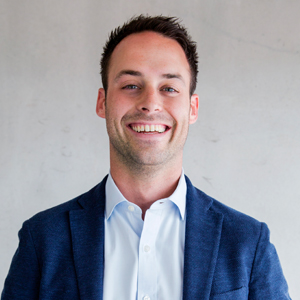
[00:00:10] Ray Latif: Hey folks, I'm Ray Latif and you're listening to the number one podcast for the food and beverage industry, Taste Radio. This episode features an interview with Bentley Hall, the CEO of Good Eggs, a California-centric grocery delivery service focused on locally sourced organic groceries and meals. Just a reminder to our listeners, if you like what you hear on Taste Radio, please share the podcast with friends and colleagues. And of course, we would love it if you could review us on the Apple Podcasts app or your listening platform of choice. Online grocery shopping is booming. Amid a pandemic-fueled shift in the way people buy food, dozens of grocery delivery startups have either expanded operations or entered the market over the past two years, a time in which the industry has grown to $122 billion in annual sales, according to research firm eMarketer. As companies jostle for market share and attempt to differentiate themselves by way of value, convenience, product selection, and quality of service, Good Eggs, which operates exclusively in California, has taken a super premium approach to grocery delivery, one that it describes as quote, a new way for people to feed their families. Launched in 2011, Good Eggs promotes itself as having the highest sustainability and sourcing standards in the industry and a service that delivers California's best groceries and meals. The company has raised nearly $200 million in funding to date, including a $100 million round that it announced In February of 2021. At the time, Good Eggs operated solely in the Bay Area, and over the course of one year grew its revenue to $100 million, tripled unit economics, hired over 400 new employees, and nearly doubled its customer base. In recent months, Good Eggs expanded its service to Los Angeles and Orange County as it attempts to build upon its reputation as an ultra-high-quality grocery option. Leading the charge is Bentley Hall, who came on board as CEO in 2015 amid a period of turmoil for the company and was tasked with realigning GoodEgg's operational strategy with its initial vision. In the following interview, Bentley spoke about how the company re-emerged and grew by focusing on its customers along with a highly curated and limited selection of products. He also spoke about how Good Eggs articulates quality and its process for vetting and adding new brands to its service. Hey, folks, it's Ray with Taste Radio. Right now, I'm honored to be sitting down with Bentley Hall, the CEO of Good Eggs. Bentley, how are you?
[00:03:01] Bentley Hall: I'm doing great. How about you?
[00:03:03] Ray Latif: I'm doing fantastic. Good Eggs is based in San Francisco, correct? That's right. But the company's in the midst of relaunching in the LA market. I have to think you've been in Southern California quite a bit these last few weeks. Have you been traveling back and forth or do you have a temporary place in LA?
[00:03:21] Bentley Hall: I have. I'm good at jumping on a plane in Oakland and going down there for a day or two. No permanent place. I think my two boys would miss me if I was down there too often.
[00:03:31] Ray Latif: That's really nice to hear. And, you know, all those jet blue points that you get from going back and forth, you wouldn't accumulate those, right?
[00:03:37] Bentley Hall: That's true, too. That's a secondary benefit.
[00:03:41] Ray Latif: Pretty significant differences between San Francisco and L.A. What has surprised you the most about those differences between the two markets?
[00:03:48] Bentley Hall: Or just learning from a food assortment what different markets like more. But honestly, both people in Bay Area and LA, they love their produce and they love discovering new unique brands that are tasty.
[00:04:02] Ray Latif: I guess whenever I go to L.A., I'm just amazed by the breadth of innovative, new, healthy concepts when I go to grocery stores. And typically when I go to grocery stores in L.A., it's Erewhon, so maybe my perspective is a bit skewed. But any interesting concepts that you hadn't been aware of until hitting L.A.?
[00:04:22] Bentley Hall: There's a ton of incredible brands down there. I mean we were there two weeks ago for a launch event and I think Harry's Berries is a perennial favorite in Southern California. Those strawberries are pretty tough to beat and I think they just started coming off the field at peak perfection a week or two ago. That's a good favorite of ours. We have this amazing bread. I actually don't recall the producer, but we can find it after. There's this stunning bread that is purple and yellow, and it's got this swirl, and it has turmeric, which is both visually stunning and also tasty to eat. We've got some great brands down there.
[00:04:57] Ray Latif: Well, the next time I'm in LA, I will definitely look for some purple, yellow bread with turmeric, or we can just dub in the brand name later on in post-production. We can do a recut later with the actual producer name. Sounds good. You've been with Good Eggs going on seven years. You actually started with the company in December 2015 as the CEO. It was a turnaround project to say the least, yet, The category of grocery delivery or grocery delivery was on the cusp of a massive growth in adoption in the United States. Let's start with those problems at Good Eggs when you took over. How did you assess the issues? And, you know, were you still pretty optimistic about the foundation of the company despite all those problems?
[00:05:46] Bentley Hall: Yeah, I mean, I think for me, you mentioned it, but being in the right category at the right time is something that really matters to me. And I happen to care deeply about food. I've been in food for 15 or 20 years. And if you've been in food for a while and then you see the biggest market in the US, which is grocery, which is a trillion dollars and 6% of GDP and a core human need and something I personally care a lot about. And you see that in this giant state of transformation, that's the greatest moment. on the planet. I mean, I wake up every day excited to jump out of bed and tackle that opportunity. I don't think you can pick a perfect company in those moments. I think you want to find a company with a good foundation and good bones that has great potential and jumped into the category at that moment. If you go back in time, remember too that back then 3% of groceries were sold online. And today it's north of 10%. And I think in general, people think it'll get above 20% in the next five or so years, that idea that that share would come in this category, maybe 5% of people believe that six years ago, seven years ago. Now you say that, and everybody's like, yeah, yeah, we get it, move on. But it was a very different level of awareness about how quickly the category is changing. And you mentioned this, but in other countries, they're way ahead of the US. So it also wasn't a theory. It was actually happening elsewhere. We were just behind.
[00:07:07] Ray Latif: Clearly, you're optimistic about the potential for grocery delivery, given what we had seen globally. Yet, when thinking about Good Eggs, to put it another way, you know, were you concerned that the basement might leak water while you were rebuilding the house?
[00:07:25] Bentley Hall: This is a good analogy. This is the thing about me and about the opportunity. I like adventure. I like a challenge. I'm super curious. I like learning and growing. So to me, again, going back, you find the right category and you get a company that is not perfect, that has things that need to be fixed and also has good bones. That's okay. I actually am excited by that. I'm not frightened by that. So yeah, when we joined Good Eggs, were there some things that were exceptional that honestly I could have never built? Yes. Were there things that needed to be fixed? that I was capable and the team was capable of also fixing for the future? Also, yes. Those kind of go hand in hand. I don't know if there's a company that doesn't have both of those things, irrespective of where it is in its history.
[00:08:07] Ray Latif: However, competition can catch up to you if you are not buttoned up. And while competition wasn't what it was back then, what it is today, how did you take new technologies and platforms that were coming to market into consideration when you were thinking about Good Eggs growth strategy.
[00:08:28] Bentley Hall: Yeah, in general, when we have big moments of change, we're thinking about what we want to do in the future. It's a pretty basic process. I talk to a lot of customers. I talk to people on our team. I talk to our suppliers. And I do that for 15, 20, 30 days. And usually there's some pretty consistent themes about what all those people, all those stakeholders really want from GoodEggs. We try to narrow that down to two or three things, and I'll get into your technology question in a second, and then we go do it. And for us, one of the things that people wanted was way more assortment and way more SKUs. So at the time, we were this occasional farmer's market. Now we are a primary grocer with 5,000 to 10,000 SKUs. The other thing people wanted, we were a two-day delivery. So you ordered, and you got it two days later. And people kept on wanting same day. And at the time, that was beginning to become more common, but still not the norm. And so we had to make a major technology change to enable same-day delivery and do that efficiently. To put that visually or from a story perspective into context, when I got to Good Eggs, we had built great technology on many parts of the business, but still probably half of the operations when we picked groceries and you delivered it was paper checklists. to get to same day delivery, that wouldn't work. And to scale that wouldn't work. So there was a big technology overhaul to move that fully digital to make that a comprehensive system and watch same day delivery.
[00:09:55] Ray Latif: That's pretty surprising to hear that you were relying on paper checklists to fulfill orders, even in 2015. I think we were pretty digitally savvy in 2015, although it doesn't sound like the company was so much that.
[00:10:10] Bentley Hall: You got to remember, I mean, Good Eggs had been around at that point for four years. Online grocery, again, was two or 3% of the globe. So that actually, That wasn't uncommon. Now it seems crazy. Like we were antiquated. We were actually the fact that we had a third or 50% digitally enabled was actually a pretty rare.
[00:10:27] Ray Latif: You're returning to the LA market. As I mentioned, you had been in other markets as well. In addition to San Francisco had pulled out of those markets, I think it was prior to you joining. Is that right? Yeah, that's right.
[00:10:36] Bentley Hall: We were in LA, NOLA, New York, San Francisco, and we scaled back from all of those five months before I joined to just focus on the Bay Area.
[00:10:46] Ray Latif: So your first few years on the job, it seems like it was about proving the model and proving that the model could work in San Francisco, so much so that the model could be repeated in a place like L.A. When you were looking at new markets to get back into, why was L.A. the right one?
[00:11:02] Bentley Hall: Because of our, our depth and our foundation here in the single market, the San Francisco area, which did require lots of focus and, and really, really making trade offs to deliver a good foundations. The reason la was the next big one for us I mean la is. in California. We know how to operate here in California, so it's not too far away. There's probably 30 or 40% of our producers and our suppliers that overlap between the two regions. We have a number of customers actually in the Bay Area over the time that I've been here, moved to LA, and were waiting for us to get there and had been asking for us. It's a huge market. It's I think 14 or 15 million people, almost twice the size of San Francisco Bay Area. And it's one that cares about food and is relatively health conscious and has these clusters of really, really high quality customers in certain neighborhoods.
[00:11:53] Ray Latif: Let's talk about those clusters of customers that you have in LA, and I assume also those clusters that, similar clusters that you see in San Francisco. Who is the prototypical customer for Good Eggs? Because this is a service, while it would be amazing if it were for everyone and available to everyone, it's not. And you guys know that so much that it doesn't seem like you're trying to be everything to everybody.
[00:12:18] Bentley Hall: That's right. We're not. And I don't think that's a winning strategy to try to be everything to everybody. So we like having deep roots in few geographies of which L.A. and San Francisco are two of those. We like really being focused on a customer who cares about peak quality high integrity food and cares about a certain level of convenience but without compromise of their values. If you think about the job to be done that customers usually come to Good Eggs for. One is full grocery. You are our primary shop. We use you for amazing produce and proteins and everyday staples, meal kits, meals, great wine. They use us for all of those things and probably 70-80 percent of at-home food purchase for their family is done through Good Eggs. That's a huge chunk of our customers. Second chunk are actually these people who are gourmands, who are gourmet. They love food. They actually don't care about convenience. They are willing to go to a butcher or a baker or a fishmonger or go to the farmer's market. And they use us for a lot of specialty items. And a huge portion of their basket with us is produce because we still buy 70-80% direct from local producers, which is pretty uncommon. And then the third job to be done that customers come to us for are people who are looking for shortcuts to meal prep. And so instead of leading with groceries like the first, they actually come in and use meal kits, use our prepared meals or ready to eat items. And that's the largest chunk of their basket. Over time, most of them grow into other categories, but they come in with one of those three intents.
[00:13:50] Ray Latif: You seem to know who your customers are really well, and I would assume that is reflected in your product selection. How many SKUs, how many brands does Good Eggs carry, and where does it break down in terms of packaged goods, packaged brands versus perishable items or non-branded perishable items?
[00:14:11] Bentley Hall: Yeah, we have around 10,000 items in the Bay Area. We have around 5,000 in Los Angeles now. Because there's high seasonality and we have such a high mix of produce at any given time, it's smaller than that total number. If you think about our mix and how it breaks out, in many ways, you think of a traditional store and there's this perimeter, right? And that's refreshes and the center is dry goods and brands that you know and love. We in a Bay Area the inverse of that. Our perimeter of the store is our center of store. Fresh for us is more than 70% of our total overall sales. I think that is also connected to your point about customer. Our customers eat a lot of like really whole fresh foods and they cook with those and they eat those kind of simple clean ingredients that are easy to prepare. That's the biggest portion of our business.
[00:14:59] Ray Latif: It's interesting you use the phrase perimeter of store because you're a grocery delivery service. You're not a grocery store. At least I wouldn't think of you that way. But do you consider yourselves a grocery store? Do you consider Good Eggs a grocery store? Are you a service? I mean, how would you describe Good Eggs?
[00:15:19] Bentley Hall: I would describe this as a service that delivers California's best meals and groceries. And if I wanted to go deeper, I'd talk about the differentiation in how we source locally and the quality of our food and how much care we put into good jobs and our people. But fundamentally, it's a service that delivers California's best groceries and meals.
[00:15:39] Ray Latif: Those products that you carry, again, are very much curated to your customer's needs. how do you evaluate the attributes or the aspects of a particular product or brand that would fit into, or that should fit into your service?
[00:15:56] Bentley Hall: Yeah, I'll talk about how we think about the whole assortment, and then I'll talk about how we select individual items and brands. Across the whole assortment, I mentioned before where the number of items we have, we wanna be complete across categories. So we wanna have something in every category, but we wanna have high curation within those categories. Actually, two nights ago, I gave a talk at Berkeley Haas, And it was about like the history of grocery, which was actually a fun conversation. And this like skew proliferation is really a new thing where a store has 50, 75,000 items. That's a pretty, pretty new phenomenon. Like, I don't, I don't know when or why we need three aisles of sliced bread to choose from that feels a little over the top. So for us, we don't need aisles of sliced bread. We need some good, some better and some best. Sliced bread for your kid's lunches. Amazing artisan bread. Maybe it's the yellow and the purple one. We need to have a small selection of bread that is great and is brought in fresh every day, but we don't need those miles and aisles. So I do just like we complete but curated is how we think about the overall assortment. Within individual items and SKUs, we have on our site our sourcing standards, and it's pretty clear about how we pick produce, how we pick proteins, et cetera. But the commonality of all those criteria is, does it taste really, really good? Which I know you and your audience can appreciate. And number two, does it meet our pretty strict sourcing standards? And two of those things, as an example, are can we trace every ingredient back to the source? Do we know where that food came from? And then on our site, we're really transparent about who the supplier is. So you, as a customer, have full transparency to the producer, where it came from, what their story is, who they are and where they grow or produce things.
[00:17:32] Ray Latif: Going back to your point about we have good, better, and best bread, is that similar across categories? Do you have sort of a value, a premium, and a super premium option across all the categories that you represent or carry?
[00:17:47] Bentley Hall: That is true across most traditional grocery categories. Things like produce, we just have better and best. I don't know if good produce is good enough for us. And things like proteins, it comes back to standard seafood, beef, chicken. We have such a high animal welfare standard. I think we only have two fish that are not wild. That's where we have a higher standard than most stores. But for us, it's the only way to curate.
[00:18:14] Ray Latif: So just as an example, let's say someone representing a brand, an entrepreneur representing a brand, I was gonna say knocked on your door, but this isn't like the 1950s, sent you an email. You have an office, they can come in. There you go, okay. Bentley said you can come to the Good Eggs office in San Francisco. He gave you permission, folks.
[00:18:30] Bentley Hall: Maybe an appointment first would be ideal.
[00:18:34] Ray Latif: Let's say an entrepreneur sent you an email, LinkedIn message, what have you, and said, hey, you know, I saw that you carry this brand as part of your selection. I think we have a better brand. I think we have a brand that is superior to that one that you carry. How do they prove that to you?
[00:18:53] Bentley Hall: One, our taste panel here will taste it. They're usually a pretty good judge of that. And then two, we will go through the sourcing standards that I mentioned. We always try new brands and see if they can beat other brands on shelf. One of the benefits of being curated is because we are selecting the ones that taste best and that sell best. It doesn't matter if you're a big, medium or small brand. If you get on our site, you taste better, and you sell more, you will be one of the brands that stays around. And because you're not competing with 100 other brands in your category, if you've already had a smaller selection, usually we are a decent volume mover for those brands.
[00:19:29] Ray Latif: How do brands curate and enhance their presence on your site? Is there a way to do so, or do you work hand in hand with brands on promotional pricing and things like that? Yeah, I mean, there's two ways.
[00:19:43] Bentley Hall: One, at a basic level, I know a lot of brands think you're trying to get somebody to get excited about your brand, to try your brand. If it were in a traditional store, you'd have people sample things in the old days, as you know. People now, if they're a brand, they get somebody excited about trying Good Eggs and that customer lives in either Los Angeles or Bay Area. It's so easy to take that intent and that interest in that brand and convert it to purchase and get it at somebody's door same day. So that's actually something that we help a lot of small brands do, especially in these markets where we are. How else do we help them? Twi is our forager and she's always hunting for new discoveries. She sends out a monthly newsletter that goes out and talks about our latest and greatest items that we're excited about. We have a blog, we tell stories to our really active customer base and sometimes we send a photographer down and tell a whole story about who the producer is and how they came up with the idea and what matters to them. We also have merchandising sections on our site where we're either saying just in which are these new items, amazing seasonal items, these discoveries. We're doing product drops every month with partners like Quince and Katonia in San Francisco Bay Area, where every month we drop some really exclusive wines. But there's ways of, I would say, identifying these new SKUs and then highlighting them across different channels on Good Eggs. That helps both get new customers excited and helps those new brands get off to a relatively good start.
[00:21:03] Ray Latif: What's been the best way to identify the brands that your customers are going to embrace?
[00:21:11] Bentley Hall: Yeah, I mean, there's many ways you do it. One, which is a basic one, but we'd probably do more than most is we actually ask our customers who love food, what do you love? What do you wish we carried? And we try to open that dialogue on a regular basis. Two is the people who are on our food team and our assortment team and our foraging team, they love food so much that it is a job. It's also what they want to do on their nights and weekends. For us, relative to some of those other people you mentioned, we go into each local market and we really want to know who is the best baker, who is the best produce grower, who's the best seafood monger down here, who's the best restaurant that we can partner with to have some exciting meal kits. So the team is always down there. I mean, you think about LA, which we just launched, the team went down there, you know, nine or 12 months before, and they knew exactly what categories they were going after. And they really just kept an open mind about who was, who was down there that was making great product. I also think the thing that is different from us versus others is we're okay finding somebody who is a small supplier who may not be able to ship nationally to some of these big players and actually work with them to grow and scale their business.
[00:22:21] Ray Latif: Let's go a little bit deeper into the research that you do on your customers. What are the questions that you're asking them? What are they telling you that's really moving the needle for your product selection? What are some of the things that they are telling you that they don't want?
[00:22:38] Bentley Hall: Yeah, I mentioned earlier in the interview, there's kind of three jobs to be done. How we get that information is we, on a regular basis, we actually do pretty big surveys, and then we actually go into people's homes, and we have in-depth interviews with them. We open their cupboards up with them, and we just go in there, because we really do want to learn, and we want to know what they're buying from Good Eggs, what they're happy with from Good Eggs, what they wish Good Eggs carried that we didn't, where they go to other retailers to get other things, and why. It's just a really open dialogue because we are curious and we want to know what our customers want. You mentioned earlier, how do we forage? We actually, our team looking at and talking to customers is a much better way, in our opinion, to meet their needs and to go look at other retailers. The other thing that we can do outside of just talking to our customers is we have all this great data on our site about where do people click? What do they buy? If you think of a traditional store, you can see velocity and how fast things move. But at Good Eggs, we can see not just how fast things move, but what the repurchase rate is. So a customer who came in, who tried that product, how often do they repurchase that item? That's also really valuable data for a lot of these small and medium-sized brands to know. So that's something we see. I mentioned those three customers before about the jobs to be done. Each of them has really different basket composition. They gravitate towards different sections. They look for different attributes in each of those sections. And so also recognizing that not every customer is the same, but there's clusters of customers who behave in similar ways and have a similar job to be done has been useful for us as well.
[00:24:13] Ray Latif: I would think that you know you're succeeding with your strategy if sales are going up if customer attention is high. But are those the key metrics that tell you that you're doing a good job?
[00:24:29] Bentley Hall: Yeah, from a customer lens, there's two things that tell us if we're doing a good job. One is size of their order, how frequently they order and how long they stick with the service. We talk about that all the time, and that's always been going up for us. When customers use Good Eggs general, they actually spend 5% or 10% more with us every year that they are with the service, and they never leave after a third or fourth order. The second thing we do, which is more, I would say, subjective than numerical, is we do an NPS study all the time. So we do it at a transaction level, like how is your order, and we also do it at an aggregate level. How is your relationship with GoodEggs? How do you feel about GoodEggs? And we look for that for Things that both delight the customers, like where they spike and are overjoyed, and then areas for improvement, and we turn those into actions.
[00:25:17] Ray Latif: The business of grocery delivery is evolving, it's changing, it's becoming faster. I feel like, you know, we've gone from two day delivery to one day delivery to, you know, six hour delivery to 10 minute delivery. How do you take that into consideration? How do you factor that into your business model? Because people do want convenience. And I got to think that as we're seeing more services open up, and more services open up with high quality items. Like I think about a service here in the Boston area called Getter, G-E-T-I-R. And I see their product selection and it's pretty impressive. They have some really high quality items. And if I can get that in 15 minutes, I think I wouldn't say this, but some customer might say, well, why do I need GoodEggs?
[00:26:06] Bentley Hall: I think you gotta have this breadth of assortment first. You gotta have actually assortment in food that is differentiated and high quality second for us. And then third, I do think there's dynamic delivery and dynamic service levels that will become increasingly expected by the people who use us. If I think about, again, those jobs to be done, the customer who's using Good Eggs as a primary grocer, they're kind of like me in a way. I have two boys who are 7 and 10. They're always in sports. My wife and I both work. So for us, in general, I kind of have to do a little bit of planning. So same-day delivery is pretty good. And Good Eggs is actually the only company that I know of that does early morning deliveries. So you can have a slot 6 to 8am. So before your day gets started, before your kids are off to school, your groceries are on your doorstep. It's a pretty awesome service, but it's still same day and it's not rush. So my wife and I, the behavior we do is we order the night before and we get it the first thing in the morning. The second group of people are those gourmands I mentioned. They actually are not as convenience driven. They actually care less about 15 minute delivery. They care more about, can I get this amazing cake from this baker tomorrow? Can I get this special fish or custom cut from this butcher? And I'm willing to wait 24 hours for it. I need it for a dinner on Friday night. And the third, the people who are short cuts on meals, that's the category which I agree, you need fast delivery. You're kind of trying to solve an impulse right now or that classic four o'clock dilemma. And again, those are all customers who use Good Eggs regularly, but from a delivery timeframe, they're pretty different. One other note, which you can choose to include or not. If I go back to like, what does our customer want to do? Our customer does not live like a really black and white binary life. There's some nights where they don't want to cook anything. They can't eat a pan. There's just too much going on. There's some nights where they want a quick weeknight win. And that's under 15 minutes. That's what a meal kit is for. And there's some nights where they do want to cook for three or four hours and have this elaborate, amazing meal with people they love. That's the same customer. And a lot of those quick service companies do not deliver to all three of those occasions. And it's the same customer that changes their behavior week to week and season to season based on what else is going on in their life.
[00:28:15] Ray Latif: It seems that the overarching desire for your customers is quality though, right? Convenience is important, but quality is the most important aspect. How do you articulate quality though? And I think this is a question that a lot of brands ask, which is, we have a great product, great ingredients, and we have the highest standards for our formulation. but it's hard for them to communicate all that to the end consumer. How do you guys do it?
[00:28:46] Bentley Hall: I mean, the best way for us to communicate quality is to get our food in somebody's hands and have them try it. And that usually does a better job than anything we can say. You talked about attributes earlier, like peak quality, high integrity food is what we do. How do we do that? I also mentioned, we source 70 to 80% direct from local producers in a category that is less than 1%. And I care about that, but that means we're getting things really close. It's coming into our central fulfillment center here in Oakland where we're sitting today. It's going out really fast, same day, next day to customers. It's hard to, through a traditional grocery store, get that level of freshness because other people are not making those same choices. When I was walking through the LA site actually two weeks ago across all temp zones, the overwhelming number of brands that we saw on shelf or producers, like I and the team that was walking along, at least one or multiple of us really knew those producers. We knew my name, we knew their parents, we knew their kids. I don't think that happens that often anymore, and that actually makes me happy and feel good.
[00:29:50] Ray Latif: Bentley, one of the other things that you shared with me the last time we spoke that was really poignant about Good Eggs was a Danny Meyer quote about whether or not you're doing things to people or for them. And I feel like that is a cornerstone of your business philosophy. Are you doing something to benefit your customers or are you just selling them something? And clearly it's the former for your customers. And I have to think it's a true statement also for your employees as well. At least I hope that's true.
[00:30:28] Bentley Hall: We don't want to be in the business of one-way transactions where we toss some product over your fence at your house and don't have an ongoing relationship. And I think we all know those who do that. So yeah, we want to have a relationship with a customer. And to do that, the idea of enlightened hospitality, Danny Meyer, he's so thoughtful about how he thinks about his restaurants and business. The idea that we are doing something for our customer as opposed to to our customer is important. And the idea that, yeah, we deliver a product, but it's really how people feel about that product and that service at the end that leaves them with loyalty and happiness for a brand or not. To do that, we have to have a strong perspective and to just be good people and good citizens. We have to have a strong point of view on living wage, on good jobs, on benefits for our team. And we're now up to 700 or 800 people in the Bay Area and L.A., the far majority of which work in our centers, picking groceries or receiving this amazing food we were talking about or delivering it to homes. And we do pay more than most. And in an industry with lots of gig labor, this is an unconventional choice to have, have them be our own employees. But for us, that matters. And we want to pay more than most and we expect more than most. And we think generally that also delivers a way better service for our customers, where they end up feeling like that is not a transactional one-way thing, but it's a company that cares and it's a company that takes care of people and food.
[00:32:00] Ray Latif: When you say you expect more than most, what does that entail? How do you have that conversation with your employees, you know, beyond giving them a strong living wage?
[00:32:10] Bentley Hall: across the company, it doesn't matter what, what team you're on. We think about what you do and that should be measurable. And we think about how you do it. And when that's really the behaviors, when, and if you're, you're welcome to come anytime and tour the facility. When you come in here, you will, you'll see that people here are happy. Like they're working together, they're collaborating, they're getting things done. They're always suggesting improvements to how we do things because we're never perfect. And we're just getting started. They care about this place. And so for them, they know what we measure, they know how they're tracking against what we measure, and they feel like they're active participants at achieving that goal with a team that cares about them.
[00:32:46] Ray Latif: Loyalty is an important part of what you guys do. Customer attention is really important to Good Eggs, as it should be for any business. How do you achieve loyalty with your employees? I mean, I think again, going back to this notion of paying them well is really important, but I think people are often moved by the little things that have nothing to do with salary.
[00:33:11] Bentley Hall: Yeah. I think for our team, the idea of continuous improvement, both in their jobs and having the ability to suggest those ideas and make them happen matters. I think often that is correlated with upper mobility in their careers. And so the more great suggestions you have and improvements you make, usually those are the people who get promoted and move up here. The other thing we do, which is it's a little thing, which I can actually have not talked about before, but it's so true to who we are. We do this monthly food for thought program. And we have a card and it talks about a producer just like we do with customers. We did this for Masumoto Farms last summer, which is one of my favorite producers for stone fruit and peaches. this card and it talks about, it had a picture of Moss and Masumoto at Masumoto Farm. It had a quote by him about who they are and how they feel about their relationship with Good Eggs and then there were some tasting notes and it's just a kind of index card and then they shipped in two or three palettes of their best peaches of the season And in our monthly all-hands-and-huddle with that team, we shared a video, we gave them each one of those cards, and we gave them each a peach to try. And that's an unconventional thing to do, but that's the best thing, one, for them for engagement, two, to get them connected to our producers and what matters. And that beats any quality assurance program we have at getting people to treat that peach with like a steward as opposed to a transaction. And so that's one of the things we do, but there's a whole host of them that we always think about.
[00:34:43] Ray Latif: that seems like it was a little bit more difficult to pull off during COVID, especially the first few months of COVID. You know, I talked to CEOs and leaders about their experience during the pandemic, and oftentimes they talk about jumping in there with their employees, being present in the warehouse, being present with their employees, you know, despite the fact that there are risks, or there had been, and there, well, there continue to be risks doing so. Was that you? I mean, was that part of your approach to leading during COVID?
[00:35:13] Bentley Hall: Yeah, that definitely was we, we talked about that period being dark days and bright nights, which means we work, we worked all the time and yeah I was in here at least four or five days a week throughout that period. For all the reasons that you mentioned, I think it's, it's a responsibility we were an essential service. And despite everybody went through a lot of change and had to do a lot of hard work during that period, for me and for the team, it was actually a pretty cohesive, I would say like bonding experience because we're helping these suppliers who suddenly had a bunch of the restaurant channels closed down, move product that was already growing or in their fields. We're helping customers who some of them literally cannot go to a grocery store for safety reasons, and we're giving them a different alternative. We're giving people these good jobs I mentioned at a time when a lot of jobs were actually being removed. And that combination, not easy, any of that, but at least you're doing something important that matters. And if there's anything the GoodEggs team has in common, we like doing hard, important things that matter.
[00:36:17] Ray Latif: It's so interesting thinking back to those first few months of 2020. You know, I was one of those people that only shopped online, that only got grocery delivery. I'm a very lucky person because I was able to do that. One of the cool things about doing that was product discovery, which sounds kind of strange, right? I think a lot of people think that product discovery, started to disappear or dissipate because people weren't going to stores as often as they had. But I found interesting things online and I'm like, wow, this is really cool. I had no idea even, you know, myself being in the food, as involved in the food and beverage industry as I am, I still found new products. Was product discovery something that was a bit of a surprise for your customers as well?
[00:36:59] Bentley Hall: Yeah, I think for people who had not used, think of the first time you walk into any grocery store, physical or online, it's a new experience, right? You don't know how the aisles are laid out. You don't know what's where. So there is some exploration and some discovery in that moment. And so I think both in COVID and another period, there was a lot of that. I also think people were eating lunch at home for the first time, right? There was just so many different people at home and different meal occasions that reinforced this intent for discovery. That's all true.
[00:37:27] Ray Latif: And has that continued, I guess, post those first few months, that first year of COVID?
[00:37:33] Bentley Hall: Yeah, that's always been a part of our platform. I think most of our customers, what we try to do is we want people to be able to fill their grocery basket with the weekly staples they get relatively quickly. So maybe 80% of their basket are things that they can do quickly and efficiently. And then yeah, 20, 30% of the basket maybe is discovery or newer things they are trying. And we want to make that an enjoyable process as opposed to a functional process.
[00:38:00] Ray Latif: Well, I'm excited for the future of Good Eggs. I selfishly hope that you guys expand to the Boston area sometime in the near future. It doesn't seem like the near future is when that's going to happen, but it would be pretty exciting. But in the meantime, very cool to hear all about the brand, the company, and how you've taken it from a turnaround project into a thriving business. Bentley Hall appreciate the time. Hope to meet with you in person real soon, but good luck with everything going forward in the meantime.
[00:38:29] Bentley Hall: Thank you so much for the time and the great questions. I hope one day we get to Boston too. I grew up north of Boston. My parents and you are both in the list of requesters now.
[00:38:38] Ray Latif: All right, Bentley. Once again, thanks so much for being with me today. You bet. Have a great day. Thank you. That brings us to the end of this episode of Taste Radio. Thank you so much for listening, and thanks to our guest, Bentley Hall. As always, for questions, comments, ideas for future podcasts, please send us an email to ask at Taste Radio. On behalf of the entire Taste Radio team, thank you for listening, and we'll talk to you next time.