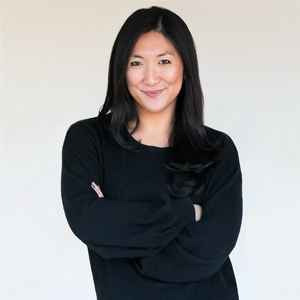
[00:00:10] Ray Latif: Hello, everyone. I'm Ray Latif and Yang're listening to the number one podcast for the food and beverage industry, Taste Radio. This episode features an interview with Amy Yang, the founder and CEO of Better Brand, an ambitious food tech-powered platform that is positioning itself as the Beyond Meat of carbs. Just a reminder to our listeners, if you like what you hear on Taste Radio, please share the podcast with friends and colleagues. And of course, we would love it if you could review us on the Apple Podcasts app or your listening platform of choice. When it came to bagels, Amy Yang didn't like her two options, so she created a third one. In the past, her choices were to eat a bagel and feel remorseful for having consumed a food loaded with carbohydrates, or not to eat one and feel upset at having to pass on one of her favorite things to Nosh on. What if, she wondered, she could create a bagel that is everything one would expect it to be, but with significantly less carbohydrates, sugar, and calories? Her answer took $1 million and a stroke of luck, but Amy eventually identified what might be described as the holy grail of food tech. Her company, Better Brand, touts a process described as, quote, grain-changing technology to create a bagel that has the same amount of net carbs as two banana slices, the same sugar content as one celery stalk, and the same amount of protein as four eggs. The bagel is aptly called a Better Bagel. Unsurprisingly, Better Brand has attracted significant attention among mainstream and trade media, and with it came interest from high-profile investors. Last year, the company closed on $2.5 million in new capital in a round led by Reddit founder Alexis Ohanian's 776 Fund. Better Brand has also attracted investment from actress Emmy Rossum, Sean Thomas, who is the grandson of Wendy's founder Dave Thomas, and actor Patrick Schwarzenegger and Sean following interview, I spoke with Amy about how she analyzed the opportunity for Better For You Bagels, why raising her first million dollars was both remarkable and lamentable, and the rationale for launching Better Bagel last year. She also discussed the fortuitous ways she met several investors, what she wanted to convey in branding and package design, and why she embraces constant iteration. Hey folks, it's Ray with Taste Radio. Right now, I'm very excited to be sitting down with Amy Yang, who's the founder and CEO of Better Brand. Amy, how are you?
[00:03:01] Amy Yang: I'm doing well, Ray. How are you doing?
[00:03:04] Ray Latif: Fantastic.
[00:03:05] Amy Yang: Excited to be here.
[00:03:06] Ray Latif: Yeah, I'm excited for you to be here as well. This is going to be an obvious question. Did you have a bagel this morning?
[00:03:11] Amy Yang: I did have a bagel this morning. I had a better bagel and I actually had our new flavor that is dropping soon that we're really excited about. It's the everything better bagel.
[00:03:21] Ray Latif: Ooh, thanks for sharing that with us. I don't know if that was under embargo or not, but it's not anymore.
[00:03:26] Amy Yang: Not anymore. There you go.
[00:03:29] Ray Latif: Great. Yeah. I mean, I love bagels. I'm a big bagel fan. I typically have mine with smoked salmon, some onions, some capers, obviously some cream cheese as well. How do you take your bagels?
[00:03:41] Amy Yang: Similarly, actually. So I mean, I think the first question is, do you prefer your bagel toasted or plain? And mine's definitely toasted. But actually, fun hack is if you air fry a bagel for about five minutes at 350 degrees, It's life-changing. I mean, truly, truly heavenly, or at least with a better bagel. And I had only found out about this a couple of months ago when it was actually a customer posted about it, tagged us on social media, and emphatically was like, this just changed my life. So of course, we tried it and it was incredible. So Air fry your butter bagels, it's the way to go. And then in terms of toppings, I think I always kind of err on the side of convenience. So love cream cheese, tomatoes, some pepper, smoked salmon, always incredible if it's around.
[00:04:35] Ray Latif: Yeah, you know, first of all, the air fryer thing is amazing. That's such a great hack. Does it just give you a crisper exterior? Is that what it is?
[00:04:42] Amy Yang: Crisper exterior, soft, chewy inside. The smell really permeates throughout your kitchen and it's a wonderful experience.
[00:04:53] Ray Latif: That sounds really cool. I'm going to have to try that. I want to get to the business in a sec, but I want to stick on the tomato topic for a second. Tomatoes on bagels are, I think, is very divisive. Really? I don't know where I stand. Well, because the tomato is wet. You know, it's like this, it can get kind of juicy, it can get into the bagel, it can kind of mess with the rest of the toppings. So I've always stayed away from the tomato, even though I've kind of wanted, I mean,
[00:05:18] Amy Yang: Even with your salmon, you don't do lox and tomato? Interesting. So, I mean, I like it because I think it adds a little kind of diversity of texture. I get your point with what if it seeps into the bagel itself, but I think that's why you have a very clear line of cream cheese and then you top it right on top of there.
[00:05:42] Ray Latif: Okay, on your advice, I'm gonna try it. I'm gonna give it another try. I'm gonna make sure that I have a firm tomato, because I can't have one that's just a little soft. Then it's gonna be a mess.
[00:05:51] Amy Yang: I agree with that.
[00:05:52] Ray Latif: Okay. All right. We've been talking about bagels. Let's talk about the company of bagels. That's Better Brand. That's a good tagline. The company of bagels, Better Brand. You should start using that. Maybe not, but.
[00:06:06] Amy Yang: The Beyond Meat of carbs. The Beyond Meat of carbs. The company of bagels. We can work that in.
[00:06:12] Ray Latif: I like yours better. The Beyond Meat of carbs, you know, that's a great way of describing what you guys do. Cause you know, the future of Better Brand isn't just going to be about bagels. And we'll get into that. There's a lot of things we're going to be getting into, but you know, when you put out your press release about the company, your first press release, one of the things that really stuck out to me was the line. about how Better Brand broke records earlier this year when its founder became the first sole female founder to raise over $1 million in a venture-led pre-seed round across food tech, consumer, and food and beverage industries. First of all, congratulations on that. That founder is you, obviously. Second, it's interesting because I think you could take that in a couple different ways. One is that it's incredible what you've accomplished. And yet, it feels like it shows how far we have to go as an industry when you're the first.
[00:07:14] Amy Yang: Yeah, you know, I think that's definitely true. And I think breaking down that statement, there are a few different aspects of it or components of it that make it really differentiated, right? So one is, you know, the sole female founder. And I think that's actually an area where the industry really can do a lot better in and make a lot of improvements in just kind of looking at the statistics that Women founders get 2% of all venture funding, which is crazy. And especially if you look further at statistics that women-led teams generate an average of, I think it's 35% higher ROI than male-led teams. And a really well-known VC actually did this analysis of their portfolio companies and found that women-funded teams performed 63% Better Brand the male-funded teams in their portfolio. So the fact that only 2% of funding goes to women in general, I think is crazy and definitely an area where we all need to do better in and focus on. And then the second part of that, I think being specific to food and beverage, I think what that says is that VCs in this space, I think need to be maybe a little bit more flexible in terms of understanding each individual company and what they're trying to achieve, rather than plugging and playing into the traditional VC model of what food and beverage typically looks like.
[00:08:41] Ray Latif: Most entrepreneurs, to a person that I'll speak with, they're born entrepreneurs. They always had this desire to build something on their own. Is that you as well? Are you a born entrepreneur?
[00:08:53] Amy Yang: That was me, yes. I actually, oh my gosh, I mean, I don't know if I should tell this story because it's actually a little bit embarrassing. I think my actual first venture was when I was like eight years old in second grade. At the time, my elementary school, the eighth graders, sold ice cream to fund their school trip. And what I realized was a lot of my classmates wanted this ice cream, but never had the foresight to actually bring money so that they could buy it. So what I actually did was I would lend someone like 50 cents and they would have to pay me back 75 cents the next day. wanted that instant gratification of eating that ice cream bar that day. It actually lasted quite some time until one of the teachers found out about it and didn't appreciate what I was doing. My parents thought it was hilarious. But I guess that's a long answer of your question. But yes, it's always been in my blood. A couple of my cousins are serial founders and have done incredible things. And I've always been inspired by them and their energy. And I've always wanted to be an entrepreneur and always knew that that was what I was meant to do. But it's not something that I dived in right away. And there was definitely a path to setting that foundation to getting there.
[00:10:17] Ray Latif: Well, I'm really glad that you've shifted your path from childhood loan sharking, let's call it what it is, to food entrepreneurship.
[00:10:26] Amy Yang: Giving the people what they wanted, right?
[00:10:29] Ray Latif: I'm defending it still. I love it, Amy. When you were thinking about different businesses to get into, different brands to create or companies to create, was Better Brand one of many or was it one of one?
[00:10:41] Amy Yang: It was one of one and it was the one from the get-go. So I knew I needed to work on something tangible that I'd be passionate about and would solve a personal pain point. And to me at that point, my largest personal pain point was always around diet and healthy eating. I was always on the cycle of craving something, wanting to eat it. questioning if I should. If I did, I'd feel guilty. If I didn't, I'd feel deprived. And it was just this endless cycle that consumed so much of my mind space and garnered so much anxiety. And I used to dream of a world where we could just eat the foods we craved without limitation and never had to worry about negative health consequences or weight gain. And that really comes down to the consumption of refined carbs for a number of reasons.
[00:11:31] Ray Latif: Brain-changing technology is how you describe the secret behind or the foundation of Better Brand. Was this technology available or did you have to invest in its creation?
[00:11:43] Amy Yang: It was not. We invested in its creation. And when I said, if we can, I think that was going back to my earlier mindset of when I was informing the conceptualization of a Better Brand at a high level. And now I know that we can because we are, which is exciting. But going back to your question in terms of the R&D and the technology, yeah, no, it was, we had a blank slate to work with. And actually the first million we raised as our pre-seed was just for the purposes of R&D. And quite frankly, you know, I had done some high-level research, spoke to numerous, numerous people in the industry and had some idea of how we were going to start or go about it. But you didn't have a million dollars? No. And then so we started fundraising, close a million for the purposes of R&D. and hit the ground running. And what was amazing, and I think so lucky in so many regards and ways, and really kind of one in a million chance type of lucky, we got it right the first time around and very, very quickly. And I have so many role models in the industry. And I mean, one that comes to mind is Pat Brown, right? Who is obviously the mastermind and genius, incredible scientist behind impossible. And when he tells this story, he tells a story about how it took $9 million and a year of time for them to just disprove or to realize their original hypothesis of how to extract heme from soy couldn't actually be done in the way that they thought or hypothesized or envisioned. Then they had to pivot from there. So kind of taking that into perspective, the fact that we got it right, right away was crazy. And I think it was just kind of this moment of disbelief. And to put that even more into perspective, we closed our first round in February of 2021, and we launched in the end of June. As soon as we got that initial like, wait, this is a prototype, like something here we can put out, we just started running because I think in order to be able to run an efficient company and that, and if you believe in your product, you just need to get it on the market as fast as possible and take the consumer on this journey with you and start telling your story and start being able to drive impact. So the fact that we were able to do that in the timeframe that we did, and again, kind of tying back to your earlier comment on, wow, like one year, it wasn't that long ago. You know, it really is true, but we've done a lot and the project has continued to evolve, but really, really lucky with R&D.
[00:14:31] Ray Latif: When you said you got it right, What does getting it right mean? Did you apply it to a bagel? Did you apply this technology to a bagel? How did you know when you hit the jackpot, so to speak?
[00:14:48] Amy Yang: When the product came out and it was good.
[00:14:53] Ray Latif: When it was good, good is a relative term, Amy.
[00:14:56] Amy Yang: I mean, it hit the specs that we, and expectations that we'd wanted in terms of where density needed to be, where these like textural qualifications needed to be, and quite frankly, that it was good. And I know it sounds Like, wait, good, you know, what does that mean? But if you think about the products out there in terms of consumers, if a product is good for you, oftentimes you have to sacrifice, right? In terms of flavor, taste, and they're not good. They're not crave-worthy. So we certainly had, is this crave-worthy? And it was. So that's when we were running.
[00:15:34] Ray Latif: Was the initial product just dough or was it just pieces of grain that you could poke at? What did you see? Was it actually a tangible product that gave you confidence that this worked?
[00:15:51] Amy Yang: It was the tangible product and we had to work all the way through the formulation aspects in terms of the proprietary ingredients that we were using, which were so novel. And then the processing, which is so specific. And then the enzyme technology that we were really honing in on in order to tie and pull everything together.
[00:16:09] Ray Latif: But why start with bagels? Why were bagels the right product to start with?
[00:16:15] Amy Yang: Yeah. One, who doesn't love bagels?
[00:16:20] Ray Latif: Yeah, that's true.
[00:16:21] Amy Yang: I think there were a lot of opponents that kind of went into that thought process and deciding why a bagel. One was certainly the fact that everyone loves bagels. It's such a positive and joyful connotation and what an incredible food to make available and more broadly. without the guilt and restriction that oftentimes comes along with it. Two is that it's the most carb-heavy food, right? And what better way to put our stake in the ground as leading innovation in the refined carb space than by transforming the most carb-heavy food into the carb equivalent of two slices of banana.
[00:17:02] Ray Latif: Well, you have to enjoy it. I mean, you have to enjoy it for what it is, but it also has to taste like a bagel. It has to perform like a bagel as you toast it and cut it and do all these things, fill it. And, you know, your investors have to love it. And it has to perform for them as well. It certainly sounds like it did. And it certainly sounds like That second round of funding that you brought in had a lot to do with how much your investors love the bagels and you have some really high profile folks on your roster.
[00:17:34] Amy Yang: It's exactly like you were saying is. it came organically from them loving the product and having tasted the product. So for our second round, which is our seed round, we closed back in October, we actually didn't go out to fundraise. And at that point, we were actually so buried in terms of just trying to keep up with everything and the pace that everything was going and trying to build the team that we weren't taking investor conversations or calls at all. And I have so many unanswered emails that I'm so sorry for anyone who's listening. But it was just like, at that point, it's like you would have loved to, right, obviously, but you just didn't have the capacity. So what ended up happening was the product was out in the market and it got in the hands of... I think this actually all started with Chris Fortunato, who's an investor out of Soma Capital. They're an incredible fund. I think they've actually breeded 18 unicorns. So just really incredible and really impressive.
[00:18:35] Ray Latif: I've never heard that verb, breed it.
[00:18:39] Amy Yang: I mean, unicorns are animals, right?
[00:18:43] Ray Latif: They breeded 18 unicorns.
[00:18:45] Amy Yang: I like it. So Chris had found out about the product through his neighbor who had ordered it and was raving about it. So him and his wife started ordering it. And I think he was like, this is something that I really want us to be involved in. But again, at that point, we weren't taking conversations. So he reached out to Patrick Schwarzenegger and Sean I think on some press articles as being involved and they had been some deals together in the past and asked for an introduction.
[00:19:13] Ray Latif: So Patrick was already involved in Better Brand at this point.
[00:19:16] Amy Yang: Patrick was already involved as part of our precede. And I think Patrick Askey and I, I said, no, because again, it was just like, they were so impressive, but it was just like the capacity. It was like, we need to just keep this company functioning, but it ended up landing out on our books. And I loved them, incredibly bright, obviously. And they actually, they then made an introduction to Kyle Vogt, who was the previous co-founder of Twitch and now Cruise. doing crazy things and revolutionizing transportation and technology as a whole. And one of those, just one of the most impressive people I had ever met. So we spoke and he kind of mentioned, okay, I know you're not raising right now, but maybe it makes sense to do kind of a step up safe. I wanna be involved from the beginning. I love the product, vision. And I really aligned with everything that he was saying and his vision for the company. It kind of just snowballed from there. You know, he asked if I wanted an introduction to his friend, Alexis Ohanian, who he thought may be a great fit. I said, yes, Alexis. And I spoke and Alexis ended up, well, so I think initially he was going to, to angel invest, but ended up bringing 776 in to lead our, our seed round.
[00:20:36] Ray Latif: Alexis being the founder of Reddit.
[00:20:39] Amy Yang: Oh, Reddit. Yes.
[00:20:41] Ray Latif: Let's talk about your investors looking at this product and this brand and being really amazed by it because oftentimes when I see a brand that I want to try, it has to move me in a certain way, especially if I haven't actually tried the product yet. And what I'm getting at is packaging and presentation. What were the key elements that you wanted to convey on that front of pack that you felt like was going to move consumers to trial and be a really good introduction, not just to the brand, but to the technology that you were offering?
[00:21:19] Amy Yang: Yeah, branding and packaging is so key and so important because like you were saying, it tells the story of your company. And if it's done correctly, it actually draws your early evangelist to you. So I think in this case, what happened is an illustration of the fact that that's true. So what we wanted to do is brand better as an elevated, modern, innovative collector's item.
[00:21:49] Ray Latif: The package itself, there's a functional component to it, there's a form component to it. Again, like how are you going to get these to market? Where do they sit on shelf? How do you mail these? What's the direct to consumer? What's the best approach for direct to consumer? How did you think about the packaging in terms of function?
[00:22:09] Amy Yang: Initially, so we're actually changing our packaging to be more functional, but initially it was really about speed to market. What packaging was going to be ready in two and a half weeks to... We were moving fast.
[00:22:26] Ray Latif: This is tech fast for sure.
[00:22:28] Amy Yang: to where we could apply our concepts and branding and make it still have that modern, innovative collector special feel. And that's how we ended up with our first iteration of packaging, but it will be actually changing soon.
[00:22:44] Ray Latif: How were you initially shipping these products? I mean, were the bagels frozen in the bag? And why are you changing the packaging now?
[00:22:53] Amy Yang: changing the packaging now just for functionality. But, you know, originally what we had liked about this packaging was it stood on its own, you know, it was freestanding. It took up a lot of space, which we think that it deserved to take.
[00:23:09] Ray Latif: It's a pouch, a freestanding pouch.
[00:23:11] Amy Yang: It's a pouch. Okay. And it's a little bit different, right? It's not what you would expect from a patch of bagels. So it differentiated it a bit. But right now, why we're changing it, it really is functionality. If you think about how many bags of product you put in a case box and space and And now we're thinking, you know, 3PL and shelf space. So it all comes down to the nitty-gritty details and functionality. But I think that design aesthetic and brand is always going to shine through and is always going to be, you know, top of mind and paramount to Better Brand in terms of how we're shipping it, D2C, the project is frozen and then shipped ambient. So, you know, when consumers receive it, it should be frozen or consumed immediately.
[00:23:55] Ray Latif: So is the next packaging going to be in a box or in a plastic bag, or are you not saying yet?
[00:24:00] Amy Yang: I think you're going to have to wait and see, Ray. It's going to be really exciting and very design forward.
[00:24:06] Ray Latif: I was wondering why you were dancing around exactly what the packaging was. Okay, but you're not ready to reveal it. Okay, I get it. Well, we do know that you won't be changing your URL anytime soon because you have a killer URL, which is eatbetter.com. Uh, you told me you bought that URL, which I totally get, but why was it so important to own it?
[00:24:28] Amy Yang: You know, I think it just, it's so clear on what our vision is and what we're trying to do. You know, we're trying to help consumers eat Better Brand obviously tying in our brand name of a Better Brand. There could not be a more clear way to spell it out to a consumer.
[00:24:46] Ray Latif: For the first year that you guys were in operation and selling your bagels, I'm sure you were getting a lot of feedback. What was some of the most poignant feedback and did you incorporate it into the next iteration of Better Brand and the bagels that you make?
[00:25:04] Amy Yang: Yes, 100%. So our vision from day one was put a product prototype in the market, you know, as early as possible and really take the consumer on the journey with us and use their feedback to inform decisions. And I think Consumers know also that, especially when you have that message and you're such a new company in terms of the scope of what you're trying to do and accomplish, they're understanding it and they're excited to be on this journey and excited to provide that feedback and feel that much closer to the brand as a result. So anything from even like flavor to texture, to how we were shipping the product, to lead time, to price, All of that was a component of how we grew in terms of product development and every step of the process since launch. And we're coming up on, I think we just passed our seventh month mark, which is crazy.
[00:26:05] Ray Latif: Do you expect that you'll always continue to evolve? Because, you know, we talked about getting it right when it came to the technology and getting that first bagel to market, but clearly you've learned so much about how the consumer perceives and uses these products. Do you expect that, you know, there'll be a constant iteration of, yeah, okay.
[00:26:26] Amy Yang: Yes. And this is actually something that Alexis taught me. It's kind of that like software mindset and approach to innovation. So if you think about Apple, right? And an iPhone, the iOS updates are constantly turning in the background and you don't know it necessarily even, but there's constantly improvement happening. And that's the exact same way we're approaching Better Brand I think that is differentiated from other food and beverage companies where it's like, okay, this is our product, let's just continue to turn it. But no, it's constant innovation. So if you order Better Brand two months ago and you order it today, you'll see a difference and improvement. And that will always, always be the case. And I think as a consumer, that's exciting too, especially if you know the brand from such early days. There's always something to look forward to and your expectations are always going to be blown and it's an exciting thing to be a part of.
[00:27:23] Ray Latif: You always have to get better.
[00:27:25] Amy Yang: Exactly.
[00:27:26] Ray Latif: Yeah.
[00:27:27] Amy Yang: Exactly.
[00:27:27] Ray Latif: Well, if I can be devil's advocate just for one second here, I think it might be scary for me as an entrepreneur if I were ever to be, if I ever had the guts to be an entrepreneur in that you want to come to market, you want to go to market with the best Product and, you know, going back to the old saying, you only get one chance to make a great first impression. Do you have any concerns that what you're coming out with, you know, it could be better. You know, what you currently have could get better. I mean, does it ever give you pause?
[00:28:04] Amy Yang: Honestly, no. I think it's about the journey and learning. And I think consumers understand that too, especially when it's such an innovative, novel product. And we've always been customer first. We've always addressed every concern. And I think what's special and unique about Better Brand is this mission that we're trying to accomplish, right? not just kind of improving human health on a macro level and transforming the consumer experience with food, but really kind of honing in on this mission of everything's possible and not ascribing to these limitations that society has set in one way or another. If we can change the most carb-heavy food, a bagel, into the carb equivalent of two slices of banana, then what can't we do? And empowering people to use that as an example and as a way of empowering and inspiring them to kind of break free of these molds and, you know, any kind of fears or restrictions that they might be feeling or under. So, you know, I think it's an exciting prospect. And I think, you know, you need to get out early. I think no matter what, you're always going to be learning from your mistakes. And again, there are so many founders that I look up to. Founders of C.A.T. are certainly one of them. I think they've done an incredible job. And they tell a story about... And this is when they were going to retail. A couple years in, their first shipment to Whole Foods was because of how it was stored was moldy. And they, you know, they're like, okay, well, that was the learning point. And we're going to move past that because now we learned that. And I think especially early on, people are understanding of mistakes and it's a learning process. And that's how you correct things early on. So, and I think the best founders are not waiting for the product to be 100% perfect because there's always going to be improvements and iterations. And if you have something that's going to the exciting consumer, get it out there.
[00:30:12] Ray Latif: Well, what would be really exciting is if I saw a Better Brand, a place like Starbucks, because Starbucks has notoriously had bad bagels. They have other branded products in their bakery section, their bakery case. But for some reason, every time you get a bagel from there, it's terrible. And I think even the people at Starbucks know this as well. So hopefully you can talk to the folks at Starbucks and as quickly as you got better bagels to market, maybe you can get as quickly, just as quickly, get better bagels at Starbucks. I hope you can make that a reality.
[00:30:47] Amy Yang: You know what's a funny story about Starbucks is our chief product officer, Matthew McDonald, who, by the way, incredible. And we really are building kind of this dream team from day one, which is another way that we've gotten lucky. And I feel so grateful for it. But Matt was the prior, actually, Executive Baker to Thomas Keller, you know, and oversaw, you can use that per se, French Laundry, Bouchon, etc. then left and to lead global commercialization, Eriksa, just one of those one-in-a-million type of guys. And we were kind of just speaking about the market and ideas and Starbucks had come up in a conversation and he said, he's like, Oh, I actually, I designed, I made their vanilla scone.
[00:31:33] Ray Latif: Oh, I thought you were gonna say I made their bagel. I was gonna go shoot.
[00:31:36] Amy Yang: No, no, no, no. Um, so I was like, Oh, that's casual, you know, and you find out about these things from these incredible people who are just so humble and are wonderful. So a lot to be grateful for.
[00:31:52] Ray Latif: Yeah. Well, I'm very grateful that we're having this conversation, that we had this conversation. Amy, it's been so great getting to know you, and I'm sure the folks listening feel like they're getting to know you as well. And I hope we all get to know Better Brand much more in the coming days. I'm really excited for the future, excited to try the Everything Bagels. In the meantime, thank you so much for taking the time to sit down with me. It's been great.
[00:32:18] Amy Yang: Yeah, thank you so much, Ray. I really appreciate it.
[00:32:24] Ray Latif: That brings us to the end of this episode of Taste Radio. Thank you so much for listening, and thanks to our guest, Amy Yang. As always, for questions, comments, ideas for future podcasts, please send us an email to ask at Taste Radio. On behalf of the entire Taste Radio team, thank you for listening, and we'll talk to you next time.