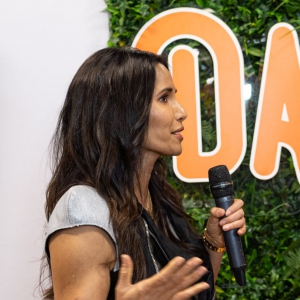
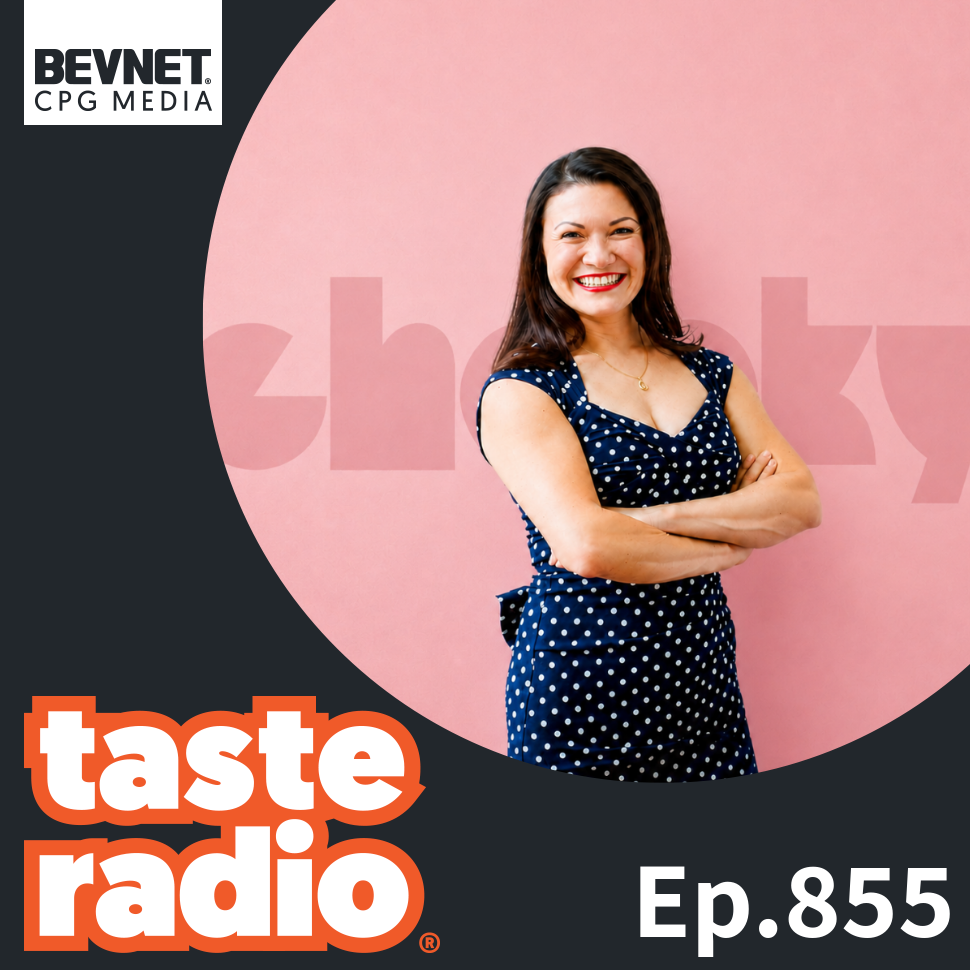
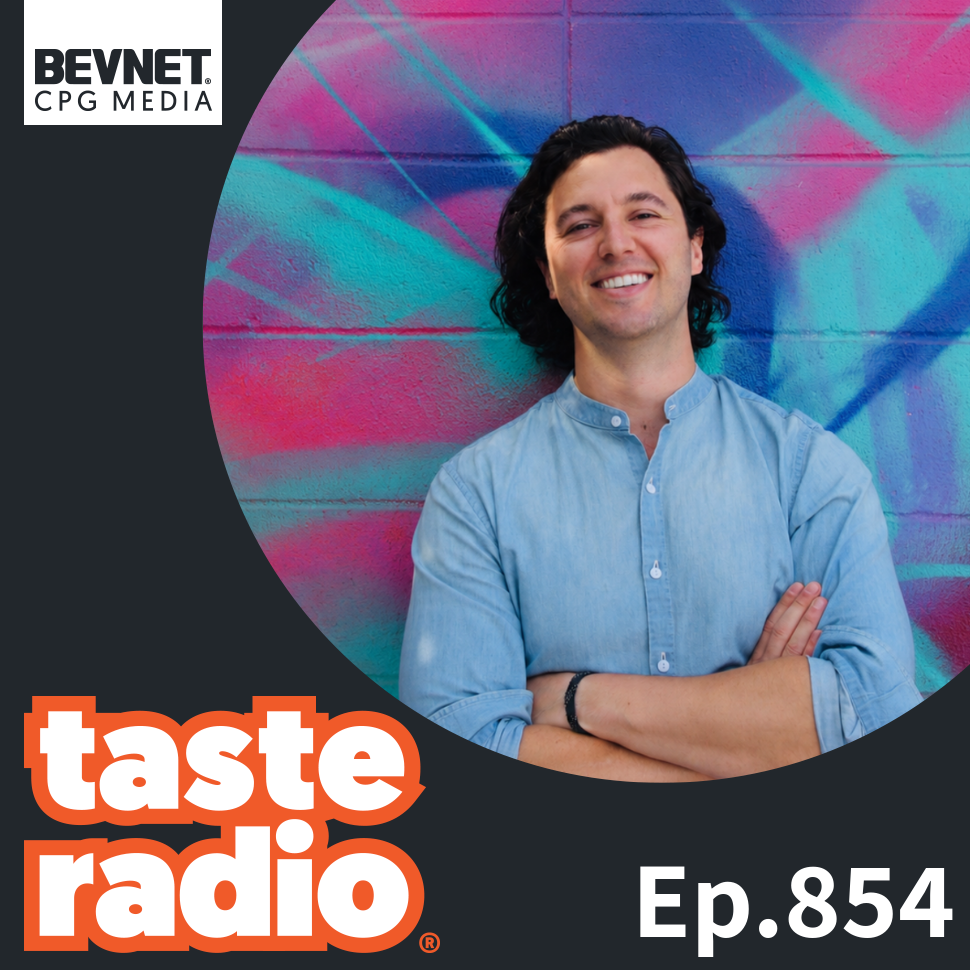
[00:00:10] Ray Latif: Hey folks, I'm Ray Latif, and you're listening to the number one podcast for the food and beverage industry, Taste Radio. This episode features an interview with culinary icon Padma Lakshmi, who is an investor and partner with Lussie brand, Dahi. We also sat down with Sandro Roco, the founder and CEO of Asian-inspired sparkling water brand, Sanzo, for a conversation about lessons he's learned as an entrepreneur. the freshest swag, the most exclusive content, and no newsletters. It's everything that comes with being a Taste Radio VIP, and it's easy for you to join that group of very important people. Head to Taste Radio slash VIP to sign up. As the host of long-running TV reality competition Top Chef and creator of the critically acclaimed Hulu series Taste the Nation, Padma Lakshmi is one of the most recognizable and respected figures in food media. Although she wields considerable influence, Padma is notably cautious about product endorsements and seldom partners with consumer brands. A rare exception is her investment in an alignment with Dahi, which markets Lassi, a traditional Indian yogurt smoothie. Padma joined the company as a board advisor and brand partner in 2021 and has played a key role in Dahi's marketing and education strategy and is a common presence in its social media posts. In the following interview, which was recorded at Dahi's booth at Expo West 2023, Padma discussed her role with the company, how the brand fits into her advocacy for Indian cuisine, and her criteria for investing in consumer brands. Hey folks, I'm Ray Latif with BevNET and Taste Radio here at Expo West 2023. And of course, this person needs no introduction, but she is Padma Lakshmi. Padma, thank you so much for being with me today.
[00:02:07] Padma Lakshmi: My pleasure. Nice to see everybody. Nice to be here. It's my first time at Expo West.
[00:02:12] Ray Latif: Your first Expo West.
[00:02:13] Padma Lakshmi: Yes.
[00:02:14] Ray Latif: You haven't had a chance to walk the floor because you've been swarmed, I'm sure, here at the booth, yes?
[00:02:17] Padma Lakshmi: A little bit, yeah.
[00:02:18] Ray Latif: Very cool. We're at the Dahi booth. Yes. You're an investor in Dahi.
[00:02:21] Padma Lakshmi: I'm an investor in Dahi. I'm a brand partner. I'm a brand ambassador. I am completely embedded, hook, line, and sinker.
[00:02:30] Ray Latif: Amazing. Dahi makes amazing products. Tell us a bit about your involvement with those products and some of the things that you're exhibiting here at the show.
[00:02:38] Padma Lakshmi: Sure, our main product is our lassi, and that's what we're incredibly proud about. I am Indian, and I've been making and drinking and eating yogurt my whole life. So has my whole family. And for thousands and thousands of years, India has a very well-developed traditional yogurt culture. And 1.4 billion Indians, can't be wrong. What I love about lassi is how delicious it is. And dahi is the Hindi word for yogurt. So that's what we've named it after. And it has 15 billion probiotics, more than any other lessee or drinkable yogurt on the market. We also have a specific live strain that's proprietary, that's from India, which really helps optimize and harness the power of all those other probiotics to help them work better. So a live strain is much more powerful and effective than, say, a powdered probiotic, and it just penetrates better, and it's better for you. It also, this drinkable yogurt has much lower sugar than anything else on the market. It has about 60% less sugar. And so, you know, as a mom, I want to feel good about what I'm giving my family every day. And literally, we drink it every single day. You know, it's the first CPG brand that I'm really partnering with, and I don't give my name to a lot of brands. You know, again, I'm an investor. I'm not, you know, I'm not just brought on to kind of sell the product. I really believe in it. I've been involved in the R&D. We're developing new flavors. We have a seven ounce that we just introduced and we'll have shelf stable later this year. We're very excited about it. And there's also a lot you can do in the recipe space. I mean, I love to drink it. It's really filling. It's very nourishing, but it's also yummy. But this plain lassi is something that I use in cooking all the time. So I was on the Today Show earlier this week, and I made a recipe for chicken tikka masala. And instead of using heavy cream, I used plain lassi, and it was delicious. And every anchor on the Today Show kept asking me about it. They're like, what's that? Wait, what is it? What is it? And I think, you know, Americans just don't know about it yet. But if you're trying to be healthy, if you're trying to have a yogurt smoothie or trying to drink kefir, this is like a million miles more delicious, more flavorful, less chalky, and better for you.
[00:05:01] Ray Latif: Yeah, and that's the thing. So I am familiar with Lussie, and I've been drinking it for a long time. I love the flavor, but you've been talking a lot about the health benefits and the nutrient density of Lussie. What is resonating most? What are you trying to really get across in terms of how you're promoting the brand and talking about it? Is it very much deliciousness first and functional benefits second, or is it the other way around?
[00:05:20] Padma Lakshmi: I think it's both in tandem. Honestly, this, you know, we're at the Natural Foods Expo, right? And so I think Everyone is here because they're trying to eat healthier. They're trying to be more mindful of what they're putting in their bodies, giving to their families, cooking with. I'm here to tell you that eating healthy and eating delicious are not mutually exclusive. I'm here to say that this is a brand that's traditionally made that is great for you, but above all, it's going to be a pleasure to eat and drink every day of your life because it's so yummy. To me, I don't make the distinction. I think for a food brand to come into my life and take a permanent space up in my diet, it has to be both good for me and delicious. Otherwise, it's not gonna last, and I think for most people, that's the same. Like, I defy you to have a glass of this Lassie, any other drinkable yogurt, whether it's a big brand that we know or something small like Heifer, and just do a blind taste test. I'll do it with you right now. I'm very confident. I wouldn't be standing here if I wasn't.
[00:06:22] Ray Latif: Yeah, you said you have Lussie every single day.
[00:06:24] Padma Lakshmi: I do have it every day.
[00:06:25] Ray Latif: Do you have it in the morning or is there a different day part use when you're consuming it?
[00:06:28] Padma Lakshmi: I have it, I'll tell you how I have it. I have it in the morning, like before I go to the gym, because I don't like a heavy breakfast before I work out. And then when I come home, you know, it's not lunchtime yet, I'll often have another glass. Or else I will freeze it and make, you know, desserts out of it. We have Popsicle molds that I pour it in. Or I'll also use the plain Lassi, like I said, you know, as I did in the Today Show and in other recipes. I'll also have it as a dessert. You know, sometimes we just put a little granola in it and have a bowl of it. Sometimes, you know, we add chopped fruit to it. Sometimes we just have it out of the jar, out of the fridge. There's a million ways to enjoy it, and I literally cannot keep it. Like, sometimes, you know, I have it in the fridge, which I have it all the time, and we're doing recipes for it, and I literally have to yell at my daughter and be like, please don't finish it, because I need it for this recipe that I'm making a video of. And I literally have to put it in the back of the fridge so she doesn't finish it. I'm not kidding. Like, that's how I came on to the brand, because I could not keep it in my fridge long enough.
[00:07:37] Ray Latif: You're screaming, little hands, stay away from my Lussie.
[00:07:39] Padma Lakshmi: Yes, keep your little hands off my big Lussie. Yeah, exactly.
[00:07:43] Ray Latif: As you mentioned, you're not just an investor, you're an ambassador, you're as much about, you know, the face of the brand as much as anything else. You know, when you are promoting it on Instagram and talking about it on social media, on The Today Show, elsewhere, I mean, how do you feel like your role has evolved since you joined the brand?
[00:07:59] Padma Lakshmi: Honestly, it's not very hard for me. I don't feel like I'm promoting it, as you say. I just feel like this is a great product that's come into my life that I don't have to make from scratch. And I want to share it with my followers. You know, when I was on the Today Show, I didn't even say the words dahi. I just said lassi. I didn't mention our brand. I didn't whip out a bottle of it. I just used it in a natural way to show people how much they can gain from it. You know, and I think that is the sign of a good brand, when you don't have to shill it really hard. You just have to say, look, this is how I use it. This is how I enjoy it. Try it for yourself. And it's the same attitude I have when I make those little Instagram videos to show people, you know, how approachable and how easy cooking can be. I think we're all leading busy lives. I think we want to eat eclectic, delicious food. I think we want to be mindful of putting only good healthy things in our body. And I think that's hard with how busy we all are with kids, with work, with our personal lives, whatever. And I think Lassie is a great thing to have in your fridge. It's been a great thing to have in my fridge. And as I said, I get exposed to every food product in the world. You know, everybody sends me everything. And this product is one that I really believe in, you know? And it's very easy to talk about because I honestly feel like I'm doing my followers a favor because it is really versatile and delicious.
[00:09:26] Ray Latif: It's really helpful for your followers to know about Lusty and how to use it in their daily lives. Retailers, however, are the gatekeepers, so to speak, of your product. Are you out there in the front lines talking to retailers about why they should be stocking your products?
[00:09:41] Padma Lakshmi: I am. I mean, I don't go on every sales meeting, but I've had Zoom calls with major retailers. I've gone and done store visits because I want to see how the market is responding to our product, how it's doing compared to other product because it's also I need to know how the consumer is experiencing it and how I also want to be open to how our retailers are selling and what their feedback is. That's all important to me. You know, I shop for my family and I look for the same things that they do. So, you know, just the last time I was in L.A., I went to Sprouts and I surprised the ladies at Sprouts and did a little store visit. Whenever I can, whenever I'm in a grocery store, I always go to the refrigerated dairy section to see how our product is doing, to see how people are liking it, how also The people on the ground in the stores are really important because they are a wealth of information and I'm just there to listen and learn from them.
[00:10:40] Ray Latif: Are you rearranging product on the shelf? Like when you see it, if it's a little disjointed, are you actually moving some of the product yourself?
[00:10:46] Padma Lakshmi: It's funny because I was supposed to go to a store and I went earlier than I was supposed to go and I went and I couldn't find any and I was really upset because it wasn't there. And the lady told me they took it off the shelves because it was selling so fast that they didn't want there to be none when I got there, but I got there early. Uh-oh. So that's why they took it off the shelf, because it was selling out. And, you know, she was worried that when I was supposed to come in, it wouldn't be there. So that's good news. That's the best problem to have.
[00:11:17] Ray Latif: Absolutely. Now, I feel like there's a lot more interest among mainstream Americans for ethnic food.
[00:11:22] Padma Lakshmi: Yeah.
[00:11:23] Ray Latif: And when I think about Indian food, it's really some of the best food you'll ever eat. Yeah. Has Lassi, has this given you license to really introduce ethnic foods, more specifically Indian foods, to more everyday Americans?
[00:11:33] Padma Lakshmi: I mean, look, this is something that I've spent the last 20 years of Emmy career doing, and I think the most exciting aspect of the food business, you know, the large food industry, is that ethnic food business, because it's where all the exciting new flavors are introduced, it's where most of the action is. You know, food is different, and things don't just trickle down, they actually trickle up. And so that to me is what's most exciting about exploring food in America today. You know, and I kind of put my whole career on it with Taste the Nation. And that's exactly what we do. You know, we go out and we meet people where they are in their communities and we hear how they eat. And there's a lot for everybody to learn about that. And I think what's great about American culture in general is that we're able to have contributions into what American food is from all over the world. American food is so exciting because it incorporates all of those world flavors into it. I mean, it's what interests me the most.
[00:12:34] Ray Latif: Absolutely. Now, I assume when you're going to walk the show floor in a bit, you're going to hear a lot of pitches about joining as an investor, as an ambassador, and I have a feeling that not many things are going to move the needle for you.
[00:12:48] Padma Lakshmi: Yeah.
[00:12:48] Ray Latif: You know, if something does catch your eye, you know, what would it take for you to get involved with, say, another CPG brand?
[00:12:54] Padma Lakshmi: I mean, it would be very hard for me to get involved with another brand. I think this happens so organically and it's so part of Emmy DNA and a part of how I eat naturally, you know, whether or not the cameras are on or not, that for another CPG brand to penetrate that would be really difficult. It would have to be additive. I mean, you can look up my track record. I don't really endorse a lot of things. I don't get involved. I'm very risk averse. And I, you know, pardon my French, my bullshit meter goes off really easy when people try to, you know, when I see other celebrities doing stuff. And I don't want to be like that. Like, I feel like I should be the advocate for the working parent who's just trying to feed their family. well and deliciously and healthily. I try to put myself in their shoes and say, well, what would help that person? I'm coming at it more from that point of view, because I'm a parent. I'm a home cook. I'm not a chef. You know, I'm a food writer. I've spent my life being a food journalist and writing recipes for average Americans and trying to help them cook on a daily basis. And so being involved as an investor with Dahi is kind of a very natural extension of that, if that makes sense.
[00:14:09] Ray Latif: It totally does. Last question, you've been involved with the brand for some time now and there's a lot going on in terms of the next stage of development. Are you involved in the R&D process, new product developments? If so, what are you trying to come up with next? What are some of the things if you can tease what's next for Dahi?
[00:14:27] Padma Lakshmi: Well, what we just came up with is the guava and believe me, we went through a lot of different unmarked bottles of You know, this much percentage of guava, that much percentage of guava, mixing it with something else, cutting the tartness, but no, don't cut it back too much. So I am involved. I mean, I let the scientist that he do the heavy lifting, but then when they've got the product ready for me to taste, they send it to me and I give them notes on it. Sometimes I just pick up the phone because it's easier to talk than write long emails. And we just go back and forth like that. I'm very lucky in that they're super serious about the science of making this product. as wholesome, as natural, and as delicious as possible. And so for me, I'm just making sure that we balance that with Taste Radio mouthfeel and usability on a daily basis.
[00:15:17] Ray Latif: Yeah. Padma, I first met you, you hosted a dinner at Sema in New York City last summer. It was phenomenal. And I could feel your passion for Lassie and feel your passion for supporting ethnic food across America. And it's just as palpable right now. Thank you so much for taking the time to be with me today. My pleasure. I really, really appreciate it.
[00:15:34] Padma Lakshmi: My pleasure. And you have to go back to Sema. They just got their first Michelin star.
[00:15:38] Ray Latif: I saw that. I saw that.
[00:15:39] Padma Lakshmi: Very happy for them.
[00:15:40] Ray Latif: Very well deserved.
[00:15:41] Padma Lakshmi: Yeah. It's the only Indian restaurant in the city that has a Michelin star. Really?
[00:15:45] Ray Latif: I have a feeling that might change.
[00:15:47] Padma Lakshmi: I think so.
[00:15:47] Ray Latif: Yeah. Once again, thank you so much Padma.
[00:15:49] Padma Lakshmi: Nice to see you again.
[00:15:50] Ray Latif: You as well.
[00:15:50] Padma Lakshmi: Take care.
[00:15:51] SPEAKER_??: Bye.
[00:15:54] Ray Latif: A couple days prior to our conversation with Padma, we had a chance to catch up with Sanso founder and CEO, Sandro Roco, whose fast-growing sparkling water brand introduced two new products at the event. The following interview continues upon a series in which entrepreneurs share lessons learned along their respective journeys. Sandro discussed his perspective on leading a team, forecasting demand, raising growth capital, testing new products, and working with mass retailers, in particular, Target. Hey folks, it's Ray with Taste Radio. Right now I'm on the mics with the man, the myth, the legend, Sandro Roco, the founder and CEO of Senso. Sandro Roco to see you.
[00:16:35] of Emmy: Good to see you again. One year later, same place. It's unbelievable to be back in Anaheim.
[00:16:39] Ray Latif: I think it's exactly 365 days since the last time we spoke. We had a private balcony last time here at the Anaheim Convention Center, but in the press room now, these aren't bad digs though.
[00:16:49] of Emmy: This is great. And also, we're not having to deal with ambulance sirens or wind blowing. Last year, I know the wind was an issue. It was. It's nice to be inside indoors.
[00:16:57] Ray Latif: 2022 was an amazing year for Senso. Just give us a quick update on what's been going on with the brand.
[00:17:02] of Emmy: Yeah, sure, so launched the brand in 2019. And so in 2022 was our first year really out of COVID that we were really able to enter into retail in a mass way. Our main partners, we launched our core line of four flavors, Calamansi, Lychee, Yuzu, and Alphonso Mango at every Whole Foods nationwide, every Sprouts chain wide across the country, a couple hundred targets, and in a little over a thousand Panda Express locations. I've been heading into this year, super excited to, I know we already did some work with BevNET, but we're super excited to launch our new innovation, two main ones, one of which is our new Pomelo Grapefruit flavor. That's rolling out first to Whole Foods for the first two months as an exclusive, our new Pomelo Grapefruit. And then we are also, I'll say, announcing a brand, I'll say evolution, in that we are, we're going to market pretty big now with a six pack. That's, from what we've seen has been It's just where our consumer shops our category. When we look at the leaders in our space, Spindrift, LaCroix, Waterloo, Polar, I mean, just how the consumer likes to shop the flavored sparkling water category, it's very clear that this is the natural evolution for our brand moving forward. And so, you know, we're excited that, you know, our first three, four years in business, you know, we've been able to achieve some initial level of scale to be able to start actually affording, you know, some of those bigger production runs and it not completely bankrupt the business.
[00:18:26] Ray Latif: not completely anyway.
[00:18:29] of Emmy: Beverage is a, as I'm learning, you know, I know we're still going to talk about lessons learned. Beverage is a heavy game. It's literally, it's a fun one, but it is, it takes an entire community, an entire village, you know, to build up a beverage brand. And it's got, it's, you know, somewhat of its pitfalls, if you will, and that it can be a bit more capital intensive. but it's also so rewarding knowing that we have so many occasions where folks can consume our product, experience our brand, experience our mission of Bridging Cultures. And like you said, over the past, especially year, year and a half, you know, post COVID, it's been amazing to see folks in person and actually be able to interact with people and see how they're resonating with the brand.
[00:19:08] Ray Latif: Absolutely. It takes a village. It takes a team. And as you mentioned, we're going to be talking about what you've learned in your three plus years as the founder and CEO of Sanzo. And one of the things I want to ask you about what you've learned is about leading a team. Sure. How have you educated yourself? What lessons have you learned about building and leading a team?
[00:19:33] of Emmy: First thing is I'm quite fortunate to have fantastic advisors now with our Series A round, a board that's been incredibly helpful in helping me learn more about how I can best transition from being, I guess, strictly just a founder to now founder CEO. And honestly, the biggest thing that I've had in my own head is folks are for the most part, leaving other roles with unbelievable companies, brands, several of which may be at this show. And so, it's my job, it's my duty to be an effective leader and steward of the brand for them. It's interesting, in just the last year, we've doubled our team size from about nine to now 20. Predominantly in the sales and marketing functions with the distribution growth that we've seen. And even just that change has had me have to reflect on what I need to be doing as a leader day in and day out for the team. I'd say even as recently as six, nine months ago, I was involved in a lot more very specific tactical and executional decisions. And it's not that I I say can't or don't want to do that kind of work, is that it sometimes actually can hold the brand back if I'm not allowing or if I'm not empowering our team to make those kinds of decisions. So definitely one of the first things for my own journey has been, hey, you know, trust your hiring process. You know, obviously ensure you're onboarding folks who adhere to the core values of the brand, but after that, you know, empower them to make the best decisions that they possibly can and, you know, get behind them, support them. Obviously, everything's going to take time. Everything's going to take some learning. But what they, I think, look to me for is a steady level of guidance and support on the decisions that they're making. But I think the biggest lesson is The biggest lesson I've learned is it doesn't matter in many ways how many times I have talked about our mission, whether on a podcast or in the trade or on LinkedIn, for some, for especially a lot of folks who are joining our team over the last six to nine months, it's actually their, it may be their first time hearing it. And so really for me, internalizing that idea of, hey, it's my job to just continuously be, I don't wanna say saying the same things over and over and over again, that sounds repetitive, but continuing to discuss how our brand lives out its core values, making sure folks understand the bigger picture reason why they're here. Obviously we are in an amazing prolific beverage industry, and specifically the sparkling water category has been on a tear for the past decade plus. But that's never been our core mission. That's almost secondary to our journey. Obviously, how we live it out, in many ways, is the work that we do in the trade. But continuously reminding folks of the bigger reason why they're here. And it's empowering for folks, I think, when I get to speak with them. But it's a constant reminder to myself, hey, keep making sure that people know the bigger mission. I remember specifically Seth Goldman's book Mission in a Bottle, as well as Daniel Lebesgue's book about the growth and scale of kind. Those are two big things, that's a main theme that both of those two leaders really harped on was, as the teams grow, even more does its leader, does its founder, CEO, need to have a megaphone and continue to shout from the rooftops the core message and the core values of the brand.
[00:23:00] Ray Latif: The vision is so important. The mission is so important. The day-to-day, though, is just as important in so many ways. And when I talk to founders, a lot of them are asking me for help when it comes to, or asking me if I know of someone that can help them with operations. day-to-day operations, it's a grind, but it's so important, especially when it comes to forecasting demand. And Sanso has grown so quickly, I imagine that it can be sometimes difficult to forecast what you need and what you might sell. How do you forecast demand? What have you learned about that part of your business?
[00:23:33] of Emmy: Yeah, I'd say, I mean, gosh, especially within the last six months, I don't think our sales and operations teams have talked as much as they have in the past six months. You know, we have, as we talked about kind of at the top of the show, you know, we're introducing the six pack, which is now, you know, a different type of packaging format. So, you know, there was some additional complication with the transition from our single can business into the six pack business. And so, you know, a lot of it is having hard conversations at the account and door level about what we think the, transition plan or just what we think that retailer is going to do. And it's it's the hard work of almost like I'm envisioning the Excel sheet that we have to myself, our head of sales and head of operations and going line by line and trying to best understand what the market is going to need. I say ultimately, though, I think when I end up talking to founders, You know, it's two things, especially for folks who are earlier in their journey. First thing is, this is why I think it's very important for founders to be heavily embedded in the operations in the early days, being physically at their contract manufacturer. If they go that route, obviously, if you're doing your own self-manufacturing, you're going to build up that... Good luck. Yeah, good luck. You're also going to build up that competence even way better than those of us who are co-pacs. But especially for those who are co-pacs, that's why it's important to be there and understanding your manufacturing and supply chain processes. And then I think as we've evolved, the biggest thing for me is the relationship we have with our contract manufacturer. probably more on site for production runs than your average founder has been. I guess the level that we've gone in, the level that we've achieved so far. It's important for me that our co-man knows that we are very heavily invested in the business and are being thoughtful about how we're forecasting that demand. We've had, again, also the I think the fortune of this industry is there's a lot of founders who've been two, three, four steps ahead of me and being able to learn some of the lessons that they've had around their own potential troubles and just how that's helping inform our own journey. You know, that's why right now, you know, we're currently at five, max six flavors. We haven't yet done a product line extension, probably won't for a bit. I mean, the core line has been keeping us up at night enough. And so there's just, I think a real, you know, if we're talking about lessons learned, ultimately it's keep your product line simple because it only gets more complicated if you are in the fortunate position of having exponential growth.
[00:26:09] Ray Latif: Well, you did just launch a new product. You did add a new product to your core line, as you mentioned, the Pomelo. Yes. And introducing a new product should take some thought. Yes. A good amount of thought before you actually do introduce it. In my opinion, anyway, I think there are some folks who will just say, you know, we're going to try this. If it doesn't work, we'll just pull it off the shelf. The Pomelo is still in its early days, but what have you learned about testing out that product before its launch?
[00:26:34] of Emmy: Yeah, I mean, you know, Pomelo was honestly about a year in R&D from the beginning of conversations with our community. So like our core customers, our biggest fans, our retail partners, and then also, you know, our board. And, you know, they've been fantastic at helping us understand category trends, you know, specifically in the Flavored Sparking Water set. And so fortunately throughout the course of, a year, every conversation with every stakeholder landed at the same place. The number one requested flavor was a pomelo grapefruit from our core community. When we started shopping around different potential flavors to our retailers, time and again, it was, hey, that pomelo grapefruit, we think that's going to do super well. And then now that we've started to grow a little bit, we have started getting a little more access to data. and are now understanding why folks are requesting it. Because when we look at other brands who've had various amounts of success in our category, a grapefruit or pomelo-based SKU ends up being at the top or towards the top of a lot of these brands' innovations. And so for a variety of reasons, I don't say the stars align, but I think we tried to do as much of our homework as possible over the past year so that we could be intentional about the release. And I think for your average emerging brand, we may be somewhat slower on innovation than folks may be used to seeing. This is now year three, year four. And this is really, aside from our Asian pair LTO, this is only our fifth flavor that's out in the market. And I think it's because we've appreciated in the earliest days just how much work operationally can be to launch a new flavor. And we want our consumers, we want our retail partners, we want our distributors, we want our entire team to know that we are thoughtful about how we are building this brand.
[00:28:26] Ray Latif: When you were talking to your retailers, and just to reiterate, you talk to your board, you talk to your retailers, and you look at data. When you talk to your retailers, is the conversation as much about, are you going to put this on shelf? Will we have a five SKU set on shelf? Or is this something where you're going to pick three and Pomelo might be one of them?
[00:28:42] of Emmy: So the original conversations came from, at least at the retailer level, hey, your current four SKUs are all hitting the mark. And in the case of at least two of them far surpassing the mark, what else do you got? And from a brand perspective, that is just music to our ears when a retailer and also our distributors are asking, hey, what else is coming down the pipeline? So that's where all of these conversations start. Obviously, we were also seeing the data come in too. And so we had, you know, a couple different options available. But it really started from, hey, the core brand is already doing quite well. How can we continue to invest in the brand?
[00:29:20] Ray Latif: One thing, or I guess one group you didn't mention, and maybe you did through data, is consumers. Are consumers asking for products? How do you listen to consumers about introducing a new, say, package format or flavor?
[00:29:32] of Emmy: So last summer, we did a massive consumer survey, both in person and digitally, specifically because data is just data. And obviously very important, actually, to understand what people are actually pulling off the shelf and purchasing, but the qualitative aspect as well of the conversations can also glean a lot of insights, especially if you have a big enough sample set. And so it was actually through the course of these very specific one-on-one conversations that specifically, one question very simply was, what new flavors would you like to see from us? And that's where Pamelo started coming out on top. But some of the biggest insights we saw were from better understanding how folks consume Sanzo and in what occasions. And time and time again, what we were seeing from folks was the sense of like, the words that specifically, it was like if we had a word cloud, was the idea of sharing Sanzo with I share Sanzo with my partner, with my mom, my grandmother, with my kid. And that was very big because I think, you know, in certain categories, it's just the type of occasion where you're really, you know, pulling a product off the shelf just for that use, whether the categories I specifically think about are like, you know, workout recovery drinks or things that with real function, it's a really one-to-one experience between the brand and the customer. consumer but what we're learning is it's actually a one-to-many experience where people are purchasing Sanzo for their families, for their loved ones, for gatherings, for spring picnics, summer barbecues and you know we drilled into that a little bit and there are certain people that would say Hey, you know, I buy a bunch of cans when you're on promo, especially when we have like, you know, two for four dollars or three for fives. But gosh, it'd be a heck of a lot easier if I could just pick up a carton, add it to my cart and, you know, bring it to a gathering. And so that's where we started really getting into, OK, now is like combining that with what we were seeing on the shelf. It doesn't take a rocket science to see it, but like it then made sense. Hey, we're now at the stage of the brand where it makes sense to now step up into this new packaging format.
[00:31:46] Ray Latif: You noted the limited time Asian pear variety flavor and that featured Jeremy Lin on the can. Very cool product. And I feel like that represented Senso in so many ways and the vision that you were talking about, the mission that you were talking about. And I felt like it created a lot of buzz around the brand. And Sanzo has done all kinds of cool things. I mean, the partnership with Marvel also, I mean, was a really cool partnership. And again, I think it generated a lot of interest and awareness about the brand. What have you learned about creating industry buzz?
[00:32:19] of Emmy: It's interesting, you know, we don't seek to do these partnerships for the purpose of generating industry buzz. Obviously, it's been a nice byproduct that we certainly won't turn down. But I think if you start with just that idea of like, just how do we create buzz? I think that alone will eventually wear out because, yeah, I think you're starting a little bit too much with the end in mind. And for us, our first principles were, how do we continue to invest in our community as we are building this brand or also as a means for building this brand? And I think one of the key things for me as a consumer, this is my first time in the food and beverage space, was, hey, we know that, especially at a venue like Expo West, we are all mavens about ingredient panels and the most minute packaging tweaks, things like that. But for the consumer, it's so much more about how does the brand fit into my life? And I don't want to say that's about it, but that's where the conversation, to me, actually starts and ends. If you're trying to build a big, meaningful brand. And so when I started thinking about that, it was from the perspective of, OK, while we may all care and love being product mavens, stepping outside of the food and beverage space early to establish that, hey, we want to be part of your lifestyle. We want to be part of your gatherings. We want to be part of your celebrations. that ended up being the first wedge into, okay, what investments can we make in the community that reflect this? And so especially you mentioned Marvel and you mentioned Jeremy Lin, I'll also throw in the Pixar turning red collaboration that we did. All those went through the lens for us of what are stories that are actually ubiquitous? But in our world, have that Asian-American lens. Marvel was maybe the most ubiquitous story ever, right? And that's why they've had so much success. Pixar turning red, that was a mother and daughter story told through Chinese-Canadian lens. And then, gosh, Jeremy Lin, I often joke with folks that we have very little representation in the actual league. But when you look at the NBA, When you look at Nielsen data and you look at who is the most active fan bases in the NBA after black Americans, it's Asian Americans. And especially me being a Filipino, you know, we probably over index that, you know, that's number one. And so. Yeah, it's also just like, how can you have fun as a brand? And so with all those partnerships, that was really the crux of it. And obviously, we've gotten some buzz, fantastic coverage from partners like BevNET and Taste Radio, but it always starts and ends with us on how can we best invest into our community.
[00:35:07] Ray Latif: The limited time products, where were they sold? Where were they retailed?
[00:35:10] of Emmy: Yeah, so that's evolved quite a bit as well. So the Marvel Shang-Chi was an LTO that was exclusively direct-to-consumer because, frankly, we didn't have any retail. We didn't have the retail to really support that. Fortunately, that run sold out pretty quickly. So we were able to pay back, I'll say, most of our costs on that partnership. Turning Red was also I'll say predominantly D2C, but we were still able to get some product out through some of our DSD partners. And then it's crazy, the Jeremy Lin partnership, that was about 90% sold through our retail partners, and only about 10 to 20% sold through our direct-to-consumer website. And so that was a great way for us to build additional rapport with our DSDs, with our independent retailers, and just kind of show up live where people are already naturally shopping.
[00:35:57] Ray Latif: Yeah, a lot of people shop at Target, and Jeremy Lin's, the limited time can with Jeremy Lin, that was sold at Target too?
[00:36:04] of Emmy: It was not. It was not, okay. It was just sold to our independent retailers. Okay.
[00:36:07] Ray Latif: But regardless, you are sold at Target.
[00:36:09] of Emmy: We are sold at Target, yes.
[00:36:10] Ray Latif: And I'd love to hear from you what you've learned about working with that retailer, because that is definitely, I don't know if bucket list is the right term, but definitely on the list of retailers that a lot of brands want to work with.
[00:36:20] of Emmy: course. And I'll say, you know, my family, I, till this day, I mean, I, my family growing up, we were a target family. I'm a proud target guest. Um, you know, we absolutely love our first ever heard that a proud target guests.
[00:36:33] Ray Latif: I like it.
[00:36:34] of Emmy: Yeah. Uh, the target people will like hearing that, that when you, when you onboard, uh, you know, with target, they make very clear that, you know, our, the folks who are walking into our doors are guests. And so we treat them. We at the brand level are also encouraged to treat their guests as our guests. And so it has been the partnership of a lifetime. Just the idea, especially now, you know, as we launched late last year into Safeway on Northern California, it's always been my dream for Sanzo to be a household name. And so where does Sanzo become a household name? It's with amazing retail partners like a Target. I'd say the biggest thing that I have learned and that I continue to I think try to coach or mentor or advise other founders on is they are target for a reason. They are phenomenal what they do. And you have to match that as a brand owner. You have to see the opportunity to sell a target as that, an opportunity to build your brand. I think sometimes folks will, you get into the habit. And look, I can be there too, where we're looking at, you know, revenue projections are trying to hit and just like, milestones we want to hit as a brand and sometimes be so laser focused on that, that we lose sight at times of the broader picture of the retail landscape, that that space that's being given to us, especially at a retail like Target, is at the expense of another brand. And so if you're going to make a run and try to enter that space, you'd better be confident that you have the resources behind you to support that. And so I think my biggest coaching tip for founders would be, make sure that both the brand and operational level, you are ready for that kind of commitment. Because at least on our side, we see our retail partnerships as one-way doors. When we go in, we don't want to come out. We would rather be a little bit later, but to have a higher degree of confidence that we're going to succeed, rather than going a little bit earlier and just winging it and saying, we'll figure it out. We think that's just You know, we want to respect our retailer relationships, especially a partner like Target.
[00:38:34] Ray Latif: This is a perfect segue to my last question. You need the resources. You want to make sure you have the resources to support a retailer like Target. Right. That's capital. Capital is part of that equation for sure.
[00:38:45] of Emmy: In beverage, I think it's fair to say that can become quite hand to hand.
[00:38:49] Ray Latif: Yeah. What have you learned about raising growth capital?
[00:38:52] of Emmy: Boy, I mean, we talked about it a little bit earlier on, but I think number one lesson is investors buy into the vision. It's my key role as the founder and CEO, even if that day, or if I just got off a phone call that was, Not a great one about something going on in the nitty gritty of operations. The second I am talking to investors, it's about what the overall vision is for the brand and staying there. Folks really want and need and deserve to hear what that is and know that that's what you're working towards. So that for me is lesson number one. The second one for sure, especially in a year like 2022, and it's seemingly going to be 2023 as well at minimum, you know, with capital markets being a little bit more volatile, having the right partners. And I know I'm certain I am not the first person on Taste Radio, and I won't be the last person on Taste Radio to say that, but your capital partners are super key. It's not just the money coming in the door. It's the quality of the folks who are coming in. And I guess, put a little bit more context on that. It's what experience have they had in the space? What track record have they had? Are you, as the founder, and are they, as the investor, setting realistic expectations for what a healthy, sustainable growth rate is for a brand? And look, those can vary by, I think, percentages. But if they are varying by multiples or tens of multiples, that might not be great alignment. You know, I think especially now, look, and I'm part of that too, you know, founders and investors are having, you know, for some having truly hard conversations that are unfortunate. I think across the board, even if your brand is doing quite well, you're still having at least relatively hard durer conversations than you were having, you know, 12 to 18 months ago. And just knowing, hey, is this a person that I feel comfortable having that hard conversation with, that they are going to act in good faith? and screening for that before you take their check. I feel very fortunate with the partners that we have that that is the case. And so I won't name them all by name. They're in the press releases we've done with BevNET, but ultimately that's probably the biggest fortunate lesson that I have heeded over the last 12 to 18 months is we have fantastic capital partners.
[00:41:13] Ray Latif: Well, you have a fantastic brand, too, and that helps a lot. Thank you. Sandro, thank you so much for taking the time. I could sit down with you for at least six, seven hours, and I'm sure we'd have some great content to share with our audience. But for now, let's keep it to a half hour. And excited to see you on the floor at Expo West. Good luck with the show, and hopefully we'll maybe we'll do this again next year.
[00:41:33] of Emmy: Let's do it again. Love it, Ray. Thanks for the time. Thank you.
[00:41:38] Ray Latif: That brings us to the end of this episode of Taste Radio. Thank you so much for listening, and thanks to our guests, Padma Lakshmi and Sandro Roco. Taste Radio is a production of BevNET.com Incorporated. Our audio engineer for Taste Radio is Joe Cracci. Our technical director is Joshua Pratt, and our video editor is Ryan Galang. Our social marketing manager is Amanda Smerlinski, and our designer is Amanda Huang. Just a reminder, if you like what you hear on Taste Radio, please share the podcast with friends and colleagues. And of course, we would love it if you could review us on the Apple Podcasts app or your listening platform of choice. Check us out on Instagram. Our handle is BevNetTasteRadio. And as always, for questions, comments, ideas for future podcasts, please send us an email to askatasteradio.com. On behalf of the entire Taste Radio team, thank you for listening. We'll talk to you next time. you