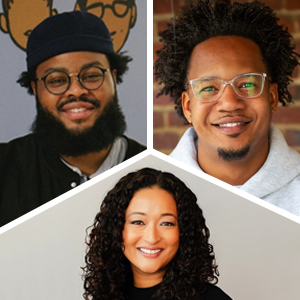
[00:00:10] Ray Latif: Hey folks, I'm Ray Latif and you're listening to the number one podcast for anyone building a business in food or beverage, Taste Radio. This episode is the first in a special series in which we examine the state of Black food and beverage entrepreneurship within the CPG landscape. It's an unfortunate reality that very few Black-owned food and beverage companies make the shelves of mainstream supermarkets, find significant investment, or are able to grow in scale. From a consumer standpoint and an equity standpoint, this is untenable. A significant slice—14 percent—of American consumers are Black. We know that there are black founders out there, but they're not necessarily making their way into our consciousness or to the radar of much of the established CPG structure. As a resource for all founders, Taste Radio, in collaboration with Quentin Vennie, the founder and CEO of beverage brand Equity, has developed a special series that highlights conversations on various aspects of the challenges felt by all entrepreneurs filtered through the experience of Black founders. We'll also discuss the ways that the environment has changed and how it has not, as well as identifying resources that our founders may not yet realize exist. In this first edition of the series, I sat down with Quentin, alongside Partake Foods founder Denise Woodard and Ibraheem Basir, the founder of A Dozen Cousins, for a roundtable discussion that explores the foundational reasons that each started their brands, how modern Black-owned brands are extending a legacy of Black entrepreneurship, ways in which they are building their company's culture to reflect their own, and the impact of Black-owned and ethnic-themed brands in expanding the audience for natural and organic foods. Hey folks, it's Ray with Taste Radio. Right now, I am supremely honored to be sitting down with Quentin Vennie of Equity, Denise Woodard of Partake Woodard and Ibraheem Basir of A Dozen Cousins. Quentin, Ibrahim, Denise, how are you all? Doing well.
[00:02:23] Partake Foods: Happy to be here.
[00:02:24] Denise Woodard: I'm doing well. Also excited to chat with you guys.
[00:02:27] Ray Latif: So great to see you. This is a conversation that's been a long time in the making, at least for Taste Radio. And Quentin had approached our team a few weeks back about this idea for a limited series to run on Taste Radio. And myself and my colleagues loved the idea, jumped at the opportunity, and here we are with our first episode. Quentin, if you could please explain to our audience sort of the origins of this idea and what the goals are for this series.
[00:03:05] Ibraheem Basir: First of all, thank you all for being a part of this conversation and taking the time. You know, the idea really came earlier in the year. I saw some really awesome content at Brewbound online, where there were a few black founders in the beer space, just speaking about their experience, right? You know, when we look at black and brown founders in the food and beverage space, we have a unique set of challenges. And therefore, we also have a unique set of skills that allows us to navigate this space in a way that essentially hasn't been seen before. There's no blueprint for us. so to speak, we can't follow the same traditional guidelines as every other founder. And so I felt like not only was it important for us to have an engaging dialogue and conversation around what some of those unique challenges and experiences are, but to also speak about how we've been able to navigate and find success in this space, and how we can continue to encourage other black and brown founders to start that business, to start that brand, right? How do you grow? How do you scale? What does success look like? And how do you navigate that, you know, considering everything that we're essentially up against and that we're faced with. And so, you know, I felt like Taste Radio was the perfect platform to be able to have that dialogue and conversation. DevNet has been an anchor for me, you know, since the beginning of equity, has been a place of sharing truth and honesty and vulnerability. And so, you know, it's been an honor and a privilege to be able to expand that in this format with these individuals and to have this limited podcast series.
[00:04:49] Ray Latif: Thank you so much for those kind words, Quentin. And the honor and privilege is ours, actually, in being able to share your voices with our audience in this conversation, this very important conversation with our audience. You mentioned that Black founders have a very specific experience in CPG. And Ibrahim, we had a conversation prior to this one about how what you all are doing is a continuation of the legacy that Black entrepreneurs have had in this country for some time?
[00:05:22] Denise Woodard: Yeah, for sure. First of all, I'm also excited to be here and really happy that you guys included me. And, you know, to give some context on that comment, you know, my father was an entrepreneur. He owned businesses really throughout my entire life, whether that was a grocery store, he owned at one point a small, like, taxi fleet, extermination business. And so I kind of grew up around entrepreneurship and kind of just this hustle, right, of like, hey, I need to identify a need within my community and the place that I'm living. I need to come up with a solution that people want. And I'm going to use that success to support my family. And obviously, my father is a small microcosm. But in general, there's a lot of data done around Black and Brown communities that show we're actually very entrepreneurial. In some cases, start businesses at a higher rate than the general population. I think I think the difference at times can be different levels of size of business, the amount of outside funding, the size of the organization. So I just wanted to kind of separate those two things. I don't think it's accurate to say that Black people haven't been entrepreneurial in America because I think that the data and the experience we show on the blogs.
[00:06:32] Ray Latif: This podcast shows otherwise as well. Denise, you've been in this industry for some time now. How many years has it been since you launched Partake?
[00:06:42] Partake Foods: My daughter is nine and I had the idea at her first birthday. So eight years that I've been working on this.
[00:06:48] Ray Latif: All right, a couple more be the double digits for you as an entrepreneur. What was the idea behind Partake? And did you grow up around entrepreneurs as well?
[00:06:59] Partake Foods: Similar to Ibrahim, my dad was in the US Army for a period of time and the entrepreneurial bug was always in his spirit, I think. And so he left the army and became an over-the-road truck driver. And he would be gone for like weeks at a time, like sleeping in his truck, driving cross-country and eventually saved up enough money to buy his own truck and then a small fleet of other trucks. And so I don't think he will ever retire. He runs a small trucking company in my hometown of Fayetteville, North Carolina. So I too had seen entrepreneurship. I think because of my father's experience, he tried to push me very, very far in the other direction because he knew how all-consuming, how much hard work it would be. And so the direction I received was go to college, work in corporate America, and don't ever leave. I initially followed, but since we are having this conversation, you can see I derailed. And so I spent my previous life at Coca-Cola. I'm working on venturing and emerging brands there. And then when we found out about my daughter's food allergies and with my frustration and the solutions that existed, I decided to do something about it and left my job in corporate America in 2017 to start Partake.
[00:08:04] Ray Latif: I love that your dad has a truck fleet because it makes it easy for you to ship pallets of product across the country, I would assume.
[00:08:11] Partake Foods: You know, you would think so. But he, he called me the other day and was like, what if I advertise Partake Foods, on my tracks? And I was like, that wasn't what I was thinking when we said we didn't have much marketing budget, but I appreciate the enthusiasm.
[00:08:24] Ray Latif: Hey, any piece of free marketing is the best kind of marketing, isn't it? So I don't know. I might take him up on that offer.
[00:08:31] Partake Foods: I may call him back.
[00:08:34] Ray Latif: Quentin, I think as a beverage entrepreneur, I almost feel like this is the most challenging type of entrepreneurship there might be. And no offense to food entrepreneurs, but beverage is such a different and difficult game. What motivated you to get into this business?
[00:08:52] Ibraheem Basir: For me, it was really cre out of necessity to natu manage my son's ADHD dia from a perspective of wha for and couldn't find. So if we needed to create it, When you look at the vast number of children and adults who struggle with ADHD, anxiety, depression, other mental health challenges, to know that there is a natural and holistic way to manage these things, it was pretty obvious that we needed to make available to other families what we had created for our own. Conversely, I didn't grow up with a bunch of entrepreneurs in my family. My father was, you know, addicted to heroin. My mother was working two, three jobs to keep a roof over our head, food on our plate and clothes on my back. And so the only entrepreneur I remember having in my family is my late cousin Delano. He owned a store at the Mondawmin Mall selling Parasuco jeans, you know, and other attire, right? But for us, You know, it was really just about how do we scratch the surface and survive? And so I've always had this entrepreneurial spirit just from knowing and seeing the lived experiences of other people and knowing what was possible, just never having a blueprint or roadmap on how to get there. And so that was really the foundation of it all for me.
[00:10:25] Ray Latif: When did you realize that there was, or maybe I'm making this assumption here, when did you start to sense that perhaps the food and beverage industry had a problem with diversity and that there was a lack of it and a lack of sort of guidance in terms of how to build a brand, particularly as a black founder?
[00:10:46] Ibraheem Basir: Yeah, I think for me, it, you know, it really, It really struck me again during that time of looking for what we needed from our son. And everything that I've always done and been a part of, I've always looked for this level of inclusivity. In any field, any genre, I often am the individual that's looking to bridge the gap. I've gone to schools that were predominantly populated by people who didn't look like me while living in communities with individuals who did look like me, but didn't have the resources of those that I went to school with. And so having this unique lived experience, going into the grocery store, going into these health food stores, these natural grocers, conventional grocers, and walking these aisles and never seeing anything that represented, one, the struggle we were trying to solve for, but two, when you look at mental health, and this is a completely different conversation, but Black mental health and other mental health hits differently because of systemic reasons, right? And so not only was I not seeing products that represented what we were looking to solve for, but I also didn't see products that represented me or my culture. And it was really evident in the early phases of that.
[00:12:05] Ray Latif: Abraham, can you follow up on that? Because I think that has a lot to do, or Quentin's sentiment has a lot to do with why you started A Dozen Cousins, right?
[00:12:14] Denise Woodard: Absolutely. You know, I just to give a little bit of context about myself and, you know, the business, A Dozen Cousins, first of all, we're a natural food brand. We make authentic meals and side dishes that are inspired by Creole, Caribbean and Latin American recipes. And, you know, food has always been very central to my personal experience, the experience of my family. The brand is, of course, named after my daughter and her 11 cousins. But, you know, I started my career working in the food industry. I spent, you know, about five years working at a large national food company. I worked on a number of brands, you know, a lot of them that I loved, and eventually really fell in love with, like, the natural product space. You know, I got a chance to work on Annie's. I got a chance to work on Larabar, brands that I still admire to this day. And, you know, at a certain point, I started thinking to myself, man, it was almost like jealousy, right? I was like, I wish there was a brand like this for people like me, you know what I mean? In the sense of something that was really high quality, very mission-driven, you know, clear ingredient standards, innovation that always felt new and fresh. You know, the brands that I grew up eating, they have like 1,000 milligrams of sodium, right? You got stuff where red number 40 is like the number two ingredient. You know, you have this old branding. It looks like it was made on Microsoft Word in like the 1960s, you know what I mean? And so for me, it was all those things. It was wanting to create something that felt high-quality, modern, emotional, evocative, and still, you know, really healthy and good to eat. So I can 100% relate to that sentiment of wanting something that speaks to you as an individual.
[00:13:50] Ray Latif: Ibrahim has had corporate experience. Denise, you mentioned corporate experience as well. When you were thinking about getting into entrepreneurship, Did you feel like that experience, that career or past career gave you a leg up in being able to navigate the system, navigate CPG, you know, despite the fact that there weren't many and there still aren't many black and brown founders in our business?
[00:14:18] Denise Woodard: I'm happy to speak first on this. I 100% feel like the years that I spent at General Mills helped prepare me ultimately to become a founder. Number one, I just learned a lot. When I walked into General Mills, I didn't know what a GMO was. I don't know that I had ever really spent time looking at an income statement. It kind of goes down the line, right? Designing a package, tasting product and giving feedback on it, right? There's all these very executional skills that I learned when I was there. And then secondly, I think from a network perspective, I have so many great former coworkers and the people that have kind of dispersed across the industry that I can now, you know, get on the phone to ask a question or to ask for an intro or to commiserate about whatever I'm dealing with. Right. And so, you know, I think knowledge and network for sure has been a big benefit. And I think the only caveat I would give is like, It's a big difference you're working for like a multi billion dollar company and working for a you know zero billion dollar company right and like you know people people remind you of that when you're on the other side of the phone with them and so I do think for sure there was also. you know, a little bit of just a detox period that I needed to have after leaving a large company and starting a small one of like, OK, you got to re-level set about, you know, your importance to your vendors, to your manufacturer, to your retail partners, et cetera. And just take that with humility. So I don't know. Those would be my comments there.
[00:15:41] Ray Latif: I wonder what it's like to work for a $0 billion company and one that's a billion dollar company. I would think one has significant advantages, but you know, the other one sounds more fun. The other one sounds like it's, you know, I have nothing. So what's the worst that can happen here?
[00:15:57] Denise Woodard: Payoffs and everything, man. You know, the cool thing about working at the $0 billion company is you can move very quickly. You know, sometimes you just need two or three people to agree on something and you can get it done, you know, versus, There were times I spent six or nine months just on an idea. You know what I mean? Just like get convincing people that this idea was good. And I don't I don't have that experience any longer, which I'm very thankful for. But on the flip side, you know, when you pick up the phone and people know that like their largest customer is on the line, you know, they respond a little differently.
[00:16:29] Ray Latif: You're thankful for not banging your head against a wall for six, nine months and trying to convince somebody that, you know, your PowerPoint presentation is pointing in the right direction for this company?
[00:16:39] Denise Woodard: See, I've been doing such a good job of not making any disparaging comments. Maybe they all sound loving, but there was maybe some very mild headbanging.
[00:16:48] Ray Latif: OK, fair enough. Yeah, Denise, I'd love to hear from you about your experience in corporate and also, you know, how that enabled you or maybe was a hindrance to you in building a brand like yours.
[00:17:04] Partake Foods: I probably did a little bit of both. So to Ibrahim's point on the network, I think that was extremely valuable. I've reunited with my old boss who sits on our board, with former colleagues who now work at Partake. And so having a network of folks that I can go to when I have hard questions, invaluable. So I think the network piece definitely has been super meaningful. I think I had a false sense of confidence because of my experience at Coke. I knew enough to speak the lingo of OIs and MCBs and all of the different nomenclature that we use, but I didn't know anything about actually running a business. in a sales function. And so now I realize how siloed it was. Like we were focused on selling our beverages and we had an endless amount of resources to be able to do that. But I wasn't getting exposure to the entire P&L. I knew nothing about ingredient procurement. I knew nothing about fundraising. And so I think it was one of the reasons as I started to think about building Partake and, you know, calling up a co-packer. I didn't even know the term co-packer before I started Partake Foods had the idea for Partake. So I quickly realized how much I did not know. And so for me, that was one of the reasons I felt like we needed to start really small. So for the first year, we were just in the New York market, me selling cookies out of the car because I really needed to get a handle on doing all the jobs in the company. And I didn't have money to lose. And so I couldn't do that at scale because the mistakes would have been too expensive. So me showing up with my QuickBooks invoice on a piece of paper and cookies in my car that felt manageable because it helped me learn the ins and outs across the business. in a way that I wasn't able to in my experience at Koch. But I think, you know, as I've gone on to fundraise, as we've met with retailers, like I think that experience in the CPG space has given me some additional credibility. Sometimes I wonder how warranted it is, because I think I've learned how much I did not know in my experience. But thoroughly enjoyed it. I think I had the fairly serendipitous experience of getting to work at VEB for the tail end of my career. So I got to see these high growth mission oriented beverage brands like Honest Tea or Zico Coconut Water and meet the people behind them and see how passionate they were. And so I think without that experience, I probably wouldn't have had the confidence to leave my corporate career to start Partake.
[00:19:17] Ray Latif: In a conversation prior to this one, we were chatting about what gave or what gives investors and retailers confidence to place a bet, to make a bet on an entrepreneur. Because early on, especially when it comes to money, it is a bet. Angel investors are hoping that they'll get some kind of return, but knowing that there's a huge chance of failure. And again, you know, the number of black and brown founders in food and beverage is really small. And it seems like the opportunities for angel investment, for early retail placement distribution are not there as much as they would be for other founders. A, is that true? And B, you know, what made investors and retailers confident or at least somewhat confident that you could possibly be successful as an entrepreneur? Denise, let's start with you.
[00:20:20] Partake Foods: Sure, so I think when I look at the space, I don't think food and beverage is that different from any other industry. I think it's very hard for a black or brown entrepreneur to secure the funding and gain the traction needed to scale a business across a multitude of industries, not just food and beverage. So I don't think this is a unique challenge to our industry. I think a lot of it personally stems back to access to capital and network. I think on the access to capital front, the friends and family funding that's often needed to get a business off the ground because of so many systemic inequities that exist in our country. There's often like there is a big racial wealth gap. And so when I looked at a friends and family round, there was no one in my family that could participate in that. And so thankfully, because of my corporate experience, and because of my husband's corporate experience, there were, you know, old colleagues of ours who are willing to take a flyer who believed in what we were doing, who helped fund the business in the early days. So I would attribute that to my network and my corporate experience that allowed me to even get the business off the ground. There's only so far, and I think you made a good point, like beverage particularly is so expensive. There's only so far someone can bootstrap. But I sold my engagement ring, I emptied my 401k, I maxed out my credit cards. I had nothing else to give. Anything that wasn't bolted to the floor of my house, I had already sold. And so had we not been able to raise that early capital, I don't think that our business would exist. And so I think a lot of times the access to capital is determined by the people who have given a vote of confidence in you. And so as I think about, as the business went a bit further, I remember We had like $2,000 left in our business checking account when I was trying to raise our seed round of funding. And I was like, there's no way this is going to work. And then we got a yes from Marcy Venture Partners. And so many of the folks who had said no before came back. Same business, same founder, same product, same traction. All of a sudden they were interested. And so it gave me a lesson in like oftentimes, whether it be investors or like any type of potential partner, like a lot of it is about the shine and halo effect that a brand has and the people that are around the table already gives people more confidence. So I think sometimes it's like knocking down that first domino of being able to say, this person's involved in the business or this person's involved. And so I do think my corporate background allowed me to kind of gather people to invest in the business and to have a vote of confidence in me earlier on.
[00:22:40] Ray Latif: Quentin, as someone who doesn't have a corporate background, at least not in food and beverage, what was your experience trying to raise money for equity early on?
[00:22:52] Ibraheem Basir: For me, it was definitely challenging to echo Denise. Considering the racial wealth gap and me growing up in a city like West Baltimore in poverty, I didn't have friends and family to lean on and say, hey, can I get 25, 30 grand to help launch this idea? I think for me, it was, again, very similar to Denise. My wife and I, we deployed our personal capital to bootstrap this. I didn't sell my engagement ring. I didn't have an engagement ring, but we definitely emptied out our 401ks. We definitely, in the moments where we worked in nonprofit, we did well for ourselves and had some investments that we had to then cash out and put that capital into the business. Raising funds, I think, has been the most challenging because I, one, don't have CPG experience. I come from the nonprofit world. And two, Again, as I spoke of before, there is no blueprint of black founders and beverage having huge exits, which then gives the investor that vote of confidence that they're going to get an ROI. I was fortunate to have made a name for myself in the wellness space. and that attracted the att Paltrow, who then became and business partner and to help us raise that in had that not happened, th equity. I'm sure of it. I somewhere in Fort Covington in Baltimore City, trying to figure out how to make this work. I think whether it's from a corporate background or whether it's creating a namesake for yourself, those relationships are foundational early on for any Black founder in any industry. But speaking in food and beverage, it was paramount for me.
[00:24:46] Ray Latif: Ibrahim, the initiatives I think that we're seeing for BIPOC founders, for Black and Brown founders, some of those did not exist 10 years ago. And it's great to see that they're there. How have diversity initiatives or have diversity initiatives helped you navigate a challenging CPG climate for all founders? And if so, what are some of the ones that are most beneficial to Black and Brown founders and really help you to scale quickly and thoughtfully?
[00:25:26] Denise Woodard: But first of all, I'm just taking a moment to pause because I want to make sure that I think of all the people who have given us like a lending hand throughout the journey. And so I'm a little mindful of not wanting to list some and forget others. So maybe I'll speak a little generally at first and say, you know, number one for me, and I think this is probably true for all early stage founders, regardless of their background, the number one challenge in the early days is just getting people to know you exist, right? What is it doesn't cousin. What do you still have. You know where can I buy it. How can I taste the product. And so in that regard there's been a lot of diversity initiatives that have just getting us in front of an audience. Right. Whether it was an influencer making a list of black owned food brands. Right. Or if it was a retailer shouting out the black owned brands that are on their shelves or you know those retailers that put us on an end cap. or that put a little sign near our product to tell you know hey here's his bio and here's where he's from like all those things have been very beneficial and. You know, it's like the straw that breaks the camel back, or in this case, just kind of the bricks that build to a wall. It's like every single one, it adds something, right? So I put those into one bucket. And then there's a second bucket, which have been, you know, things of economic benefit. You know, one that I'll call out specifically is like Kroger that offers basically free slotting for minority-owned businesses. And hopefully that's still true. I know it was true when we launched into Kroger. Like, that was a meaningful financial benefit to the company. And one, again, that was very beneficial to us. For sure, I think that the diversity initiatives that we've seen emerge over the last, you know, call it, you know, two to four years in particular, a lot of them have benefited a Dozen Cousins, for sure.
[00:27:01] Ray Latif: Denise, have you had the same experience? You know, have any of these initiatives kind of fallen short of your expectations for them and for those that promote them?
[00:27:12] Partake Foods: I think to Ibrahim's point, like we've seen both the kind of qualitative as well as the financial benefits, it does seem to ebb and flow. And, you know, it's challenging because I know that these retailers and these businesses, they have a business to run too. And so you look at an earnings report and you see that profits are down and you know, most likely one of the next things that's coming is DEI initiatives will be cut. And it's unfortunate. And I think it's just dependent on retailer initiatives, retailers own financial status. And so we've seen, you know, programs ebb and flow. So I'm grateful for them when they exist. And when they don't, I often understand, although it can be frustrating, because it can be something that we counted on or something like, you know, you plan to go into a retailer knowing you would get some support and a program's changed. But you know, I understand that nothing's guaranteed there. And yeah, you just kind of roll with the punches the way that you do across other parts of your business.
[00:28:08] Ray Latif: It's even more frustrating when you think that these initiatives are open to you and you're specifically someone that could benefit from them, but for some reason you're not eligible for them. Quentin, you face this exact problem.
[00:28:24] Ibraheem Basir: Yeah, I did. And it was disheartening for a multitude of reasons. One, I felt like it was a slap in the face to have to certify my Blackness, you know, as a business owner. You know, it's like they wanted everything except blood.
[00:28:40] Ray Latif: And by they, just to be clear, what is the they? What is the certifying organization that you're talking about?
[00:28:46] Ibraheem Basir: It is the minority-owned certification. I can't remember the initials. Nor do I want to give them a shout out, but the they that me and Khaled so eloquently speak about, they deny my application for something that was in my bylaws that had nothing to do with the criteria that they had put out. And after going through a three or four month process of the application, you know, to then be denied for something that I honestly didn't want to do in the first place. I mean, when I when I walk out my house and I drive, you know, I don't have a certificate of blackness to hand to a police officer or any other, you know, systemic or societal issue. So it was unfortunate and disheartening that I had to prove my Blackness in order to qualify for a program that was supposed to support Black founders. For me, it became an additional barrier of entry. So it felt very much like a box check. And this is no shade of disrespect to the individuals who have gotten their stamp of authenticity from this organization and have been able to benefit significantly from it. I just personally haven't. My stamp of authenticity and my Black support came from the individuals that's on this call right now. Individuals like Denise that I call at all hours of the day and text and set up meetings to have conversations with to figure out how do I navigate. You know, Ibrahim gave me a surprise shout out on Instagram when he went in Sprouts to show, you know, their diversity programs. Right. And so like these individuals and other individuals like them have been, you know, that stamp of authenticity for me and helping me to navigate and gain traction in the space.
[00:30:38] Ray Latif: I think there's also an aspect of culture and company culture that plays into how you build your businesses, you three in particular, that is so great to see and so inspirational. And Ibrahim, I'd love to start with you because I think about a Dozen Cousins and the first thing that comes to mind is culture. How does that permeate into how you operate on a daily business with you and your team, the food itself, the packaging, you know, how are you sort of approaching culture in a way that is very holistic to your brand?
[00:31:15] Denise Woodard: First of all, thank you for saying that is something that we think about a lot. We want that to be people's first association when they hear the brand or think about it. So I'm happy to hear that that's the case for you. You know, and I'll start just at a really high level by saying whenever you are. selling a cultural product, which ultimately we are, right? I think you have to be super respectful about honoring the people and the places that made those things, right? Like, I didn't invent Cuban black beans. I didn't invent trini chickpea curry or Creole red beans, right? These recipes have existed for hundreds of years. Obviously, we put them in a format. that make it easy for people to enjoy. We use good ingredients, but at the same time, we're leveraging a legacy and a tradition that existed long before us. And so, to me, the obligation has always been, number one, to treat that legacy with respect, right? So, like, we don't want people to taste the product and be like, yo, I don't know what this is, right? Like, we want them to feel like, yo, this is what I know, right? This is, like, my grandma's beans, or this is, like, the rice that I cook at home. So that's first to us is, like, this trueness and authenticity to the food itself. I think second is from a marketing perspective you never want people to feel like you are commodifying or making a caricature of their culture and that includes myself and I unfortunately get to see that all the time in other brands right where it feels like They're just kind of using these cultural artifacts or words or visuals or language to make money versus having it feel like a real celebration. So that's something else that we pay a lot of attention to from a marketing perspective. It's like making sure that the images we put forth, the words that we use, the stories that we tell all honor, again, the people and the culture that we pull from. And so I guess the last thing I'll say once you triple down from all that is you got to have the right people in place to do that, right? And so our team, for example, 100% of our team comes from a minority or multi-ethnic background, 80% of our team is either black or Latino. And so when we're making decisions about innovation, about marketing, about product development, we're doing it in many times from a place of intuition and personal experience. You know, we're able to do a lot without having to do a ton of market research all the time. And that's not to say, obviously, that those things aren't beneficial, but I think it just gives us a nimbleness and an intuition that we kind of know if it smells right or not.
[00:33:34] Ray Latif: Denise, when I think about culture and the impact of lived experience as it relates to Partake Foods, you know, I think there's just so many parts to your brand that anyone can embrace. It seems like it has so much runway for any walk of life. But is there a part of your brand, is there a part of your company that you feel like benefits from a particular type of culture in your experience as a black founder?
[00:34:03] Partake Foods: I think none of us are a monolith. I'm a mom, and so that plays into the maternity and paternity policies that we have and the flexible work-life balance that I hope to provide to my employees because I know what it's like to struggle as a working mom. I'm a first-time founder, so I spend a lot of time mentoring other founders because I know how hard it is to get the first retailer to say yes, to get the first investor to say yes. I'm a black woman, so when I look at specific causes and the lack of diversity in the industry, I think about where I put my energy and effort, and I think about the fellowship program that we started for HBCU students. I think generally I like to take a plus one approach to things, and this is like the most uncouth thing ever, but as I'm saying it, the thing that comes to my head is the Snoop song, ain't no fun if the homies can't have none. It's like there's opportunity for all of us to win, and so if I can take some tiny minuscule part of helping lift other people up, whether they have food allergies, whether they're a woman, whether they don't look anything like me and just need an opportunity. Like that's what I think of when I think of partake. It originally started as people with food allergies being able to partake. I continue to see all the inequities that exist that don't let a lot of different types of people partake. And so I really just think about me and the company and our culture all about just trying to build a new table, build a bigger table, something so everybody can eat.
[00:35:21] Ray Latif: As much as luck is a key reason why brands succeed. And I don't know any entrepreneur that doesn't point to luck. They always talk about people and, you know, Quentin Vennie being in this business, the business of selling beverages for, is it two or three years now? It'll be three years this year. Three years, which in itself is an amazing accomplishment. You have spoken about working with other founders to help you figure out how to build your business. And you talk specifically about Denise and Ibrahim as being really influential. But what else can black founders, brown founders do individually or as a community to help the collective grow and build strong and sustainable brands?
[00:36:16] Ibraheem Basir: I think a lot of it is doing what we're doing right now. You and I, Ray, have had conversations around this, and there were founders that you had mentioned to me that I'd never heard of. There were brands that you had mentioned to me that I'd never heard of. And I pride myself on building relationships or at least knowing other black and brown founders in this ecosystem. And even with that, there were still brands that I was unaware of. And as soon as I became aware of them, the first thing I did was take money out of my pocket and put it into their business by supporting them. And I think having these ongoing conversations and being open and willing to share resources, we see it in other communities all the time. And we've seen it in our community in this country historically. And when we've done it, other entities have come in and tried to destroy it. And so I think now, We're at a space where I won't say that the threats are limited but I think that our power is more powerful. And I think our ability to really come together as a community of founders and otherwise and not just put dollars into these businesses but put knowledge and resource and information into these businesses is paramount. I would not be where I am had it not been for Denise making certain introductions that helped me to either acquire capital or get a better sense of knowledge or information. Same thing with E-Bring, right? I know for myself, I wouldn't have have been able to make it the three years that I've made it without being able to call on and anchor myself in my community. And so I think, you know, just constantly being willing to share those resources to share that information is paramount.
[00:38:09] Ray Latif: And Ibrahim, I mean, you've been building a brand for, I think it's six years, I want to say now, and I'm sure you're still running into roadblocks and aspects of the food business that are just, for one reason or another, challenging. Where as a Black founder do you feel like you and other founders could benefit from more support? Is it from retail? Is it distribution? Investment? Sure, I'm sure. But is there a specific aspect of the food industry where it just feels like it's lacking in terms of the support that you need?
[00:38:49] Denise Woodard: First of all, I want to make a slight tangent, which is something I always feel compelled to say on topics like this, which is like it's This is the sticky thing about racism, right? Like, we all know that is there, but it's not like someone gives you a little certificate that says, you know, I'm not giving you any money because you're a black guy. You know what I mean? Or anything like that. And so I'm always very cautious about ascribing a challenge that I faced to. someone else's racism, bias, et cetera, even though I logically know some percent of it is driven by that, right? So that's like the first caveat I'll give. Now with that said, the reality is the business evolves on a monthly or if not weekly basis, right? And so if you asked me today in Q2 2024, we could use help with fundraising, right? It's a really difficult capital market and we need more capital to grow, right? If you would have asked me, 12 months ago, I would have pointed to supply chain and said, hey, man, we need more capacity or better cost structure. You know what I mean? And so I feel like it's a constantly evolving challenge. It's part of the thing that makes, I think, CPG so fun. It's such a dynamic role. You have something new to think about every day, really. But at the same time, it makes it hard to answer that question, I think, because I don't know that there's one silver bullet that if I had 10% more of it, then we'd be off to the races. I think it's just, it's that constant being vigilant, kind of keeping your head on a swivel, making sure you're paying attention to what's next that ultimately, you know, will drive success.
[00:40:20] Ray Latif: Denise, I wonder as someone who is black and someone who's a woman, what is it like out there for you when it comes to fundraising? Partake has raised a good amount of money, but how have you managed that process and what have been some of the wins and what have been some of the most challenging parts of it?
[00:40:40] Partake Foods: I think fundraising is probably not easy for most people. I feel fortunate that we've generally been able to get the funds that we've needed to scale our business. We do have a lot of funds involved in our business that are focused on women founders or founders of color, groups like Blackstar Fund that's been an investor since our seed round of funding, Backstage Capital, Fearless Fund, Supply Chain Capital, like a lot of groups. that are involved in our business that are trying to bring a more equitable lens to venture capital investing. I think the challenge is like one of our investors is this very public fearless fund that invests in women of color is being sued right now around the affirmative action, like the whole like bring down DEI basically movement. And so you know, as we look at those investors, like I think they're having the same challenges we're having in fundraising. And so if they don't have capital to deploy, like that makes it even more challenging for us. And so, you know, we've been fortunate to raise from groups that are focused on women or people of color. What I've seen is it's getting harder for those groups to be able to raise capital. And that creates one more challenge.
[00:41:44] Ray Latif: For sure. Quentin, are you seeing those same types of issues when it comes to working with venture capital and private equity firms that are specifically focused on founders of color in particular?
[00:41:59] Ibraheem Basir: Yeah, I mean, I've spoken to a few and, you know, I think to expound on what Denise is saying, I think the funding for these funds are few and far between, right? Like it's challenging for them to raise capital and therefore they have to be a bit more meticulous in their requirements and what they're looking for in a brand. And some of those requirements we fit and some, you know, we don't. I've also had experiences with funds that said that they were about the proliferation of Black founders, and they tried to take my business over. And so I think it's a very nuanced scenario. I will say that for any VC fund or investor who's choosing not to invest in Black-owned food and beverage brands, you're missing out. I mean, you know, the data pinpoints and shows that our spending power is greater than it's ever been. The ROI on brands that have been founded by black founders that have an exit tend to be a lot higher than our counterparts. To speak to what Ibrahim has talked about and is bringing to the table, there's a multitude of culture and diversity that's being now displayed in store shelves across the nation that taps into populations that have historically not seen themselves represented in traditional grocers. And so I think there's a lot of unique upside, more upside than downside. And I think as we continue to navigate the space, we'll continue to prove those points. And so if you haven't yet, I would suggest you get down.
[00:43:39] Ray Latif: Yeah, for sure. And Ibrahim, you know, coming kind of full circle here, thinking about the impact that Black-owned brands have had in expanding the audience for natural food, for organic food, can't be denied. I mean, I think that is something that you have pointed out in the past. I mean, you know, if you can expound upon that and, you know, where the opportunities exist and where they're going from here.
[00:44:10] Denise Woodard: Yeah. You know I think like just to give one like concrete example of one of our large national retailers you know a Dozen Cousins has a 200 index with African-American consumers right. Meaning they're twice as likely to buy us as they are to buy any other kind of being in the category. Right. And so just from a raw data perspective we know it's the case that you know we're We're either compelling this consumer to buy beans more often or we're pulling them back into the category in a way that they weren't historically. So that's like on the data side I would say like more anecdotally you know what can happen sometimes. And I don't think it's the fault of any other natural organic food brand. But. it becomes this kind of self-fulfilling prophecy where, okay, if I look on your website and I see people that look a certain way, and your Instagram looks a certain way, and you buy ads in certain publications and podcasts, and all the people look that way, and you know what I mean? And it just becomes like, okay, if all the focus, the marketing, and the product development is going towards a particular, you know, archetype, of course, you're going to sell more product to that person. And historically, that archetype has not been someone like me. You know what I mean? It's not like, young black man from Brooklyn, let's hit him up with a bunch of natural and organic ads and product development. That's just not the case. And so I think when you have brands like A Dozen Cousins, like Equity, like Partake, like dozens of others that you can see where a founder is looking at the opportunity from a different lens, even something as simple as Denise articulating her target as people who want to be included, people who want to eat anything. It's not suburban moms who do yoga at 7 a.m., you know what I mean? And I don't want to speak on her behalf, obviously, but it's just, you know, talking psychographically and behaviorally, you can pull in a lot more people versus always looking for a specific demographic slice. So hopefully that all makes sense.
[00:45:58] Ray Latif: It for sure does. And, you know, in the time that we have left, I think about the opportunity that each of you have for your own brands and just, it seems like the sky's the limit, but just to ask very specifically, you know, what is your goal? You know, what do you want your legacy to be, you know, in this industry? And Ibrahim, let's start with you.
[00:46:20] Denise Woodard: Yes. First of all, I could probably spend one whole hour on this question, but I want to be brief and answer it in two ways. First and foremost, for me, and the thing I think about every day, is to build a generational food brand. obviously to get there you need great products and a strong business model and emotional brand building and there's a million things that ladder up to that but that's kind of the north star that I think of often and then on just a micro level from a business perspective I'm very excited to be self-sustainable right to be a profitable business that you know we're operating and running based on our own merits and the sales that our customers generate and not to be in a position where you know there is a constant need to fundraise or a constant need for other support, right? Where you kind of are your own stable and firm business. So those are the two ways I would think about success and excited to continue on the journey to get there.
[00:47:12] Ray Latif: Denise, what do you see as, you know, or what do you hope your legacy will be with Partake?
[00:47:17] Partake Foods: To Ibrahim's point on the business front, we're trying as fast as we can to be a self-sustaining brand that controls our own destiny. And in the meantime, want to continue to make good products that are inclusive and do good in the world. And I think personally, when I think about my legacy, helping other people, helping other, particularly women and black and brown founders, get their businesses off the ground, get their businesses to the next level is something that I'm extremely passionate about.
[00:47:43] Ray Latif: And Quentin?
[00:47:45] Ibraheem Basir: Yeah, I think it's a it's really it's a combination of everything that was just said. Right. I think that self-sustainable piece is paramount. You know, it's challenging going out every few years or months or whatever trying to raise capital. But if we're able to really find this level of profitability, it can be our own anchor. you know that I think we've accomplished a level of success. And you know for equity specifically like we want to continue to expand pathways to wellness. We want to continue to be a product that expands the way people look to consume products. Right. And how they choose to take care of themselves. I mean my shirt says be more kind drink equity. Right. It's like and it's not just being kind, you know, as a general practice to other people, but also being kind to yourself, right? Love yourself enough to do something good for yourself, right? And that often can start with what we choose to put into our bodies. And, you know, for me, to expound on what Denise has said, like, through my success be able to be an anchor and a support for other black and brown businesses that are coming up in the CPG space that are mission driven that have incredible products and ideas that continue to shift and change the way we as human beings consume food and beverage. And so I think that's what the legacy that's what I look for my legacy to be.
[00:49:01] Ray Latif: Those are three wonderful answers to a very complicated question, but thank you so much for sharing your thoughts on what could be for yourselves as entrepreneurs and your brands as well. This has been such a great conversation and a great first episode in this series. Thank you all so much for taking part. Thank you in particular, Quentin, for this concept, this idea. I'm sure we have a lot more to talk about. I know we have a lot more to talk about. So listeners stay tuned for the next few episodes of our series focused on Black founders in CPG. That brings us to the end of this episode of Taste Radio. Thank you so much for listening. Taste Radio is a production of BevNET.com, Incorporated. Our audio engineer for Taste Radio is Joe Cracci. Our technical director is Joshua Pratt, and our video editor is Ryan Galang. Our social marketing manager is Amanda Smerlinski, and our designer is Amanda Huang. Just a reminder, if you like what you hear on Taste Radio, please share the podcast with friends and colleagues. And of course, we would love it if you could review us on the Apple Podcasts app or your listening platform of choice. Check us out on Instagram. Our handle is bevnettasteradio. As always, for questions, comments, ideas for future podcasts, please send us an email to ask at Taste Radio. On behalf of the entire Taste Radio team, thank you for listening, and we'll talk to you next time.
[00:50:31] Ibraheem Basir: you