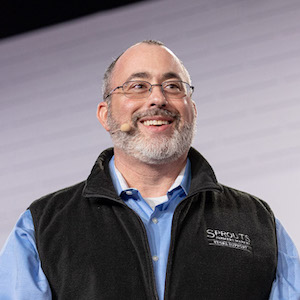
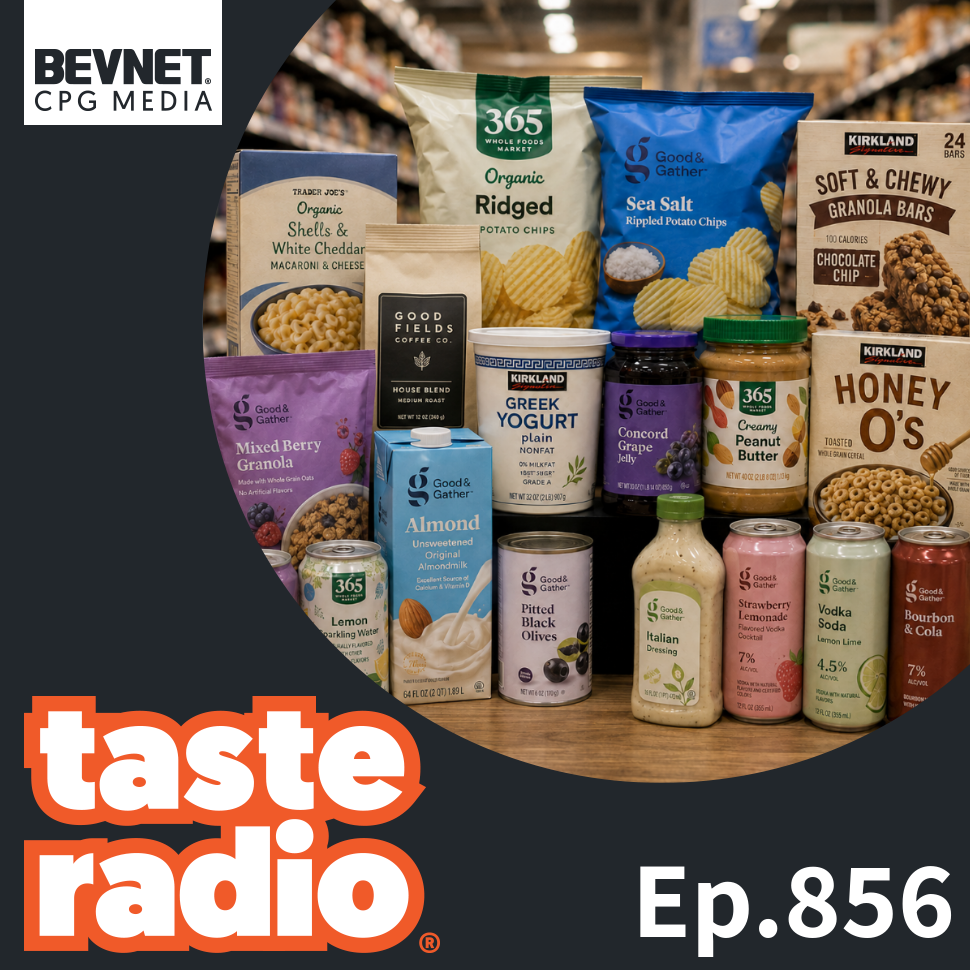
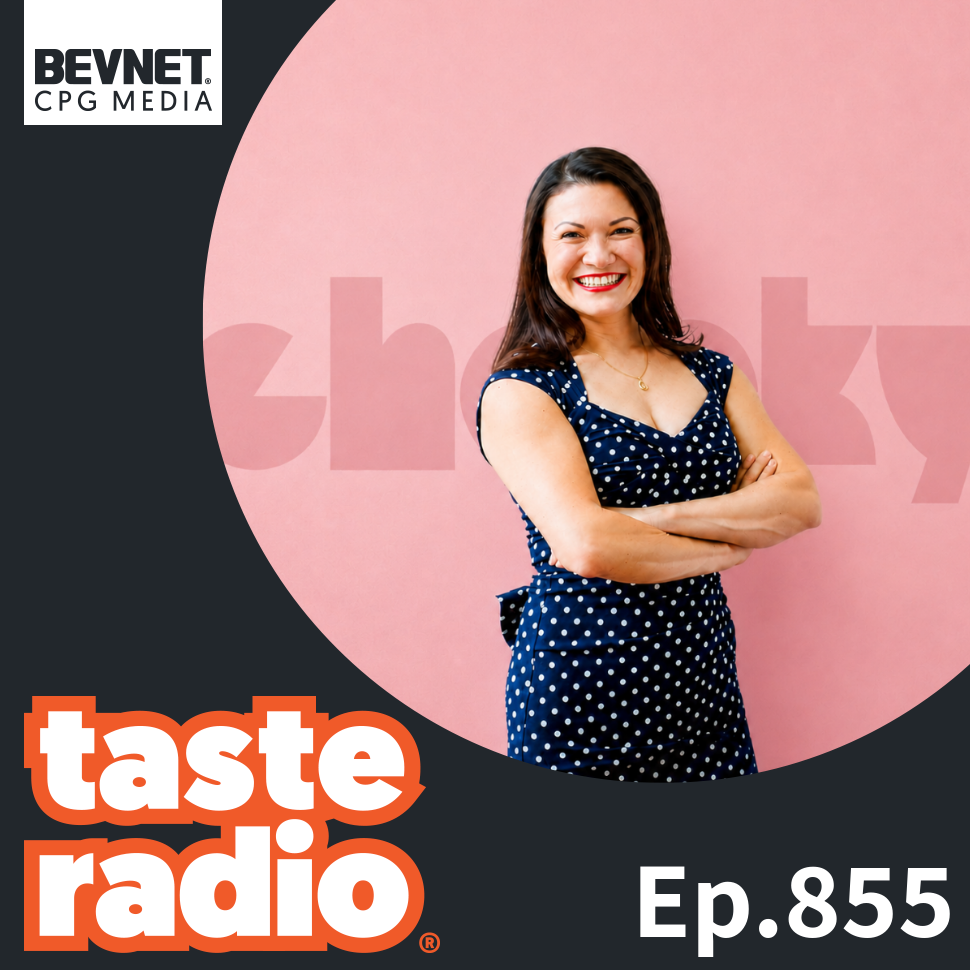
[00:00:10] Ray Latif: Hello, friends. I'm Ray Latif, and you're listening to the number one podcast for anyone building a business in food or beverage, Taste Radio. This episode features a trio of interviews with executives representing mass, specialty, and natural grocery retailers. If you've ever wanted to get inside the mind of a retail buyer or merchandiser, this podcast is required listening. In this episode, we sit down with key members of the buying and merchandising teams at three coveted retail chains. Will McDonald, the Vice President DMM Beverages for Walmart, Kristin Alas, a Category Manager for Gelson's, and Brian Albert, a senior Category Manager for Sprouts, reveal how each retailer evaluates emerging brands, assesses innovation and trendy ingredients, and cultivates successful relationships with founders. Hey folks, it's Ray with Taste Radio. Right now, I'm honored to be sitting down with Will McDonald, who is the Vice President DMM of Beverages at Walmart. Will, great to see you. Yeah, thanks for having me today. Great to be here. Indeed. We're here in Manhattan Beach. It's a beautiful day, I think. I'm, you know, looking outside the window. It seems to be sunny, but we're inside a hotel lobby at the Beverage Forum event here in Manhattan Beach. And I hope to get outside at some point. I mean, we flew all the way out here for the sun, right?
[00:01:36] Vice President: Yes, we did. No, the weather is phenomenal, even though we're in a podcast studio in the hotel. We are in a podcast studio.
[00:01:44] Ray Latif: Our team did an amazing job creating this studio. We've got a backdrop, we've got tables, we've got professional microphones, cameras, we've got the whole thing going on here.
[00:01:52] Vice President: It's an honor to be here.
[00:01:53] Ray Latif: It's an honor to have you. Thank you so much again for joining us. Walmart, you've been with the company for some time.
[00:01:59] Vice President: Yeah, 13 years now.
[00:02:00] Ray Latif: Okay, awesome. I have to admit, I was scrolling through your LinkedIn page, looking at your experience, and I saw one of your first jobs at Walmart was being in charge of gift cards. Yes. OK. Gift cards. How does that work?
[00:02:14] Vice President: Yeah. So actually, my first buying responsibility was being over gift cards. So if you think about everything from Walmart gift cards to Starbucks to PlayStation and all of those things that we sell, at the front of the store near the checkouts, that was the program that I got to manage. And so I learned a lot about the restaurant industry and gaming, and also just how the details of payments work behind gift cards. So a little bit of a non-traditional merchandising category, but it was really cool to jump into merchandising and learn that way.
[00:02:49] Ray Latif: Yeah, for sure. I mean, I think when you see those displays, there's just so many businesses out there. I imagine it can probably be difficult to pick and choose what you want to have in your stores.
[00:03:00] Vice President: Yeah, totally. One of the biggest things that merchandising that we work through at Walmart is just managing our assortment. So how broad do we want to carry things? How many stores do we want items in? What items make more sense to be in certain geographies versus other ones? So you can imagine with gift cards, you know, there's different restaurants that are different in different parts of the country. And so being really choiceful in how we make our decisions and what we offer to customers is It's kind of the bedrock of what we do.
[00:03:31] Ray Latif: I imagine it's not too dissimilar from the beverage industry, with so many things evolving in terms of what people want, the nutrition that they are trying to incorporate into their own personal lives, for their families. And I imagine it's pretty complicated at this point, no? I mean, how do you assess, evaluate emerging trends and the brands that represent them?
[00:03:55] Vice President: Yeah, it's very, very complicated, but it's also not on the other hand. So, I mean, I'll start with the simple and then work to the hard. From a simple standpoint, what we are trying to do at Walmart every single day is offer our customers the brands and the items and the ingredients and all of those things that they want and that they're looking for. And so we have a lot of different tools and resources data to search through those things and to find what they're looking for. And then it's our job to make sure that we get it on the shelves and present it to them so that they can purchase it. So on that standpoint, it's pretty simple of what we're trying to accomplish. I think where it gets really tricky and a little bit more difficult is the how. And that is, there is, as you mentioned, there's no shortage of brands, no shortage of trends. No shortage of the next ingredient, the next thing that is coming. And so what we focus on every single day is trying to be really choiceful in how we go about that and make sure that in our environment, every single thing that we offer to customers is is what they want, and we feel confident that we can give it to them and supply it to them every day.
[00:05:08] Ray Latif: There's a lot of brands here that would love to have their products on shelf at Walmart, whether it be locally, nationally, what have you. And if I were a founder and I was thinking, OK, how do I get in touch with the Walmart team? I think my product would be great on shelf in this store or that store. I kind of feel like I would be overwhelmed a little bit because Walmart is a behemoth. It is the largest brick and mortar retailer in the country. You have so many stores. And just the thought of that first step, taking that first step to introduce yourself and your brand to Walmart, again, feels like it'd be a little overwhelming. How do you talk to emerging brands and emerging founders about that first step and subsequent ones after that?
[00:05:52] Vice President: Yeah, definitely kind of understand how people feel. I think that. When you look at Walmart, it's very easy to say, oh, they're really big. They must be hard to work with. It must be a challenge to make a connection and break through. But in reality, it's actually not. My team is super focused on making sure that we're meeting with everyone that we possibly can and that we're attending events like today and that we're doing things in the industry to where we can make connections. Again, the organization and the store count and all of those things may be overwhelming at the onset, but at the end of the day, we're still people too. We're merchants that are trying to find really cool, great items and meeting with founders and trying to find that is a big part of what we do. On the how that happens, yes, again, there is, I think I have a total team of 10. And so the count of founders and people in the beverage industry versus just the amount of people that we have to meet is challenging sometimes. But I do think that there is overall a really good opportunity to have dialogues with us, to seek us out and to talk about your products or anyone's products at Walmart.
[00:07:06] Ray Latif: At the end of the day, how many of your brands on shelf, how many of the brands at Walmart are the result of you reaching out to founders versus inbound inquiries to Walmart?
[00:07:19] Vice President: That is a great question. I would actually say that it's pretty mixed. We have a lot of really good examples that my team sees things either in the news or out in... On BevNET.com perhaps? On BevNET.
[00:07:34] Ray Latif: Maybe you heard it on case radio.
[00:07:35] Vice President: That's right. Yeah. And, you know, out when they're when they're traveling or and are are looking at things in the marketplace. And we do have a lot of examples where our team has just reached out and said, hey, I would love to talk with you. I'd love to hear your story. But then we also have a great mix, too, of people reaching out to us, getting our contact information, reaching out, making connections through other people who know us as well and connecting that way. So it is it is a mix of both.
[00:08:01] Ray Latif: You always see these, I don't know, I wouldn't call them horror stories, but you always see these stories on LinkedIn or Instagram about founders reaching out to buyers at the various retailers across the country. And it's like, I emailed this retail buyer a hundred times, or, you know, I called them a hundred times. And I wonder how effective some of that stuff is. You know, if someone emails you, Will, and says, hey, you know, I would love for you to try my product. I think I have a great brand that would really fit in well with the selection at Walmart. How much value do you place on an email versus, say, an in-person meeting at an event like this? I mean, if you say you spend five minutes with someone at an Expo West or at a BevNET Live, you know, how impactful is that versus an email or a phone call?
[00:08:45] Vice President: Yeah, I would start off by saying that whether it is an email, a LinkedIn message, any type of communication contact like that, we definitely view all of those means as just ways to connect. And so if you think about, I want to make a pitch, I want to put my best foot forward, I want to provide all of these things, we use a lot of those ways just to make connections to set up further dialogue. Not very often is my team, or I would probably say anyone, just going to get an email and make a buying decision on, okay, these stores or this area of the country. A lot of those things have to be worked through and really thoughtfully discussed with emerging suppliers. I would say use all of those things as a way to just communicate with us and try to find time that we can either have a 10 minute dialogue or a phone call or something like that to really get deeper into plans for the brand.
[00:09:44] Ray Latif: How long does it typically take from initial meeting, initial email to on shelf at Walmart?
[00:09:50] Vice President: It all depends on the timing of our cycles. And so, as you can imagine, with the footprint that we have and the merchandising processes that we have, we typically relay our stores once or twice a year. It's called a modular reset. And from that process, I mean, you're looking at anywhere from six to eight months on introduction dialogue conversation going through the process and then ending up in a store. I would classify that as normal or the middle ground if you will. There are often times too though that we have a lot of new tools and capabilities. If we want to move faster, and also I would say digitally too, if we want to move faster and get something online or do something that is not necessarily in a modular, in a store, there's a lot of opportunities for us to move much faster than that if we need to and if that's something that both parties feel good about. The other thing that I would say too is that sometimes it also takes a lot more time. We've had a lot of dialogue and conversations with brands on, hey, we're going through the process and then we both kind of agree that hey this may not be the right time we're having you know some things that we're working through or the brand is working through marketing or manufacturing or filling the blank and sometimes those conversations have to happen over over months and years to make sure that we get the timing right whenever whenever we're ready.
[00:11:14] Ray Latif: Yeah, clearly, you know, with some early stage brands or even emerging brands that are two, three years in, they may not have the production capacity, may not have the distribution muscle that they need to be able to be in Walmart or any other retailer for that matter consistently enough for your needs and for your customers needs. I have to wonder, though. whether or not that affects your interest in the brand sort of long-term. I mean, if they can't fill a need, if they can't fill your shelves in the timeline that you want them to, I would think perhaps there's another brand out there that will do that instead. So how competitive is it for, and specifically as it relates to early stage brands, you know, a year to five years in, how competitive is it to get on shelf at Walmart?
[00:12:01] Vice President: I would say a couple of different things there. I first want to kind of address what you were talking about on, hey, if we're delayed or how, you know, does Walmart or does anybody lose confidence from a merchant standpoint on my team on we had to delay or because we're still working through things. I can tell you 100% that we would much prefer doing it right at the onset as opposed to moving too fast and then having challenges. It is very difficult to overcome not being ready, launching anyway, and then having kind of ongoing challenges. And so our preference, no matter what, is that we want to do what is right by brands. We want to do what's right by us and our customers. And the best path forward is to go when everyone is looking at it and saying, OK, we're ready. The second thing I would say is that we truly can be as small or as big as we need to be. There are a lot of things that we do every single day that are big launches, innovation. And it is an easy decision to say, hey, this is something that we're going to take nationally, or this is something that we're going to go in a pretty significant amount of stores in. We also have the ability to be as small as we need to as well. We can test in certain markets. We can test in certain categories. We have the ability to be very micro-focused as well. And oftentimes, feedback from brands and from suppliers helps us shape that dialogue and how we want to go to market.
[00:13:36] Ray Latif: What's the benefit of going micro? What's the benefit of being in a handful of Walmart stores? Because Walmart is a volume retailer. I mean, you sell not just pallets, but truckloads of pallets of products. So for a brand that's, you know, relatively new to the market, maybe selling, you know, a bottle a week per store or two bottles a week per store. I mean, it doesn't seem like that has much of an impact for Walmart. So what's the benefit of your retailer, of your company doing such a thing?
[00:14:05] Vice President: Yeah, the main thing that I would say is that it doesn't, yes, there's a lot of brands that are big and that move a lot of volume. But also, we look at metrics that measure output per store or output per item per store. And so even if you're a brand that's in 100 stores, and you are building momentum in those stores, it's very easy for us to have a dialogue that's data driven. that says, hey, we can make a strong projection that you, when you expand, will move from here to here because of how you're performing in these specific stores. Even though the overall case quantity or movement may be smaller, there's ways to equivalize it. We look at that a lot. I do think that the The other piece too is kind of like the phased approach is that in a smaller group of stores or markets, we both have the ability to learn. There's a lot of things that our supplier partners and founders and emerging brands Once they get in the store, sometimes the variables are different than what they may have expected, especially if they've never been in a Walmart store. What the product looks like on the shelf? How is the packaging catching consumers' attention? How is our supply chain running seamlessly? You know, a list of questions go on and on. And so a lot of times, the ability to get a real-world environment helps people make adjustments and changes for the better too.
[00:15:36] Ray Latif: Lately on the podcast, I've enjoyed doing some word association with guests, and I'd love to do that with you as it relates to specific categories in the beverage industry. You ready?
[00:15:44] Kristin Alas: Yeah. Okay. Let's do it.
[00:15:45] Ray Latif: Let's do it. All right. A tangential category, energy drinks. Great category. Yeah. Will was very excited when he said great category, by the way.
[00:15:56] Vice President: It's very interesting. One of the things that we'll kind of explore a little bit deeper on the stage later. is that industry has just seen so much change, so much innovation, and customers are responding to it. We talked a little bit about ingredients, enhancements, meeting needs through function, and that category continues to be one that there's a lot of activity in.
[00:16:21] Ray Latif: I just want to explore that just a hair more. A lot of times when we are introduced to new energy drink brands, they will talk about specific ingredients or formulation, not necessarily flavor, but how much do ingredients move the needle for you and your team within that category?
[00:16:39] Vice President: It definitely is a combination of a lot of factors. Anytime that we talk with our customers and engage with them and or in just looking at data and how they purchase, there are a lot of factors that influences customer purchase and how they think about brands, categories, or how frequently they buy it. And so for us, all of those things tend to be important depending on the customer group that they are talking to. And so in energy, whether it is a specific function, a specific ingredient, or very flavor focused, a lot of those things are gonna resonate with different customers. And so, again, there's been a lot of innovation there and a lot of brands that are doing different things on all of those that customers are responding to.
[00:17:28] Ray Latif: Let's do a catch-all for this one, sort of mid-calorie functional soda.
[00:17:32] Vice President: A lot of innovation, a lot of growth that everyone can see there. There definitely continues to be more brands, more excitement. And that one has been really interesting to watch, and it's going to be great to see where that goes in the future. Okay. I wish I had more of a crystal ball.
[00:17:48] Ray Latif: No, no. I mean, I think it is exactly that. It's a developing category, and it's going to require a bit more development, I think. Yeah. cans slash ready to drink, ready to pour cocktails.
[00:18:00] Vice President: That one is interesting, so not technically in my space. And so me and my team don't manage that. So I just kind of get more of a side view of that business and that industry. But everything that I do see, I think that ready to drink and on the go in general is a trend across a lot of categories now. I think that people are looking for those types of options. And there, again, continues to be a lot of innovation and a lot of newness over there too. functional beverages as a whole. functional, emerging, any label that you want to put on it that is more of the kind of up and coming thing is, it's really, really interesting and it's ever changing, I would say. So even the term functional beverage or the category as we would have described it four or five years ago, we're talking about different brands, different items and different functions. And so we look at all things emerging and all things functional as an opportunity just to get them in the store and see what customers respond to. And then from there, we kind of build out a plan on, is this going to stick? Is this a trend that's going to stick? And then is this something that is also can be incorporated into more mainstream areas? Kombucha. I would say that our chilled space in general, we have the ability in our chilled portfolio to offer a lot of different items and kombucha is one of them. And so I would say that overall chilled beverages for us, there's a lot of different brands and a lot of different categories that we have to offer to customers up there and and all of them are doing pretty well. That includes juice? Our set I would just tell you is you know you could you could walk into a store and and see is everything from chilled juices, everything from protein shake type of offerings, everything from chilled healthier better for you soda we have in that set. Also kombuchas and a lot of different other things too.
[00:20:11] Ray Latif: All right, this is the last one. And this one's near and dear to my heart. Kids beverages.
[00:20:14] Vice President: Yeah, near and dear to my heart as well. So I also, in addition to Walmart World, I have four kids. Wow, that's amazing. Yeah. And so it's something that we have a passion for as well. There is a lot of opportunity in space as it relates to kids. And we continue to see, you know, talk about emerging, we continue to see brands and and people coming up with ideas that we have never thought of or seen. And we're working to bring all of those things to stores. Kids in general, that occasion, whether it's around Lunchbox or Summer or On the Go, as we referenced, there is a lot of great occasions to tap into there. And so everything from great brands and mainstream offerings to new and exciting emerging brands is something that we are keeping our eye on.
[00:21:07] Ray Latif: I gotta ask, Will, because I feel like you have a lot of influence with your suppliers. You can say, look, we love your brand, we love your product, we don't love your sugar count. Is that the way it might work? I mean, let's say you go to one of these big kids brands and say, we appreciate what you do for us. You know, we appreciate the fact that you're a great supplier for Walmart. But, you know, we want to help America be healthier. Is there anything you can do about your sugar count? Is there anything you can do about your calorie count? Do you have that kind of influence? I mean, do you have that ability to advise brands on how to make kids healthier.
[00:21:43] Vice President: Yeah, I t as we think about all of for you and healthier opt primarily is to offer lik that we possibly can. So And so for us, it's much more about breadth of assortment. We wanna make sure that we're working with all of our vendor partners to offer the best possible products that we can. As far as anything on, and again, too, the one thing that we haven't talked about, we've talked a lot about emerging in different things today. We also offer a lot of great private brands that we get the opportunity to work closely with our product developers and our teams as well. And so that is a opportunity for us to look across all of the industry and really offer everything that we possibly can on meeting customer needs.
[00:22:37] Ray Latif: Well, private label, if you're creating a private label kids brand, I would be excited because I'm hoping and look, you know, there's really a handful of big kids beverage brands. I mean, I can think of three, really. And two of them, I'm not huge fans of what's in there. And I'm just hoping that when the next time I go to a soccer game or, you know, some sort of after school events and I see parents passing out beverages, they're not the ones that are 150 calories, 25 grams of sugar per six ounce juice box or a pouch. And I'm just like, there's got to be a way to make these things better. And if Walmart is coming out with a private label on, I'll be the first in line to buy it.
[00:23:19] Vice President: All right.
[00:23:19] Ray Latif: Thank you for that. There you go. Will, I said I'd sit down with you for a while. I told your team 15 minutes. I think we've been chatting for about 25. Thank you so much for taking the time. I really appreciate it. And I'm sure our audience does as well.
[00:23:31] Vice President: Yeah. Thank you.
[00:23:31] Category Manager: I appreciate it. Thank you. Vibrant Ingredients is the natural ingredient partner powering food and beverage innovation, delivering flavor, function, and protection through a science-backed portfolio. Vibrant delivers purpose-driven solutions that help brands create extraordinary experiences. Discover what's possible with Vibrant today. Visit VibrantIngredients.com.
[00:24:02] Ray Latif: Hey folks, it's Ray with Taste Radio. Right now I'm honored to be sitting down with Kristin Alas, who's a Category Manager with Gelson's. Kristen, great to see you.
[00:24:10] Brian Albert: Hi, thank you so much for having me. It's a pleasure.
[00:24:13] Ray Latif: It really is a pleasure to be sitting down with you because Gelson's is one of my favorite stores here on the West Coast, and more specifically in Southern California.
[00:24:20] Brian Albert: Love to hear that. Thank you.
[00:24:22] Ray Latif: Yeah, I always try to visit a Gelson's when I'm in town. I typically shop Gelson's via Instacart.
[00:24:29] Brian Albert: Okay. Yeah. That's very common actually. Is it? Yes. A lot of customers, especially after COVID has gotten used to Instacart.
[00:24:40] Ray Latif: Yeah, I feel like it's really easy to shop your stores using that platform. And it's great that the stores have this or that Instacart has the same prices and sales typically, right? Or is it across the board always like that?
[00:24:53] Brian Albert: For the most part, yes. But I still encourage you to actually go inside of the stores so then you can see what our new products are and pricing. So maybe we have a really cool display and you can see all the items that are on the display.
[00:25:08] Ray Latif: Yeah, I love going into a store like Gelson's for discovery. I'm always visiting the chilled beverages as often as I can. I always feel like you have a good shot selection, juice shot selection at Gelson's, and you're clearly in charge of that. But how do you think about making the store a place of discovery for consumers?
[00:25:28] Brian Albert: So I always try to look for something unique to the set. So you do have your everyday teas, you have your very common national brands, but what I try to differentiate from the set are those unique items that maybe could be local, better for you, lower sugar, or have really cool packaging that makes it stand out from the shelf.
[00:25:48] Ray Latif: And just to be clear, you are a Category Manager for quite a few categories. Before you hopped in the mic, I think you listed like nine different categories.
[00:25:56] Brian Albert: So beverages, candy, jerky, mixers, bread, salty snacks, Chuck Lane, chips. So half the store.
[00:26:06] Ray Latif: About half the store, yes. When you're talking about something that's unique, how do you define unique?
[00:26:13] Brian Albert: Especially right now, adaptogens, those added benefits to beverages are huge and trending. So prebiotics, probiotics, postbiotics, but most importantly that it tastes good as well.
[00:26:26] Ray Latif: I'm so interested in this idea of functionality as being an important part of your assessment of a brand and its products. Because functionality is sometimes really difficult to explain to a consumer. So does the functionality have to be easily understood? Does it have to be functionality like So caffeine is an easy to understand functionality, but maybe prebiotics are not so much. So how do you take into account education and awareness and communication of these ingredients when you are deciding whether to bring a brand into the stores?
[00:26:58] Brian Albert: That's a great question. So I look for vitamins and also what it does for your body. And that's the tricky part because a lot of beverages are jumping onto that bandwagon of being a functional drink. So they want to play into that category. So hydration is not really functional. I would say I would put that more into hydration set versus functional. As I mentioned, the vitamins, the adaptogens, Lion's Mane,
[00:27:29] Ray Latif: These are things that your customers, they understand because they're already aware of these kinds of ingredients, or is it that your customers still need to be educated about a functional ingredient like a lion's mane or a reishi? I mean, do you feel like they have a good sense of what they're getting into when they walk into the store or do they still need quite a bit of education?
[00:27:50] Brian Albert: Yes and no. So a lot of customers are looking for better for you items and maybe they're not quite sure what they're looking for. So maybe if they're about to grab a soda and then they see this functional beverage set where less sugar, Maybe probiotics, prebiotics, they're not quite sure what it is. They pick it up, they try it, and that's kind of how they learn about it, just from tasting it. But also when I bring in new items, vendors have an opportunity to be featured in our What's New newsletter, which then they can put four to five sentences. about the product, why it's so great. And that gives the opportunity for vendors to educate customers. Or if they do in-store demos, then that's another great opportunity to talk about the product and why it's so great.
[00:28:42] Ray Latif: You said when you bring new brands into stores, how often, what is your new product cycle or what is your cycle for bringing new products into your stores?
[00:28:50] Brian Albert: Monthly. Monthly? Yes. Wow. I try to always act very quickly when it comes to bringing in new items. I don't want to wait for my cycle because then it's a loss of sales. It's a loss of opportunity. It's a loss of, no, if it's something cool, something that fits my set, I'm going to try to bring it in ASAP.
[00:29:12] Ray Latif: It's probably a little bit easier because Gelson's, how many stores do you have across your chain?
[00:29:16] Brian Albert: 27. 27.
[00:29:16] Ray Latif: Okay. So yeah, I mean, it's probably a little bit easier to do that than if you had 270 stores. But when you do bring a new brand in, does that necessarily mean that another brand has to leave your store?
[00:29:27] Brian Albert: For the most part, yes, because I do have to be very mindful of packout. But some of our stores have these huge, monstrous sets, like a 60-foot set. So if I have the space, I can easily bring it in. But with the stores that are smaller formats, then yes, maybe I do have to DC slower-moving item, or if I'm- DC stands for discontinue. Yes. Disco. Yes. Or if there's four flavors, then I might only be able to bring in two. Okay.
[00:30:00] Ray Latif: What keeps a brand on shelf from month to month and keeps a brand on shelf, not just from month to month, but from year to year?
[00:30:07] Brian Albert: So it's all about what the vendor is going to do. If they're going to come in and do demos, they're going to have the displays, they're going to do the shelf TPRs, participate in our rewards box, get their product out there. It's really up to the brand. So the easy part is always to get onto the shelf, but it's staying on the shelf.
[00:30:29] Ray Latif: To have a better relationship with Gelson's and its customers, you mentioned being in store, doing the demos, getting involved with your newsletter program. How would you talk about brands that are doing the right thing, doing the best support of their products in stores versus those that aren't?
[00:30:46] Brian Albert: So it could be something simple like social media, coming into our stores, doing a quick little video and putting it on their social media so that it's telling their customers that Gelson's now has it. Demos are always great. So getting in front of our customers, talking with them is always appreciated. And also just checking in with me. So don't call me, but I'm always an email away. So if you email me, I'll respond. So just to quickly say, hey, how's my new line doing? What can I do? Are there any opportunities? So I really appreciate things like that, because then I know that the vendor's really trying to put themselves out there.
[00:31:32] Ray Latif: What should be the first step in an introduction to you? Should it be sending your product? Should it be coming into your store and trying to find Kristen? Should it be an email?
[00:31:42] Brian Albert: email.
[00:31:43] Ray Latif: What is your email address?
[00:31:46] Brian Albert: K-A-L-A-S at galsons.com.
[00:31:50] Ray Latif: That's very easy. It is. Five letters. K-A-L-A-S at galsons.com. I didn't even have to think about it.
[00:31:56] Brian Albert: Nice. I really don't like unsolicited products.
[00:32:02] Ray Latif: Sent to you.
[00:32:02] Brian Albert: Yes. Okay. It gets lost. So I get cases of samples coming in. Oh no. Daily. Okay. It looks like a warehouse. So it does get lost. But an email is very appreciated.
[00:32:17] Ray Latif: OK, what should be in that email?
[00:32:18] Brian Albert: Sales deck and just talking about the product, what it is and when my next cycle is. So I do, I actually do have a review cycle or review schedule that I do try to follow. But if it's something cool, I bring it in quickly.
[00:32:34] Ray Latif: What would entice you beyond the sales deck to bring a product into your stores for a sample, for you to sample the products? And I know you talk about unique and differentiated, but is there an X factor?
[00:32:45] Brian Albert: So once the vendor reaches out and if I see the package and I think it looks really cool, interesting, fun, then I'll say, hey, send over samples to the address below in my signature line. And then if it tastes good, you'll hear back from me right away.
[00:33:04] Ray Latif: So this might be a little controversial, but we published an episode a couple of weeks ago. And we talked a bit about how, you know, great packaging is table sticks, but it feels like the modern aesthetic, which has a lot to do with retro, sort of that throwback feel of the 60s through the 80s. It's becoming pretty universal. We're starting to see packaging that starts to look a lot alike. Even if it is beautiful, even if it is really appealing, everything's kind of blending in. What's not blending in for you package-wise? What stands out for you?
[00:33:45] Brian Albert: Sometimes it's just the simplicity of the package. There's one or two brands in particular that I love their plain white package.
[00:33:55] Ray Latif: You want to share which brands those are? No? I'm putting you on the spot. Okay, good. Just say, shut up, Ray, and keep going.
[00:34:00] Brian Albert: I'm sorry. with their product right in front of that package. And all you do is you just see what it is. And it's kind of just going back to the basics of this is what it is, and it looks great, come try me.
[00:34:19] Ray Latif: Yeah, minimalist. Yeah, I mean, I agree. I think sometimes you can go overboard with copy with, I don't know, fancy characters. And before you know it, you don't even know what the product is.
[00:34:30] Brian Albert: Right.
[00:34:31] Ray Latif: Yeah.
[00:34:32] Brian Albert: But then cool package, bright colors do stand out as well. So it's really up to the consumer. And that's always why it's good to have a mix of everything. see what works for the customer. And if it tastes good, then customers, no matter what, will continue to buy it.
[00:34:50] Ray Latif: Can a brand launch at Gilson's? Can an emerging brand launch at your stores? Or would you rather have them prove themselves out in another retailer and then come to your stores?
[00:34:59] Brian Albert: definitely they can come to Gelson's. We do a lot of first markets and we really look for those first market items, try to work with local communities. And yes, absolutely. I encourage startup brands to seek us out.
[00:35:19] Ray Latif: Okay, key takeaways here. Month-to-month review cycle, sometimes. Don't call Kristen, email Kristen. And yes, you can launch your brand at Gelson's. I like all of this. This is great.
[00:35:32] Brian Albert: Yes, yes, yes, yes. Kristen.
[00:35:34] Ray Latif: Yes, yes, yes, exactly. All three things. Thank you so much for taking the time to sit down with me. I really appreciate it.
[00:35:40] Brian Albert: No, thank you.
[00:35:40] Ray Latif: This is really helpful information for our audience, so thank you again.
[00:35:43] Brian Albert: I appreciate your time.
[00:35:47] Ray Latif: Hey folks, it's Ray with Taste Radio. Right now I'm honored to be sitting down with Brian Albert, who is a senior Category Manager with Sprouts. Brian, great to see you.
[00:35:56] Good Dirt: Great, thanks for having me. I'm honored to be here.
[00:35:58] Ray Latif: I would think anytime you're out in public, you're getting swarmed.
[00:36:02] Good Dirt: Not anytime I'm out in public.
[00:36:03] Ray Latif: Well, I mean, if you're at a beverage slash food trade show, convention, whatever you want to call it, I mean, you're the guy that people want to meet.
[00:36:10] Good Dirt: I feel very fortunate to be in the role that I am. I get to meet a lot of great people and taste a lot of great products. Some of them have opportunities. How about that?
[00:36:19] Ray Latif: I like the way you put that. You know, I got to tell you, I have a ton of respect for Sprouts because we work with and interact with a lot of early stage founders and a lot of emerging brands. And I feel like Sprouts has become that retailer where brands can get national presence, attention, awareness, sales. Have you thought about incorporating emerging brands into your stores? And has that strategy evolved or changed in recent years? Again, it just definitely feels like Sprouts has become that major national retailer where we're seeing a lot more early stage brands than we had in the past.
[00:36:57] Good Dirt: I think for us, we have a true passion for innovation and wanting to find those great brands that are new. And we start as a farmer's market, right? And so bringing those new items that you can only find there, but then today, in today's day and age, getting brands into our stores to bring to our customers, it's really a point of difference for us. And I think our customers love it.
[00:37:23] Ray Latif: What does it take for an emerging brand to go chain wide in Sprouts, especially ones that are relatively new to the market? Because I'm seeing brands that are like eight months in and they have national deals with Sprouts.
[00:37:34] Good Dirt: But for us, what are we looking for? We're looking for brands that are innovative. We're looking for brands that are differentiated.
[00:37:39] Ray Latif: Can I pause you right there and ask you to expound on what innovation means for you, how you would define it, how you would define differentiation?
[00:37:45] Good Dirt: Sure. When we talk about innovation, especially for Sprouts, it's about ingredients, product, packaging, anything that is truly new. and stands apart that may not be out in the wide market today. And we have something called innovation centers or discovery centers in our stores. And we are trying to bring that uniqueness, something cool, something exciting, something that our customers may not have seen before, to get them to come into Sprouts and find these products and get them to keep coming back because there's always something new that we're bringing out there.
[00:38:20] Ray Latif: And differentiation, let's just throw out a category like, better for you soda, right? So for example, there's a brand called Good Dirt, which is on all of your stores. I sat down with the founders for an episode of our Elevator Talk series, which highlights emerging brands in the food and beverage industry. Love it. Love that brand. Love their approach to the industry. Love the approach to the category. But how do you see them as being differentiated from, say, the Ollie Pops and Poppies of the world?
[00:38:47] Good Dirt: For us, the innovation is the ingredients in that specific. So Good Dirt with the mushrooms they have in their product. It's not like any other carbonated beverage you would find in our stores. So for us to bring them onto our innovation centers, there's nothing else like it. So brands that, where they can go, hey, there's nothing else like us out there. We want to see them. And what we'll do is we will review those brands. We look at the, how does the liquid taste? What does the packaging look like? Is it easy for the consumer to understand what makes you different? Is there a component of sustainability? That's truly important. And looking at those factors and going, okay, We'll give any brand that we see, we'll score them on all those attributes. And then at the end of the day, we go, okay, is this something we're really excited about? Or what feedback can we give a brand to help them improve and eventually get into Sprout?
[00:39:39] Ray Latif: When you say sustainability is important, Yeah. Is that something that Sprouts has incorporated as part of its mission? Or are you sort of just following the consumer along their journey and finding out what's important to them and making sure that you're stocking products that reflect that importance?
[00:39:57] Good Dirt: Well, I think sustainability is important to Sprouts and it's part of who we are, it's part of our DNA. What makes sustainability or what makes a brand sustainable? It can be a number of things. For example, we're seeing a lot of regenerative agriculture out there. And I think that's really critical for this world that we live in to have sustainable and long-term as part of Sprouts DNA.
[00:40:23] Ray Latif: What else, when you talk about hierarchy of importance for a beverage, and your primary focus is beverages.
[00:40:29] Good Dirt: His beverage, yeah.
[00:40:30] Ray Latif: Talk about that hierarchy of importance. I mean, taste, yes. But I've also talked to retailers now, not every retailer, but I've talked to retailers in the past who have said, taste isn't necessarily the most important thing. There are other attributes that our customers are looking for. But how would you rank, I guess, the most important factors for a brand that wants to be in Sprouts?
[00:40:51] Good Dirt: You've got packaging. Is your packaging both attractive and tells your story that it gets a consumer to actually pick it up, pick your package up off the shelf? That's objective number one. Number two, once they actually drink it, are they going to want to drink another one and come back and buy another? How do you know that, though?
[00:41:11] Ray Latif: I mean, because it's subjective, right? But you've tasted a lot of beverages, so I would know. I mean, I assume you would know.
[00:41:17] Good Dirt: So one of the things that we do is we have a distinct panel. It's not just me who makes a decision. A distinct panel. We get a number of people to actually try the product independently who have different tastes. Because I may not like a certain ingredient, but there are plenty of people who get to try the product and say, yeah, this is really good for what it is. And so by having different points of view, especially with taste, as it is very subjective, I think it puts us in a great position to offer something to the customer. So packaging, taste. Packaging, taste, innovation. You know, you talk about Good Dirt. Are the ingredients. Ingredients matter. Right? They really do. I do want to back up on one thing and that's sustainability. If you think about natural, this natural retail and where we started, it was about organic. It's really one of the things that started this industry. So organic is really about sustainability. And so we are just taking that to the next level.
[00:42:15] Ray Latif: It's funny you bring up organic, actually, because that was at a leadership conference in January. I think it was January, yeah. And there was a representative from Spins there, and they were talking about what consumers want, what's important to them as it relates to natural foods and beverages. Now we're shocked that organic was actually at the bottom of the list. Sustainability was pretty high up. Functionality was kind of high up, obviously taste. But organic became one of the least important factors for consumers as it relates to natural foods and beverages. I think it's a table stake at this point.
[00:42:51] Good Dirt: Right, I think consumers automatically assume when they go into a natural retailer that, oh, it's automatically going to be good for the earth. Or it's possibly, and I haven't read that specific study that you're referring to, but I think it's a table stake. That's why people come in. Oh, I already know it's going to have something like organic or natural or sustainable as part of it. That's why I come to Sprout. So I'm not looking for that because I know it's already here. Let me find something else that's appealing to me.
[00:43:19] Ray Latif: You know, we're here at a beverage conference, the beverage forum, and you just were on a panel evaluating brands in a, it was called a ones to watch lightning pitch, and each brand that presented had 30 seconds.
[00:43:32] Good Dirt: 30 seconds. That's not a lot of time. It is. lightning, literally, to go through and say, here's what we stand for, here's why we're different. Oh, by the way, go downstairs and try it.
[00:43:43] Ray Latif: But you know, I actually like the 30-second pitch because it actually resembles real life, right? I mean, if you're at an Expo West, and I'm sure, again, you're getting swarmed, and someone's like, I've got 30 seconds. Can I have 30 seconds of your time, Brian? You're like, OK, 30 seconds. How do they wow you in 30 seconds? And I know you're going to say, well, OK, they've got great taste, innovation, sustainability, all these things. But I mean, what's the X factor for you?
[00:44:05] Good Dirt: I will tell you that it's not about those 30 seconds for me. I like to think like a consumer. You're not going to have a sales pitch. You're not going to be able to tell your story with the spoken word to that consumer when they're at the shelf. So what I like to do is, let me see your actual package. Does it stick? Can I read it? Does it tell me what you stand for and give me a reason to want to pick it up and want to drink it, in this case, for a beverage? The 30-second pitch? It's exciting, tells me what they stand for, it can get my attention, but I want to see more and I actually want to take it away and actually try it on my own. I think that's what customers do.
[00:44:43] Ray Latif: So I would think maybe you're going to follow up with some of these folks that presented on stage.
[00:44:47] Good Dirt: Oh, everyone that presented on stage, I'm actually going to go down and actually try their products, take a look at it, say, okay, in my own scorecard in my mind, I'm going to look at the packaging, I'm going to look at the drink, I'm going to look at how is it different from what I know is currently in our stores, and I'm going to score them.
[00:45:04] Ray Latif: When someone has that extra meeting with you, when someone has the meeting beyond the first initial pitch, what should they be including in that meeting? What are some of the things you feel like, I wish you hadn't said that?
[00:45:16] Good Dirt: What's most important for these brands? You are getting a platform. You are getting an opportunity in Sprouts. Tell me what makes you different. Tell me how are you going to achieve not only success today, but success in four months from now? What are you doing in this remarkable digital channel that's just exploded in terms of what's going on to actually drive consumers to your brand and to Sprouts to try it? Love seeing that.
[00:45:43] Ray Latif: What's going to bring incremental value to Sprouts? What's going to drive store traffic into Sprouts?
[00:45:48] Good Dirt: That's important and that's part of why we have the innovation centers because it does, it is appealing and is why customers come into our stores.
[00:45:54] Ray Latif: For a reason why. The innovation centers you're talking about, they're very specific parts of the store is what you're saying.
[00:45:59] Good Dirt: Yes, it is a centralized island, so to speak, of products that are new, unique, different, fresh finds, those kinds of things. Right there that a consumer can walk right up to and peruse the entire table, whether it's four feet or eight feet all the way around, all sides have product on them that we are bringing to them for them to
[00:46:17] Ray Latif: Is it in all 400 stores or 400 plus stores? Just about all of them. What's the lead time to get into the Innovation Center?
[00:46:22] Good Dirt: Well, sometimes we can act so quickly. It's about anywhere from six weeks to three, four months.
[00:46:29] Ray Latif: And how long do brands stay as part of the center?
[00:46:32] Good Dirt: Usually 60 to 90 days.
[00:46:34] Ray Latif: Okay, okay.
[00:46:35] Good Dirt: So it's a good opportunity for consumers to discover them.
[00:46:38] Ray Latif: And how do they stay in Sprout stores beyond that? They perform. They perform. I don't know if you can share any specific metrics in terms of sales volume or velocity that would get you to say this needs to be in all of our stores all the time.
[00:46:50] Good Dirt: Well, it's category specific. And one of the things that we look at is really what's the units per store per week per variety. So if you've got, let's say, five different flavors, but they're only doing a unit per store, versus a Category Manager that may not be enough. So what we want to see is, I'll give a great example. There's a brand called Juni.
[00:47:13] Ray Latif: Adaptogenic Tea. Jay Shetty.
[00:47:16] Good Dirt: We brought that in onto our innovation centers. And I was blown away by just the amount of consumers that were buying them week on week. And every single variety was outperforming the Category Manager. And to me, I look at that and go, that's a home run. And so kudos to Jay and Kim and that team for creating this brand, but also getting people to try this phenomenal product.
[00:47:41] Ray Latif: I just want to back up for a second. Again, I asked about, and I interrupted you. So I asked about, you know, something that might turn you off in an interview or, not an interview, but a pitch or, you know, an initial meeting beyond that first introduction.
[00:47:55] Good Dirt: I would tell you that one of the things, we've talked about innovation and differentiation here. If you come in and tell me, Brian, we are in every single retailer except First Routes. There may be a reason for that, but more importantly, that makes me think and go, okay, if I were to bring you in, not saying, by the way, I have brought in brands that have been in every single retailer and I was pleasantly surprised with the results. But if I bring you in, how is that differentiating? How is that truly helping us as Sprouts stand apart? Because remember about these innovation centers, we're trying to bring people in, give them a sense of discovery. If your brand is in every retailer and they see it on the shelves at Sprouts, are they really discovering something new?
[00:48:37] Ray Latif: That's a really good point. I mean, I love the idea of Sprouts being a retailer for discovery, especially a retailer for discovery at scale, because there's a lot of small retail chains, the pop-up grocers of the world and whatnot, where you can go and find new products every, in some cases, every two weeks. If you think about like an Erewhon, in every two weeks, they're rotating brands in and out. But sort of having Sprouts as that national retailer of discovery, I mean, that's a powerful statement.
[00:49:05] Good Dirt: It's wonderful, and let's not forget, that discovery, that innovation center is only one component of who we are. We have this entire store of good-for-you or better-for-you products that are in there every day, that our consumers know, okay, I can find great things on our shelves and in our deli and our fresh departments that they may not find anywhere else.
[00:49:25] Ray Latif: We hear all the time about the relationship between supplier, brand, founder, and retailer. And I want to talk about the human relationship because the human relationship is really the glue. I mean, what are the best relationships? What have been your best relationships with founders and why have they been so good?
[00:49:46] Good Dirt: I think it comes down to authenticity. There's always passion. If you're a founder, you're an entrepreneur, you're founding your brand. you're going to care a lot. But more importantly, it's do you have the wherewithal to go Is a retailer sharing something with me that I can actually learn from, get better? How can I improve my product? And those relationships where they grow over time. Also brands that I would say that are serious about what they do, but don't take themselves too seriously, right? It's about relationships. We're all humans. We're all in this world together in my humble opinion. So to be able to connect with someone on a personal level about who they are, what they do, what drives them, Why are they here? To me, that's fascinating. That's what creates the best relationships for me.
[00:50:34] Ray Latif: I would say that's very true. And, you know, having met you for the first time, actually, I don't know, we may have met in the past, but having sat down with you for the first time and had a conversation like this, I already feel like we're on a good pathway to a more, a deeper relationship.
[00:50:48] Good Dirt: A deeper relationship. Nice job. Yes. No, I completely agree. Yeah. But also being friendly. Yeah. The opportunity to sit here at this show and listen, and the people from Happy Coffee were on stage earlier, including Robert Downey Jr. And to hear them speak, one of the things they said is, happiness is a byproduct of doing good. Okay, so in general about being good, being nice to each other, to me that matters.
[00:51:17] Ray Latif: If you're going to name your brand happy, I mean. Brian, thank you so much for taking the time.
[00:51:23] Good Dirt: Thank you, I appreciate you.
[00:51:28] Ray Latif: That brings us to the end of this episode of Taste Radio. Thank you so much for listening. Taste Radio is a production of BevNET.com, Incorporated. Our audio engineer for Taste Radio is Joe Cracci. Our technical director is Joshua Pratt, and our video editor is Ryan Galang. Our social marketing manager is Amanda Smerlinski, and our designer is Amanda Huang. Just a reminder, if you like what you hear on Taste Radio, please share the podcast with friends and colleagues. And of course, we would love it if you could review us on the Apple Podcasts app or your listening platform of choice. Check us out on Instagram. Our handle is bevnettasteradio. As always, for questions, comments, ideas for future podcasts, please send us an email to ask at Taste Radio.com. On behalf of the entire Taste Radio team, thank you for listening, and we'll talk to you next time.
[00:52:19] Kristin Alas: you