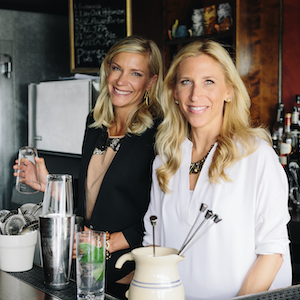
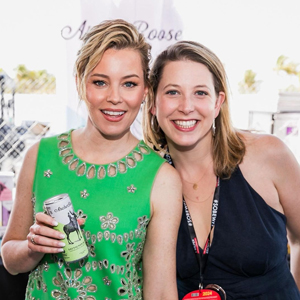
[00:00:10] Ray Latif: Hello friends, I'm Ray Latif and you're listening to the number one podcast for anyone building a business in food or beverage, Taste Radio. This episode features an interview with actress, director and producer Elizabeth Banks, and entrepreneur Marian Leitner, the co-owners of fast growing canned wine brand Archer Roose. A bold and carefree woman. A living embodiment of human adventure. A confident explorer known to travel the world atop a moose. Archer Roose, the fictional character that Marian Leitner created to represent her wine brand in name and label design, is all of those things. One could say the same thing, except for the moose part, about Elizabeth Banks, the Hollywood multi-hyphenate known for acting roles in the films The Hunger Games and Love and Mercy, and as the director of comedies Pitch Perfect 2 and Cocaine Bear. Aligned in personality and passion for life, a pairing of Elizabeth and Marian Roose was made formal in May of 2021, when the former joined the wine company as a co-owner and Chief Creative officer. The partnership came seven years after Marion and husband David Waldman launched Archer Roose, a brand developed to quote, deliver a better, luxurious glass of wine in a conveniently portable, sensibly portioned, and environmentally conscious package. Archer Roose markets six varieties of wine, including Sauvignon Blanc, Malbec, Pinot Grigio, and a Bubbly Rosé, each packaged in 250 ml cans and sold individually and in four packs. The brand is represented in thousands of bars, restaurants, and retailers across the U.S., including Target, Sprouts and Total Wine and more. Archer Roose is also the exclusive wine brand on JetBlue flights, and in March partnered with Regal to bring its Bubbly and Malbec cans into over 100 theaters nationwide. I recently sat down with Elizabeth and Marian for a conversation about the origins of their relationship and how they built rapport, trust, and set expectations for each other. They also discussed how they incorporate a sense of adventure, breaking rules and relatable humor into Archer Roose' marketing strategy, and why entering Target meant being able to swing at a pitch they could hit. Hey folks, it's Ray with Taste Radio. Right now, I am honored to be sitting down with Marian Latif and Elizabeth Banks, the co-owners of Archer Roose. Marion, great to see you.
[00:02:44] Marian Leitner: Great to see you. And I'm excited to see you've got some cans next to you, which means we'll be drinking during this podcast.
[00:02:48] Ray Latif: I will definitely be drinking during our conversation. Elizabeth, I hope you have some cans too.
[00:02:53] Elizabeth Banks: You know, now I feel a little left out. I mean, they're right across the room and I am thinking about standing up and grabbing one, but it's 10 a.m. where I am here in L.A. Yeah, I'm slightly frowned upon to be drinking wine at 10 a.m. Yeah, Saturday morning, maybe I'd be getting away with it, but I probably won't get away with it today.
[00:03:12] Ray Latif: What if you just close your curtains and pretend like you're in Europe? Then you could drink and have no problems.
[00:03:17] Elizabeth Banks: Are you in my brain? That's where I'd like to transfer myself to most mornings.
[00:03:23] Ray Latif: Well, I gotta tell you, I feel like we're on the same wavelength, Elizabeth Banks people who are listeners of this show know that my dream job is and will always be to host Press Your Luck. And I grew up idolizing Peter Tamarkin. And when I saw that the show was being turned into a modern version of the show with you hosting it. I was like, this is incredible. And the fact that you're sticking to the same format as the original, not like that whammy thing that came in like the mid 2000s. That was not good. No, the real Press Your luck.
[00:03:56] Elizabeth Banks: That's right.
[00:03:57] Ray Latif: And it's so near and dear to my heart. And I hope you and I know you enjoy it.
[00:04:01] Elizabeth Banks: It's actually one of my favorite jobs ever, ever, ever in Hollywood. You know, it's, first of all, I loved the original as well. I love hearing from fans who loved the original. I loved Peter, rest his soul. I feel so fortunate because his family reached out to me to say that they were really happy with the reboot as well, which meant the world to me. And I just have so much fun doing it. You know, guess what? We get to bring people into Hollywood from all over and hopefully hand them life-changing money, you know, and they have fun doing it. And I tell you, our producers do the best job. All the contestants go through contestant boot camp, and they really become very close. Like, they hang out after. Like, it's anyone who comes becomes part of the Pressure Luck family. That's the thing I think I'm most proud of is that we've really created a Like the entire family, everybody loves it. It's everyone's favorite job.
[00:04:58] Ray Latif: It is an amazing...
[00:04:59] Elizabeth Banks: Thank you for bringing it up. And we drink a lot of Archeroos behind the scenes.
[00:05:05] Ray Latif: Well done. Yeah. I think, you know, giving away loads of money, making people happy and creating, I guess, lifelong relationships among your guests. What could be a better job than that? Other than being a co-owner of Archeroos.
[00:05:19] Elizabeth Banks: You're not wrong. Having a wine company is pretty fun too.
[00:05:22] Ray Latif: Yeah. Marianne, you know, when I first saw the video that announced Elizabeth Banks the uninvited house guest and also the new spokesperson for Archer Roose, it's kind of weird. The first thing that came to mind was Fight Club. Because I kind of thought about Marianne as this sort of upstanding, organized citizen as the Ed Norton character. Latif and Elizabeth Banks the sort of chaos causing Brad Pitt. You're both Tyler Durden, but just, you know, different versions of that person.
[00:05:59] Elizabeth Banks: I love that comparison. Which one am I though?
[00:06:03] Ray Latif: You're, you're, you're Brad Pitt. You're, you're the.
[00:06:06] Elizabeth Banks: Oh good. Yeah. I'm the chaos machine in this whole thing. I think that's a really fun comparison. Marion did not need me. I will say this, like she, when I met her, I was like, Oh, I just want to be in business with this woman. I mean, she had, she had a lot of plans. She's got an incredible drive. And she knew what she was doing. I mean, I really just, I was so... Impressed. I meet a lot of fancy people and I was exceedingly impressed by Marion, by the business plan, by what we wanted to do in this category with canning the wine, how we were going to make it still taste great, how it was like a lifestyle brand. You know, she sent it to me. This is all during the pandemic. I was living in Utah for part of the time. I had cans of wine like floating down the river with me. And I was like, I get it. I get why this is going to work for people. I just thought she was the bee's niece, so I will happily be her Tyler Durden.
[00:07:07] Marian Leitner: And I feel like Fight Club is a really great analogy for what's happening in the wine industry today, which is like, I kind of been joking that we've been predicting this wine apocalypse for a long time and now it's kind of here. And Archer Roose is ready for it because we have been ready to bring, like recognize that like the old way of doing things is done and we need to embrace a whole new outlook on the industry, way to reach out to consumers. bringing in that agent of chaos to like make this industry more fun and accessible. And like, there is nobody, I mean, literally from the get go, it's always embarrassing to say this, but like before Elizabeth even knew of me or even knew of canned wine, I was like, she would be the best business partner ever. And it's honestly been that way. So just really lucky to be on this journey. And, uh, our knuckles are only a little bloody, right, Elizabeth?
[00:08:04] Elizabeth Banks: A little, yeah. No, it's mostly, it's us against the world, Marion. That's what you meant to say.
[00:08:10] Marian Leitner: That's exactly what I meant to say. Honestly, I think this is just a real opportunity to reshape the industry to be consumer oriented and recognize that like the trends that exist today are about how can I control my consumption? How can I control what I put in my body? Wine is already a great fundamental product when it's low intervention and there's high quality and a great story. But what's missing is delivery, like both how we market to the consumer and educate the consumer. And then of course, how we allow them to only have just a glass of wine. Because fundamentally, most of us can only really, as much as I'd love to be able to have a bottle of wine every night, I can't. And so being able to just have that glass, that's fundamentally what alternative packaging is all about.
[00:08:59] Ray Latif: I'm going to have a glass right now of your rosé. Well, it's in a can. I don't have a glass, as I told Marian prior to you hopping on the mic, so I hope that's okay.
[00:09:09] Marian Leitner: Yeah. We always love to say that Archer Roose tastes best out of a glass, but it's in a can for a reason. So you can drink it wherever you want. And also, Ray, if what you're really telling us is that you take your bottle of wine directly to the face, we don't judge that either.
[00:09:24] Ray Latif: I haven't done that in a while, but you know, I'm not going to frown upon that either. This is the rosé.
[00:09:30] Elizabeth Banks: I hope it's chilled.
[00:09:31] Ray Latif: It is chilled. Of course. Of course it's chilled. Yes. These have been sitting out for three, four days and I just wanted to get, no, I'm just kidding.
[00:09:39] Marian Leitner: Nothing better than a tepid rosé.
[00:09:41] Ray Latif: For sure. For sure. I'm sure some of our listeners are going to be like, okay, wow. Latif and Elizabeth have this great partnership, amazing relationship. They're both working together to change the wine industry, but How did Marion meet Elizabeth? How did Elizabeth sign on to become part of this? And how does this relationship work?
[00:09:59] Marian Leitner: Let's be honest here, right? there is a graveyard filled of celebrity alcohol partnerships. And I knew from the get-go that that's not what we wanted to build. So ever since we were an itty-bitty brand, you know, just around our dining room table, trying to build something that could be a better glass of wine, we knew that we wanted to build something where we were really brand first, and rather than kind of romanticize and have images of bucolic vineyards, we instead really focus on our values. So quality, because honestly, it doesn't matter if the format's convenient, if there isn't a replacement pour, we wanted it to be transparent so that you had all the ingredients listed on the back, there was no unnecessary additives, that you also had the story of the people, place, and practices behind the wine. But fundamentally, we also just wanted to talk to consumers differently. And we wanted to build a craft wine brand. And that's really where Elizabeth Banks kind of always sat in the back of like, as we were building this brand, we wanted to create an icon, an image that was memorable, because how many of us have had a bottle of wine, said that we loved it, and then never find it again, because you can't remember what it's called. Right? And this way we wanted to have an image that you would always remember and would stick in your brain. And that we could then translate into a whole philosophy of how we talk about consumers. So be a little whimsical, be funny. And frankly, there's only one person that combines like the sophistication and that whimsy with also an unimpeachable sense of humor. That's Elizabeth Banks. And so I always knew, like, this is it. Now, how do I make this happen? And what I was so thrilled about was that she wanted to come on board and take this journey with us.
[00:11:55] Elizabeth Banks: There was a real confluence of things that happened, to be honest, on my side of it as well. One was that I recently refound this, Marian, and I'll send you a photo of it, but I had gone on like a women's weekend pre-pandemic with some friends and we were all talking about, okay, like we're getting to middle age, like what is the next, you know, part of our life going to look like? And we literally all made vision boards, okay? So we made vision boards and I am really proud to say it's one of the things that I put on my vision board was smart water. which was I thought like I was like okay this is like celebrities got involved with this brand they've all made a lot of money but like I just had it on there I was like I knew there was something out there for me that was meant for me that was more specifically like meant for me to be a part of but I knew that I wanted to have something and You know, it's so funny because then when canned wine comes across the, you know, your your transom here and you're like, OK, this is exactly who I am, which is what Marian is saying. It's like I like high quality things and I'm, you know, I'm learning to be a little fancier in life. But that's not how I grew up. You know, and I like things that are convenient. And I also I don't want to I want things to have a little bit of attitude. I want to break down some doors. I want to have incredible female partners, like this just checked tons of boxes for me. And the product is great. And it really sort of does feel like a representation of who I am as a person, which is, let's take the product really seriously, but also let's not take any of this too seriously. because life is short and let's have fun. And I just love that that was the attitude Marianne wanted to bring to building this company, because we knew that if we did it ourselves, it would translate to our consumer, that they would feel the energy that we're trying to put into this brand, that they would want to join us on the journey of like, yeah, let's have fun when we're drinking wine together. We all have these like wine clubs and the book clubs and the mommy wine thing and the bloggers and it's like, It is fun. There's a reason that all exists. It's connecting women and it's connecting people together. That's what a great glass of wine does. It brings out a really fun time for people. That's what I was here to get behind. It's been very exciting.
[00:14:21] Marian Leitner: One of the words you use is so intrinsic to how we feel about things, which is we like to say where we're fancy means schmancy.
[00:14:29] Archer Roose: Yes, that's right.
[00:14:30] Marian Leitner: And it's in that, like, we do take our wine really seriously. We've been partnering with the University of Cornell and Anardis for more than seven years on research around canned wine, because I think we should all acknowledge, like, we've all had terrible canned wines. And I think one of the misses of the first wave of that the industry kind of, as they stepped their toe into this arena, was that they didn't take the time to really understand how do you optimize Pitch Perfect pour from a can. And that's what we've been doing. And our research has now been recognized for that. And so that you couple that replacement pour with the ability to then say, we're going to place this in your life. We're going to film a commercial about Elizabeth Banks folding laundry and drinking a glass of wine because that's something we can all relate to. And it's about being able to really translate this to your life as opposed to an ideal that feels very far away.
[00:15:32] Ray Latif: I'm not the kind of person who folds laundry. I hate folding laundry, but I will say when I do sweep the floor or mop, I, you know, will typically have a glass of wine or something else in my hand. And now that I have some Archer Roose, I feel like this is going to be even easier for me to do those tasks. It's interesting when I go back to the question of how did you meet and the fact that Elizabeth Banks this sort of multi hyphenate vibe about her. You're a director, you're an actor, you're a comedian, you do all these different things. Did you want to be a consumer brand owner as well? Was this something that you were looking at and you're like, I would love to own a brand or own part of a brand?
[00:16:09] Elizabeth Banks: I was. I was actively looking for things that I could invest in, get behind, stand with, and not just as the face. you know, that was also what I loved about this opportunity was I really felt like Marion was inviting me in as a partner, as someone who had like a say, a seat at the table, if you will, you know, and who understood that, like, I've been building brands, whether it's the Pitch Perfect movies or Cocaine Bear, you know, every time we put together a movie or a tv show like we have to then figure out like who's the audience how do we get it to them what's the distribution you know there actually were some really interesting crossovers here and i did want to sort of expand myself you know i i've been building a relationship and a trust with an audience for 20 plus years And I did feel like, what else could I do? I mean, I just never want to be put into boxes. I never want to feel like anybody knows what I'm going to do next. I love surprising people. I like surprising myself. And I love the continued learning that I'm doing as an adult businesswoman.
[00:17:18] Marian Leitner: And I love the fact that like Liz is a real business woman. And like, I get to learn from that piece and it's really challenged us around how we think about partnerships. So in a great example of this is Regal. So we were just announced as the new wine in their concessions. And Liz really said, like, this is not just a placement. This now needs to be a example of how we're going to create true partnership activation. And so we're doing screenings, you know, with them across the country and we are, you know, creating cool events that people can come together and get excited about going to the movies again.
[00:18:00] Ray Latif: Yeah. I mean, you know, I think prior to Arturus getting into Regal, I mean, what was the wine available? I don't want to name names, but it wasn't very good.
[00:18:10] Elizabeth Banks: No, you know, but it's also that I really believe that I think we've all had this experience of Marion, you mentioned it before, like you find a great wine when you're having a great time and you want to be able to remember it. And so I just love the notion that people can be at the movie theater, having their Friday night out, have their glass of wine while they're watching their movie. I wanna replicate Netflix and chill at the movie theater because I still think leaving the house is really fun and important. And I think that sense of community is, especially around movies, is something that I love and I wanna make sure that we continue to find ways in the film business, but also what a great crossover here to bring people to the theater and give them a great time. And I just felt like this was such a perfect partnership to create an on-premise experience for people with a wine that then they'll go home and go, what did we have when we saw Dune? Oh yeah, it was at the Moose one. Great, let's buy it at Target. Exactly.
[00:19:16] Ray Latif: The Moose one. I'm glad that you brought that up.
[00:19:19] Elizabeth Banks: Archeroos, the moose, the moose, yeah.
[00:19:21] Ray Latif: The moose, but it's, it's a steampunk-ish moose. I feel like the whole vibe of Archeroos is very steampunk-ish. You've got the top hat. I mean, are you going to wear a monocle and like ride a unicycle on a future video? Or is, I mean, I think that would be appropriate, right?
[00:19:36] Elizabeth Banks: That has been in the paperwork at times.
[00:19:38] Ray Latif: Okay.
[00:19:39] Elizabeth Banks: A hundred percent. It's actually, uh, it's very hard to find a trained moose. Uh, we've tried. They, they're very hard to find, but keep looking.
[00:19:48] Marian Leitner: In fact, I'd like to use this platform as a casting call. If you happen to have one, please reach out.
[00:19:54] Ray Latif: This is the right platform for this. So definitely good call there, Marianne. No, I think that would be kind of fun. I mean, at least have a, you know, forget about the moose. It's not, you gotta have the monocle. The monocle is key. If you're flying a dirigible, I mean, that'd be even better, but like.
[00:20:10] Archer Roose: Oh, great word.
[00:20:11] Ray Latif: Yeah.
[00:20:12] Archer Roose: Love it.
[00:20:13] Ray Latif: Yeah. It's, it's, it's all from the, what's the name of the gin brand that I'm blanking on? Hendrix. Hendrix has a very similar kind of vibe as well.
[00:20:21] Elizabeth Banks: Yeah. Yeah, I mean, I think, look, it's that sense of adventure and of breaking rules, right? Well, another confluence of just things, this is so random, but my college thesis project was this Eric Overmyer play called On the Verge, which is about three intrepid female explorers in Victorian times who like go try and find a Yeti and like, you know, and so when Marion was talking to me about Archer Roose and who she was and this character that, you know, is at the heart of the adventure, seeking wine lover, but I was like, this is, I wrote an entire thesis about women like this, you know?
[00:21:00] Marian Leitner: Yeah, it was literally one of these things that was like, this is meant to be, because that's a lot of what we're actually doing is, world building here. And the whole reason why we have this icon is yes, because it's memorable. And so you can go and look up moose wine and it will pop up even if you can't remember Archer Roose. But it's also a story. It's a character that we've created that's this battery pusher and rabble rouser who is traveling the world because we offer a global portfolio. But we are obviously an American wine company and a moose is a truly North American animal. So she travels the world and each one of these wines is like a postcard from the places that she's traveled. So it allows the consumer, we hope, to have greater sense of empowerment in the wine aisle because they'll try new things and reach for a new varietal and explore a new country because they know that with our Jerusalem, always get a high quality, low intervention, fruit forward, dry glass of wine. And that's the goal.
[00:22:02] Ray Latif: And to be clear, the moose is on the front of every can. The moose and the rider of said moose is on the front of every can. And you both seem to understand, obviously, I would think you would have to, the inherent feel, value, aesthetic, everything about the brand so well. And I feel like you both understand each other so well. How long did it take before you really felt like you had trust, rapport, that you could finish each other's sentences? I mean, when did that start to happen?
[00:22:34] Marian Leitner: So we talked a lot over the phone and via Zoom during the pandemic, but the first time we met was when we shot on Invited Guest. And I remember just saying like, Please, please, maybe she'd be as cool as I think she is. And she showed up 15 minutes early to this shoot, so 15 minutes before her call time. During COVID, she reached out to every single one of the crew members, and she knew their name. Instantly, she remembered their name. And after that, I was just like, we're going to be fine. This woman just knows what she's going to do, what she's doing. And like, she doesn't phone in anything. She shows up a hundred percent of the time. And so that she just had my trust from there on out. So that was it for me.
[00:23:18] Elizabeth Banks: You know, we have a lot in common. The Massachusetts thing also helps. I mean, I'm very partial to all my, you know, family, friends. That's where I'm from. I'm from Western Mass. And I love that this, you know, she was based there and I've been to visit her. It's been great. You know, I think that also just there's this like a get to it, you know, take it seriously, do the work and have fun while we're doing it. I mean, that's really what it comes down to for the two of us.
[00:23:44] Marian Leitner: I mean, Liz, you held my baby before like most members of my family did.
[00:23:49] Ray Latif: That's true. That's definitely how you develop rapport. Was it your first child, Maren?
[00:23:55] Marian Leitner: It was my second child. What I can tell you is that my house was a mess and Liz literally showed up uninvited and then just did the dishes.
[00:24:06] Ray Latif: Did that really happen? That really happened.
[00:24:08] Elizabeth Banks: Yeah.
[00:24:09] Marian Leitner: He did the dishes.
[00:24:10] Elizabeth Banks: I was in Boston on some other stuff and I had my son with me and we had time before we were going to the airport and I was like, I'm coming over. I want to meet the baby.
[00:24:20] Marian Leitner: I want to meet the baby. But like, this is something really cool because you don't meet a lot of people who are as accomplished and established and hardworking as Elizabeth Banks like, you get to know her pretty quick and you learn like, Elizabeth Banks friends that go back to like in utero that she's still like cares about actively talks to like she she's a relationship person through and through but that they show you know that show up to their business partner's house and like you know just do their dishes and like make sure they're okay postpartum like that to me is like pretty awesome human being right there.
[00:24:57] Elizabeth Banks: To be fair, I mostly just did the dishes I used and then my kid used and you had a couple left over but that was there was not a lot of dishes that needed to be done. I was not going to leave more dirty dishes. By the end of this story, we need to build a mythology here. Yes, I know. I'm sorry. I'm sorry. I'm breaking it down. I just I don't want to I don't know. I'm feeling shy.
[00:25:18] Ray Latif: Were they wine glasses? Were any of the dishes wine glasses, I wonder? I would think so. Or were you just drinking straight out of the can at that point?
[00:25:24] Elizabeth Banks: What else do you do?
[00:25:25] Ray Latif: What else do you do? Indeed.
[00:25:28] Elizabeth Banks: The pump and the dump.
[00:25:30] Ray Latif: You know, I'm from Massachusetts. I don't think I'm nearly as funny as some folks from Massachusetts, Elizabeth included. I grew up in Auburn, Mass., but I do appreciate the blue collar vibes of places like Pittsfield and Auburn and Boston, you know, to a certain extent. And I also find that these folks are incredibly funny. The people that live in these towns, they're able to, you know, share stories that are really dry and sarcastic, but, you know, not offensive. And I feel like that's all incorporated into the marketing and communication of Archer Roose.
[00:26:01] Marian Leitner: We have given away live snakes.
[00:26:04] Elizabeth Banks: That's true. We've given away live snakes. I had to carry live snakes in an entire, you know, a whole day of snakes.
[00:26:11] Ray Latif: Wait, I saw that. I saw that press release. And then there was another one that came out immediately after that said that this is all, well, you apologized for giving out.
[00:26:20] Elizabeth Banks: It turns out I sometimes have terrible ideas. The real issue, to be honest, I still think it's a great idea, is it's very difficult to ship snakes. You don't trust the shipping at this point. There were a lot of supply chain issues when it came to snakes.
[00:26:39] Marian Leitner: Very true. But also like Elizabeth Banks such a unique voice. It's so important that like we amplify that. And so we work with a fantastic Boston based creative agency called Colossus that we have since day one. We're ride or die with them. And, you know, together, I think, again, this all comes down to this idea of For us, the vision that Liz and I share about the industry is let's create a truly consumer-focused brand that's based off of a better glass of wine? And how do we tell stories around this in a way that people know that everything about the way that we're approaching this industry is different? And sometimes that involves giving away snakes. And sometimes that involves like leaning into stuff that, you know, just as Liz mentioned earlier, like book club. I mean, that was one of, I think, your more brilliant ideas, which was, well, sure, everybody has a book club, but let's be honest about what we do at this book club. That's right. We get together and drink wine.
[00:27:44] Elizabeth Banks: And gossip and talk about our kids.
[00:27:45] Marian Leitner: And gossip and talk about our kids.
[00:27:47] Ray Latif: Sure. Sure. I mean, they go hand in hand, all of those things, for sure. Archeroos is an established company at this point. You have investors, you have strategic investors. And I think, you know, if you have a marketing communication strategy that is, shall we say, more professional than it was when you first started, that's a good thing. But when you want to be top of mind, you want to be irreverent, you want to be fun in a way that you think is going to differentiate the brand from others on the market. How do you incorporate that into your strategy and do it in a way that sort of fits in and doesn't throw things off the rails, but maybe does throw things off the rails, but in a good way?
[00:28:28] Marian Leitner: Okay. A couple of things here. I'm going to nitpick.
[00:28:31] Ray Latif: Please nitpick.
[00:28:31] Marian Leitner: We're not established. I don't like the idea that we're part of the established. We like to think of ourselves as insurgents.
[00:28:40] Ray Latif: Okay.
[00:28:41] Marian Leitner: And that's kind of an important distinction because today's alcohol industry, particularly on the wine side, the distribution is so consolidated that You know, to be a really big brand, you really have to take big risks, especially when you start, you know, like we did just a few years ago around our dining room table. And so the formal part of that marketing communications plan is about saying, what is our North Star? Who are we? What do we stand for? Who is our consumer? We can never violate that because the minute that we do, we A, are sellouts. We don't wanna have any part of that. And two, we're betraying the reason why we're here in the first place and why we have a competitive edge. And, you know, that irreverence is hugely part of who we are and it's deeply seeped into this mentality. So yes, we've been around for a while and we do have awesome accounts like JetBlue and Target and Kroger and stadiums across the country and Regal Cinemas. But to us, we still very much feel like the new kids around the block because we're constantly proving that we deserve to be here, because there is an inherent bias, I think, against canned wine. And we want to demonstrate that one, our wine is fantastic, and two, that it truly has a place as a part of the grocery pickup that you do each week, because we want to be where our consumers are. And so again, this comes back to how do we have that laser focus towards them, and we ask ourselves, where are our consumers drinking wine? and then follow them across that journey. And like that is really core to who we are and we can't ever lose that. But we are very lucky to have established players behind us like Constellation. They've been truly fantastic partners who's by helping to leverage their data and insights, it's allowed us to really crystallize who are we and how do we build a strategy that really fulfills what that vision and the drive of the company is.
[00:30:50] Ray Latif: But do you ever have to clear some of the content that you create with a Constellation or some of your other team members who might be like, hey, be careful about doing this. For example, the video where Elizabeth Banks about to go to a PTA meeting and goes into her fridge and pulls a couple of cans of Artruis out of there and says, I'm going to need this before this PTA meeting. I love that. In fact, I'm probably going to do that next week. But it is a little risqué. So, I mean, at what point do you push the envelope and maybe get pushback from your lawyers or from Constellation and say, no, but this is who we are. We have to be this.
[00:31:32] Marian Leitner: Yeah, I mean, we're kind of a ask for forgiveness. Look, like they invested in us because we're doing things differently. And we know what the line is. And we care. I feel like we pay a lot of money to lawyers to keep us on the right side of the law. But like, again, this this comes down to we want to speak to our consumers. Yeah.
[00:31:56] Elizabeth Banks: And I'm sorry, but like glasses of wine being poured in a vineyard, like I'm truly struggling to even think of what like a wine ad or commercial even looks like in this moment in time. I'm like really struggling, like Is it like people walking down vineyards and like riding a horse? I truly like, who is it? Are they going out to fancy dinner? None of that makes any sense to me. I just want to sort of show, I want to be relatable and I want to show our consumer that like we see them and we see opportunities for them to enjoy life a little bit more, especially in those moments. when we feel obligated, right, to like get through something. So, you know, one of the, again, early on, I sent this line to my sister. She texted me from the sidelines of the soccer game to say, you've made today's soccer game of eight year olds who just like chase the ball, right? Like, You made today's soccer game a little more bearable because she's going to be sitting on the sidelines for like three hours at this thing in the blazing sun with some girlfriends waiting for their kids to just be done chasing a ball around. Like, it's great. We all want to be there to support our kids. That's why you're there on the sidelines. But have a little more fun with it, you know?
[00:33:19] Ray Latif: Now, when I think about a lot of brands that are successful, and successful in quotes as in they have made it to a certain extent, a lot of it has to do with getting into major national mainstream retailers. Getting into Target, I think, feels like it was a game changer for Archer Roose. You went from, you know, being on premise and being in JetBlue to really getting into some retailers. But once you get into Target, it says something about you. It says something about the brand. And everyone who listens to this show dreams about getting into Target. I don't think there's a single person who's like, I don't want to be in Target. I can't imagine a single person would say that. How did you go about, what was the plan? What was the strategy for getting into Target? And how did you both work on achieving that goal?
[00:34:06] Marian Leitner: Yeah. So multi-year, long-term strategy that really was actually kind of traditional in its nature, which was that since we are doing something so different, we wanted to build this brand in the on-premise. And so we did start, to your point, Yes, it was JetBlue, unique captive trial, where we beat 30 other brands in a blind taste test, many of which were in glass, to take over that menu. Then it was taking over stadiums, where we kicked out old legacy wine brands that weren't selling, and in our first year with no marketing, increased their wine sales by 7x. And we brought those case stories to Target, along with the data we had around our consumer. And the pitch was, our consumer is here and we need to be everywhere our consumer is because our vision is about truly following our consumer and showing up where they want us when they want us. And target got it they're fantastic partners and they want to support different perspectives in the industry, which I also think is really critical and now, frankly, I think we're all on a learning around how do we really make. alternative format truly successful in retail because wine is on a journey as a bigger industry around how we reframe its relationship to the consumer and that a piece of that is how do we partner with retailers to rethink how products like ours are merchandised within the store. Where do we belong? We belong in the cold box. We belong in displays like you would see with beer and hard seltzer, not in a rarefied wine set. And how we partner with our retailers is really important, but getting into Target was so exciting and is truly also a direct consequence of the fact that Liz flew to Minnesota during a snowstorm in December. And we did a siege.
[00:36:20] Ray Latif: I hope you had a good seat, Elizabeth Banks those flights can be a little turbulent.
[00:36:24] Elizabeth Banks: A little bumpy, yeah. That's right. I just remember being like, I think I got off the plane, it takes all day to get there and you lose the time. And I just remember getting there and it was already pitch dark. And I was like, is it still day? I was so confused even what time it was when I arrived. Yes, they're incredible partners. I think what Marion is also saying is like, we're not just like, take the wine, throw it on the shelf. Thanks so much. Walk away, right? We really are in a conversation with how do we engage target consumers. in the store. And Target is also... They're figuring out in a really interesting way like how to sell alcohol in Target, which is a new-ish thing. And not a lot of people buy their alcohol at Target yet, right? And so I think building this partnership while they're building that part of their brand has been really exciting for us too and to be like part of that. That's where I as a businesswoman like this is so interesting to me like what they're doing.
[00:37:27] SPEAKER_??: Mm-hmm.
[00:37:27] Marian Leitner: I just wanted to add one other thing that I think you touched on so beautifully, which is that if you want to get into Target as a brand, what we all have to constantly ask ourselves is like, what can we do for Target? What do we do for our partners? Because it's tough out there right now. And so we have to think outside the box and experiment so that we can truly add value and help them achieve their goals.
[00:37:53] Ray Latif: Absolutely. You know, retailers and retail buyers want to know how you're going to incrementally drive sales, how you're going to drive incremental sales to their stores. It's not just, Hey, this would be a cool product to have in your store. They're not in business for that. They're in business to make money, to make lots of money, to make more money every single year. That's capitalism for you. But anyway, Target in particular. They don't need anybody. And so to convince them that you're going to increase foot traffic to their stores or give people yet another reason to be there and have that be a real compelling reason is pretty amazing. When you share that message, how do you do it in a way that makes it clear that you're going to follow through on that?
[00:38:38] Elizabeth Banks: We went when we were ready and we knew we could fulfill it, right? We went when we were like, this is the time. You know, five, six years ago, we weren't ready to be there. We would have failed, frankly. So we set ourselves up to win there and we back our word up. I mean, that's just the bottom line. I don't like to swing at pitches I can't hit. So this was something we knew that we could sail out of the park.
[00:39:05] Ray Latif: So just don't go to bat if you can't hit the pitch is what you're saying.
[00:39:08] Elizabeth Banks: I don't think there's anything worse in business than not being able to deliver on your word. Banks is right.
[00:39:15] Marian Leitner: Striking out doesn't benefit anybody.
[00:39:18] Ray Latif: No, you know, being patient is really important. Patience is a virtue. That's the line anyway. In the beverage industry, it's tough because if you run out of money, you can't be patient. You got to go get that money one way or the other. And Marianne, I mean, you, I don't recall reading about how you originally funded the brand and then how you funded it through the addition of Elizabeth Banks a owner and, you know, investor in the brand. Yeah. I mean, can you talk a bit about that and what your strategy was for initial investment and then funding beyond?
[00:39:52] Marian Leitner: When my husband and I, when we first decided that we wanted to do this, I actually had just gotten in to go get an MBA and we decided, well, I decided I didn't want to get an MBA. This is what I wanted to do. So we took the money that we saved and then we were the first hundred K into the business.
[00:40:10] Ray Latif: You got an MBA, by the way, just not in school.
[00:40:14] Marian Leitner: I don't have a diploma.
[00:40:16] Ray Latif: No.
[00:40:16] Marian Leitner: But yeah, it's been an extraordinary journey. So the first 100K was ours. And that basically funded getting the whole supply chain set up, landing our initial distributor. But I still had a day job. I was working at the World Bank during the day. And once we kind of got these initial pieces in place, we went out and we raised a small friends and family round thinking that we would go out then and raise a big war chest because we all know that building beverage brands is extremely expensive, right? It takes 30 to $50 million is the general kind of rule of thumb.
[00:40:53] Ray Latif: You just scared off half our audience, by the way. And the other half that you didn't scare off are completely crazy. They're psychotic people, but they're good people.
[00:40:59] Marian Leitner: They're great people. And look, I was one of you good people, you know, I found out pretty quickly that Investors didn't want to fund a first-time female founder in the alcohol business. I mean, let's be honest, less than 2%. This statistic is actually old. The one that everyone cites is 2% of all venture funding goes to female founders. That's not true anymore. It's actually 1.3%. We've gone backwards. And in the state of Massachusetts, it's 0.8%. And so this is a huge challenge in bringing new perspectives and voices to the market and particularly in capital intensive spaces like ours. So look, I closed a lot of small checks and then was lucky enough to find our first institutional funders, which was SoGal Capital. who hasn't been on this journey for a long time. And as we grew and we stuck around and we proved to people that we weren't going anywhere from sheer grit and perseverance, we've been able to attract wonderful investors to the table, such as Constellation Ventures. But I do think it's super important to call out that beverages is a tough space to fundraise in period. Alcohol with its crazy regulations and its three tiered systems feels very impermeable. And it's even harder for female founders and people of color to raise money. I mean, I was lucky enough that I had a network to draw upon. And to me, this goes back to honestly what our theory of the wine industry is today, which is that you meet a lot of people who like to drink wine, but they don't have a lot of brands that they're loyal to. And that's because it's been a very supplier driven business for a very long time, and it needs to be consumer driven. And making sure that you're allocating capital to consumer driven brands, we're bringing in a new perspective to this category is so critical. But I'm happy to commiserate with any founders out there who are raising funding because it took us a very long time to now have the momentum that we have. But we're very lucky now to have the backers that we do.
[00:43:18] Ray Latif: Elizabeth, do you feel the same way? I mean, when you think about how, you know, vetting the existing investors and, you know, talking to your own network about funding this idea and this company, I mean, you know, how do you think about the investment potential or the, you know, the potential to bring on new folks and whether they're aligned with you personally or professionally?
[00:43:40] Elizabeth Banks: First of all, I'll just say, trying the wine is a huge selling point. It's delicious, right? So that's number one. But, you know, we were talking about patience a minute ago, and the wine industry is hundreds of years, it's so old. I mean, when you think about Wine in bottles. I mean, hundreds of years we've been drinking this stuff, right? Thousands probably. So I can be patient right now with this category because as Marian says, like the whole world is changing. Consumers are changing. Supply chain is changing. The climate is activated and it's changing. So wine is all gonna be affected by that. And I feel that we are positioning ourselves to be at the forefront of what is next in a hundred and something year old category in the beverage industry. And that's what's really exciting to me and is exciting to our investors.
[00:44:46] Ray Latif: Yeah, well said. There's a big opportunity, I think, to rethink how things are done, especially if it means growth for the category and growth for the industry as a whole. It feels like wine has kind of been banging its head against the wall for a decade now doing the same thing and not seeing the results that they would expect. I'm not sure what results you would expect after banging your head against the wall. And Archer Roose brings a different form factor, a different conversation, a different feel, a humorous vibe. It brings all these different things that the wine industry has not had in the past. Thank you both so much for taking this time. This has been so much fun. I can't even believe we've been talking for an hour. I feel like we could talk for another three hours. I know you're very busy people. Thank you so much again for everything you shared with our audience. It's so helpful. I really appreciate it. And hopefully we can stay in touch.
[00:45:34] Elizabeth Banks: Thank you so much for having us. Yeah. Thanks so much. This has been fun. So much fun. Cheers.
[00:45:39] Ray Latif: Cheers.
[00:45:40] Elizabeth Banks: Cheers, everybody. Enjoy the bubbly.
[00:45:45] Ray Latif: That brings us to the end of this episode of Taste Radio. Thank you so much for listening. Taste Radio is a production of BevNET.com, Incorporated. Our audio engineer for Taste Radio is Joe Kratchy, our technical director is Joshua Pratt, and our video editor is Ryan Galang. Our social marketing manager is Amanda Smerlinski, and our designer is Amanda Huang. Just a reminder, if you like what you hear on Taste Radio, please share the podcast with friends and colleagues. And of course, we would love it if you could review us on the Apple Podcasts app or your listening platform of choice. Check us out on Instagram. Our handle is BevNetTasteRadio. As always, for questions, comments, ideas for future podcasts, please send us an email to ask at Taste Radio. On behalf of the entire Taste Radio team, thank you for listening, and we'll talk to you next time.
[00:46:36] The Hunger: you