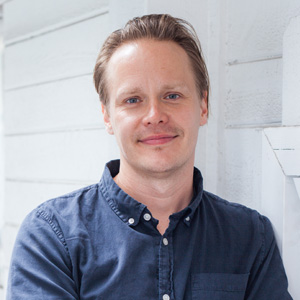
[00:00:10] Ray Latif: Hello, friends. I'm Ray Latif, and you're listening to the number one podcast for anyone building a business in food or beverage, Taste Radio. This episode features an interview with Tero Isokauppila, the founder and CEO of Four Sigmatic, a pioneering brand of mushroom-infused coffee, tea, and supplements. At one point during my conversation with Tero Isokauppila, he recounts a story about playing golf with the CEO of a large and well-known US retailer. The executive told Tero that Four Sigmatic wouldn't be successful because of its esoteric brand name. It's fair to say that the CEO underestimated Four Sigmatic. Founded in 2012, the trailblazing company pioneered the thriving category of mushroom-centric food and beverages. Four Sigmatic markets a platform of organic ground coffee, protein powders, creamers, and supplements that are infused with functional mushrooms, including reishi, lion's mane, and chaga. Four Sigmatic's flagship Mushroom Coffee is the leading ground coffee on Amazon and Whole anchor for its significant e-commerce business, which represents more than half of its sales. The brand is also represented at major retail chains, including Walmart, Whole Foods, Target, GNC, Albertsons and The Vitamin Shop, and generates tens of millions of dollars annually. In the following conversation, I spoke with Tero about how his personal background as part of the 13th generation of Finnish farmers influenced his decision to launch Four Sigmatic, navigating an ahead-of-its-time trend, how he overcame, quote, making every mistake that a founder can make, and how the company aligns category insights and innovation. Hey folks, it's Ray with Taste Radio. Right now, I'm honored to be sitting down with Tero Isokauppila, who is the founder and CEO of Four Sigmatic. Tero, how are you? I'm great. Thanks for having me on. Yeah. Thanks so much for joining us. I feel like I mildly butchered your last name, Isokauppila. I think I got it right that time.
[00:02:31] Tero Isokauppila: Yeah. It's a Scandinavian name. You always need to buy a couple vowels to make it right. But yeah.
[00:02:37] Ray Latif: That would be fun. Finnish Wheel of Fortune would be a fun game to play, I think.
[00:02:42] Tero Isokauppila: Yeah. Finland caught on the global news a few years ago when one of our words became the word of the year globally, and it's kallisarikennit, and it means to get drunk at home by yourself without wearing pants. And it's a word very long with a lot of umlauts.
[00:03:00] Ray Latif: I think I saw, it was either on your Instagram page, or maybe it was your wife's Instagram page, where you guys were out somewhere in the Finnish country, and you and your kids were running all over the place. I think it was your kids without pants at the time though. Yes. I didn't see you without pants. That would have been a bit awkward.
[00:03:20] Tero Isokauppila: No, that would have been very awkward. We spent our summers, I live in Austin, Texas, and we spent our summers in Europe. at our family farm that we've had for now 13 generations and our kids are the 14th and they're so young that we potty train them in the summer and just get them all naked. So then they learn to use the potty.
[00:03:39] Ray Latif: Ah, well done. And obviously they're not the ones getting drunk without pants. No, they're getting drunk on life. God bless them. That sounds like a good time. Do they eat mushrooms or do they appreciate mushrooms?
[00:03:53] Tero Isokauppila: No, but they pick a lot of mushrooms. They're both mushroom obsessed. They just don't eat them really. So a little too young, but they do the Four Sigmatic protein shakes. They love them. And our creamers, those are the ones they take.
[00:04:07] Ray Latif: Is it just because mushrooms are more of an acquired taste or they just can't get over the sort of look and feel and smell of them?
[00:04:15] Tero Isokauppila: Yeah, I learned this after becoming a parent, so this is new to me, but kids are very careful about food for, I guess, evolutionary reasons, to avoid things that are poisonous or toxic, and they especially avoid foods that are inconsistent often, and that's why I like vegetables, and also mushrooms. A lot of kids don't eat, and it takes a while for them to get comfortable with it, so I think that's what it is, but the creamers and the protein shakes, they do.
[00:04:45] Ray Latif: That's so interesting. I never knew that, but it totally makes sense, especially about mushrooms, because you never find two mushrooms that look exactly alike unless they're genetically modified, which is not part of your purview.
[00:04:58] Tero Isokauppila: Yeah, that's right. Yeah.
[00:05:00] Ray Latif: Your kids are still pretty young at this point. I don't think they're using Gen Z and Gen Alpha terms like Riz and Sigma, but I was thinking about this. You know, it's already in your name, Sigma, and apparently Sigma means good to the kids these days. Have you toyed around with that in your social?
[00:05:20] Tero Isokauppila: Uh, no, I'm not cool enough for that. I think our team might have done something, but I'm, I'm, I'm not cool enough. Yeah, my kids are three and a half, two and five months. So yeah, they, they say the darndest things, but they don't use the Gen C, Gen Alpha slang, but they do say funny things. Our neighbor is very fit and muscular. And one of my oldest calls him beefcake and yells at strangers that are muscular, that they're beefcake, which I find very funny.
[00:05:47] Ray Latif: I didn't know that that was a Gen Z term or if that's just something that people say.
[00:05:51] Tero Isokauppila: No, I think he just found it somehow and says it. OK.
[00:05:55] Ray Latif: You mentioned you, Summer, on your family's farm, which your kids are now the fourth generation, I guess, owners or family inheritors of that farm. When you were growing up, I mean, talk a bit about how your sort of eating culture and lifestyle in Finland impacted your interest in mushrooms in particular, and then perhaps entrepreneurship?
[00:06:22] Tero Isokauppila: Yeah, we've had the farm at least since 1619. So my kids, if they decide to live or farm there, then they would be the 14th. In Europe, 100 years is a short time, but 100 miles is a long distance. And here in the US, 100 miles is a short distance, but 100 years is a long time. But yeah, it surely impacted. So I grew up in Finland at our family farm. My dad is an agronomist, so professionally trained farmer. And my mom taught physiology and anatomy, and that was kind of a marriage of like Scandinavian culture meets farming meets health and wellness. We drank spring water, showered in spring water from our property, ate berries, mushrooms. So yeah, I grew up foraging mushrooms when I was yay high with my mother and went to an environmental school that my great-grandfather started. So it was surely a big part of my childhood. But what's interesting is as a kid, I didn't realize it. I didn't understand that it was special or different. You thought everyone lived like that, right? So later when I lived in multiple countries around the world and became an adult and went to an international school for university, then I started realizing that my upbringing was very unique and very different. And I started appreciating and seeing it kind of differently.
[00:07:40] Ray Latif: It totally makes sense that you would be interested in the space that you're in now as a business owner, but going from farming to consumer packaged goods, there's a bit of a distance in between those two things. When did you think about launching a brand?
[00:08:02] Tero Isokauppila: Yeah, I've worked in large corporations, management consulting, big tech, between my ventures to get some money. But I'm generally pretty unhirable. So I feel like I was forced to be an entrepreneur. And my first couple businesses didn't do well. I was like 18 to 20 when those started. But I always felt like I wanted to create something of my own. But yes, you're right. Farming and CPG are quite different. Even though a lot of CBD people think they know farming, it's a very different world. The margins, they're hard in different ways. Let's just put it this way. And I didn't really want to do a CBD company. It was not like, or I wanted to work in mushrooms. I feel like the mushrooms chose me and nobody was just doing them. And I was like somewhat pushed into this world. And then I had to self-learn everything, not just about, CPG, which is its own unique industry with a lot of unwritten kind of tacit knowledge, but also the U.S. culture and having to move, starting a business in Europe and then moving to the U.S. And I didn't grow up with Kroger or Albertson or Publix, and I didn't know anything about these distributors and margins. So it was self-taught and I was driven by the mission to bring mushrooms to the people.
[00:09:24] Ray Latif: I think mushrooms are so divisive, particularly in the United States. There's just this feeling that, I'm going to use a gross term here, but gross. I think there's a lot of people that say, oh, mushrooms, I can't come near mushrooms. And of late though, I think people have embraced the functionality of mushrooms in a way that they had never considered before. And I think about Four Sigmatic as being at the forefront of introducing mushrooms as a functional ingredient into food and beverage. But that sounds like an uphill battle. You know, in 2012, it sounds like an even more steep climb. What was the marketing strategy? What was the communication, the education strategy at the outset? Was it something that was really just, let's focus on people who are sort of already in the know, or was it, hey, you know, we can have a broad impact. We can have an impact on the broad population, but we've got to start somewhere. I mean, talk a bit about that.
[00:10:30] Tero Isokauppila: Yeah. Borsigomatic was started in 2012, so there's been a few evolutions. When we started, there was no real mushroom category. We were not the first mushroom brand, but the mushroom brands that were out there were selling mostly just capsules for immunity. And then we created the world's first mushroom coffee, the original mushroom coffee, and created the concept of using these functional mushrooms in teas and Cocos and other things like that. So in the beginning, because we were self-funded, we started like most CPG brands being broke. It's just doing a lot of demos and events and try to make the demos and events at least break even. So with our own staff, try to sell enough to justify the cost. And we did a lot of like groundwork, education and traveling around the world, doing events, doing demos.
[00:11:21] Ray Latif: When you talk about the demos and events, where were the demos? Where were the events? How did you determine where your time and money was best spent at those places?
[00:11:32] Tero Isokauppila: Yeah, a lot of retailers did not want us. They were laughing at us. Basically, like everyone laughed at us. But the co-ops and the kind of like natural product stores were willing to give us a chance. They were used to new innovation as long as it was natural and mushrooms surely were. They were like, yeah, this is like down our alley and we can do this. So most of the demos were in store in natural product stores and co-ops. And then the events were along the lines of like vegan events, biohacking events, paleo events, like kind of adjacent health and wellness, but kind of at that point, cutting edge wellness events that we did. Every time we tried to do something a little more mainstream event, it failed, but those were the ones that worked.
[00:12:18] Ray Latif: And these were all over the world, you said, or were you really focused on particular parts of the country? No, all over the world.
[00:12:24] Tero Isokauppila: Yeah, it was about 20 countries all over the place. I mean, disclaimer, we had no clue what we were doing. So me and my founding team were all self-taught, had no clue. But it was a lot of UK, Canada, Scandinavia, kind of the main markets in the beginning until we could afford to come to the US. It's also interesting that most CPG brands, as you probably know and your audience probably knows, is like lose money. So it's very common that if you're CPG upstart, you're not profitable for a while in the U.S. because there's a lot of middlemen. But in in Europe, you kind of have to be because there isn't the funding market to fund losses. So most European, Canadian CPG brands have to start profitable. So that's what we did, and we were profitable. We didn't pay ourselves much, if any, but we were able to break even and do a lot of demos and events. That's the first evolution. Then we get to the US, and we did that same strategy at Whole Foods and Sprouts, but it was clearly not scalable. And that was a time when we had done a lot of education, long form education in person, or I had done a lot of it. And podcasts was about to like boom in. So this is like 2014, 2015. And we got into doing a lot of podcast interviews, but also sponsoring podcasts. Mushrooms at that point I would say are complicated to understand so short form was very difficult because it was hard to for the Mycophobia the fear of fungi that you mentioned that a lot of Americans have it was hard to explain in a 30-second viral clip, but it was much easier to explain in a long-form interview or conversation and That was a big growth driver for us for multiple years. Let's say five years and And then the last few years, we've been increasingly focused on, again, more traditional CPG building, how you build in retail, which requires money and investment, which we can now do, but it's more, again, traditional CPG marketing.
[00:14:25] Ray Latif: What's really interesting about Four Sigmatic is that nowadays you see mushrooms in everything, in beverages, in snacks, in breakfast foods in some cases. But that didn't happen until I think the last three or four years. But when Four Sigmatic was out there, you know, with creamers and coffee and tea and whatnot, I think people were generally Happy to see it, even if they didn't understand it. I think there's still a continuing education for a lot of people about mushrooms. How have you kind of set a foundation, not just for your brand, but for a whole host of other brands that are using mushrooms as a key functional ingredient?
[00:15:13] Tero Isokauppila: Yeah, for sure. We all stand on the shoulders of giants, the people who came before us. So before Four Sigmatic, there was a lot of amazing mycologists and educators on the grassroots level that did valuable work. For sure, the coffee platform has been groundbreaking. I think now that has leaked into RTD as well, and bars and other big categories. But I think the coffee, we created the original mushroom coffee, and now mushroom coffee is, I think, globally a billion dollar category. which is pretty mind-blowing. So I think a lot of brands have benefited from the groundwork we did, particularly in education and some of the partnerships we had in podcasts from Tim Ferriss to Joe Rogan. And then they build upon that and improved on some other part of marketing or formulation in a different way and gain traction. And I'm sure there will be new brands that build off of them. So I think that's the natural evolution. I'm trying to build Four Sigmatic like my father taught how farming works, where a quarter is 25 years, not three months like in Wall Street. So I hope We're here in 100 years, but it is normal, I think, that every generation of CPG learns from the previous. And a lot of the success cases of five, 10 years ago have now been replaced by other innovation in the same categories from other upstarts.
[00:16:39] Ray Latif: Is it hard? Have you been frustrated at all by the amount of new brands coming into this space and perhaps some misinformation about their products and the functionality and their use cases and so on and so forth? Or has the growth of this space, that of mushrooms as a functional ingredient in food and beverage. Has it been pretty consistently and well communicated across the board?
[00:17:10] Tero Isokauppila: Both. I'm happy that there's way more companies. Rising Tide lives on both. So I'm very happy we're not the only or one of two or three people doing it. So I think that's positive. And we also benefit from it. I think the world benefits from it. The two things that make me a little bit sad is The world is globally very mushroom-friendly, but the Anglo-Saxon culture, as mentioned, is a little bit microphobic, and there's a lot of mushroom illiteracy in the U.S., particularly around how they should be grown and cultivated. There was a study a few years ago, a peer-reviewed study, that 74% of reishi supplements in the U.S. contain no reishi mushroom. And it's most of these new products, I don't know if it's on purpose, but they buy these like lab grown mycelia products that are grown on grains, rice or oats. And according to FDA, you can't call mycelium a mushroom. And then every mycologist would know that too. It's like mycelium is not a mushroom. But that's kind of frustrating from a product quality. Consumers are not actually getting mushrooms at most cases. And a lot of these brands on TikTok and Instagram contain no mushrooms. And then the other one is the marketing claims, particularly on TikTok and Instagram. There's a lot of structure function claims that are very illegal, but they're just not enforced. There's all kinds of claims about inflammation, even cancer, and all kinds of things. And some of these brands are making tens of millions of revenue on TikTok and Instagram, and they fly under the radar of the regulatory. And that makes me a little sad, because while I do believe in the healing powers of mushrooms a lot, and I know they can do amazing things, some of those claims might be quite unrealistic. Like there's weight loss claims like, oh, eat this mushroom and reduce blood and lose 10 pounds. And I don't think that's going to happen for most people. So those make me a little sad.
[00:19:03] Ray Latif: I think they can also make you a little concerned about the category as a whole in that If there's a news story that comes out or a lawsuit that comes out that says mushrooms don't actually do these things for you, it could undermine all of the great work that you've done, not only sourcing high quality ingredients, but educating people about mushrooms. Do you feel like it's incumbent upon you and the team at Four Sigmatic to you know, go after some of these other brands and sort of do a compare and contrast to what you offer and what, you know, other companies offer.
[00:19:44] Tero Isokauppila: I try to stay away from it. There was a lot of mushroom battles even when we started within this niche community. And I've tried to be more Switzerland and not get in the middle of it. I don't think it's my job to do that. I think that's why you have the government that enforces regulatory and other things. And I hope consumers and health educators will you know, do their part. I don't think it's my job to tell. It also comes across a little inauthentic if my job is to say how every other brand sucks. Like, I don't want to be that person.
[00:20:19] Ray Latif: Totally understand. But one thing that you have done Four Sigmatic that is over the past year plus is focus a bit more on the functional benefit of your products. And it feels a little less so on the ingredients themselves. You did a rebrand in 2023, which again really highlights the benefit of your products. As an example, your mushroom coffee. Now there's a big word. I think the biggest word on the package is think. So it's Four Sigmatic, Think Organic Coffee. And then there's another highlight that calls out Mental Focus and Energy. The mushrooms listed or the highlight or the note about mushrooms on the front of the pack is much, much smaller than I think it had been. Why is that? Why really focus or put a lot more emphasis on the functionality versus the ingredients?
[00:21:10] Tero Isokauppila: Yeah, right. I mean, it's a great point. And I think anybody who's like a seasoned CPG vet would know all of these things. Sadly, I didn't know all of these things because a self-taught entrepreneur from Europe and an immigrant in the US. But around nine, eight, nine years into the journey, the category had started to grow. To your point, the last few years, it's grown quite a bit. And we started realizing that the landscape had shifted to a more mainstream audience. And we also had money and the customer data from our own website to do extensive surveys. And what we found very quickly are a few things. One, by the way, you already mentioned is even people who buy mushroom products are still trying to learn what mushrooms are good for. They kind of know they're good for something, but they don't really know what they're good for. Right. So they're in still in learning mode, even if they're paying customers and happy paying customers. The other thing is that they don't really care about the mushrooms. At the end of the day, most consumers care about themselves and how they feel. So the benefits of the products are more important. We started out by having mushroom coffee just on the packaging, to your point, and then evolved into Think Mushroom Coffee, but still mushrooms were big and with lion's mane mushrooms. And the more we talked to people, they really cared about what are the health benefits of this product or what do I get out of it? And a little over a year ago, we did a rebrand and packaging update that was more suited to those consumer needs. On top of that, our products were originally sold online. We've been in retail since the beginning, but it was mostly an online business. And our Amazon and direct-to-consumer was the growth engines. And now it's becoming more of the retail being the growth engine. And our packaging was not super optimized for retail purposes. And there is a flavor difference. what works in retail versus what works online. So adjusting also for the needs of our retail partners was important part of the packaging update.
[00:23:09] Ray Latif: Yeah, I want to get into your e-commerce business in a moment. Just going back to the focus on functionality first and foremost, in hindsight, you know, if you could do it all over again, would you lead with functionality on the front of pack or would you have done the same thing that you did? I mean, I can understand why you would do both because on the one hand, most of your business was e-com and so people had a little bit more access to information to search if they needed to versus, you know, making a two second decision in store.
[00:23:42] Tero Isokauppila: Great question. I've thought a lot about that because it is, to your point about the newcomers, like the world was different when we started. And I would say is that when you create a category, in this case, we created a billion dollar subcategory within mushroom coffee, it changes along the way. And I would say that in the beginning, it was the right decision to call it mushroom coffee. I would have probably shifted it two, three years earlier into a benefit focus. But actually, if you're listening and you're trying to create a new category, not mushroom something else, then I would say it might be actually beneficial to lead with the mission or the ingredient in the beginning. But as you go mainstream, then the benefit or the category driver is more important.
[00:24:29] Ray Latif: I think that's good advice, especially because there are folks listening who do have esoteric ingredients that are the foundation of their brands and are trying to figure out how to communicate those ingredients best to their consumers. You know, the brand itself has a lot to do with how companies get successful, the branding that is. We're seeing a lot of slick packaging, a lot of really fun and catchy names. It just seems like really outstanding packaging is table stakes these days for getting off the ground. I think you could get away with, you know, having something that wasn't ready for primetime, but nowadays it's tough to establish yourself without that.
[00:25:18] Tero Isokauppila: And maybe a note there is we did pretty much everything wrong. It's actually true. I've talked to a lot of more successful than myself, CPG entrepreneurs, and they say the same thing is that they did so many things wrong, but then the one, two things they did right paid for all the mistakes that they did wrong. So like the true power law. And I think with packaging or branding, it's also true. A lot of the best cases ever were somewhat unique and weird and maybe suboptimal in the beginning. And if you look back at some of the most iconic consumer brands from like Starbucks and their original logo and whatnot, but like, there's a lot of examples of those, how they evolved over the years. But what is really important, particularly in health and wellness is authenticity. And if you're too slick, too polished out of the gates, I think you sometimes lose, I would even say often lose consumers trust that it's authentic. Not by design, but if you are kind of scrappy and authentic, you might perform slightly better, especially in the early adapter audience than if you're super, super slick. Because if you're slick, you look bigger. Now, there are some categories where you can't afford to take as long, like ready-to-drink beverages, where you have to win pretty quickly and get the scale pretty quickly. That might be different. But I do want to say that authenticity often trumps an NBA design perfect solution in the beginning, because people want to join the brand and the mission as much as they want the clear, concise information.
[00:26:59] Ray Latif: That's such an interesting perspective. And I think that there's a lot of intelligence behind that perspective and that people are, consumers are smart. And if something looks too good to be true, they might think it's too good to be true. With the brand name, however, you know, Four Sigmatic, I know what it is, but someone who's brand new to the brand might say, oh, that sounds like some sort of techie, you know, supplementy kind of brand. Has there ever been any thought, I mean, you said you made a lot of mistakes. You know, would you go back and change the name if you could, or shorten it to, I don't know, maybe you'd call it Sigma?
[00:27:37] Tero Isokauppila: It's a difficult name. And I think we've been a difficult brand since the beginning. And it's part of the ethos. We're very geeky. Four Sigmatic comes from math. So it's a very nerdy name. And most people don't get it. So yeah, I mean, on paper, I would for sure choose something simpler. like our parent company is called Fungi. So, I mean, that's probably more targeted to what we do. That being said, it's part of our journey and kind of shows our imperfection as people and as a brand. And I think that's what people also enjoy. But yeah, it's not a great name by large and a funny story that I haven't shared anywhere else. But I did like Frisbee Golf with a CEO of a large retailer here in the United States. And we were sold at that retailer and did really well. We were one of the better brands in the category. But he obviously doesn't know all the brands that they sell. They sell thousands of brands and it's like, what's the brand name? And his first comment was like, yeah, you got to change the name. And this is us like eight, nine years into the journey. It's like, yeah, that name will never succeed. So I've heard it a lot. It's not probably a great name and there's probably better names, but it is our name and we're proud of it.
[00:28:53] Ray Latif: Well, if you're a nine figure business or you're a business that's doing nine figures in sales, I think your name probably is fine. And I think Four Sigmatic has been doing fine, particularly online, particularly in e-commerce. Most of your business is still e-com, right?
[00:29:11] Tero Isokauppila: Yeah, it is still slightly more e-commerce, but retail is growing quickly. And in online, Amazon has grown faster than direct-to-consumer.
[00:29:23] Ray Latif: Do you feel like you understand e-com now in a way that can be a source of education, can be a lesson plan, a blueprint for other brands, or has e-commerce also evolved to the point where you need a new strategy or you need to tweak and adjust your strategy year to year?
[00:29:44] Tero Isokauppila: Yeah, when I think of e-commerce, I think of like, I used to live in Asia, and this was over like a decade ago, and I would live in the Philippines and Hong Kong. And now if somebody goes there, I feel like even though I live there, I have no right to give them advice. Because if you haven't been there in the last year, you probably don't know what's going on because it changes so quickly. Similarly, in e-commerce, I feel like every six to 12 months, the landscape changes. So before starting Four Sigmatic, I did e-commerce for one of the largest websites, e-commerce businesses in the world with like 100 million paying customers. And I feel like I understand some of the fundamentals that don't change that are evergreen in e-commerce. But at the same time, it's constantly evolving and changing. And yeah, I don't try to behave like I am an expert at it because it's this constantly changing, evolving landscape. From a high level perspective, yes, and the value it can give to CPG brands in education, community, R&D, and a launchpad that you can control are very valuable. And I think those are true and will be true. But like the tactical execution under it, it's like this constantly evolving and changing thing.
[00:31:01] Ray Latif: You mentioned Amazon is outpacing direct-to-consumer. I feel like the margins are probably better direct-to-consumer. I would certainly imagine that, but Amazon is just such a behemoth and just such a sales machine. Do you feel like your resources are better spent, even though obviously the margins are not as great, but your funds are better spent and your time is better spent focusing on Amazon than D2C?
[00:31:28] Tero Isokauppila: Every channel has its pros and cons, and they serve maybe also different points of the company's maturity. So for us, increasingly, our success comes from converting traditional coffee drinkers from big coffee brands, much bigger than us, into mushroom coffee. And that has been easier for us on Amazon and Whole're the number one ground coffee on Amazon pretty much consistently, and top also in the other categories. And that's just the place where once you have that bestseller, you can get other coffee shoppers that don't ever buy mushroom coffee and maybe convert them into our products. There's a lot of social proof. There's less risk for the consumer to buy it there on Amazon. So the conversion rates on Amazon are better. But yeah, it's true. You can't operate Amazon and DTC the same way because the margins are lower. Like a lot of DTC brands have great margins, but they also have like 20 people creating content and ads and things like below the line. There's a lot of expenses that you don't necessarily need on Amazon and Whole it's almost like a little bit of a cultural and P&L shift, too. But Amazon can also be challenging. And we've definitely multiple times had our own issues with that as a marketplace. and continue to have issues, but every channel has its challenges.
[00:32:49] Ray Latif: Four Sigmatic, I always think about the brand as being a CPG brand. I don't really, I wouldn't call it a beverage brand, even though most of what you sell are beverages, you have supplements, you also have protein powder. But there was a time, and I recall seeing this in our office, I saw a Four Sigmatic chocolate bar. And I was like, wow, this looks really cool. And it was delicious. And I was like, okay, this is interesting, because now Four Sigmatic kind of expanding into a platform brand, you don't sell the chocolate anymore, to my knowledge, do you?
[00:33:23] Tero Isokauppila: We do. It's a seasonal item. It's always been a seasonal item. It was something our community asked. We were known for mushrooms. Mushrooms are known for chocolate for a lot of different reasons. And it was just something that we partnered with an amazing chocolate company to create this high end chocolate. And it's just sold in the colder winter months because shipping, you know, it doesn't melt. You don't need cold chain storage, which is its own headache. So we just sell it seasonally and it's done well. People love it. It's something we often think about is like, should we do more just because people love it. But then like chocolate business itself is it's very seasonal. The margins can be a challenge. You know, there's logistical operational challenges, but we do still sell it. It's just not a focus area because it's hard to execute year round.
[00:34:14] Ray Latif: Well, you said a word there that I want to touch on, which is focus. You sell a lot of products, a lot of different products. You have four product lines, coffees and creamers, protein supplements, and starter kits. The question about should we expand into food or should we go deeper into chocolate? I think it's a question about focus. You know, how much emphasis are we putting on our existing products versus our new ones? And this goes to innovation. I talk to a lot of entrepreneurs who feel like innovation is the most fun part of their job. to their detriment in some cases, you know, how do you weigh the importance of staying focused on your best-selling items, on your core items, and the desire to innovate, and also your consumers' interest in new products?
[00:35:03] Tero Isokauppila: Yeah, this is one of the biggest mistakes and learnings I had as an entrepreneur, because I love products and I wanted to see mushrooms in multiple different ways. And we had a big community that was asking for those mushrooms in multiple different ways. But from a business perspective, the first rule of sustainability is financial sustainability. And I think in order to do that as a you know, an upstart with limited funding, is to be really focused. And I think we're already in too many categories. Just in the coffee, we could still 2, 3x the business constantly. just doing coffee. And for that reason, like I'm constantly trying to streamline, but you don't also want to like we do well in the other categories, so you don't want to abandon them. But if you're a new entrepreneur listening to this, it's just do the one thing. Granted, when we started category, we didn't know what the one thing was. You know, we had mushroom elixirs and teas and coffees and Cocos, and we didn't know that coffee would become that big. Like, I believed it would be big, but even I didn't believe it would be a multi-billion dollar category. And now I believe it can be a massive, even 10x bigger overall. But we didn't know what it was. So we were kind of throwing stuff in the wall and see what sticks. But knowing what I know now, You really want to the age old rule that you go an inch wide and a mile deep is probably best for CBT brands. Don't go into too many categories. I think there is eventually value in being multiple categories because consumers find you in different parts of the store from a merchandising brand awareness point of view. But you want to thread that really carefully.
[00:36:42] Ray Latif: How do you know for sure where to emphasize or where to put your resources? There's a post that John Foraker, who is the former CEO of Annie's and the current co-founder and CEO of Once Upon a Farm, and it was a brilliant post that he published four days ago. And he talked about how if you could do it all over again, he would really focus on a smaller set of products that Annie's would market versus just the broad variety that they had. And this is in 2012. And at the time he was showing where most of their money was coming from. And most of their money, if I'm looking at his chart here, was coming from products that they really don't sell as much today. Things like frozen entrees. And this is Annie's I'm talking about. Obviously Annie's is now known for their snacks, for their macaroni and cheese and whatnot, but I'm wondering how he knew and I'm wondering how you know, you know, whether it's sales data or the potential for a category that would give you confidence that a particular part of your business would be the best selling or the one with the highest potential for growth.
[00:37:53] Tero Isokauppila: Great question. And I think it's both an art and a science. Category management and innovation has a lot of factors. And sure, companies like P&G, Unilever, Nestle have mastered it. But even like they, I think, struggle with it at times or make mistakes. But as an upstart, like you have a lot of, you have category size, category growth, category competitive landscape, you have your presence, like what does the consumer allow you to be in? Because like certain brands can't jump into certain categories and certain brands can never ever jump to any other category. They're stuck permanently. Like if we would have been called Finnish mushroom guys, like it does limit probably some of the scope. So long story short, we've done these exercises with people smarter than us and mapped out all the factors. But in my experience, at the end of the day, it comes down to opportunity and intuition as an entrepreneur a lot and sounds like a cop out. But for example, You could have this perfect plan, but if the retail buyers don't buy into the plan and get behind it, it's hard. Like as you might need that distribution to get on shelf on those categories and those categories, for whatever reason may be, don't want you in. What I would say is if you are multi-category like Annie's or, you know, John makes a great point about they were probably too many. And we're probably in too many, but where there are synergies between categories. So example of that could be a protein powder brand can probably also do bars and shakes because it's like protein, you know, that's the overarching theme. And in our case, like we do really well with coffee, tea and cocoa, even though there might be separate buyers, but they're usually sets that are near each other. And the consumer thinks of a hot beverage or like somewhat similar health benefits between those two worlds or three worlds. So for those reasons, there's a lot of synergies. So if you are in multi-category, I would say synergies, if you strategically want to think about it, is think about synergies in retail and synergies with the consumer is probably helpful. But yeah, there's a lot that goes into it, and it's both art and a science, and I would trust the intuition part a lot.
[00:40:14] Ray Latif: How much does e-commerce or how much does your success on e-commerce matter to the retail buyers that you were just mentioning? You've been very successful on Amazon with C2C, but do they see that as potentially translating to retail stores?
[00:40:32] Tero Isokauppila: It's changed a lot. Also a lot. When we started, Amazon was seen as like a scary thing. You didn't want anything on Amazon, but they were not afraid of D2C. Like they were like, Oh, it's a different thing. We don't really worry about it. There was value in D2C and validating the product. And then some brands were successful in leveraging the email and social that they build on D2C to success in retail. And it still happens like. A great example of the last few years is like a magic spoon, for example, with great online success converting into retail success. Now, I think retail buyers are more aware and they understand also the value of Amazon. One of our main partners, unsurprisingly, is Whole Foods Market. And Whole Foods Market, owned by Amazon, they actually share a lot of marketing programs. And a lot of people don't know this, but they are building this like advertising arm that also goes and expands into the stores. And that ecosystem allows you to do the one thing that every marketer has wanted to do, which is attribution between online and offline. You know, this omni-channel marketing and all these buzzwords that you hear but nobody could validate. Actually, Amazon and Whole Foods can at least in those channels show you know, conversions from offline to online and online to offline at some decent amount of precision. So I think now the success there helps more. And also us talking to more conventional retailers, the fact that we are number one ground coffee on Amazon, where there's every ground coffee in the world, and we're beating the Dunkin Donuts and the Pete's and the Maxwell Houses of the World gives them some confidence that there's something here that is appealing and they should at least consider it. If the time is right or not, that's a different, that's a retailer specific, but they're like, it gets their rapid ears up and is like, what's going on here? Because this is like meaningful.
[00:42:30] Ray Latif: What gets your rabbit ears up as an angel investor? I noticed that on LinkedIn that, you know, you make small investments in emerging brands, but you know, what would motivate you to get involved with a new company or a new founder?
[00:42:46] Tero Isokauppila: I've been blessed. I've done 20 investments. I think I've exited five. I think five have gone out of business. I think 10 is still 50-50 how it's going. But I feel pretty good about how things have gone, but I'm not sure if I'm an authority to give advice on how do you do it. But personally, I'll just share how I look at it is first and foremost, I wanted the product or the service, but in most cases, the product to be something I'm really bullish and excited about myself because I need it to be fun to, you know, I need to believe in the mission. I need to believe in the product. Other than that, you know. Money's money, you can always make it. I feel like the best part about startups is the journey and the fun. And if it's not fun, then I really don't see the point. So I'm looking for a mission and a product I believe in and what the world needs, something bigger than the company, ideally. I'm also looking at people, both the founder by and large, but the team and the other investors that I enjoy and trust, because it will be hard. There'll be a lot of headwinds and probably crises. For the difficult times, particularly, I want to know, do I like them? Do I trust them? It's a big factor. I think unit economics is in CPG where some things fall apart. I've looked at a lot of companies where I'll be a happy consumer myself. I believe in the mission. I believe in the product. But I didn't want to invest because the unit economics seemed tough. I'm investing my own money. I don't have that much money. So I can just like spray and pray like some investors can and their, their fund allows it. So I need the unit economics that there is eventually a sustainable business there.
[00:44:31] Ray Latif: Does taste factor into your investment strategy? I mean, and, and, you know, there's personal taste and then there's, is this work for a mass audience?
[00:44:41] Tero Isokauppila: Price and taste are so important. But at the same time, I invest pretty early. So I'm not expecting the company or the product to be perfect on day one. But I know that in order to make it great. So I've done investments where I've passed because the taste was not good. And I've made investments where I knew that they're not ready, but I trusted the team. to solve for it, but yeah, taste and price matter a lot. Like you can be more expensive than the incumbents, but to a certain point and you need to taste good enough. So there are huge factors. But again, like if you invest in seed stage or early stage startups, then like you can't expect to be polished in all records.
[00:45:25] Ray Latif: Well, I think you just made a bunch of listeners happy because they're probably on the edge of their seats being like, I got to get this right. I got to get that right. And even though Taro said they made a lot of mistakes, you know, look where they are now. I think just patience, a mission, like you said, and aligning yourself with great people who are smart, who have been there, done that. And well, I would suggest listening to people like yourself, Taro, perhaps even on podcasts like these.
[00:45:52] Tero Isokauppila: Yeah, well, at least you'll learn. If you ever meet me at Expo West or Utopia, I don't know, wherever in Austin, Texas, I can at least share a lot of things I did wrong. So if nothing else, you'll learn from my mistakes.
[00:46:06] Ray Latif: OK. Taro, this has been so great. Thank you so much for taking the time. I really appreciate it. I haven't had the opportunity to meet you in person, I don't think, at least I can't recall, but hopefully I will soon, whether it's at Expo East or, excuse me, Expo West or sooner than that.
[00:46:24] Tero Isokauppila: Yeah, I've been blessed enough to meet some of your colleagues, but I would love to meet at Expo West and have a cup of mushroom coffee together.
[00:46:32] Ray Latif: All right, let's plan it. Thank you so much again, Taro, and I'm sure we'll be talking soon. Thanks for having me on. That brings us to the end of this episode of Taste Radio. Thank you so much for listening. Taste Radio is a production of BevNET.com, Incorporated. Our audio engineer for Taste Radio is Joe Cracci. Our technical director is Joshua Pratt, and our video editor is Ryan Galang. Our social marketing manager is Amanda Smerlinski, and our designer is Amanda Huang. Just a reminder, if you like what you hear on Taste Radio, please share the podcast with friends and colleagues. And of course, we would love it if you could review us on the Apple Podcasts app or your listening platform of choice. Check us out on Instagram. Our handle is bevnettasteradio. As always, for questions, comments, ideas for future podcasts, please send us an email to ask at Taste Radio.com. On behalf of the entire Taste Radio team, thank you for listening, and we'll talk to you next time.
[00:47:31] Tero Isokauppila: you