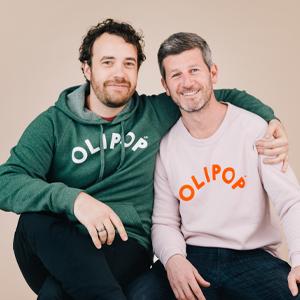
[00:00:10] Ray Latif: Hello, friends. I'm Ray Latif, and you're listening to the number one podcast for anyone building a business in food or beverage, Taste Radio. This episode features an interview with Ben Goodwin and David Lester, the co-founders of leading Better For You soda brand, Olipop. It's not a stretch to say that Olipop's explosive growth has altered the beverage landscape. The prebiotic drink company markets one of the fastest-growing beverage brands in recent years and pioneered the breakout category of functional low-calorie soda. Co-founded by industry veterans Ben Goodwin and David Lester in 2018, Olipop is expected to generate $500 million in revenue this year and is sold in over 35,000 retail stores across the U.S., including major chains Walmart, Target, Whole Foods, Publix, Kroger and Costco. Remarkably, the company is also profitable. Olipop's rise, fueled by Gen Z consumers seeking a healthier alternative to legacy libations, spurred the launch of dozens of new entrants into the space. Strategic companies have, expectedly, taken note. Olipop's ascent is not common, but the co-founder's adherence to business fundamentals, simple and clear messaging, and mission-driven values have given the brand a foundation on which it has flourished. In the following interview, Ben and David spoke about how Olipop's gradual embrace of the word soda has helped the brand's resonance with consumers, why marketing strategy doesn't lean heavily into education about the product's functional benefit, why they say that the brand's mission and economic outcome, quote, will forever be entwined, their perspective on alignment with or a sale to a beverage conglomerate, why they strive to be, quote, experts in the leadership of their business. Hey folks, it's Ray with Taste Radio. Right now, I am supremely honored to be sitting down with Ben Goodwin and David Lester, the co-founders of Olipop. Ben, great to see you. How are you?
[00:02:23] Ben Goodwin: Ray, thanks for having us. Excited to be here. For sure. David, great to see you as well. You too, man. Yeah. Thanks for having us.
[00:02:30] Ray Latif: Yeah. It's been a little over four years since we last had you on Taste Radio. Not much has changed in your lives. It's pretty much the same company that it was in 2020. And I just wanted to have you back for kind of a check-in on how things are going.
[00:02:44] David Lester: Yeah, it's pretty quiet over here. So you're helping to break up our day.
[00:02:51] Ray Latif: David, where are you now? I felt like both of you were based in LA when we last spoke, but maybe I was wrong.
[00:02:56] David Lester: We were in the Bay Area. Yeah. So both of us, we started out there and I'm now in Atlanta. We've been there for four years with the kids. It's really nice.
[00:03:04] Ray Latif: Nice. Nice. And Ben, you're up in Portland, Oregon. Is that right?
[00:03:08] David Lester: Close. I'm in southern Washington on the Columbia River. So it's like 30 minutes outside of Portland, but the taxes are better on the side of the river. And I live in a really beautiful little farmy spot, which I like.
[00:03:23] Ray Latif: Do you get to mix up some music out there in peace and quiet?
[00:03:28] David Lester: Yes, I do. My studio is on the other side of this wall. It was like a bonus room that they unearthed while they were renovating the house. And it's just, it's concrete walls. And I was like, this is perfect. This is exactly what I was looking for.
[00:03:41] Ray Latif: If listeners don't know what we're talking about, it's because Ben, unbeknownst to me until recently, is a DJ specializing in deep house. Is that right?
[00:03:52] David Lester: Yeah. I mean, house, techno, down-tempo, not that anybody really cares, but it's not really the like EDM-y stuff that has taken off. It's more kind of underground. I used to throw raves and warehouse parties in my late teens and early twenties, and the spirit has not died for me.
[00:04:11] Ray Latif: But it's not necessarily rave music. I mean, it's the kind of music that you can listen to at your desk while you're doing some work. Just, you know, something to keep your blood going.
[00:04:20] David Lester: Yeah, though I will say I did DJ our end of year party last year. Oh boy. Yeah, I know. I was very nervous. It was something that got suggested and I turned it down at first. I was like, look, I don't want to be the CEO that forces everybody to like listen to his music. And, you know, maybe that still would have been the right call. I have no idea. At the end of the day, it was really fun. At least I had fun and we actually got the dance floor pretty packed out. So I'm sharing the music where it seems seems reasonably appropriate.
[00:04:55] Ray Latif: I can't tell based on David's reaction how the company felt about that. He's he's pretty stone faced.
[00:05:01] David Lester: I mean, like, no, it was it was lit. You know, all the younger people in the company were enjoying it. And I was on dancefloor as well. Yeah, Ben and David actually When we first met over a decade ago, and this is kind of typical of Ben and David because we're quite imaginative people. We spent a lot of time speaking about music and then a little bit of time speaking about how to start a company and then music again for a bit. And we've been to see some good gigs together as well, including an infamous one going to see Underworld, but Ben was very annoyed that I was talking to him too much through the performance. It's a very rare treat to see one of David and I's favorite groups of all time. David gets a couple under his belt, and then it turns into a discourse. And it turns out that you listen to music with your ears. So it really is transmitting signals.
[00:05:50] Ray Latif: Jeez, I always thought you listened to music with your eyes, but no.
[00:05:53] David Lester: I know, not everybody knows.
[00:05:56] Ray Latif: I'd love to see Olipop sponsoring a Tomorrowland at some point in the near future. That might be fun for you guys.
[00:06:03] David Lester: Never say never, my friend.
[00:06:04] Ray Latif: Okay. All right. Well, David, you referenced the kids, and it seems like the kids love Olipop these days. Well, they've always loved Olipop. It's not, I think, because it is a soda brand per se, but I think they consume it the same way that past generations consumed soda. They do it often. They talk about it in a variety of settings, whether it's for lunch or just a snack or, you know, out with friends. And it's really interesting to me because when we first spoke, this word, soda, was actually a bad word. I was listening to that episode of ours and the description that you guys gave was it was the healthy alternative to soda. But I think it was just a few months later that you trademarked the term, a new kind of soda. When did you guys realize that you needed to go all in on that four letter word? And what gave you the confidence that it was the right thing to do?
[00:07:08] David Lester: Yeah, I mean, I'll take an initial crack, but I know David will have a lot of thoughts about this as well. I mean, it was interesting because, and maybe we discussed this on the last foray, David and I had a beverage venture together prior as well called Obi, and we had actually called it a probiotic soda, because more or less, we've been kind of tinkering in this space for a while, and Olipop obviously launched the kind of current functional soda, category, but there were kind of the early version of it in OB. And at that time, we actually called it a probiotic soda. And we were getting some pushback from our consumers. However, it was a substantially smaller company, about 500 times smaller. So we were mostly selling the product around where we had actually launched it, which was also the Bay Area. And so we were predominantly addressing a coastal consumer. And we were addressing a coastal consumer that was, you know, this is like 8-10 years ago or something along those lines. And at that time, it was the case that a lot of the especially the health conscious coastal consumers, our experience was that they didn't like the word soda, but they love the way it tasted. And they were open to the concept, we just had to finagle it a bit. So when we launched Ollipop, we took soda off the pack, we called a sparkling tonic. That's also not untrue. That's just a different way to kind of describe what the product is. However, in the name Ollipop, you've obviously got pop and pop is the way that the pretty much the entirety of the Midwest refers to soda. And we had kind of this hypothesis that the Midwest would actually be more open to the idea of a healthy soda, whereas the coastal territories probably needed more time to wrap their heads around it. However, as the category started to build up some momentum, I think there was actually a shift amongst even kind of your coastal consumers, where all of a sudden, the idea that this was a new category, that this was a thing that had healthy and function in it, generated that permissibility. And we were just able to switch over and say, look, we can just call it a soda for everybody now, because there's enough of a baseline understanding nationally to switch some of the verbiage.
[00:09:23] Ray Latif: But you know what they call soda in the South, Ben? Coke? Okay, call it Coke. I mean, I guess you could have gotten away with calling it Ollie Coke. I mean, maybe that'll be the name in the future.
[00:09:34] Ben Goodwin: We'll check. I'm sure it's fine.
[00:09:37] SPEAKER_??: Okay.
[00:09:37] Ray Latif: David, I'm sorry to interrupt you there. But yeah, I mean, your thoughts on the word and why it's such an important term for Ollipop these days.
[00:09:45] David Lester: In my experience with innovation, between consumer goods, consumers are going to put you somewhere, right? If they don't know where to put you, it's too hard. And from the beginning, we were clear of leaning in semi-automatically to soda, but we were a little hesitant, as Ben said, around putting soda front and center on the pack. And we've gained confidence in that. I think change perceptions around it, too. I mean, if you look at the history of the soda category, it's gone through a couple of evolutions. It started off as a health tonic, changed over the years, and to a certain degree, we're changing it back. You know, it's kind of a third wave of soda, if you like. So, you know, as the brand has grown, as our awareness has grown, you know, as we've educated consumers around, you know, what soda can be, we've really leaned into it. And yeah, I'd say consumers firmly understand this as a soda brand. That's our main kind of source of volume and where people position us in the category as well. And obviously a huge opportunity with the addressable market there as well.
[00:10:51] Ray Latif: But it's a soda Brad Avery different from what exists as a traditional soda out there. And the price reflects that. Olipop is a premium-priced product. And compared to a Coke or a Pepsi, it's significantly more expensive. That's the wrong term. I don't want to say significantly more expensive. It just costs more. And there's a reason for that. You use better ingredients. You use more expensive ingredients than what you might find in a traditional soda. But you have to explain that to consumers. How has your marketing evolved to the point where you're calling yourself a soda, but you're also having to explain to consumers why it's more expensive because of the ingredients inside?
[00:11:34] David Lester: You know, that's interesting because I don't know that we have ever actually gone through a crisis where we've felt like we have to explain it to customers. In fact, you know, it's interesting. The more I've gone down this road, we'll be in retailer meetings, and they're really well-intentioned, and I totally understand the place people are coming from. But a lot of the time, it's going to get the question, or it's taken as this common-sense thing, like, tell me how you're going to educate the consumer. And you go and see if you can't have No plan to educate the consumer. But if the foundation of your ability to sell your product is actually tied to educating the consumer, you're actually like you're pushing a rock uphill. I think one of the things that's been very helpful about our product is the fact that As a concept, it's mentally intriguing and it's a bit sticky, right? It's like, so what is this healthy soda that feels like a contradiction? But once you start to interact with it, it's actually incredibly self-explanatory. Like, oh, the pack design is telling me it's fun. It's telling me that it's healthy, but it's telling me that it's fun first. I drink it. Wow, that really matches that soda experience that I, that, you know, obviously 97% of households in the US interact with. And then, oh, I get it. It's like a healthier version for me. And then obviously, some of our more core customers are going to do a deeper dive and explore the ingredients more or understand, hey, this quantity of fiber actually makes a big difference. But I think a lot of times that exploration, to a certain extent, is self-guided. And a lot of it, I think, comes off the back of a customer that has already been provided value and has, to a certain extent, started to become enamored with your product. Whereas if you went out proactively and started trying to hammer people over the head with your health messaging or relied on, I need to drive education before I've developed an emotional connection or value. then I think you'd actually have a much harder time of it. Additionally, I would say that the other thing that Alipop capitalizes on is the fact that there's a massive underlying demand that consumers have, which is you do have this in the US $42 billion industry. with, and David just referenced it, 150 years of history in the United States. It's extremely deep as a category. And so you have all these customers who love, love, love, and grew up with soda, but now have a really conflicted relationship with it. And Olipop really helps to resolve that pain and really provide somebody with that full experience, but they're not trading in their short or long-term health. In fact, they're doing the opposite. They're investing in their health. And so you plop a a pain resolution system like that into a category that has the second highest price in elasticity in beverage behind only coffee, and you actually have an equation that works pretty well.
[00:14:31] Ray Latif: Ben, along those lines, I think about their customers, the typical customer, at least from my perspective of Olipop, and that's the Gen Z consumer, the Gen Z customer. And the whole idea of nostalgia as being important to that generation is really interesting to me. And the way that Olipop has incorporated nostalgia into its branding, its package design, into its flavors since the beginning seems like it was a perfect fit. But you were way ahead of it. I mean, you know, even before someone was saying, oh yeah, like the whole throwback nostalgia is really appealing to kids these days. I mean, you were already there. Did you know, I mean, did you have a sense that this was going to be an appealing characteristic, an appealing part of the brand to this segment of consumers?
[00:15:29] David Lester: 100%. I mean, you know, David and I had a lot of conversations. One of the things that we landed on thematically was effectively like modern nostalgia. That is a framework that is really important to the brand. And yeah, it is the case that younger consumers do really enjoy things that seem retro, that have a nostalgic component to them. It's interesting, the lollipop flavors, they have nostalgic elements to the formulas, and then they also have these redefinitions that are ownable for the brand. So there's that modern nostalgia actually takes place inside of the liquid as well. But, you know, nostalgia also and emotional comfort are very universal human need states, right? They affect so many different layers of our life and our existence. So, you know, you want to build your brand platform, especially if you're going after opportunities as large as soda. You want to build your brand platform so that it works with core audiences that are going to be important to you. But I also argue that, you know, you want to make sure that you're building a framework that is pretty universal and will stand the test of time. something like Modern Nostalgia is going to work for the next generations that comes beyond Gen Z and Gen Alpha, but it also works in a Big Ten way with Millennials and up the chain as well. Again, that's really important because we do technically over-index on Gen Z, but we also pull pretty significant numbers with older demos as well. That's great because Soda itself is a Big Ten category and you want to be able to play in all these different demographics. Yeah there's a huge emotional reservoir in the category and for us it was important to tap that consumer behavior change very difficult and so if you're telling people stop doing this thing that you're familiar with and do this completely new thing that's hot and so you know for us we. We're changing one thing, which is the ingredients, but everything else that people love about soda, we're keeping the same. We wanted to celebrate that and meet consumers where they are and not take away the aspects of the category that people love.
[00:17:44] Ray Latif: So I gotta ask, and I'm sure you get this question all the time, if most people are buying your product because it's fun, because it tastes great, because it makes them feel a certain way, and I don't mean functionally, but just makes them feel a certain way in their daily lives, as a part of their lifestyles, Then why is the functional ingredient so important? Why is it so important to keep as a part of the brand? Your chief rival has stated that they're going to remove that functional benefit from their products. So why keep it in there?
[00:18:20] David Lester: There's a lot of layers to this answer to this question. And I'm sure David and I are both going to have something to say about it. But look, from our perspective, we are a mission driven company. So the mission and the economic outcome of this business will forever be entwined. And the thing that gives us the extra rocket fuel in our daily endeavors and for the team, and I also think with a lot of our customers is the fact that we are looking to make an impact at scale. Now, arguably, there is some intrinsic impact in migrating consumers away from traditional soda by itself, and that's awesome. But the goal of functional soda, and again, we founded the category, so we feel pretty confident in our ability to speak to the goals behind functional soda, is actually to not just be a neutral offering, but to be a contributory offering. it certainly isn't going to negatively impact you to have that. In theory, it's higher risk, you actually have to do the work, you've got to do the research, you have to put adequate amounts of the right ingredients and store it correctly, so that it's actually stable and gets to the customers in the way that you have communicated to them. But all that is actually the right thing to do if your goal is to shift human health at scale, which really is the framework behind our brand. Now, there's all sorts of Business reasons that go along with that kind of underlying mission that have utility so for example, you know, one of the reasons why we have invested so significantly in a scientific advisory board and in in vitro research and stability research for Purdue University. Is because we want to be able to continue to communicate around functional benefits and we want to survive the scrutiny from regulatory lens and from a media lens deep into the future, right? We have so many customers that write into us that are. pretty profoundly benefited by our product. And the last thing that I would be interested in doing is either hoodwinking them, or letting them down by removing out some of it that they've actually come to rely on. So I think there's, there's a lot of utility for it for the business in a myriad of ways. But most importantly, it's literally why we founded the category and why we founded our product. I think it's very well articulated by Ben there. Ben and David have been working together for over 10 years. One of the things that inspired me to join Ben was his focus on mission and impact. It's inspired a lot of the other people who've joined our business and our investors and our customers, as Ben said. Talking to some of the commercial benefits that Ben was referencing, you said yourself, Ray, this product costs more than regular soda. What we're proving out is we have a value proposition that works for people at that price point. We're selling at scale and mass retailers like Walmart and Target And what is it that makes up the components of that value proposition i mean the product taste amazing you know ben is very gifted formula that that's definitely the case i think emotionally there's real benefit there as well in terms of you know that little, no joy that we provide people within that day i think the function also plays a critical role in that to you know and, Our viewpoint is that that will be increasingly more so. It's allowed us to grow in a very sustainable way. Without a lot of discounting or trade spend, we're in a fortunate position that we're now profitable this year as well. All these components and the effort that goes behind it, it's not easy, as Ben said. There's a lot of work gone into it over the years. But we think that really important in terms of value proposition we're providing and why consumers are so willing to spend on this product and it kind of shows on the data as well. I think in the category eight to the top ten SKUs within the functional cellular category are Olicon. I definitely get a little, and I'm not, that's not what's happening in this environment, but there's certainly certain instances where I get a little bit frustrated with the cynicism. And I think we should all be a little bit frustrated with the cynicism. You know, the reality is that according to the CDC, 40% of Americans have type two diabetes or prediabetes, right? 70% plus of Americans have weekly digestive distress. And the vast majority of Americans are on one or multiple prescription medications to try to address all these real-world problems. And there really is a valid opportunity to shift public health at large, which alleviates a lot of suffering, alleviates a lot of revenue burden on the tax system, on the medical system, I mean, our levels of disease are so high, it is a national security risk. And so you have these opportunities to help address that with the food that we're putting into our bodies and the drinks that we're consuming. And if we had a spiral into this, this like cynical headspace of Well, most of the health and wellness products that are out there, they say one thing to build a big business off the back of it, then they get challenged and they pull their claims and they pull the functional ingredients because it's safer. Okay, fine. But what are we going to do about all of these people who have really serious health issues? Our goal is simply to say, has been from the beginning. So you can build an amazing, profitable, rapidly growing firestorm of a business. You can also do it the right way and put your money where your mouth is when you're delivering value to your consumers. And if you marry it correctly, that will actually be rocket fuel to your business, not a burden. And we want to set that standard for the health and wellness industry. So they've got a case study. They realize, like, not only can we do it too, but actually be advantageous to our business. to do it. And if we don't move to that place, CDC also predicts that by 2050, 1.3 billion people globally will have type 2 diabetes, a completely preventable or predominantly preventable lifestyle disease. So that's why it's so important to us that we actually make a real dent and kind of shift this narrative. You're preaching to the choir, Ben.
[00:24:31] Ray Latif: I mean, we talk about this on the podcast often, which is healthy products aren't as ubiquitous as they should be. And a lot of it has to do, in my opinion, with the fact that big companies, big CPG doesn't really have a vested interest in acquiring brands that are doing better for humanity. Let's call it what it is. But to be everywhere, to get to more places, it seems like an alignment with a strategic company is inevitable. It has to be. And I mean, I think this is the elephant in the room, right? You know, if Coke or Pepsi or Kirk, Dr. Pepper is knocking on your door and saying, hey, we can take you from here to everywhere. I mean, that's pretty powerful, right? But the problem is, They might turn around and say, oh, well, you know what, this whole fiber benefit isn't really going to work for us. And you can't control that. So when you're thinking about the future of Olipop, how much of that plays into your perspective? How much of that plays into your thinking that, you know, we have to be independent for as long as possible, because inevitably, if we do sell, it's gonna be a different brand. It's gonna be a different product.
[00:25:42] David Lester: Yeah, that's a fair question. And actually, by the way, I really like how you framed that question, because we've gotten asked versions of that, but I actually really, really liked your framing. So I appreciate that. You know, look, for us, first of all, there are obviously a handful of different routes you can go. You know, when you've raised enough investor capital, it's difficult to stay private. But there's an exit, there's an IPO, there's a range of different things that you can do. And certainly where we sit now, we're keeping all of our options on the table. The other thing that we're doing is we're managing triple digit growth every year. Back one year, we almost had quadruple digit growth. So that's kept us quite busy. Economic pressures and efficiency pressures are going to be levied against your business, irrespective of whether or not you enter into a strategic relationship or you go public. That's the nature of scaled business. But how you respond to those pressures or how you prep your business for those pressures, I think can make all the difference, right? So there are ways to scale efficiency against procurement, ways to scale efficiency against co-manufacturing, I think there's also ways to ensure that the consumer base, this goes actually right back to David's point, which I think was a really good one, around ensuring that there is a understanding in terms of the relationship that's driving your brand, right? Because I think oftentimes in these hypothetical scenarios where there's a bit of a gutting that can happen around the functional offering, there wasn't, for example, like a bunch of scientific research behind that functional offering. One of the things that we're doing right now is we've actually, and you would have seen this in the Bloomberg spot, but we've entered into a handful of different insurance reimbursement networks. And there's two sides of those reimbursement networks. There's kind of the food is medicine side, and there's the food is engagement side. The food is engagement side allows you to actually work with insurance companies to kind of incentivize around preventative measures. And that's actually a really interesting business model there. But all of a sudden, if you build a couple hundred million dollar section of your business, in theory, that starts to go into these kind of differentiated spaces, but the functionality of your product, the ability for it to actually be proven out with real research, is fundamentally tied to those really interesting routes to market growing and staying activated, you might find yourself in a fully different equation. I think there are ways to really kind of mindfully build your business, and there's ways to build your distribution, and there's ways to build your brand and your communications to your customers. And so that as a cumulative whole, kind of no matter where you go, can generate a differentiated outcome than what I agree with you does sadly often happen. I think it's worth noting as well that what is important for everybody commercially as they look at high-growth brands and categories is you know what's the equation that's driving that growth and nobody wants to kill that right so look at that energy category for example we have Red Bull's independent company. You have monster sales in partnership with you know coca pepsi. Nobody has removed the function ingredient from those products and it's because they understand it's a critical part of the value equation and the growth is driving those brands in the category and I feel like that's what we're showing with Olipop as well. We're leading this category with a 60% share. It's one of the exceptional growth stories within beverage the last couple of decades. I think it's a really important part of that and it's been said it's really. Inspiring thing the way that frames it is like yeah we want to show that there's a way to do this and can i have it as a blueprint for others to follow as well. Investing in science focusing on the mission of what you're trying to do can actually supercharge your business rather than being albatross that some point you need to discard. Such a good point about the energy category, right? Because Red Bull is interesting, taurine, acetylcholine, caffeine, and then that created a framework by which others like Celsius and Monster and a handful of others for then actually went to laddering up even more ingredients and even more benefit as an offering. And one of the things that allowed that category to do that was the fact that they retained value at their price point, so that there was real opportunity from the ingredients cog side to keep experimenting with additional value for customers. So there's no reason why this category can't do the same thing. And in fact, I would argue, if it doesn't, it's not actually achieving its potential.
[00:30:19] Ray Latif: It's so interesting. This is such an amazing conversation because it almost sounds like one way to future-proof the authentic value of your brand is to show that there are people, there's a large segment of people who are spending literally hundreds of millions of dollars to drink your brand, to drink your products for their own health. And to remove that money from the equation would be to, well, it wouldn't be very capitalist, would it?
[00:30:48] David Lester: Exactly. I mean, we are clear, we're not relying on altruism as a, you know, as a way to protect our concept and our mission. It's actually leaning into the existing structures, you know, capitalism, commerce, profit that are there, but, you know, just setting it up in a different way, as you say, and commercially being very successful as well in terms of productivity per door, you know, which is something which is critical for distributors and retailers. We understand that, you know, the profit that we offer that, you know, fall into stores and new consumers we're bringing in. In a lot of cases, we are the growth driver for the beverage category in major retailers now. And that includes some of the stores. New stores are going into Wawa, for example. I think we're the second highest contributor to category growth in that category behind Mandu. So often, that's been the issue, I think, for retailers is that they've had to make a trade-off. Look, these better for you products that we want to start, but the terms just aren't there. Well, they're not providing the same revenue growth as some of the other established brands. We're showing that that is possible.
[00:31:55] Ray Latif: I'm glad you brought up Wawa, David. I recall from our conversation four years ago when Ben was talking about recently attending a 7-Eleven innovation summit. Yeah.
[00:32:07] David Lester: Oh my God, blast from the past.
[00:32:09] Ray Latif: Yeah, right? And so it was interesting because you had said at the time, if I can recall, that you were looking for places and channels where Olipop would not work. And those were the best places to learn about how to make adjustments to the brand, how to talk to consumers in a way that would be more appealing to all customers. And it doesn't seem like that's happened, though. It seems like Olipop works in most places it's in. But maybe I'm wrong.
[00:32:40] David Lester: You're correct. We have seen Olipop work very consistently in our retail partnerships. It's still been very insight driving, though. I think the motivators that drive different groups has been very useful. You know, when we reference how we need to communicate in terms of marketing, the flavor preferences that are experienced by different groups of consumers or in different parts of the country. So we're still learning everything that we can. And there's no better way to do that than get exposed to different groups of customers that are spread all across the United States. It's actually similar to one of the aspects that I really love about our remote culture, because people ask a lot of times, because of remote culture, what are the upsides, downsides? One of the biggest upsides to having a fully remote workplace is we can hire people from all over the country. So it's not just, we're not just in a barrier bubble. We've got Kansas City and Oklahoma and Minnesota. And that also really helps to ensure that we're getting this varied perspective. You're right, we haven't. Kind of writ large, we haven't found a massive retailer where the product doesn't really doesn't work, which, you know, knock on wood that that continues. But we are certainly learning everything we can, and every new area that we go into.
[00:34:00] Ray Latif: That's a perfect segue to my next question, which is about staffing. David, early on, and Hollypop debuted in 2018. Is that right?
[00:34:10] David Lester: That's right. Yeah, I think the back end of 2018 was when we first went into market in 20 stores in Northern California.
[00:34:17] Ray Latif: How about that? And now you're in 35,000. That must be a trip. No, but early on, what was your most impactful hire? And as Ben referenced, I mean, Olipop's been a rocket ship several times over. I mean, I guess just a rocket ship at different speeds. Or, more specifically, a rocket ship at the same speed but from place to place. You know, how do you identify the most impactful hires early on and as you are speeding through the galaxy?
[00:34:45] David Lester: It's very difficult to highlight one individual hire that is critical. Maybe a couple of broad statements on that, hiring exceptional talent is probably the most important job in a high-growth business like this. If we can't attract and retain the best people, there's obviously huge parts of business Ben and David are just not touching at this point. You need people coming on board that have the technical skills, also absorb the mission. And carry the culture that we want to build here as well and we invest a lot in that the team did incredible job where i am about to fly off in a couple of weeks to a new high off site that we do in northern california where we invite every cohort of new highs go through this and spend three days in northern california and get immersed in our business and understand the culture and hear from Ben and David am. And also, you know, develop a cohort of people that they join with that can help them, you know, on that journey through the company as well, because it's crazy trying to keep pace with this growth. And it is something that we find, you know, every three, four months, you have to really get your head up and evaluate, you know, are we resourced in the right way? You know, does the team need additional support? So that's been a constant challenge and one that we've had to invest a lot of time in as well. We're in a very interesting space in terms of talent because there's a couple of factors impacting it simultaneously. So one, the growth that our business has had, David just made a really spot on point, which is you know, kind of seasons of change that in a normal growth business might take a year or two years, we run through in a quarter. And that's really exciting, but it's also very disruptive in a lot of ways. So you constantly have to stay on top of that. And that also affects your team and your leadership team, especially. It's one of those things where you're like going up a mountain and all of a sudden, if you're going up the mountain at 10 times the speed, the environment is changing so rapidly. And, you know, I've been really, really impressed with the maturity of a lot of the leaders in our business who have been open to either taking on new areas of growth because they realize they're a little over their skis, or we've had some folks who've been open to re-leveling as it's been necessary. And it's also a real testament to not only the quality of leaders that we have, but the quality of the culture at Olipop that they've been willing to stick around and kind of shift their role as it's appropriate. The other factor that we have playing into our experience is we had over 90,000 applications last year for 30 roles. This year, our first six months, we had 130,000 applications. So it is multiple full-time jobs just to go through the applications. What's great about that is you can absolutely source the best talent, but it also makes things a little complex. I agree with David's point, there hasn't been a singular hire that's necessarily been the most impactful. But what I would say is focusing on your leadership and making sure that your executive leadership team, your senior leadership team, they're really fleshed out with the right senior people who are strategic at the level that's appropriate for where they're sitting is beyond critical. Because David's point, we're sitting at north of 150 employees now, and we might have close to 200 by the end of the year. And you are getting to a point where you going from a place where you can stand in a room and talk to everybody to, I absolutely must have my waterfall, my strategic waterfall throughout my organization has to really work. And you only are going to be able to achieve that by people who have the raw technical skills, but also really have the leadership aptitude that's required to contextualize and disperse in a way that's appropriate for levels. One point on that, which I think is interesting and worth mentioning is initiative that Ben pioneered with our executive coach, Laura Greenberg, OLU, the Ollipop university. And so, you know, it's something, you know, Ben has been adamant about from the beginning, you know, kind of highlighting that we would be experts in leadership as a business. And we put our money where our mouth is on that front with the OLU initiative, which involves all our senior leaders going to. You know not sign on in california three days of the year to get intensive leadership coaching and then that continue on through the year in various cohorts so. Yeah i say ben's commitment to that and the initiative is developed with laura greenberg is really been fantastic and say comparable to. I get back to my corporate days to the edge and remember we had a program that the edge where brand building which was kind of marketing incredible program yet something like this would rival that and so it's it's unsurprising to me that you see this, you know high standard of leadership and emotional intelligence within our business because it's something we're investing in.
[00:40:00] Ray Latif: I imagine a really important job for Alipop is in the realm of marketing slash digital marketing and social media. You know, you're following on Instagram is about 330,000 followers, I think at this point, maybe a little bit more than that.
[00:40:14] David Lester: None of it paid for, by the way.
[00:40:17] Ray Latif: Incredible. 310 to be exact. And how you interact with your consumers, how you talk to them, what they tell you about the brand, what they want to see in terms of new flavors is critical information. But finding the right people to just figure out how to talk to, how to discern what is important, how to take the right advice from consumers if you can do such a thing. It's all really critical information and it's such a critical role. You know, how do you think about modern marketing, digital marketing, when you are relying on people who might know a lot more about the space than you do and kind of have to trust them, especially if they're a lot younger? And in this space, in this kind of business of social marketing, it is usually folks who are under 30.
[00:41:07] David Lester: Ben and David are obviously big social media users ourselves, so we're quite knowledgeable on this.
[00:41:12] Ray Latif: I noticed you guys aren't on Instagram. Is that there was there was one strange Instagram account that had both of you on it or maybe it was just Ben?
[00:41:19] David Lester: Seriously? Yeah. Well, I have one that has maybe three photos on it, which I had to create because I used to do a bunch of Instagram lives for Olipop.
[00:41:30] Ray Latif: Okay.
[00:41:30] David Lester: But yeah, I've never, I haven't really done anything with it.
[00:41:33] Ray Latif: That's the one. And there's like, there's four, there's four images, there's four posts. And one of them are, I think is... One's like a tree. Yeah, David on Ben's back. And that was like, that's the most liked one, I think.
[00:41:45] David Lester: Yeah, I mean, it's an interesting question on, you know, digital and social around. I think our team has done a fantastic job on that. I think what we've learned is, you know, it's different. So I was a trained sort of brand marketer. That was my career before going into entrepreneurship. And it's a very different way of thinking in a digital space, much faster. Yes reason that most of these large corporations not very good at digital and social because the thought process is so different so you know we've got a team run with it to a degree but office strong foundation of what our brand stands for i think that's really critical but anybody who claims to have social one hundred percent figured out i think is. not telling the truth. It's constantly evolving as well. And I think adaptation is key. So what may be working for you at one point, you know, six months later, you might find, you know, this is totally different. We started on Instagram. It was a very important channel for us and TikTok came along and we had to adapt and figure that out as well.
[00:42:49] Ray Latif: I just want to make sure everyone's clear on what Ben said about none of it paid for. Let's be very clear. What do you mean by that, Ben?
[00:42:58] David Lester: It just means we're not buying users or facilitating any of our social media efforts with bots, which is not always the case.
[00:43:06] Ray Latif: Okay, I think listeners can read between the lines there. It's important, again, I just had a conversation with Ben Witte, who's the founder and CEO of Recess, and he talked about how, you know, their pivot from being a hemp-centric brand to one that's magnesium-focused had a lot to do with paying attention to what their consumers were saying, listening to their consumers, and making sure that they were doing the things that were going to keep them happy. And keeping people happy with Hollypop seems like really expanding the flavor universe. I think there's 20 flavors that you guys have, or at least that you've released over the years?
[00:43:45] David Lester: Yeah, that sounds right. Because some of them have been limited time releases, but that sounds all great. I mean, sometimes I, because I obviously formulated them all, sometimes I just like, I stare at the page of all of our flavors. I just chuckled to myself. You make a great point though, Ray, because, yeah, I mean, you're 100% right. If there's anything I want Olipop to be, I want it to be a brand that is extremely customer-centric, right? Because everything that we do is built in support of our customers' health and happiness. Nobody purchasing your product except for your customers. So a great example of that is actually our shelf-stable product. which took a really long time to launch. So the cold version of the product, which is currently the version that we've actually built the entire company with, it has inulin in it. And inulin is not stable at room temperature. So we've been really excited about our product. But there's obviously some intrinsic limitations in our ability to expand it. And our customers have noticed that as well. And we've actually gotten thousands of requests for, hey, I only have so much room in my fridge, and I'd love to be able to pantry load Ollipop, or I want to put it in my kid's lunchbox and I want to take it with me for the day. I don't want to worry about it. Now, the reality is that the current version, you probably can still take with you for the day because it takes weeks for the inulin to start to degrade. But we understood the concern. And it actually took about 18 months to develop the new formula because I had to find something that tasted right, was soluble, and we had research-backed ingredients that I could sport that was adequately novel. But eventually, we got there. And it's a great opportunity now to respond to consumers. It's also in our new multipacks. the per can quantity of fiber is six grams instead of nine grams. That was also listening to customer requests, because there's a lot of folks who consume Olipop more for that, hey, how do I replace my soda? I love the fiber, but I want to drink it more like traditional soda. Well, drinking two or three Olipops in a day will really rapidly get you to extremely high levels of fiber. And so we wanted to ensure that we still had an amount of fiber that we felt really good about that performed really well in our in vitro trials. It still exceeds what's necessary to capture the excellent source of fiber designation from the FDA. but had a little bit of a lower amount so that customers could drink it more in keeping with how some of them were consuming regular soda. And with one shelf-stable product, we're able to kind of kill two birds with one stone. And we feel really confident about the decision because it's consumer request and insight led. And that's how you can do something that's that substantial, because it was a big effort on our parts to develop and launch that product. But we never wavered from it being the right thing to do, because we knew we were responding to consumer requests. I feel really, really happy about that. And I'm going to continue to listen to our consumers as we go.
[00:46:59] Ray Latif: And I imagine it opens up a lot of new distribution opportunities for Olipop in the future. I mean, it could be the top selling or the most distributed version of Olipop, given that there is no cold chain that you need for the shelf-stable product. So excited to see where that goes. You know, for our listeners, a lot of whom are early into their brands development or early into the development of their brands, you know, I'm sure they'd want to ask you guys a million questions, but I always look for at least one piece of advice that you could share with, you know, someone who's zero to three years in and, you know, the kind of thing that they may not have thought of, they may not have considered. as they have been building their brands. You know, David, what would you say to that person, starting with you, something that they really need to consider that they may have overlooked early into their brand's journey?
[00:47:57] David Lester: Yeah, it's tons of empathy for people and admiration for people going, you know, taking that decision. I think, you know, Ben and David had talked about this before, I feel like entrepreneurship is as much personal as it is a professional journey. So you learn a lot about yourself. So taking the decision to Leave your other career whatever it is taking the decision to start something getting to your first million in revenue. Huge accomplishments from which you will learn an incredible amount and so you know just kind of sitting in the acknowledgement and empathy for yourself of that achievement. It's really hard you know Ben and David just second go to it and so people say wow this is gone really quick the second go we made a lot of mistakes the first time we had. A lot of self-reflection and personal growth. And I'd show resilience to kind of stick with it as well to get to this point. And it's not easy. So you will make a lot of mistakes along the way. It's important to stay alive as a company. If you stay alive, sometimes it might look a little ugly. Sometimes it might not be very elegant the way you're approaching it. But if you can stay alive and learn and reflect on those things, you might get somewhere interesting.
[00:49:09] Ray Latif: I love that. I mean, it's so funny how like stay alive sounds kind of strange, but it's so important. Lance Collins, who's the founder of a lot of amazing brands, including Fuse and Body Armor had said something very similar. It's like, look, at some point you got to figure out how am I going to make this thing break even? And how am I going to stay alive to that next level of development? So thank you for sharing that, David. Ben, any thoughts that you'd like to impart to our audience before we head off?
[00:49:37] David Lester: Yeah, I mean, I think that David's point is a great one. It can be even expanded a little bit, right? It's that mental health is a really kind of unaddressed aspect of entrepreneurialism, because entrepreneurs, oftentimes, you've got to be like, go, go, go, I'm always winning, you know, you're always selling. And so it can be extremely isolating. And I think actually hand in hand with that, simultaneously not to add a bunch of extra pressure to somebody who's already going through something like that, your ability to develop interpersonally is extremely important because if you are successful and you want to sit in a highly influential position inside of your business, you never stop being an entrepreneur but you actually shift into a leader of others and you start to shift into more of like a systems engineer. And it's a really different part of your brain. And there's all sorts of competencies that come into play. Something that, to David's point, kept you alive in year two, now in year four or five, is actually very disruptive to your ability to create a team that functions really well. you know, doing that work to keep yourself well integrated as you go through that journey so that you're able to stay where you want to stay for the duration is really, really important. Or sometimes it's time to know where like, this is my sweet spot, and this is not my sweet spot. And that's kind of piece number two, which is, look, there's three things that you really need to make a company succeed at the mechanical level, you need an excellent product that has really good product market fit. And then you need the ability to make it scale from like a long-term margin standpoint, from a volume standpoint, just all the mechanics associated with that. Those two things are hard enough to get right. Then once they're right though, it's all about your team and the culture you build with your team. And once you kind of wrap your head around that and realize like, I have to get the absolute best people that I can, that are really motivated by the vision, that themselves, like your ability to assess the psychology and the EQ of the people you're working with, which by the way is oftentimes directly related to your ability to assess and work with your own psychology and EQ. All of that melds together into the unsung important aspects of running a company, which is really working with your people. And if you invest in those ways, if you invest in your own emotional health, you invest in the psychology and the health of your people, when it comes time to say, hey, I'm actually exiting my areas of competence from a whole range of different places, you actually have people that you can trust to pass them off to. But those aspects And then the other one, which is obviously running out of cash. Those are some of the biggest either, that's either it ends up becoming a synergistic superpower for your business if you invest in it, and then you invest in yourself, or that ends up becoming an Achilles heel that really pulls everything back. So those are worth, and again, people who are just dodging around trying to stay alive, the last thing they want is a bunch of other somewhat ambiguous stuff dumped on their plate. But I can't possibly overstate its importance, especially as you cross some of those thresholds and get out into the later years.
[00:52:47] Ray Latif: Powerful stuff and really important that our listeners hear what you're saying, Ben and David think they are, and I think incorporating it into their businesses is gonna be really helpful. So thank you for sharing that. And thank you both for just an incredible conversation. I am really grateful that you took the time to sit down with me today. Thank you so much. I'm gonna cheers with an Olipop Barbie peaches and cream flavor. This is delicious, by the way.
[00:53:15] David Lester: We've been going this whole time. I didn't even see the open one. It's been burrowed away.
[00:53:20] Ray Latif: I've held it in my hand. I hope it's not too warm at this point. There's still some chill to the skin. In all seriousness, it's delicious. And for folks who haven't had this yet, I hope you can get your hands on one because it is really good. David, Ben, thank you so much again. I hope we can get together in person in the near future, perhaps at BevNET Live in December in Marina del Rey. But until then, it's been an honor. Appreciate it.
[00:53:47] Ben Goodwin: Thanks so much, Ray. Thanks so much, Ray. Thank you.
[00:53:53] Ray Latif: That brings us to the end of this episode of Taste Radio. Thank you so much for listening. Taste Radio is a production of BevNET.com Incorporated. Our audio engineer for Taste Radio is Joe Cracci. Our technical director is Joshua Pratt, and our video editor is Ryan Galang. Our social marketing manager is Amanda Smerlinski, and our designer is Amanda Huang. Just a reminder, if you like what you hear on Taste Radio, please share the podcast with friends and colleagues. And of course, we would love it if you could review us on the Apple Podcasts app or your listening platform of choice. Check us out on Instagram. Our handle is bevnettasteradio. As always, for questions, comments, ideas for future podcasts, please send us an email to ask at Taste Radio. On behalf of the entire Taste Radio team, thank you for listening, and we'll talk to you next time.
[00:54:43] Ben Goodwin: you