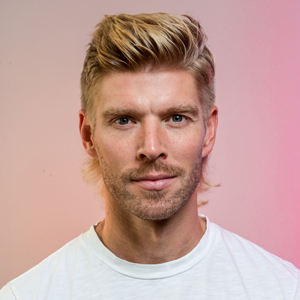
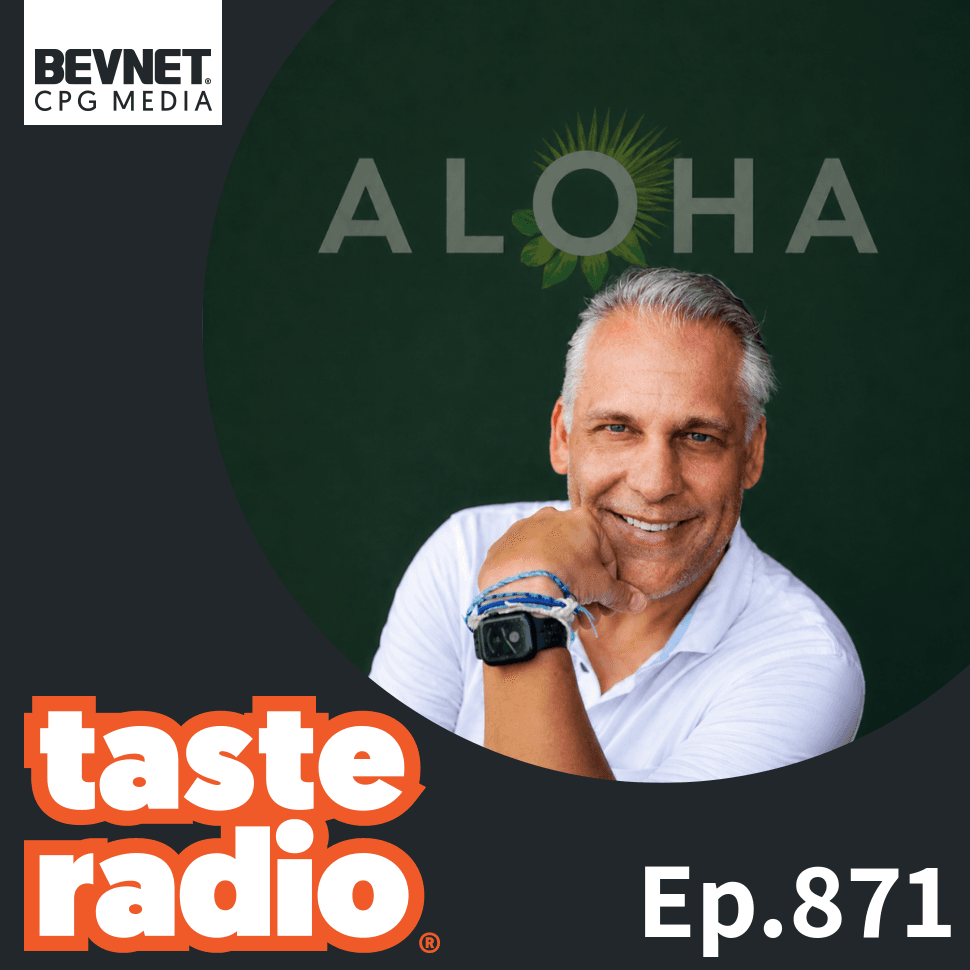
[00:00:10] Ray Latif: Hello, friends. I'm Ray Latif, and you're listening to the number one podcast for anyone building a business in food or beverage, Taste Radio. This episode features an interview with reality TV star and entrepreneur Kyle Cooke, who is the founder and CEO of premium beverage, alcohol and lifestyle brand, Loverboy. The cultural relevance of reality TV stars is typically short-lived. Kyle Cooke, however, is playing the long game. Kyle is best known as a cast member on Bravo's popular television series, Summer House. He's also the founder of Loverboy, a fast-growing brand of premium sparkling hard teas, spritzes, and canned cocktails. Loverboy, which launched in 2018, is prominently featured on Summer House it has throughout the show's past five seasons, during which Kyle has given viewers an inside look into the brand's development. Summer House been a boon for building awareness and eliciting trial of Loverboy, but Kyle points out that the brand wouldn't have the traction it does without delivering on the better-for-you ingredients and flavor that consumers are increasingly seeking out from ready-to-drink alcoholic beverages. Consumer demand has generated plenty of retailer interest. The brand is currently available nationally at Kroger, Total Wine & More, and Whole Foods. In this interview, Kyle speaks about how he has cultivated an authentic connection between Loverboy and its consumers, how ingredient quality generates new interest, the reason that merchandise has become a key profit center for the company, and why, despite having 470,000 followers on Instagram, does he want to make a better effort on social media. Hey, folks, it's Ray with Taste Radio right now. I'm honored to be sitting down with Kyle Cooke, who is the founder and CEO of Loverboy. Kyle, great to see you. Hey, Ray. Great to see you. Glad we're finally doing this. Absolutely. It's been a while. Well, we first met, I want to say in 2021. That was when you joined us of BevNET's first ever Cocktail Showdown competition, which was virtual. Yes. Yes. It was really great to meet you. There was a lot of hype about you being a part of the competition, given your celebrity and fame. But you know what, when I heard about your brand and you heard you talk about Loverboy, Frankly, I was a little surprised because I thought that it was more of a, and I'm sorry to say this, but I thought it was going to be more of like a kitschy kind of thing that was very much tied to a reality TV show. And you came to the table with this really great presentation and it seemed like a pretty solid understanding of business and what you wanted to do with the brand. How long have you been working on this?
[00:03:17] Kyle Cooke: We conceptualized it in 2018 on camera, because I'm on a Bravo show called Summer House. But I think that definitely gives people the preconceived notion that maybe he's not actually running the company, or maybe this is just like any other celebrity brand. And I joke, because the word celebrity, Almost kind of rubs me the wrong way. I call myself a D-list celebrity at best. I mean, at the end of the day, this is reality. I'm not some rock star. I'm not an athlete. I'm not an actor. But yeah, look, I've had to be a total sponge to just soak up as much as I could because I knew nothing about consumer packaged goods, nothing about food and beverage, nothing about alcohol. But look, I've always run my own businesses. I got my MBA back in the day, and I just saw this huge opportunity. Back then, we didn't even have any acronyms like RTD or Beyond Beer, but I just saw this opportunity in flavor. And part of it was because I was in this position of influence on a reality show that was seeing some good success. And we recorded the first two seasons in the early kind of heyday of the Hart-Seltzer movement. This was 2016, 2017. And all of a sudden, the wheels started turning. But yeah, I've had to just learn as much as I could. Back then, it was hard to find anybody who even understood you know, a sugar beer based product is or what the government considers it to be. And, you know, you had to learn the acronyms like IRC beer, internal revenue code beer. And yeah, it's kind of crazy because back in 2017, 2018, it was still just beer, wine, spirits for the most part.
[00:05:00] Ray Latif: Yeah, well, you know, there were things like hard tea out there. They were just at the cusp of the hard seltzer movement. It's interesting to see where that category has gone. Whereas I think hard tea, you know, which is a big part of your business seems to be on the rise and seems to be something that a lot of people are looking at as a great alternative to a heavier beer or a cocktail. I do want to talk about the product lineup and the development of the brand from a formulation standpoint. But I want to back up for a second, because you talked about starting your own businesses or being your own boss and having this desire to create your own business from an early age. And when I Google your name, by the way, tangent here, I'll tell people, I'm like, oh yeah, I'm going to interview Kyle Cooke today. Like, oh wow, that's awesome. Kyle's awesome. I love this show, Summer House. I watch it all the time. But when I first met you, I didn't know anything about Summer House. Yeah, well, you know, I just didn't watch, I don't, I don't watch a lot of reality TV. And so I just always saw you as an entrepreneur. But if you Google your name, Google uses the description or the title of TV personality. I would assume that you would prefer entrepreneur, but I could be wrong.
[00:06:13] Kyle Cooke: Absolutely, yeah, I mean, look, I've been running my own businesses. I mean, shoot, if you include Cutco, you know, back when I was 17, 18. I had a contracting business, which we were talking about just before we started rolling. I've been doing startups in everything from real estate to healthcare to, you know, nutrition. The desire to build something has just been, it's in my DNA. But what's the number one challenge any company, particularly if it's consumer facing, You know, encounters, cost of acquisition, right? Cost of customer acquisition, retention, generating awareness, exposure. Look, when I started working on casting Summer House with the producers, it was 2015. So the idea that you can make a living as an influencer was still not even in the cards. I viewed it as a platform for product placement. whatever I happened to be working at the time, and actually back then I was working on a nutrition coaching app. And I figured, bravo, it's the number one network among women, great audience to tap for people that wanna look good, feel good, and I just figured it'd be a home run. And so that's kind of where it all started. I just took my entrepreneurial know-how and desires and tried to cut through the noise and figure out, where's my cheat code? And so if every company in my space, if you look at Bev Alk, I mean, the marketing line item is huge, right? Like in the year that we launched, Bud Light Seltzer and Corona Seltzer launched, not that we're a hard seltzer, but they were pretty good comps. They spent 140 million collectively. just that summer to launch those brands on marketing. When I had a higher velocity, I only spent zero. That has always been, in the back of my mind, what drives some of the dedication to this quote-unquote TV personality, but it also comes pretty easily.
[00:08:14] Ray Latif: It's not easy. I mean, it comes easily to you, but I don't think it's easy for a lot of people to put themselves out there and show a side of themselves that, you know, you'll look back and watch probably a few times and say, I wish I had done something different. I'm sure there are a number of times. We're on season eight here, Ray. Well, but that's the thing. I think there is that give and take that's that yin and yang of, you know, how much do I share? How much do I put myself out there to sell a product, to build awareness for my brand? And not every entrepreneur has a similar, most entrepreneurs don't have a reality TV show to promote their products, but a lot of them do use social platforms like Instagram or TikTok to highlight what they're doing. And, and, you know, they, may stretch themselves a bit further than they feel comfortable doing for the benefit of their brand.
[00:09:09] Kyle Cooke: Oh yeah. I mean, there's some great examples out there, right? But yeah, there's a nice little parallel between being vulnerable as a person because that builds up relatability, and I actually think it's relatability that makes reality television so captivating. When you watch a movie, you can't directly identify with a particular actor, because they're just playing a role. Reality television, I think, has hit such a stride in pop culture, particularly the last, I don't know, five, 10 years, just because of that relatability factor. The nice parallel here is like what makes today and tomorrow's brand successful. It's authenticity, which is kind of interchangeable with, you know, vulnerability, right? Like if I had this well oiled machine, like if lover boy was already 30 employees and humming along when I launched it. there'd be way less to talk about. There'd be way less vulnerability, and there'd be less of an authentic connection for the audience as a result. And I think that's, like you said, not everybody has a reality TV show, but you can make an effort to kind of let people in on the journey, the entrepreneurial journey and the brand's journey, and I think that helps build loyalty, and that's what every brand's after.
[00:10:25] Ray Latif: Do your consumers feel like they can trust you as much as they like you? Because I think that's an important distinction, right? People watch the show and they like you. Some people love you. But do they trust you enough to spend their money on a can of Loverboy and a case of Loverboy? And if so, how do you get them to trust you?
[00:10:48] Kyle Cooke: Yeah, that's a great question. I think first and foremost, I mean, any celebrity brand, whether it's an A-lister or someone like myself, they're gonna benefit from some degree of that initial novelty purchase. Like if you're a diehard fan of me or the show, this is a tangible thing for you to kind of almost like step inside the inner circle and sip on something that we're sipping on television. And so that novelty, I mean you've seen lots of celebrity brands have that initial pop And then sometimes it immediately just disappears because it was a crap product or a crap service. And they were just leaning too heavily into the celebrity and not enough into the brand and the quality. And so from very early on, we knew that yes, the brand had to be some type of an extension of me. I'm a fun, cheeky, flirty, extroverted guy. But the brand needed to stand on its own. And that includes the quality, right? Because how are we gonna get people back for a repeat purchase? if they're taking that one and only chance, you know, just to see what it's all about. And it's gotta be exceptional quality. And we've made quality a big part of what makes Loverboy special from day one.
[00:12:08] Ray Latif: My first encounter with Loverboy was via your Espresso Martini. This is a real throwback item, folks. If you're watching the video, this is not what it looks like. Those are sweet. Yeah. This was a fun product. Looks very, very different in terms of package design, just brand aesthetic, and feel, it feels like a more elevated, mature, and I say this in a way that's like, I love your current branding, but this feels like it's a little bit more for, I don't know, a loungy type of setting. Whereas I think your current brand aesthetic and package design feels much more fun. It feels much more like you.
[00:12:51] Kyle Cooke: Yeah. Well, we kind of took a different approach to each product line. So even though the, the sparkling hard teas, which is kind of like our core flagship product, we've got eight different flavors. We have refreshed that brand. So it stands out even more on the shelf. And that, that's certainly the fun, cheeky, flirty brand that, you know, just screams drink me all day, drink me all night at a barbecue or whatever. But when we launched our spritz line and then eventually our can cocktail line, which you're holding, We wanted to go from an ultra-premium product to something that would be sitting on someone's bar cart, right? And so the espresso martini that you're holding, that had gone through a couple different iterations. Version one was entirely sweetened with maple syrup, so it was really sweet, and I quickly realized that a lot of Americans have actually never had real maple syrup, so they didn't even know how to place the sweetener system and identify it. But yeah, we kind of look at each product line as an occasion and we want the branding to almost kind of hint at that occasion. So you're spot on. I mean, that's exactly like what we wanted people to kind of take away when they look at the espresso martini.
[00:14:03] Ray Latif: Now talk about something that didn't exist in 2019, canned cocktails. I mean, the idea of a ready to drink cocktail, that was such on the fringe, such a niche thing. It's, you know, it's still a pretty small category. It's growing. Back then it wasn't necessarily something that people could say, Oh, wow, this is, this is going to grow. This is going to be awesome. Hard tea, on the other hand, was already an established category. Twisted Tea was the dominant leader, still is the dominant leader in that space. I think for a lot of entrepreneurs who think about, you know, an opportunity, they see white space, they see a category that hasn't been innovated in for some time. They see ingredients or they see ingredients that they don't love and they're like, we can do better. Entrepreneurs often do that. They launch a product and they fall on their face because they don't have the resources. They don't have the marketing budgets. They don't have, you know, a lot of different things to make their product successful. It's a pretty crazy thing to say, I'm going to launch a product or a brand that is going to compete with this dominant player and somehow be successful. Sure. I guess what I'm getting at is what made you think that you could ever compete with a product, with a brand like that?
[00:15:12] Kyle Cooke: Great question. So, you know, I think early on when I was looking at what was going on with hard seltzer, they were all in white cans. They all had literally the same formulas coming from the same co-backers. Sugar, beer, sugar, natural flavors. very little flavor going on in a hard seltzer in the early days. And I was very much inspired more by that than the legacy hard tea brands. When I said that there was just beer, wine, spirits, I kind of lumped in F&B with beer. F&Bs haven't changed since they launched in the 90s.
[00:15:47] Ray Latif: And for context, for folks who don't know what an F&B is, it's a flavored malt beverage.
[00:15:51] Kyle Cooke: Yes, like a Smirnoff or a Mike's or a Twisted Tea are sugar bombs. They are made with malt liquor. There really isn't an emphasis on quality and there's zero emphasis on nutrition or any type of better for you component, right? These things are, quite frankly, horrible for you. And so, I mean, I think hard T's interesting because I can't think of another consumer category where someone has a blatant monopoly, right? Like Twisted's had 90 plus share for over 20 years. And up until recently where it started growing at 40%, it was growing at a steady 20% clip. A lot of people came in with essentially a copycat, like a knockoff. Like, oh, let's just go after the same consumer with a slightly different brand and practically the same liquid. That's just not gonna cut it. And so when I looked at what was going on with hard seltzer, I was like, finally, an alternative beer where you have a nutrition label, you have the ingredients, there's not much going on there. In fact, from a flavor standpoint, there's a lot to be desired, but the alternative If you want flavor, are these legacy F&Bs? And that was when the light bulb went off. And I was just like, I can't be the only one who thinks there's a way to create a high quality flavorful product without making it laden with sugar. Because, I mean, you don't have to be a scientist to know that artificial and natural sweeteners exist. And so when we first formulated our three core sparkling tea flavors, the idea was, yes, we're going to use tea, But we don't wanna be lumped in to the existing hard tea category. We will grow hard tea by way of bringing in a high quality consumer looking for better for you products with better ingredients than what they're getting from hard seltzer. And oh, by the way, we happen to use tea to flavor the liquid because it's a great way to add flavor without adding calories. And then you just do a little research tea's the most widely consumed beverage in the world outside of water. I'm like, hey, if there's tons of options in the non-alk tea aisle, why can't there be options in between F&Bs and hard seltzers?
[00:18:14] Ray Latif: Is the consumer that you just described, Kyle, is that the same person or the same group that watches Summer House? Are those the same folks? Was there alignment between your vision for who this brand could attract and could sell to with that of the show?
[00:18:33] Kyle Cooke: That's a great question. So, you know, I think if you look at Well, first of all, like I said, Bravo, number one network among women. It skews a little more affluent, a little more educated. I don't care what you're selling. It's probably one of the top audiences that you could ever market anything to. It doesn't matter the category, women control most of the discretionary income, they do most of the shopping, et cetera, et cetera. So if you look at Bev Alk, I think one of the main reasons your top suppliers missed the hard seltzer window is because they wrote it off as a fad, or they wrote it off as yoga-going moms, because that's what the initial data showed. And lo and behold, I think more men drink hard seltzer than women at this point. And so, you know, I thought, well, hey, the Bravo audience is loving hard seltzer right now. They're gonna be looking for something more. They're gonna wanna graduate from hard seltzer to something more premium, more flavorful, but still keeping that better for you profile. So it was kind of right place, right time when I started to look at my nutrition coaching app, look at the struggle it was to bring that to life on camera. But then I looked at what everybody was asking about when we post pictures online. It's what are you drinking? And so it took two years of filming for me to realize the opportunity. It wasn't a nutrition coaching app where people are trying to part with money and change behavior. It was, you know, giving them a better for you, better tasting option that they can drink, you know, and kind of level up their heart seltzer.
[00:20:09] Ray Latif: Is that the reason most people are drinking Loverboy now is because it's a better for you option or is it because it's a fun, exciting brand that you can drink with others?
[00:20:19] Kyle Cooke: I think it's a combination. And then I also think that, you know, look over time, I think even the F&B consumer that isn't health focused, if they can grab something that tastes great and is light and refreshing, but still full of flavor. then I think that's a consumer we can convert, right? That's not the initial, that's not your early adopter by any means, but I really do think that over time, I mean, you know, if sugar's the new tobacco, eventually that educational component that's certainly not gonna be led by Loverboy or even Bev Valk, but you know, over time I think that the consumers that aren't paying attention to what they're drinking will kind of, you know, wise it up.
[00:21:04] Ray Latif: Before we hopped in the mics, I was chatting about your cap and my admiration for your cap. And I looked at it and it doesn't look like the logo on your cans. And I said, is that a new logo? Are we breaking something new here on Taste Radio? And he said, no, it's just something we have fun with. We do different iterations and different logo types with our, and font types with our logo. And I love it. It looks like a mid seventies type of, or it has a mid seventies type of vibe. A little retro, a little throwback. A little retro. And merch, I think has become an important component of what you do and what a lot of brands do as well. I think, again, it's about associating yourself with a brand, being proud to wear a hat or a t-shirt or what have you. But how do you think about merchandise? as a, I guess, as an aspect of, as a sales driver, as an awareness driver of your brand?
[00:22:04] Kyle Cooke: Yeah, that's a great question. Look, I think when I describe Loverboy, I absolutely describe it as a lifestyle brand. and with a big community, but those are two things that like everybody has in their pitch deck. Oh, we're going to create a lifestyle brand and we're going to build community. Right. But again, the question is like, what audience are you going to go after and what audience are you going to resonate with? And again, cheat code, we have that built in audience, but the merge plays a big role in really cementing the fact that Loverboy is a lifestyle brand. A big focus of ours in BevAlc and beyond is premiumization. We've proven that we've broken through that $40 a case price point. If you think about the average F&B or hard seltz or even some of the lower-priced RRTDs, it's tough to command over $40 of dollar scans at the register per case. So we've always been a premium brand with our entry product, which is our sparkling hard tea. How do you build up the lifestyle side? Amanda, my wife, who is also on the show, who's our creative director, has a great eye for branding. The first time we veered off course when we didn't use our exact logo is when she took, and it's now all over the place, but when she did it, it was, I don't know where she was inspired, but we took the collegiate-like lettering that you'd see on a Harvard sweatshirt and put it in Loverboy. And Ray, I think we probably sold 10,000 of those sweatshirts. It is absolute insanity. We couldn't keep them in stock for the first three years. And so the merch is just a really fun way to bring people into the brand. And selfishly, yeah, if people are wearing merch, they're just walking billboards. And I think the problem with merch in beverage, and probably food and beverage for that matter, is it's often thought of as a giveaway, right? Like brands, you know, oh, hold a PBR and we'll give you a t-shirt at like a bar. And we wanna use quality garments, quality blanks, and really pay attention to details and stuff, because we won't be able to pay for this. It actually becomes a profit center. And these aren't throwaways, right? These are prized possessions. That realization has been really important for us as a brand. So about 75% of our revenue historically has come from retail. And that 25% is kind of split down the middle between our DTC, our TDs, you know, our spreads and our cocktails and our merch.
[00:24:51] Ray Latif: Again, I'm impressed with your merch strategy and the fact that you're selling almost as much merch as you are selling products direct to consumers is pretty eyeopening. Honestly, based on what you're saying, it sounds like, uh, about 12 to 13% of your overall business of your overall revenue is coming from merch. Is that accurate?
[00:25:13] Kyle Cooke: Yeah. Yeah. And it all kind of depends. Like if we, if we have a new drop. Like we just sold 500 of these hats in the last month. So for all I know, merch is actually well over that 50% mark when you look at our RTDs, because we haven't launched a new RTD, you know, in quite some time.
[00:25:30] Ray Latif: So again, I mean, why not double down on merch? I mean, given that you see a lot of growth there and that there is a lot of interest and demand for anything that says Loverboy.
[00:25:42] Kyle Cooke: We love hearing stories where people, it's like same way if you're holding a Loverboy, can at a party, sometimes that's just like an immediate attention grabber or a conversation starter because they'll ask about Summer House and maybe the person drinking it has no clue what they're talking about, but all of a sudden there's a conversation. Same thing goes for our merch. You see someone wearing a Loverboy sweatshirt and it's like one of those like, if you know, you know. So it's just this cool little community that we've been building and yeah, look, we'll continue to find ways to give the consumers what they want.
[00:26:18] Ray Latif: Kyle, you're a business person. You're an entrepreneur. You're a, I know you don't like the word celebrity. You're a reality TV star. You wear a lot of hats. And I imagine it might be difficult to know when to wear a certain hat. When to feel like I can just speak to this person as Kyle Cooke and not as an entrepreneur, not as a TV personality, but just as me. Do you find it difficult to kind of just be yourself when you are juggling so many balls, when you do have to fill so many different roles?
[00:26:52] Kyle Cooke: Well, I definitely don't have a hard time being myself. That almost comes too easy. You know, I think it's just a matter of where people meet me. If your first interaction, you know, is out in Montauk on the beach and we're playing beer Olympics, you're probably going to have a certain connotation. If you meet me at business school where I'm like front row, hand up all the time. or in the entrepreneurial setting, where I'm a hustler and I'm just grinding and working 80 hour weeks for the last 15 years. Look, first impressions certainly mean a lot, right? And in some cases, the celebrity component actually works against me because they almost expect like, oh, he's just here to participate on the call, whether it's a wholesale, retail, or whatever. And when they realize that I'm leading it, I almost have to knock their guard down a little bit and earn their trust and earn their respect, because I didn't just get here by throwing my name on something and acting like an idiot on TV. Believe it or not, there is a little method to the madness, and we built this thing from the ground up, blood, sweat, and tears. Again, going back to that vulnerability and authenticity component. That's how the best brands of today and tomorrow are going to be built. That's why this creator economy is scaring the you-know-what out of big CPG and conglomerates, because throwing a brand extension out there ain't going to cut it. That's why most brand extensions fail. There's nothing there. whether people meet me in the business setting or in the, you know, TV reality or social setting, I just make a point of trying to show both sides because that's who I am.
[00:28:41] Ray Latif: You mentioned social Kyle, and I want to ask you about your social strategy, because on the one hand you have your Kyle Cooke social strategy. And then on the other, you have Loverboy, a social strategy. And I think, the Twain meet often. How do you think about talking about, you know, yourself to support viewership of Summer House? And how do you think about it, you know, to support what you're doing with Loverboy?
[00:29:07] Kyle Cooke: Yeah, I think it goes hand in hand, to be honest, because, I mean, at this point, season eight is airing. We introduced Loverboy season three. It's practically a cast member. We also had a spinoff called Winter House. you know, where there's a lot of consumption there. And I think that people are rooting, you know, to some degree rooting for us. Like they know the entrepreneurial journey is challenging. That's why you got to have a little crazy in you to think you can do it. And we show the bumps along the road. If anything, I actually wish I did a better job doing that on social. Some of these brands that don't have a TV show have done a remarkable job of letting their fans in behind the scenes, what it's like. I Mid-Day Squares and Nectar Hard a bunch of other brands are just phenomenal at that. I almost rely too heavily on the TV show. Oh, we have the big cameras coming to that canning production line. We don't need social, and then who knows if that scene even makes it. So if anything, I actually want to make a better effort to let people in on social because I don't want to just rely so heavily on TV. But I really think they're intertwined. I'm not saying every founder should go try to build an audience and intertwine their personal life with their business. But that's what's worked for us. And if it comes naturally to you, have at it. But we can take parts of our personal life, and it's much more about product placement, right? We talked about the non-op real briefly. So my good friend Carl, who's been on the show with me since day one, is three years sober as of last January. He was actually our first sales hire at Loverboy. And it got to a point where he's like, Kyle, I almost feel like it's inauthentic for me to not have a Loverboy product in hand, but I'm sure as heck not going to have an alcoholic drink in my hand. And all the while, he was kind of bitching and whining about the options in the non-ALC space. because they either don't exist, or the ones that do are full of calories, carbs, sugar, you name it, or they're just trying way too hard to be complex and sophisticated, and you end up with something that tastes like cough syrup. So the Loverboy non-alcohol was very much a part of our filming last season, because I was able to bring Carl back into the fold at Loverboy with a product that resonates with him personally.
[00:31:38] Ray Latif: Kyle, thank you so much for taking the time to be with me today. It's just such a fantastic brand you've created, and I'm excited to continue this conversation. Maybe we'll do it again in a year and see where you're at in a year's time.
[00:31:51] Kyle Cooke: Well, thank you. I'm glad we did it now because I'm just in a constant state of learning. And so if we did this two, three years ago, I probably wouldn't be as polished, but hey, that's the entrepreneurial journey.
[00:32:03] Ray Latif: It is indeed. Once again, thanks so much, Kyle. Thank you, Ray. Cheers. Cheers. That brings us to the end of this episode of Taste Radio. Thank you so much for listening. Taste Radio is a production of BevNET.com, Incorporated. Our audio engineer for Taste Radio is Joe Cracci. Our technical director is Joshua Pratt, and our video editor is Ryan Galang. Our social marketing manager is Amanda Smerlinski, and our designer is Amanda Huang. Just a reminder, if you like what you hear on Taste Radio, please share the podcast with friends and colleagues. And of course, we would love it if you could review us on the Apple Podcasts app or your listening platform of choice. Check us out on Instagram. Our handle is bevnettasteradio. As always, for questions, comments, ideas for future podcasts, please send us an email to ask at Taste Radio. On behalf of the entire Taste Radio team, thank you for listening, and we'll talk to you next time.
[00:33:00] Kyle Cooke: you