[00:00:10] Ray Latif: Hello, and thanks for tuning in to Taste Radio, the number one podcast for anyone building a business in food or beverage. I'm Ray Latif, the editor and producer of Taste Radio, and with my co-host for this episode, John Craven, Jacqui Brugliera, and Mike Schneider, who has the coolest shirt on of the four of us right now. I believe that's Jackie.
[00:00:31] John Craven: It's Jackie's gal right here.
[00:00:32] Ray Latif: Who's wearing a white t-shirt that says oat milk on it, and the font of oat milk looks like an old high school varsity jacket lettering kind of thing.
[00:00:41] Jacqui Brugliera: I thought I was going to win.
[00:00:42] Ray Latif: I wore my new shirt today and then Jackie pulls that out. That's your Bert and Ernie shirt, isn't it? Yeah, what are you wearing? Why? It's a nice one. I like it. Yeah, Bert and Ernie shirt.
[00:00:51] John Craven: I just found it at a thrift store and it was in my size. It was meant to be. I was like, this is so on brand.
[00:00:57] Jacqui Brugliera: You're walking by the thrift store and it's like, Jackie, come in.
[00:01:00] John Craven: Literally calling my name.
[00:01:02] Ray Latif: Jackie, you're so Gen Z, even though you're not. Thrifting.
[00:01:06] John Craven: I'm trying. I'm trying. Yeah, thrift. I mean, thrifting, I feel like is also a bigger thing in California and in San Diego. There's a bunch of thrift stores. So I've been thrifting a bit. But yeah, very Gen Z of me. And I found this and I've been having, you know, a renaissance with oat milk lately. I went to almond milk and now with Super Basic, I've just been drinking more oat milk.
[00:01:26] Ray Latif: So good.
[00:01:28] John Craven: So good.
[00:01:28] Ray Latif: Super Basic rules. I hear mixed reviews about oat milk these days. You just drink cream. I just drink cream.
[00:01:35] Jacqui Brugliera: But have you had Super Basic? It's the new Oatly four ingredients. We got to get some of that.
[00:01:41] Ray Latif: You should just stop making the other Oatlys. It's so good.
[00:01:44] Jacqui Brugliera: It's so good.
[00:01:44] Ray Latif: That should just be Oatly. What's weird is, Jackie, when you and Amanda Smerlinski did your tour of Sprouts, or at least your shopping extravaganza at Sprouts, I was actually kind of surprised to see that product on an ambient shelf.
[00:01:59] John Craven: It was in refrigeration.
[00:02:00] Ray Latif: Maybe you guys put it there to make it easier for people to see, but it looked like it was in an ambient shelf next to like, what's that one Pacific Naturals or Pacific Organic? Yeah, that brand, which is non-refrigerated.
[00:02:11] Jacqui Brugliera: I think it could be. They just decided to put it next to the milk because that's where people expect milk to be.
[00:02:15] Ray Latif: For sure. For sure. Anyway, is there a tag on the back? Is there a brand associated with your oat milk t-shirt or no?
[00:02:22] John Craven: It's just Super Random. Someone really loved oat milk and decided to make this t-shirt.
[00:02:27] Ray Latif: That's a great name for a brand, actually. Super Random. Super Random. For a clothing brand, anyway.
[00:02:32] John Craven: Yeah, that could be, oh, they could have fun with What To.
[00:02:34] Ray Latif: Probably been done. Yeah, probably been done. Actually, on the way over, I was thinking, you know what would be an awesome name for like an Instagram account or even like a bar? Terminal Harvest? No, Tequila Mockingbird. 17 Octopuses? No, Tequila Mockingbird. And then like literally three seconds later, I'm like, I'm sure someone has that. Yeah, you did not invent that. Did you check it? Yes, I checked it, yeah. There's a cocktail bar, there's several Instagram accounts. Yeah. So we'll just try to go with, what's the name of our brand again? Something Random?
[00:03:01] John Craven: Super Random.
[00:03:02] Ray Latif: Super Random. That's the new name of the brand. It's called I Forgot. Well, you know what's not Super Random is our unofficial guide to Expo West. That's Nosh's unofficial guide to Expo West, penned or at least led by managing editor Monica Watrous. They did an incredible job. We have five articles on the site, Nosh that is, about things like the ABCs of Expo West, how to stay healthy, safe, and sane at the show, surviving and thriving an investor's perspective, no booth, no problem backpacking at Expo West, and from Hawkeye to hijack your etiquette at the show. So much good information. A lot of it free, actually, which is nice. Do they tell you not to take more than one USB stick? No, but you know- Always a problem for you, Ray. I shared my own insights about how to stay safe and healthy.
[00:03:55] Jacqui Brugliera: Good team effort there. We've got some writing from Jeffrey Klineman there. We've got some insights from Ray Latif himself. Monica Watrous, as you said.
[00:04:02] Mike Schneider: Yeah, there's some useful stuff, a little bit of humor. It's good.
[00:04:06] Jacqui Brugliera: A little bit of humor.
[00:04:06] John Craven: Yeah. I was chuckling a couple of times reading through it. Yeah.
[00:04:10] Ray Latif: I'll tease.
[00:04:12] Jacqui Brugliera: Nate Rosen sent me a DM with one word, scurvy.
[00:04:17] Ray Latif: You know, I'll just share this one thing. You can find this in the article, but I'm encouraging everyone, don't just rely on hand sanitizer. Please, please, please, please, as often as possible, wash your hands with soap and water and do it frequently because hand sanitizer, it's good in a pinch. But you need to wash your hands. Please stop stuffing your face with samples without having clean hands. Use a napkin. Use a fork.
[00:04:44] Jacqui Brugliera: All the people who are running from their booth and look like they're in a hurry are running to the bathroom because they're probably going to meet you. You know where to find Ray.
[00:04:52] Mike Schneider: I'm surprised he didn't say, if you expect to shake my hand, please be wearing latex gloves.
[00:04:57] John Craven: Do you do the handshake, Ray? Or do you do the, like, fist bump?
[00:05:02] Mike Schneider: I do the handshake more than Mike does. Mike does the fist bump, the elbow bump. Ray does the one where you go for the shake and then he puts his hand up and kind of rubs his hair a little bit.
[00:05:11] Ray Latif: No, I thought it would be more of a fist bump guy in the COVID era, but I don't do the fist bump as much. The fist bump's a little too bro-y for me.
[00:05:20] Mike Schneider: It is. That's why I do the elbow. The elbow seems like you What To get cross-checked or something. It's very UFC.
[00:05:28] John Craven: I'm a very pointy elbows. So it's kind of like a hazard.
[00:05:31] Ray Latif: So I try to avoid that I have pointy elbows, too Yeah, we don't do it But no, I'm practicing.
[00:05:38] Mike Schneider: I don't do it by day one of Expo West my shoulder What To fall off
[00:05:45] Ray Latif: I also like doing the bro handshake where you crash hands together and it makes a big sound. Because then everyone knows, oh wow, it's two cool people hanging out. And we What To know who they are. They know each other. The louder the slap, the deeper the relationship.
[00:06:02] Jacqui Brugliera: I'm going through seven years of seeing that in my head right now. I just What To start chest bumping.
[00:06:08] Mike Schneider: Yes, just bumping is gonna be fun. Actually, you could have a Taste Radio gold ring and have people kiss Oh for crying guys.
[00:06:14] John Craven: Yeah, just by the bathroom door.
[00:06:16] Jacqui Brugliera: Yeah listeners do not chest bump to Jackie at Expo West. That's that's weird.
[00:06:21] John Craven: I can handle it
[00:06:24] Ray Latif: Let's go back to the gold ring for a second here. It's just, I'm thinking about that right now. And I think if anyone ever, like, was like, Hey, Ray, where's your gold ring that you talked about on the podcast? I'd actually, I'd fly back home. I'd be like, you know what? That's, that's the peak of my idiocy and celebrity, as it were, in the food and beverage industry. Kiss the gold ring of Taste Radio. Please don't, please don't ask. So yes, Expo West next week. We will be there. Most of us will be there from the 12th to the 16th. I think a couple of us are still going to be there to the 17th. Nope. No, no, no, no for me. Okay. Well, uh, reach out. We're all going to be gramming. We're all going to be up. John will be tweeting, X-ing, whatever you do.
[00:07:08] Mike Schneider: I don't really multitask at these things super well. You're just going to be gramming? No, I just wait till I get back to my place and probably more gramming.
[00:07:16] Ray Latif: Well, I feel like that's probably the best way to get ahold of us at the show is not to email us, not to text or call, but to gram. Slide into our DMs. Slide right in. I'd like a LinkedIn DM, please. There you go. No, I don't check those things during the show. Mike is BevNET Mike. Mr. Craven is BevNET Craven. Jackie is BevNET Jackie. Q-U-I. I have the hardest one. It's Bev Trade. B-E-V-T-R-A-Y-D-E. But yours is going to pop up when they're looking for ours, so it happens. Just find the blue shirt in the crowd. Yours kind of looks like Bev Tirade, by the way.
[00:07:52] John Craven: That works too.
[00:07:53] Ray Latif: So a friend of mine actually, he, he teases me and he says, it looks like Bev trade raid, which I don't know what that even means, but.
[00:08:02] John Craven: Where did Bev trade come from?
[00:08:04] Ray Latif: I started that account in 2016 and it was intended to be sort of a, I don't know, a playful way of talking about my job in the beverage trade. Right. So Bev trade with a Y. Got it.
[00:08:19] Jacqui Brugliera: The fact that no one got it means it's as dumb as heck. So. It has a Y in it. It's like, you know, it's your name in it.
[00:08:26] Mike Schneider: Just switch to Ray from Taste Radio. Well, the other way to do it is Taste Radio with a Y.
[00:08:31] Jacqui Brugliera: No, see, that's the same as Bev Trade.
[00:08:33] Ray Latif: Is it? Yeah. Okay. All right. Taste Radio. You know what? You have much more marketing experience than I do, Mike, so I think you're probably on the right track here. Be that as it may. Be that as it may. You know, you used to drink before your super curious days. You used to be a hard kombucha guy, right? Oh yeah, I like hard kombucha. You were always a kombucha guy, but how do you feel about hard kombucha?
[00:08:55] Jacqui Brugliera: I really liked June Shine. It gave me the alcohol experience that I was looking for when I was looking for an alcohol experience. So I'll just shout out to June Shine. But yeah, I think hard kombucha is pretty good. Some of it's a little too boozy for me, but not June Shine.
[00:09:09] Ray Latif: Well, June Shine is, I think, the brand that most people associate with hard kombucha when you talk about that product and category. Can I shout out to hard tapache as well? Of course. Crooked Owl, that stuff's really good too. It is really good. That gives me the similar experience. Yes. And adjacent, segment, not really a category yet. But anyway, Juneshine, the San Diego-based company, that maker of hard kombucha and canned cocktails, announced that it would acquire Beyond Beer brand Flying Embers in an all-stock transaction that was announced yesterday. Justin Kendall, who's the editor of Brewbound, wrote the story. Flying Embers is also a maker of hard kombucha. They make beer, they make seltzers, hard seltzers. I think they make a wine too, don't they? Or am I not sure? They had a few innovations. But according to the article, the acquisition will make Juneshine By far the largest hard kombucha company in the country, the combination of the two brands will account for 63% of all hard kombuchas sold in the United States, according to this article. Did not see this coming. John Craven, your thoughts.
[00:10:22] Mike Schneider: Yeah, definitely did not see this coming. I think also noteworthy in that is that it does not include the physical brewery. You know, it's clearly more about the brand and owning more market share. Flying Embers Brewery. Yeah, correct. I don't know. I have mixed feelings about it, to be honest. I mean, owning that big of a chunk of a category that I think is maybe having a little bit of, uh, growing pains to put it nicely and taking away, you know, another competitor that was probably spending to build awareness and help further the category. You know, I think that's could go either way, I guess.
[00:11:02] Jacqui Brugliera: And it's, if it's not a production play, that's, that's another thing that just kind of makes me raise my eyebrow. If you're not getting the breweries to be able to increase production,
[00:11:11] Mike Schneider: What's going on there? Oh, I think it'd sort of be very difficult to not read into this as Flying Embers was a distressed brand and if they have a brewery, that's an asset that someone will certainly pay cash for and the brand, you know, get somebody else to run it.
[00:11:31] John Craven: Yeah, it sounded like, um, June shine also just wanted to increase distribution and Flying Embers had distribution in areas that they didn't have. So that was probably another big deciding factor. And I feel like now they have just. A bunch of different types of products. So they're like fully like a platform of innovative alcohol products.
[00:11:50] Mike Schneider: Well, in June shine, I mean, I think, you know, as kind of background to this too, I mean, they had. rumored to have been up for sale at one point. Then they raised, I think it was $10 million from InvestBev. They're also about to launch a light beer brand. You know, there's like a lot of things going on here that acquiring Flying Embers probably would not have been on the list for anyone. But, you know, interesting. I think definitely some good stuff in both those brands.
[00:12:19] Ray Latif: Yeah, interesting in the article, Forrest Dean, who's one of the co-founders of Joonshine, said that four years ago, this probably wouldn't have made sense for Joonshine, but today it's perfect timing. And in Flying Embers, they found a brand that was, quote, more complimentary than we originally thought. So I'm sure there was a lot of due diligence and research on how the brands kind of fit together in one portfolio. While it is surprising and while, you know, I think there are some questions about, does this help the category of hard kombucha specifically? I hope it works because they're two great brands and, you know, hard kombucha has had this weird trajectory of, you know, it's going to be the next big alcohol category. And it really hasn't kind of been that yet. So, uh, yeah. Interesting to see how this all plays out.
[00:13:06] Jacqui Brugliera: Yeah. Hopefully some of that means there's people synergies between the two as well so that they, they can, you know, just get more work done. Absolutely.
[00:13:12] Ray Latif: Now, hard kombucha, I think in our business was looked at as being, again, a growth category of potential to expand the opportunity for alcoholic beverages because it was a better for you option, right? And it was better for you supposedly than beer, wine, or liquor.
[00:13:32] Flying Embers: Vibrant Ingredients is the natural ingredient partner powering food and beverage innovation, delivering flavor, function, and protection through a science-backed portfolio. Vibrant delivers purpose-driven solutions that help brands create extraordinary experiences. Discover what's possible with Vibrant today. Visit VibrantIngredients.com.
[00:14:00] Ray Latif: Ultra-processed foods, on the other hand, I think most people look at them and say, these are just not good at all. There's no way to make these, I guess, better from a optics perspective or from a health and nutrition perspective. I don't know if that's necessarily true. And Errol Schweizer, who is a longtime food industry vet, former Whole Foods executive, and now I would say active pundit when it comes to food and beverage, penned a recent article for Forbes titled, Why Now is the Time to Reinvent Processed Foods. This was a great, great article. And he talks about the history of processed foods and how a lot of it was born out of World War II, when the United States wanted to make sure that its soldiers were properly fed and had enough food to eat. That's why they were always packing these foods with preservatives and just hoping that they could have enough nutrition and last long enough so that they could fight in a long war if necessary. Now, according to Errol, we live in a permanent wartime economy. At least the grocery industry, in his words, is to this day a permanent wartime economy. The agribusiness sector solidified during the post-war era to ensure cheap, calorie-dense, convenient, and abundant food for all has led to widespread consumption of ultra-processed food and has wrought, according to Errol, enormous damage to human health and the environment. But he does note that there is some opportunity here. If you think about, you know, frozen food brands or better for you frozen food brands, like a Saffron Road, which, you know, let's call it What To is. It's a processed food, but they're a heck of a lot better than. I don't know. Can I, can I say Stouffer's? Stouffer's? I mean, you know, you said it. Hungry Man. Hungry Man. Yeah. You know, and he talks about how we're seeing some regulation. We're seeing governments take action to reduce the amount of ultra processed foods or reduce the kind of ingredients that are causing all kinds of problems for human beings. But I think, you know, voting with your dollar and putting pressure on the big companies to acquire and work with some of these smaller brands, I think would be good for the industry as a whole and America as a whole. I just don't know why there isn't enough emphasis on this.
[00:16:28] Mike Schneider: I think, look, this whole argument is, I think to some extent said, or often said from a position of privilege since you know I would almost argue that there's a much bigger just food security issue out there that you know we're sort of stuck in a vicious cycle of you know needing cheap food you know people being concerned about prices and yeah I mean most people aren't in America aren't loading up their grocery cart with like high-priced stuff right you know there's a reason that these companies are producing low price I guess, durable, maybe, food products. You know, you can buy a loaf of bread and eat it over a week, right? Which is not how fresh bread works, you know? So maybe there's an argument to be made that if we didn't have this stuff, then some of the food security issues and prices would be better, but I think it... You know, when the question is asked of like, why don't these companies do it? I think it just is much more complicated than that. And don't get me wrong. I do think that there is some of this stuff has been taken to the extreme of like, you know, corporate greed, if you What To call it that, where we're just making ridiculous products. Right. So I guess what I'm trying to say is I don't, I'm not sure that this is like, is black and white of a, an issue as I think people who are writing about it on LinkedIn who are in the industry make it seem.
[00:17:52] Ray Latif: That's a fair point, but if you look at a product that we talked about a few episodes back, that Trix loader, the General Mills product. Yeah, that's the extreme. Totally agree. We do not need that product. We don't need that product. And I would argue that the onus isn't on a consumer to say, okay, well, I'm going to spend a bit more to get a better for you cereal. I think the onus is honestly on conglomerates and corporations like a General Mills. to say, okay, we're going to invest in the future of health, invest in the future of our world by making better products and buying and acquiring better for you brands. But they are doing that.
[00:18:25] Jacqui Brugliera: Are they? They do have incubators. They do have innovation arms and they do have those. But many times you see those innovation arms get spun up and then they spin down. So why hasn't Simple Mills been acquired yet? I don't know the answer to that question. I put Mike on the spot there. The answer is probably cost. Cost to acquire Simple Mills and then cost to run it. Cost to integrate it into an entire platform and to have that be the new gold standard for our company.
[00:18:54] Ray Latif: The thing with Simple Mills and going back to John's point about accessibility and affordability, I feel like that brand has gotten to a price point that is accessible for more people than it had been when it launched. A few episodes back, we talked about ultra premium and expensive cereals, and it's understandable why a General Mills or a Kellogg wouldn't buy one of those brands because it's not a great value for them. They can make their own products, which they're already doing. and they just don't see a great future for these products. Simple Mills, on the other hand, which has a pretty broad portfolio of products and could, I think, integrate pretty nicely into one of these bigger companies. It's just a little surprising to me.
[00:19:29] Mike Schneider: No, I mean, look, I think there is also just an education component that even consumers who have the financial means to buy better products don't totally understand. And I'll use a bread example again. of, you know, there's a bread that I buy from Iggy's, which is a local bakery here in the Boston area. And this is a conversation I randomly had when going away on a weekend with another family, and they're like, they love the taste of the bread, but they don't buy it because it goes stale fast. And it's like, okay, but do you know why, you know? And I think there just is a basic misunderstanding of the trade-offs, if you will. And that, you know, quality, it's not going to work the same in fresh, better for your products in some categories. Frozen food, obviously, totally different animal. I don't know. I mean, I think, again, this is just complicated. It's like one of those things like asking, I don't know, why don't we all have electric cars or I don't know, universal health care or something like that, right?
[00:20:28] John Craven: Oh, yeah.
[00:20:29] Mike Schneider: These are good ideas.
[00:20:30] John Craven: There's still just a huge disconnect between like when we're growing up between food and the food industry and understanding where our food comes from. And like Craven was saying, like, why does bread go stale? Or, you know, why does tomato taste different when you like grow it fresh? I mean, another good example of a brand that is becoming more accessible is like Bonza. I can buy it on Walmart Plus for like really cheap and it gets delivered and that's a better for you pasta. But people don't know that chickpeas are more nutrient dense and they just go with something that's even a little bit cheaper that they're more comfortable with. And people don't know, you know, I guess better or they don't have the education or the resources or access.
[00:21:11] Mike Schneider: But look, I mean, I think even the processed foods have gotten worse, right? It's like stupid things, like if you ever try eating a Twinkie, you know, like a Twinkie from 30 years ago is not the same. I mean, not that you should eat either, to be clear. But yeah, I mean, I think clearly there's some broken stuff there. And, you know, to Jackie's point, I mean, we do need some of these bigger companies or, you know, at least money to be put into them to get to a point where They can have the economies of scale to get the cost to a point where, you know, they are more broadly affordable and available. I mean, if it's in Walmart, great, you know, that's awesome.
[00:21:47] Jacqui Brugliera: Some of the innovation I would bet is shrinking sizes, you know, shrinking portions as well, too. So you look at, Jackie was talking about Hungryman, and you talk about how big Hungry Man. Ten years ago versus how big are the portions today?
[00:22:03] Mike Schneider: Wasn't that the one that was like a full three pounds of food or something?
[00:22:06] John Craven: Yeah, and then you also got like a brownie. It was like a three course meal.
[00:22:09] Mike Schneider: Yeah, some weird dessert that you weren't quite sure What To was.
[00:22:12] Ray Latif: Well, I'll just say this, if General Mills, and I'm not trying to pick on General Mills, but if they look back at one of their most successful investments, that of Annie's, and look where that brand is right now, and consider how many people buy Annie's mac and cheese and some of their gummies and snacks on a regular basis, I think there's real potential with other entrepreneurial brands that we're seeing out there that are doing good and could be good for their portfolios from a financial standpoint and from a health and nutrition standpoint. So there's my soapbox talk once again here.
[00:22:42] Jacqui Brugliera: Again, it's just not as easy as you make it seem where a giant, you know, conglomerate's going to be able to spin up an innovation arm and then also be able to integrate these into their processes. So it's definitely a commitment and there's a high cost associated with changing all their processes so that they can be better for you.
[00:23:02] Ray Latif: That was Mike's really nice way of saying, right, you sit there in your chair, in your expensive studio here at BevNET headquarters. Gotta bring you back down to earth. You get a makeup guy, you get someone bringing you coffee. I had to go product guy on it. And you think that it's just so easy for them to go and buy anything they want at any time and integrate it into their manufacturing and marketing.
[00:23:24] Jacqui Brugliera: There's so many good ideas out there, Ray. And it's, you think of them. And the funny thing is when you ask a founder, Hey, have you thought of this? They're like, you know, Oh, that's a great idea. They'll probably are being really nice to you. And of course they've thought of it, but they also know how, you know, the proverbial sausage is made too. And they know why they haven't done the thing that you suggest, even though it's a great idea on paper.
[00:23:48] Ray Latif: Okay, I could go on and Do About corporate M&A strategies.
[00:23:52] Jacqui Brugliera: I really want What To're talking about to happen, Ray.
[00:23:55] Ray Latif: Yes. Well, thank you for indulging me, everyone. And thanks for everyone who's listening to my soapbox talk here. But what I do What To talk about now is C4. C4 is a brand of energy drinks. Smart energy, I noticed. Yes, you know why it's called this? This can I have in my hand. I have a guess, is the C for Cognizant? No, C4 is the name of a brand that is marketed by a company called NutriBolts. And C4 Smart Energy is one of their products here. And where does the smart in smart energy come from, Mike? Cognizant. It comes from Cognizant. And as we know, Cognizant is a clinically tested nootropic ingredient.
[00:24:35] Jacqui Brugliera: Why couldn't one of the four C's be for Cognizant, Ray?
[00:24:39] Ray Latif: That delivers a patented form of citric choline to supply your brain and those of your consumers with the energy it needs to stay sharp. Learn more at Cognizant.com. That's C-O-G-N-I-Z-I-N.com. It is clinically tested and proven that Cognizant sharpens mental focus. If you need a boost in the morning, if you need a boost at Expo West, this is something you'd What To reach for. I'm just saying. All right, I promised John Craven something special. I really did. It's better to deliver. No, this is going to blow your mind. I got some samples. They were delivered to the home base in sunny Brookline, Massachusetts. I know they should be delivered here, but you know, it just happened. But I brought them here for you. It's good. It's two things. Okay. One of them is a dip. One of them is a snack. But I'm gonna give them both to you. I know that I bet the dip.
[00:25:33] Mike Schneider: Can I dip the snack?
[00:25:37] Ray Latif: Has come out with two new products they have a new jalapeno lime yum hummus and they have a new French onion I brought to the French onion and To use or to dip in Ithaca Hummus. I have some pretzels Otz. I The well-known maker of pretzels and other snacks has launched a new line of products called Mixed Minis. These are four-ounce pouches of pretzels that come in three bite-sized shapes. There are waffles, rings, and twists. There's a garlic butter variety. This one has artificial flavors in it, I'm not sure if you want it. I was gonna say this is like an interesting snack to choose after your last discussion. Right, and this one, yeah, this one is one made with Mike's Hot Honey. It's done in collaboration with Mike's Hot Honey. Do you want one or both to dip in there?
[00:26:25] John Craven: Yeah, which one would go with that dip?
[00:26:26] Mike Schneider: I'm gonna go with garlic butter. Garlic butter it is. I mean, I love Mike's Hot Honey, but... Garlic butter. I mean, or I could just sample this hummus. The way that the NOS guide said, where I just stick my finger in it.
[00:26:37] Ray Latif: Don't do it. Don't you do it. I'm leaving if that happens. No, please don't. Please, God, don't. Go for it. Do it. Do it. Oh, wow. That looks good. Look at that garlic butter. Get your finger in there. Come on. Yeah, get that crunch. This is not the right chip for this, but Ithaca Hummus tastes great. Yeah, Ithaca Hummus is amazing. Oh, you just put the plastic back in there. Whatever. Okay, well, it's yours now anyway, so.
[00:26:59] Mike Schneider: Can we sample another product?
[00:27:01] Ray Latif: Yes, please.
[00:27:02] Mike Schneider: No, no, show's done. A couple fewer ingredients than the last one here. I guess it's the brand called Tingly? Yes. These are Tingly Sichuan pepper peanuts, which I got a little tiny bag of. I noticed Mike just gripped the whole thing because, you know, but you should definitely try these are really good.
[00:27:21] John Craven: Yeah, that's a fun name.
[00:27:22] Jacqui Brugliera: These are individually packaged, right? They're 50 Hertz Tingly foods.
[00:27:26] Ray Latif: Look at that. So there's a multi-serve bag that contains, how many mini bags are in this multi-serve bag?
[00:27:34] Jacqui Brugliera: 12 20 gram packs.
[00:27:35] Ray Latif: Yes. And the small pouches are 0.7 ounces per. Look at that. I'd guess there's probably about 15 or 20 peanuts in here. Very cool.
[00:27:45] Jacqui Brugliera: I have the Tingly Brittle, which is green Szechuan pepper toffee nib chocolate brittle.
[00:27:52] Mike Schneider: I'm a little scared of this one. I'm good.
[00:27:55] John Craven: Do they make your mouth tingle?
[00:27:58] Mike Schneider: Well, the nuts definitely Do About this one, I mean, it's chocolate and it smells spicy.
[00:28:04] Ray Latif: Oh, OK. There's a chocolate variety, too. Oh, look at this. It's a Sichuan peppercorn that actually popped out of the bag. Yeah. So it fly out of your mouth and fly out of the bag.
[00:28:12] Jacqui Brugliera: The chocolate and the peppercorn together is so good. It's like a, just a subtle essence of heat. And you get that, the numbing from the peppercorns, but it's not hot. It's really good. Is it going to affect you later on though, is the question? Oh, probably not. Not me.
[00:28:30] Ray Latif: No? You have steel guts? I'll be fine.
[00:28:37] Jacqui Brugliera: Thanks for asking.
[00:28:39] Ray Latif: Uh, you got some coconut water there to wash it down.
[00:28:41] Jacqui Brugliera: Oh, I do. This coconut water is called Coco Karma. This is a brand... Or as we say in Massachusetts, Kama. Coco Kama. Coco Kama. Yeah. And I don't know how they would say it in, um, in Australia, but that's where this brand is from. And there are several different flavors. There's a acai, There's, you know, original coconut water, and then there's lychee or lychee, depending on how you like to say it. And this stuff's really good in these little 250 milliliter cans. Can you share one? Yeah, you What To try one? My mouth's burning.
[00:29:14] Ray Latif: Which would you like?
[00:29:14] Jacqui Brugliera: Okay, see, I knew someone's mouth was going to be burning. Might as well have the lychee with the szechuan.
[00:29:19] Mike Schneider: Stopped halfway down the table. Oh dear god my mouth is on fire. Really? I saw this coming. It's a building heat. Well I had the whole bag.
[00:29:28] Jacqui Brugliera: I had a whole bag before we recorded. Oh I gotcha. Okay so I still do have the numbing from the peppercorns from the brittle and you know and it's gonna last probably a good five minutes. It's super tasty.
[00:29:41] Ray Latif: I'm going to come to John's office in a couple hours and see how he's doing. And be dead. Maybe John's the one you What To check in on, Ray, about later. Yes, that's what I'm saying. I'm going to go into his office and be like, so how's it going? Get out of my office.
[00:29:55] John Craven: Power your insides.
[00:29:56] Ray Latif: Yes. Jackie, I mentioned the sprouts visit that you and Amanda Huang, which was probably my favorite social video of the year. Very fun and exciting. And I loved when Amanda crashed her cart into someone. She was trying to go for the market basket experience. She didn't say, excuse me. She didn't say, oh, I'm sorry. She goes, beep, beep, beep.
[00:30:20] John Craven: She goes into like car mode.
[00:30:22] Ray Latif: Exactly.
[00:30:23] John Craven: Get out of my way.
[00:30:24] Ray Latif: But yeah, you got some there under your table there, don't you?
[00:30:28] John Craven: Yeah. So we did pick up a bunch of different products. So check that out on the reel. But one of the things that I picked up was rolling greens, plant-based meat. Starting to plan for Coachella next month and you know, I'll be camping. So I want some easy meals.
[00:30:44] Ray Latif: You're already planning for Coachella.
[00:30:46] John Craven: Yeah. You know, I'm getting my camping pass next week. I'm ready to go.
[00:30:50] Ray Latif: Nice.
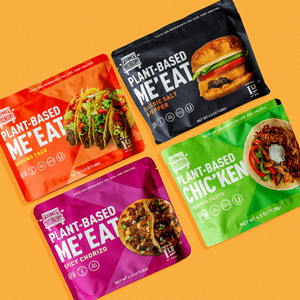
[00:30:50] John Craven: Yeah. So this is dehydrated and it's meat. So you rehydrate it and then you could make anything out of it. So you could make like a burger or meatballs and it's plant-based. So it's just pea protein, dehydrated onion, dehydrated garlic. It's really simple ingredients. So it's cool to see just like more innovation for like shelf stable products. And when I went into REI the other day too, I just saw more and more products that actually looked edible that was dehydrated because in the past it looked like those, you know, what are they called? The packs of food where it's just like your last resort. Yes. MREs.
[00:31:29] Mike Schneider: I would just exist off Spaceman ice cream.
[00:31:32] Ray Latif: That's just me. I can totally see that being something that we'd see in the military, right? Let's say there are soldiers who would prefer a vegan food option.
[00:31:40] John Craven: Yeah.
[00:31:41] Ray Latif: I mean, that seems like it's, it's something that's an easy fit into What To they call the PXs? Sure, PXs. Yeah, the PXs are like the convenience store and grocery store for military bases.
[00:31:53] Mike Schneider: This is good, we're teeing up our future discussion on military food logistics.
[00:31:59] Ray Latif: I mean, we're all well-versed in it. You know what, we are the people that you What To come to when it comes to that topic, so. One more brand I What To talk about, that's a brand called Gateaux, which is G-A-T-E-A-U-X, which is a frozen dessert company, and they recently launched a new line of petite-sized cakes. And they sent me a couple of these cakes. One of the products they sent me was their sour cream coffee cake with cinnamon pecan streusel. It was in-freaking-sane. Did you bring us some? I didn't. I'm so sorry. Gray! I know.
[00:32:36] Jacqui Brugliera: That is the property of... Does that sound familiar, Ray?
[00:32:41] Ray Latif: Yes, it does. It's just a home eating cake. I brought this for Mike and John specifically. This is, they also sent me a chocolate cake. This is made with cream cheese, vanilla bean icing. The great thing about these products are that you literally, you can take and bake. You don't need to do anything but put these in an oven or toaster oven for the amount of time they ask you that they tell you to prepare it for. And you've got dessert right there. So in this case, you preheat your oven to 350. You bake for 40 to 50 minutes. Let it cool for 20. You put on the frosting and you've got this amazing gourmet cake. I love this and it's relatively affordable. So this Chocolate cake is $13 and you can probably serve four people. $13? Yeah, let me see this thing. Oh, $13 got you excited? No, I decided it seems, to be honest, a little high. It is incredible. That pecan cake that I had was ridiculous. Gâteau Patisse. Look into it, folks. That brings us to the end of this episode of Taste Radio. Thank you so much for listening. Taste Radio is a production of BevNET.com, Incorporated. Our audio engineer for Taste Radio is Joe Cracci. Our technical director is Joshua Pratt, and our video editor is Ryan Galang. Our social marketing manager is Amanda Smerlinski, and our designer is Amanda Huang. Just a reminder, if you like What To hear on Taste Radio, please share the podcast with friends and colleagues. And of course, we would love it if you could review us on the Apple Podcasts app or your listening platform of choice. Check us out on Instagram. Our handle is bevnettasteradio. As always, for questions, comments, ideas for future podcasts, please send us an email to ask at Taste Radio.com. On behalf of the entire Taste Radio team, thank you for listening, and we'll talk to you next time.
[00:34:28] Expo West: you