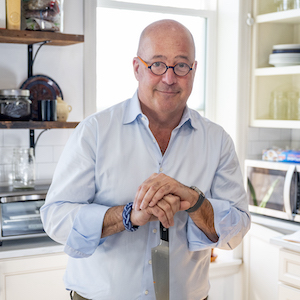
[00:00:10] Ray Latif: Hello friends, I'm Ray Latif and you're listening to the number one podcast for the food and beverage industry, Taste Radio. This is a special edition of the podcast, which highlights interviews with six founders, creators, and innovators who joined us on the show during the second half of 2021. Just a reminder to our listeners, if you like what you hear on Taste Radio, please share the podcast with friends and colleagues. And of course, we would love it if you could review us on the Apple Podcasts app or your listening platform of choice. Let's kick things off with Andew Zimmern, the award-winning television host, chef, and writer. In the following clip pulled from our episode featured on November 30th, Andrew, whose latest TV series, Family Dinner, is now in its second season, spoke about why he believes that great brands don't necessarily need to be the best brands, why he believes elitism is hampering solutions to issues of food accessibility and affordability, and his position that GMOs, applied within reason, continue to play an important role in the food system.
[00:01:19] Andew Zimmern: I really believe you don't need to be the best. It's better to be the only. And I think in many ways, just thinking of companies that I really admire, in a sense, even in a crowded genre or segment of the marketplace, in a sense, they're the only. you know, spindrift is the only one just to use flavoring of natural fruit juice and be very low in glycemic intake and still really good for you and refreshing and dry. I love that. Jenny's has been able to find a way to be a mass market product, right, but still retain that, you know, neighborhood scoop shop ability to make an extra rich flavor or a unique flavor or something that is really only doable if you are managing a very small, small company, even though Jenny manages a very, very large international one. So, I mean, those are the types of things that that truly appeal to me. what Jing Gao has done with Fly By Jing, I think also makes her the only. A woman owned and operated business from scratch. She had two or three setbacks with restaurant partnerships she was trying to do both in the States and back in China. I can't say more about it than that, but she overcame two really big setbacks in her business life and just kept forging ahead and said, you know something, I'm going to move to LA, I'm going to start this food company. And to do it the way she has with premium product and to place herself in a very unique segment of the marketplace, I think has been absolutely brilliant and fantastic. I admire that. I admire her tremendously for that. Her fortitude and her perseverance has been incredible. People don't know that companies like General Mills, and I have no relationship with them. I want to be completely transparent about this. This is just my personal feeling as a consumer. General Mills spends more money than any other company in the world researching and trying to establish marketplaces for drought-resistant grain. The reason is that General Mills' most profitable unit is the Big G division. That's the division that has all those cereals. So it's in their best interest to figure that out. But General Mills, at a time when everybody is screaming at the top of their lungs, including me, that one of the most important existential issues Other than voting rights for all Americans is the climate crisis we're in. It is literally our existence depends on solving that. and working to make sure that we don't increase our temperature 1.5 degrees by 2050. That's the death sentence, right? So companies like General Mills that are throwing $500 million plus a year into drought-resistant grain research are the people that are going to save us. And I would encourage people to think about some big companies, not all, some big companies that are doing a lot of work in that area to be the ones that have the distribution, the production capability to help us solve hunger problems in America as well. No one believes in wellness more than I do. However, it is very important to look on balance about what you can achieve. And sometimes that comes at a certain cost. As long as the net experience is positive, I think it's better than deriding those companies. than to support a company that makes a product that's out of the league financially for 99% of Americans to buy. I'm very, very lucky. I can't lie to you. Technically, I believe I'm a one percenter. I make over a certain number of dollars per year. that puts me in the upper 1% of Americans. Can I afford to buy some all-natural fantastic sausage at $15 a pound from a bespoke butchery in rural Virginia that's doing an incredible job? Absolutely. Do I have some of those in my fridge? Absolutely. Do I have Hillshire Farm smoked sausage in my fridge? And have I in the past? Absolutely. So it's an extremely, extremely important thing, I think, to be transparent and make sure that we're addressing all the issues and not just trying to create food solutions for one part of America. We need to create food solutions for all of America.
[00:05:39] Ray Latif: And you have to have the discussion about it. It can't just be a talking point that you heard or that you read about. It has to be discussed among people. And I think one of the ways or one of the most common ways that people discuss these topics is over the dinner table, over a family meal. And that's what's your, a lot of what your new series is all about, Family Dinner.
[00:06:02] Andew Zimmern: That was a very professional segue.
[00:06:05] Ray Latif: I've been doing this awhi saying that Family Dinner departure from your other bizarre foods. Talk about a relatively new show.
[00:06:17] Andew Zimmern: Th So it's actually, and when I explain it to you, and first of all, thank you for mentioning that and asking the question. And yes, Family Dinner, those mealtimes are a place for us to talk to our kids, talk about issues, learn stuff from them, exchange ideas. We don't do enough of that in America. We're not exchanging ideas civilly. We've never seen a more divisive time in our country's history or globally. The same divisiveness is occurring in countries all around the world. So you can make the argument that even the day and age we live in globally is more divisive than ever. I think we need to sit down and carve out times for, you know, we've lost that Family Dinner. We've lost that family meal. You know, we no longer have three generations of Americans living under the same roof. That's a very rare exception. I think it was a lot easier to parent when we had three generations living under one roof. It was easier to cook, spend time together. We were able to pursue the things that we all know are healthier for us. Bizarre Foods, I made about a gazillion episodes of them over 12 and a half years. We never had an episode of Bizarre Foods that didn't have a family meal in it. We never put a circle around it or stuck a lower third against it and said, pay attention, we're having a family meal. I just wanted people who were living in Finland to see how people in Japan or Kansas or Uruguay ate together. My intent with those family meal episodes or family meal scenes in Bizarre Foods was to show people that despite appearances to the contrary, we had way more in common than we had things that divided us. In a world where we're increasingly defining ourselves by our differences, I was like, come on, we all sit down and tell our kids to be quiet and finish everything on their plates and ask them how their day was. I mean, we did that in 70 languages in Bizarre Foods. So when Magnolia approached me and said, we want an intuitive content show, that's my production company. We make a lot of digital and linear TV for a lot of different groups. They wanted an intuitive content show. I immediately blurted out Family Dinner.
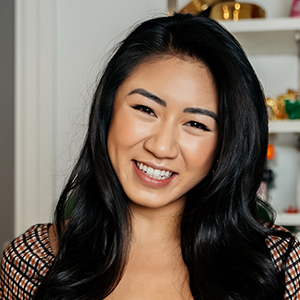
[00:08:32] Ray Latif: Next up is Vanessa Pham, the co-founder and CEO of AumSum, an innovative brand of starter kits for cooking Asian dishes at home. In a clip pulled from an episode featured on October 26th, Vanessa spoke about the inspiration for and meeting behind AumSum, why she and her co-founder and sister Kim set out to build a brand for all consumers, why observers may be mistaken into thinking that the company has a niche focus, and how AumSum's PR strategy has been effective in attracting national media attention. What is, in your words, what is the essence of AumSum?
[00:09:12] Andew Zimmern: I mean, I can't describe the essence without describing what our name means, because that's really the heart and soul of it. So Ong Song in Vietnamese means rowdy, rambunctious, riotous. We chose that name and that energy because it was our kind of personal middle finger to the model minority myth of Asian-Americans being docile or submissive. So really, the AumSum energy is about being proud and loud, unapologetic. And AumSum strives to be that in our content that we put out into the world, our interviews where we try to shape national dialogues, and of course, in our products where we don't hold back on flavor. or really in your face with the fish sauce, with the spice, for example. And that's really how we live that ethos in everything that we do.
[00:09:59] Ray Latif: Let's get to the who, because one of the things that I guess kind of surprised me about AumSum is the idea that you and Kim wanted to be a brand that is everywhere. You want to mainstream this idea of AumSum as being something that could sit next to other kitchen staples like tomato sauce. And when I look at the brand as it is, as it stands right now, I see a sort of relatively niche consumer for it. And I'm sure you've heard that before. And I apologize if I'm, if that sounds offensive, but I guess I've seen a lot of brands out there and I'm just thinking about the broad opportunity and I'm not necessarily seeing it yet for AumSum, but I'm putting words in your mouth. So who is the AumSum consumer? Who are you really trying to target with the brand as it stands today?
[00:10:47] Andew Zimmern: Yeah, I think it's a great question and one thing I will say is that I think this is a place where investors and marketers alike can miss something that I think is very critical. And I think what that is, is that you can't talk about audience and opportunity without talking about evolution of a brand. And what happens with so many brands that I think fall flat is that year one, they start trying to talk to their year five consumer because they're thinking, okay, well, we want to grow sales as much as possible. That means a bigger market opportunity and therefore bigger audience. But when you're building a brand, if you do that, you're not standing for anything. And you're not going to cut through the noise. And you're going to dilute your brand, basically, right out of the gate. And so, of course, as with anything, any entity, any even person, there's an evolution. And there's growth over time. And so what we do at BOMBSOM is we're very intentional about how we show up, who we speak to, at what part in our journey. We're not going to launch and right out of the gate be speaking directly to certain demographics because of our mission but also because of our strategy as a brand. Everything that we're doing now is by design. It's who we're intending to speak to. And so that's why you know to us we answer to the Asian-American audience at the end of the day every day. They are the core of our brand. They're our anchor, and they're the community we want to do right by. But we really believe that that doesn't mean that we're not relevant to all consumers. And in due time, we will speak to them and meet them where they're at. But it's an evolution, and it's a balance, and it's a dance. And we have so many tools at our disposal. It's not a blanket strategy. Every channel is different. how we show up in social media versus how we'll speak to folks if we have shelf talkers on the grocery store in middle America, will evolve and be different. It's all about having a cohesive ethos while still meeting the consumer where they're at, at different parts of the brand's journey. It's nuanced, but I think it's very critical in the execution of scaling an intentional brand that's mission-driven, that represents community and culture.
[00:13:12] Ray Latif: just so much media coverage about Omsom right out of the gate. You know, 18 months ago is when you launched. You've already had articles in the New York Times, Food and Wine, Vogue, dozens of other media publications, Consumer and Trade. How did you achieve this kind of coverage for an early stage brand? It just, it rarely happens if ever. I think I can think of one other brand where this is the case. It was a brand called Recess, which makes, have infused beverages and the like. You know, I saw that a couple of years ago and I saw similarities in terms of the coverage for OMSOM. What was the PR strategy? What was the plan for getting this kind of coverage? Was there one?
[00:13:53] Andew Zimmern: Yeah. So, of course, you know, PR was a very important mix in our launch strategy or part of the mix for us. Our approach to it really came all the way back to the brand strategy. So it wasn't just like, OK, here's our brand or whatever. All right, let's tack on this PR strategy. From day one, AumSum has been a response to the way the world looks and exists. So inherently, what we're doing touches upon really important dialogues that are happening at a national level. And so it's hard to kind of divorce the two, right? The way that we talk about who we are, what we stand for, and flow that ethos through everything that we do and put out into the world, whether that's our visual identity, our website, or our product to our perspectives and our content. All of it is a response and is a change that we want to see in the world. And so inherently, I think that has been newsworthy because it parlays into broader conversations that journalists are driving at that level. And so I attribute a lot of, I think, that PR success to the brand mission, vision, and values that we live from a very genuine place every day. And that has been interesting to people because it's not this kind of soulless, brand positioning doc that you know was was manufactured. It came from a very genuine place in the hearts of myself and my sister. I think people can feel that. And I think that that kind of one thing led to another. And then at the same time we were really from day one investing in building a strong evangelist community knowing who we're speaking to speaking directly to them. and creating something meaningful and real. And journalists can see that, and that's newsworthy as well. So I think, you know, between our community approach and our PR strategy, there was this kind of flywheel between the two. I know a lot of people say they don't believe in like a PR flywheel, but there was something that was harmonious, I would say, in the coupling of those strategies.
[00:16:13] Ray Latif: Let's keep it going with Kabir Jain, the Chief Growth Officer of upscale, LA-based grocery chain Erewhon. In this clip from an episode published on November 9th, Kabir explained why Erewhon describes itself as, quote, an idea, how the retailer defines innovation, why he describes brand selection as, quote, both an art and science, and the reasons that the company will say yes to some brands and no to others. Why does Air One describe itself as an idea?
[00:16:45] Vanessa Pham: Look, I think as a business at its core, we're a grocery store, right? We're a restaurant and a grocery store, which we can get into. But I think what Air One has developed into and what we hope to continue to develop it into is to really a place to inspire and motivate people to eat better, to live healthier lives, and to start to make better decisions for their own health and wellness. And that can take a lot of different flavors, right? It can take someone coming and trying, you know, one muffin in our cafe, which is something that they've never tried before, but that got them feeling better about themselves and makes them want to come back to our store. Or it could be someone buying organic produce for the first time in their life versus the, you know, maybe the conventional produce they would buy before. And so it takes a lot of different flavors, but I think what we found with the consumer, which we can get into is that, you know, all of our consumers, In some shape or form are prioritizing health and wellness to some degree in their life right like they're at that stage. And so we want to be that place for them right where they can come walk our aisles to learn about new products find interesting new ingredients that they hadn't seen before at other stores. spend time talking to our staff in the store who are beyond knowledge experts in each of their sort of categories and spaces that they play in where people can just come spend time and learn. And that's the idea. And so to power that we have products and recipes and dishes to deliver that experience. But at the end of the day we're trying to create a retail experience for these customers.
[00:18:13] Ray Latif: There's trends and then there's innovation, right? There's innovation that's born from trends. How do you guys define innovation? How does Erewhon assess everything from taste to ingredients to package design? What are you looking for when it comes to an innovative product?
[00:18:30] Vanessa Pham: In my opinion, the lines are pretty blurred. And it's hard to discern when you see something, whether it's a trend, a fad or true innovation. And innovation can come in many forms, right? Like there is scientific innovation at the furthest end of the scale. And there is maybe packaging innovation at the other end of the scale. And so, you know, as we look at new products and new brands, we are looking for things that are interesting, new and different. And in my mind, if it meets any of those criteria, there's some level of innovation that is coming into play. You know, I think what often gets remissed at the store is for in general, for every new product that comes in, in some cases, the product has to come out there. There's a limited shelf space. That's not an air one phenomenon. That's just a retail phenomenon. And so, you know, as we think about bringing new products in, we have to think about are they innovating in any way, whether it's the packaging type, the story that they're telling on their own channels, you know, the ingredients, the taste profile, reinventing a category. Are they doing that enough to warrant them coming in and an existing product unfortunately going out. And that's that's the nature of the business. The other component at the end of the day though is our customers have come to expect new products. I mean they want to spend 45 minutes in the store browsing through the aisles to see what are the new products in specific categories that they're seeing that when they were here last Friday they didn't see. So that's part of the beauty of air one that we are willing able and really excited to work with small brands to take chances on new brands and to get them into market really quickly. And again, we have the freedom to do so because we've now developed a customer base that's come to expect it and gets really excited by it.
[00:20:08] Ray Latif: How many brands do you carry in store? How many different brands do you carry in your stores?
[00:20:13] Vanessa Pham: That's a good question. Brand count, I don't know, but we carry at any point in time north of 12 to 14,000 SKUs in any of our stores. So it's heavily merged. And again, the reason behind that is we want to be a place of discovery. We want to have categories that are merged with a variety of SKUs to give customers that choice. And again, we want every SKU to turn with some level of velocity when it's in our store. But we like the idea of having that level of merchandise variety for our customers. And one of the things that I didn't really appreciate at all among many things when I joined this business is how incredibly difficult that is to manage. That's one of the things that, like I said, when I came over to what I call the real world, you start to learn how hard it is to run some of these parts of the business. Managing 12,000 to 14,000 SKUs is incredibly complicated to not only keep them on the shelf, but understand what should stay, what should go, how to merge them, what to merge together. It's a really nuanced process, and there's a lot of people here working to kind of continue to perfect that.
[00:21:12] Ray Latif: Now, there are three questions I can think of that our entrepreneurs would love to ask you. So I'm going to ask you on their behalf. Number one, why would you say yes? Why do you say yes to certain brands when they are pitching you?
[00:21:25] Vanessa Pham: Yeah, again, that's the magic question. Art, not science. And I wish there was an answer for it. But really, it's a it'd be an entrepreneur that has built a brand and a product that gets our team really excited. And that would be a variety of things. It has an amazing taste. It is in a category that we're excited about. It brings newness in terms of its packaging or its story or its ingredient profile and sort of all of those collectively would get our team excited to say yes.
[00:21:54] Ray Latif: So unfortunately you have to say no to some brands. What are the common reasons you would say no to a brand?
[00:22:00] Vanessa Pham: Yeah, good question. So the most common would be the ingredients profile, right? So we get a lot of samples of brands and applications of brands that have ingredients that we just don't allow at everyone. things like maltodextrin, things like canola oil, and these are sort of ingredients that we don't feel comfortable allowing a product to merchandise on our shelves. They're ingredients that we would never use in our cafe. So that's the most common reason. But what I would say is a lot of brands come into Erawan after their first application. They'll try again six months later, or they'll try again 12 months later, and maybe something in the brand has changed, or maybe the timing is just better. And so we see that pretty often as well.
[00:22:36] Ray Latif: As you mentioned, if an entrepreneur hears no, typically they'll come back a second time or a third time. But I think persistence is the fine line between respectful and annoying. There are entrepreneurs that I've spoken with that say, we have a list of retailers that we will not take no for an answer. We are going to be laser focused on getting into this chain. And sometimes it works and other times I think the buyers get really annoyed. What is the best way to be persistent in getting into your stores? Is it just getting to know the staff? Is it, you know, continuing to refine your product? Is it finding success at other retail stores and bringing those numbers and that knowledge to Erewhon?
[00:23:16] Vanessa Pham: Yeah, well, first I would say power to them. If I were in their shoes, I'd probably do the exact same thing. So, you know, can't hate them for that. You know, it's a good question. I think, and this is hard to do, but if I were them, if you get customers demanding the product, We'll sell the product, right? So if you've built enough of a consumer base and a consumer demand that loves your product and walks into Erewhon and asks our staff, why aren't you selling Ray's Kombucha? We're going to go find Ray's Kombucha and understand why we're not selling it, right? Because then we have proven out there's at least some level of demand there versus for a lot of new products. We're taking a chance and we don't know. So if a brand's trying to get in, that's one thing I would suggest now. It's obviously a lot easier said than done. But we get customers coming in asking us for products all the time. And we'll take the time and attention to go understand who those brands are. Do they fit our profile? Could we sell them? Because we want to make our customers happy.
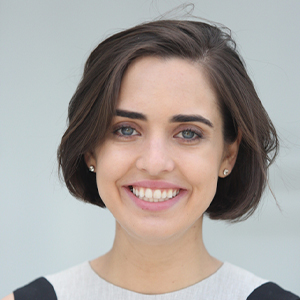
[00:24:13] Ray Latif: Next we have Catherine Dockery, the founder of seed stage venture capital fund, Vice Ventures, which describes itself as quote, conquering stigmas and striving towards superior returns by investing in good companies operating in bad industries. In the following clip from an episode published on August 31st, Katherine explained what piques her interest in a first meeting and how she works with founders and operators to achieve their collective goals.
[00:24:42] Andew Zimmern: Every single one of our founders, I am very lucky to call a close friend. We invest in great people who are smarter than we are for sure, which is why I get this question a lot, but a lot of people are always very curious about our thesis and our semi-theses on certain categories. And obviously we have them, but when we go into pitch meetings, we realize and we recognize that a lot of people are much smarter than we are. So it makes a lot more sense to go into this meeting with a completely open mind about whatever they're pitching.
[00:25:12] Ray Latif: You may not know these founders beforehand. You may not know their level of intelligence or how well they understand their brand and category. So how did they get in the room?
[00:25:21] Andew Zimmern: Yeah. So we take, I would say probably 94, 95% of all our deal flow comes from cold pitches. For sure. We don't really work with a lot of other funds, just especially because of what we do. And because of that, we get a lot of founders come directly to us at Info Vice Ventures, looking for a meeting and we take a ton of meetings. It's very rare that we won't take a meeting from a coldie bar. Especially because of how I raised the fund.
[00:25:49] Ray Latif: Yeah, you understand what these entrepreneurs are going through. How many meetings would you say you take in any given week?
[00:25:57] Andew Zimmern: It ebbs and flows, to be honest with you. So right now is August and it's pretty light, right? Because a lot of people are out of office. But in September, I guarantee I'll be in meetings from 930 to six and sometimes later depending on if the company's in California or what the schedule is. But no, I mean, we see a ton of businesses for sure.
[00:26:16] Ray Latif: 930 to six talking to new brands or early stage brands.
[00:26:23] Andew Zimmern: Yeah, I would probably say of that an hour and a half or two hours of my day is not talking to new companies. But we're constantly talking to new companies, for sure, especially from Cold Abounds.
[00:26:33] Ray Latif: Wow. What gets a second meeting?
[00:26:36] Andew Zimmern: Well, who gets a second meeting is people who know their customer really well. So I mean, I was just talking to a gender specific company. And when I asked them about the gender breakdown of their customer, they had no idea, right? So like, that does not get a second meeting. Companies that are operating legally do not get second meetings, which you would be surprised is a lot of them.
[00:26:57] Ray Latif: Company operates illegally, did you say?
[00:26:58] Andew Zimmern: Illegally, yeah.
[00:26:59] Ray Latif: Okay.
[00:27:00] Andew Zimmern: Especially in alcohol, we see it all the time. So the three-tier distribution system with alcohol, you can't distribute the product if you make the product. And we see a ton of alcohol companies start out self-distributing without using a licensed self-distributor. So you see that, like if you're operating legally and your company has been in operation for six months, then it's an immediate pass for sure. But yeah, I mean, great brands get meeting brands that tell stories, brands that have any type of tie to nostalgia, right? So you think of recess, I think you'd be hard pressed to find an American that grew up in America as an adult that never took a recess before. I think I just don't know who that would be. So really, really strong brands that tell strong stories with and connect with consumers for sure, definitely gets a second meeting.
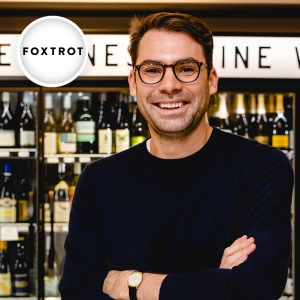
[00:27:47] Ray Latif: We continue with Mike Lavatola, the co-founder and CEO of Foxtrot Market, a fast-growing chain of hybrid corner stores and cafes that is redefining convenience for modern consumers. In this clip, pulled from an episode aired on July 27th, Mike discussed how the company communicates its business model to consumers and industry professionals, the retailer's target customer, how it cultivates an intimate understanding of its consumers, and how analytical and anecdotal data factor into Foxtrot's product selection and merchandising strategy. You describe Foxtrot in a certain way. I think you use corner store, convenience store. I've seen it described in a number of ways, a contemporary evolution of the corner store and cafe, a first of its kind retailer blending on-demand mobile delivery with beautifully designed brick and mortar stores, an upscale convenience store startup. What is your way of describing Foxtrot? How would you communicate what you are to someone who is very new to the company?
[00:28:52] Kabir Jain: Yeah, it's a great question. I mean, convenience store and cafe, you know, definitely kind of get you to a certain kind of place. Right. And so if you look at the company now, you know, about half our sales are retail and half of them come online. But I think sort of the interesting insight we have is that it's really the same consumer shopping across both. Right. So for us, when we say convenience store, it sort of, you know, notes the categories of goods that we sell, but hopefully the experience you're getting when you walk in does not at all resemble what you sort of think of as a, as a traditional store. So traditional C store that is. So, you know, the experience walking in, in person, the sort of space goes from being the sort of bustling coffee shop in the morning to that kind of traditional cafe, midday market evening, and then like a wine shop at night. And then all that is kind of, presented online as well. So, you know, the best way to think about us is sort of a market and a cafe that's really agnostic to how customers shop. So we're happy to deliver to you really fast. We're happy to see it in person or sort of bridging the two together in a way of a pickup.
[00:29:55] Ray Latif: But it's not the traditional C-store customer that you're servicing. I'm probably offending some folks by saying that, but when I think about the average C-store consumer, I'm not necessarily thinking of the Foxtrot consumer. Who is your average customer?
[00:30:07] Kabir Jain: Yeah, no, no, I think that's sort of what the interesting insight was was sort of all of these folks who in every other part of their lives are going to interesting restaurants and shopping at cool shops and wanting to find out about new things. When they had to get a last minute snack they're going into 711 or wherever because that's the only thing sort of open. or existing there. And so when we think about the consumer, it's really pretty broad. The biggest wrap around them is that, as of now anyway, they choose to live in a dense urban city. All of our locations in Chicago and in Dallas and in DC are in the city. But even in Chicago, we have nine locations open now. And the neighborhoods they're in vary pretty widely. So a neighborhood like you know, Southport is all sort of families with kids in a neighborhood like River North is sort of all, you know, young singles. And so when we think about the merchandising mix, we want to make sure that we're sort of catering to a bunch of tastes. And while a lot of it can be sort of interesting and special, it's not like a just like overly bougie, overly kind of expensive experience because of that, that really kind of gets away from what the convenience store really is, and sort of our bigger goal is to be a place that it makes sense for you to shop every day right so that that's coffee in the morning, or you're out of milk or you want to grab an amazing bottle wine like that's what we think should be on the corner of, you know, sort of all these neighborhoods. To more specifically, you know, kind of answer your questions, our average age is about 34 now. And I think that really just kind of represents a medium of, you know, folks just out of college to, you know, those still that are still in the cities with young families.
[00:31:44] Ray Latif: You know, I've seen your product selection and you do carry a lot of really innovative and disruptive products. You also carry Dunkaroos.
[00:31:51] Kabir Jain: Yeah, well I would say that was innovative once upon a time. But like, that's kind of the mix, right? And like, that's what really guides us internally. Like, we are almost hypersensitive to not carrying whatever the latest millennial, D2C, beautifully packaged thing is if the product isn't that great, right? So like, I always use the example of Oreos. We have Oreos in our store because no one has invented a better Oreo. We have tried every new version of Oreo, but no one has made a better one, so that's what's in our stores. Having said that, there's so much cool stuff happening in ice cream or mushroom-based snacks or these other trends where the product is actually delicious and they sell. If they don't turn, then they're not in the store. That's the filter that we're able to look at everything with. When they see this new interesting product that they might never have heard of, stacked next to things that they know they love, it brings sort of credibility to the overall mix.
[00:32:46] Ray Latif: It definitely feels more like a convenience store in that case, because you're not going to find Oreos at a Whole Foods. You're not going to find Oreos in a lot of places that feel as upscale as Foxtrot does. And frankly, no offense to anyone listening who makes an Oreo type product, you're right. Oreos are the best. They're not that healthy for you, but they are the best. So that's actually a challenge to entrepreneurs listening. If you can make an Oreo that tastes as good as an Oreo, that's healthier and better for you, Foxtrot will pick you up in a heartbeat. Am I right?
[00:33:15] Kabir Jain: Yeah. And what's going on now in the, I don't even know if soda is the right word for the category. Right. But like we carry Coke and diet Coke, but if you look at our shelves, we're way over indexed on, you know, things like Ollie pop, right. Because they actually taste amazing and they have all these other benefits and they look pretty and they sell. So you can certainly do it. And at the end of the day, it's not us deciding it's the customers, right? Like our job is just to kind of sift through, find the products that we think tastes great and can break through. And then the customers are ultimately the ones who kind of. pick if it stays or goes.
[00:33:47] Ray Latif: I want to get into sourcing in a sec. You mentioned a couple of things there. You talked sort of about hierarchy in terms of what you're looking for and tastes great has to be the top list. Sounds like looks great and is on trend. Is that the pecking order?
[00:34:01] Kabir Jain: I think taste grade is 1, 2, and 3. And then how does it sell? So, you know, something that myself and the merchandising team love that, you know, no one else appears to even after we try to elevate it, you know, unfortunately kind of can't stay. And then, yeah, you know, like beautiful packaging certainly matters and who makes it certainly matters. You know, we like want to be, making sure that we're working with the right kinds of folks who are doing it the right way. And also, I think especially over the last year and through our up-and-comers program, realizing that our shelves really can be a platform for building some of these smaller businesses. And our favorite thing to do is find these new products that have never been into retail and give them a home. So does it taste great? Does it look great? And is it someone that we want to get behind? All kind of factor in.
[00:34:50] Ray Latif: How do you find new products? And how do you find some of those products that have never been in retail? I mean, are brands actively pitching to you? Are you actively looking for new brands to put on your shelves?
[00:35:00] Kabir Jain: Both. So by far the most fun part of the job and why, you know, I really started this was like, why can't you get this stuff conveniently? So I'm always on the hunt. The merchandising team's always on the hunt, which is a ton of fun. And then, yeah, you know, we're getting pitched all the time. You know, there's like stuff. stuff kind of sent to the office. And then there's just the old school way of entrepreneurs, you know, going into our stores, talking with the store manager, giving them samples that, you know, kind of make their way to us. But it's an everyday kind of ongoing, ongoing thing.
[00:35:28] Ray Latif: There's this delineation between great for you and great tasting. Where does great for you, better for you, healthier for you fit into this matrix? Like one of my colleagues had mentioned, when I think of Foxtrot, I think of Erewhon. Is that a fair comparison?
[00:35:46] Kabir Jain: Yeah. I mean, everyone is doing fantastic things and someone that we think is doing an awesome job. How does, how does better for you fit in again, it kind of goes back to, you know, consumers voting with their dollars. Right. So I think we've kind of got this barbell approach, which, you know, during the day, super healthy, right. So like what sells at lunch, you know, which is like incredibly healthy rolls, fresh fruit, you know, like all of these trends that, you know, you talk about sort of each week, but at night, what sells it is the exact opposite. It's like the most indulgent cookie you can find, or the craziest ice cream pint you can find. And I think ice cream is an interesting category. We continue to try all manner of ice cream, for lack of a better word, like all the different milks and all the different trends. And that's a category where they really struggle to make up any significant portion of sales compared to normal ice cream. And I think that's because when you want ice cream, you just want to be indulgent. But during the day, you want to be really, really healthy. I think our job is to surface better-for-you options out there, kind of cross your fingers and hope that consumers actually want them. And in most cases and in most day parts, they do, but don't try to put them in a corner and like be dogmatic about what they should be eating when it's time to be indulgent.
[00:36:58] Ray Latif: Finally, we hear from Danielle Lavolsi, the founder and CEO of Nutso, a brand of premium nut and seed-based butters. In the following clip, Polterman episode published on October 19th, Danielle discussed why self-care is great for ideation, benefits of bootstrapping, and why she fears regret more than she does failure. I really enjoy being alone because it allows me time, gives me time to think, to ideate, to meditate, to do whatever I need to do away from the chaos that might be going on in my life. And it sounds like you appreciate alone time as well.
[00:37:36] Catherine Dockery: well, I don't know what people think when they meet me, but I think I can be very charismatic and very extroverted, but I'm actually kind of an introvert. Like I need some downtime. Like I know to replenish myself and to your point, my best thinking is by myself. And I'm just like at this vibration that's extremely, doesn't need to be Zen, but it really needs to be kind of in that meditative state. And I have like, if I'm getting a massage, I have some of my best ideas, getting a massage. So just FYI, that's a trick.
[00:38:09] Ray Latif: That's a great tip. I love it.
[00:38:11] Catherine Dockery: Oh, I do. I'm a big get a massage, yeah, yeah, yeah. And almost every time I have a big idea that you almost need your little diary right there to write it down.
[00:38:20] Ray Latif: Wow, interesting. Maybe you can have like a digital recorder. You can sort of like quietly speak into it while your face is in that little pillow thing.
[00:38:29] Catherine Dockery: Exactly. I think I would freak out the person massaging me, but it's a great idea. When I started, I mean, I didn't take any money. I think some of the biggest mistakes can happen when you have this surplus of cash, because there's so many times that you don't know how things are going to turn out. But if I had, I always think about this, if I had like $5 million when I launched my company, like I might not even be in business. Like it just, It scares me in a weird way, because it would just make me make some big mistakes. Marketing is one of the hardest things to figure out with your brand, because back in the day, there was only television and radio, advertising and magazines, right? Now there's like a hundred different ways to have brands coming at you 24-7, right? In every aspect of our lives, unless we're putting ourselves in the timeout box. So bootstrapping made me think about every dollar that was spent. And I think, I'm not saying everyone needs to do it like me. And there's been some great brands that were pop-up brands and they had a lot of money and they're successful today. But for me, bootstrapping, it really helped me build these authentic, loyal customers. because I was doing all my own demos. I mean, it was me, myself, and I. The board meetings, you saw me talking to myself, it's just because I'm having a board meeting. I did every aspect of this company, from accounting, which I absolutely hate, I don't ever want to be an accountant, to obviously being out there and being a demo person. But being out there and demoing our products, like every customer was important and telling that story 1,000,000,000 times. It's so important to your guerrilla marketing and you're building your base off of this customer who then buys it for this person as a gift or tells this person, you really, really have to try this amazing product because it's so different and it tastes so amazing. You know, that's how the company started. And I think that's why we're still in business today is because we did do the guerrilla marketing. We did build this company from one loyal customer at a time. And, you know, once you get that loyal customer, you don't ever want to lose it. You know, it's just, they're so valuable as a brand because loyalty is king.
[00:40:53] Ray Latif: One of the things that you shared with me the last time we spoke is that you have more of a fear of regret than failure. And I think that was such a really interesting thing. I love that quote. Yeah. I mean, is that yours?
[00:41:04] Catherine Dockery: I hope I'll be able to see my name behind it. No, I said that. Now, whether someone can look that up and say somebody else said that, but that's my quote. So, yeah, I mean, because I was trying to figure out, because failure is such, it's not like I don't have fear of failure. Like, of course I do. Everybody I know does. But one day I was trying to figure out, like, why am I different? Like, why is that not just putting me into a coma state or a fetal position in my bed, right, some days? And it is like I have a fear of regret more than a fear of failure. So I'm not saying my fear of failure isn't high, but my fear of regret. So I don't want to be, I don't doubt I'm going to be 80 someday. But if I do make it to 80, I just want to be able to look back on my life and not be bummed that I didn't try something because I was too scared or I thought that I was too old or I thought that my time had passed, right? You hear of all these people like getting their degrees or becoming a doctor or, you know, starting their business at like freaking 60 or whatever. Like my whole philosophy is, you know, you're never, you're never done until you're clearly done and you can't breathe anymore. So, get out there and do what you want to do. But yeah, so it makes me, I guess, a little different.
[00:42:25] Ray Latif: It applies to life as much as it applies to business. And I wonder in what case that it has appeared in business where you've said, look, we will probably fall down on our face, but we've got to try it.
[00:42:37] Catherine Dockery: probably every other day now. But yeah, I mean, well, the whole business was started that way. And again, I think to be a great entrepreneur, you have to have really good instincts that you listen to. So that sixth sense, whatever you want to call it, I think all entrepreneurs have it. And you know, in your heart of hearts, when something is like shouldn't happen, or you shouldn't be doing it, or you should, and you can't explain it any other way to say, but I just don't have a good feeling with this. And so there's definitely been instances where, you know, whether it's a vendor or an investor, or it just wasn't a perfect match. And it's okay to say no, and it's okay to say it's not the right timing, but no is a very powerful word and probably should be used more often.
[00:43:29] Ray Latif: That brings us to the end of this episode of Taste Radio. Thank you so much for listening. And thanks to our guests, Andew Zimmern, Vanessa Pham, Kabir Jain, Catherine Dockery, Michael Avitola, and Danielle Lavolzi. As always, for questions, comments, ideas for future podcasts, please send us an email to ask at Taste Radio.com. On behalf of the entire Taste Radio team, thank you for listening, and we'll talk to you next time.