[00:00:10] Ray Latif: Hello everyone, I'm Ray Latif and you're listening to the number one podcast for the food and beverage industry, Taste Radio. This episode features interviews with Danielle LiVolsi, the founder and CEO of Nutso, super premium nut and seed butter brand, and Kun Yang, the co-founder and CEO of upstart cactus water brand, Prickly. Just a reminder to our listeners, if you like what you hear on Taste Radio, please share the podcast with friends and colleagues. And of course, we would love it if you could review us on the Apple Podcasts app or your listening platform of choice. The first time someone sees a jar of nutso, they're probably wondering, why is it upside down? The brand's nut and seed-based butters are designed such that the twist cap is at the base of the jar, allowing for natural oils to rise to the top and make it easier for consumers to stir and blend before use. The novel approach has been essential to building awareness and gaining trial. But as founder Danielle LiVolsi explained in our interview, winning customer loyalty is the key to her brand's success. Founded in 2008, Nutso, which markets all-natural snack bars in addition to its butters, has become a nationally recognized brand that's available in over 10,000 grocery stores, including Walmart and Costco. A former radio sales executive, Danielle bootstrapped the company's launch and development and has emphasized steady growth and a focus on consumer demand for high-quality ingredients and customer service. A mother to two adopted sons who are the inspiration for the brand, Danielle also leads Nutso's sister non-profit, Project Left Behind, for which a portion of all sales support orphaned and undeserved children around the world. In the following interview, Danielle recounted the creation of Nutso and the creative ways that she won over buyers for the brand's first retail chains, why she adheres to the Nordstrom model of customer service, the reasons she has turned down offers to invest in the company, and why she fears regret more than she does failure. Hey folks, it's Ray with Taste Radio. Right now I'm speaking with the one and only Danielle LiVolsi, the founder and CEO of Nutso. Danielle, how are you?
[00:02:25] Danielle LiVolsi: Good, how are you doing?
[00:02:26] Ray Latif: I'm doing great. You know, I thought I had a nice setup here in our studios at BevNET headquarters. You have a pretty legit setup yourself. And I asked you before we started recording if you were actually in your office or at home, and it sort of looks like a hybrid between both, and you explained exactly why.
[00:02:43] Danielle LiVolsi: When I launched Netso in 2009, I wanted to be virtual because I knew I would work from anywhere and, you know, being an entrepreneur, you're working all hours and all the time. So I launched my business virtually and all of our employees work virtually. So it was kind of easy during the pandemic. Nothing had changed as far as that goes.
[00:03:05] Ray Latif: Yeah, well, you're not alone in all this, but I'm sure you've shared some tips with other entrepreneurs. You told me a while back about this great Facebook Group called OMGCPG that you said it's been very helpful for you and also for a lot of the early stage entrepreneurs representing emerging brands as well. What kind of dialogue goes on in that group?
[00:03:31] Danielle LiVolsi: I mean, anyone can join. So obviously I've been doing this for 13 years. There's a lot of companies that are just starting out. And honestly, I'm a little jealous because, you know, I don't even know, I guess Facebook was going on, but there definitely wasn't this group. And what's nice about it is people will ask questions, you know, things that every entrepreneur has, especially starting out in a business. So it could be everything from trying to find a co-packer or a particular ingredient. I just used it recently to ask about a referral for a certain agency. I think it was for Amazon, an Amazon agency, but you know, it's a great place. And what I like the most about it, there's a lot of great groups out there and networking groups, but it's all about CPG companies. So it's in our space. You know, we need a different Amazon agency than maybe somebody that's doing clothing. Right. So yeah, it's really awesome. And if you haven't joined the group, join the group.
[00:04:30] Ray Latif: I guess there's also a lot of conversation about supply chain issues that have been ongoing during the pandemic. What are some of the things that have really affected you and affected your business throughout the pandemic?
[00:04:43] Danielle LiVolsi: Honestly, the pandemic had its own set of issues, but I would say right now, post-pandemic or, you know, almost post-pandemic. Almost pandemic. I know. Every time we think it is, it's not over. But the repercussions of 2020 are just insane this year, and everyone is struggling. There's this whole issue of not having enough employees for truckers for logistics so there's not anyone that wants to drive an 18 wheeler I guess to go pick up all of our brands to take them to a retail store so there's a big issue with that gas prices are extremely high everything's expensive right now. All of our ingredients were delayed. There's certain delays on packaging so paper products and people have heard about like if you're trying to build a house there's no wood. I mean there's like it could almost be giving you panic attacks. So yeah, we've dealt with a lot. We've had two of our main ingredients, one of them being coconut and sesame seeds, two different issues, but the coconut, we couldn't find a shipping container that would, you know, everything was so backed up in ports that we couldn't get it. Even though we had it at the port, we just couldn't get it onto a ship to ship across the ocean. And then our biggest issue, we've been out of sesame seeds since June. And that was because, as everyone knows, India really got hit hard with COVID. So while they were going through the peak of COVID, one of our places where we actually pasteurize our sesame seeds in India, went and had to shut down because of a certification issue. And then we couldn't get anybody in to fix the problem. So that plant just kept, you know, it was like shut down indefinitely. So we are now, no kidding, last week, we just finally got our sesame seeds released and it's been really painful because we launched our famous tahini five seed fusion butter in Whole Foods globally in July. So yeah. It's been interesting to say the least.
[00:06:54] Ray Latif: Well, there's some solidarity in knowing that you're not the only one going through these issues. You might have an issue sourcing and pasteurizing certain ingredients, but at the end of the day, everyone in the food industry, everyone in The Beverage industry is facing similar issues. Does that make it a little bit easier or is it still, well, this sucks and I'm not really sure what the answer is beyond, you know, a month or two?
[00:07:21] Danielle LiVolsi: We stay pretty focused on us and so obviously I know it's going on and there has to be a little bit of helping me sleep at night because I know it's a it's a worldwide problem, but at the end of the day, buyers don't want to hear excuses. Retailers don't want your stuff to be delayed and it affects them and their bottom line. And so at the end of the day, no one really cares about the excuse. You just need to figure out how to get your product on the shelf and keep it on the shelf. So there's always stress.
[00:07:53] Ray Latif: You've been doing this a long time, as you mentioned, and 13 years is a long time to feel stressed out. How have you avoided stress or relieved stress in the time that you've been doing this?
[00:08:06] Danielle LiVolsi: Well, a glass of wine now and again always helps, but that could get dangerous. One of the things I kind of have always been uncompromising on is my me time. I even put myself into timeout boxes once in a while when I'm like, you need to go and just So I'm a big, you know, I don't go crazy, but just, you know, getting some good exercise in. I just did a 47-mile bike ride with my youngest, who's 18, in Montana. We did a race, a mountain bike race. So I was training for that. So I always make sure I've got, you know, some other thing that I'm kind of working on, on the side that gives me that downtime that I'm not thinking about my business while I could be writing and still thinking about it. But you know what I mean? I'm not, you know, in front of my computer. So I definitely always tell entrepreneurs starting out, you, you have to give yourself some downtime. Like in the hardest part is going to bed knowing like you have a hundred things on your to-do list. Like I hate lists. I don't do lists because. It's daunting to me and I don't understand how you do a list when you're an entrepreneur because there's a million things and they're going to stay on your list forever and ever and ever until, you know, you're no longer doing it. So anyway, so yeah, a lot of me time and really scheduling it into my calendar. So it's not a compromise. I have to do it.
[00:09:31] Ray Latif: When I ask entrepreneurs about this type of advice, I always assume that they wish they could give themselves that advice when they started out. When you started out, you were not in the food business. How did you get into this business? What were you doing before Nutso?
[00:09:46] Danielle LiVolsi: Yeah, so I've worked my whole life since I was 16. I started at McDonald's, like I know a lot of people.
[00:09:53] Ray Latif: What were you doing at McDonald's, by the way?
[00:09:55] Danielle LiVolsi: asking you what you wanted for your meal that day.
[00:09:58] Ray Latif: And if you wanted extra fries, you were a cashier, a service person.
[00:10:03] Danielle LiVolsi: Yeah. And I worked, I mean, I worked in the drive through, I worked back flipping burgers. Yeah, no, that was my when I, so if I was 16, I had to be what, like a sophomore. So I've been working my whole life and I'm not afraid to work. That's probably a very good positive trait as an entrepreneur. But what I ended up doing after college was really getting into sales. So business was my major. And I worked for a really large firm in New York City called Hachette Philippaki Magazines. and got my foot in the door in sales, and it was like crack. I loved it. Just because you seriously, I don't know if I see that, but in a positive way, just because it's kind of like the sky's the limit, right? Like on how much you can make, and I have to believe what I'm selling, so I can't just sell, you know, something that I don't believe in. But it gave me so many great skills, and my desire was always to have my own business. So I have talked to patent attorneys, you know, I've had some crazy ideas that I've kicked down the road while being a sales manager sales executive moved up to San Diego and got into radio advertising sales was the manager of new business there which. Some people don't like to do, but that again was a great challenge. And just really constantly thinking about, you know, what I could do to start my own business. I think honestly, to be a good salesperson, you have to be an entrepreneur at heart because most sales positions, there's not a lot of micromanaging, you know, you're out on your own, it's live or die, you're either going to sell and be successful or not. So there's a lot of similarities there. And, um, even though I had some great ideas, right? None of them came to fruition except for Nutso.
[00:11:53] Ray Latif: Now, I know you've talked about why you launched Nutso, sort of the history behind the brand. I know you've told that story a number of times, probably more than a few hundred times at this point. It's on your website. But for our own edification, for our listeners' benefit, just give us the brief story behind what the brand represents and why you felt the need to enter this space because for the longest time this nut butter space didn't have a lot of innovation. It was dominated by a handful of players and was very difficult to break into.
[00:12:27] Danielle LiVolsi: Yeah, well, I love the story, even though I have told it probably hundreds and hundreds of times because it has to do with my two youngest boys. And as I said, I had a great job in sales, radio sales. I did want to have my own business, but nothing I had come up with seemed like the logical next step. And then, in the meantime, life kind of happens, and this really unique opportunity, which changed my life forever, was adopting. And so, in 2002, I adopted a three-and-a-half-year-old little boy, and it really changed my life in the fact that He lived in an orphanage for three and a half years, we get him to the US, and he's super tiny so he was like an 18 month old, even though he was three and a half years old. He was in the 5% on height and weight and, you know, one of my loves is obviously cooking and nutrition on the side. So I was like, I've got to get all the nutrition in this little boy. He's already three and a half. And you know, it was one of many things. Greg also had 2200 eyesight, but he had no glasses and never would. So he had a lot of things coming at him that needed to be fixed and not just, you know, obviously his food, but that was where I came in. And so my first challenge was Greg did not like to eat. Which is kind of unbelievable but it isn't once you know understand the body and, you know, really not having a lot of food for three and a half years. So that kind of gets shut down and one of his biggest issues was, he would eat bananas, so anything white, he was very into Whole Foods, and then he loved bananas that were sliced. But if I tried to get him to eat any kind of texture, specifically like, you know, animal protein that I felt like he probably really needed, he just would chew and chew and chew and chew and chew. And if you have kids, we can't make them swallow. And so we'd end up spitting it out. And I was just kind of so perplexed. So what I do best is problem solving. And I, I love nuts and seeds. I grew up eating Jif smooth out of the jar with a spoon with my sister after school every day. So I grew up and really got into natural nut butters, but I got this big idea that I could make a vegan source of protein by taking peanuts, which are really a legume. putting them in my food processor and then adding a bunch of different nuts and seeds, because different nuts and seeds have different vitamins and minerals. And I can make this like yummy little nut butter for him that I could put on his bananas, which he did eat. And that's what I did. And he ate it. And I ate a lot of it too, because it was really, really good. But that was really the genesis of it. And there was nothing else like it. Because as you know, we only have mono butters up until 2008.
[00:15:17] Ray Latif: You know, it's a great idea, and there's lots of great ideas that folks have. Commercializing those ideas is always challenging. We've talked about this a lot on the podcast. You know, going from idea to finished concept is not the easiest thing to do in the world. How did you launch your first product? How did you teach yourself about the business? And are there any similarities between what you did prior to launching Nutso and developing the brand itself?
[00:15:45] Danielle LiVolsi: Yeah, I mean, everything led up to it, right? And it's always interesting to look back and you couldn't change anything in your life because you needed all those experiences to get you to where you are today. Even I'm probably the one of the most impatient people I know, but it all had to happen the way it did. So the whole chicken or the egg scenario was so it because I couldn't figure out whether I needed to produce my recipe. I mean, the first thing is obviously getting the recipe nailed down, which took months and months. And there's all kinds of steps in that. And that was probably one of the hardest just because I don't like to measure and you obviously need to measure. But then beyond that was just trying to figure out, you know, the chicken or the egg. Do I have to find a co-packer that can do a few jars, which is almost impossible? Or do I need to sales, you know? So you don't need a retailer to get into somewhere. And with nut butter, you can't just like go get a commercial kitchen and kind of, I guess you could kind of do that.
[00:16:43] Ray Latif: But it's really hard. Back 13 years ago, I don't think that was a real much of an option or not. There weren't too many available. for what you were doing.
[00:16:52] Danielle LiVolsi: It would have been harder. Yeah. And the nut butter, like the way it's ground, it's just a little different, but anyway, long story short, definitely gotten to, you know, I would tell anyone go local, go small. Like when I was in sales, starting out in sales, everybody's told me, you know, start off with the smaller clients, make all your mistakes there before you get to the big guys. And it's just like that in every aspect of being an entrepreneur, like start off with a small guy. So I started off with our local, amazing retailer called Jimbo's and actually got to Jimbo himself and gave him a jar and he was hooked from the first taste. And so, you know, it really started out small in San Diego before going on to Whole Foods. But I've made plenty of mistakes. I mean, I went up to the Whole Foods buyer, SOPAC region, probably a few months after Jimbo's with my best friend from radio sales. So we drove all the way up. It's two hours traffic, everything. I made a nice basket. I had my jar of nutso in there and I hadn't had it co-packed quite yet. So maybe it was right before Jimbo's actually put it into their store. But the point of the story is, It was a chicken or the egg, so I take it up in a basket and give it to, I think I'm going to do like, I don't know if you've heard of Bare Naked and the whole Stu Leonard story, but like I thought, oh, I'm just going to go meet the buyer. Of course, she will see me. And of course, that didn't happen. The receptionist was very sweet, but said that there's no way. So we left the basket there and I felt very defeated. Got back in the car to drive two and a half hours home with my best friend. So at least that part was fun. And then I did get an email from the buyer and she was like, listen, I can't try your product. She was like, because it doesn't have a tamper seal, which of course, even in 2008, who would eat anything without a tamper seal, but it didn't even cross my mind. So you just kind of have these small little things that you learn about and you figure out, you've got a pivot turn and you've got a problem solve all the time. And, you know, voila, I was in SOPAC region probably within like 2009. It was definitely the end of 2009. That same buyer brought us in. I sold it. There's a way to do it in your regions of Whole Foods where you can get like your local Whole Foods store to put you in the system. And then you just piggyback on like up to a hundred mile radius. And so I sold into each. store by myself, just going in and talking to the grocery team leader. And, you know, that's how I launched the business was really one store at a time, one stone turned one store at a time.
[00:19:34] Ray Latif: Yeah, well, you know, it seems to have worked. I mean, you're in a lot more than one or two stores now. And The interesting thing you talked about, I think in both cases when it was with Jimbo's and with Whole Foods, is that you made the effort to make a face-to-face appearance. You made the effort to see these people in person. A little more challenging these days for a lot of reasons. But can you tell me about how you actually got to Jimbo himself? You know, Jimbo's is a small chain of organic grocers based in San Diego. I think they have more stores than they did when you first approached the company. But, you know, did it take a lot of perseverance to actually meet him or was he a little bit more available or was he more receptive to meeting younger brands?
[00:20:22] Danielle LiVolsi: Well, I don't want to speak for him, but yeah, it's never that easy. So it's a great question. So the way that I got to him was through a friend of a friend who happened to be like neighbors with Jimbo. And so the idea was I would do that same kind of gift basket thing. And then I gave it to the friend of the friend and she like walked it over and told Jimbo that he should try this nut butter and how amazing it was. And she kind of did the elevator pitch. You know, I'm sure I wrote a note or whatever, but like, you know, there's a fine line between, you know, knocking down a door and using a bulldozer, right? So you gotta know the difference, but like, you gotta definitely knock that door down any way you can. So it's just a, it's a finesse, but yeah, nothing, nothing is easy.
[00:21:13] Ray Latif: No, it certainly sounds like it's not. Did you have a label at that point? Did you have your famous upside down package at that point?
[00:21:22] Danielle LiVolsi: Yeah, and that was actually because, I mean, I came up with the idea because my first idea failed. I really thought that I wanted to launch this nut butter in single serves because I'm super active myself and I'm just like, I could eat nut butter all the time, anywhere. And it's kind of like, a trail mix, you know, it stays, you don't need refrigeration. So my first idea was to do single serve. And I did see this guy in Colorado. I was a little disappointed when I did my search online because I saw he was starting out in single serve. And that would be Justin, of course, which he's a great guy.
[00:22:00] Ray Latif: Sure. Justin Gold of Justin's Nut Butters. Yeah.
[00:22:02] Danielle LiVolsi: Yeah, that didn't stop me. So I wasn't like, oh shoot, because I could tell he wasn't that big in 2008. So I went and, you know, my first thing was to find a co-packer and I actually found one in LA. So I was still, you know, dead set on it because I'm an innovator. I want to do things differently. I don't want to just, you know, do the same thing. And I'm trying to solve problems. So I go up to this co-packer and I was like super excited, you know, blah, blah, blah. And then when it came to the end and they're like, okay, well, your minimum is a million single serve packets. I was like, what? Like, there's no way that's chicken or the egg thing again, where like, I don't even, I haven't even sold one and you want me to have a million of them and I'm bootstrapping? Like, um, no.
[00:22:48] Ray Latif: How many packets were you looking to buy at the time?
[00:22:50] Danielle LiVolsi: Like maybe 2000. I just need a few. Just a few. I mean, I'm starting out. I don't need a million. A million is a lot.
[00:22:59] Ray Latif: Did they start laughing the way I started laughing?
[00:23:01] Danielle LiVolsi: Yes, they did. I apologize for laughing. Super nice guy. No, no. Because I'm an entrepreneur. You have no idea what minimums are in the real code backing world. So I was super defeated. And after I had to pick myself up off the ground and dust myself off, I was like, if I'm going to keep doing this idea, I'm going to have to resolve to the fact that it's going to be in a jar, which just seems so boring and so not innovative. And so then I don't know how it like I just have these moments a lot of times it's when I'm putting myself in a timeout box or something you know like I can think best and have great ideas when I'm not working, which I think that's everyone. And so I got this idea because. If you love nut butters like I do, and you get into natural nut butters, it's like a known fact that you buy the mono butter and you bring it home. The oils are going to separate because we don't want all those nasty hydrogenated oils. And so you put it upside down in your cupboard at home so that when you finally decide to open it and eat it, the oils actually have migrated to the bottom of of the jar, which is obviously the top when it's upside down. And then that way, when you stir it, the oils aren't just like getting all over your counter space. It's very hard to sometimes stir those oils when they're at the, you know, at the very top of the jar when you take the lid off.
[00:24:22] Ray Latif: Anyone who's ever had natural peanut butter has had that problem where you're mixing the jar and the oils are splashing all over the place. And you're like, why am I buying this stuff? The Jif, the Skippy, that's a lot easier, even though you know it's terrible for you. But the natural stuff, yeah. And it's such a good idea to turn it upside. I've never actually done that, unless I've had a jar. Not so at home because the cap is on the bottom.
[00:24:44] Danielle LiVolsi: Yeah. And so that was my genius idea. And obviously, you know, my background in sales and marketing. And I was like, holy heck, this could be huge. You know what I mean? Like this could be so cool. It's going to be the only jar upside down on the shelf and it serves a purpose. So yeah, that's how it got upside down.
[00:25:05] Ray Latif: Can I ask you a quick tangent to this whole story of how Nessa was developed? I really enjoy being alone because it allows me time, gives me time to think, to ideate, to meditate, to do whatever I need to do away from the chaos that might be going on in my life. And it sounds like you appreciate alone time as well.
[00:25:25] Danielle LiVolsi: Oh, I don't know what people think when they meet me, but I think I can be very charismatic and very extroverted, but I'm actually kind of an introvert. Like I need some downtime. Like I know to replenish myself. And to your point, my best thinking is by myself. And I'm just like at this vibration that's extremely, doesn't need to be Zen, but it really needs to be kind of in that meditative state. And I have like, if I'm getting a massage, I have some of my best ideas getting a massage. So just FYI, that's a trick.
[00:25:57] Ray Latif: That's a great tip. I love it.
[00:26:00] Danielle LiVolsi: Oh, I do. I'm a big get a massage, yeah, yeah, yeah. And almost every time I have a big idea that you almost need your little diary right there to write it down.
[00:26:09] Ray Latif: Wow, interesting. Maybe you can have like a digital recorder. You can sort of like quietly speak into it while your face is in that little pillow thing.
[00:26:17] Danielle LiVolsi: Exactly. I think I would freak out the person massaging me, but it's a great idea.
[00:26:21] Ray Latif: Yeah. I wonder how many times you've thought of an idea like, Oh, well, I can raise money here or I can raise money there. But you've never, you didn't do that for a long time. As you mentioned earlier, you bootstrapped the company and didn't take, I mean, as far as I know, you didn't take money for years and years.
[00:26:36] Danielle LiVolsi: Right. No, I mean, I'm a little unique. It's all good or bad. But yes, it's, that goes back to how I grew up. I mean, my parents were kind of like pioneers. So I grew up on a lot of acreage in Pennsylvania. My dad was always a big thinker and had a million ideas brewing. But just, you know, middle class. My mom was secretary, my dad was construction. And so I know about bootstrapping from my childhood. And I think it makes you smart, to be honest. And I started the company, ironically, in a recession in 2008. Everyone can remember that. And a lot of people thought I was crazy, including my parents, but they were nice enough not to actually say it. But you know how you always know when your parents, you know what your parents are thinking, even when they don't say anything, because I had a great job and lots of perks and was making a really good, you know, a lot of money, but was not fulfilled and knew I had this other calling. So when I started, I mean, I didn't take any money. I think some of the biggest mistakes can happen when you have this surplus of cash, because there's so many times that you don't know how things are going to turn out. But if I had, I always think about this, if I had like five million dollars when I launched my company, like I might not even be in business, like it just, it scares me in a weird way because it would just make me make some big mistakes. Like marketing is one of the hardest things to figure out with your brand because back in the day, you could just, you know, there was only television and radio, advertising and magazines, right? Now there's like a hundred different ways to have brands coming at you 24-7, right? In every aspect of our lives, unless we're putting ourselves in the timeout box. So bootstrapping made me think about every dollar that was spent. And I think, I'm not saying everyone needs to do it like me. And there's been some great brands that were pop-up brands and they had a lot of money and they're successful today. But for me, bootstrapping, it really helped me build these authentic, loyal customers. because I was doing all my own demos. I mean, it was me, myself, and I. The board meetings, you saw me talking to myself, it's just because I'm having a board meeting. I did every aspect of this company, from accounting, which I absolutely hate, I don't ever want to be an accountant, to obviously being out there and being a demo person. But being out there and demoing Natural Products, every customer was important, and telling that story 1,000,000, 100,000,000 times. is so important to your guerrilla marketing and you're building your base off of this customer who then buys it for this person as a gift or tells this person you really, really have to try this amazing product because it's so different and it tastes so amazing. You know, that's how the company started. And I think that's why we're still in business today is because We did do the guerrilla marketing. We did build this company from one loyal customer at a time. And, you know, once you get that loyal customer, you don't ever want to lose it. You know, it's just, they're so valuable as a brand because loyalty is king.
[00:29:56] Ray Latif: The hustle is clearly important and was clearly important to the development of Nutso. I'm thinking of three aspects, three elements of the brand that probably played into its success. And I'm thinking of, well, the packaging was so standout. You never saw another package like that on the shelf. The ingredients were all clean ingredient, organic, you know, made with, in some cases, different kinds of seeds and nuts that I think had been seen in the nut butter category. And then the story, the story behind the brand, if you could rank those three in order of how customers, consumers picked up on and became those loyal customers of the brand, what would that order look like?
[00:30:43] Danielle LiVolsi: The number one thing that it has to be is amazing taste, right? Like if the packaging is great, you'll get that customer for one time. But if you don't have the most delicious out of this world, like orgasmic experience in your mouth, it's just not going to happen. You're not going to continue to get those loyalty and customers aren't that loyal anymore right it's all about the sale or it's like, especially I'd hate to be a mono butter like what's the difference between this butter and generic butter right like it's just, you, you have to deliver on taste. 110. We've all bought the green powder that we knew was super healthy for us. And I mean, I've done it probably two dozen times. And then I get home, I'm really into it for two days. And then I'm just like, Oh, I just can't do it. I can't do it. I can't do it. It doesn't taste good. Like there's no out how healthy it is for me. I'm not going to do it. And so taste is number one, then I would definitely say the packaging as much as I want to say the story. I do think the story is extremely important. And I, you know, would put that as number three, but you know, people want taste is number one. And then, you know, the packaging is just your, your greatest marketing piece, right? So with no money, with $0 in marketing, if you've got a great label and package, like that's half, that's more than half the battle because you're going to show up on the shelf. And then the story for me, and I think customers are super smart is it's very authentic, right? We all have heard stories. I mean, every brand probably has the story. I'm not saying that they're not authentic, but ours is extremely authentic. And it's kind of how I've built the brand is on kind of how I feel and the authentic piece that I want it to be. So when I launched Nutso, I co-founded a nonprofit called Project Left Behind. And it was because of my experience adopting my two boys that changed my life. and understanding the play of these children that obviously it's by luck on where we're all born in the world. And so I wanted to continue to do more and I didn't want to just give to, there's a lot of great nonprofits, but I wanted Netso and my legacy to be about changing the world for the better and specifically children. So I'm really proud to say that I've been to every project that we support. So that's kind of my me time and downtime as well as giving back. And we usually take a group of women down to Peru. That's one of our biggest projects where we have 22 indigenous children that live in this house during the week to go to school to get an education. And we have four boys that are going on to a higher education first time in their families. So first generation getting their culinary degrees. Two of them are going to be mechanics. So again, just back to Customers really can tell authentic brands and they do want to, even if something's a little more expensive, if they know that the authenticity of the brand, they're willing to pay a little bit more. You know what I mean? So we found that as well, right? Consumers want to make a difference with their dollars. So it's been a really fun ride for sure.
[00:34:03] Ray Latif: Yeah, you know, modern consumers are definitely looking for more than just the food or the drink anymore. Though it feels like Nutso is still targeted toward a more specific consumer than a pretty broad audience in that it is an elevated eating experience. Even though the origins of this brand were founded, were based on your children, This is a brand that I see a lot of older consumers eating. And I don't mean older consumers as in like elderly people. I mean, people who are not kids. So is that the case? I mean, is that who you, is that who your customers are? Was that who they were? I mean, or are you trying to reach that more mainstream consumer, that everyday nut butter consumer?
[00:34:52] Danielle LiVolsi: Oh, no, we're trying to reach those mono butter. So we have smooth, which, you know, there's so many brands out there, right, that are like, you know, it's a muffin, but it's got six vegetables in their muffin and stuff. So we definitely have a very mature audience as far as like knowing like good quality and taste. you know, to your point, we don't add any sugars or any kind of palm oil or hydrogenated oils. It's just amazing nuts and seeds. But yeah, there's, I mean, obviously women are the number one shoppers at grocery stores and moms are always, as I was, trying to sneak things in, right, for their kids. So, you know, getting Gregory, who is my three and a half year old, to eat a Brazil nut probably was going to be a big stretch, but having it in his nut butter that I did in the food processor, which would have been considered our peanut pro smooth, he had no problem eating. And the other thing I would say is our consumers are really smart. So a lot of them are using them to, like if in place of oil, you just would use nutso or in your pancakes, just use nutso. So, you know, there's a lot of ways to incorporate nutso in your everyday life, which isn't just to make it on a piece of bread with some jelly. So kids do love it, but that's, you know, a lot of where the smooth comes into play. And, you know, we definitely want everyone to be able to enjoy nuts. So not just the elitist or the Whole Foods customers, which we love, but we think everyone should be eating a high quality product that gives you the benefit of different nuts and seeds. So we have a natural line and we also have obviously an organic line. So We do want to be all things for all people. And we really want to, you know, which we have done is innovate the category to think, you know, why not a mixed nut and seed? Like why not getting all those different vitamins and minerals in your two tablespoons that you put into your smoothie, right?
[00:37:00] Ray Latif: And it's all about the customer, right? It's all about what the customer wants and the quality that you can deliver to that customer. I think one of the first times we spoke was at a Nosh live event about five years ago. And I'm pretty sure you told me at that time that you, Nutso, wants to treat your customers like Nordstrom does. What do you mean by that?
[00:37:22] Danielle LiVolsi: Well, I mean, that's just Nordstrom and Home Depot, right? The customer is always right. Like, to lose a customer, like, is the most painful thing for me, just because it takes so many dollars to gain that customer, right? So why squabble over, you know, if somebody's taking the time to email you a complaint or that they didn't like something or they thought their jar wasn't completely filled the way they thought it should be, like, it's so much easier to just be the customer's voice, right? So our customer service, our customer service is all about the customer's always right. And I think I told you this the last time I talked to you, but you know, it's really sweet because it's kind of a family affair. And so, and so my mom, who just had her 77th birthday actually answers the phone for not so, so she gives the best customer service because She doesn't tell people that she's my mom. And I'm just, you know, sometimes I'm like, I wish you would because sometimes people can be a little bit rude. But most of the time, people are calling to be positive. And she's just so great because, you know, nobody's going to handle a customer better than your mother.
[00:38:34] Ray Latif: Yeah, I would say so. Well, I don't know. My mom, I My mom might not be the best customer service rep sometimes, especially if they're being mean to me or being mean about my brand.
[00:38:44] Danielle LiVolsi: The only time she gets a little upset, but no, she does a great job.
[00:38:50] Ray Latif: How many calls a day did she get?
[00:38:52] Danielle LiVolsi: Well, she probably gets about 10 a day and she'll answer even at like 10 o'clock at night. My dad will have a fit because she wants to answer even when it's way past. It doesn't matter where you think they're calling from unless it was another country. There's no way that it's like the nine to five that most people. But everyone's very appreciative because so many times you call a customer care center and it's just an automated voice, I'm sorry, and you're just like, oh my God, it's just irritating right from the beginning. So yeah, she takes her job pretty darn seriously.
[00:39:25] Ray Latif: Yeah, I would say so. 3,600 calls a year, an average of 3,600 or plus calls a year. Yeah, you got to be pretty serious about that. Do you encourage that? Do you encourage your customers to engage with you via phone or email?
[00:39:37] Danielle LiVolsi: Yeah, I think it's important. You know, we want to hear from them. I mean, a lot of our flavors were started because customers are giving us advice or things that they want, like the Power Feel, which is our non-peanut. I came out with that about a year and a half after I launched the Peanut Pro and not that I needed another SKU or another headache. but customers like, we really love this peanut pro, but our child can't take peanuts to school, or we're trying to cut down on peanuts. Can you come up with a peanut free version? And so, yeah, it's definitely how a lot of our flavors have been launched is from customers.
[00:40:17] Ray Latif: Earlier, you had talked about marketing and how much money you probably saved on marketing by not having a lot of money to start with.
[00:40:25] Danielle LiVolsi: my belief in marketing is it's not one size fits all. It's that you really have to take who's your consumer, where can I find them, where can I dominate the advertising so I'm not with like five million brands and where I can get some one-on-one time to really make that difference, right? I hesitate when I'm getting like a brief three seconds in front of somebody because we know now that whole you know, you need somebody to see your brand three times before they remember you. I think now it's like 25, right? It's just like, it's so different than it was 20, 30 years ago. So being really mindful of where you can find this mass group and own it, like what you want to own that space so that they remember you is super important.
[00:41:18] Ray Latif: One of the things that you shared with me the last time we spoke is that you have more of a fear of regret than failure. And I think that was such a really interesting thing. I love that quote. Yeah. Is that, I mean, is that yours?
[00:41:30] Danielle LiVolsi: I hope I'll be able to see my name behind it. No, I said that. Now, whether someone can look that up and say somebody else said that, but that's my quote. So yeah, I mean, cause I was trying to figure out, cause Failure is such, it's not like I don't have fear of failure. Like, of course I do. Everybody I know does. But one day I was trying to figure out, like, why am I different? Like, why is that not just putting me into a coma state or a fetal position in my bed, right, some days? And it is like I have a fear of regret more than a fear of failure. So I'm not saying my fear of failure isn't high, but my fear of regret. So I don't want to be, I don't doubt I'm going to be 80 someday, but if I do make it to 80, I just want to be able to look back on my life and not be. bummed that I didn't try something because I was too scared or I thought that I was too old or I thought that my time had passed, right? You hear of all these people like getting their degrees or becoming a doctor or, you know, starting their business at like freaking 60 or whatever. Like my whole philosophy is, you know, you're never you're never done until you're clearly done and you can't breathe anymore. So get out there and do what you want to do. But yeah, so it makes me, I guess, a little different.
[00:42:50] Ray Latif: It applies to life as much as it applies to business. And I wonder in what case that it has appeared in business where you've said, look, we will probably fall down on our face, but we've got to try it.
[00:43:02] Danielle LiVolsi: probably every other day now. But yeah, I mean, well, the whole business was started that way. And again, I think to be a great entrepreneur, you have to have really good instincts that you listen to. So that sixth sense, whatever you want to call it, I think all entrepreneurs have it. And you know, in your heart of hearts, when something is like shouldn't happen, or you shouldn't be doing it, or you should, and you can't explain it any other way to say, but I just don't have a good feeling with this. And so there's definitely been instances where, you know, whether it's a vendor or an investor, or it just wasn't a perfect match. And it's okay to say no. And it's okay to say it's not the right timing. But no is a very powerful word and probably should be used more often. So
[00:43:53] Ray Latif: Well, I'm glad that you didn't say no when I asked if we could do this interview because it's been such an amazing conversation. I've followed Natsu for many years and it's such a disruptive brand and concepts. And we often talk about, you have to be different, you have to be innovative, but not every disruptive, innovative brand makes it. And it's so great to see that you have and that you'll continue to do so. for the foreseeable future. Danielle, thank you so much for taking the time to sit down with me today. And hopefully we can catch up in person pretty soon, perhaps at Nosh Live.
[00:44:28] Danielle LiVolsi: I would love it. So yeah, I can't wait to see you in person, the whites of your eyes, everything. I'm so sick of Zoom calls.
[00:44:36] Ray Latif: It's what we've got in the meantime, but we're turning a corner, hopefully.
[00:44:39] Danielle LiVolsi: I know.
[00:44:39] Ray Latif: We're turning a corner.
[00:44:40] Danielle LiVolsi: I know, but it's been such a pleasure. Thank you.
[00:44:43] Ray Latif: Indeed it has. Once again, thank you so much, Danielle.
[00:44:46] Danielle LiVolsi: Bye.
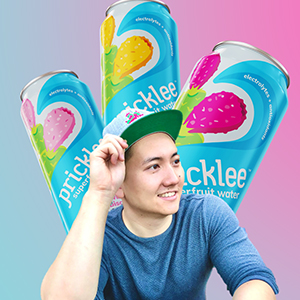
[00:44:48] Ray Latif: From nuts and seeds to nuts and bolts, those of business planning and strategy, as outlined by our next guest, Kun Yang, who is the co-founder and CEO of Prickly. Co-founded by five pharmacists and friends in 2017, Prickly markets beverages made from prickly pear juice and is described as, quote, cactus water. The company promotes the drinks as being high in antioxidants and lower in sugar than coconut water, a comparison that has served the brand well, according to Kwon. In the following interview, which was recorded at Natural Products Expo East 2021, Kwon recalled Prickly's backstory, how his team is leveraging consumer awareness about coconut water to build the brand, the impact of localized social marketing, and what he described as the key to learning the ropes of The Beverage business and adapting quickly. Hey folks, it's Ray Latif with Taste Radio. Back here in Philadelphia, you're gonna hear the honks, sirens, and all kinds of other stuff behind me, but it doesn't matter. The one thing you need to hear is the voice of Kun Yang, who is one of the co-founders of Prickly. Quan, how are you? Doing well, Ray. How about yourself? I'm doing fantastic, doing fantastic. Prickly Cactus Water. That's right. We've got some of your cans right in front of me. It's a sky blue can with? animations of cactus on it. And there's a lot of descriptors about what you guys do and what you're all about. But since we have you here, why don't you tell me what's Prickly all about? Absolutely.
[00:46:18] Project Left: So Prickly is a cactus water inspired by you know, grandma's recipe. Our partner, Mohamed, grew up in Lebanon, and she used to make this for him all the time. It's made out of the fruit of the cactus, which is called the prickly pear. It's one of Mother Nature's most sustainable ingredients that you could ever find because it requires such a low water footprint. It grows off of rainfall. It's harvested sustainably with just the fruit that's born on a seasonal basis. The characteristics of the product are that it has half the sugar, half the calories of coconut water. We do use real prickly pear puree, which generates all the antioxidant and electrolyte benefits of the drink, as well as, of course, the ever-incredible grandma's recipe that inspired it all, which makes our product unique and stand out because it's family in a can.
[00:46:58] Ray Latif: Family in a can, and there's four co-founders who are part of the Prickly family. You described yourselves as the United Nations of beverages. In essence, it's amazing to see the diversity within that cohort.
[00:47:10] Project Left: Yeah, absolutely. I mean, the only difference is, you know, when we were actually a team of healthcare workers, you know, who bonded together because of our passion for health and wellness and entrepreneurship. And the plant-based movement has become a really important part of our ethos. And when you see the growth of plant-based milks, plant-based meats, and now plant-based waters, you can see that there's a huge demand for these types of products. And for us, the hardest part was really dropping our lab coats as healthcare workers and putting on our cactus suits and running around New York City and Boston spreading health, happiness, and hydration. And I think the more and more we went into that, the more we've realized that this is totally our calling, our purpose, and what we love to do every single day. Are you guys still in your full-time jobs or is this your full-time job now? So currently, we are working full-time with our other occupations. Well, we work two full-time jobs, but my partner and I will be going full-time quickly by the end of the next two months. Very cool. That's exciting.
[00:48:00] Ray Latif: Very exciting. Yeah. We've seen other cactus water concepts over the past decade, or at least since I've been working with BevNET, I've seen a bunch come to market. This idea of better coconut water or at least an alternative to coconut water is something that has been communicated in the past as well. But I feel like what you guys are doing in terms of how you describe your brand and the positioning of Prickly has evolved quite a bit. It's not just we're better than coconut water. It's a more nuanced approach. How has that communication evolved?
[00:48:33] Project Left: the most important thing was to give consumers an anchor point to understand cactus water. Coconut water is a really good comparison because of just incredible work that they've built for all the equity around plant-based hydration from 2005 to 2021, right? 16 years of just dominating that market. And I think educating consumers on the value of drinking plant-based hydration. So I think for us to anchor it to coconut water as sort of a new age format, if you will, really gives consumers an answer to a lot of questions such as where can I find this on a shelf? How much does it cost? How do I drink this? When do I drink this? Do I put in a smoothie? Do I put in a mixed cocktail? So that anchor point is really, really important. But the other thing that's even more important to us is the ingredient itself. I mean, this is the fruit of the cactus, which, again, grows in completely arid climates. And when you think about all the things that are happening in today's climate, from droughts to climate change, you start to think about the fact that more and more arid land is going to be required to farm for fuel, energy, sustainable sources of stock, right? For something like Prickly and the ingredients that we use, it's really important for us to think about what are the ways that we can communicate just how incredibly sustainable the cactus is itself and the Prickly pear is from the fruit of the cactus. And then what are some ways that we as a company can take a leadership role in really fostering that community, building up that industry and giving back to those people that are building cactus farming as a sustainable form of farming in the future.
[00:49:57] Ray Latif: Have you found that the brand is more easily understood by ethnic consumers? You mentioned one of your co-founders is Lebanese and his grandmother made a similar type The Beverage for him. I feel like this is something that people who eat prickly pears or have eaten prickly pears on a regular basis would get pretty quickly. That being said, is that where you're leaning at all in terms of your marketing strategy?
[00:50:24] Project Left: So surprisingly not, actually. I think everyone knows what a cactus is. I would argue 99% of the world knows what a cactus is. And I think a lot of times The Beverage consumer may not even want to ask some of those deeper questions. Of course, because we play in the natural specialty channels, you start to wonder, okay, well, what is the cactus water? Oh, it's from the fruit of the cactus. And we want to make sure that we have an answer for those individuals that are seeking for more information. What makes the cactus good for you? What makes prickly pears good for you? But the most important thing is to communicate also to the lay consumer, what is cactus water? And so that anchor to coconut water, where they understand it, whether they like it or not, whether they drink coconut water or not, it gives people an understanding of where we play and why we exist. And then of course, all the nuance and all the incredible work behind the brand to kind of educate consumers beyond that for those that are looking for that information is there as well. So I don't think we're actually an ethnic play. That's not what our demographics have shown to date. I think we're actually quite a mainstream product and I do think that we will have a play in conventional in the future as well. Where are you currently sold? So we are pretty omnichannel. We're obviously sold DTC. We obviously sell on largest online platform, as we all know. And then of course, we are very focused from a retail distribution standpoint to the Northeast. So New York City is a very big place that we're activating right now, primarily in the independents, up and downs and regional chains, where we're doing, you know, obviously our promotional schedule and TPRs, but we're also activating it by plugging in people wearing cactus suits. We call them cactus activation events. at the point of sale to just educate consumers and raise brand awareness. And we're also doing that in Massachusetts and all the way up in New England as well. So for us really focusing our retail footprint where we have boots on the ground where the founders live and where we can really raise brand awareness from a guerrilla marketing perspective in the Northeast. But we completely recognize that there's a hotbed of awareness already and people that will raise their hands for plant-based hydration down in the Southwest, from California to Arizona, Texas, Nevada even. And so we fully expect that our expansion plans will go in that direction.
[00:52:25] Ray Latif: That's the offline marketing play. The online marketing play includes, as would be expected, Instagram. And the button that I see next to Instagram on the box that you brought me is that of TikTok. I think every beverage Brad Avery food brand is like, oh, we need to be on TikTok. We need to be on TikTok. Cool. You need to be on TikTok. But what does your content look like? Is it actually something that people want to watch? Is it entertaining? Does it translate to sales? Does it translate to finding new customers? What is your TikTok strategy? I mean, like, how are you guys working? You're relatively young guys as co-founders. You probably understand the platform a little bit better than other folks.
[00:53:00] Project Left: What's really interesting is our brand actually has the highest conversion rates online from the 18 to 24 market and 35 to 44 market. So we think about it as buyer of households and also the younger generation that are still looking for function, but also more so everyday hydration at that 18 to 24 range. And so TikTok and probably Facebook are probably our highest. maybe not converters. I would say TikTok is still interesting because of attribution. It's still very difficult to kind of track because we aren't running a ton of conversion ads right now. Our goal is to really build brand awareness. So from a TikTok perspective, you know, we're really laying a lot of work and groundwork into the guerrilla marketing that we do. So we're running around the streets of New York, Boston, dressed up in cactuses and just spreading health, happiness, and hydration by giving people a taste of cactus water, just getting reaction videos, comparing it to even coconut water, kind of a la the Coke and Pepsi taste challenge of way back when, right? And one of the best parts about this is we look at social as an extension of our retail, so we're very hyper-localized in what we do. So, TikTok is an amazingly strong platform for hyper-local content, surprisingly, right? Where, you know, we walk down Boston and you look at the engagement that we get and everyone talks about, oh, come to Newton, come to Lowell, come to UMass, come to all these places. Like, I've seen you in Boston, I've seen you here, I've seen you in New York. And so, we're going to lean deeper, actually, into the hyper-localized content that we're having here because the goal is to support our retail strategy with our social. And also just to tell the incredible stories of people that exist, of people that look like us, people that are diverse. And no matter where you come from and who you are, you know, we kind of really, from a personality perspective, approach it where we, you know, try to find interesting people kind of inspired by humans in New York, if you will, on the streets of Boston and New York and just give them samples. So that's been working well for us.
[00:54:45] Ray Latif: One of the other things on the inside of the box that I'm seeing is a call to action to text, quote, nomococo. That's right. Is that working? Are you seeing people texting that line?
[00:54:53] Project Left: Yeah. So our SMS channel is our strongest conversion channel. Interesting. For us. And I think SMS is probably going to be the strongest conversion channel for a lot of DTC brands in the future. You know, so one of the biggest things that we try to think about is like, what are better ways to generate leads going into our SMS? Because the ability to have these unique conversations with consumers is incredible. Not to mention, that's probably where we get most of our data and the best quality data of understanding why our customers came to us in the first place because of just that intimate conversational text messaging platform that you can have versus some of the other communication channels that you have with your consumers. Who's running your SMS communication? So we run internally, our team does it as a we were pretty scrappy as a founding team, we do have, you know, a full time merchandiser now in New York. And we have quite a few vendors that are supporting us from media buying to, you know, design and things of that nature. But our team is still very, very technical and hands on and scrappy. And we actually challenge ourselves to become more and more so technical in every aspect of our business. Because coming from a different industry like healthcare, coming to CPG, you start to realize how logistically challenging and technical of an operation this is, especially given the evolution of CPG being as omni-channel as it has become with DTC, and the reliance of that as a market and channel, especially this past year, and probably into the future as well. So it's really important for us as a founding team to really understand all aspects of that so we can hire better, understand where our blind spots are, and bring in and build a team around us that can take Prickly to the next level.
[00:56:23] Ray Latif: It's important to learn all these things. It's also important to learn all these things pretty quickly. I bet that when you guys started out, there were people who were like, okay, these are four guys who have no experience, who are launching a concept that is relatively challenging to communicate. They've got no shot. You've got to learn the business pretty quickly and you've got to adapt pretty quickly. How have you learned how to set yourself up for success in The Beverage industry?
[00:56:51] Project Left: I think it just comes down to just the incredible wealth of goodwill that exists in this industry. I mean, look at what you guys have done in BevNET. You look at some other communities that exist, such as Startup CPG, and you realize that there is such an amazing pay it forward mentality that exists in this space. And a lot of people that are just willing to help and be involved in projects that have good energy, good people, and good missions behind them. And so we've been very, very fortunate to find a lot of incredible mentors, a lot of just incredible humans, other founders, groups that can support us and provide us that education. And then the last thing of it just comes down to, are you willing to put in the time to really network, foster those relationships, and then actually do the work? And the fortunate thing for us is we were up to the challenge and we still are. And we know that the journey is much larger ahead of us than it is behind us. But getting to the starting line for The Beverage brand is half the battle. And to be where we are today and to see how bright the future is for us tomorrow and sees all the great proof of concept and validation we've seen already, it just gives us a lot of excitement to continue to build this for the masses and just further the plant-based movement and just try to find ways to make mainstream healthier. Again, just really excited about it, and just really excited about how giving this industry is. We wouldn't be here without all the people that we've met and have helped us along the way.
[00:58:05] Ray Latif: That's so amazing to hear. How do you ask for help? How do you network effectively?
[00:58:10] Project Left: Honestly, I think you just do. You just ask, you know? And I would say that we're pretty trigger happy when it comes to reaching out, cold emailing, and just building relationships. Hey, Ken. What's up, buddy? Right on cue.
[00:58:23] Ray Latif: Quan turned his head, and for good reason, because It's the man, the myth, the legend himself, Ken Sadowsky. Ken, how are you? Fine, thanks. Good morning. Good morning. You can't, we were just actually talking about how to network and how to help. And when Ken Sadowsky is in your eyesight and is in your eye line, you turn and you ask for help. Good morning. All right. Well, we'll wrap up our interview and then Quan, Ken, you guys should chat. Uh, that was funny. Yeah.
[00:58:54] Project Left: You know, we are in an Expo East, right?
[00:58:55] Ray Latif: So who knows you're going to run into. Exactly. Uh, you mentioned you're pretty trigger happy about, yeah. How do we network?
[00:59:00] Project Left: Yeah. I think we just go into it understanding that if you have good intentions with the way that you're trying to build your brand and you believe in the mission that you're subscribed to, that good people will find their way to you. And so we just really believe in that positive energy, giving back where we can, even being as small as we are, I think You know, there are a lot of people that have, that are also in positions far less fortunate than we have come to in the last couple of months. And there's ways that we can kind of give back and help those individuals as well. So I think it's just this giving mentality, you know, no matter what size you are, there's always people that need help that can. share in the transfer of knowledge. And we go into all conversations with that mentality, where we're not only getting, but we're trying to give as well. And I think that's really worked really, really well for us. But more so, I think the very important thing to recognize is the infrastructure of support for beverage has never been as big and supportive as it has been now. I mean, more and more organizations, Slack groups, communities are forming by the day. and connection points that allow individuals working in any aspect of the supply chain to connect and foster relationships. So there's just no shortage of individuals. And I think that that really helps us, you know, just think about the fact that there's a lot more to learn than there is that we already know.
[01:00:12] Ray Latif: Absolutely. Well, Quan, we didn't even talk about you guys' appearance on The Today Show, but I would encourage folks to look for that appearance. You can find it online, I'm sure. And when you do, if you want to learn about how to get on The Today Show, reach out to Quan. How do folks get in touch with you?
[01:00:30] Project Left: Yeah, so they can email me directly at kuan, K-U-N, at prickly.com or drop us a note, hello at prickly.com and DM us on Instagram, DM us on TikTok. We're always, we're trying to, you know, be more and more social by the day. So find us there. Outstanding.
[01:00:44] Ray Latif: It's been so awesome speaking with you and it's been so awesome to see how you guys have grown since the first time we've met you. And I'm so, I'm so psyched for the future of Prickly.
[01:00:53] Project Left: Yeah. Thanks so much, Ray. It's such a pleasure to meet you again and see you out here in Expo East.
[01:00:57] Ray Latif: Absolutely. Talk to you soon. Yeah. Take care. That brings us to the end of this episode. Thank you so much for listening, and thanks to our guests, Danielle LiVolsi and Kun Yang. As always, for questions, comments, ideas for future podcasts, please send us an email to askatasteradio.com. On behalf of the entire Taste Radio team, thank you for listening, and we'll talk to you next time.