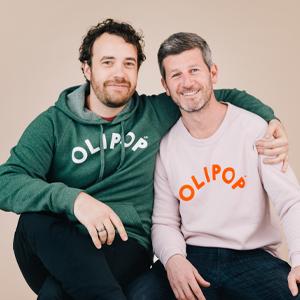
[00:00:10] Ray Latif: Hello, friends. I'm Ray Latif, and you're listening to the number one podcast for anyone building a business in food or beverage, Taste Radio. This special edition of the podcast features highlights from interviews with seven innovators, leaders, and disruptors who joined us on the show during the second half of 2024. Let's kick things off with Ben Goodwin and David Lester, the co-founders of leading better-for-you soda brand, Olipop. In this clip, pulled from an episode published on August 20th, Ben and David talk about why marketing doesn't lean heavily into the product's functionality. They also explain why mission and economic outcome will forever be entwined and why hiring talented leaders at the strategic level is beyond critical. How has your marketing evolved to the point where you're calling yourself a soda, but you're also having to explain to consumers why it's more expensive because of the ingredients inside? You know, that's interesting because I don't know that we have ever actually gone through a crisis where we've felt like we have to explain it to customers. In fact, you know, it's interesting The more I've kind of gone down this road, you know, we'll be in retailer meetings and they're really well-intentioned and I totally understand the place people are coming from. But a lot of the time it's going to get the question or it's kind of taken as this kind of common sense thing like, all right, tell me how you're going to educate the consumer. And you go and see if you can't have... No plan to educate the consumer. But if the foundation of your ability to sell your product is actually tied to educating the consumer, you're actually like you're pushing a rock uphill. I think one of the things that's been very helpful about our product is the fact that As a concept, it's mentally intriguing, and it's a bit sticky, right? It's like, so what is this healthy soda that feels like a contradiction? But once you start to interact with it, it's actually incredibly self-explanatory. Like, oh, the pack design is telling me it's fun. It's telling me that it's healthy, but it's telling me that it's fun first. I drink it. Wow, that really matches that soda experience that I, that, you know, obviously 97% of households in the US interact with. And then, oh, I get it. It's like a healthier version for me. And then obviously, some of our more core customers are going to do a deeper dive and explore the ingredients more or understand, hey, this quantity of fiber actually makes a big difference. But I think a lot of times that exploration, to a certain extent, is self-guided. And a lot of it, I think, comes off the back of a customer that has already been provided value and has, to a certain extent, started to become enamored with your product. Whereas if you went out proactively and started trying to hammer people over the head with your health messaging or relied on, I need to drive education before I've developed an emotional connection or value. then I think you'd actually have a much harder time of it. Additionally, I would say that the other thing that Olipop capitalizes on is the fact that there's a massive underlying demand that consumers have, which is you do have this in the US $42 billion industry. with, and David just referenced it, 150 years of history in the United States. It's extremely deep as a category. And so you have all these customers who love, love, love and grew up with soda, but now have a really conflicted relationship with it. And Olipop really helps to resolve that pain and really provide somebody with that full experience, but they're not trading in their short or long-term health. In fact, they're doing the opposite. They're investing in their health. And so you plop a a pain resolution system like that into a category that has the second highest price in elasticity in beverage behind only coffee, and you actually have an equation that works pretty well.
[00:04:10] Ben Goodwin: There's a huge emotional reservoir in the soda category, and for us, it was important to tap that. Consumer behavior change is very difficult, and so if you're telling people, stop doing this thing that you're familiar with and do this completely new thing, That's hot. And so, you know, for us, we were changing one thing, which is the ingredients, but everything else, you know, that people love about soda, we're keeping the same. And we wanted to celebrate that and meet consumers where they are and, you know, not take away the aspects of the category that people love.
[00:04:44] Ray Latif: So I gotta ask, and I'm sure you get this question all the time. If most people are buying your product because it's fun, because it tastes great, because it makes them feel a certain way, and I don't mean functionally, but just makes them feel a certain way in their daily lives, as a part of their lifestyles, then why is the functional ingredient so important? Why is it so important to keep as a part of the brand? There's a lot of layers to this answer to this question. And I'm sure David and I are both going to have something to say about it. But look, from our perspective, we are a mission driven company. So the mission and the economic outcome of this business will forever be entwined. And the thing that gives us the extra rocket fuel in our daily endeavors and for the team, and I also think with a lot of our customers is the fact that we are looking to make an impact at scale. Now, arguably, there is some intrinsic impact in migrating consumers away from traditional soda by itself, and that's awesome. But the goal of functional soda, and again, we founded the category, so we feel pretty confident in our ability to speak to the goals behind functional soda, is actually to not just be a neutral offering, but to be a contributory offering. it certainly isn't going to negatively impact you to have that. In theory, it's higher risk. You actually have to do the work. You've got to do the research. You have to put adequate amounts of the right ingredients and store it correctly so that it's actually stable and gets to the customers in the way that you have communicated to them. But all that is actually the right thing to do if your goal is to shift human health at scale, which really is the framework behind our brand. You know, our goal is simply to say, has been from the beginning. So you can build an amazing, profitable, rapidly growing firestorm of a business. You can also do it the right way and put your money where your mouth is when you're delivering value to your consumers. And if you marry it correctly, that will actually be rocket fuel to your business, not a burden. And we want to set that standard for the health and wellness industry. So they've got a case study. They realize like not only can we do it too, but actually be advantageous to our business. to do it. And if we don't move to that place, CDC predicts that by 2050, 1.3 billion people globally will have type 2 diabetes, a completely preventable or predominantly preventable lifestyle disease. David, early on in Hollypop debuted in 2018. Is that right?
[00:07:29] Ben Goodwin: That's right. Yeah. I think the back end of 2018 was when we first went into market and 20 stores in Northern California.
[00:07:36] Ray Latif: How about that? And now you're at 35,000. That must be a trip. No, but early on, what was your most impactful hire? And as Ben referenced, I mean, Olipop's been a rocket ship several times over. I mean, I guess just a rocket ship at different speeds, or more specifically, a rocket ship at the same speed, but from place to place. You know, how do you identify the most impactful hires early on and as you are speeding through the galaxy?
[00:08:04] Ben Goodwin: It's very difficult to highlight one individual hire that is critical. I think Maybe a couple of broad statements on that, hiring exceptional talent is probably the most important job in a high growth business like this. So if we can't attract and retain the best people, there's obviously huge parts of business Ben and David are just not touching at this point. And so you need people coming on board that have the technical skills, also absorb the mission. And carry the culture that we want to build here as well and we invest a lot in that the team did incredible job with ben are about to fly off in a couple of weeks to a new high off site that we do in northern california where we invite every cohort of new highs go through this and spend three days in northern california get immersed in in our business and understand the culture and hear from Ben and David am. And also, you know, develop a cohort of people that they join with that can help them, you know, on that journey through the company as well, because it's crazy trying to keep pace with this growth. And it is something that we find, you know, every three, four months, you have to really get your head up and evaluate, you know, are we resourced in the right way? You know, does the team need additional support? So that's been a constant challenge and one that we've had to invest a lot of time in as well.
[00:09:24] Ray Latif: We're in a very interesting space in terms of talent because there's a couple of factors impacting us simultaneously. So one, the growth that our business has had, David just made a really spot on point, which is you know, kind of seasons of change that in a normal growth business might take a year or two years, we run through in a quarter. And that's really exciting, but it's also very disruptive in a lot of ways. So you constantly have to stay on top of that. And that also affects your team and your leadership team, especially. It's one of those things where you're like going up a mountain and all of a sudden, if you're going up the mountain at 10 times the speed, the environment is changing so rapidly. And, you know, I've been really, really impressed with the maturity of a lot of the leaders in our business who have been open to either taking on new areas of growth, because they realize they're a little over their skis, or we've had some folks who've been open to re-leveling as it's been necessary. And it's also a real testament to the, not only the quality of leaders that we have, but the quality of the culture at Olipop, that they've been willing to stick around and kind of shift their role as it's appropriate. I agree with David's point, there hasn't been a singular hire that's necessarily been the most impactful, but what I would say is focusing on your leadership and making sure that you're kind of executive leadership team, your senior leadership team, they're really fleshed out with the right senior people who are strategic at the level that's appropriate for where they're sitting, is beyond critical. Because David's point, we're sitting at north of 150 employees now, and we might have close to 200 by the end of the year, and you are getting to a point where you're going from a place where you can stand in a room and talk to everybody to, I absolutely must have my waterfall, my strategic waterfall throughout my organization, has to really work and you only are going to be able to achieve that by people who have the raw technical skills but also really have the leadership aptitude that's required to contextualize and disperse in a way that's appropriate for levels. Next, we have Poorvia Patodia, the founder and CEO of pioneering chickpea snack brand, Bienna. In a clip pulled from an episode featured on October 22nd, Porvi discusses the trifecta of attributes that make for a great brand, how Bienna incorporates long-term trends into its innovation strategy, and how building to win means learning in small ways.
[00:12:09] David Lester: Over the last five years, and certainly with COVID, obviously COVID was terrible in a lot of ways, but we kind of used it as an opportunity to really kind of reset the stage in terms of what our goals were. And it created a time period where I think as a CEO, I could say, you know what? this business is not about what's gonna happen in the next year or two, or even three years. It's really about what can we do to build just a beautiful brand that is really here for the longterm. And so, when I thought about, and me and our team, when we thought about like, why are we here? What is it that we're looking to build? And when I think about a great brand, there were kind of three attributes that I really focus on. And so like one, it's, building a mission-driven brand that has, as I said before, highly differentiated products and is solving problems for people. The second piece is great margins. And the third piece is really exciting growth opportunities. And those three things to me is a trifecta, right? That's the kind of business and the kind of brand that I want to be working on. And I think is what, what a lot of people want to, you know, strive towards. And so, you know, getting all those three things together in a business that's That's really exciting. And so that's what we've been working towards. And it's really amazing in the last couple of years, you know, we took a lot of actions to make those things happen. And, you know, here we are in 2024, and it's exciting because a lot of those and some risky decisions that we took. you know, have all kind of come together. And so we're here at a time where we're having, you know, our strongest year yet, both in terms of revenues as well as profitability. So both top line and bottom line with strong growth rates. And so it's exciting when you take risks and you do hard things. And, you know, when those things start to come together and you really start seeing the results of that work. One of the things I tell founders when they talk about decisions that they're trying to make about their product lines, or are they positioned well, is I really encourage people to think about what are the long-term trends that you're positioned against, right? I mean, the whole reason BNN is here and why we're still growing and thriving is because of a decision that I made over 10 years ago when I started this brand, which was at the time I didn't have the advantage of Google Trends, but I was really betting on two trends. One was a trend around protein and the second was a trend around chickpeas. And if you look at the Google trends charts for those two trends today, over the long term, those have just gone up and up and up and up almost every single year. And they're at their highest peaks and continuing to go up. you know, one of the unique challenges of consumer products is that you're dealing with physical inventory. And that is what really creates a problem for earlier stage businesses, right? That don't have, maybe their internal processes are just being built, right? And so they don't have the discipline or the history to be able to forecast how much to produce so that you're not underproducing and overproducing and all of those challenges. And so I think that one of the advantages that other industries like the tech space have is that they're not dealing with physical products. And so if you learn that something is not working in the market, you can rapidly just change, you know, your product features or whatever it is you're working on. And so I've created this methodology that we're following at Vienna now, and I call it the build to win methodology. And it's this idea, it takes this idea from the tech industry, which is, let's just, I'm just going to summarize it as sell, design, build, which is you sell first and you confirm that you can sell, and then you design and build. And in our industry, because we're dealing with physical products, it's like, we've got to build first and then see if it sells. So that process and how we have to do things because we're dealing with physical goods is a huge challenge for the smallest and youngest brands. Because inevitably, if you're innovating, you're doing something that isn't known fully in the market. And no matter how much you try to take your best guess at what you think is gonna work, you just don't know till you know. You have to kind of put something in the market to know if this is gonna work or not. And then now you've already invested all this money into inventory and suddenly you learn this flavor is not working or this claim you thought was gonna be amazing is actually not as powerful as you thought or this naming or whatever it might be. And so, The idea behind this methodology that I created is the build to win methodology is take that idea that comes from the tech space, which is cell design and build and implement it within CPG. How do you do that? And there's kind of, you know, there's four or five pillars underlying that methodology. So, but it's really about testing and learning in small ways in the market before you make big commitments to do a launch. So that involves creating something, testing it with consumers, putting it into both retail and online, and really getting that omni-channel feedback on whether something is really going to work and getting the velocities you want, and doing all of that before you make any large commitments around launches.
[00:18:04] Ray Latif: Let's keep it going with Charles Coristine, the CEO of fast-growing, better-for-you snack brand, Lesser Evil. In this clip from our episode published on July 30th, Charles discusses the value of self-manufacturing for end consumers, why he advocates founders being super scrappy and not overhiring, and his belief that being an entrepreneur is a hero's journey.
[00:18:31] Poorvia Patodia: The whole thing, the whole beautiful thing about having your own manufacturing facility and really being zoned in on operational efficiency is like, I think that we can produce amazing snacks at a value that a lot of other people can't because we don't have a co-packer in the middle, right? So we basically take all the savings that we have. Obviously we make margin because we need to stay in the business, but we pass on all those savings to our consumers. And I think doing that proves that we can sell organic, better-for-you oil, packaging that's basically enhanced, better salts. We think our products are better in a lot of different ways than our competitors. And we sell it, in most cases, cheaper now than most of our competitors, especially since COVID.
[00:19:15] Ray Latif: I spoke with Matt Weiss from Ryan Snacks at Expo West. He's a big fan of yours. And I mean, he and Ryan Snacks just bought a manufacturing facility.
[00:19:25] Poorvia Patodia: Yeah, I think they're doing the right thing. I talked to him before he did it. You know, I said owning your own destiny is an amazing thing. And, you know, you're going to be able to basically innovate really quickly, come up with what we call rolling thunder, which is different products for different customers. You get your customers supercharged. You have all your own employees. You start figuring stuff out together. And all of a sudden, you're adding a lot of value to your supply chain. and you can be a lot more efficient. So I think that that is, it's a really good move for them.
[00:19:54] Ray Latif: So for entrepreneurs listening right now and saying, okay, I'm at year one or two, and I'm thinking about opening up a manufacturing facility. I mean, would you recommend they do it or is it more, you need to be like where Matt is?
[00:20:06] Poorvia Patodia: You gotta be super scrappy and you've gotta be able to go out and try to figure out where you can buy used equipment. And you gotta find like some garage or, you know, I think our first production facility was like a, a mechanical operation or something. It was like, you know, there was two sides. It was like, we took 5,000 or 4,500 and there was 5,000 on the other side that was some other facility. And we put our first line in and it wasn't all that efficient. We had a shitty hasten bagger, sorry for the language. That's fine. It wasn't all that efficient, but we figured it out. And as we made, you know, we priced things fairly. We didn't have a ton of overhead. We didn't hire, people overhire consistently in this business for whatever reason. We had low overhead and whatever money we made, we'd go and buy another piece of equipment. And we just kept buying junky equipment and figuring out how to do it. And it worked, you know, I don't think it's all that complicated because I'm definitely not super intelligent.
[00:20:58] Ray Latif: So the answer is yes, but be super scrappy about it.
[00:21:00] Poorvia Patodia: Be super scrappy about it, yeah.
[00:21:02] Ray Latif: Gopin, going back to people who were higher in this industry, can you elaborate on that?
[00:21:06] Poorvia Patodia: Yeah. I've gotten kind of granular on this. Like I basically looked at our company in terms of, okay, what is our gross revenue per employee? And I looked at like, what do most large CPG companies look? And the best CPG companies are like four or $500,000 per employee that they generate in revenue. So if you're a company that's got three, four or $5 million in revenue, you should not have a staff of 20 or 30 people. That means your fixed costs are way too high. You know, if you're at 4 million cells, you should probably be 8, 10 people most.
[00:21:41] Ray Latif: I gotta ask about, you know, your personal goals here. Like you took a company that was in, I think, what did you call it? I'm going to quote you from our last episode here. You said retail buyers regarded Lesser Evil as a dog with fleas. It's no longer that for sure. But do you have a personal outlook in terms of like where you want to be and where you want to build this company, how you want to build this company for the future? I guess what I'm asking is, is there a end game that you see that you have in mind?
[00:22:12] Poorvia Patodia: Yeah, I want Lesser Evil to exist for the long term, for sure. I want, and it's not just about my legacy, because I think that's somewhat ego driven, but I, when I kind of sit back at the end of the day, and hopefully I'm on a beach somewhere, I want it to be like this healthy brand that's gone mainstream. And that is kind of like a Lay's or, you know, Doritos or something like that, that, you know, there's some attachment to those products that I created. But other than that, I just, no, no, I don't have any huge plans. Because it feels like the business is you, like you in the business. No, it's not. No, it's not.
[00:22:45] Ray Latif: Well, no, I mean, the business is you in that you live the business every day of your life. Yeah. Almost every minute of your life. Not that the business. He's Charles Coristine.
[00:22:54] Poorvia Patodia: Being an entrepreneur is like, you know, setting off on a hero's journey. It's like, you know, the movie Star Wars? Sure. You know, it's an internal struggle and it's an amazing opportunity to recreate yourself. So this whole journey with Lesser Evil has been like this personal journey that I've gotten to kind of go through all these ups and downs and these turmoils and, you know, redemption. And, you know, it's been an incredible thing. And the best part is I've gotten to do it with so many amazing people that I love. I'd like to write a book on this kind of stuff, because you can't make it up.
[00:23:25] Ray Latif: Well, maybe we'll title this podcast, The Redemption of Charles Coristine. Basically, yeah. Next, we have Peter Rahal, the co-founder of groundbreaking protein bar brands RX Ben and David. In the following clip, pulled from an episode published on October 15th, Peter talks about his obsessive work ethic and leadership style, how to create, quote, the best business strategy, and what he means when he says that happiness is irrelevant. A good leader's got to flex between micromanagement and macromanagement, right? You can't stay too much at the macro, and you can't stay too much at the micro. You got to really understand when to go back and forth between those two things. When is the problem too small, though? I mean, how do you know? You know based on how impactful it is. I think, in general, there's like 100 ways to do something. So you have to have a good sense of how important it actually is. So anything with product, with people, with brand, service, customers, like if there's a serious problem, that's worthy of micromanagement. But yeah, I think as leaders, you gotta use good judgment. And it doesn't mean you're like a bully coming in and sort of pushing, but it's just making sure that the right things get the appropriate attention. I like business fundamentals and I think one of our strategies and my personal strategy is like a satisfied customer is the best business strategy. I'm going to write that down. It's so good because it's true. It's like if you just turns out if you just make customers happy, even ones that are upset with you. It all works out. And a lot of entrepreneurs make a huge mistake of just looking at customer service and call it consumer service as like an expensive burden or line item that's inefficient. I think they're making a grave mistake. And it might seem daunting, but you want to scale the unscalable, as some say. And you can tell a lot of consumer brands have shitty customer service because when we respond, they're sort of shocked. It's actually an uncompetitive market when you think about like, in America, people's customer service experience with other brands. I don't think it's that good. It's offshored or no management, bad bots trained on bad SOPs. So back to the fundamental thing, it's like you want to set it set as my customers the best business strategy. And then we are in the consumer goods business. So like, two things you better do right is like, serve the consumer and make great goods for them. You know, I think about your journey, Peter, and, you know, as I'm doing my research and doing some background work, I keep thinking of a name and that name is Mike Rapoli. I'm pretty sure you're familiar with Mike. Mike Rapoli is the co-founder of Vitamin Water, the co-founder of Body Armor. He's a pretty well-known figure in the beverage industry, one of the most successful beverage entrepreneurs of all time. And I sat down with him a while back and I think I asked him when he was getting into body armor, you know, why are you doing this again? Because you had already made quite a bit of money with vitamin water. You're quite successful. You're bought and sold pirate's booty. You got horses. You know, you're set. Don't worry about this. Like, why are you getting back to this crazy business? And I think what he tried to articulate and what he did articulate is that the excitement, the goal of being the best at something was driving him. And he was obsessed with this idea of knocking Gatorade off its perch with body armor, creating a sports drink brand that wouldn't settle for bronze, as he said, that was going for gold, nothing less. And I see a lot of the same Rapoleon kind of attributes of David in that you have said, you know, our goal is to become the number one protein bar in America. That's a very lofty and ambitious goal. and one that might make you pull every strand of hair out of your head. But true or false? I mean, you've got to have number one as your target if you want to be successful. True. Yeah, for sure. It's competitive. You got to want to win. So yeah, true. Of late, I've heard a lot of investors talk about the idea of building a 20, 30, $50 million brand and it being something that is achievable and something that should be targeted versus trying to be the category leader or be distributed in all 50 states. I mean, why is it so important to be the best? If David isn't four times the size of our export, it's a failure, my view. It's about winning. It's about moving things forward, making customers happy, bringing innovation to the market. Winning is fun. Why else would you do it? Do things for second place. Winning is fun, and I love winning. I love the competition, and a lot of people might say, well, entrepreneurship isn't about the end result, it's about the journey, but the end result is what you're chasing, right? But does it make you happy?
[00:28:35] Ben Goodwin: Winning?
[00:28:35] Ray Latif: Yeah, winning makes me happy, for sure. Okay. I'll ask this question, again, I think I might know the answer, but true or false, entrepreneurship is about finding happiness? No. Just false, okay.
[00:28:50] Ben Goodwin: False, yeah.
[00:28:51] Ray Latif: I think this is irrelevant. Happiness is irrelevant. Okay. You're the second person I've spoken with this year who has said something similar to that, or at least has the same kind of mindset when it comes to happiness. It was Jay Shetty, who is the well-known self-help expert and the co-founder of a sparkling tea brand called Juni, J-U-N-I. And he said, happiness is overrated. Now you can listen to the interview to hear him expound on that, but it sounds like you're of a similar mindset. I, yeah, it's irrelevant for entrepreneurship. I don't really care about it. But don't you want to be happy when you're doing what you're doing?
[00:29:32] Ben Goodwin: I would, I would say it should be fun. I think you should have a sense of humor at work.
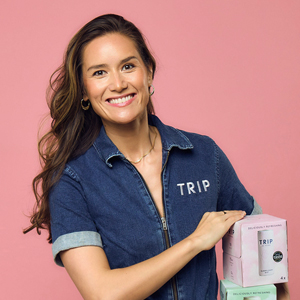
[00:29:37] Ray Latif: Like it should be fun, but the, through the journey, I think happiness is relevant, like serving and winning and achieving goals. I guess, yeah, that outcome could make you happy, but it could also make you, I don't know. I just don't think of it as an emotion that I apply to entrepreneurship. It's actually quite the opposite. Your expectation should be it's misery. Oh, dear. Well, it's like a better expectation because it's hard. There's failure. There's stress. There's rejection. There's tough conversations. It's emotional. There's trade-offs, like intellectually stressful or demanding. If you want to be happy, there's other things you can do to make you happy. We continue with Olivia Ferdi, the co-founder of calming beverage platform Trip. In this clip, Boltzmann episode aired on November 5th, Olivia explains why she never did a market analysis prior to launching Trip and why being obsessed with the details from the outset gave the brand a foundation for rapid success and scale.
[00:30:46] Charles Coristine: There was never, and it mortifies me to actually say this, but it sort of comes up in reflection conversations like this. There was never a sit-down business plan. We never marked the market. We went to stores and tried drinks in the UK because it was 2019, we couldn't travel as much. But it was to sort of check what sweetness and flavors were out there in a more kind of reflective perspective. But there was never a review of the white space. I don't know if this has come across as we've got to know each other as people as well. There's never been a competitive, we want to do X but better. It's never been about that. I think you can build a lot of brilliant businesses by being either the second mover or doing something better than the market standard. But it was actually purely forward focused on how we felt we could help people, how we felt we could innovate and bring these ingredients together, never kind of looking at gaps in the market and things like that. It was as simple as a conversation of, can you think of anyone that wouldn't benefit from something delicious and affordable that could help them feel better in themselves every day? Can't think of a single person that wouldn't agree with that, even though Stress is a word that's maybe a bit more of our generation and our parents might not talk about stress in the same way that we do, but I think we'll probably both agree our parents are stressed. Sure. They don't sleep great. They might not talk about it with the same kind of vocabulary. But for us, it was really about helping people and helping everyone.
[00:32:16] Ray Latif: One of the things she admired most about Trip is how meticulous you were and have been about the package design, the liquid, the communication, everything's been buttoned up. Again, that's really hard to do at the outset when you're not necessarily sure how someone's going to see the brand or interact with it. But what were those elements that you wanted to communicate from the get-go and why has it worked?
[00:32:46] Charles Coristine: It's something we feel very passionately about. I think you'll probably tell from getting to know us how much we care about all these details. And again, it comes back to that customer-centric experience, having navigated it ourselves, thinking we're looking for something healthy, natural that can help us. Why is it so hard to understand? Why is it so hard to find? We were that original consumer ultimately. It's expanded and we're learning more and more about the breadth of our potential customers and it is something I want to be for everybody. Understanding that was such an important guiding element to us, but we are completely obsessed. The product is front and center for a couple of reasons. on reflection didn't know this at the time not coming from beverage but on reflection you know in beverage the product has to sing it has to do the whole storytelling you can't be where your product is all the time quite often you don't even know where your product ends up got a photo through last night from someone in phoenix airport sending me pictures of trip i was like i didn't even to be honest i didn't know we were there which is so cool because i love that about beverage you actually often Obviously, you pitch and have a strategy, but it could end up anywhere. And ultimately, if that beverage is on a shelf somewhere, it's got to tell a story in a matter of milliseconds, and you can't be there to tell the story. That is playing off all of the senses, sight, initially, feel, obviously, smell, taste. And for us, the product was and is always the hero that you'll see in all our brand and marketing. The rest of the marketing has actually been done by this incredible feedback loop of community who take photos of the product, post about it, advocate for it, recommend it. It's very powerful and very authentic and it moves the needle. It has grown the business from strength to strength. Ultimately, that product, as you mentioned, for those that may have known about CBD in the early days, because CBD was one of the ingredients in our products, We couldn't advertise this on Google and we couldn't put it on Amazon and we couldn't advertise through Meta. And that meant that we knew that we had to get awareness and people trying the product without those typical traditional channels that if you were an FMCG, I'd actually recommend you just launch the product, not obsess over the branding, get it out there, get some product market fit feedback, get some customer insight, whack it on some of these platforms and start generating insight. We couldn't go down that journey. So actually, we knew the product had to do a really big job. Not only did it have to communicate things that you might not have understood from typical advertising platforms, we also had to combat misconceptions, misconceptions and stigma around what traditionally The hemp industry here has been crowded with brands with big brown leaves or green leaves and, you know, monkeys and snakes and dragons and all sorts of things which don't really translate some of the benefits, in my view, visually of this product. So for us, it was about choosing color theory is all about how colors can make you feel. And these pastel colors are so recognizable across the globe. And people feel something when they look at a pastel color. It's actually incredibly disruptive in its calming, recessive visual. Marketeers, I mean, we're joking, we were looking at the pictures of the sketches I did of the brand before we launched. And typically, you know, you iterate, you optimize. And obviously, we will do that. We are doing that. But you have experienced marketeers who have told me for years, they'll look at the front of this product and say, There's not much on there. You're not being super clear about traditional brand, USP, anything like that, but it was all for a reason. It was all to tell you from a two meter distance, this is a better for you calming proposition. Excite you and interest you enough to draw you to the shelf where you pick it up, you feel it, you turn it around, you can read all that packaging pretty quickly. If you buy at Crack It Open, you're immediately hit by that fresh botanical smell. We are so proud of these formulations. They are like nothing you've ever had. The fullness of the experience, the flavor, so many feel, you know, a nod to some of your favorite flavors, whether that's peach or raspberry or something you're familiar with, but with that unexpected twist, that depth that makes it feel adult and premium and sessionable. So alongside that aroma which hits you as you drink it, that kind of layered experience I think really makes this stand out. But that was so important to everything we were building. I guess product obsession, in the absence of just being able to put lots of awareness spend on paid media, it was all about the product so that whoever we sent it to, wherever it ended up, someone might try it and want to learn more.
[00:37:32] Ray Latif: Finally, we hear from Justin Rosenberg, the founder and CEO of HoneyGrow, the innovative and rapidly growing fast-casual restaurant chain. In the following clip, Boltzmann episode published on December 3rd, Justin talks about HoneyGrow's focus on using great ingredients, the common denominator among its leadership team, and how consumer feedback influences menu decisions and new product development.
[00:37:59] Peter Rahal: Our noodles when we first opened weren't good. They were like, like typical little main noodles with all due respect. Like it just wasn't a good product. So we were open for about a month and I'm like, we're running out of time. I gotta figure this out. Again, people are smart. They're going to know, like I'm paying X bucks for this. I want a good quality product. I can go there and pay two bucks less.
[00:38:16] Ray Latif: Can I ask you a quick question? When you define good, how do you define good? Is it good enough for the average consumer, but not good enough for Honeygro kind of thing?
[00:38:24] Peter Rahal: Maybe the word should be great. I want it to be great for everybody. I want like, I want people to walk away and be like, that was, that was awesome. Like the great, and it wasn't great. It was like, it was, it was good. It was okay. So I went to New York, hopped on a train, July, 2012, we opened June, 2012. And I went to all my favorite ramen spots, Ippudo, Momofuku, Toto ramen, some other spots. And nobody wanted to tell me what to get their noodles from. They're like, we're not telling this kid anything. And I went back to one of them and there's a new server, probably a few weeks later. And she's like, oh, let me find out. And she came back, she's like, chef doesn't want me telling you, but it's from these guys. And I'm like, oh, cool. So I called them on the train back to Philly. It's like, yeah, come on in. And literally within three weeks, we worked out a deal and we were able to have these really great freshly made noodles that takes about a minute and change to cook. So we're cooking noodles freshly made to order. Like, it's not like they're just sitting in a pan. We have a freshly made whole wheat noodle now, which is really cool. Had that for a while. But again, like I wanted this concept to have a bit of a moat around it and differentiate itself. And again, like You think about salad concepts, there's just so many, right? You have like sweet green, just salad. And I think those two do great jobs. And you have others out there that, you know, what's really differentiating all of that. And same thing with Mediterranean. I think Cabo does an amazing job, but there's a lot of Mediterranean concepts. You know, one of the cool things about Honeygro is that we haven't really seen anyone specifically replicate what we do. We call them phony grows. They open up doing kiosks, stir fries, and salads. And eventually you see them fail because a lot goes into what we do. It's more than just the cooking. It's a lot to make a successful operation.
[00:40:01] Ray Latif: Are the people around you and the people that have been around you, are they a reflection of your own personality?
[00:40:05] Peter Rahal: Maybe. I think my team is very different. It's pretty cool. Our, uh, our COO came from five below. He was head of their development and just rolled out five blows around the country. And before that EB games. He's very different than me in many different ways. I'm different than him. I think, you know, we fill each other's gaps in a very nice way. We have other folks in the team that I think the common denominator is there's a grittiness and a toughness to this group because they've been through a lot. Very honest with each other, like, Hey, like, this is not a good idea. They're very quick to call me out if I don't have a good idea, which is great. Like you don't want to be the guy who's just like. You know, they're just kissing your ass. Like, they're like, Hey, like Justin, like that's cool, but here's why this probably won't work. And we'll go through it. And if they're right, great. Like, I'm not trying to be right. I want to find the right solution for the company. And that's the overall mentality of our group always. So we have like an offsite, I say offsite, it's literally like in our building tomorrow. And it's like, all right, well, what do we need to do to get to our goals for next year? And we just challenge each other with it. I'm a firm believer and you don't need a lot of people like Warren Buffett. Like you don't have a lot of people on the team per se, but you have quality folks you can take care of. And I'm proud to say that's what we do. Like I just find good people and keep them happy, push them, be there for them, support them, but challenge them. It's all a balance that leadership at the end of the day and cool, you know, great results will happen. Yeah. When you, and I'm going to steal a line from our COO, it's a great one. It's, uh, trust comes with time and wins, right? He says that all the time and it's true. We've been through a lot with each other and we now trust each other because we've been through a lot of time together, the good and the bad and the wins, like turning a company around the pandemic, everything in between restarting the growth engine. That's a lot of stuff, right? And everything in between. So, you know, now we're at a phase where we're beginning to really grow, right? We're, we're going to do, you know, we'll be at call it 70 to 75 units by the next year. Okay. Well, you're gonna have to find more people, right? So we're beginning to really hire more folks and there's that. Possibility a strong possibility where the wrong people will get on the bus and you need to be able to identify it quickly and get it right because I know it's cliche, but You're only as good as your weakest member of the team. So you got to just be careful with that as you scale
[00:42:20] Ray Latif: I would think that, and it could be different at Honeygrove, that buffalo chicken is probably not the healthiest option for people to eat, but people still love the taste of it. They're familiar with it. They know what they're going to get, or at least they know what they think they're going to get. But sometimes listening to the customer can take you in a place that you didn't originally intend to be. How much do consumer trends or customer feedback, how much does that impact menu developments? You know, new, I don't know, ambiance for lack of a better word at your restaurants. How much do you think about their perspective when you are introducing something new to the restaurants?
[00:42:59] Peter Rahal: So I look at all of our reviews on Google and Yelp every morning. It's one of the worst ways to start your day, right? So I look at our daily sales report and we have like this website or whatever we're using, it aggregates all the reviews. I look at it and thankfully most of them are very positive. But even one bad one is going to make you like upset, right? So we look at that and if you see a trend in something, both good and bad, we're like, Hey, let's lean into it or let's fix it. On the good side, we have a garlic butter chicken dish that was an LTO. The numbers were astronomically great. So we put it on the menu full time. We test things like crazy. We tested a gelato at one of our two or three locations and it didn't work. So, okay, cool. We now know the customer spoke and even though some people requested it, the brownie was a good example of something that I thought was ridiculous and I was totally wrong and happy I was wrong. There are a lot of stuff that come in and you always want to make sure that you can provide those great experiences, but you don't want to deviate too far away from who you are as a brand. There are suggestions like, Hey, like, you know, I've heard people come to me and ask for like, Oh, you guys should be doing wraps. Like we could do wraps, but we don't have to do wraps. Right. We do 60% dinner business, so we have a good product. We're not everything for everyone. So I think kind of like Apple again, like when jobs came back, there must've been all these different versions of printers, right? He's like, let's stop doing this. Let's focus on personal computing and three other things. And that's what we do. We really focus on stir fry salads, honey bars, who is their triangle of honey grow. If there's something to make it better, great. If there's something that is the suggestion on it, we'll definitely test it or talk about it, but you gotta be careful with that. You don't want to dilute who you are.
[00:44:37] Ray Latif: That brings us to the end of this episode of Taste Radio. Thank you so much for listening. Taste Radio is a production of BevNET.com, Incorporated. Our audio engineer for Taste Radio is Joe Cracci. Our technical director is Joshua Pratt, and our video editor is Ryan Galang. Our social marketing manager is Amanda Smerlinski, and our designer is Amanda Huang. Just a reminder, if you like what you hear on Taste Radio, please share the podcast with friends and colleagues. And of course, we would love it if you could review us on the Apple Podcasts app or your listening platform of choice. Check us out on Instagram. Our handle is bevnettasteradio. As always, for questions, comments, ideas for future podcasts, please send us an email to ask at Taste Radio.com. On behalf of the entire Taste Radio team, thank you for listening. And we'll talk to you next time.
[00:45:27] Poorvia Patodia: you