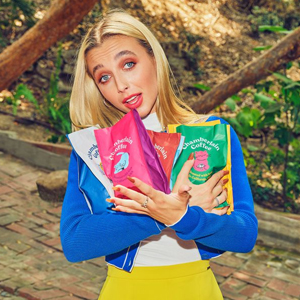
[00:00:10] Ray Latif: Hello, friends. I'm Ray Latif, and you're listening to the number one podcast for anyone building a business in food or beverage, Taste Radio. This is a special edition of the podcast, which highlights interviews with six founders, creators, and innovators who joined us on the show during the first half of 2024. Let's kick things off with Gen Z icon Emma Chamberlain Coffee founder, Emma Chamberlain. In this clip, pulled from an episode published on May 7th, Emma spoke about why the brand's identity is anchored by love and modernity, and how collaborations with other brands are determined by a set of filters. A lot of people love Emma Chamberlain. You know, they're just passionate about you and what you do, but getting them passionate about coffee, getting them passionate about a can of coffee, I feel like it's a different thing. Is it?
[00:01:08] Emma Chamberlain: It is. I mean, I think, you know, it's completely different because people's taste buds are far more, I mean, it's more polarizing. Like you either really like something or you don't. Whereas someone's personality, it's a completely different experience. And so I think, you know, that's why we're so excited about diversifying what we offer and in all categories, right? Like we don't just do coffee. We also do matcha. Um, you know, we have, a sweet canned offering we have, a lower sugar canned offering. We're trying to diversify what we have so that we can appeal to a broader audience in the way that I think a personality can appeal to a broader audience in a way.
[00:01:48] Ray Latif: But I hear in the beverage industry all the time, you don't want to be all things to all people. Totally. So how do you be the one thing, but the one thing that people love you for?
[00:01:59] Emma Chamberlain: I mean, I think even though we are diversifying what we have and we sort of so that people feel like they can find themselves in the brand, we also still have a very I would say solid and specific brand identity in the sense that, you know, we aren't necessarily doing everything. Like we're vegan, we're plant-based. So the product is appealing to that audience, right? And that's not appealing to everybody, but it's appealing to a lot of people. So it's enough people, right? We're leaning very... I don't want to say Gen Z, but modern coffee drinking in a way, leaning towards iced beverages for the most part, various ways to make cold brew. We have lots of products that allow for cold brew making at home. And we're not everything to everyone, but I think we're trying to cater to the modern way of consuming, not even just coffee, but caffeinated beverages, I think, that you would get from a cafe.
[00:02:56] Ray Latif: I think about Starbucks, and not to bring up Starbucks, but they're the elephant in the room. Oh, of course, of course. And I almost wonder, if Starbucks had approached you and said, hey Emma, we want you to be the face of a new line of beverages, that might have been an easier sell than saying, hey, Starbucks consumer, come buy a can Emma Chamberlain Coffee. But when you are thinking about a Starbucks, because again, whether you like it or not, you're competing with them, how do you talk to their consumers and say, try us?
[00:03:25] Emma Chamberlain: I mean, number one, I think for me, I've never been a huge Starbucks fan, right? Like, it's like, they didn't necessarily cater to me. I think there's been, you know, it's a very, that's a different consumer in some ways. No, not necessarily, because it is very broad. But I think what we offer is something that has maybe a bit more of a personality in the sense that it also feels, I think Chamberlain Coffee feels It feels more boutique-y in a way. It feels more... I mean, and that's just because I think naturally we're a smaller brand, but also because our packaging and the personality of the brand is very distinct and it's very playful and it's very fun. I feel like there's something about that that You know, it adds another dimension to the experience that you maybe don't get from a Starbucks, just because Starbucks is so, it's so massive that it almost, you don't get that sort of warm and fuzzy feeling maybe with it anymore. And I bet there are some people who do, but I think that our branding and And just the, you know, the way that we present ourselves as a brand is much more of like, we want to be your happy coffee family in a way. And we want you to find a character that you resonate with. And we want you to feel a part of this brand. Whereas I feel like with Starbucks, it's just such a big thing now that it's like, you can't, it's very hard to connect with it, I think.
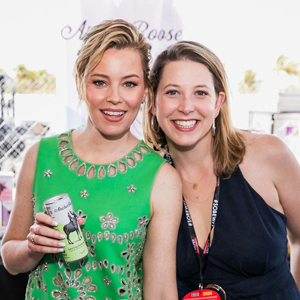
[00:04:56] Ray Latif: Next up, we have Elizabeth Banks and Marian Leitner, the co-owners of fast-growing canned wine brand Archer Roose. In a clip pulled from an episode featured on April 30th, Elizabeth and Marian spoke about how they incorporate a sense of adventure, breaking rules, and relatable humor into Archer Roose' marketing strategy, and why entering Target meant being able to swing at a pitch that they could hit.
[00:05:24] Emma Chamberlain: we knew that we wanted to build something where we were really brand first. And rather than kind of romanticize and have images of bucolic vineyards, we instead really focus on our values. So quality, because honestly, it doesn't matter if the format's convenient, if there isn't a replacement pour. We wanted it to be transparent so that you had all the ingredients listed on the back, there was no unnecessary additives, that you also had the story of the people, place, and practices behind the wine. But fundamentally, we also just wanted to talk to consumers differently. And we wanted to build a craft wine brand. And that's really where Elizabeth Banks kind of always sat in the back of like, as we were building this brand, we wanted to create an icon, an image that was memorable, because how many of us have had a bottle of wine, said that we loved it, and then never find it again, because you can't remember what it's called, right? And this way, we wanted to have an image that you would always remember and would stick in your brain, and that we could then translate into a whole philosophy of how we talk about consumers. So be a little whimsical, be funny. And frankly, there's only one person that combines like the sophistication and that whimsy with also an unimpeachable sense of humor. That's Elizabeth Banks. And so I always knew like, this is it. Now, how do I make this happen? And what I was so thrilled about was, you know, that you wanted to come on board and take this journey with us. There was a real confluence of things that happened, to be honest, on my side of it as well. I was actively looking for things that I could invest in, get behind, stand with, and not just as the face. That was also what I loved about this opportunity was I really felt like Marion was inviting me in as a partner, as someone who had, like I say, a seat at the table, if you will. you know, and who understood that, like, I've been building brands, whether it's the Pitch Perfect movies or Cocaine Bear, you know, every time we put together a movie or a TV show, like, we have to then figure out, like, who's the audience? How do we get it to them? What's the distribution? You know, there actually were some really interesting crossovers here. And I did want to sort of expand myself. I've been building a relationship and a trust with an audience for 20 plus years. And I did feel like, what else could I do? I mean, I just never want to be put into boxes. I never want to feel like anybody knows what I'm going to do next. It's that sense of adventure and of breaking rules, right? Well, another confluence of just things, this is so random, but my college thesis project was this Eric Overmeyer play called On the Verge, which is about three intrepid female explorers in Victorian times who like go try and find a Yeti and like, you know, and so when Marion was talking to me about Archer Roose and who she was and this character that, you know, is at the heart of the adventure seeking wine lover. But I was like, I wrote an entire thesis about women like this. Yeah, it was literally one of these things that was like, this is meant to be.
[00:08:45] Taste Radio: Vibrant Ingredients is the natural ingredient partner powering food and beverage innovation, delivering flavor, function, and protection through a science-backed portfolio. Vibrant delivers purpose-driven solutions that help brands create extraordinary experiences. Discover what's possible with Vibrant today. Visit VibrantIngredients.com
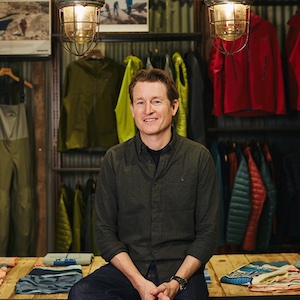
[00:09:12] Ray Latif: Let's keep it going with Ryan Gellert, the CEO of pioneering outdoor apparel and gear company Patagonia. In this clip from our episode published on March 26, Ryan discussed how leaders of early-stage and emerging brands can actively incorporate sustainability and environmental responsibility into their business strategies. Ryan, you took over as CEO of Patagonia about three and a half years ago, and it was in the throes of the global pandemic, September 2020, if I'm not mistaken. That's right. Yeah. Since that time, you hear a lot of praise for the direction of the company and where the company is going. What has inspired you as a leader? And what have been your biggest challenges in, I guess, riding the ship? Not that the ship needed a lot of riding, but you have it in a direction that seems very clear and intentional.
[00:10:05] Chamberlain Coffee: I think it's been an incredibly dynamic period for all of us as humans the last three and a half years with COVID, with social unrest, with racial reckoning in this country and the Western world and beyond. And then the economy has been up, down and sideways. The only thing you know for sure in that space is that wherever it is today is probably not where it's going to be tomorrow. So it's just been a really, really dynamic time. The thing that's inspired me the most is the people that I'm surrounded by and have the opportunity to work for and work with, and that's the founders, the Chouinard family, and that's all of our employees. And it certainly includes our customers as well. Through all of that, what we have felt is there's this community of people who care deeply about the health of the planet and the communities that depend upon it. Our restructure in September of about 18 months ago, and the work that we've been trying to do to live within our purpose statement, we're in business to save our home planet, I think has been a consistent grounding and source of inspiration.
[00:11:08] Ray Latif: In our world, you know, with the economy that we're in, inflation being out of control, and leaders that we have in the food industry saying it's okay to eat cereal for dinner drives me crazy. And I got to think about the emphasis or if there is an emphasis on affordability and accessibility of your products and how price affects your focus and mission as a company?
[00:11:32] Chamberlain Coffee: Yeah, let me answer that first through the lens of our apparel and equipment business, then we can talk about it in food as well. You know, we have long believed that our responsibility in the apparel sector is to make the highest quality product, to encourage our customers not to buy things they don't need, and then to partner with our customers in keeping their product in use as long as possible. We operate the largest apparel repair facility in North America. We replicate that in all the markets globally that we work in. We buy product back when it's still usable, but people are done using it, and we take responsibility for all of our product at the end of life. And so that's just a handful of the cost that we bear in bringing our product to market and extending its life. And we believe in charging the real cost, the true cost for the apparel that we make. We bring a really similar point of view to food. And at the same time, I think the thing that we wrestle with is, how do we change the food sector, how do we make food products that meet all the three criteria that Paul spoke to, and at the same time, create a food business that's not just feeding the 1%. So that's the big idea, and we're still very much in the early days of figuring out how to do that, how to scale the different food solutions that we're bringing to market.
[00:12:53] Ray Latif: You know, we're here at Expo West. I don't think there's a single founder here that would say that sustainability and environmental responsibility isn't important. But how can leaders, particularly those that are operating early stage brands, actively incorporate them into their business strategies?
[00:13:06] Chamberlain Coffee: I think it's a couple of things. One is, you know, we've talked a lot about the Regenerative Organic Alliance. I think that standard, it's one we co-founded with Dr. Broaders and the Rodale Institute. is one we feel very strongly about. So I think if that applies in the business that you're in, I would strongly encourage you to look at becoming a member of that standard. I think as well, it's just really understanding your supply chain and understanding where the levers are, where the impacts are, and where the solutions are that you can apply and scale as we try to change this food sector.
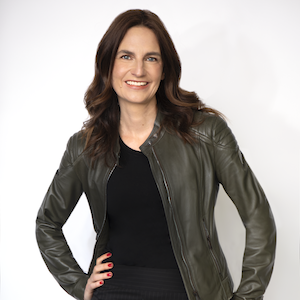
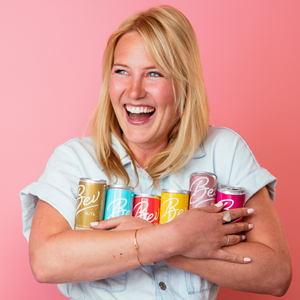
[00:13:43] Ray Latif: Next, we have Alix Peabody, the founder of Bev, a stylish brand of canned wines that was acquired by E&J Gallo in June of 2023. In this clip, pulled from an episode published on January 9th, Alix spoke about how taking a brief respite to focus on her mental health impacted perceptions of her as a leader and Bev's ability to land new investment and a potential return to entrepreneurship.
[00:14:12] Emma Chamberlain: I struggled with with a lot of mental health stuff just all the insert stuff here throughout the entrepreneurial journey at different points for different reasons, you know, I think some of it was the stress and. And the pressure, the pressure I was, you know, putting on myself for sure. Just having to grow up really fast, you know, navigating a company through a global pandemic when people's jobs were to go in and out of grocery stores where everyone thought that's where you go to die. And, you know, and I'm like 29 being like, I don't know how to tell you to do this. Like, you know, there was, there was a lot and there was a period of time. that I actually have not yet spoken about publicly but feel comfortable doing so now where I did take off a couple of months and was like I need to get my head straight because I will do the brand and the people a disservice if I just try to power through this when I'm really not doing so great on the inside. And People applauded me for that, you know, internally, I told my investors, I told, I told everyone what was going on, that I was really struggling with depression and anxiety. And, you know, and I, I couldn't really think clearly. I couldn't sleep at all for a while. And when I spoke about it, it was, you know, when I told people they, they applauded me and then there was a shift in how I was treated afterwards, you know, and, and I kind of came back and. I also had to realize at that point in time, and this was back in like 2021, a couple of years ago, when I took a couple of months off. And I also came back feeling different and feeling like I could attack it all. And then kind of realizing that everyone else is kind of right where I left them. And there's still a little bit of, you know, walking on eggshells and is she okay? And, you know, did she get sleep? whatever and you know, and especially when I was working with people close to me who knew me well enough to tell the difference. That was, I imagine hard on them. Right. And so I take responsibility for, for a lot of that. I do think that. There was a huge call to it because there was a huge need for there to be a call to it. And then, and then a few interesting things started happening. It was harder to raise money. If you'd spoken about it, it was. harder to get certain deals done or people kind of change how they were talking to you or negotiating or whatever. I personally experienced them. There starts to be like a little backtalk here and there happening when you're the one that's saying like, Hey, I'm, you know, I'm suffering from some mental health stuff. And so I think people generally, and when I speak to other founders, I think that there's a, there's a similar sentiment where it needed to be spoken about. And then people started seeing the other side of the coin of what happens when you do talk about it. And it had to get backpedaled in order for the businesses to continue on, in my opinion, which, like I said, might not necessarily be a super popular one. But it's brave, but also there's people's capital at risk, stuff like that. Are you brave enough on the other side to be like, I'm still going to double down and back this person that has spoken out about having mental health issues in the past? That's a tough position for everybody involved, right? And so I think that a lot of people, I mean, I know that a lot of entrepreneurs are struggling with it and they kind of just learned that they have to be a bit more quiet about it. And I think that's a real shame.
[00:17:25] Ray Latif: I also think that when you look at Instagram or LinkedIn and you see brands and entrepreneurs that seem to be doing well, but may not be, but you have to project confidence, you have to project positivity, it kind of muddies the waters about what is real and what's not. And on your Instagram account, there are a number of times where you've taken... a break or talked about, you know, not feeling like, you know, what you're doing is helping you in so many ways. It's, it's seeing this kind of stuff and being on, on social media is that in fact, actually hurting you, but have you been able to find a balance? And I mean, do you just stay away from that kind of stuff nowadays?
[00:18:06] Emma Chamberlain: Yeah, it's a process. Um, I definitely have taken times when I've taken breaks and they've been like real breaks. And my mental health is always better, period, dead stop. When I do that, I have found now that my kind of general rule of thumb, oh, I mean, obviously I'm, I don't want to like live under a rock. So I, you know, I look and see what, I check in on Taylor Swift, obviously all the time. Um, you know, just, just making sure I know what she's wearing and who she's dating. Um, but anyways, you know, I thought I spotted that, but we can never be sure. But for me now, I'm kind of like, is there something that I want to share? Is that thing true to me? Am I going to care? Is it true enough to me that I'm going to care if somebody says something nasty to me? for saying it or for posting it or for sharing about it. And basically I want to use it right now as like an output, not an input, if that makes sense. So yeah, it's nice to see what people are doing sometimes. Sometimes it sucks to see what people are doing and realizing you're not there, obviously. But right now for the time being, I've decided that if I really feel pulled to, you know, to share something or say something about my life or you know, the brand or anything really, then I will do that. But I'm not going to sit there and scroll.
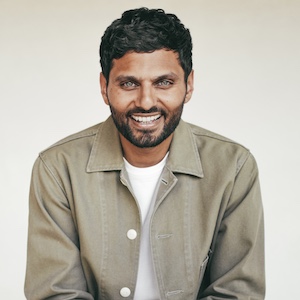
[00:19:27] Ray Latif: We continue with popular wellness influencer and podcaster Jay Shetty, who is the co-founder of sparkling tea brand, Juni. In this clip pulled from an episode aired on March 5th, Jay explained the criteria he uses to identify alignment with potential business partners and how the intersection of human behavior and evolution of social media impacts consumer habits and their motivation to try new things. I mentioned to your team that I wanted to kick off the interview, even though we've already kicked off the interview with a little bit of word association. And you mentioned your podcast On Purpose. I'd love to hear what you think of when you hear the word purpose.
[00:20:13] Elizabeth Banks: Oh, wow. What a great question. And you want them to be quick, right? You want like quick responses.
[00:20:17] Ray Latif: I would say if you can, if you can say something in under 10 seconds, that would be ideal.
[00:20:22] Elizabeth Banks: And a word or a sentence, or you don't mind?
[00:20:24] Ray Latif: Word or sentence is fine.
[00:20:26] Elizabeth Banks: When I think of the word purpose, I think of using your gifts and talents in the service of others. That's what I think of when I think of purpose.
[00:20:35] Ray Latif: How about love?
[00:20:37] Elizabeth Banks: I think of love being heartfelt and genuine.
[00:20:41] Ray Latif: Authenticity.
[00:20:43] Elizabeth Banks: Being who you are with everyone is different.
[00:20:51] Ray Latif: Leadership.
[00:20:53] Elizabeth Banks: Learning from others and allowing them to lead when they have better ideas.
[00:20:58] Ray Latif: Happiness.
[00:21:00] Elizabeth Banks: Overrated.
[00:21:04] Ray Latif: I'll let you off the hook here. Entrepreneurship.
[00:21:07] Elizabeth Banks: Oh, I can explain it if you want. Entrepreneurship, a new passion, new passion.
[00:21:14] Ray Latif: Can I go back to happiness for a second?
[00:21:15] Elizabeth Banks: Why is happiness overrated? The reason why I think happiness is overrated, and I know that hopefully, I don't want to say that to upset people. I think it's more that I found happiness to be a difficult thing to look for in life when you look at the natural cause of events that most people are going through. So you lose a loved one, hard to find happiness. You have a miscarriage, hard to find happiness. you turn on the news, hard to find happiness. And I find that the search for happiness almost creates a unhealthy experience of, well, I'll never be happy. Where can I find it? I don't see it anywhere. And I feel that looking for purpose, looking for meaning, looking for service, looking for peace, looking for the ability to support and care, I feel like those are far more worthy pursuits that actually lead to a feeling of happiness. But if happiness becomes the billboard sign and the neon sign that we're chasing, it can become a really painful experience. And so I found looking for purpose, service, meaning to be far healthier pursuits that actually do lead to happiness. And that happiness is a happiness you can always hold on to and keep. It's yours. Whereas I think the way we've talked about happiness generally in the world is pleasure or moments of fleeting happiness, which I think we all are kind of tired of and, and don't want to settle for. So that's, that's kind of why I use that word. And, but hopefully it was, yeah, hopefully something more surprising too.
[00:22:51] Ray Latif: Yeah, it was wonderful. And thank you very much for expanding on that. Let's tie the last few words together, happiness and entrepreneurship. I hope. that becoming an entrepreneur has given you happiness, particularly as an entrepreneur in the beverage industry, you are the co-founder of Juni. What were your initial expectations when you thought about starting this business and what's the reality of being in it right now?
[00:23:14] Elizabeth Banks: Definitely. I mean, I obviously come from a world where we create content, majority of which is online. I do live events and I've published two books, but generally my work's online. And so we can edit a podcast or update a website and it takes two seconds. Whereas when you're reformulating something to get it to taste better and have the right proportions and reduce the calories and reduce the sugar intake, because we didn't want that. I mean, you start recognizing that an update online, which took you three minutes, now takes three months. And that sounds bizarre to someone who's like, obviously it does. But as someone who's been in the digital space and the online space, it's a completely different patience and renewal program. I think we saw during the pandemic how the prices of tin cans went up, how export and import prices went up. And you start to recognize just how the global economy impacts a product that you're making locally and how much that can have. I think one of the things that we found exciting, though, and by the way, all of these are great learning experiences, is that you recognize a lot of things. The first thing you put out is never the best thing. The first formulation we put out of our drink was not the best one. The one we have right now is the best we've ever had and we'll continue to improve it. For us, it was really important to make sure that it had ashwagandha, that it had lion's mane, that it had reishi mushroom, but that you wouldn't even know that those are in there and that it would still taste good. But we also wanted zero grams of sugar because that was a big priority to us. We wanted people to have a sweetness without having that. So I think For me, what I've learned through this process and what I get excited about is that there's so much great feedback from our consumers. There's so much great feedback from our audience. It's a really exciting time to be in this space if you know what you're doing uniquely. And I think we've always known that. I think we were always a team.
[00:25:04] Ray Latif: How did you find the right people to surround yourself with such that you could develop and scale Juni?
[00:25:11] Elizabeth Banks: Yeah, I think the good thing for me was that I was approaching this with a lot of humility and like I said a student mindset of, I don't know this industry I don't know this space I'm here to learn. For me, there's three things that really make a big difference when I'm making these types of decisions. The first is energy. Do I feel that we're energetically aligned? And what I mean by that is values. Are our values aligned? Do I feel a sense of we believe in the same mission, that we want to make the world a happier, healthier, and more healed space? These are values that are important to me and my wife. And that's where I look at the first gate or the first door. Then if someone walks through that door and we feel aligned, I look at strategy does this person have the right strategic mindset do I feel like they have really good ideas and they really understand how to implement it and do they really recognize what could be our pitfalls are they prepared for them like do we strategically get along. And the third one is, do I feel like they're going to get along with other people in the company as we grow? Are they people that people are going to enjoy being managed by as this person is going to lead people? And so energy strategy and management have always been three very big focuses for me whenever I'm evaluating it. By the way, I think people evaluate me too. I think people have different visions and dreams. So it's not that my values are right, but they're right for me. And I think that's always worked for me. And it's something that I've noticed when I ignore it, it doesn't go well. But when I implement it, it seems to work.
[00:26:41] Ray Latif: Finally, we hear from NFL superstar Patrick Mahomes, who is the Lead Investor in upstart RTD coffee brand Throne Sport Coffee. In the following clip from an episode published on May 21st, Patrick spoke about how he and company founder Michael Fedele aligned on the company's business plan and strategy, and how he's highlighting his consumption habits to build an authentic relationship with consumers. This conversation makes me recall one I had with Kobe Bryant, rest in peace. Kobe Bryant was one of the largest investors in body armor early on in his development. And he talked about his first conversation with Mike Rapoli, who was one of the co-founders of body armor and how he convinced him to invest. What aspects of this brand of this business really convinced you to take part as the Lead Investor, Patrick?
[00:27:39] Marian Leitner: I think first off, what always got me was the passion that Michael talked about and how he truly believed in Throne Sport coffee and that it could really get you to the next level. And then that's what you're always looking for. And as an athlete or as a person, and you've seen the health craze kind of go throughout the nation is that you really want to take your body to the next level and be the healthiest that you can be. So everything I put in my body, I'm looking at the labels, I'm paying attention to what's in it. So whenever Michael talked about how much healthier and how much natural caffeine you're going to get from this coffee, I thought it was just a no-brainer. And I knew from my experiences of playing in the NFL or being around pro athletes and seeing how they really invest in their bodies as well. I knew that once they saw Throne Sport coffee and how much health benefits it has, that it was going to take off in the NFL. And I'm excited for the real world to see it and how they could take off where they train and how they kind of help perfect their body and be healthier for their lives as well.
[00:28:37] Ray Latif: Patrick, Gen Z consumers are known for being able to sniff out inauthentic messaging, connections with different brands. In fact, there's a whole blowback against celebrities going on right now in social media. How do you authentically connect with the typical, the target consumer for Throne Sport coffee?
[00:28:58] Marian Leitner: First off, to kind of hop on what Michael was just talking about, I mean, I'm drinking these coffees before I go work out early in the morning. And it's not giving me the jitters, it's not giving me anything like that. It's giving me that natural feeling of I can go out there and get the workout that I want. And I think that was big for me. I mean, just because that's what I want to do every single day. I want to be the best I can be and get my body in the best shape possible and be able to get the most out of every single workout. to kind of show that it's authentic to me is that I do it. I mean, I'm drinking it every day. I gave it to my QB room actually today, and I pass it out and let the guys try every single flavor. And I want others to get this. I want others to see the benefits Throne Sport Coffee is giving me. And I think when it's true to you, you can really speak in that way. And I think people can authentically hear it in your voice that you believe You believe in the product more than the investment. You believe in the product and think the product's going to kind of keep taking off to another level because of the, I would say, the best benefits that it gives you every single day. And sometimes I have to stop myself. I start talking too much. I get a little damped up because I know that I want to get this great product into the best people's hands and really let their lives be better for it.
[00:30:08] Ray Latif: That brings us to the end of this episode of Taste Radio. Thank you so much for listening. Taste Radio is a production of BevNET.com, Incorporated. Our audio engineer for Taste Radio is Joe Cracci. Our technical director is Joshua Pratt, and our video editor is Ryan Galang. Our social marketing manager is Amanda Smerlinski, and our designer is Amanda Huang. Just a reminder, if you like what you hear on Taste Radio, please share the podcast with friends and colleagues. And of course, we would love it if you could review us on the Apple Podcasts app or your listening platform of choice. Check us out on Instagram. Our handle is bevnettasteradio. As always, for questions, comments, ideas for future podcasts, please send us an email to ask at Taste Radio. On behalf of the entire Taste Radio team, thank you for listening, and we'll talk to you next time. you