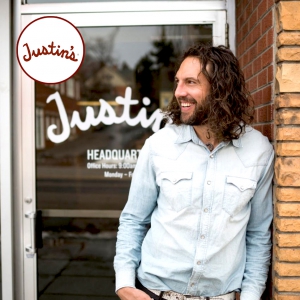
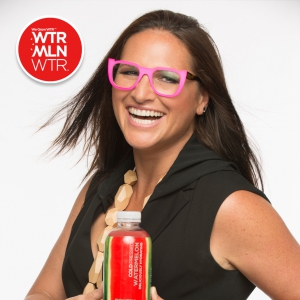
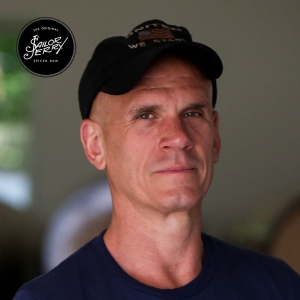
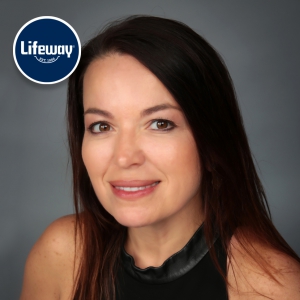
[00:00:03] Ray Latif: The path from idea to successful beverage brand is lined with thousands of details and decisions. BevSource will support you at each step by adding data and expertise where and when you need it most. From formulation to sourcing and production, our full suite of services and custom support from a team of beverage experts empower entrepreneurs and give them the resources to win. Start your journey to success with BevSource. Visit bevsource.com and get connected with our team today. Hey everyone, I'm Ray Latif and you're listening to the number one podcast for the food and beverage industry, Taste Radio. This is episode 169, which highlights interviews with a few of the leaders, innovators and entrepreneurs who joined us on the podcast during the first half of 2019. including Vita Coco co-founder Mike Kirban, Lifeway Foods CEO Julie Smolyansky, Justin's founder Justin Gold, Sailor Jerry Rum and Hendricks Gin creator Steve Grasse, and Watermelon Water co-founder Jody Levy. Just a reminder to our listeners, if you like what you hear on Taste Radio, please share the podcast with friends and colleagues. And of course, we'd love it if you could review both Taste Radio and Taste Radio Insider on the Apple Podcasts app or your listening platform of choice. Let's kick off the show with Justin Gold, who we featured in episode 153. Justin is the founder of namesake brand Justin's, a pioneering maker of better-for-you nut butters and snacks that was acquired by Hormel Foods for $286 million in 2016. In the following clip, Justin spoke about his perspective on the keys to innovation and improving the food system, the first thing he tells new entrepreneurs, and how he hopes consumers perceive the Justin's brand. It comes down to, I mean, we're in a capitalist society, so it comes down to people buying the products that create the most change. So consumers vote every time they buy something. Every time they spend money, they're voting with their pocketbook. And change is gonna conserve. Consumers continue to buy the products that stand for something, that stand for organics, regenerative agriculture, sustainability, fair trade, reinforced alliance. you know, packaging that's more sustainable, or recyclable, or compostable. If consumers spend money on those products, no matter where they come from, whether it's a small company, or a public company, or a big food company, if they buy those products, it sends a message, and those companies will continue to grow, and the big companies will have to change, or they'll buy into that paradigm. But it really comes down to consumers choosing those products. If we get into a cycle where consumers want products that are Justin Gold enough, but they're the cheapest products that they can find and don't have a lot of the sustainable or regenerative or organic values that some of these other products have, and we just keep going down that cheap path, we'll just keep perpetuating the cycle of, you know, trying to figure out how do we get out of this hole that we're in. Now, I think we'll always have both, but the way the industry wins is with consumers buying the products that are making a difference and continue to support those brands. Is that how you think about innovation? Is that the starting point? You know, innovation is a multi-layer process. The first thing I start with is, what's a problem in the marketplace and how can I solve it with a product? Problem, for instance, for me was I go mountain biking, and I want a protein snack on the go, and I've been eating energy gels, but I want protein, not a sugary gel. So solving the problem of having protein on the go was a squeeze pack for me. And so now, it put me in a great opportunity and position to create a nut butter squeeze pack, which really resonated with a lot of other people. Problem for me was when I went into a natural food store and wanted an indulgent, sweet snack, I wanted a peanut butter cup, but it had to be the best. It had to be 100% organic, conflict-free, way less sugar than what was out there. And solving the problem was creating something that didn't exist for someone like me. So the first thing I do is I try to find a problem. Can I ask you a question? Yeah. When was the last time you ate a Reese's peanut butter cup? Honestly, it was this past Halloween. Okay. And I forgot how sweet they are and how waxy the chocolate is. It's still a really good product, but since I've been exposed to, you know... different products, my flavors have changed. You almost said better, I think. You said different, but I could tell you were thinking better. I don't ever want to put down another brand or another company. Honestly, if it wasn't for Reese's and what they pioneered and done, I would have never had a chance to create an organic peanut butter cup. So they deserve a ton of credit and admiration. I think they can do better, and I can do better. Our packaging on our peanut butter cups still comes from plastic, still goes into a landfill, and still generates waste. that's the next frontier for our industry is waste. You're lecturing at the Colorado University Business School, right? Yeah, almost like every week. Wow. What's the first thing you tell entrepreneurs, potential entrepreneurs? What's the first thing they need to hear? Yeah, you know, I always tell entrepreneurs, most people are afraid to start because they're so paralyzed by failure. And what I say is if you don't start somewhere, you'll never end up anywhere. And I can't tell you how many entrepreneurs, just by starting, their paths end up pivoting. Because now that they've burned the ship, right? You sail to an island, you burn the ship, there's no going back. Now you've got to solve the problems. And as you launch your product, you kind of figure out, oh, you know, well, maybe, you know, we shouldn't be doing it this way, we should be doing it that way, you know, maybe. And then once you start, now you're on the path. And so I advise a lot of people just to start, see what happens. Now, that doesn't mean quit your job and go all in, right? I worked at REI and Weighted Tables for about five years while I was working at Justin's. I was paying five co-workers before I was paying myself because I believed in the business so much, but I'd rather pay someone else than pay myself. I'll work another job. But I was all in. And just by starting, the company changed so much, right? I had different flavors. We went from jars to squeeze packs, brought on different nuts. But if I didn't start somewhere, I would have never known all the things that I needed to do in order to keep growing and evolving. It was just by starting. What do you want people to say about Justins? You know, when someone sees the Justin Gold, how do you want them to identify the product? How do you want them to identify the brand and the company behind it? Wow, it's one of those things where you think I'd have an immediate answer, but I really haven't thought about it a ton. When they think of Justins, I think they want to think of, I want people to think of something that It's kind of how I want to be thought of. It's just great intentions, honest, humble, and really trying to make a difference, right? This is a brand that's not going to trick you, not going to deceive you. It's going to try to always do good, and it's going to do it in a way that's very humble and fun. Right? We're not glitzy. We're not glamorous. We're not pretending to be the best thing out there. We're just trying to make a difference. And for us, it's about progress, not perfection. And every day, we try to be a little better to get to somewhere really great. And I hope that's what people think about our brand. Next up is Jody Levy, the co-founder of innovative beverage brand Watermelon Water. An artist and serial entrepreneur, Jody has overseen the evolution of Watermelon Water from a single product to a platform brand whose products are available at over 25,000 locations nationwide. In this clip from episode 155, she discussed the similarities between art and entrepreneurship and chronicled the history between her brand and music icon Beyonce, who's an investor in Watermelon Water.
[00:08:24] Taste Radio: I really believe that starting businesses and creating strategies for businesses is very similar to making something out of nothing. Whether it's a built environment, a designed object, a painting, or a sculpture, it's all about that organism and what goes into it and what inspires it. So when we apply that to our world, You know, a concept is one thing. An entrepreneur with hustle is the thing that's going to be the catalyst. But every single person, every employee of the business, every brand ambassador, every investor, every person that is an expression of that company infuses their energy into what that is and helps to direct its path and its course. And in that, to me, it's very much like art.
[00:09:14] Ray Latif: You've had some pretty high profile investors within the beverage industry and then outside the beverage industry as well. Let's talk about Beyonce first.
[00:09:24] Taste Radio: Okay.
[00:09:24] Ray Latif: Beyonce came into the fold, what year was that?
[00:09:27] Taste Radio: Well, we really crossed paths the day that we launched our product to the world.
[00:09:31] Ray Latif: Everything goes back to 2013, right? Meeting Ray of the Teeth.
[00:09:36] Taste Radio: December 17, 2013. We launched our product with Hormel Foods, and she dropped a track called Drunk in Love that ended with the lyrics, I've been drinking watermelon. So thank you, universe. I mean, this whole journey is a journey of synchronicity. And I could tell you stories that, you know, seem out of this world over and over again with every single person that's along it. But so we founded the company in March 2013. By June, we were ready to go. I think around June, I learned about food safety. So we were really ready to go in July.
[00:10:16] Ray Latif: Hey, we're good to go. Actually, this is going to make someone very, very sick. You're not good to go.
[00:10:22] Taste Radio: So remember that thing about ignorance? Yeah. And I met Kara Rubin, who was the head of the Northeast Division of Hormel Foods. And she loved the product and she gave me a lot of great wisdom. And I remember I showed her a rendering of like 200 facings of, you know, my hot pink watermelon water bottle. And I was like, how do I get this? And she laughed at me because she's like, you can't just get that. Like, that doesn't work that way. And I was like, what do you mean? I hate that answer. And we spent some time talking through it and she was like, well, why don't you just, if you can wait till September, we're going to open our first store in Brooklyn and I can, you're new and you're local and I can't give you your 200 facings, but I might be able to give you a row or something like it. And my partners and I spoke and we're like, you know, launching with Hormel Foods feels like a really great thing to have them and to use that as a really meaningful partner, which they have been. And it's been amazing how they've supported us in our innovation. Lo and behold, the store didn't open in September. It didn't open in October. It didn't open in November. And at this point, I'm like, oh my God, I don't even believe in mistakes. But like, this is not, I messed up here, right? Like we're burning capital, we're producing product. We have a 60 day shelf life. It's not like our product's sitting there ready to go. And the ribbon cutting was on December 17th, 2013. Blizzard, gnarly, freezing. And so we all, we go. And I remember like two hours later, my phone starts blowing up and everybody starts texting me. And I think that they're texting me to be like, congratulations, you're on shelf. Nobody knew we were on shelf. Like no one knew. I hadn't been under a rock for a year. It turns out that Beyonce had dropped this track. And I happen to come from the music industry. I've done a lot in hip-hop. I texted a friend of mine and I was like, crazy, you know, serendipitous moment. Like, how cool is this? I'd love to send her some. The concept of drinking watermelon didn't exist before two hours ago, right? So she sent me the cell phone number of one of Beyonce's producers and I texted her and, you know, a couple hours later we had product up there. And then later that afternoon, they announced a surprise show at the Barclays Center. Same thing, called a friend. He got me to the owner. Owner was like, so cute. Pepsi's got a contract, but of course, bring it in. We'll fill up the green room. And that's what we did. Like there was a year where we would send out like Mother's Day and Valentine's Day, we'd have cases with hot pink bows and I'd always send it up to Parkwood, which is Beyonce's production company. And then about a year later, they reached out and they had sort of been following along and loved the brand and the edge and the voice and our story with a woman at the helm of a company and supporting U.S. growers. And we started talking and getting a deal like that done is not easy and it takes a lot of time. And then she and I sat down and we spent a lot of time talking about how a voice like hers can amplify meaning and message and how the idea of helping to educate people about the importance of what we put in our bodies is one of the most important things that we need to do in our society because it's really a social justice issue. And with that, she really wanted to invest in the business and invest in the belief system that kind of encompasses everything that we do and our decision making around it. And she did that. And she's been an amazing partner ever since.
[00:14:16] Ray Latif: We'll be right back with more from this episode after a quick word from our sponsor. Nothing slows a beverage entrepreneur more than getting swallowed up by production details. BevSource will help you create and execute upon a custom operation strategy so you can focus on building your brand. Our expertise in product development and production management is unparalleled. Let BevSource help make your beverage dreams a reality. Visit BevSource.com to learn more. Let's continue with Steve Grasse, the creator of iconic spirit brands Sailor Jerry Rum and Hendricks Gin. In a clip from our wide-ranging interview, which we featured in episode 144, Steve spoke about the influence that bands have on his creative process, and why a focus group that panned the idea for Hendricks Gin was a good thing.
[00:15:07] Vita Coco: I've always approached brands like bands. I'm really into music, and as a kid, bands got me excited. I hate sports. I hate sports. It's one of the reasons I don't like Boston. Sports aren't my thing, but bands, when I was a kid, and I was always thinking, nobody draws the name of a brand on their notebook. They draw the name of bands. Nobody gets a tattoo of a brand on their, you know what I mean? They do about bands, why? Because bands create passion and excitement, and they're not always trying to sell you something, right? The content is what you're excited about, what the band makes, and you become part of their circle and their lives. And that's the way we approached the brands we created, is they're really like bands.
[00:15:58] Ray Latif: Now, the bands have the music, but they also have the association of being famous, cool, whatever.
[00:16:03] Vita Coco: Well, but they got famous because they created an identity that was visual, that was audible, and it was also visceral. and then they toured to get you to sign up and be part of their group. They didn't buy a TV commercial and say Van Halen, right? They came out with something that caught on that you didn't have to pay for the advertisement. The advertisement was the song, but the song was an earworm that got into your head, right? So if you can create a brand that operates that way, Well, then he got something really powerful. And Sailor Jerry, boom. So was Hendrix. But Sailor Jerry was specifically that model.
[00:16:48] Ray Latif: Do you still think that way in terms of bands and brands?
[00:16:52] Vita Coco: Yes. Yeah, and I think, you know, it's interesting. A lot of these hipster Brooklyn brands that started in the 2000s aren't gonna work because they all have the same graphic design. They all look the same. They all have the same story. There's nothing sticky about them. There's no mystery or arcane secret knowledge. It's all the same. And they all have the same credentials. Again, you're an idiot if you don't keep learning from the stuff you do. So each time we do stuff... You learn from it. Yeah, exactly. People always say, how'd you make Sailor Jerry work? I'm like, we tried everything. but we never spent too much money doing anything. So if something worked, oh, do more of that. If something didn't work, we'd stop, but we hadn't spent a million bucks on it. When we came out with Hendrix 20 years ago, we were the only gin to come from Scotland. We were the only gin to have a different flavor profile. So it was easier to stand out. Like I've often thought, could you do Hendrix again? The way the world's gotten with media and the fact that there are literally three or 400 gins a year coming out. And I think, again, we were at the right place at the right time because we were the first esoteric djinn. I would say we were the first craft djinn. And we were also at a time before the world was turned upside down by the Internet.
[00:18:20] Ray Latif: Were folks in the industry surprised that you took that approach to the branding, you know, sort of whimsical, quirky, as opposed to the sort of refined approach that gin normally has?
[00:18:29] Vita Coco: Well, what's funny is, again, we only did one focus group for this brand. We had a bunch of gin drinkers sit around a table put the bottle on the table and they all sat up immediately and said, we hate this. And the president of grants at the time, he said, did you see how they just sat up and reacted? I'm like, yep. And he goes, it's going to be a hit.
[00:18:56] Ray Latif: Let's continue with Julie Smolyansky, the CEO of Lifeway Foods, a pioneering brand of kefir drinks. In this clip pulled from episode 147, Julie spoke about why Lifeway was one of the first brands to market the health benefits of probiotics and discussed taking on the role of CEO at a relatively young age and the criticism that followed.
[00:19:18] Mike Kirban: We were the first company to write probiotics on our products. I remember my dad saying, never talk about bacteria with food because Americans don't understand that you have to only talk about the calcium and protein. They don't want to hear about bacteria. We really embraced it because we realized that we did not have the advertising budget that the big food companies had. We could not stand on lifestyle alone. that we had to take the risk and talk about bacteria and talk about, you know, good bugs and educate the marketplace on the benefits of probiotics. And so we took that risk and I think it did pay off. And, you know, that's what the, of course, today the probiotic industry is one of the hottest industries. It's the biggest trend. And we're even within the micro trend talking about gut health being the number one health and wellness trend happening all around the world globally. We're very proud that we were able to make that connection between food and health and wellness and the fact that what you eat impacts your health and wellness.
[00:20:23] Ray Latif: Clearly, you're passionate about the company, the brand, the product itself. Were you as passionate for the role of CEO when it came to you? How do you prepare for that role? I mean, it seems like it happened so suddenly.
[00:20:40] Mike Kirban: Yeah, it did. So yeah, my dad had a sudden heart attack in the middle of a sunny summer morning. Both myself and my brother, who was like four years younger, got thrown into these roles. Listen, you're never ready for anything and you don't have experience until you have experience. I was naturally a leader in my life. I had led a lot of various projects. I guess I had a lot of confidence. And my father really groomed us for a leadership role. We'd grown up in the family business. We grew up watching both of our parents build businesses. It was, you know, the dinner table conversation. And frankly, all the conversation in our lives was around our parents' businesses and their entrepreneurial experiences. And we grew up in our businesses. I mean, our playgrounds were my parents' warehouses and their plants. And we spent most of our spring breaks and summer breaks working in their businesses and helping them. So it felt very intuitive to just do the work that needed to be done. And I absolutely would not let all that my parents had worked for to go to waste. And it felt healing to work and do his work. It felt really special to be sitting at his desk and kind of fulfilling some of his dreams and to take it even farther than he ever expected. I don't think he ever expected Lifeway Foods be what it has become.
[00:22:16] Ray Latif: There was some motivation that you got. I had read an article where a friend of your father's, after it was determined that you would be taking over as CEO, had said that, quote, there's no way that a 27-year-old girl can run this company. That's it. It's done.
[00:22:34] Mike Kirban: Absolutely, yeah. I mean, you know, when I heard that comment, it just angered me so much. First of all, because it was both my youth and my gender were both under attack. But then I remember, listen, my parents came to the United States with no English, no money, no friends, and an infant toddler. So, you know, if they were able to, with all those challenges and adversities, come to the United States not knowing what they were in for. Now me educated, my brother and I educated in the United States with resources, with a network, with folks who want to help us in a well-greased operation. Lifeway was a $12 million business at the time. There's no reason why we shouldn't be able to do this. I was executing on the strategy that my father and I had developed. tweaking it along the way and, you know, doing the things that needed to be done to grow the category in the product line and the brand. And, you know, it worked.
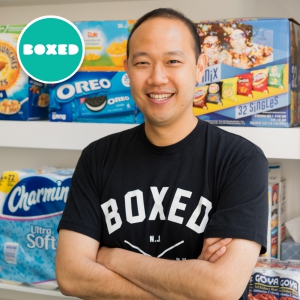
[00:23:41] Ray Latif: We'll be back in a flash after this quick word from our sponsor. Beverage entrepreneurs, are development and production issues keeping you up at night? Don't take a pill. Call BevSource and let us help you with some of the stress-inducing tasks that can eat away at your time and energy. From formulation to sourcing, inventory management, and supply chain optimization, our team of experts has your back. Visit BevSource.com and get the rest that you deserve. When Boxed, an online retailer of bulk goods dubbed the Costco for Millennials, launched in 2013, it had all the hallmarks of a tech startup. Audacious idea? Check. Parent's garage as the company office? Check. Low probability of success? Check. Unlike many startups, however, Boxed has thrived since its debut. In an interview included in episode 152, co-founder and CEO Chae Wong discussed the evolution of mobile and e-commerce and explained why he believes that the future of online food shopping will, quote, feel like Netflix. You talked about the changing winds. Well, what's causing those changing winds? You know, what are the factors that are making online shopping so exciting for consumers today?
[00:24:57] Lifeway Foods: I think there's two sides of that, right? There is the consumer reason and the business driven reason. The consumer reason is actually something that we live with every day. So one of the scariest yet most interesting stats, I don't know if it's true or not, but someone told me, and he had a medical degree, so I assume it was right, but I can't say it was, you know, trust me, I'm a doctor, literally. But he said that he read somewhere that there was a professor at an undergraduate who had tracked decibel levels, so noise levels, of the undergraduate cafeteria over the last 10 years. And today it is 25% of the decibel level of 10 years ago. Less. 25% less, yeah. No, it's only 25%. So, it's a huge, a massive decline. It's like a library. It's a quarter of what it was. Exactly. So, what explains that? Well, we sit there. We don't need to talk to people anymore. We sit on our phones. We stare at them. And instead of just being the default thing when something's awkward, it's like now it's like people go straight to their phones when they sit down and eat. Unless they're going with a huge group. So, with that said, I think that trend, as that group graduated college, and as that group comes into their own and starts buying CPG, that group being the millennials. Millennials are now the biggest baby-producing generation in America, the biggest generation in the workforce. And pretty soon, I don't have a stat to back this up, probably the biggest CPG-purchasing generation in America, too. It's natural, right? They're just going into that curve. So how do they interact with brands? How do they interact with shopping? That generation generally doesn't say, oh, I need something. Man, I got to go to a store. You know, they might go to a store and a lot of them still do. I still do. But they're thinking, oh man, I need something. Can I get this online first? So that's the, that's the consumer facing reason. And that's shifted really fast. In 2013, when we first started, I remember getting crazy emails that said like capital, ha ha, you expect me to put my credit card number in a mobile app? You are nuts, you know? And now five years later, it's like, of course you would. So that's the consumer reason. The business reason, in a lot of ways, you have to thank Amazon. And you kind of have to thank Walmart, too. So Walmart bought Jet, Amazon bought Hormel Foods, and the entire industry, supplier and retailer, collectively freaked out. And they all finally saw that they were pretty far behind, and they need to catch up quick. And so by then advertising their capabilities and pushing capabilities, It got into the mind of the consumer that said, OK, if I'm seeing all these signs to buy online, should I be buying online? Right. And it became a self-fulfilling prophecy.
[00:27:36] Ray Latif: This is kind of a big, wide open question. But, you know, from your perspective and having been doing this for some time, you know, what is the future of online shopping look like? What is the future of food shopping look like online?
[00:27:47] Lifeway Foods: Great question, and I think there's a very easy answer. And I think it'll feel a lot like Netflix. And most folks are like, all right, he's going off his rocker. Let me repeat the question. I don't think you understand the question. But if you think about what Netflix does really well, it doesn't matter if you're on your PS4, your laptop, your iPhone, your Android. It doesn't matter if your cousin who's still bumming off your password is still using your Netflix account. It doesn't care where you are, it knows exactly what you like, the medium in which you want it delivered, you want it downloaded, you want it to stream it, you want it in 1080p, you want it 720p, it doesn't really matter. They just deliver the content however you want and you choose. You have the ultimate keys when you're on Netflix. For food shopping and grocery shopping online, that does not exist. If you want it in three hours, that's a separate checkout, a separate service. If you want the big pack, you have to go to this retailer or that retailer. If you want fresh foods delivered via truck, that's a whole nother checkout or a whole nother retailer. It's just like, oh my gosh, man, like what's going on here? So I think the winner just has that Netflix style experience. We sell food. whatever you want it, however you want it, you dictate, and we tell you the pricing and when to expect it to be delivered. Something as simple as that does not exist today, even with Amazon, right? If you want Amazon something to be delivered now, you're checking on Prime now with a different assortment. You know, if you want ice cream delivered via truck, you got to check out on Amazon Fresh. If you want a box of Oreos in a big size, you got to go to Prime Pantry. So all that, it's like this experience where, like, the customer's like, yo, I just want what I want, how I want it. And no one's been able to answer that call. That's not to say because the industry is full of people who don't know what they're doing. It's exactly the opposite. It's that the problems are so tough on the back end with inventory, where you have inventory and how much you have of it, that it's a really difficult problem to solve from a logistics perspective. But whomever solves that first, I feel like will pave the way for everyone as having the playbook on how to win online.
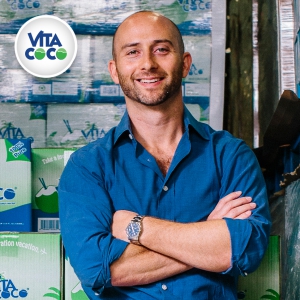
[00:29:58] Ray Latif: Last but not least, we have Mike Kirban, the co-founder and CEO of Coconut Water Powerhouse Vita Coco. As part of an interview featured in episode 164, Mike discussed why he takes a hands-on approach in his day-to-day leadership of the company, why he hires based on attitude, why he's looking at potential brand acquisitions, quote, all the time, and his belief that Vita Coco could be, quote, the better-for-you beverage brand for the next generation. So, you know, I'm quite hands-on. I manage by walking around. I literally walk into meetings all the time where I'm not invited and give my opinion. Sometimes it's appreciated, sometimes it's not, but it doesn't really matter. When you greeted me at the door, there was a conference room that a few folks were in, and we were chatting for a minute, and one of them slammed the door before I walked in there. Slammed the door shut. A little bit of a, well, scowl? I don't want to say scowl.
[00:30:54] Mike Kirban: I don't want to say that.
[00:30:55] Ray Latif: Those were the auditors. They don't actually work here. That explains everything. Okay. But yeah, I can imagine. I mean, you know, you've got all these people on the floor. There's, I don't know, it's like 50 people out there, at least 80 people. And yeah, I mean, it seems like walking around, you kind of get a pulse.
[00:31:12] Vita Coco: Yeah.
[00:31:13] Ray Latif: Totally. And getting out in the trade with the guys, you know, I think for me, that's very important. Right. I like to be hands-on. I like to be involved in the day-to-day. I like to know what's going on even though I don't influence every decision that's being made around here. I've got a great leadership team who has a lot of freedom to make decisions and do things, but I like knowing what's going on because if I know some of the smaller stuff, it helps me figure out some of the bigger issues when they arise, right? Because I know where the root of the problem could be or where the root of the opportunity could be in some instances. So I feel I'm very close to the business, which I like. We spoke once in the past and you said, I hire based on attitude. Yeah. How does that work? I mean, obviously they've got to have some sort of experience to work in a certain role. But how do you gauge attitude? It depends on the role and it depends on how much experience a role needs. But I'm never one to look at, for example, where somebody went to school or if somebody went to college. You know, for certain roles, people have to have some experience, you know, in order to be able to do that role. But at the same time, when I meet somebody, I know pretty quickly if they've got the right attitude, right? And like I said, I always say it's about attitude over skill set. And that attitude, if I pick up on it wrong during an interview or when I meet somebody, you quickly realize if they're not the right fit. And one thing that actually Jim Cook from Boston Beer said one time, which was really interesting is, hire slowly and fire quickly. And I live by that. We have plenty of people that just, they're great people, but they just weren't the right fit here that didn't work out. And we are very capable of moving people out who aren't the right fit. Because this place, like I said, it's like a family, but we need to move in sync. And if there's somebody that is an asshole or that is affecting that movement in sync, they need to be taken out of the picture because they poison it really quickly. And I think that's a critical part of, I think, why this place is such a fun place to be. We just have a good time and we work together. Nobody works against one another here, which is great. What if that person is just a rock star?
[00:33:19] Mike Kirban: I don't care.
[00:33:21] Ray Latif: I've had it. I had somebody here for, you know, it took me a little bit too long to take them out, but they were amazing, brilliant, brilliant, really amazing individual, but just not the right personality fit. That, to me, is more important because if the rest of the team is not having fun because somebody is just, you know, not the right attitude, it slows down the whole organization. And I don't think we're as productive. How often are you looking at potential acquisitions for Vita Coco? All the time. Really? I look at things all the time. I think, you know, my goal to create this better for you beverage platform, combining functional beverages and healthier beverages will need a combination of both in-house innovation and new to world brands and M&A. And, you know, for us, obviously the fastest way to do this through M&A. So if there are opportunities, specifically larger things that we could acquire and really gain size and scale even faster, great. But if not, and we see opportunities to innovate and create brands from scratch, we'll do that also. So I think my goal is over the next couple of years to really have four or five totally unique brands in-house under Ball Market Inc., which is the holding company. that really play in different sub-segments of this healthier, functional drinks market. I believe we could create a lot more value long-term here by taking the foundation that we've created, which is, you know, a pretty large, probably the largest independently-owned, better-for-you beverage company, and building off of that and creating a broader platform. And whether one day that becomes a portfolio or a platform that we could IPO, or it becomes, you know, something that potentially, you know, a strategic is interested in because maybe they're not in the non-ALC business or they're, you know, looking for opportunities to get a broader platform. Or if it's just a longer term thing that is a dividend generative business, I think there's just more opportunity for us to do something with that. Coke and Pepsi, they're really good at certain things and they've done quite a lot of M&A in this better for you functional beverage space, but their share of better for you functional beverages continues to decline, even though they've done so much acquisition in that space. And I think it's just because it's not what they're... good at. It's not what they're focused on. So I believe that that opens up kind of this lane for us to just drive right through as we should be the ones and we could be the ones who really create the better for you beverage company for the next generation. You know, the beverage, the big beverage company for the next generation. That is the goal. That's the goal. And I also think, you know, without really taking shortcuts, I think it could be done. You know, and I think that's one thing that that we're quite proud of here. We create really good products and we try to do it as a good company. And I think consumers are looking for better brands from a better company, better products from a better company. And that's kind of what we're trying to be. There's no reason we need to take shortcuts in our product. There's enough margin in there to do things right. You know, that's that's what we're focused on. That brings us to the end of episode 169. Thank you for listening and thanks for our guests, Justin Gold, Jody Levy, Steve Grasse, Chae Wong, Julie Smolyansky, and Mike Kirban. Tune in next week for episode 170 when we're joined by Stu Leonard Jr., the CEO of admired grocery chain Stu Leonard's. As always, for questions, comments, ideas for future podcasts, please send us an email to askatasteradio.com. On behalf of the entire Taste Radio team, thank you so much for listening, and we'll talk to you next time.