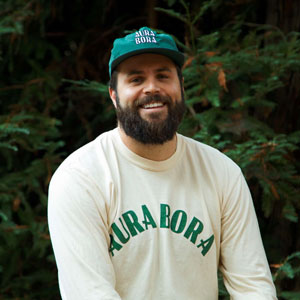
[00:00:10] Ray Latif: Hey folks, I'm Ray Latif and you're listening to the number one podcast for the food and beverage industry, Taste Radio. This episode features an interview with Paul Voge, the co-founder and CEO of botanical sparkling water brand Ourobora. When we last spoke with Paul Voge, Ourobora was still a few months away from closing on a $10 million Series A funding round. At the time of the investment, which was announced in September of 2022, the brand, known for its whimsical label designs and botanically-inspired flavors, was less than three years old. A young company operating within the competitive sparkling water category may sound like a risky funding opportunity to some, but it was clear to Ouroboros investors that the brand had an uncommon ability to not only connect with consumers, but cast them as evangelists who would sing its praises. Ouroboros' emphasis on sustainable differentiation has been key to building a loyal community. A point of focus in the following conversation was Paul, who also spoke about the brand's recent collaboration with cult Olive Oil brand Graza, why Ouroboros discontinued its viral Secret Menu, lessons from its shift from D2C to brick-and-mortar sales, and why his personal phone number is on every can. Hey folks, it's Ray with Taste Radio. Right now, I'm honored to be sitting down with the one and only Paul Voge, the co-founder and CEO of Aura Bora. Thank you, Ray. Great to see you. Good to be here. We are here in Philadelphia at Expo East 2023, the last Expo East in history. Maybe. Maybe. Maybe they'll change their mind. It could make a comeback. I was actually talking to someone last night about this and They're like, well, what if the other stuff doesn't really work out? Or what if people are like demanding an East Coast convention focused on the natural channel, or at least natural and natural adjacent foods Polar Beverages.
[00:02:04] Paul Voge: And, you know, maybe, maybe, maybe, I imagine like you and I and others are the, the violinists on the Titanic right now. And we know this is the last one, but we're having one last good show.
[00:02:13] Ray Latif: I like that. I like the way you describe that. Um, we're going down with a ship. That's right. Okay.
[00:02:17] Paul Voge: I'd still like a raft, but I'll play for those just before they get on the raft. You're here actually as an educator. I am.
[00:02:24] Ray Latif: I got a speaker badge from New Hope Network. Thank you, New Hope Network. And you're also here, I guess, in a little sort of quiet way to talk about your newest LTO. That's right. Which is actually the talk of Expo East. Ouroboros Dry Guys, an Olive Oil martini made in collaboration with Graza, the maker of extra virgin Olive Oil, a cult brand in its own right. Pretty amazing stuff. I had an opportunity, I had a sneak peek taste. Can you have a sneak peek taste of something?
[00:02:56] Paul Voge: Sneak peek taste, yeah.
[00:02:57] Ray Latif: Sneak peek taste of this, I think three months ago. And it was amazing. And now paired with this incredible packaging, this amazing label design. I'm not surprised that everyone's chatting about this.
[00:03:09] Paul Voge: Thank you. It was really, really fun. It has been fun to work on, fun to release, fun to drink, all the above.
[00:03:14] Ray Latif: So what inspired this product and how long have you known the team at Graza?
[00:03:20] Paul Voge: I met Andrew Benin maybe a week before they launched, January of 2022. And we became fast friends because I think we both obviously like consumer packaged goods, but he is just a bit of a whiz on the internet, I would say. They obviously had a very large launch. I feel like every chef in America has a bottle of Graza, is what it feels like in their pantry. So we've communicated over the last couple of years, and the story was not this, not 2023 Expo East, but 2022 Expo East. Andrew said, quote, we should make a lightly sparkling Olive Oil martini, non-alcoholic. He actually said four cruise lines. Like, let's sell it on a cruise. It's very specific. Very specific. And I just laughed because it seemed, you know, he's a friendly guy. Maybe he's just kidding, et cetera. And then a couple months later, I brought it up to him. A couple months after that, he brought it up to me. And fast forward 18 months later, here it is. So I'd say this summer we got started in earnest of, okay, this could make sense, but only if we release it in September. Let's see if we can pull it off in a couple of months.
[00:04:22] Ray Latif: So we did. What do you think is going to be the impact of something like this? Did you have a specific reason for creating it beyond saying this would be a cool collaboration?
[00:04:30] Paul Voge: I would say we were trying to test three things at once. So the first and probably most impactful is when we launched Ouroboros four years ago, I didn't know the word mocktail. I would say, yes, non-alcoholic was a trend, but it didn't feel like the legs that it has now. And I remember the first few sampling events in San Francisco, having folks ask, hey, is this a mixer? Can I drink it as a standalone mocktail? And we've since gotten a bunch of reviews to that same effect of, hey, I'm consuming your product at six o'clock. Sometimes people say, hey, I consume other sparkling waters during the workday. And then kind of as a treat after work, at dinner time, I try your lavender cucumber or whatever the flavor is. So we kept hearing that and it felt like, okay, We're really focused on sparkling water. We're focused specifically on multi-pack in retail. But if there was a reason for another product line, maybe it would be something that is more, call it evening forward, you know, something you would consume in place of alcohol. And of course, this conversation with Andrew popped in our heads and we thought, okay, let's test out a new product line that is a non-alcoholic cocktail. Let's test out a partnership with another brand and let's just see how our consumers respond. So that was the goal, nothing more. And if it goes well, maybe this is the next product line. If not, it was a lot of fun.
[00:05:42] Ray Latif: Before we hopped in the mics, I had mentioned that I haven't seen Polar Beverages and food collaboration. I can't recall seeing one. This is perhaps the first. Pretty remarkable in that you were able to incorporate something that makes sense into Polar Beverages. This wasn't just like a slapstick. Hey, you know, let's do some kind of crazy collab. I see so much more of that too. There was a Velveeta and Chocolate collaboration. I don't know. It was earlier this year, I think. I forget the name of the chocolate company. It was a high-end chocolate company, and they incorporated or infused Velveeta cheese into their truffles. Obviously, that's a food and food pairing, but some of the stuff just feels like outrageous collaborations designed for shock value more than let's introduce Graza to Ouroboros consumers, let's introduce Ouroboros to Graza consumers.
[00:06:32] Paul Voge: It's funny, my similar one of that is I actually tried the ranch Van Leewnen's collaboration. It was good. I was like, if you like ranch dressing, this is great. And I'd say similarly, there are people in the country that don't just have ranch with their salads, they have it on pizza. And if you look at all of the ways they have ranch dressing, it might as well be Polar Beverages. That was kind of the joke with Graza, of the consumers that love Graza, which is pretty much anyone that's ever tried it, consume it so frequently, it might as well be Polar Beverages. Stop dancing around with the food. Just put a straw in there and call it a day. But I agree. The best part about this has been Graza consumers that were unfamiliar with Ouroboros discovering it or vice versa. Ouroboros consumers that maybe they buy a different Olive Oil and we had a nice bundle on our website that a lot of them purchased to try Graza.
[00:07:15] Ray Latif: So you are saying, though, that this, the dry guys line could be something that goes forward in the future? Yeah.
[00:07:21] Paul Voge: Okay. Yeah, I'd say we liked that term. My wife, Maddie, and I kind of always felt like she drinks a lot less than me. I don't drink very much, but she hardly drinks at all. And it feels like if you go to a high-end restaurant now, it's becoming more common in a great way that there is a non-alcoholic section. For sure. And just the word mock is a, it's a patronizing word, like mock trial. It feels almost like, oh, this is a dress rehearsal. It's not a real thing. It feels like a nice way of giving a kid a soda in place of a beer at an adult event, which when you're a kid, you feel so special. Look, I have root beer in this beer-like bottle, but these are adults. Like there's no reason to treat them like that. And what constitutes what an evening beverage is? Why have we let alcohol become the only thing you can have after six? So we were trying to think of a fun term Orabora, obviously, is a very fun name for our brand. So we tried to think, what is something that makes it seem like it's alcohol-free without being patronizing? And dry, of course, is a great word for that. So guise, as in things, not actually a gendered term. We're both from the East Coast, so guise is not really a gendered term. But yeah, dry guise was the name, and we felt like that was a good name for this line to distinguish it from sparkling water.
[00:08:29] Ray Latif: Were you sitting in on my interview with Brooks Addington, who's the CEO of Toast, yesterday?
[00:08:34] Paul Voge: No.
[00:08:34] Ray Latif: Because we were literally just having this conversation. Oh, I love that, great. When you had said, I really don't like the word mock. Yeah. That came up in our conversation. Good, good. And no offense to people who do call their beverages or brands mock or describe it that way. But I do feel like mock is inherently, inherently means fake, right?
[00:08:49] Paul Voge: It's mean, totally.
[00:08:50] Ray Latif: Yeah. So it's like, I'm drinking a fake beverage or a fake cocktail. And it does feel like something, I don't want to go too, too far on this because I feel like it is going to get me in hot water. But anyway, it's amazing when you do have something that actually speaks to a consumer looking for this type of product in a way that feels very approachable and actually delivers on the taste. So when I tried this, it definitely feels like a sparkling water with the essence of a martini more than the martini. And I think a lot of people are looking for that type of product because the martini is kind of heavy, even though it is you know, just typically vodka or gin, it feels like a heavier beverage than you would think, than you would imagine. So amazing stuff, very excited for a potential expansion of this product. But I mean, you've been hard at work introducing new line extensions or at least limited time extensions throughout the life cycle of Ourobora and since the beginning of Ourobora. And I think it's one of the things that has really differentiated you, the brand, from so many other upstarts that we've seen come out in the last three years. The Secret Menu is something that I think some people don't fully understand, but the people that are loyal consumers of Ouroboros get it and are true evangelists, like real evangelists of the brand. Talk about the origins of that Secret Menu and how you continue to evolve it.
[00:10:19] Paul Voge: You know, the idea when we first, I mean, on our very first kind of now embarrassing investment deck or very first, again, embarrassing sell sheet was, hey, there's a lot of sparkling waters with the same four or five flavors. You know, they have a grapefruit, they have a lemon, they have a lime. Could we make differentiated sparkling waters? I often use the word craft. Could we do kind of what Samuel Adams did for beer? We could do for sparkling water, or pick Dogfish Head, pick your craft brewery of choice, or even Van Lewins, you know, what they did to ice cream. Could we do it to sparkling water? That was the original idea. Now, ironically, and all those brands I just referenced have this same problem of if you're known as the innovative, X brand, the innovative ice cream brand, the innovative beer brand, you need to keep innovating. So our long-term customers were getting tired of our flavors. Not because they don't like them, but it's a very promiscuous category of, I was tired of drinking Pumple Moose LaCroix, so I wanted different flavors and that's why this started. So that was the idea originally of, hey, Even if it's just online, we've built up this online community, in large part thanks to Shark Tank, and now in large part thanks to our amazing marketing team of, can we, every month, release in limited time flavor, just make a few thousand cases of it, and sell out in a couple weeks? And that's now been every month for, I think, 16 months in a row, we've made a different flavor. So right now, apart from Dry Guys on the Sparkling Waterside, we're selling a peach honeysuckle flavor. Next month we'll sell our Halloween-ish flavor, it's honey pumpkin. And then back to our favorite green bean casserole, and then Christmas time and we're back to the beginning of the lineup.
[00:11:51] Ray Latif: The availability of these products, however, is limited to people who are subscribers or part of the program, correct?
[00:11:58] Paul Voge: So that was at one point the case. When we first did Secret Menu, it literally was a Secret Menu. If you went to the website, you wouldn't find it. You had to have a special link, and it was hidden on our site. Now, all of our limited time flavors, anyone can buy. You have to buy at least 24 cans of which, which makes it a little more exclusive, because you have to know you're going to like it to pay. I get it. It's, for some, prohibitively expensive. So that used to be the case. We might bring that back if there's something that we can only find in very small quantities. Like last year on our Secret Menu, again, this only went out to, I don't know, maybe 20% of our email list. So 20% of our consumers that are spending enough that they got into this club. We did a persimmon clove flavor and we did our green bean casserole flavor. That was kind of the latest Secret Menu. And the response was great. And I think brands do this a lot where they want some FOMO, like they want their best consumers to feel special and best in quotes. Everyone's great. But there's a difference between FOMO and just anger. And I think that's what we found last November was, yeah, we sold out of those flavors really fast. And there were other consumers that felt like, just because I don't spend enough to get into this Secret Menu club, I can't buy this product. Like, how wrong is that? So we did away with the Secret Menu. It's still a link on our site, but everything else we want to be open to everyone because I did feel like we went over the FOMO line where it's fun into like, oh, this is borderline offensive. Let's make this open to everybody.
[00:13:20] Ray Latif: Do the limited time offerings as a whole, are they a strong revenue generator for the brand? Or is it again, just to, is a big part of it to introduce Ouroboros to new consumers and strengthen your relationship with existing ones?
[00:13:33] Paul Voge: Yeah, I would say probably the question we've gotten most frequently from investors is, is this marketing or is this sales? And of course, the best marketing is sales and vice versa. And for us, it's those two things, and frankly, mixed with R&D. You know, we've had plenty of limited-time flavors now that a retailer has tried. One of our limited-time flavors, a retailer is on our email list and tried it and said, hey, we would love an exclusive on this for 90 days. It's an amazing retailer we're not currently sold in. And if that works, I mean, the entire program will have been worth it just for that one retailer. But I'll say Ginger Meyer Lemon started as a limited time flavor. You can now find it in a few thousand stores. Lime Cardamom started as a limited time flavor. It's probably in about a thousand stores. So for us, yes, it is a significant revenue generator. It is certainly where most of the revenue from our website comes, which shouldn't be a surprise because for brands, as your distribution grows, You can buy our products a lot cheaper in store than you can online. Just heavy box shipping necessitates us to have a higher price online than we do in store. So I love when I see consumers, particularly this year, we launched with Publix and we've seen way fewer orders of our Marquee flavors from Florida. It's data we can actually track. of folks that were buying our lavender cucumber flavor online in Florida last year are now not buying it online. I am so happy to have that person unsubscribe, because that means they're buying it from Publix at half the price. And when we get them back, it's because they're buying flavors they can't find in Publix, like maybe Honey Pumpkin or Peach Honeysuckle. So that's kind of the idea of, yes, it is a revenue generator for us, absolutely. It's marketing, sales, and R&D. And I hope no one ever buys our Marquee flavors online eventually, because we're in enough stores that you can find it around the corner.
[00:15:05] Ray Latif: For sure, beverage doesn't lend itself to a long-term market ability, for lack of a better word, online. It's not necessarily something that people want to buy or is going to be a margin-worthy channel Polar Beverages brands. That being said, you do learn a lot about the brand. You have a deep relationship with consumers.
[00:15:29] Paul Voge: Totally. Yeah, we have a longstanding relationship with some of these consumers. They've been buying 12 or 24 cans of our product every month for years. That's a very intimate relationship. I think we know that, which feels great. Those are the people we want to make products for.
[00:15:42] Ray Latif: So how do you continue to do so when you are really focusing much more on brick and mortar and traditional retail?
[00:15:50] Paul Voge: For us, it does feel like a bit of a bifurcation in the business. And of course, the two support one another. In fact, this morning, just before we sat down, I saw a support ticket that was someone finding our product in a retailer and then looking us up on the internet and buying three different flavors. Like, that is the modern consumer. That's perfect. They bought a couple of cans at a store, single serve, and then they just bought three cases, 36, on our website. Do we call that person an online consumer or a retail consumer? Of course, they're both. So for us, I would say what has been probably the most refreshing thing post COVID is retailers really care. I remember retailers not caring about your website or your online stats or your lifetime value or the average age of your customer. All of the data that makes online relationships so valuable, retailers didn't care. Investors cared, but now that ends up being the focal point of a lot of retail conversations. We've been in big retail meetings this summer where That might be 20% of the conversation is, where are your orders coming from? Show us a heat map. What's your average consumer look like? How much do they spend with you? And the retailer gets some sense of, OK, if that sort of consumer has that size basket ring in my store, that increases our average sales. And I think every retailer in America right now is trying to figure out, How do we increase our basket size? Cause we're getting fewer visits because of inflation and we're getting way more private label purchases. So it's kind of an odd time in the world right now on both sides of the fence, online and retail, but we have found it to be very beneficial in retail meetings to have a very strong online audience. And we found it really, really beneficial to our online audience to have a lot of retailers where they can buy the product for less.
[00:17:22] Ray Latif: In those retail meetings, do you already have the data? Do you have that information that they want or is it something where you create that in a deck and provide it to them later on?
[00:17:31] Paul Voge: I normally throw it in the appendix and I hope in the meeting they ask the question so I can jump to the appendix. And if they don't, well, it's in the appendix for them whenever they'd like. Yeah.
[00:17:39] Ray Latif: Are investors the same way? I mean, I think you mentioned that earlier. They're really interested in seeing your marketing online and how well, how deep of a connection that you have with consumers. How much of that is the conversation with them and why does it matter so much?
[00:17:51] Paul Voge: It's a big conversation. I think it matters so much because for so many years, there's really, I put an asterisk on this sentence, but there was really no way of knowing if I sold a hundred units in a store, did I sell a hundred units to one person or one unit to a hundred people? And of course, a hundred units to one person is a much stronger business, assuming it's not my mom. Like that's a much stronger business than you think. Okay, great. We can scale up to a hundred people and sell a hundred times a hundred. Numerator is kind of changing that. It's an amazing company that is taking receipts to see what is the repeat purchase rate in retail. So maybe a few years from now, this will look like an antiquated conversation. That's why investors are so interested. Hey, we know your velocity in stores. We can get that from Nielsen and IRI and Spins. And we have some sense of your revenue because, of course, you're sending us your QuickBooks data. And we have some sense of your innovation pipeline, etc. But the actual health of the business is not just velocity on shelf, it's velocity on shelf over time. If you're a new brand, you don't have the benefit of five years of showing, hey look, 20% higher unit velocity year over year over year over year. That proves to an investor, okay, it's either the same consumer buying more and more of it, or other people are learning about it, and that makes them feel more safe. If you're a newer brand, that's kind of why if you're not losing money online, which this is, I guess I'm talking to food brands now, but you need this online data so you can prove to an investor, hey, look, you're right, I don't know how many of those Whole Foods consumers are buying multiple units, but I do know online they're spending X hundred dollars per year on my website. So it's some defensibility, but of course I hope Numerator and others change that so that we can see, hey, at Wegmans and at Publix and at Whole Foods and at Sprouts, we're getting the same consumer over and over again and they're telling their friends.
[00:19:26] Ray Latif: Investors also want to see a path to profitability. This is nothing new. It's been, I mean, I think it's shocking sometimes when I talk to folks and I'm like, why is everyone so focused on profitability? Well, that's kind of how you run a business, right? It's inherent in business. I'm being kind of a jerk saying that, but it shouldn't be that much of a shock when investors are saying, look, you need to get your margins right. You need to have a way that you can be a sustainable business. In sparkling water, it seems like that's a little bit of a tougher ask for founders because the margins are so different than a lot of other beverage types. But what has your approach been to getting to that path to profitability?
[00:20:07] Paul Voge: Yeah, I would say sparkling water is certainly one of, if not the most competitive part of the grocery store. I would say certainly of the beverage set. Part of it is even the term sparkling water seems like a commodity. You know, it is a commodity. So Private Label, Perrier, San Pellegrino, Waterloo, Polar, LaCroix, I just named probably 50% of the market share. And there's like a thousand other brands that make up the last 50%. I think the reason it's so hard to get profitable in sparkling water, particularly for those at the lower end of the price set where they're competing against private label. Yeah. There's very little margin left. It's a really heavy product. So it is unique. There's a uniqueness to it of it is both very low price and very heavy. So you're going to lose a lot of margin, getting it to the store and merchandise, get on the shelf or getting it on an God forbid, in our case, less than a truck load truck. And then you need to play these crazy promotions to get off the shelf. For us, thankfully, we are a higher price. And like a lot of the other brands I've already mentioned, you know, our very first pitch deck said, what Jenny's did to ice cream, what Van Leewnen's did to ice cream, what Justin's did to peanut butter, what Kettle did to potato chips, we'd like to do sparkling water. And by that we mean, hey, we're in a really commoditized category. Everything I just named has a big private label component. We're in a commoditized category. Can we have differentiated flavors, unique ingredients, and hopefully a brand consumers care about? And as a result, they'll be willing to pay that premium for all of those things. So we end up having, yes, a higher gross margin because even though we're using ingredients that are three, four, five times as expensive as a lot of the bigger brands, Our consumers notice the difference, and they're willing to pay, in some instances, two and a half, three times the price. We're not profitable. I hope to be very soon. You know, it's what I think about before I go to sleep and when I wake up. But just to directly answer the question, it's very, very challenging in sparkling water. I think being a premium player makes it easier to be profitable. I think having a multi-pack makes it easier to be profitable. We were an all-single-serve company until this year. And having consumers that tell their friends naturally so you don't have to buy every single purchase helps a lot.
[00:22:06] Ray Latif: Do you ever go back and forth on the word water?
[00:22:10] Paul Voge: Good question. We've talked about it a little bit. So anyone that starts a food and beverage business, like you're, of course, your biggest friend and your worst enemy of, I drank a lot of sparkling water. I drink a lot of sparkling water. I had two cans before this interview. I'll have 10 by the end of the day, even here at Expo, away from my fridge. I didn't drink soda. I grew up with a really healthy Whole Foods mom that I remember going to birthday parties and feeling like I was doing something evil by saying yes to Dr. Pepper or Mountain Dew. So I didn't drink soda. I don't drink that much alcohol. So to me, yeah, mostly what I'm consuming is water or sparkling water, but we have had consumers reference, hey, your herbal flavors seem more like a tea. Or hey, because you're holding raspberry vanilla, hey, this one tastes a little more like a cream soda. Or like I mentioned earlier, lavender cucumber seems more like a non-alcoholic cocktail. So I don't know. There's a lot of words for what we're making. I like that we kind of cross categories. Is it a mixer? Is it a mocktail? Is it a soda? Is it a sparkling water? I'd like to say yes to all the above. I think it's mostly a sparkling water, but I am really selfish and I drink sparkling water, so I could be wrong.
[00:23:12] Ray Latif: Well, the reason I ask is because you are charging a higher price point. It is a higher price point for sparkling water. And I wonder if consumers would say, oh, it's not a sparkling water. It's an herbal tonic or whatever you want to call it. Elixir. Right, exactly. But then it makes it more complicated for most consumers. So it is a bit of a catch-22. And at the end of the day, you know, when you're looking at the can, the words, herbal sparkling water, perhaps the second smallest font, maybe the third smallest font on there, you would pick it up and you'd say, this looks like a really Polar Beverages more than you would a sparkling water.
[00:23:47] Paul Voge: That was certainly the dynamic. I used to live in Colorado where it feels like every other business in Denver, Colorado is a craft brewery. And there was a time where I remember seeing a bottle of Samuel Adams or a can of Samuel Adams and not knowing it was a beer relative to the rest of the beer category. So I guess in some ways we're kind of proud of that. It feels like a little bit hypocritical or kind of an oxymoron to say, hey, we're proud that consumers think we look different than sparkling water, but of course we are trying to disrupt sparkling water. So There is always a delicate balance by how different you can be without being confusing. And I would say certainly we have received negative feedback from occasional consumers of, I didn't know this was a sparkling water. Like I grabbed it off the shelf, it's so colorful, I thought it was a soda. And I was disappointed, there's no sugar in this. But by the same token, I think retailers in particular, are interested in adding variety to the set. They know that consumers, like I mentioned four years ago when we started this, I was tired of the same old brands. So there's room for disruptive innovation here and it is an extremely, extremely profitable section for the retailers. They sell a lot of sparkling water. I buy a lot of sparkling water and I sell sparkling water. So that's a good comment about should we think about going to a refreshment beverage or elixir rather than water? I think we'll stick with water because I also just think people are under hydrated and people should be drinking more water, but that's a separate issue.
[00:25:03] Ray Latif: I think you're 100% right about that. You've mentioned a couple of times in our conversation, talking directly with consumers and managing challenges related to unexpected taste or, you know, thinking that there was going to have sugar in it. But how best do you manage, what is your process for managing customer service, essentially. And how do you do it, given that there's so many different forms of communicating with consumers via social, email, via a grocery store representative? I mean, how does that information trickle back down to you? And how do you utilize it? How do you get back to that consumer and create a positive relationship with them after the fact?
[00:25:39] Paul Voge: There are so many ways to talk to brands now. It's a little bit overwhelming. I'll say, I don't knock at all a brand that doesn't reply to DMs or doesn't want a phone number. We have all the above. It is a little overwhelming. We have a team of 11. I'll say, my phone number is still on the back of every can. We actually didn't put it on this garage can, did we? No, we did. Yep, there it is. Oh, wait. Let's see. Yeah, it is. So my phone was in the back of every can. Those are my favorite consumers to talk to because they're consuming the product while they're calling me. So it's like direct feedback. That's where they got the number off of the can.
[00:26:10] Ray Latif: And by your number, you're talking about the brand's number. No, that's my cell phone number. You put your cell phone number on there.
[00:26:15] Paul Voge: Call it up. That's me. Yeah.
[00:26:17] Ray Latif: Oh, I have your number on my phone. I can't believe that. I never noticed that.
[00:26:20] Paul Voge: Here, I'll just show you all the missed calls. That's from when I was walking the show yesterday. Wow. Yeah, they all come in as unknown callers or potential spam. There's a lot of spam out there. Aren't you worried that you're answering a spam call? I answer every call. Yeah. Sometimes I have to hang up quick because it actually is spam, but other times they say, is this? Oh, sorry. I thought I was calling a number on the back of a sparkling water can. I say, yeah, this is Ouroboros. Let's talk.
[00:26:40] Ray Latif: Do you tell them that you're the CEO and the co-founder? Usually not.
[00:26:43] Paul Voge: Okay. I want real direct feedback.
[00:26:45] Ray Latif: Okay.
[00:26:45] Paul Voge: that they just think this is a guy manning the phones, which is great. That's exactly what I am. They're totally right. So that's the first point I would say. Social feels a little different because you're not necessarily talking to consumers that are actually consumers. You know, we're living in such a branded world right now, which I think is very fun. I think some consumers would call overwhelming. There's an overwhelming number of choices. So, I mean, I can think of consumers that have followed us on Instagram for years. I don't think they've ever bought a can of Ouroboros. They think we post funny, interesting things. That's totally fine. They are a consumer in some sense. They're a consumer of our marketing. Consumers have switched the ways they're interacting with brands. And some of it means, yes, they're buying more product from us or they're seeing us in stores. And some of it means we are just serenading them hopefully with Ouroboros music and maybe one day they'll actually pop up in a can five years later. That's totally fine. So I'm not really answering your question except to say there are a lot of ways to talk to consumers. I'd say the direct customer service feedback for D2C consumers. We definitely collate and at the end of every month take a look of, Are cans getting damaged in transit? What did people think about blueberry wildflower? You know, when we get negative feedback, is it just one guy that has negative feedback or several people with negative feedback? If retailers get feedback, of course, we're normally hearing that direct of, hey, this price is too high or that promotion didn't work, et cetera. So there are so many data points and it feels like a lot of this job is figuring out which of the comments or emails or notes are important and which of them you need to ignore. But the phone calls we don't ignore, give me a call.
[00:28:09] Ray Latif: Okay. Yeah. There you go, folks. Call Paul anytime.
[00:28:11] Paul Voge: Yeah, there you go.
[00:28:12] Ray Latif: Well, within reason. I think consistency in customer service is also really important. Whenever I call, say, my cable provider or credit card company, and I unfortunately have a pretty inconsistent experience with customer service. Totally. And when you answer the phone and talk to someone about, I don't know, damaged cans in their recent order or, you know, someone who's like, oh, you know what? I didn't like this flavor. I want my money back. How do you create a consistent communication across the board?
[00:28:40] Paul Voge: You know, email is probably the largest interaction with consumers, just in terms of the number of emails we get in a week. And we have a large e-commerce store, so it makes sense. We obviously have macros, and there's a lot of the same requests of, hey, I had a damaged can. Great, we're going to refund you for the damaged can. No, we don't need a picture of it. If they come in more than once, yeah, we start asking for a picture of it so we're not getting scammed. I'd say on the consistency piece, What's so great about social media, and I think maybe no one's doing this better Mid-Day Squares, is we've realized that brands are just humans. Like, there are humans running these brands. So, that's what's so great, is when I talk on the phone, yes, you're right, most of the calls are not really that helpful of calls. Someone's calling because, hey, this was, I got one this week, this was too fizzy and it ruined my shirt. That was an actual call. I apologize. Ruined my shirt? Yeah, I was like, hey, it's sparkling water, it's not gonna stain, there's nothing in there, you're totally fine. If anything, if there was a stain, I might have released the stain. You're welcome. But I'd say one in every 10 calls is someone saying, hey, I was addicted to Diet Coke, and I love your product, and thank you. And that's worth it. Like I'm in a busy, sometimes bad day, and at 2.30 I get a call from someone that just said, your product made an actually meaningful impact in my life. So how do we have a consistent response? On the phone, it's a consistent response because it's always the same person answering. On email, I'd say we're very, very diligent of what is our tone, how do we communicate with consumers, what are the sorts of things we're willing to say. When they give feedback, we of course record it and we talk about it every month, positive, negative, or neutral. And maybe our favorite way of interacting with consumers is flavor ideas. You know, we come up with a new flavor every month. Yeah, we're running out of ideas. Like, we need folks to come in and tell us, hey, what's so great is this peach honeysuckle flavor we're selling right now. Peach was the number one requested flavor via email of the last two years of, hey, we want a peach, we want a peach, we want a peach. We finally found a good pairing of the peach with honeysuckle, and we're really excited. In particular, we flagged all those emails to send it back. Some instances, two years later, hey, that flavor you asked for, here it is. Here's a discount code. We'd love to hear what you specifically think, because this was kind of your idea.
[00:30:42] Ray Latif: Paul, it's been so great speaking with you. I just want to ask you one more thing. It's about one of your investors, and that's Citi Capital. Sure. You mentioned Mid-Day Squares Capital is also invested in that brand. And Melissa Ficina and her team are pretty amazing folks. And I did an episode of Taste Radio, I think it was about a year and a half ago, related to a private equity firm and their relationship with the founders of the companies that they're invested in. And it was titled, When You're Looking for an Investor, Look for a Friend. Nice. Now, that's not always going to be the case, but it feels like you have a very similar personality and outlook on life as Melissa and the co-founders Mid-Day Squares. I think there's just something about your personalities that be like, yeah, they're a great fit, great fit, great fit. It makes a lot of sense. Do you feel the same way? I mean, do you feel like, you know, Melissa is a friend of yours as much as she is an investor?
[00:31:37] Paul Voge: Yeah, I'd say with Melissa in particular, I'll say this about everyone at Citi. Absolutely. I love the name of your podcast. If you're looking for an investor, find a friend. Of course, when you're finding an investment or an investor, some of it comes down to numbers, traction, retailers, et cetera. But kind of the same comment I made about brands is these investment firms are not entities so much as they are a collection of people. So with Melissa, our relationship began on the operations side, really organically. She certainly has a Northeast sensibility about her. And I'd say the same thing about me, which is kind of why we got along. And I'd also say the same thing about Nick and Les and Jake, even though the East Coast of Canada. But still, similar idea. I think most city capital portfolio companies feel like these are our friends that know a lot about the business. They know specifically a lot about operations. Yes, of course, we need to have a formal board relationship where we're reporting numbers and vice versa. But at the same time, they're all huge consumers of the product. There's a Citi Capital employee named Amber who lives in Florida, and she sends me pictures from the public set. Like, that's not something you normally get from an investor. Or we just sent a huge number of boxes to their off-site retreat with all the Citi Capital employees, and we're getting feedback on one of our flavors. So absolutely, they are a friend, Melissa in particular, who I've known longer than I've known her investment firm from the op side. And that's a really special thing. I think there have been a lot of negative comments about just investors this year, even before we started this podcast, we were talking about every investor is looking for profitability or a path to profitability. And I think sometimes I hear brands or entrepreneurs specifically. you know, they view the investors as evil or different or, you know, too taxing. But the truth is like this only works with, like both parties have to be kind of a symphony with one another. And it only works if you have investors that can see the vision and you have entrepreneurs and operators that are kind of building towards that vision. So Citi Capital has been an amazing partner. We have other great investors as well, but certainly they're our largest investor and probably the one I've known the longest for sure.
[00:33:37] Ray Latif: Well, I've known you now going on three years, I think.
[00:33:40] Paul Voge: That's probably right.
[00:33:41] Ray Latif: Yeah. We first met, and we talked about this in our episode last year when we sat down with you. We were doing one of our competitions, beverage brand competitions, the New Beverage Showdown, that is. And as usual, judges got a few things wrong. And I think people didn't see the opportunity that you saw, didn't see the genius of what you and Maddy had created. And I'm just so happy to be sitting down with you right now, Paul. It's just, it's, this is, This is the best part of my job, is when I meet people who have a dream and are living that dream.
[00:34:13] Paul Voge: Thank you. I feel totally likewise about you and Taste Radio and BevNET. Thank you. Yeah, just you guys are great friends to the industry and it's so fun. We try. It's a good way of charting our progress, too. Hey, when I get to sit down with Ray, what have we accomplished since the last time I got to sit down with Ray? Yeah. I'm nervous about it, you know? I feel like I need to have shown you some progress since the last time we spoke. I would say you've progressed.
[00:34:35] SPEAKER_??: Okay, good.
[00:34:35] Ray Latif: Once again, thanks so much for sitting down with me, Paul. Good luck with everything going forward. Maybe we'll just do this one more time in 2024.
[00:34:42] Paul Voge: Count me in. Thank you.
[00:34:43] Ray Latif: Thank you. That brings us to the end of this episode of Taste Radio. Thank you so much for listening. Taste Radio is a production of BevNET.com, Incorporated. Our audio engineer for Taste Radio is Joe Kratchy, our technical director is Joshua Pratt, and our video editor is Ryan Galang. Our social marketing manager is Amanda Smerlinski, and our designer is Amanda Huang. Just a reminder, if you like what you hear on Taste Radio, please share the podcast with friends and colleagues. And of course, we would love it if you could review us on the Apple Podcasts app or your listening platform of choice. Check us out on Instagram. Our handle is bevnettasteradio. As always, for questions, comments, ideas for future podcasts, please send us an email to ask at Taste Radio. On behalf of the entire Taste Radio team, thank you for listening, and we'll talk to you next time. you