[00:00:00] Ray Latif: Hey Landis, remember that survey we sent to the community? Did you read what the listeners said? Here's a quote. Taste Radio has thoughtful interviews which give me great insights into various aspects of running a food and beverage brand. Another listener said, I work at a natural food startup, and this is one of my most valuable hours of the week. Each week, I walk away with two to three ideas to test at work.
[00:00:30] Andrew Zimmern: So the Taste Radio audience is looking for partners to help them formulate products, provide ingredients, design packages, can, pack, market, provide investment.
[00:00:39] Ray Latif: I mean, they're looking for everything. So if you're out there listening, they're here. and co reach this engaged audience made up of over 65% brands who are ready to hear what you can do for them, contact ask at Taste Radio and ask about our new 4, 16, and 24 packs of pre-roll and mid-roll ads.
[00:00:56] Carol Ortenberg: And now, Taste Radio.
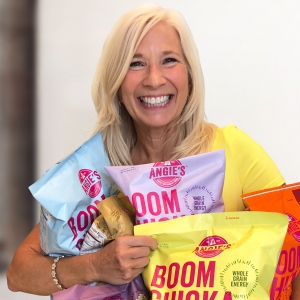
[00:01:11] Ray Latif: Hey everyone, I'm Ray Latif, and you're listening to the Top Podcast for the food and beverage industry, Taste Radio. This is episode 143, which highlights interviews with a few of the leaders, innovators, and entrepreneurs who joined us on the podcast during the second half of 2018, including Kobe Bryant, Angie's Boom Chicka Pop co-founder Angie Bastian, Andrew Zimmern, Blueprint founders Zoë Sakoutis and Erica Huss, America's Test Kitchen creator Christopher Kimball, and Arizona Beverages co-founder and chairman Don Vultaggio. Just a reminder to our listeners, if you like what you hear on Taste Radio, please share the podcast with friends and colleagues. and co course, we'd love it if you could rate both Taste Radio and Taste Radio Insider on iTunes. Let's kick off the show with Angie Bastian, who we featured in episode 126. Angie and her husband, Dan, launched Angie's Boom Chicka Pop in 2001, and it has evolved from a tiny operation selling kettle corn at farmer's markets and fairs to a ubiquitous retail brand that was acquired last year by ConAgra Foods for $250 million. In the following clip, she spoke with Nosh editor Carol Ortenberg about why she believes in celebrating, quote, the feminine with food, and how that perspective played into a celebrated package revamp.
[00:02:32] and co: So we knew we needed to be more than a kettle corn company. And, you know, at the time, this would have been 2011, when we looked at rebranding and maybe creating a different presence, we went to store shelves. And this is a recommendation I would give any entrepreneur is understand where your product lives, the context, the community. And for me, it was really about how do we do it differently? And what I saw at the time was a very serious looking snack shelf, a very sort of pretentious snack shelf. And when it wasn't that, then it was sort of diet food aimed generally at women, you know? and co I said, you know what, it's our job as a food company to deliver good food. But let's do something more than that. Let's just celebrate who we are. Let's deliver the food. Let's do it in a way that isn't, and I've used this word before, pedantic, that doesn't preach to consumers, that reflects the simplicity and the fun of the food. And let's do it in a way that, you know, captures the essence of popcorn and maybe a fun approach to food that isn't quite as serious and doesn't take itself so seriously. you Angie's has been incredibly successful. How much do you attribute to just looking so different on the shelf? Made all the difference in the world for us. Like this is what I would say, I mean, for people, for my children, for every, I'm like, be different, be yourself, be like, like whatever, like when you capture that sort of emotion of what you want and you know it's the right thing instinctually, you don't know if it's going to work. In fact, we had people say, oh, don't name it that, like, oh, don't do this. And yet somewhere deep inside of ourselves, we knew we needed to be different. We wanted to be different. In fact, I wanted someone to stop on the shelf and co, what is that? And behind that, what I wanted was to elicit curiosity. I felt like our customers were readers, like they can read the bag, right? They could pick up the bag. They could touch it. They could feel it. They could read it. They could look at it. And it triggered something. like curiosity about the food. And that's a value that we try to teach our children. And with form comes function. and co that's the other sort of part of like being creative and different on shelf. And it, you know, it captured a lot of attention. I think you also really made an impact because you spoke to female shoppers so well and you connected with them. You know, how did you decide to go that route? and kind of adopt that language and messaging and persona that really resonated with that shopper. Yeah. And this speaks to, let's just say, the women's experience in business. So my husband and I were together in this, leading together, but that also meant that at practically every meeting, there was one or two women in the whole room with me. Because I came from the profession of nursing where there were women everywhere, you know, they ran the profession. And I was now in this business world where I might be the only person at the table. And I just felt compelled, and Dan and I talked about this, to celebrate the feminine and not preach to the feminine, but to reflect and celebrate the feminine with food. Because I always felt like women weren't really supposed to eat. Or if they were supposed to eat, people were watching them so they didn't, you know, I don't know. It was so weird the way things- It can be judgy. Yes, it can be really judgy. And I, you know, I want to be as healthy as everybody else, but I also want, you know, I want to eat what I want to eat. I want my red wine and I want my chocolate when I want it. And, you know, guys don't seem to get that same sort of judgment directed towards them. And advertising doesn't sort of... lay it out for women how they're supposed to eat. When I started noticing, it was like food was either a moment of conflict in advertising for women or a sexualized behavior, and that was really advertising directed at men. And I just said, we are not going to do that. That is not what I want. I want to celebrate. I want the packaging to celebrate real women, because it's real food, like to connect everything, and not be apologetic about it. Just show up loud and proud and be who you are. Just be who you are. And that's what we did with the packaging. And that's why we didn't shy away from the multicolors, the sort of feminine-looking packaging and language, because I just didn't see it on shelf. And when I did see it on shelf, it really wasn't about celebration of the feminine.
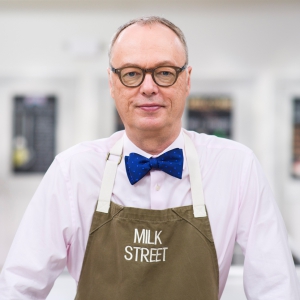
[00:07:20] Ray Latif: Next up is Christopher Kimball, who's best known as the creator of America's Test Kitchen. In 2015, Christopher, who also founded the magazines Cook's Illustrated and Cook's Country, launched Milk Street, a company focused on instructional recipes and techniques inspired by global cuisine. In this clip from episode 124, he explained why he's not a fan of the term ethnic cooking and shared his stance on trendy buzzwords in the food business. Well, I hate the term ethnic cooking. Ethnic cooking is kind of an old-fashioned term, which implies some strange culture somewhere else in the world where people are doing weird things. As you just quoted, ethnic cooking is just someone else cooking dinner some other place. That's all. And everybody's got the same issue. I mean, if you're in Istanbul or Mexico City or if you're in Chiang Mai, it doesn't matter. You're putting dinner on the table. And you just do it with the ingredients you have on hand, and the cookware you have on hand, and the experience you have. So the point is like fashion and music, and I've said many times, those industries a long time ago figured out the world's a small place. and co fashion begs, borrows, and whatever from around the world, and you get these hybrid things. And the same with music. You know, there isn't just Bob Marley reggae, there's a hundred kind of reggae, right? So food is going through that now. You know, food was very, until recently, was very xenophobic, right? I mean, there was American cooking and then, okay, you maybe get a little bit of this and that, but it wasn't really integrated. And if you go around the world, you see all these people cooking in ways that are, I think, often much better than what I grew up with, much smarter, much more interesting, bigger flavors. All that's going to get combined into this new repertoire. And a lot of that stuff, if you go, you know, I was in someone's house back in the 80s in Copenhagen, and Test Kitchen looked like my kitchen. They cooked the same food I cooked. I was kind of surprised. I thought they'd be making traditional Danish food, of course, which people don't do. So, yeah, I think that's right. And I think it's also, you know, we have a big immigration discussion now, but people's food and recipes come through across borders all the time. and co you almost can experience a culture through the food, right? So that's what's so great about food is you can have, you know, a guy in San Francisco who came from Veracruz in a small town of 500 people. He's now the chef at Nopalito Guzman. He's just a great guy, but his food tells you a lot about him and where he grew up. So that's the other thing I like about it, is that you learn a lot, there's context around the recipe, and you learn a lot about the people and the food, and nobody can stop that from coming across the border. You've mentioned immigration a couple of times. I mean, is there an inherent social mission to your promotion of, I don't want to say ethnic food again, because I don't like that term, but cultural cuisine? Well, first of all, I'm not in the camp of, you know, this is authentic, don't mess with it. Nothing's authentic. I mean, Mexican food's not authentic. I mean, there was, you know, the Aztecs and there were all these other people, there was Spanish food, there was French food, there was all these different kinds of food. and co it's always a moving target. There's nothing authentic. So at one point in time, people say, well, this is authentic. Yeah, but wait 50 years, and then it's not going to be the same thing. So I'm not in the hallowed anthropological mode of saying this is cast in stone. Nobody else can do it. It's unchanging. It's owned by a culture. I take the opposite point of view, which is that I'd like to get everybody sitting at the same table and sharing their food and get over this, you know, who owns what. Nobody owns anything in the food world. Everybody participates in it. It's this river that keeps moving. and co the mission for me is you sit down with someone in Test Kitchen. I was in Taiwan six months ago cooking with an 80-year-old and her mother, who was 96, making scallion pancakes, you know, in this little tiny place. And all she did was made 45 pancakes a day. That was her job. It was her business. And I couldn't speak her language. She spoke Mandarin. And I had a translator, but we had a great time. You know, she yelled at me and called me stupid. I was doing it all wrong, which I was. We had a great time, you know? and co what a great thing. Now, if I just walked in and met her and we weren't cooking, I couldn't have had that conversation with her. But the fact that I was trying to make scallion pancakes and she was the teacher let me have that experience. So I think it's everybody sits down at the table and I think that's a good thing. And you get away from this idea of, you know, you're just stuck in your own culture because it turns out a lot of people around the world are a lot smarter about cooking than we are. There's all these buzzwords going around the industry. I mentioned gluten-free. I mean, do you pay any attention to these? Do you incorporate any of these into the Milk Street strategy? Look, if you really have a celiac problem, gluten's, you know, a serious health problem. So, and I, years ago, we did a couple of gluten-free cookbooks, not here, but And that was a real service for people because you could now eat those things that you couldn't eat. So for people who really have a problem, sure, but we're really not interested. We're interested in the joy of cooking and the joy of changing your life and your cooking based upon what we learn around the world. So I don't want food to be medicine for Milk Street. It is medicine in that it's incredibly exciting and being a good cook is a terrific thing. I mean, I think I've had people come up to me in tears say, you know, I didn't know how to cook and now I do. And I just feel so much better about myself. I just, my life is so much better. I think there is a transformation that happens when you go from being an okay cook or you don't know how to cook to being a good cook. That's the medicine in the recipes here.
[00:13:14] Carol Ortenberg: BevNET Live and Nosh Live are both in early registration mode. Plan ahead and save. Visit bevnetlive.com and noshlive.com to get your tickets at the most budget-friendly price.
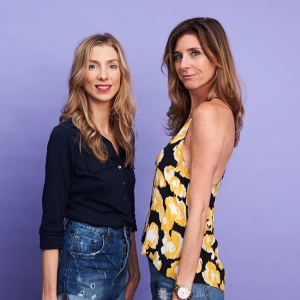
[00:13:27] Ray Latif: Let's continue with Zoë Sakoutis and Erica Huss, the founders From Blueprint, a brand that pioneered the packaged cold-pressed juice category and helped mainstream juice cleansing. In a clip from our wide-ranging interview, which we featured in episode 133, they explained how a phone call from former Starbucks chairman and co Howard Schultz accelerated Blueprint's eventual sale to Hain Celestial. As you were scaling and as you were growing, it seemed like you needed a strategic partner to keep up with your vision of making cold-pressed juice and cleanse available to mainstream America. So how did you decide upon Hain Celestial as that strategic partner?
[00:14:08] Taste Radio: Well, capacity was not our issue, thankfully, so we always had a handle on that. We opened a facility on the West Coast, we had one on the East Coast. What happened was we were always sort of paranoid because this category is such a low barrier to entry. You know, there were a million copycats by 2011, 2010, but they were all kind of, they were small and we didn't care. It was very easy to enter and it was not as easy to actually maintain and co scale. But so by about 2011, we were like, okay, there's definitely going to be a big player here. We're doing too well for there not to be a giant fish right behind us. So it's like, the question for us was like, when is Pepsi coming in? When is Coke coming in? When is the major competitor coming in? I mean, at the time, our largest competitors, like Organic Avenue, or like local press, Juicery, New York. and co it was a good business model in that, you know, we never had to raise cash, we were positive from day one, and we were able to continue growing, not at like a crazy clip, but like, you know, we didn't have the funding to really put our foot on the gas pedal, but we were doing fine. Then we got a phone call from Mr. Howard Schultz of Starbucks, and we were like, oh shit, I guess we know who our competitor is now.
[00:15:21] Ray Latif: and co... Was it him on the phone?
[00:15:23] Taste Radio: Yeah.
[00:15:24] Ray Latif: He left a voicemail.
[00:15:25] Taste Radio: It was amazing. He left a voicemail. We were at lunch and we came back. Literally, I had that on my voicemail for so long. I was like, okay, let's listen to it again. So you're like, this is serious. We just sat down on the floor and listened to it over and over again. He was like, this is Howard Schultz. I just want to say I have tremendous respect for what you've built. And I could probably recite it verbatim. We can recite it. We can recite it. And I would love to explore, you know, I mean, he was basically saying, like, I'm getting in the game and I'm looking around and like, I'm about to pick my pony and I would love for it to be you. You want to play? and co we were kind of... What year was this? 2011. This was, was it 2011? Yeah, it was spring 2011. Okay. and co you're putting some pieces together, I can see. So we were put in play and we didn't necessarily... Involuntarily put in play. Involuntarily, thank you. We didn't ask to be, but then we were there. and co we found ourselves in this position of like, oh man, so we had to go through this courtship process with them, which was kind of fascinating. I mean, We got the we got the grand tour. It was very interesting. and co we went through that process at the end of it. I mean, it was all lovely and Howard Schultz is a wonderful human being and it was a great experience. But at the end of the day, it wasn't the right partner for us. It wasn't the right offer. I mean, we were like on the eve of a lot of growth. We had cracked the HPP code and we're like, come on, like, we know what's ahead of us.
[00:16:50] Ray Latif: I guess you can tell me now what was revenue at the time?
[00:16:52] Taste Radio: At the time, it was like 20 something, say like 20 million, I don't know.
[00:16:57] Ray Latif: So can I assume that Starbucks lowballed you on the offer?
[00:17:00] Taste Radio: I guess it just depends who you ask. I mean, according to them, it was a very fair offer. So anyway, so at that point, after we decided we're going to continue on without you, but yikes, now we know who our competitor is. And then like, you know, a few weeks later, they announced that they had acquired Evolution.
[00:17:20] Ray Latif: Evolution Fresh.
[00:17:21] Taste Radio: Evolution Fresh, West Coast. and co we said, OK, I guess now we have to finally go out and find our partner. and co then we really, you know, we engaged a banker and we're like, OK, let's do it. Let's do a little pony show. And we we sort of went around and we entertained a number of deals and structures. So from you know, minority to majority to full acquisition. And for whatever reason, I mean, you know, for obvious reasons, I guess at the time, Hain Celestial being a natural foods brand and Erwin being very charming and charismatic, I think, you know.
[00:17:53] Ray Latif: The CEO of Hain Celestial, former CEO of Hain Celestial.
[00:17:55] Taste Radio: Former, almost former, right? He's kind of in the middle now. But for that reason, we, you know, we chose them. It was the right choice, I think at the time. and co that is how we were put in play involuntarily. Yes.
[00:18:07] Ray Latif: You used the qualifier at the time in terms of being acquired by Hain Celestial.
[00:18:13] Taste Radio: I mean, we only knew what we knew then and it was the right conversation at the right time. I think had we not necessarily had the Starbucks experience motivating us, we might have played things differently, but it's very hard to look back and say we would have done things differently. We had, you know, a lot of conversations and it felt like it was checking a lot of the boxes that we needed to check. the decision to go with Hain. And hindsight is 20-20, but we went with the information we had available to us, and that was the right decision at the time that we made it. The one thing that we knew about ourselves, which I will give us a lot of credit for, is that, again, we hadn't raised any money up until that point. And I think we both knew that we were probably not going to do great in an environment where we took on like a minority partner, majority partner. And then we had to kind of coexist with them and sort of share the steering wheel. We were very comfortable and confident doing what we had been doing. And I think we were doing a fine job at it. You know, everybody sort of hears these stories, which are just so classic about the company coming in, and then you kind of lose all of your Authority and decision-making power and I think we were kind of terrified of that. So isn't that what happened though? well, you know what, here's the thing, it was an acquisition. So it was like, you have to assume at that point, you're not steering the ship anymore. Like that's it. So you better be happy with that number. Even though we stayed on, you know, our contract was to stay on for two years, and there was like a small earn up, but you have to consider that gravy and, and we did. And I think in that way, our expectations were somewhat managed. To your point, again, it was like, that was the best decision at the moment, because I think We were not going to be comfortable with a sort of larger earn out hanging over our head with someone else at the helm.
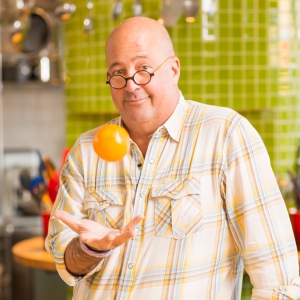
[00:19:59] Ray Latif: From Blueprint to Bizarre Foods, the show that is, Andrew Zimmern is the host and co-creator of the popular television series in which he has chowed down on stomach-churning foods like raw pig testicles, a frog's beating heart, and co penis. In an interview included in episode 127, Zimmern discussed the role of food as a cultural medium that unites people and why he has a bone to pick with the natural food industry.
[00:20:27] Carol Ortenberg: I think food is the great uniter. I've never experienced a meal with other people and I've had the opportunity to dine with world-famous terrorists, with dictators, with, you know, heroes and villains. And I've never gotten up from a meal not having connected with those people in a different and better way. And that doesn't mean that I become simpatico with an evildoer. It just means I may understand them more and it may allow me to bring more perspective and healing to the world. So from a culture tolerance standpoint, to me, the sharing of food, the physical breaking of bread, literally not metaphorically, binds us in a way that goes back all the way to the first interactions between, you know, hominids, not yet humans, as they bumped into other groups of hominids. We have been sharing food together since the dawn of human civilization. It is at its very, at its very least, the most important way we communicate with other people.
[00:21:42] and co: It's hard sometimes in the natural foods industry though, because you have food as this cultural experience and joy, but then there's also so much focus on diet and eating right and eating.
[00:21:56] Carol Ortenberg: Oh, I think it's all bullshit. I really do. I can't think of a bigger area of, you know, snake oily, you know, people to take advantage of needy other people with untransformed trauma issues in their life than in the health wellness food space. I get violently angry about it. There are people who are doing really, really amazing things. I was upstairs and looked at a whole bunch of stuff. I mean, you know, if folks can make people's lives healthier and easier through food, Bravo, fantastic, but there's so much, there's so much crap in that arena and people trying to sell people things based on their, you know, the buyer's shame experience. You know, I'm fat. I'm less attractive than I wanted to be at this age. Things haven't worked out to me. I don't have a lot of money. I mean, you name it. And yes, there are people all over the world taking advantage of that, but in the health wellness food space, I think there's a unique brand of bad person there. And I like to call bullshit on them whenever I am confronted by them because I just don't believe it's right. It's not that I'm against people who want to eat a certain way, it's just that we have a common sense, as Americans we want it all. The difference between our culture and other cultures is that when somebody wants to lose weight, they eat more colorful foods, make sure to eliminate their carbs and exercise more. I mean just sort of like common sense stuff. And because they've had a food culture for thousands and thousands of years. Ours is 400 years old. You know, and we've always been a convenience society. And I think that drives a lot of cures that we don't need.
[00:23:45] and co: Also in the natural food space, we have this interesting thing where you see foods that in other countries are maybe just normal or have been consumed there for centuries, like you referenced, but now are becoming very popular and trendy here in the States. Crickets, for example, or eating insects or fermented teas. Is that kind of strange for you when you see something that just is accepted and normalized everywhere else that in the States becomes this huge trendy food?
[00:24:15] Carol Ortenberg: No, it excites me.
[00:24:17] and co: Okay.
[00:24:19] Carol Ortenberg: The problem is I want people to do it well. You just named two examples, right? So let's just take fermented aged Pu-erh teas, right? Lots of health benefits, super expensive, rare and collectible. So you can really get jonesed about it. I mean, I collect watches, I collect guitars. I mean, I'm a bright, shiny objects person. I'm no saint, right? So I get it with the Pu-erh teas and the popularity and just tea drinking in general is very, very good for you and very helpful. And I've explored tea culture in almost every country on planet Earth where tea is grown. So I've seen a lot of stuff. And I think that's fabulous. I think it's fantastic. And is it maybe a little fetishized right now? Sure. But that's part of the natural cycle of things. Taste Radio now has pre and mid-roll ads in 4, 16, and 24 packs. Reach brands who need your solutions to their biggest challenges. Email ask at Taste Radio to learn more.
[00:25:22] Ray Latif: Let's continue with Don Vultaggio, who co-founded Arizona Beverages and is quite literally a towering figure in the drinks industry. In this clip, pulled from episode 139, Don discussed the mindset of successful entrepreneurs, how Arizona has maintained its iconic 99 cent pricing model for 26 years, and why running a business means handling all kinds of problems, even if it means mopping up blood.
[00:25:50] Kobe Bryant: Entrepreneurial companies don't get hung up in like market studies and focus groups and they want to be so certain. There is no certainty, right? You try. With always a view of where the exit is, meaning if it doesn't work, it's not going to cripple you, it's not going to bankrupt you, that kind of thing. But we did that then, we do that today. You try, you put it out there, you do the best you can with a package, a product. a price point and you see what happens.
[00:26:17] Ray Latif: Affordability has been such a critical part of the Arizona brand itself. The 99 cent can really change the game in terms of how affordable T was and continues to be. It's been 26 years. How the heck do you keep a 99 cent price point in all that time? The answer is, I don't know.
[00:26:38] Kobe Bryant: Because if you look at things like gasoline and look at labor costs, and if you look at like tolls and bridges, they've all jumped by hundreds of percent. When we started making tea in 1992, we were producing in a factory in Cincinnati, Ohio. It was an old brewery. And they were running that can at a little over 100 a minute. Today, in our plant in New Jersey, we run it at 1,500 a minute. on two fillers, so we were able to speed up the line. We cut the aluminum down because we thin-walled the can. Over the years, we've probably knocked out 50% of the aluminum weight in the can. We haven't touched the beverage at all because, like I said, that's what people are buying. But whatever we can do, like, you know, in our office here in Woodbury, we have a cross dock in the basement. We built this building around the need to have distribution in this marketplace without having additional cost of warehousing at all. We deliver everything at night from our central location. So when the traffic is less, the trucks can make more trips back and forth. So we've done all the things behind the scenes to give the consumer the value. And we take pride in that because I know working people appreciate what we've been doing. And the reason why we succeed and continue to succeed is they appreciate it without cutting what I feel is the most important thing, the flavor, the product, the ingredients. And if you can put those two combinations together, you could be successful in America. And we've proven it every day. What you're talking about is efficiency. Efficiency. Efficiency that some people take for granted. I don't, right? I know that if somebody looks at it on a shelf and sees the right price, they buy. They don't know how it got there. Did it get there in a 53-foot trailer that has been now lightweighted so you get another pallet on every load, which is what the industry has done? They don't know that the truck was delivered at night, so it wasn't stuck on the George Washington Bridge for two and a half hours. Those kind of things, the consumers don't know and don't care. So that's what businessmen have to do, because there's only one thing you can control, not weather, not market conditions. You can control your costs. So that's what we've done as a company. Every situation's different, and each situation requires fairness and honesty, right? And if you screw it up, call a guy up or a gal up and say, I screwed up, this is what happened. Transparency, right? Because some people run from it. I don't. I run towards it, right? If there's a problem, that's when I really jump into play. You know, one time we, back in Brooklyn, there was a, unfortunately it was a robbery. I heard there were a few of those. Yeah, we had a bunch. But this situation was a courier who was leaving our shop, was shot as he exited the building. And there was blood and there was, you know, it was an issue. Fortunately, nobody died, but people were seriously wounded. And when everything calmed down, I said, get the mops out. Let's get this cleaned up. Get the blood off the floor. I said, most people, when they see blood, you know, they don't handle it very well. I said, I'm like a guy who's, I sees blood, I go into action because that's the problem, right? But most people are not that. And, you know, in life, when you have a problem, I've always said, deal with it, right? Don't run from it. Don't hide from it. Don't make excuses for it. And it's a good model to follow.
[00:30:05] Ray Latif: Last but certainly not least, we have NBA legend Kobe Bryant, who is an investor with fast-growing sports drink brand Body Armor, and has an active role in its business and marketing strategy. As part of an interview featured in episode 137, Kobe explained how the same ambition that fueled his NBA career drives his passion for beverage, and explained why the insatiable desire to win permeates every aspect of the brand. There's a lot of entrepreneurs out there that would want to align with a Kobe Bryant, align with a professional athlete. What's the best way to approach someone like you?
[00:30:43] Andrew Zimmern: Well, come with your idea, come with your product, and I'll look at the product, but I'll also look at you as a person and spend time with you and get to know you. If you have the internal fortitude to see your idea all the way through, if you have a plan, a very detailed plan. That's something I can align myself with. You know, when Mike Repole came to me and we were talking about body armor, and he warned me, he said, listen, you could lose all your money. I said, oh yeah, show me. And he proceeds to break out his charts where he had every single year mapped out. And not only the year and what we should be doing, what we will be doing three, four, five years from now, but also month to month, week to week, Man, it's obsessive stuff, right? So when I look at all those numbers, I'm saying this guy has thought this thing all the way through, from soup to nuts. That's somebody that you want to give your money to. Because you understand, things may not always go according to plan, but you know you have a plan. And then when things don't go according to plan, you can pivot from that plan. But I got to say, to Mike's point, man, this guy, he's been spot on. month to month, year to year, with every single one of the predictions he gave me when we first sat down. He was off by one, actually. Last year, we actually, he underestimated how much we were going to be selling.
[00:32:12] Ray Latif: Mike's a really smart guy.
[00:32:13] Andrew Zimmern: He's got that mama mentality, right? Yeah, well, no, it's obsessive. Yeah. Right? It's like, no, I really care about this. And not only him, but it trickles all the way down to the company. Yeah. And we all have that same mindset.
[00:32:28] Ray Latif: That brings us to the end of episode 143. Thanks for listening, and thank you to our guests, Angie Bastian, Christopher Kimball, Zoë Sakoutis, Erica Huss, Andrew Zimmern, Don Vultaggio, and Kobe Bryant. Tune in next week for episode 144, when we're joined by Steve Grass, the creative mind behind Sailor Jerry's Rum and Hendrick's Gin. As always, for questions, comments, ideas for future podcasts, please send us an email to ask at Taste Radio. On behalf of the entire Taste Radio team, I'm Ray, and we'll talk to you next time.