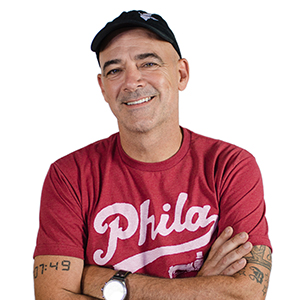
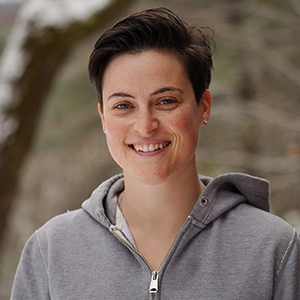
[00:00:10] Ray Latif: Hello friends, I'm Ray Latif and you're listening to the number one podcast for the food and beverage industry, Taste Radio. This special edition of the podcast highlights actionable insights and advice from interviews with six founders, creators, and leaders who joined us on the show during the first half of 2022. Just a reminder, if you like what you hear on Taste Radio, please share the podcast with friends and colleagues. And of course, we would love it if you could review us on the Apple Podcasts app or your listening platform of choice. We kick things off with La Colombe co-founder Todd Carmichael, who has turned his attention from coffee to sparkling water with his latest venture, Lofty Water. In this clip, pulled from our episode published on January 4th, Todd spoke about the origins of the brand name, the value of hard work, how he landed on sparkling water as the basis for his next beverage brand, why he chose to build a production facility rather than work with a co-manufacturer. First of all, why is it called Lofty Water? Well, Lofty because it has higher ideals. I mean, we want the brand, the company, and a lot of its aspirations to really be something that's a super high aspiration. both product and the direction of the company. We're taking 20% of all the profits from the company and we're driving it into projects that we think are important. We want it to have high ideals and the personality of the company, we want it to be someone that has high ideals. That it not just be about the bottom line, that it'd be about doing good. And not in that fake way, in the real way. And, you know, it's really that. It's about the aspiration of higher ideals, lofty water. How do you define fake and real? Well, I think that there's a lot of words to accept, like, I don't know, like brotherhood. You have people who say, hey, brother, hey, that's fake. You don't fucking know what brotherhood is. I know what brotherhood is. Brotherhood is me and JP. You know, that's real when it's deep inside your soul. And I think there's a lot of words used out there that aren't like genius. It's genius. It's like, no, it's not. Like, you know, there are a few geniuses. I'm not one, you're not one. I mean, a genius is like way up there. So we use these words and they don't really have meaning. So I, it's the way I separate them saying, well, no, that's fake. And that one is a real, you know, JP and I are true brotherhood, but we're not geniuses. We're just two normal dudes that work really hard. I'm glad you mentioned that you work really hard because I think you know there are some geniuses who for whom you know things come very easy. But for most people the struggle the hard work is how you get to. You know, you get to achieve the things that geniuses achieve. And one thing that you mentioned the last time we spoke that really stuck with me is that the struggle of creation, that struggle is where you're using your time most wisely. And it's, it's interesting because another entrepreneur who recently left his own company, his own sparkling water company, ironically enough, not to call lofty water, sparkling water, but we'll get to that in a second, but who left his own water company recently talks about how the obstacle is the way. And it kind of reminded me of your comment of the struggle of creation and the obstacle is the way. How do you, how do you think about hard work? and struggling as it relates to, you know, an end goal. I mean, is it always hard? Is it always that obstacle? Is that the journey that you thrive upon? Yeah, I mean, I like the way he says that, and in a lot of ways, I think they're very similar. You know, for me, it's like, if it's easy to climb a mountain, you shouldn't be climbing it. You know, it's when, I mean, particularly in the creative space, it's so much doubt, and it's just so, I mean, it's traumatic. You're chasing at whispers, at ghosts, at things that don't exist. You're looking for black holes, man. And that is, it's this whole traumatic experience that's popping around in your head and you're trying to solve a puzzle that's never been solved. In that space is where I think I belong. It's torture the entire time, but it's where I belong. And when you crack it, I mean, you crack it. I'm in my lab downstairs in my house, and I'm holding the Stanley freaking cop, man, because I know I've just cracked it. And tears are coming down my face because the months and months and months that led up to that moment were just constant self-doubt, constant trial and error. How many failures? You know, is this going to be the last failure before you pack it up? Are you just going to keep going at it and keep going and keep going? And I just kept going. And in that space, that's where I call the struggle is, I think, where I belong. You know, you've known the things I've done physically, like walking across big expanses. It's the same deal. Just step after step after step after step. I think that's kind of my strength. You know, a few, if you tell me, give me a choice between genius or drive, I pick drive. Drive will get you there. You know, genius watches a lot of Netflix too, huh? You know, goofs off. Drive gets her done, but drive hurts. I think any kind of innovation starts just with thought. You just spend a lot of time in your own mind. And you spend time, I walk aisles and I walk in the stores, I'm looking for spaces that are void. You're looking for black holes among stars, right? And it dawned on me that when you go to a restaurant, they only give you this binary option, which is still or sparkling. and it felt very black and white. And particularly when it comes to mouthfeel, when you look across the table or you look at the menu, you have thousands of mouthfeels, but in water you got two, really? Is that all you got? So you look up carbon and you realize that was invented in 1807. And you go, I mean, 1807, I mean, come on, they were putting leeches on people. I mean, so it's the truth. You see, I mean, they had large animals pooping in the streets. I mean, this is where we were. So you got to say to yourself the technology can't be that extraordinary. And you there has to be it can't just be black and white. It has to be a spectrum there somehow. And so you obviously you do all your research and you recognize that it's super easy to drive carbon into water. And it wants to hold on because of a chemical bond and it's very difficult to use any other kind of gas. I mean, it's just really the existing filling systems that have created this binary situation that, you know, they're all designed to only dissolve carbon into water. Not hydrogen, not oxygen, not argon, not any of the gas. You're breathing 14 gases right now. None of those, except for the carbon that you're breathing, can be injected in water. No, they all can. It's just really fucking hard. Sorry, I should have said that. Okay, it's just really hard. So I needed to figure out how to do that. And then, so I did. And once I did that, I then tasted all the gases that were consumable by people. And you find they all have different behavior. They have different bubbles, they have different flavors, they bring out different sides of essences, they can be sweet. And so you realize that it hasn't been binary the whole time, that there's an entire spectrum of bubbles between flat and sparkling. I think that there's a whole platform there. And I think the industry could really use an injection of new gases. I believe that if you can make your product on standard equipment, it's not innovation in my terms. I mean, in your terms, that's great. I mean, but in the way I define it. So it's almost as if I start out with the understanding that my area of expertise is those areas that can't be made in co-packing facilities. It can't be. You cannot make a draft latte in any COPAC facility. It can't be done. It's physically impossible. Now I did go to the FDA years ago and we went out to Kabul and I showed them how I would have to redesign their plant. And they were like you're out of your mind. I mean that's going to cost us 20 million dollars. You know it was just like they said go away you crazy person. So it was clear that now if I went to let's say a counterpressure filler and I said OK here you know with basically those who create carbon I would have to completely alter their plant in significant ways. I cut half of the line out, remove and put in a whole new piece, remove their fillers. And you go, okay, well, it just, no one's going to have that. I mean, no one's going to have it. So you have to go and create your own. That's it. I mean, it's, you know, part of it is too, I feel there's a lot of benefit because when you make your own stuff, you learn more. You learn and you learn, you're constantly learning, and you can modify and modify and modify and make it better over time. And that's hard to do with a co-packer, you know, because they want to crank out 30,000 cases and, you know, of each flavor and then wait for the next cycle. And that's it. You know, where I like to drop the line for 48 hours, modify it completely, fire it back up and then run it for 24 straight. You know, no one's going to put up with that. So yeah, one, it's the physical nature of it. I mean, particularly this way of creating effervescence, it's radically different than any line you'll ever see. I mean, the engineers that I have that came in over the last couple of weeks, they couldn't figure out what it was. These are beverage guys. I was like, what the fuck is this thing? How does it even work? I mean, you go, okay, yeah, all right. That's how far off go packing we are. Our next clip is pulled from an episode featured on May 17th and features Zoe Feldman, the GM of Consumer for acclaimed and influential restaurant group Momofuku. Zoe discussed the importance of maintaining perspective, the reason she only hires, quote, Swiss Army knives, her emphasis on building contingencies into the company's operational strategy, and why she maintains an open book, open door policy.
[00:10:58] Taste Radio: I've actually been thinking a lot about this lately. Like, what's... Like, we're not making vaccines, you know? No. I recently got married.
[00:11:05] Ray Latif: Congratulations.
[00:11:06] Taste Radio: Thank you so much. Thank you. She's the best. She's a surgeon. She's an OBGYN.
[00:11:11] Ray Latif: Wow.
[00:11:12] Taste Radio: And she deals with high-risk patients in a public hospital. And I often think to myself, You know, if Dr. Mara Black, she comes home, you know, every night having dealt with, I mean, horrors that, you know, you and I can't understand. And I'm sitting here thinking about, OK, my Pouya chili pods, you know, are stuck in the miller, you know, for an extra 72 hours. And it gives me very good perspective. I no longer am a person who freaks out. And I think it was COVID. It was learning how to be by myself. It was really, obviously with Mara, that's a big part of it. But it's understanding now that there are certain things that will require freak outs. stuff like that. Control the controllables, right? I can't waste my time or my energy because there's too many things. I would just be cowering in the corner. So I think it requires a lot of tenacity and a lot of patience. And I wonder a lot, why do I do this? I don't think it's the rush. I think it's the fact that I'm driven by two things. One, Just don't take this opportunity that's so incredible and not do a really fucking great job. I said I wouldn't say the F word. I'm so sorry.
[00:12:28] Ray Latif: I think if you used it twice, then it's fine. Like I said, we just have to hit that checkbox, let people know on Apple podcast.
[00:12:34] Taste Radio: That's fine. Sorry, not safe for children. You know, I'm driven by the fact that I love solving problems and puzzles. And I do think this is an extraordinary business and a brand. And I was handed the opportunity and I want to do a good job. But also, and I mean, this is a big part of it. I haven't sort of yet publicly talked about this, but it makes sense when you consider my background and my history. You still go into the grocery store and stuff says Oriental. It's 2022. Dave Chang was the guy who made it easier for everyone else to do the thing. He's been doing this 16, 17 years, like I've been talking about representation in this industry for 10, 12, 15 years. So it's like maybe it's finally caught up to him, maybe it's finally caught up to me that other people care about these things. So knowing that I sort of have that as well, the responsibility to help shepherd this incredible brand that was founded by an Asian American man. It's the opportunity to take everything I've learned, all the people that I've met over my entire career, bring all those resources to bear, to finally actually try and do the thing, right? It's like the speaking truth of power. I could say it all I wanted, but it's like, you know, okay, we were able to do it at Shobani through bringing diverse founders into the incubator program. It's fantastic. But I never really could wrap my arms around it the way I want it to. Now I can. And that's pretty extraordinary.
[00:13:58] Ray Latif: You described members of your team as Swiss Army Knives. Yes. Everyone has to be a Swiss Army Knife. What do you mean by that?
[00:14:08] Taste Radio: If you don't want to answer customer service tickets, then you can't be on the team. If I'm doing it at midnight, I don't expect you to do it at midnight, but I expect that nothing is beneath anyone. Everybody has to put ego aside. We need all hands on deck all the time. And I've erred on the side of overcommunication, which has definitely kicked me in the ass a couple of times, but I do it because I want everyone to understand that we truly are all in this together. We are very flat. There's no hierarchy. We have reporting structure, but when I say it's loose, it's incredibly loose and not really enforced. And you want everybody to feel ownership and accountability and like they're all in it together. And I will say it's been very remarkable to sort of watch unfold. And look, people are putting in 80 hours a week, 100 hours a week routinely. The growth is so rapid and I don't want to make a mistake and overhire and then have to not retain folks. Like I'm incredibly sensitive to that dude. I just don't ever want to do that. So making sure they're the right people and they understand that they are going to have to do some tasks that maybe would not be, you know, be fitting of what they think their level is. Those are not the people that I want to join this organization.
[00:15:17] Ray Latif: You did mention over-communicating, and I think this is something that's really interesting because under-communication oftentimes causes a lot of problems. Over-communicating, as you mentioned, can sometimes cause some problems, but I think the reverse is the bigger issue in a lot of companies. When you are tackling this issue of how much should I say or how much should I not say, what's your strategy?
[00:15:43] Taste Radio: I think about myself at 25 and at 28 and at 30 and at 35 or whatever, all different phases of my career. And I think to myself, God, I wish I had known the bigger picture because maybe that would have helped me in some decisions that I made. So I believe in letting everybody on the team know this is what the bigger picture is. Because if they don't know that, what do they think they're working towards, right? It's sort of like everybody's kind of working in a vacuum. If we all understand that the goal of the year is X, Y, Z, these are why these are the goals. This is why we chose to do things this way. It makes it clear for people, right? Like if I say, hey, we're really nervous about the port of entry situation because containers have gone up 10x. since the pandemic began, and I've inherited that problem. I want us to be able to figure out a way, I mean, I guess to kind of foresee it in the way that we best can to prepare for it. So maybe the woman, Alex Wong, who's amazing, who we hired a couple months ago to lead logistics and warehousing for us, She understands that I don't really want to risk any containers coming from Taiwan into the port of any port of entry in the U.S. in Q4 because there's going to be such a logjam because of the holidays. So instructing all the POs to be placed through the full year for all of our noodle products, right? It's making sure that everybody on the team understands that. Every function, customer service, marketing, sales, growth, finance, for a bunch of reasons, right? It impacts everyone, impacts cash flow, impacts tax and legal to some extent, certainly impacts sales, obviously, and growth on D2C. Those guys to be worried that we're not going to have enough supply because that in my mind is the thing we have to think about on a constant and consistent basis is how do we make sure that we have enough supply because the demand is there. So trying to think a couple steps ahead and really be strategic and not outsmart the global supply chain but do what we can. That is why I over communicate certain decisions to the entire team, because I want them all to understand this is what they're working towards now. This is why we're thinking about new noodle flavors in March of 2022, because it takes this much time. And then we have, I mean, you know, it's, it's a lot of work and a lot of prep. I always want everybody to understand what the insight is into these big decisions that are being made.
[00:18:06] Ray Latif: These are complex issues, though. These are complex global issues that are affecting everyone. And I think in some ways they can be kind of scary. I think in some ways the topics can be esoteric in nature. Are you at all concerned that this is going to go over people's heads and they just won't understand it?
[00:18:22] Taste Radio: On the team?
[00:18:23] Ray Latif: Yeah.
[00:18:23] Taste Radio: No. Because open door policy. Somebody has a question. Somebody wants to look at our P&L. Somebody wants to look at our retail sales plan. Everything's on Google Drive. Everybody has access to everything except legal documents. Everybody has access to everything. We have a meeting every Monday. We do a monthly business review once a month. We do a quarterly get together in real life. Everybody knows what's going on. I don't ever want anybody to be surprised or say, hey, I didn't realize this or I didn't realize this was going in this direction. Every member of this team, everything that they do touches everything else and has a material impact on every other part of the business. So I want everyone to see and understand the mechanisms for that and the how and the why.
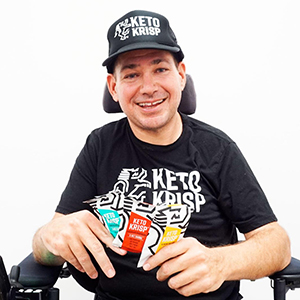
[00:19:06] Ray Latif: We continue with a clip from our episode published on February 1st, which features an interview with Adam Bremen, the founder of fast-growing snack bar brand, Keto Krisp. Adam explained the importance of, quote, getting outside of our comfort zones and why it led to his passion for surfing, why he wasn't overly concerned about the challenges of entrepreneurship in the food industry, and why he always, quote, puts himself in the retail buyer's shoes. One of the most amazing things I read about you and I saw on your Instagram feed is that you surf. And I wonder if that is something that came from your brother and sister as well. Did they teach you how to surf? Were they surfers?
[00:19:49] Todd Carmichael: No, you know, my brother's always been a sports enthusiast, basketball, golf, baseball, played all the sports all the way up into college and works out like a phoenix. And in 2016, he was involved in an injury. He's doing great now. But I came out to L.A. to help him rehab from the injury. And everybody's like, Adam, you gotta meet this guy, Jesse Billauer. Jesse Billauer runs this organization called Life Rolls On, and they help people with special needs surf. Now, Ray, I've never been surfing in my life, and I hate the cold water, but I love the sunshine, and I love to try new things. I think that's how we grow as individuals is to get outside of our comfort zone every day. And that builds confidence and confidence breeds success and positivity breeds positivity. And I just said, you know what? I'm going to try it. Who cares? What's the worst thing that could happen? You get a little cold, you get a little bit uncomfortable, but you're bettering yourself. And I was, I got up, I got there like six in the morning. It was a little chilly, the water was cold, but I was so fired up by the volunteers and by the athletes like myself. It was such an incredible day and my brother actually got to watch me participate in my sport. We're all growing up through life and it was great, Ray, as I would cheer for him. And I would love nothing more than to cheer for him all day long, but he got to watch me participate in my sport and do my thing. And it was such an incredible moment that, you know, I can't describe it. It was awesome. And now Jesse and I are great friends and we're a big advocate of his organization. And I encourage everybody to check out Life Rolls On because It's my commitment to the organization and to him to make sure that people like me have that same experience every day. And it's just, it was life changing for me. And after that event, I said, you know what, if I was in better shape, I could do more activities like this. And that's when I started dedicating myself to health and wellness. And that's when we started creating something like Keto Krisp.
[00:21:58] Ray Latif: It's one thing to have an idea. And I've said this a number of times on the podcast. It's one thing to have an idea. It's another thing to execute upon that idea. It helps if you have a family who knows business and you have a long, your family has a long history in entrepreneurship. Your brother's also a long time CPG executive. All that being said, you must have known getting into this business that the food industry is pretty tough.
[00:22:25] Todd Carmichael: anything that's worth doing is tough, but I look at that as an opportunity, really, and I don't mean to sound cliches, but again, I use the attitude you never know until you try. And number one, life is about focusing on what we can do, not what we can't. And I know that we're going to get into the can-do story a little bit later on. in the podcast here, but, you know, with my brother's experience and my love and passion for people, I said, you know, Noah and I both sat down and I kind of stumbled upon the keto diet just by chance, you know. I had started working out with a friend in the pool and we were doing some great things and he said, Adam, you know, if you really want to make some changes you've got to change your diet. And, you know, Google is our best friend and a great source of information. So I just started Googling the things that I was putting into my body and taking out, and it was really aligned with the keto-based lifestyle. And then, you know, as a passionate consumer and a curious consumer, I started testing different brands and just said, Why don't we try to make something that's a little bit different that really focuses on Taste Radio texture? Obviously, the macros are important. We just started with three flavors and just kept rolling and literally would go door-to-door and say, guys, you got to try this. People were excited and they loved the Taste Radio texture. Again, you never know until you try. We just kept trying and believing and just never giving up.
[00:23:58] Ray Latif: You know, Adam, I hope this comes across as positive, but you're a natural salesperson. From what I have heard and read about you, you just have this natural gift when it comes to selling. And I really, actually, I felt it the first time we had a conversation. I was just like, Adam just has this great way of communicating that lends itself to being a great salesperson. For folks who may not be a great salesperson, may not be great at sales, what is your secret?
[00:24:24] Todd Carmichael: I always put myself in the position of the other person on the other end, and being in a chair and having depend on people the way that I do, I think I'm extremely sensitive and extremely understanding of others, you know, and I'm so grateful for people. I wouldn't be in the position that I am today without so many great people. First, it starts with my dad and my mom who set the foundation of how to treat people, do unto others as you would wish them to do unto you, just simple like that. I just love people and I think sales is all about service. I really care about the relationships. The bars are one thing, but the people at the end of the day is really what's going to make your life special and that's what it's all about. And I always say this to my brother and my family, and anybody will listen, the bar is just a platform for me and us to connect as people. And that's what's really fun about this whole thing, is the ability to connect with others and to put a smile on your face and have fun. Life is short, we gotta play hard. Have fun, smile, and don't take yourself too seriously. And just, again, treat people how you would wanna be treated, simple as that.
[00:25:37] Ray Latif: When you say you try to put yourself in the other person's shoes, how do you understand what they need? How do you identify what their goals are or what they want out of the relationship that you may or may not have?
[00:25:52] Todd Carmichael: I think it starts with asking questions, showing that you care. when we have meetings with buyers, you know, I point blank ask them what they're looking for and, you know, why they're interested and introduce myself and they're interested in the story. They want innovative products. And I guess, like you said, thankfully, I have a gift to be able to, to communicate and just listen, you know, and ask questions. I'm never pushy or whatever. Hey, if you want to try it, great. If you don't thank you for your time. And I really mean that. I'm grateful. I really am.
[00:26:28] Ray Latif: Even though you have a team of folks that work for Keto Krisp, you told me that you're involved in every single buyer meeting. And that's really important to you as the founder of the company. Why is it so important that you're involved in every one of those buyer meetings?
[00:26:43] Todd Carmichael: Because again, they gave us the time to listen to our story. And the least I could do is be on a phone call, or meet them face to face. I mean, there's so many different food options that they can choose or look at, but they happen to give us the time. And I'm so, you know, again, appreciative, and I say it over and over again. When I say that, I truly mean that.
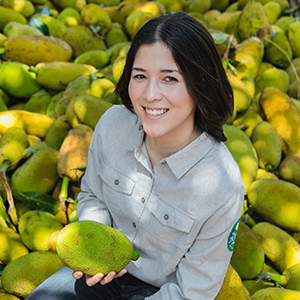
[00:27:07] Ray Latif: Next up is a clip from an episode published on January 11th, which featured an interview with Annie Ryu, the founder and CEO of The Jackfruit Company and sister brand Jack & Annie's. Annie explained the special nature The Jackfruit, identifying the right messaging to attract retail buyers and consumers, and what she's learned about entrepreneurship and the value of persistence.
[00:27:32] La Colombe: You know, jackfruit is this amazing plant, highest yielding tree crop in the world, drought resistant, thriving all over Southern India and could transform farmers' lives for the better by being a tremendous amount of added income for them if we could pioneer the supply chains and the foods to be able to get this to market. Jackfruit has this amazing meaty nature, just the way it grows. And that's why it has this very special and unique place in this huge plant-based meat arena, because it's naturally dissimilar to meat. So you're not starting with water and a protein powder or protein isolate to get to something that has a meaty texture. You're really starting with a plant that grows with a meaty texture. And that enables us to give consumers foods that are more similar to meat, less processed and more plant, which is really, people are looking for plant-based foods. They're looking to get more plants in their diets. So usually not just looking for something that's vegan, they're looking really for more plants. And so that's part of what we're really looking to provide to people with jacanannies. But it's also about providing those foods in a way that's not a sacrifice on taste, because if it's a sacrifice on taste, you're going to eat it a small fraction of the time as you would eat it if you really, really loved that food as food.
[00:29:00] Ray Latif: There's so much that's brilliant and beautiful about what you're creating and what you have created. The big question I think that a lot of people would have is, well, how do you get people to understand The Jackfruit is all about? Because it is still a very esoteric fruit, an esoteric plant for so many people. Is it really important to educate people about The Jackfruit as much as it is to educate people about plant-based eating?
[00:29:29] La Colombe: I think that for the time that we're in, we as a company are fortunate because when I started this company, plant-based meat didn't nearly have the name recognition. It wasn't nearly a movement as it is today. a word when I got started. And so it's now this huge arena, which really gives a foundation and a platform for jackfruit because jackfruit is the meatiest plant out there. There really isn't anything else like it. And so we don't have to do the education about what is plant-based meat and why you should eat it. We can, well, of course, support that, but we can talk about what Jack & Annie's is and The Jackfruit is in this space that already exists. As a social enterprise, the impact that we have is tied to our scale. So the more we can sell, the more farmers we can partner with. So we're always looking to grow. So basically, what's the message that will best allow consumers and buyers to understand everything about us? From the beginning, Whole Foods was our first customer. They understood the vision, the mission that we had, and put us on shelves when I was still running the company, basically out of my dorm. I remember getting the acceptance message sitting in one of the dining halls at Harvard. It was some real leaders and visionaries in the industry who could see this vision as well and stepped up and put it on shelves. And I think that when you can build those kind of partnerships, that's where the magic happens in the food industry. And you can really start making something change together because then a consumer sees our product on shelves at Whole Foods. And because it's on shelves at Whole Foods, they know, oh, this is the future that's starting to arrive. This is the kind of food that I've been looking for, looking for less processed, plant-based foods, and now it's here. Finding those customer partners who have similar values is a huge part of how you get that acceptance over time and how you really get that going. All of this was at one point just a vision. And when you can see with the work of our incredible team that every single day we're converting ideas and visions to reality. And when you look back on what we've been able to build and how much easier everything that used to be so hard has become. we can do whatever we set our minds to. I think that going from raising $100,000 round on a convertible note to raising $23 million in 2021, investors know that they can believe in us as well, that we've been able to pull off what looked impossible and create something that is extremely difficult, if not impossible, to replicate that is scalable and that we are in the process of scaling.
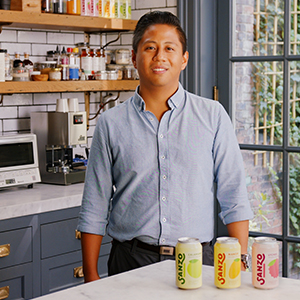
[00:33:02] Ray Latif: The episode continues with Sandro Roco, the founder and CEO of fast-growing Asian-inspired sparkling water brand, Sanzo. In this clip from an episode published on March 22nd, Sandro explained the impact of well-known culinary personalities on his decision to start a beverage brand, how he identified addressable white space in the sparkling water category, and why, quote, hitting quickly is important for an early-stage drink company. What really sparked this desire to get into the drink space? Because it's always fun to think about starting a beverage brand, but actually being in the business is a whole nother thing.
[00:33:43] Zoe Feldman: Yeah, of course. And I think exactly to that point, what folks think it is versus what it actually is to execute can be quite different. But for me, ultimately, it came from a place of the idea that, hey, food and beverage is culture. And the idea that culture can shape conversations, can shape, frankly, even like policy. For me, the journey started really with kind of an admiration for David Chang, the founder of the Momofuku Empire, as well as Anthony Bourdain, who I think for many folks, especially Asian Americans, really shone a necessary light and gave us a bit of the credibility that we were kind of hoping to get in more mainstream media outlets. But when I thought about, let's say, specifically the impact of a Momofuku, and so we talked about this, that I'm from New York, obviously spent some time in LA. For me, it was like, hey, the Momofuku brand, as amazing as it was back then, and obviously now they've also really, I wouldn't even say dabbled, they're really diving into CPG. But for the most part, pre-COVID, you really could only experience that culture. if you went to one of those restaurants. And as a person who grew up in suburban New Jersey, I thought about, hey, what would happen if for someone like myself, who's still living potentially in a suburban New Jersey or other parts of the country, how would they be able to connect those dots, create that bridge of cultures? And so for me, it was very much an idea that, OK, if I can't experience this in restaurants, how can I bring this to folks in grocery stores? And for beverage, I'll say, I can't, that's one where I'm like, I don't know that, you know, I think folks ask me, you know, could it have been a food product, a beverage, something in beauty or what have you? That is one where it's just, hey, I was a big sparkling water drinker before this. My mother as well, she actually has gastrointestinal issues. So she has always been drinking club soda or things with carbonation in them. And so carbonated beverages have always been a part of my life. And the idea that we could tell stories through a beverage And especially with how many occasions, even just throughout the day, but even events. We talked about our Disney relationship. We talked about other partnerships that we've had. There's just something I've found in the last two years with beverage that just can really, really set the tone for cultural conversations. And it's just been such an enriching experience for me over these last few years.
[00:36:02] Ray Latif: Well, sparkling water in particular, it doesn't require almost any education. People know what it is. Yes. So you don't really have to explain what this does for you. It's a refreshment beverage. Yeah. Yours are obviously a little different because you have such unique flavors. Yes. But sparkling water, regardless of the flavoring, even regardless of the branding, is still a very, very challenging category. I mean, there's some massive players in this space. Did you have any concerns that this was a real uphill battle that you could get swallowed up in? Sure.
[00:36:36] Zoe Feldman: Call it masochism or delusion, but I think we embraced the idea that it would be that kind of battle. But at the same time, and I think we've talked about this too, and I frankly, you know, we have these conversations with beverage buyers and folks in the trade. Yes, it's very competitive, but we also believe that we're creating a true white space, that if we do it correctly, yes, of course, folks can come in and start copycatting our products, you know, perhaps our branding to a certain degree, but the connections that we've made with our community, the authenticity of our relationship with our flavors, we don't think is as easily copycatable and look like, while it is highly competitive, we do see a massive market opportunity in specifically the flavors that we are, that we're working with. And what we specifically love about sparkling water, to your point, is that the education about the category, you don't need as much because it's a very, to your point, very easily consumable drink. You don't need to talk much about it. And so for us, that means that we can devote our time to talking about the culture. Sure, we'll very readily admit some of these flavors, you know, we do have to do the education about, but if we can, and that's why we've, really enjoyed our partnerships with Disney, Pixar, putting it in to folks' lifestyles outside of just food and beverage is able to help them make that connection. And we have seen, we feel like there will continue to be a massive white space for us in the future. So, you know, when we say all this, I guess, call it money, resources, all these folks getting in, we actually see that as validation of the fact that we have a lot of runway to go. What we did from the beginning and continue to do, because it has worked out well for us, is really invest into this community. When I launched the business, it was from a perspective of really starting with the community first versus, I don't know how other folks ideate, but from what I see, not just in this industry, but across the gamut, folks create a product and then try to hopefully back into filling a problem. We really started with the community first. And I think when we started seeing the initial pulls Both, sure, from a velocity perspective, and we can look at Spans IRI or whatnot, but really just like engagement at the very earliest onset. And that's why for me, it was very important to kind of start it by myself with a bit of a, as far as beverage goes, a shoestring budget. It's obviously crazy how much money anyone has to throw into this business just to get it off the ground. But once we started seeing that pull, it was very readily clear, oh, we could, own the conversation around this community. And one thing that's been fascinating for us is while, yes, we're doing this in Beverage, it's actually very empowering to see other folks own it in different spaces as well. I mean, we're, I'd say, at this point, pretty best business friends with Jing Gao from Flyby Jing, with the Pham sisters from AumSum, Sarah Nguyen from Nguyen Coffee Supply. You're seeing this happen across a variety of categories and our ability to, I think, collectively own this relationship with our community and also bridge out to the rest of the folks who are not necessarily in this community, but who do love these flavors, that's something that we feel is really actually sustainable. And that's why right now, even though we've had the run of success that we've had over these first couple of years, I can't emphasize enough that we really feel like we're just in the first inning of what we think is gonna be a very long game. I do tend to, I mean, I don't know if this goes against what a lot of folks feel in entrepreneurship, but I do tend to feel like in beverage, because there's so much competition, The product, I feel like the brand kind of has to hit a little quicker or else, you know, I'm not sure it's there, at least if you're going to try to build it fast. Obviously, you know, we just, before we hopped on here, talked about, you know, GT's Kombucha and how he built the entire category over, you know, a couple of decades run. But for us entering into a category like Sparking Water, which is already established, if you're going to be a new player, if you think you can become, you know, the next big thing, My thought was I wanted to feel like we could hit pretty quickly. And so having that initial buy-in that early kind of gave us the validation to say, OK, let's build the next set of relationships and go from there.
[00:40:39] Ray Latif: When you say hit quickly, what do you mean by that?
[00:40:41] Zoe Feldman: So we sent samples to the Momofuku team. Within about a week, they said, how do we get this on shelves? And within about two weeks of it hitting shelves, There were reorders, and it was a notion of like, hey, we need to order more. This is actually outselling the glass bottle Coke that's currently here, or the Just Water. Or I think they also had Glass Bottle Coke, Just Water, and LaCroix Peppermousse. And within two weeks, we were outselling all of those with our Calamansi flavor, and with our Calamansi and Lychee SKUs. That's kind of what I'm talking about, is like, hit quickly means get into a select number of doors, measure velocity, measure the relationship with the key decision maker, and then go from there. Because I will say, even hit quickly, sometimes I think folks might take that to say, go launch in 10,000 7-Elevens on day one. And that's not how we have built the brand. And at least right now, it's not how we're looking to. There will come a day, and we're obviously hoping to meet with the 7-Eleven venture team. But that day is not, that day was not back then.
[00:41:40] Ray Latif: Yeah, it was to really build that initial, that initial relationship with those retailer partners. Kat spoke with us in an episode published on February 15th, and in this clip, she discussed her funding strategy as an angel investor, why she urges entrepreneurs to find a quote, minimum viable community, and how she efficiently consumes large amounts of information using a variety of ways and sources.
[00:42:17] Adam Bremen: look like any investor, I am investing, especially investing in early stage companies, I'm investing in where I believe the consumer will be in five years. because I'm getting in early, right? Early in the curve, early in the company. And certainly I believe in omni-channel retail, I believe, which extends far beyond food, you know, and health and wellness. I believe in better for body, better for planet trends that will continue, accelerate and endure. And so of course, when I'm putting my money to work, where do I want to put it to work? I want to put it to work where I believe the customer is going. My advice when you asked to entrepreneurs or people in the early stage I said find a minimum viable community, a product, and a set of people who are so delighted that they reorder on their own. That happens for various reasons depending on the product. This is a nutritional product that helps people invest in their nutritional foundation and the customers we survey, our own customers, tell us they feel more energy, their digestion improves, over time they feel that they can tell that their immunity improves. People don't reorder a premium price product over and over and over for years on their own unless they believe it does something positive for them. So my tip is there is no free lunch. You can market your way and build a beautiful brand, it's very easy to do that now, to early customers. But if you believe your own hype, and you don't actually get to the truth of do they find enough value to reorder on their own and tell their friends, eventually you'll be found out, right? Eventually kind of the tide recedes of energy or of hype or of market dynamics. And you're left with whether someone feels they need your product in their life, if it is worth the time, the energy, again, the discretionary income. And so what Chris and the experts he enrolled over 10 years ago created, it worked. And people who wanted to accelerate recovery, who wanted to invest in their digestion, who already were early in the awareness of the connection between gut health and other parts of our health, because of the pro and prebiotics in this product, were fans. And they reordered on their own, again, a premium price point. And then word of mouth helped grow the business because they certainly didn't have a marketing budget. Again, they're bootstrapping the business. And there is no version of the Athletic Greens story and the success of the founder bootstrapping the business that occurs without a product that is so effective that a large majority of customers subscribe and stay for years and years. And of course, when you have that model, there are compounding benefits. of the business over time. It's not like typical CPG where you've got to keep remarketing, reacquiring a customer every day to like beg them to buy your product off the shelf, competing with another new product that is also marketing, branding, begging us, you know, to pay attention to their product versus another. This is a very different game. Quality, consistency, effectiveness in people's lives. And then yes, Now that we recognize we have a once in a generation opportunity to literally almost in the way that Red Bull or Gatorade were beverages of a generation to be that, but like radically healthy for you, then yes, it made sense to raise outside funding to go tell the world the story of the product and invest heavily in infrastructure and global expansion and inventory. ahead of our growing demand, but the secret sauce to getting to $160 million run rate was built on a foundation of a radically effective product. And then Chris, the founder CEO was and is an incredibly precise capital allocator, right? He's like radically focused on appreciating the cash conversion cycle of this model, protecting direct-to-consumer so he doesn't have these margin impact elements of wholesale or retail. Not that we won't go there. We will at some point, but in a uniquely AG way. But it was better for the consumer.
[00:46:45] Ray Latif: To oversimplify my thoughts here, you know a lot about a lot. Can you talk about how you consume media, whether it be via podcast, an article on a website, a conversation on social media, in an efficient way and one that's gonna benefit you over time?
[00:47:06] Adam Bremen: I mean, I am constantly digesting, but I'm just, I think like many people, I'm deeply curious. And the way I experience, it's different than learning, I mean, related, but when I see something that piques my curiosity, I'll read a little, but very quickly, I go deep in the community. I show up in the discord of the NFT project. I jump into the brand new app that's still clunky and weird and early stage to experience something like social audio and Clubhouse in its early days. or Discord as it was growing as the place for not just gamers, but now NFT projects and Web3 communities. I am just comfortable being the new kid in the room, not being the expert. I go deep, deep, deep in these communities and in these new platforms or categories. But then I pull myself out, right? I found a way to not get lost in the messiness of something that's early stage. I connect, I appreciate, I learn, I experience, I make my own mistakes so I can understand where it is in its life cycle. And then I think about how does this apply to me, my business, my family, my life, and then use that to incorporate and weave it through my thinking as a leader. as a brand builder, as a consumer. And I keep doing that over and over, right? I did it with Omnichannel Retail. I did it with CPG. I did it with Angel Investing. I did it with Social Audio and now Web3, NFTs, and I'm starting to get involved in DAOs again, hopefully Glossary at the bottom. And it allows me to be educated when something is early and messy, when people are typically hand-waving it, poo-pooing it, saying it's just a trend. Because most trends, they don't remain what they are they turn into something that matters and endures that go beyond being a trend right to becoming a movement and a shift in the way we live our lives and therefore commercial opportunities and brand building etc. And so this weaving of these deep experiences and then I don't say like I didn't become a professional gamer, I didn't become a full-time social audio creator, I didn't become a full-time NFT collector and trader, but I have deep knowledge and respect of these technologies and communities and shifts going on in the world so I can think about How does this apply to us and what is worth investing time, money, energy and resources? And so I can bridge these worlds of early stage and mass commercial or of entrepreneurial and something that's a bit more mature and accepted and enduring. And so the way I learn and absorb information is by experiencing it and going deep and not being scared by the messy stages and what I don't know and what I don't understand in the early stages. because making the mistakes is how I learn quickly by engaging in the communities.
[00:50:16] Ray Latif: That brings us to the end of this episode of Taste Radio. Thank you so much for listening and thanks to our guests, Todd Carmichael, Zoe Feldman, Adam Bremen, Annie Ryu, Sandro Roco, and Kat Cole. As always, for questions, comments, ideas for future podcasts, please send us an email to askatasteradio.com. On behalf of the entire Taste Radio team, thank you for listening, and we'll talk to you next time.