[00:00:00] Paddy Spence: This episode of Taste Radio is presented by BevNET Events. Join us this November 29th and 30th for Nosh Live, a natural food industry conference gathering A-list speakers from top brands, investors, retailers, and more to navigate the food industry, discover what's next, and find your vital partnership.
[00:00:26] John Craven: Beverage Pros, you know we have you covered. BevNET Live takes place on December 3rd and 4th to talk about innovation, trends, and challenges in the beverage space, while encouraging partnership through extraordinary networking opportunities. The events are at the Lowe's Santa Monica Beach Hotel for the 10th time. To learn more, visit www.bevnetlive.com and noshlive.com. We hope to see you there.
[00:00:48] Paddy Spence: And now, Taste Radio.
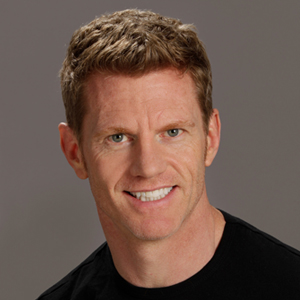
[00:01:01] Ray Latif: Hey, everyone. Thanks for listening to Bevinette's Taste Radio. I'm Ray Latif, and you're tuning into episode 132 of the podcast. This week, we're joined by Paddy Spence, the visionary founder of market research firm Spins and CEO of Stevia sweetened beverage company Zevia. Just a quick reminder to our listeners, if you like what you hear on Taste Radio, please share the podcast with friends and colleagues. And of course, we would love it if you would rate us on iTunes. It's hard to overestimate the impact that Paddy Spence has had on the natural food industry. With Spins, Patty helped change the way that natural product sales data was collected and cultivated, and in doing so, created a powerful resource for a fast-growing industry. As the CEO of Zevia, a company that he acquired in 2010, Patty has played a key role in legitimizing Stevia as a leading natural and zero-calorie alternative to sugar. Despite its divisiveness among consumers, the ingredient is central to the incredible success of Zevia, which is expected to pull in over $200 million in sales this year. All this being said, we were delighted to have Patty join us for this episode of Taste Radio. In our conversation, Patty discusses his decision to launch Spins, the importance of marrying personal insights and passion with quantitative data, why he views Zevia as a brand that is about continuous improvement, his perspective on work-life balance, and whether a multi-billion dollar exit is imminent for Zevia. All right, it's Ray from Taste Radio, and I am on a web link with the one and only Paddy Spence. Patty, thank you so much for being with me. Absolutely. Thank you for having me today, Ray.
[00:02:46] Paddy Spence: You guys are located in Encino, California, correct? That's right. We're in the San Fernando Valley, just outside of Los Angeles proper. It is a typical Southern California day. Feels like New England in the summertime, without the humidity.
[00:03:04] Ray Latif: You're pretty familiar with New England. You grew up here and you went to school not too far from BevNET headquarters here in Watertown, right?
[00:03:10] Paddy Spence: That's exactly right. And one of my favorite places and favorite childhood memories is my mom going to the Eastern Lamigin Bakery and getting us lamigins, which are like Armenian pizzas, a specialty of Watertown and just one of my favorite foods.
[00:03:26] Ray Latif: It is a delicious food for sure. And you went to college in Cambridge, is that correct?
[00:03:31] Paddy Spence: I did. I went to Harvard both as an undergrad and for business school. And after being a townie and growing up and living in Cambridge at 25 years old, I said, I'm getting the heck out of here and I'm moving to California.
[00:03:45] Ray Latif: You've had a very long career in food and beverage. How'd you cut your teeth in this business?
[00:03:50] Paddy Spence: Well, my first job out of business school was with Kashi Cereal. And it's one of those classic natural food success stories. When I joined Kashi in 1992, there were seven employees. It was $3 million in sales. But we had an idea. And the idea was we could create a better cereal. And what does that mean? It meant a cereal without sugar and a cereal with high fiber and whole grains, a multigrain cereal, which in 1992 sounded insane. And frankly, that's what attracted me. I've always been attracted to the idea of doing things that are just super challenging and maybe crazy. And Kashi certainly fit the bill. And so that was my first job in the natural products industry. So many of the real tenets that allowed Kashi to be successful still exist today. And I'm seeing them play out with many brands, including Zevia. And what are those tenets? It's a consumer population that's looking for a better way. In those days, everybody ate cereal for breakfast, and yet cereal was not always healthy. It was full of sugar or artificial colors or preservatives or other stuff. Passionate consumer was the first ingredient. Creating a familiar yet better-for-you version of what people were familiar with was the second one. Kashi looked like a regular cereal, but it was healthier. And then the third one was an industry that said, hey, there's a better way we can sell better products and we can differentiate ourselves by doing that. And we've seen the retail environment evolve a lot over the last 26 years, but nonetheless, the leading retailers today are the ones who are saying, you know, I can do things differently and I can do it better. So consumer, product, and retail environment were all there in an early stage, but many of the same attributes we see today that are fueling the explosive growth of this industry.
[00:05:43] Ray Latif: So you mentioned retail environment, and in 1995, you launched a company called Spins, which is a market research firm that's focused on natural and organic products. You know, what did you see as the opportunity back then, particularly when the industry was still in its infancy?
[00:05:59] Paddy Spence: Well, it's a great question. And I think broadly, I believe in being your first customer. In other words, so many great opportunities and businesses are born out of the needs of the founder. And in this case, I was a frustrated market research user. Frankly, I would go to conventional supermarkets and I always had a little bit of Nielsen data indicating the one or two cereals, conventional cereals that Kashi was out selling. But then I would go to natural products retailers, and back in 1992, Whole Foods didn't even have a data warehouse. And so even I would go to Whole Foods market, and they didn't even know what their best-selling cereal was nationwide. And so I realized, wow, I'm a sample of one, but this is definitely the type of data that I would purchase as a user. There must be other folks like me out there. And so that was really the genesis of Spins with this idea that we can arm ourselves with facts and analytical tools to help us drive the business and help us reach consumers. And 20 plus years later, Spins is a thriving company and has really proven that out, that analytical information can help drive the growth of an industry and fuel an industry. The light bulb goes off and I'll never forget one of my first meetings when I was with My friend John Raish from United Natural Foods, and this is probably 1995, and we were looking at data. And John was at that time in the East Coast in Connecticut, and we looked at this brand called Oregon Chai. And Oregon Chai was on fire. And what was amazing is Oregon Chai was on fire regionally. On the West Coast, it was surging, and John wasn't even stocking the product yet. And I'll never forget looking at that data together and the two of us realizing, hey, this isn't a fad. This is a trend. Six months later, Oregon Chai had national distribution and the rest was history. And so moments like that where you see the power of data, you see the power of gaining insights outside of your own walls, it's so powerful and that can change everything.
[00:08:05] Ray Latif: Was there a time when a trend or a hot brand didn't show up in the data and why?
[00:08:12] Paddy Spence: Well, I think, you know, there's an old saying that Nielsen's chief statistical officer said to me once, which is, all data are wrong, but some are useful. And I think there's a lot of truth to that. Look, data can absolutely mislead you, but it's knowing how to sift through the trends and how to identify things. So I don't know so much that there were things that we didn't see in the data. There were certainly things, trends and phenomena that you saw in the data that were tough to project or track. I'll give you a great example. St. John's Wort and some of the herbal supplements in the late 90s were just on fire, but it was literally like watching a roller coaster. You'd see a negative article in the Wall Street Journal or the New York Times about this or that supplement, and we would watch the sales tank. Then you'd see a positive article about another supplement, and we'd watch sales surge. And so it was almost impossible to forecast because you'd look at growth trends for an herb or a supplement ingredient and say, this thing is on fire. But all it took was one negative article and sales would tank. So that was an example where the past doesn't help you predict the future. And in some more volatile product categories like that, it was really tough to use data as much of a guide. So things haven't changed much is what you're saying? The media still has an outsized influence on people's behavior, there's no doubt.
[00:09:35] Ray Latif: If you're a brand owner then, and you're planning out your innovation strategy using data analytics, what are some of the things that you should take into consideration when maybe tempering or accelerating a potential line extension?
[00:09:49] Paddy Spence: Well, I'm a big believer, again, with that adage that all data is wrong, but some is useful. I'm a believer in overlaying qualitative insights with quantitative data. What does that mean? It means that I'm a consumer and I'm passionate about certain segments, foods, beverages, supplements, etc. And so I go to the store and I find things that personally excite me. And when there's an intersection between my own personal interests and a trend I see, it makes sense. And so I can give you any number of product trends that I would consider to be fads. I personally don't subscribe to those, and as such, haven't gotten involved. And in some cases, those trends have kind of fallen by the wayside. So juice cleansing, for example. I am not a personal believer in the concept of cleansing, and certainly cleansing with high sugar fruit juices is the antithesis of healthy to me. But if you watch the data, you could see a tremendous surge in those categories. As an individual, I felt that was short-lived, and I think history has proven me correct in that people realized, hey, if I only eat sugar and water for a day or a week or a month, I may lose weight, but that's just not conducive to longer-term health. And as such, we've seen this whole idea of these quick cleanses using juice kind of fading away, and we're seeing different trends emerging in the fresh juice and beverage space.
[00:11:14] Ray Latif: So it's a little bit of going with your gut and your intuition as much as it is considering the data.
[00:11:19] Paddy Spence: Well, exactly. And as an entrepreneur, on the flip side, there are compelling trends that if I can't get excited about them as an individual, I'm probably not going to do well at. I remember years ago, I interviewed as the CEO of a pet food company. I now have two cats, but at the time I wasn't a pet owner. And I looked at that and I said, you know, I'm just not sure I'll be able to summon up the passion for dog food that I can for some other categories. And as such, I'm not sure I'll do well at this. Having said that, organic pet food is a blazing hot category. And sure enough, you know, there are a lot of successful companies in that segment. For me personally, I knew that wasn't going to be my best opportunity because of my lack of personal passion.
[00:12:03] Ray Latif: you know, spins is, as you mentioned before, an important part of a growing industry and has contributed to the growth of an industry. And at what point did you say, okay, now is my time to move on to something else?
[00:12:17] Paddy Spence: Well I think you know I ran spins as CEO for eight years and was chairman for another six or eight months after that. And I think at a certain point you realize that your interests have evolved. And for me you know much of what I had sought to accomplish strategically we did. You know, we created the first data service for this industry. We pioneered scanner data for natural product stores. We partnered with AC Nielsen at the time. And so a lot of those big strategic things had been accomplished. And for me, you know, I really had a passion around products. And one of the things that had happened to me along the way, Ray, is that in 2001, my wife and I went off of sugar. and it changed our lives. And I had been in the natural foods business for quite a while at that point, but I thought I was healthy until I did a food journal for a week and realized I was getting 250 grams of sugar a day. So literally a thousand calories a day just from sugar. And that was an epiphany that completely changed my life and changed the way I felt every day. So we went off sugar and started using Stevia every day. And I realized that, for me personally, again, this was a life-changing event. And gosh, there's probably millions, if not billions, of people out there who could benefit from that same experience and that same revelation. And so ultimately, that led to Zevia, because our whole mission is to help folks reduce the amount of sugar that they consume. We really believe that sugar is the number one enemy to public health around the world and is contributing to many, if not most chronic diseases and getting off of sugar is the first step towards health. So that's an exciting mission. If you can change people's lives with a product that you create or that you offer, boy, that's a life's work. And so that's what I'm doing today at Zevia.
[00:14:07] Ray Latif: We'll be right back with Paddy Spence after this short break.
[00:14:10] Paddy Spence: Nosh Live is a two-day business and networking event for the natural foods industry held this winter in Santa Monica on November 29th and 30th. Learn more at noshlive.com.
[00:14:23] Ray Latif: So having launched Spins, you probably worked with dozens of brands, if not hundreds of brands over the course of your time there, and yet you still decided to start a CPG company. You weren't terrified by the prospect?
[00:14:34] Paddy Spence: Well, I think things that terrify you are the most exciting, right? I mean, I'm not a skydiver, but why would anybody in their right mind jump out of an airplane? Because it's terrifying, right? And I tell my kids that, you know, excitement is part fear and part anticipation. And there's no doubt going up against Coke and Pepsi to sell a carbonated soft drink is the epitome of insane, right? Or at least it was eight years ago. And yet, that's what made it so exciting. And I really, in my heart of hearts, Ray, believe that we have a better product. And it's not just because it doesn't have sugar. It doesn't have artificial sweeteners, or GMOs, or artificial flavors, or color, or all these other things that people want to avoid from soda. And so I can stand there with 100% confidence and know that I have a better product. So my task is just to get it to people. So when you start to break it down like that, it gets a lot less scary. And at the end of the day, ask 100 people, who wants to drink more Coca-Cola next year? Even the most diehard fans are not going to tell you they want to double their consumption. So that is a perfect environment for a challenger brand like Zevia to come in and redefine what this category means.
[00:15:48] Ray Latif: You're right, it doesn't have any sugar, doesn't have any calories, doesn't have any artificial sweeteners, but it does have stevia. Stevia is still a very divisive ingredient. There are some people who will taste a product with a little bit of stevia in it and they will never try that product again or never buy that product again. You know, when you were formulating the idea for a brand and formulating the liquid itself, what did you take into consideration as it relates to people's, many people's, dislike of stevia?
[00:16:19] Paddy Spence: Well, let's first just put things in context. Stevia has 47% household penetration in the United States. 84% of people are trying to reduce their sugar consumption. So, which sounds better, marketing something that 16% of people want, which is sugar, or something that 47% of people want, three times the number, which is Stevia. So I think there's a real misunderstanding there. And that comes from a less than holistic view of why people consume products. If it were only about taste, people would drink champagne or Jack Daniels all day long, right? If it were only about health, we'd only drink water. The reality is it's about both. And I think that's where Stevia wins every single time. Because yeah, sugar tastes great, but guess what? It's linked to a lot of chronic health problems. Stevia, half the people think it tastes great, half the people aren't sure, but the half that aren't sure, they know what sugar does to them. And so I think one of the missing ingredients there is how you perceive the health impact of something you consume affects the way you perceive its taste. People want to like sugar and they want to like artificial sweeteners, but at the end of the day, the negative health halo associated with those products detracts from their enjoyment. And so I'll tell you this, we have no problem getting people to switch from conventional soda to Zevia these days. taste is not an issue. People love the taste of our product, and more importantly, they love the impact it has on the health of themselves and their family.
[00:17:53] Ray Latif: For the record, I would drink champagne every day if I could. Now, you mentioned a bunch of numbers there with household penetration of stevia. There must have been some challenges early on with not only people not knowing what the ingredient was, but some of the issues with taste, which many have been remedied or at least improved upon in that time or over the last few years. What was the biggest obstacle or was it really challenging to sort of sell this notion of a stevia sweetened beverage? to retailers, to investors, and ultimately to consumers?
[00:18:32] Paddy Spence: Not really. I mean, I think we've always taken an iterative approach to the ingredient in our product. And what do I mean by that? Well, Stevia was granted sweetener status, grass status by the FDA in 2008. That was only 10 years ago. So as I tell people, you know, when I started at Xebia in 2010, we were at MS-DOS, right? And I'm old enough to have grown up in an area before we had computers. And I can remember the first computer that I had access to, the RadioShack TRS-80. That thing was not in any way powerful. It could barely do anything. Did people buy it? Heck yeah. Did they buy the first iPhone? Of course. Was it anything like the iPhone today? No. And so if you start with that approach and that philosophy that this is an early prototype or this is an early version, and we're going to continue to improve it, you will continue to delight your customers. And I think that's something we've had at our core, values-wise, from the beginning. We never think we're at the end point. We're not taking a formula and locking it in a vault for 100 years and keeping it secret. We're continually iterating it. And as the ingredient and the taste of the ingredient improves, we've been able to improve our product. And along the way, just as importantly, we've been taking out more and more nasty stuff. So we don't have any color in our products anymore. We're non-GMO project verified. We only have Stevia as a sweetener. I mean, we have four ingredients in our product. And so That iterative approach has allowed us to continually improve the product and to continually delight consumers along the way. We had people in the early days who loved our product because of the impact it had on their lives. And now, eight years later, they say, I love the impact on my life and I really love the way it tastes. So for us and our brand it's all about continuous improvement. It's about being 1 percent better each day each week than we were before and just continuing to find ways to make the ingredient deck cleaner to enhance the packaging to get the price lower to get the taste better. You know it's just constant process of iterating and optimizing here at Xebia.
[00:20:42] Ray Latif: Do you think there's a point at which Zevia and Stevia as an ingredient will taste just like sugar?
[00:20:48] Paddy Spence: I think there's a point at which we're going to say, our children or our grandchildren are going to say, I can't believe you used to put sugar on waffles, or I can't believe chocolate milk used to have sugar, or I can't believe X, Y, and Z. So I do. I think sugar is going to be used as it should be as a condiment. as a drug, as something to be used very sparingly? Can you imagine if we consume salt in the same way we consume sugar, right? I can't even imagine the impact on our health. I see a world where our sugar consumption looks more like our salt consumption, where we're sprinkling a little bit of sugar on something to enhance taste without getting the negative health impact of excess consumption of sugar.
[00:21:37] Ray Latif: Is it about changing the palette of future generations in some ways, in that maybe beverages don't need to taste as sweet?
[00:21:46] Paddy Spence: Absolutely. And I think one of the things we're seeing in our business is, when I started at Zevia eight years ago, one of the things that kept me up at night was closing what I call the sweetness gap. We're just not as sweet as Diet Coke. How do we get there? And Aspartame and Ace K artificial sweeteners are intensely sweet. And we don't have that same sweetness with Stevia and with Zevia. Well, fast forward eight years, what's happened? Well, Americans have started drinking a lot more sparkling water. And so two things have happened as a result of that. Number one, when you consume less sweet, you need less sweet. And so all of a sudden, no one's telling us that our product isn't sweet enough. And the other thing is, guess what? Zevia without color looks a lot like sparkling water. And so some of the positive attributes of better for you beverages, like no color, have become more prominent in recent years, just as the consumer's palate has shifted to move away from sugar. And I find this in my own household. My six and eight-year-old daughters have grown up in an environment where sugar just wasn't consumed very much. And so guess what? A little goes a long way. And it's been amazing to see firsthand how our palates have evolved. And I know it's happening with hundreds of millions of people around the country.
[00:23:04] Ray Latif: Zevia is a national brand. Just for context and perspective, how many retail doors are you guys in at this point?
[00:23:11] Paddy Spence: We're in about 30,000 retail doors in the U.S. and Canada, and we also have a very robust online business. Last year, Bloomberg reported that we were the number two soda online ahead of Pepsi after Coca-Cola. So we definitely over-index in venues like online, and I think that's a leading indicator, and that's why our sales are accelerating the way they are.
[00:23:33] Ray Latif: So early on, you know, how did you align with the right retail partners for the brand? And what were some of the early wins that opened up doors for Zevia later on?
[00:23:43] Paddy Spence: Well again so much of our process is marrying personal insights and passion with quantitative data. And one of the really compelling pieces of data we got early on on the brand was that really we were a multiples brand. And what does that mean. It means that 30 percent of our transactions back in 2011 were multiple six packs. We're selling on average nine cans per transaction. And so when you look at that very early on as a tiny little brand, and you say, gosh, we're selling nine cans, are we a dry shelf multi-pack brand? Are we a single serve immediate consumption brand? Well, that's pretty easy. We're a multi-pack brand. And so focusing on that strategy, which, by the way, is literally the opposite of what very successful brands like Vitamin Water and Buy had pursued, But you know what? We're going to run our own race. We're going to build the volume and the business on the dry shelf via multi-packs, and that's been a tremendously valuable strategy. Fast forward to 2018, and we're now seeing tremendous demand for immediate consumption Xevia across a range of venues, whether that's convenience, restaurants, healthcare, education, etc. So that early decision, driven by data, really set the course for the Brad Avery the next eight years.
[00:25:01] Ray Latif: And you've created other Daypart uses and usage occasions by extending the platform into mixers and other beverage categories as well. How do you evaluate those opportunities to introduce new products and brand extensions?
[00:25:18] Paddy Spence: Well, again, it really comes down to looking at qualitative insights and overlaying data. So qualitatively, I'll give you an example. I'm on my, I think, fifth can of Zevia organic tea today. Brand new product line we just launched. We've only been shipping for about four weeks, but we're getting a phenomenal reception. Well, how did that product line come to life? Two ways. On the qualitative side, for 18 years, my wife and I have been making tea at home. and putting Stevia in it and going, gosh, I just wish someone else would do this. And no one did, and so we stepped up. What's the quantitative side of that? Well, one of the things we found is the Zevia shopper significantly over-indexes for tea. So people who buy our soda and our energy drinks and our mixers and our sparkling water are also drinking tea, they just don't have a Xevia offering to purchase. And so when we took that qualitative personal insight, overlaid the quantitative data on our shopper, it was a blindingly obvious opportunity. And it's a great brand extension. It's our first non-carbonated line, and it's our first USDA organic line. So for us, it's all about finding ways to extend the brand, continue to bring the ingredients more upscale, more pure, and at the same time, meet a clear consumer need that we see in the data.
[00:26:39] Ray Latif: We'll be back with more from Paddy Spence after this quick break.
[00:26:42] Paddy Spence: Natural Foods Companies, hire your next great team member by listing your job on the Project Nosh job board. To learn more and list your job, visit Nosh.com slash jobs.
[00:26:56] Ray Latif: I hope you're getting a discount on that data.
[00:26:58] Paddy Spence: I am a wonderful customer for Spins and I joke with them, if you can't sell to Paddy Spence, you probably shouldn't be in sales. Just put it in front of me and I'm going to sign. Come on.
[00:27:10] Ray Latif: Isn't that where the name Spins came from, from your last name? Am I wrong?
[00:27:14] Paddy Spence: Originally, it was Spins was Spence Information Services. And thankfully, we evolved past that long ago. But yeah, there's no doubt that I'm a great customer for Spins. I'm the easiest sell they'll ever make because I'm very data hungry.
[00:27:29] Ray Latif: and you happen to have founded the company too. I'd love to talk a little bit about company culture. How many people work for Zevia at this point?
[00:27:40] Paddy Spence: It's a moving target, but I think it's around 55 or so, maybe 60 at this point.
[00:27:46] Ray Latif: And I mean, that's a, that's a healthy number of folks who work there. I mean, as a leader and as a leader, you know, having done this twice now, you know, what do you see as the best ways to motivate your team? Well, I think it's three things.
[00:28:01] Paddy Spence: I think that really starts with the selection process. And so. We hire people who are passionate and they're passionate about a lot of different things. We have people in our office who are passionate about martial arts and who are passionate about horseback riding and passionate about quilting or whatever it is. But having a passion and focusing on that is kind of the first selection criteria for us. The second thing that's kind of unique about our culture is everyone at our company is an owner. Through our stock option program, everyone has equity in the company, and thus we think like owners. So I'm going to tell you a great story about an opportunity that really has become a real focal point for our business that started because of my colleague named Luke. Luke runs our shipping, and he came to me one day and said, hey, Patty, did you realize that Joe Rogan is a big Xevia fan, and he talks about Xevia on his podcast? didn't realize that I'm not a listener or hadn't been at that time. And so we sent Joe a bunch of Xebia and sure enough, he's a big fan. Luke then came to me a few weeks later and he said, Hey, Patty, you know, I was watching a documentary on the UFC fighter, Nate Diaz, and he's a big Xebia fan. Well, who knew? Next thing you know, we send Nate some Xevia and he's now one of our sponsored athletes. And more importantly, mixed martial arts and fighting has become a really big vertical for Xevia. And who would have ever guessed we'd be the fighter soda, but we are. And all of that came from our shipping coordinator, Luke. So thinking like an owner is the second one. And then lastly, it's just having a workplace where people can be themselves. You know, we spend so much time at work, and yet the idea of having to operate in an environment where I can't be myself, it's so constraining. So what does that mean? Well, we dress casually. We wear Zevia t-shirts. We drink a lot of soda at work. We have flexible work hours. You know, it's an environment where we're here to work, but we work to live. We don't live to work. And so, you know, we're all about supporting families. We're about supporting our team members. And this is a big family. And so it's about selecting people carefully, making sure they have a passion, allowing them to be themselves at work and allowing everyone to be an owner in the business. So we're all thinking about how we can move the business forward. Have you ever had to fire anyone for bringing in like a sprite? You know, it's funny you say that. There's not a lot of sugary beverages consumed in this office. Having said that, you know, and this is something that I really strongly believe. I don't believe that people should never have sugar. What I believe is they should have a sugar budget and they should allocate that as they see fit. And so I can tell you, people, they eat donuts in the office or they eat birthday cake on a birthday. And if you give a six-year-old a choice, do you want a lemonade juice box or do you want a piece of cake with the same sugar content, they will pick the cake every single time. And in our household, we have a sugar budget and my kids always allocate their sugar budget not to beverages but to foods. So people eat sugary foods in the office, they don't drink a lot of sugary beverages. I'm sure they wouldn't want to drink it in your presence, that's for sure. Hey, you can smoke a light cigarette and you're not gonna die, but how many light cigarettes can you smoke and still be healthy?
[00:31:13] Ray Latif: Very good point. I read a quote of yours once that said, so much of what I try to do is be 1% better than I was yesterday. What does that mean?
[00:31:23] Paddy Spence: Well, it means that challenging yourself is not always easy, and it's not always comfortable. But if you adopt a mindset that says, I'm going to challenge myself all the time, you'll not only become more comfortable with failure, but you'll find ways to just be a little bit better. So I'll give you a very personal close to home example. My wife's out of town this week, and I'm taking care of my two kids alone. We have to leave the house at 7.15 in the morning in order to get to school on time. And the first four days of the week, dad alone, it was a struggle. And the kids didn't get a great breakfast, and we're brushing our teeth in the car and that kind of thing. So I said, you know what? It's Friday today. Mom's coming home late tonight. I am going to make this the best morning of the week. And I got up at the crack of dawn, and I made an amazing breakfast with pancakes and berries and all this stuff. And so, you know, the satisfaction that I derived from that one tiny thing, I said, you know what? I'm just going to make Today's morning go the way that the kids would love for it to go. And it was so satisfying, such a tiny thing, but it got our day off to an amazing start. And to me, that's what life is about. It's about identifying those little things you can do to just feel better every day, or even more importantly, make someone else feel better. And that's what Zevia is all about. It's just being the best we can be and supporting our family, supporting our community, and supporting the health of the world.
[00:32:48] Ray Latif: We often ask CEOs, and particularly CEOs, because it is the buck stops there kind of job, how they balance work life and personal life. And it sounds like you have some pretty good perspective there. Is there a point at which you say, you know what, I have a set time to leave the office and that's it? Are you that kind of CEO? Or is it sort of just, I'm where I need to be as needed?
[00:33:12] Paddy Spence: No, I'm someone who gets the work done. But candidly, my family comes first. And that's our ethos at work in general. As I said, we work to live, we don't live to work. And so for me, 100% of the time, if I'm not out of town on business, I'm home for dinner. And before that, I leave the office early and I pick my kids up. And you know what, that means I got to work an hour late at night or an hour at five in the morning. That's what I do because it's the most important time of the day for me. And so I do think it's about prioritizing and saying, okay, first priority is my family. Second priority is my work. And I'm going to find whatever time I need to to get that work done. Third priority is my health and my workouts. And again, I'll squeeze those in. But for me, it starts with family. And that's what's most important.
[00:34:02] Ray Latif: You've been at it with Xevia for eight years. The brand, as you mentioned, and over 30,000 retail accounts. I've seen some numbers in terms of revenue. I'm sure you're not going to share those numbers with me, but it's a pretty successful business. So what's next for Xevia? What's the end game?
[00:34:19] Paddy Spence: Well, the end game I think is to reinvent carbonated soft drinks on a global basis. I mean, I don't have to tell you or your listeners, you know, if you ask a hundred people, what's the worst food in your diet, the worst thing in your diet, it's soda. Many people will tell you that. And that's not me saying it, that's their perception. And so if we can bring a product to the world that has no sugar, has no artificial sweeteners, has only four simple plant-based ingredients, you know, we have an opportunity to make a material impact on global health. And that's what I'm excited about. So, you know, I see us as an independent company. I see us as the monster energy of carbonated soft drinks, but better for you carbonated soft drinks. And we are still very early in that mission. But we're at a tipping point. And I'm seeing it not just with consumers, but with retailers and other industry partners. The world is saying enough is enough. We've been lied to enough about the health profile of sugary drinks. They're not healthy. I'm just gonna say it black and white, sugary drinks are not healthy. People realize that and yet they haven't had an alternative. So that's what my life's work is and that's what gets me excited every day to go out there and change the world.
[00:35:34] Ray Latif: Can you do that on your own though? I mean, don't you need a strategic partner to do that?
[00:35:38] Paddy Spence: Well, you know, it's interesting, Ray, I think eight or 10 years ago, that was the conventional wisdom that distribution was the Holy Grail, and you needed big beverage to get in front of the consumer. And I think, you know, if I had to think about a watershed event that really changed my perception, it was Whole Foods and Amazon. Because you realize very quickly that your consumer can find that product wherever it is, and getting to the store efficiently is what's important. And in the old days, yeah, maybe it was a transactional relationship with the consumer that was really fueled by distribution. And if you put the product in front of the consumer, they'd buy it. I think that's an old model. I think today's consumer is saying, I want authenticity. I want something that stands for something, and I want something that's better for you, and we deliver on that. And I can tell you hands down, Big Soda is not meeting the consumer's needs in those areas.
[00:36:28] Ray Latif: So you've built this great distribution network and you've made it clear that a strategic partner isn't necessarily the most important thing for the company's future. But with this capacity, with this ability to deliver products across the country, have you ever considered taking on another brand to plug into your network that has similar or aligned values to Zevia?
[00:36:54] Paddy Spence: You know certainly that's a fascinating question. I guess what I would say is I want to do one thing well versus two things halfway. And Xebia's categories total six hundred and sixty billion dollars globally. And that's just the categories we're in today not the ones we're contemplating. So I'd say I got a pretty hefty workload just to carve out my one or five or ten percent share of that market long before we take on another brand. So it's always interesting and I never say never but we certainly have plenty of work and plenty of opportunity with the Xevia brand expanding our global distribution and our share of stomach in the markets in which we compete.
[00:37:35] Ray Latif: Outstanding. Patty, this has been great. And I know you're a very busy man and I really appreciate you taking the time to sit down with me and you know, good luck with everything going forward with Xevia. Absolutely. Thank you, Ray. That brings us to the end of episode 132. Thank you to our guest, Paddy Spence. Tune in on Friday, October 12th for episode three of Taste Radio Insider, which features an interview with John Sebastiani, founder of Crave Jerky, who discusses the business strategy behind his incubator and private equity fund, Sonoma Brands. You can catch both Taste Radio and Taste Radio Insider on Taste Radio.com, iTunes, Stitcher, Google Play, SoundCloud, and Spotify. For questions, comments, ideas for future podcasts, please send us an email to askatasteradio.com. On behalf of the entire Taste Radio team, thanks for listening, and we'll talk to you next time.