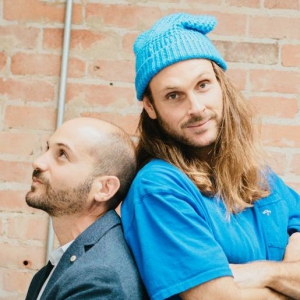
[00:00:10] Ray Latif: Hello, friends. I'm Ray Latif, and you're listening to the number one podcast for the food and beverage industry, Taste Radio. This episode features an interview with Ari Raz Noah Simon-Waddell of plant-based probiotic yogurt brand, The Coconut Cult. Get access to limited swag and exclusive content by becoming a Taste Radio VIP. It's easy for you to join that group of very important people. Just head to Taste Radio slash VIP and take one minute to sign up. The example of a duck is often used to express abductive reasoning. If it looks like a duck, swims like a duck, etc. If one were to use the term a niche brand, the logic would typically hold true. But there are exceptions, like The Coconut Cult. Founded in 2017 by Noah Simon-Waddell and Ari, The Coconut Cult markets refrigerated coconut-based yogurt sold in glass jars. Known for its commitment to small-batch production and vegan and organic ingredients, the brand is sold chain-wide at Sprouts and The Fresh Market, and is also carried at select Whole Foods regions, along with hundreds of natural and independent stores. An 8-ounce jar retails for approximately $10. The Coconut Cult has also built a thriving direct-to-consumer business, generated in part by a social strategy where Noah is front and center, speaking to the brand's followers, including 107,000 on Instagram, about healthy eating and lifestyle choices. Amid the construction of a new production facility designed to keep up with surging direct-to-consumer and retail demand, I spoke with Noah and company CEO Ari Raz about how The Coconut Cult has positioned itself for scale and mainstream success while maintaining the values and vision from which the brand was born. Hey folks, it's Ray with Taste Radio. I am at Expo West 2023 at the Marriott Hotel, which is adjacent to the Anaheim Convention Center. In the press room and sitting with me right now are Ari Raz Noah Simon-Waddell of The Coconut Cult. Gentlemen, so great to see you. Great to be here, Ray. That's Noah. Thank you, Ray. That's Ari. And you guys just came from your luxurious Airbnb, or what Ari described to me in that I perceive to be a luxurious Airbnb.
[00:02:39] Noah Simon-Waddell: We rented the biggest house we could find. How many people do you have on your team? Our team is bigger than you would think.
[00:02:47] Ari Raz: We have, yeah, full-time we have 14 and part-time we have 12. Wow.
[00:02:52] Ray Latif: Yeah. Okay. Company's bigger than I think people would imagine.
[00:02:55] Ari Raz: Yeah, I would think so too. It's mainly because we are self-manufacturers. So we have a large operations team with our two facilities running full-time.
[00:03:06] Ray Latif: Noah, you created the formulation for Coconut Cult and I think about how amazing it is and what a unique kind of product it is. There's not a lot like it. Is there, I mean, do you guys have competitors or are there other brands out there that do what you do?
[00:03:20] Noah Simon-Waddell: I don't think there is another brand that does what we do.
[00:03:24] Ray Latif: Does that make it harder for you to talk about what it is that you sell? And, you know, for folks who are not familiar with the brand, just give us a brief introduction.
[00:03:32] Noah Simon-Waddell: Sure. I started making homemade yogurt when most of the food that I was eating was making me sick and I would just feel unwell a lot of the time after I ate. So I stopped eating a lot of prepared foods and started making all my own food. So I was making my own cheese, milk, and yogurt. and was making it with a homemade yogurt starter. And I was also sourcing like specific probiotic strains to help with inflammation and my gut issues and like chronic kind of health issues I'm having. So I realized I should be fermenting the very medicinal, powerful, expensive bacteria instead of the basic lactobacillus that most people make yogurt with. And it was night and day. And I was like, wow, I ate this yogurt I was making and I could really feel how much better I felt just after eating it. It was clearly working. I passed it to friends and family, and there's a lot of similar reaction. I'm like, this yogurt makes me feel great. It's very active. That's what the yogurt is. I think fast forward six years that I've been selling this yogurt to people who are interested, It's been a challenge because people are like, is it a yogurt or is it not a yogurt? And it is a yogurt, but it is like a different value proposition. It's also like a supplemental probiotic. So it's like in these two different categories and. One thing I really figured out was, why is it so different than other yogurt? And it's because it's so active and alive. And what we've learned is that almost all the yogurt in the grocery store is actually pasteurized after they've fermented the bacteria in it. So most of the yogurt that everybody's eating, like their daily yogurt that everyone's been eating for most of their lives is very different than the yogurt that we're making because it's essentially very low probiotic. It's not very active. It tastes different. It's not as tart. It's not as sour. It doesn't have like a mouth tingle. And ours has all those things. So in one way, it's easy because we're like, what we are is a yogurt that's actually super fermented, very alive, very active, has a very tang to it. It almost has a medicinal quality to it. And that's going to be very different than any other yogurt that you bought in the store.
[00:05:55] Ray Latif: All that being said, and thank you so much for that introduction to the brand. It's a lot. It's a lot to talk about. It's a lot to explain. The tingly feeling is probably something to explain, too, to people who are trying, and they're like, oh, is this bad? Did I eat something that was bad? But no, you're actually eating something that is really good because of that. The tingly feeling tells you that. So having said all that, I think, and I'll admit, when I first encountered your brand, I was like, okay, this is a small niche brand. It's going to do great in heroin. And I know you guys do great in heroin. I don't see it really scaling. I don't see kind of scaling potential unless you do something really drastically different, maybe single serve, because currently you're in 8 and 16 ounce jars. And I thought maybe a smaller size would be great for trial, great for getting into the mainstream retailers, etc. I was wrong. You guys are scaling and you're scaling in natural quite well. You're scaling in e-comm as well. And Ari, you shared some of those details with me. Can you share them with our audience?
[00:06:46] Ari Raz: Yeah, absolutely. So I felt the same way as you, Ray, when I first joined The Coconut Cult. I thought we needed something new. We needed to introduce something new that would allow us to scale, get on more shelves. Because to be honest with you, when I joined the business, one of the reasons why Noah brought me in was really to help the brand reach its potential. And the way that I saw that happening was to really deprioritize the core line that Noah created. use the same yogurt, but offer it in a smaller size format at a more accessible price point, which seems like a pretty, you know, generic playbook for any CPG brand, but it works, right? What I didn't realize at the time and what I learned last year is in fact the demand for the core line, the eight and 16 ounce glass jars, even at 9.99 and 19.99 on shelf, the demand for those products is far greater than I could have envisioned. In fact, if you look at my original models and projections for what the glass jars could accomplish in terms of gross sales in natural retail, I've since tripled my expectation for what they can achieve, and I'm actually thinking that's probably not high enough. Wow. Yeah.
[00:08:05] Ray Latif: And talk about your direct-to-consumer business, too, because this is shocking to me, especially because your products need to be delivered cold. If they are not, you get this bubbling thing going on underneath the lid. It's not bad for you, right, Noah?
[00:08:19] Noah Simon-Waddell: No, it's just more for fermentation happening.
[00:08:22] Ray Latif: But again, your DTC business is pretty remarkable.
[00:08:25] Ari Raz: Yeah. So essentially what we had to do in November, really, but we started this in September, but by November we were on this path that we had started where we were releasing a limited edition flavor on our website every two weeks. And some of those flavors were going to be a collab, either with another brand or with another influencer. All of these are people that Noah's known for years and all the brands Noah's been friends with for years. So we did one in October with Hoobar. where we put an entire bar of chocolate in our cream-based yogurt, and that yogurt just took off on social media, on TikTok. It became a phenomenon. People were sharing and resharing videos of themselves pulling entire bars of chocolate out of a jar of yogurt. I mean, who's crazy enough to do that? Our CMO, Mike Schneider, by the way.
[00:09:20] Ray Latif: was pulling every favor he had ever acquired in this industry, trying to get a jar. I don't know if he ever accomplished that. I don't know if he ever got it.
[00:09:28] Ari Raz: Well, he stopped by the booth to grab one. Oh, really? Yeah, we have many 8-ounce versions of it at the booth. Okay. But what that triggered was this incredible amount of interest and curiosity about, what is this brand? What is it all about? So in October, we had 180,000 individual users visit our website. Of those 180,000, about 35,000 of them went straight to our store locator. And then from there, our Instagram audience started to skyrocket, our TikTok following started to skyrocket, and subsequently our subscription numbers started to skyrocket. And just this interest in like the flavor of the month concept. From September, when we had 260 monthly subscribers off our site, we have grown now to today to over 4,200 monthly subscribers. with no paid ads, no paid influencers, no affiliate fees, just organic marketing, content created by Noah, content created by our influencer friends, talking about our limited edition flavors and how cool they are, how delicious they are, and really helping us spread the word and build awareness. And it's been a tremendous success so far, and it's definitely something we're going to continue doing. That is absolutely nuts.
[00:10:46] Ray Latif: And it all came from the one collab that you just did with Hugh Chocolate.
[00:10:50] Noah Simon-Waddell: Well, that was a great one.
[00:10:51] Ray Latif: Or at least that was the starting point.
[00:10:53] Noah Simon-Waddell: I think it's really cool because we're able to do so many like really interesting collabs. There's so many great partners and other food brands that are out there that we're able to create a really interesting, unique flavor that someone isn't expecting in a yogurt every month. We had a great one for Christmas with Simple Mills. We did a Simple Mills Santa's Milk and Cookies, which had the same level of excitement behind it. We just did a, and sometimes we don't do, we just did a banana bread flavor. We made a yogurt that essentially tastes like banana bread and has the texture and consistency of bread pudding that possibly was the most viral flavor we ever made.
[00:11:35] Coconut Cult: Vibrant Ingredients is the natural ingredient partner powering food and beverage innovation, delivering flavor, function, and protection through a science-backed portfolio. Vibrant delivers purpose-driven solutions that help brands create extraordinary experiences. Discover what's possible with Vibrant today. Visit VibrantIngredients.com.
[00:12:03] Ray Latif: It seems like these collabs are directly responsible for the increase in your subscriber base. However, do you feel like there needs to be a strategy not only to maintain the sustainability of what you currently have, but also to build upon it? I mean, certainly the collabs and these limited edition offerings are going to get you some new customers, but The strategy has to go beyond that, right?
[00:12:27] Ari Raz: Yes, absolutely. At a certain point it will. But the truth is that we have capacity challenges that limit how much we can sell off our site. So every month when we release a limited edition flavor, we actually have to cut off the number of new subscribers that we can accept each month and the number of limited edition jars that we can make as well. You know, the truth is, is that with our current strategy, as basic and simple as it seems, there's a good argument to be said that without really changing too much about how we're doing it, as long as we continue to come out with, you know, incredible flavors, really unique offerings each month, the network effect of what we're creating of, you know, more and more people starting to find out about the brand and learning about it and trying it or wanting to try it. There's still a ton of, of just runway that we have without really having to shift to something like, you know, working with a paid ad company or anything like that.
[00:13:25] Noah Simon-Waddell: I mean, that coupled with the education around why our yogurt is so different and so much more You can take it in place of your probiotic supplement. It's like an actual functional yogurt. I talk a lot about that on TikTok and Instagram, and I think not only do those views get a lot of views, but it gets a lot of other influencers and influential people sharing the same message. this very serious, like, hey, we're really changing the food system. We're trying to improve yogurt and make it a much better for you product with the fun marketing-esque stuff that we do with the collabs and the flavor of the month. It's a great kind of tandem effect.
[00:14:14] Ray Latif: Ari, you told me about the successes that you're seeing at Sprouts. Yeah. And I wonder, do you see that the success that you're having at that retailer is a direct result or at least a very strong consequence of all the virality you've been seeing from these collabs?
[00:14:32] Ari Raz: So Noah touched on a really important point, which is it's not just the collabs. It's not just the limited edition flavors. A big piece of what we're able to do that is very unique that really boosts our credibility and our awareness is the content that Noah creates, the message that he puts out, being the person who really created this whole brand. His message is so important and it's been resonating with all of the natural food influencers that we work with, it resonates with a ton of our audience customers. And I think that what we saw in Sprouts, right? We didn't just see it Sprouts, okay? Before we even launched in Sprouts, when we went viral on TikTok, and we had a lot of people wanting to learn about our brand, before we got into Sprouts, our purchase orders from October to November, increased by 250%. And that's before we got our first order from Sprouts.
[00:15:35] Ray Latif: And just to be clear, when did you launch in Sprouts?
[00:15:38] Ari Raz: So we launched in Sprouts and The December. Of 2022. Correct.
[00:15:43] Ray Latif: Yeah. You know, when I talk to founders and I talk to investors, it seems like the name of the game is just to continue to grow, grow, grow, grow. And hopefully, well, nowadays, definitely be profitable while you're doing it. And there's been some chatter and I kind of subscribe to this chatter of just build a great business. And if you can be profitable and pay your team well and pay yourself relatively well, great. Why not? It's a business. It doesn't need to be a national, international kind of brand. No. People have different ambitions and, you know, I'm not an entrepreneur and I don't, you know, maybe I'd be a bad entrepreneur because I think that way. But, you know, Noah, what are your ambitions for this company? What do you want to see The Coconut Cult become?
[00:16:26] Noah Simon-Waddell: Well, my first ambition with it was sort of the energy behind food business that I sort of like felt was very stiff and very serious and not aging well. So I was very interested in kind of creating a fun, playful and sassy energy that would sort of match the sassy yogurt. And I think it grew into having me grow up a little bit about what was important with food and business. And bringing in Ari, we did it in a very groovy way and trying to scale our sort of management team and company structure in a groovy way that felt like a serious business, but also felt like a family. But I think the newest iteration of my ambition is I think yogurt in the grocery store should be real. a live yogurt that's going to help people's guts because the food system has gone wrong in so many ways. There's so many things in the grocery store that are causing illnesses and making people sick and causing digestive issues, which cause all sorts of other issues with their health. And I think yogurt is a food that can help heal that. It can help deal with a bunch of the food kind of spawned ills that everybody is dealing with, or so many people are dealing with. And I think it's unfortunate that the yogurt that everyone has access to is not helping anyone. So my ambition is to change the way that yogurt is manufactured, the way that yogurt is understood, and the actual product of yogurt that people are buying because I think people, especially in this day and age, deserve yogurt that's going to be very, like, healing and a great digestive aid and is going to actually help them fight off a bunch of, you know, bugs and viruses going around, and I just don't want our yogurt to do it. I want the expectation of yogurt to change for the consumer. So I think it's a very large-scale thing. I think we do it by trying to like, you know, lead by example and push our way to the front and have the loudest, you know, soap box in the yogurt category and try and see if we can get a couple of these yogurt makers to come along and try to do what we're doing.
[00:19:02] Ray Latif: So it's not just about, say, getting The Coconut Cult into a Walmart as much as it is trying to convince, say, a Chobani to adopt a process that is going to deliver the same kind of nutritional benefit as The Coconut Cult.
[00:19:17] Ari Raz: We don't wanna call out specific brands, but what I would say to that is, you know, the way buyers think about yogurt in general is they say, okay, dairy yogurt's dominant. That's the 8.5 billion category. Plant-based yogurt, much smaller category. It's a subcategory in yogurt. The two top leading brands in plant-based yogurt today, if you look at their nutritional profile, if you look at their ingredients, you know, you'll see canola oil, You'll see starch, you know, different kinds of starches. You'll see gums. You'll see natural flavors. Refined sugars as well. Ingredients that consumers more and more aren't very interested in, right? And you wonder why the plant-based yogurt category is so much smaller than dairy-based yogurt. Well, it's because generally the two top brands that you see everywhere aren't really great products. They don't taste that great. Their ingredient profiles aren't great. So what's the opportunity for The Coconut Cult? I think the opportunity for us is to really show buyers, show the industry. It's not about plant-based yogurt or dairy yogurt. It's about who has the best tasting yogurt, period, that is functional, that provides you with the benefits that you're looking for. and tastes, again, better than anything else on the shelf. And I think that's the real opportunity for The Coconut Cult, to be that brand that can bridge that gap between what people perceive as a plant-based versus a dairy category, much in the same way that you see plant-based meat companies trying to bridge that gap. We're doing it with a product that's completely clean label, ingredients you can recognize actually functional and also, again, that tastes better than pretty much any dairy yogurt on the market.
[00:21:03] The Coconut: Do you want more repeat buyers on Amazon? Well, this free resource in collaboration with Straight Up Growth will help your brand turn first-time buyers into long-term subscribers. Download Winning the Repeat Purchase Game on Amazon now at Taste Radio slash SUG. That's Taste Radio slash S-U-G to start building retention-driven growth for your brand on Amazon. Scaling a beverage brand into major retail comes down to operational readiness. From packaging lead times to co-manufacturing strategy, the details can make or break a launch. In a new e-book in collaboration with Octopi and Asahi Beer USA, industry leaders share what they've learned in helping brands scale. Download it now at Taste Radio slash octopi.
[00:21:53] Ray Latif: What is your trial strategy right now and how do you see it evolving to get more people to try The Coconut Cult?
[00:21:59] Noah Simon-Waddell: Our strategy has been being a little preachy on social media. You know, I think it's valuable information.
[00:22:08] Ray Latif: How many followers do you have across your social platforms?
[00:22:11] Noah Simon-Waddell: I mean, I think we probably have over 100k on Instagram and about 50k on TikTok.
[00:22:19] Ray Latif: And people are digging the preach?
[00:22:20] Noah Simon-Waddell: Yeah, I think it's like the message of, you know, your yogurt could be doing so much more for you. You know, you don't even realize that you think you're eating this functional product and it's not actually alive is a powerful message. The strategy has been me explaining these truths that I've found out and it's got a lot of other people wanting to share the same message. So our trial strategy, I think, is mostly just sharing what we know about yogurt and how we make our yogurt and how it's different and why that's meaningful and why it's so important. And I think it resonates with a lot of consumers that are then just sharing it in their circles and sharing it on their channels or just sharing it to people that they're bumping into in the grocery store, that I think that's what's driving the trial is this awareness that's spreading organically just because of how meaningful the message is.
[00:23:15] Ray Latif: Who are your followers? Who are your customers?
[00:23:18] Noah Simon-Waddell: The people that care about ingredients, the people that are looking for food to do something more than just be calories.
[00:23:27] Ray Latif: So demographic wise, I mean, would you say it's females 18 to 25? Would you say it's very active consumers?
[00:23:35] Noah Simon-Waddell: I think it's across the board. Yogurt is traditionally probably consumed more by women than men. So it definitely skews to being a heavier female audience. But what do you think, Ari?
[00:23:49] Ari Raz: You know, I agree with you. I think where, so when I first came in as CEO, I asked Noah and one of the other co-founders, Jungho, I said, you know, are we kind of like a, you know, 35 to 45 female brand? Or are we like a 18 to 25 year old female brand? And they said, oh, we're a 35 to 45 female brand. Well, OK, you know, that's what they said at the time. I think today, based on all of the posts that we see being shared, especially with our TikTok posts, that's really changed. I don't think that you could put an age sort of metric on who's buying our yogurt at this point.
[00:24:29] Ray Latif: But TikTok definitely skews younger to an earlier audience.
[00:24:32] Ari Raz: Well, because of that. Right. So now we have so many more younger generally females buying the yogurt, discovering it, sharing it. And what's really cool is that when people try it and experience it, generally they have a positive experience. Our repurchase rate is incredibly high for the industry. It's a reason why we have so many subscribers too. They become passionate about the brand. They become passionate about the product. They want to become evangelists for what we do. And that is one of the reasons why we have so many people who reshare posts about our yogurt on social. Again, influencers who other brands might have to pay. money to share about their product, they'll post about us organically because they believe in what we're doing in our mission so fully, and because Noah's communicating a message that resonates with them, and it's a message that they, too, want to share with their audiences.
[00:25:25] Ray Latif: And it's fun. I think that's the element of food that sometimes gets lost, right? Like, people want to enjoy what they're eating and drinking, right? And so how do you get people to feel comfortable with that and, you know, pick up a jar and want to take a picture of it? It's got to be fun, right?
[00:25:39] Noah Simon-Waddell: Yeah, it's got to be fun. If it's not fun and it doesn't taste great, it doesn't work.
[00:25:44] Ray Latif: Yeah. But the fun element, I mean, how far do you go with it, I guess? I mean, because I think originally The Coconut Cult was fun, but to the point of... almost comical, and I apologize for saying that, but it felt that way, you know?
[00:25:58] Noah Simon-Waddell: I mean, the truth is, like, I'll turn everything into a joke. I think everybody, you know, everybody on our board, everybody that I have to have, our investors, they all know this about me. So I guess we're finding that out, because I'm always going to push the limits of fun and seriousness and what to take serious and what can I parody. You can be polarizing and polarizing is good, right? Because it's just, you know, more people paying attention and more eyeballs. And, you know, as long as it's for the greater good, we can— Ari's been waiting to talk here.
[00:26:33] Ari Raz: Scroll far back enough on our Instagram feed and find the Fluffy Flamingo Muppet videos to get a picture of what he's talking about.
[00:26:44] Noah Simon-Waddell: Yeah, I was doing a puppet show with Flamingo Puppets before Ari came on board. I thought I was pretty good.
[00:26:55] Ray Latif: If I was an investor, I'd be like, hey, that's hot.
[00:26:58] Noah Simon-Waddell: We put that on the first page of our deck and we're like, how is this going to work? Have you seen our puppet show?
[00:27:04] Ray Latif: It's going to kill with the moms. So it sounds like you're tempering a little bit or your team is asking you to temper.
[00:27:11] Ari Raz: No, we're not asking Noah to do anything. We're just asking Noah to be Noah. And, you know, if he wants to create content that is silly and goofy, great. I think that at the end of the day, the real judge of whether the content works or doesn't work is, you know, how many views does it get? How much engagement does it get? Where does it go? And whether or not people buy the product. And Noah's been doing it for so long that he's evolved how he does it, too, in his approach. And I think that, arguably, he's... I wouldn't say you've mastered it, but, like, you're... I'm better at editing myself. You're getting there, yeah. And it's a really powerful skill set that most brands, especially emerging brands, right, they're not very good at or they don't recognize how important it is. But for a brand to be able to really communicate its value to customers in a way that is authentic and resonates with them and makes them want to reshare that, that's incredibly powerful. And it's something that, yeah, most brands really don't have a lock on.
[00:28:11] Ray Latif: What's more authentic, though, than hearing from the founder and someone who feels as passionately about their own brand and their products as someone like Noah? I mean, I think that is something that when people talk about authenticity, You know, it's not just seeing an Instagram post with, oh, we use this much of this ingredient or look at The Fresh fruit we use. It's like, well, anyone can do that. Is that authentic to your brand? I don't know. Is it specific to your brand? Specific to a lot of brands. But Noah, there's only one Noah.
[00:28:42] Noah Simon-Waddell: Yeah, I mean, as a consumer, I'm always interested in the people behind the product, the energy behind the brand, because I want to connect to something that feels human, that feels real, that doesn't feel like a business or something that's been manufactured as something that's going to sell. So yeah, when other brands see that I do really well on social for a brand, they're asking me, how can I get more views like you're getting or whatever? I'm like, well, people connect with other people. So instead of thinking of your social media account as a business account, think of it as a personal account and make it about you or make it about a person that other people can connect to. Cuz no one wants to follow a business. No one wants to be engaged and keep tabs on a business. People want to follow and engage with another human that they can then kind of develop these kind of weird. you know, screen relationships that you do when you, like, on your phone, you feel like you get to know someone through their Instagram account or something, you know, that develops with another human. So that's always, like, my biggest piece of advice for other brands is, like, make your social media about connecting with another human, and that's what, like, I resonate, and that's what I aim to do.
[00:29:55] Ray Latif: I think now's when you can drop the mic.
[00:29:59] Noah Simon-Waddell: Expensive mics, right?
[00:30:01] Ray Latif: Yeah, they're okay. We have a couple. That was incredible. Thank you so much for that. No one wants to follow a business. That should be written on every business strategy or social strategy that's ever been written. Outstanding. Guys, I feel like The Coconut Cult has been kind of a long, strange journey, but it's getting to the point where this long, strange journey is making a lot of sense. And even if it continues to be a little strange going forward, that's great, because that's who you are. And that's what The Coconut Cult is. Thank you so much for taking the time to be with me today. I'm so excited for the future of your business and for you guys personally.
[00:30:34] Noah Simon-Waddell: It's been a pleasure, Ray. Thank you, Ray. It's been awesome.
[00:30:37] Ray Latif: Thank you.
[00:30:37] Noah Simon-Waddell: Until next time.
[00:30:38] Ray Latif: Exactly. That brings us to the end of this episode of Taste Radio. Thank you so much to Simon-Waddell and Ari Raz. Taste Radio is a production of BevNET.com Incorporated. Our audio engineer for Taste Radio is Joe Cracci. Our technical director is Joshua Pratt. And our video editor is Ryan Galang. Our social marketing manager is Amanda Smerlinski. And our designer is Amanda Huang. Just a reminder, if you like what you hear on Taste Radio, please share the podcast with friends and colleagues. And of course, we would love it if you could review us on the Apple Podcasts app or your listening platform of choice. Check us out on Instagram, our handle is bevnettasteradio. As always, for questions, comments, ideas for future podcasts, please send us an email to ask at Taste Radio. On behalf of the entire Taste Radio team, thank you for listening, and we'll talk to you next time.