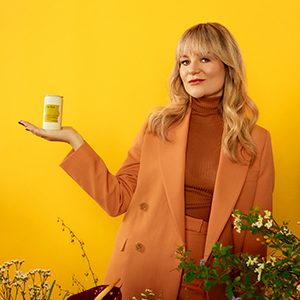
[00:00:10] Ray Latif: Hello friends, I'm Ray Latif and you're listening to the number one podcast for the food and beverage industry, Taste Radio. This episode features an interview with Morgan McLachlan, the co-founder and Master Distiller of botanical spirits and lifestyle company, Amass, and also the co-founder of De Soi, a brand of non-alcoholic aperitifs launched in partnership with music icon Katy Perry. Just a reminder to our listeners, if you like what you hear on Taste Radio, please share the podcast with friends and colleagues. And of course, we would love it if you could review us on the Apple Podcasts app or your listening platform of choice. There were a few chuckles when Morgan McLachlan launched her first brand, a vodka crafted from California clementines. Yet while its novelty may have amused some in the beverage alcohol industry, the product represented a foundation for her now acclaimed distilling philosophy, which is focused on botanical-based spirits. The co-founder, chief product officer, and Master Distiller of Los Angeles Amass, Morgan describes the company as born out of, quote, a desire for quotidian pleasures made better by plants. Launched in 2018, Amass produces a variety of spirits, including its flagship dry gin, and in recent years, extended into hard seltzers, as well as personal care and beauty products, such as liquid soap, hand sanitizer, and candles. Earlier this year, Morgan introduced Dissoie, a line of sparkling, ready-to-drink, non-alcoholic aperitifs. Co-founded by global pop star Katy Perry, Dissoie was designed as a brand for mindful, yet also refined consumption. The line includes three expressions, each made with botanicals like blackcurrant, birch, and yuzu, and functional ingredients including reishi mushroom, ashwagandha, and maca. In the following interview, I spoke with Morgan about her transition from a career in the film industry to the spirits business, and how the former guided her focus on creative distilling methods. She also discussed how Amass developed its distinctive branding and positioning, the company's decision to incorporate lifestyle products into its portfolio, how Dessoit is an expression of a new phase in her life, and the origins of her partnership with Katy Perry. Hey, folks, it's Ray with Taste Radio. Right now, I'm honored to be sitting down with Morgan McLachlan, who is the co-founder of Amasse & Dessoix. Morgan, how are you?
[00:02:43] Morgan McLachlan: I'm doing great, and I'm admiring your French pronunciation.
[00:02:48] Ray Latif: Well, the first time we chatted, I really screwed it up. I called it DeSoy, which was totally embarrassing on my part. It's spelled D-E-S-O-I. So maybe I could be forgiven for calling it or pronouncing it DeSoy, but you were like, Ray, it's actually DeSoi. And so now I'm gonna get that right forever from now on.
[00:03:11] Morgan McLachlan: We'll be welcoming Canada and France now.
[00:03:15] Ray Latif: Both great countries. I'm excited. I'm excited. And I'm excited for you. You were named one of Food and Wine Magazine's Drinks Innovators of 2022. Congratulations on that.
[00:03:26] Morgan McLachlan: Thank you. Yeah, it was actually a surprise and a real great honor and really fun interview for that too.
[00:03:36] Ray Latif: Yeah, I read the interview. I read the highlights of the interview and it mentioned that upon coming to LA or moving to LA, you created a nocino out of walnuts that you foraged in LA. Is that right?
[00:03:51] Morgan McLachlan: Yep. Well, I came from, I was born in British Columbia and so very familiar with the, you know, the botany and plants and stuff up there. And then I moved to Los Angeles felt very overwhelmed at a babe in the woods. So I just, I started doing hikes around here. I don't know if you spend much time in Los Angeles, but you know, when people think of LA, they don't, they think of You know, I used to think of kind of like, what's that video game?
[00:04:18] Ray Latif: Grand Theft Auto?
[00:04:19] Morgan McLachlan: Grand Theft Auto.
[00:04:21] Ray Latif: Yeah, I knew exactly what you were talking about. How did I know that so quickly?
[00:04:27] Morgan McLachlan: Yeah, people tend to think of Grand Theft Auto, they don't really think about trees and plants. It's, you know, it is dirty and gritty. But it's surrounded by all these really beautiful, incredible microclimates. And, you know, there's a lot of actually big parks in the area. Park and Aleutian Park, the Los Angeles Mountains, I live in Echo Park and the Angeles National Forest is a 30 minute drive from me. So it's actually pretty diverse when it comes to botany and was delighted on a hike in Griffith Park to discover that in fact, there's really great walnuts, indigenous walnuts that grow in the area. So yeah, at some point decided to experiment making Nocino, it's really delicious.
[00:05:10] Ray Latif: It's so funny to think of wild walnuts in LA. I think most people would be like, oh, were they just like walnuts that someone tossed out, you know, like near the freeway or something like that. And that's how you found them. But clearly that's not the case.
[00:05:24] Morgan McLachlan: That is not the case. I know that there's a lot of cognitive dissonance when people think about anything natural coming from Los Angeles when we decided to make a Los Angeles gin as sort of the initial product for a mask, there was a bit of a debate of whether that would be intriguing and compelling or maybe, yeah, a little confusing for people.
[00:05:51] Ray Latif: Well, I think it follows the same sort of path that you've taken across your career in this industry. I mean, the product that put you on the map, so to speak, was a vodka made with clementines, which is going to require a lot of education as well. Sure. Yeah. How'd you come up with that idea? I mean, in this, for some context here, this was the first product from your first distillery.
[00:06:21] Morgan McLachlan: Yeah.
[00:06:21] Ray Latif: So talk about that distillery and talk about why a vodka, I'm sorry to laugh, I didn't mean to laugh, a vodka made from Comintons.
[00:06:28] Morgan McLachlan: That's it. Well, I laugh too, to be honest. there are a number of reasons. I mean, number one, just sort of philosophically, and I think I'm a little less ideological now as Master Distiller than I was when I was when I started. But philosophically, I mean, the world doesn't need another neutral grain spirit vodka, right? And making a vodka that you know, it just wasn't intriguing to me. I wasn't intrigued by vodka as a category, but started messing around. My old partner came from an old California ranching family, so we had access to a lot of really beautiful fruit here in Southern California. And at that time, this was in the, I guess, the later 2008 or so, I don't think anybody was distilling from citrus and didn't think it could be done and just sort of decided to experiment with it and discovered that clementines actually make a really beautiful vodka distillate. Surprisingly, like just a really beautiful full mouth feel, long finish. The esters that come out are actually kind of these beautiful vanilla notes. And so, yeah, it was something I just put out because I thought it was really interesting. And of course, you know, does the general public care about a vodka distilled from clementines? Not so much, but to add to that, we called the product Vapid Vodka, which again, there was education there. We would have people come into the tasting room and ask what Vapid meant. And so I would say in terms of a alcohol beverage marketing and positioning experiment, it was a bit of a fail, but the product was delicious.
[00:08:16] Ray Latif: I was going to say you guys have gotten a lot better at marketing since the old Vapid Vodka days.
[00:08:23] Morgan McLachlan: Totally. Yeah, bartenders would laugh. That's about it.
[00:08:27] Ray Latif: It's understandable. Like this is, you know, your first product, you're new to the industry. And prior to getting into the alcohol business, I think you told me your family was involved in show business for a long time. That's right. And still is as well. Is that right?
[00:08:42] Morgan McLachlan: Yeah, a lot of my family are still in show business, mostly my parents at this point. But yeah, so I grew up in the motion picture industry and really in a family of artists. My grandfather was a commercial artist, like an old pen and ink guy, designed tons of logos like back before computers. And my father's a cinematographer. And so grew up around movies and TV and myself I really do have a passion for cinematography. I ended up following in my father's footsteps and my first career I worked as a camera woman so until the age of about 27 I was schlepping cameras around and shooting TV and film. So a little bit, I think it's always interesting hearing how people, it's not, seldom is it like totally linear and I'm sure you have the same sort of story, seldom is it totally linear. I bet you weren't, when you were a little boy you didn't think that you were going to, grow up and be a journalist discussing beverages. So I want to hear your story too.
[00:09:46] Ray Latif: Loyal listeners of the podcast know that I wanted to be a game show host when I was young. Yeah, my idol was Peter Tmarkin from Press Your Luck, if you remember that show. Yeah. Well, and you know why? And I think this kind of speaks to what you're referring to is like, you can bring elements of your passion as a kid or what you thought would be your passion as an adult into the job that you're currently in. So in some ways, I do bring that game show host vibe-y kind of thing to the podcast, I think, right? You're like, you know what, I can totally see that, right? in the same way that you brought your artistry and your love of art to the beverage alcohol business, right?
[00:10:30] Morgan McLachlan: Yeah, there are a couple things that came from that, which is I think, you know, growing up in an artistic family sort of really having good exposure to, you know, developing an artistic process. And then when you, when I think about distilling and, you know, and beverage formulation in general, like I really think about it, it really is a trade. It's a craft and there's a lot of chemistry and there's science to it, but there's also artistry to it. And you can be real, if you're really good at one of them, but you might not have, you know, there might be some technical flaw or you might be a very good technical distiller, but what you're doing is just lacking a certain je ne sais quoi. And it's the same thing with filmmaking, um, really. So, I mean, it's, it's mechanical and it used to be chemistry when we're processing film, there's a lot of physics, but then there's artistry and it's, it's, you know, when it comes to distilling, you know, where you make your cuts, it's kind of the same thing as the depth of field that you have in a, photograph, for example, in the expression of the image or the expression of, you know, the plant that you're expressing in the distillate. So I just, I kind of came from it, I think, like I had sort of a technical background that was useful for, frankly, teaching myself distilling, and then the process. And that's kind of where also understanding, you know, an art like, you know, formalists, like understanding the rules of the composition, you know, studying the great masters and, and knowing kind of the rules so that when you break them, you're doing them intentionally and you know why you're doing them. And so I've kind of taken that and applied it to like how I build products.
[00:12:19] Ray Latif: How does culture fit into the mix?
[00:12:22] Morgan McLachlan: Looking at drinking culture, and this is something I think about a lot, actually, in both, especially I'll say beverage alcohol. We're at a really, really interesting time and exciting time in the history, I think, of beverage, period. Because here we are, beverage alcohol, like categories, for example, have been extremely defined and very, extremely tradition driven for so long. And so much of the culture has been indoctrination around that tradition. And so there's the alcohol, like alcohol categories and, you know, gin must have juniper in it. Bourbon must be aged in new American barrels with a number three or four char, whatever it is like, well, why is that? Let's deconstruct that. And so we're at a time now where I think there is a lot of experimentation happening, I think, thanks to sort of more entrepreneurship and more independent brands being able to do their thing. And then there's also drinking culture is very tradition bound, too, when you think about it. There's certain drinks for certain occasions. And if you're a woman, you wouldn't You know, I mean, there's a lot of gender stuff even. And I think those things are starting to come apart, which is exciting. And I think people are adopting, also being open to drinking traditions from other cultures more. I think it's just, there's so much innovation and the 21st century, I think is going to be a great time for beverage because I think they're all getting better.
[00:14:00] Ray Latif: Yeah, I would 100% agree. I think, however, the best brands are the ones that, well, the best brands in this new beverage culture are the ones that communicate the best, right? And creating great liquid isn't the easiest thing to do. But I think the difference between one brand and, you know, two brands that both create great liquid and one is successful and one's not so successful has a lot to do with how they communicate what they do in their packaging, in their brand story, in their marketing, et cetera. And I think that's one of the hallmarks of what Amass is all about, right? Amass is a beautiful brand in every aspect. And, you know, I want to talk about how you got involved. There was, you're a co-founder, the person with the vision for the brand, the initial vision for the brand is someone else. How did you meet that person?
[00:14:56] Morgan McLachlan: So after I founded the Spirit Guild, I discovered that my strong suit really, you know, and that was really a small business, like a mom and pop little distillery. My strong suit really and passion really is product development and production. And so I ended up doing a lot of product development for other brands. So there's, you know, probably about 10 other brands in the market that I developed their product for. So Amass actually started as a client, and you are talking about my partner, Mark Lin, who has Another exotic foreigner, we like to joke, I'm an exotic foreign woman from Canada and he's an exotic Irishman, but he had this idea and at the time it was a little bit different than what it is today for a mass, but he wanted to build kind of a global craft brand that was a little, I'll say maybe decentralized or decolonized in a way that sort of took a modern approach to craft distilling. And, and at that time he wanted to work with different craft distillers from around the world and have a little portfolio. And so our gin, which was our sort of LA inspired gin was the first product. And he came to me to develop it. And anyways, he came to me as a client, we collaborated on developing the gin and launched it. And just really enjoyed working with each other and, you know, developing the philosophy of what a mass is, which today it is something different. We decided to focus on just kind of taking a modern approach to spirits and focusing on botanicals. We thought that was enough. And yeah, so after working with him as a client for a couple of years, he asked me to join as the CPO and co-founder, and I did. And it's been three years now. It's been a great journey. And the company has grown really quickly, I think, for a neophyte brand. And yeah, it's been a great ride.
[00:17:08] Ray Latif: It seems like people found this concept of a botanical centric distillery really compelling. It's so interesting, you know, when you think about a spirit brand evolving into a lifestyle brand, was the idea of being a lifestyle brand something that was inherent in the original branding?
[00:17:27] Morgan McLachlan: Oh, like a little bit like I don't we didn't initially have these aspirations to be sort of like an omni category omni channel lifestyle brand. But well, myself, you know, I think there's a lot of kitsch in sort of the crafty scene. And then there's like a lot of douchiness, for lack of a better word, and sort of the luxury lifestyle beverage. you know, lifestyle beverages that are out there. And so we knew that we didn't want to be this like folksy brand. And we knew that we we knew that we wanted to be, you know, more of a mass global brand that would appeal to a lot of people. But we didn't want it to be some like douchey $60 vodka that was all about the packaging. So in a funny way, maybe there was a little we wanted it to have some elements of everyday luxury, at least in the aesthetics and and certainly in the quality of the product.
[00:18:22] Ray Latif: Morgan, I mentioned that a mass market, soap and candles, you also have lotion, you have hand sanitizer, you have bath salts, you have a bunch of different things that you sell outside of spirits and ready to drink cocktails. We'll get to ready to drink cocktails in a sec. How far do you push it? And push it is the wrong phrase, I know, but I guess how far do you go with it before you're like, that's probably not something we should sell?
[00:18:47] Morgan McLachlan: That's a great question and something that has been a subject of great debate at our company too. And it's really simple because, for example, we've moved into personal care products and certainly have a philosophy about the functional aspect of those personal care products, which are very basic. We're talking a lotion, hand soap, hand sanitizer, and bath salts. There's been a few other things I've been messing around with. you know, we do clean beauty ingredients, but for us, it's really more about fragrance and exploring botanicals in those mediums more as, you know, from a fragrance aspect as opposed to a functional aspect. So I'm not going to make a new eye cream, but I, you know, have made some I think, nicer smelling hand sanitizer using botanicals. So I think that outside of beverage, beverage is really about the flavor and aroma. When it comes to other products, it's really about exploring botanicals from a fragrance aspect.
[00:20:06] Ray Latif: One product line that you recently introduced that seems like every distillery is getting into these days is ready-to-drink cocktails. And this is obviously in line with what you're doing with the Suave, but Amass sells RTDs that are made with alcohol. I have to think that Amass was probably also thinking about a non-alcoholic cocktail as well. So let's start with the Amass product. You know, talk about that roadmap and the timing of when you decided to launch, because right now there are a lot of these products out there. And then second, you know, why is De Soi its own brand and not part of the Amass portfolio?
[00:20:46] Morgan McLachlan: Oh yeah, those are good questions. So I think when we decided to kind of shift the thesis and focus on botanicals, exploring botanicals, and also, I mean, I think our brand itself reads better for you. Alcohol, obviously. technically isn't good for you. And for those of you familiar with the TTPs rules, you really cannot make any health claims when you're marketing alcohol, but doing a non-alcoholic spirit was definitely kind of, I think, fit with our philosophy and of course, a botanical non-alcoholic spirit. And I had this idea for these non-alcoholic aperitifs actually before I joined Amass. It was just something that I really wanted to drink and so started developing, say maybe even just sort of sketching out like what that little line could be in.
[00:21:43] Ray Latif: And just to let listeners know, Amass does have a non-alcoholic spirit as part of its portfolio, just not a RTD cocktail.
[00:21:50] Morgan McLachlan: So yes, we have a non-alcoholic spirit that's called Riverine, and it's kind of a terroir-driven gin, for lack of a better term. In this case, it was inspired by the Pacific Northwest where I grew up. There are a lot of non-alcoholic distilled spirits out there, but not a lot in the ready-to-drink format.
[00:22:14] Ray Latif: This is such an interesting product. And I first encountered, I want to say about two months ago, and the ingredients are amazing from the standpoint of, I know it's not a functional beverage, but it has the type of ingredients that you would typically see in a functional beverage, yet it's very much, you know, a refreshment drink as well. So, you know, talk about the formulation of this.
[00:22:38] Morgan McLachlan: But the functional ingredients in all of the flavors, and we do have three expressions, are all designed to really just help you relax and unwind. The way I think about our product, it really is flavor and occasion first, and function second. And educating people about that, it's really about, for us at this point, it's really about just showing the occasion and talking about it through our media channels. So at this point in time, and obviously you look at beverages all day long, these ingredients, and I decided to stick with, I just have a real interest in plant-based medicine on top of botany anyways. My background with adaptogens is I went through a big illness while you live in Massachusetts. I had Lyme disease in my 20s for a long time, was really sick and ended up using plant-based medicine myself to get over it. And these particular adaptogens, they're pretty common at this point. Now, I don't know if there's mass awareness about them, but these days people kind of, maybe I live in a bubble, but they're becoming more and more common. So at least with our consumers, people generally speaking know what they do, which has been really interesting. We weren't sure how that was going to go.
[00:23:59] Ray Latif: Katy Perry is obviously a megastar. How did that partnership come to be?
[00:24:05] Morgan McLachlan: So I met Katy Perry through my friend Michael, who I actually know from my background in the entertainment business. He's been at CAA for a very long time. And anyways, we're just, he was, you know, has been a big fan of Amass and we're chatting about this little range of products that for us internally at Amass, like we really thought of it as sort of something that was targeted more towards a predominantly female consumer and was, you know, we wanted the brand to kind of be fun and poppy. And meanwhile, Katie actually has a big interest in better for you natural products. She is, you know, heavily invested in plant-based food and I think she's like, major shareholder actually in Bragg's Apple Cider Vinegar. And he knew that she was actually really interested in alcohol alternatives. Katie, like myself, likes to have fun, enjoys alcohol, but we're just at a similar point in our lives. She's in her late thirties. I'm in my early forties where we can't enjoy alcoholic beverages as much as we used to for various lifestyle reasons and I would say our age. We were both pregnant at the same time and had babies about four months apart and anyways he introduced us and it was this funny thing where she was able to articulate the brand and what I was thinking about and the occasion and the consumer and, you know, the vision, the aesthetics better than I could. And I thought, okay, that there's something here. And yeah, we decided to go into business on this together. And she is incredible. You know, when we started chatting about formalizing know this partnership it was really funny there was like me and like some of the amassed people and then like her like five managers and they're like all older guys and like some people from like the agency and it was like you know this like secret zoom meeting and like i was like how's this gonna go and she is she's brilliant she's really a genius like she's just on just like on every level and it was just so funny she I like she ran that meeting like all of her people like these older guys that who I really adore now I've got to know but like all of the business questions were there, great feedback and insight. And so she's really been an incredible business partner and has been involved with developing not just the liquid, you know, I invited her to taste the product at, you know, all of the sort of iterations, but also the brand as well.
[00:26:53] Ray Latif: Everything I've seen to this point looks great, and I'm excited to see where DeSoile goes from here. And I've been very, very excited to speak with you, Morgan. This has been fantastic. Thanks so much for taking the time, and I look forward to meeting you in person whenever we have an opportunity.
[00:27:08] Morgan McLachlan: Absolutely, me too, Ray.
[00:27:10] Ray Latif: Thank you.
[00:27:11] Morgan McLachlan: Thank you.
[00:27:15] Ray Latif: That brings us to the end of this episode of Taste Radio. Thank you so much for listening, and thanks to our guest, Morgan McLachlan. As always, for questions, comments, ideas for future podcasts, please send us an email to ask at Taste Radio. On behalf of the entire Taste Radio team, thank you for listening, and we'll talk to you next time.