[00:00:10] Ray Latif: Hello, and thanks for tuning in to Taste Radio, the number one podcast for the food New Beverage industry. I'm Ray Latif, the editor and producer of Taste Radio, and I'm with my show co-hosts John Craven, Jacqui Brugliera, and Mike Schneider. In this episode, we feature an interview with Marshall Rabil, who is one of the co-owners of Hubs, a specialty peanut brand with an impressive legacy. Just a reminder to our listeners, if you like what you hear on Taste Radio, please share the podcast with friends and colleagues. And of course, we would love it if you could review us on the Apple Podcasts app or your listening platform of choice. How the heck is it mid-October? The publication date for this episode Of October 14th. We're deep, we're deep into autumn right now. What's going on here? It's crazy.
[00:01:00] John Craven: That's how time works, Ray. That's how time works. Passes. Moves fast. You're older now than you've ever been and now you're even older. Each second you're older. Ray is just crushing those pumpkin spice lattes while he can.
[00:01:16] Ray Latif: I must be getting older because loyal listeners of the show will notice that my voice is a little off now. I had a slight cold coming off of Expo East, but it didn't help that I was screaming my head off this past Sunday when Manchester United clobbered Everton in a Premier League victory. And I was so excited that I kind of ruined my voice.
[00:01:36] John Craven: I'm pretty sure it was when Alex Iwobi scored the opening goals when you were doing most of your screaming.
[00:01:41] Ray Latif: You know, one of my friends got mad at me because I talked about how Arsenal's only loss of the season was against Man U. And I said that Man U mopped up the floor with Arsenal. And he goes, no, you didn't mop up the floor with Arsenal. So I said, oh no, okay, maybe you're right. They Swiffer wet jetted the floor with Arsenal. How about that? More efficient. Yeah. Put that in your trophy case, right? Anyway, it is mid-October and that, uh, that means two things. One, that we're getting that much closer to BevNET Live, Nosh Live, and Brewbound Live in December. And also that Halloween is not too far away. Mike, are you wearing anything? You dressing up for Halloween? You're a Halloween guy?
[00:02:19] John Craven: I dress up for Halloween every day. No one notices. I dress up as a barista. Okay. Okay. Gotcha.
[00:02:27] Ray Latif: Well, Halloween is obviously Of October 31st, but October 28th is a very important day for folks in this industry. That's because that's when nominations are due, the deadline that is, for BevNET's and Nosh's best of awards.
[00:02:44] Jacqui Brugliera: Yeah.
[00:02:45] Ray Latif: I love it.
[00:02:46] Jacqui Brugliera: Yeah. Favorite time of year. Yeah. Love the show. I feel like we always say we love watching Best of Awards at BevNetLive and NoshLive. We love watching the animation that Aaron on our team creates. There's so much excitement at the event when they're announced and love seeing the group photo at the end with everyone holding their trophy. It's an awesome time.
[00:03:07] John Craven: people run into the odds. Like if people are out networking, they just run in when they hear the awards are about to be announced. And we got that great photo of Jessica and Charis from Pop and Bottle jumping after they won the award. So many good things about the awards.
[00:03:24] Ray Latif: For both sites, the awards reflect best of in terms of brand, person of the year, some of The Best new products that came out, marketing campaigns, best designs, package designs. So again, you know, this is an opportunity for us to recognize some of The Best things that we had seen over the past year. We need to hear from you guys though. Again, nominations are open. for The Best of Awards for Nosh and BevNET. You need to submit those nominations Of October 28th. Is there an easy way to do that, Jackie? I'm pretty sure we have a pretty simple process to do so.
[00:04:00] Jacqui Brugliera: Yeah, if you just go to BevNET.com or Nosh.com, you'll see it on the site. It's under the submit button. And you can submit as many nominations as you want. And each submission, you can check off as many categories as you want. So whether it's a new product, it's a marketing campaign, it's person of the year, Submit that nomination, check off the category, and it's as easy as that. And as far as who qualifies, as long as the product or the campaign was introduced after July 1st, 2021, you can submit that as a nomination. And if you're an agency submitting on the behalf of your client, please submit one submission per company. And that is how the nomination process works.
[00:04:44] Ray Latif: That is outstanding information, Jackie. Thank you so much for sharing that. I didn't even know. I should have read the fine print that everyone who released a new product, brand revamp, or marketing campaign from July 1st, 2021 on is eligible. So that's really important information for our listeners to know.
[00:05:00] John Craven: That's okay, Ray. We forgive you because you're spending all of your time editing and producing the top podcast for the food New Beverage industry.
[00:05:08] Ray Latif: I like to call it the number one podcast.
[00:05:11] John Craven: Jeez, Mike can't even get that right.
[00:05:16] Ray Latif: Now we would call these the top events for the food New Beverage industry. Of course, I'm talking about BevNET Live and Nosh Live, as Jackie mentioned, happening very soon, December 1st and 2nd for Nosh Live, December 4th and 5th for BevNET Live, of course, at the Lowe's Santa Monica Beach Hotel. It is the can't miss or they are the can't miss events of the season. Both events will be packed with industry gatekeepers, including investors, distributors, retailers, strategic advisors. Again, these are no brainers. If you are in the food New Beverage industry, you got to attend. And if you are planning to attend, now is the time to sign up. You can register and get $100 off the ticket price if you do so before October 21st. If you're an insider, a BevNET and Nosh insider, you can save even more money. You can save $200 off the registration price. So again, Do it now. Don't delay. Might as well save the money if you know you're going to go. And again, it is something that you should attend. We will all Been Here. We would love to see you. If you have any questions about the event, just let us know. Just send us an email to ask at Taste Radio.
[00:06:24] John Craven: It's The Best place to vet your 2023 strategy before you put it into play. Just bring your ideas for 2023, hardest questions that you have, things that are keeping you up at night, ask everybody, and you're going to get a lot of great advice on what to do in 2023 from people who have seen more rodeos than you have. No matter what size your company, you should come to BevNET Live, you should come to Nosh Live. They're awesome for that.
[00:06:48] Jacqui Brugliera: Yeah, and we have a lot of great new things happening at both events. So at Nosh Live, we're bringing Elevator Talk. So I bet a bunch of you have watched the video series that Ray hosts. So Elevator Talk is coming to Nosh Live and we're going to create a platform for brands of all stages to get in front of a panel of experts as well as Taste Radio hosts and get some feedback about their pitch. So it's a great opportunity to practice your pitch, whether you're pitching a new product, you're looking to innovate or introduce a new SKU, it's a really great way to get feedback no matter what stage you are in with your business. And also at BevNET Live, we have our RTD Spirits track. So it starts on Sunday and moves throughout the entire event. On Sunday, we will have an investor panel, as well as our cocktail showdown pitch competition. And then on Monday, we will have an interview with a founder within the space, as well as breakout session track that's going to dive into the category. So if you're in that space, you're looking to enter into the RTD Spirit space, that's some great content for you. And we also will have sampling opportunities for those brands that are RTD Spirits or Mocktails or brands that are looking to be in the party environment, I would say. We will have sample bars.
[00:08:11] John Craven: I'm super excited about this, Jackie. Like this whole idea of having the non-ALC bar for the sober curious like me. Can't wait. So cool that we're implementing that in the event. We're just trying to step up the sampling occasions for whatever your particular use occasion is. So we'll still have the, you know, the fridges out for every day, all day beverage sampling. We've got the non-ALC bars for non-ALC beverages during our parties or during the happy hour and our official party. And then we'll also have, you know, Alcobars for RTD Cocktails, so it's going to be awesome.
[00:08:42] Ray Latif: I was smiling the whole time that Jackie was talking because I'm so excited to bring Elevator Talk to you, Nosh, live. Pair entrepreneurs with investors and industry experts who can help them build awareness for their brands and get to that next level. And then obviously for the RTD Cocktail Showdown, so excited to have that coming back to the show. Love that competition in more ways than one. So very excited for the events. Hope to see you there. Full speaker agendas will be announced very soon, but please head to BevNET.com slash events to register now. Now, I don't believe that Jack Owoc'Walk, the Bang Energy founder and CEO will be joining us on stage like he did at MetLive summer 2022. I don't think he's going to be on stage for our winter event. I could be wrong. He might, he may be joining us, but he and his company have been in the news quite a bit. over the past couple of weeks. Yesterday, it was announced on BevNET.com that Bang has filed for Chapter 11 bankruptcy protection. This threw a lot of folks for a loop, and I think there is some confusion about what this all means for the company. John Craven, you have your finger on the pulse of all this. What's going on here?
[00:09:59] John Craven: Yeah, definitely a roller coaster a couple of days for Bang. Friday, they had this article from Bloomberg come out that certainly had many people watching Jack's speech from BevNET Live in June, which was mentioned in the article. And Monday came out that they were reporting Chapter 11. You know, the company calls it like a restorative strategy. And ultimately, this is kind of coming on the heels of a couple of legal judgments against the company, which has them on the hook potentially for a bunch of money, as well as, you know, breaking up with Pepsi, which I guess has a breakup fee as well. By a bunch of money, you mean hundreds of millions of dollars? Yeah, I mean, you know, money that I think any entrepreneur who looks at these is just gonna be like scratching their head of how to make sense of this stuff. But, you know, obviously, the companies that are involved in this are of reasonable scale, but The company is trying to rebuild itself back to DSD, getting out of the Pepsi system. It was interesting just looking at social media yesterday when this news came out and you see all sorts of people trying to dunk on Jack and bang. You know, I mean, this is, first of all, not something that means Bang is going away by any means. It means that, you know, there certainly is some challenges that they need to work through. But I don't think that this is in any way whatsoever the end of Bang. And, you know, look, I think VPX, which is the actual, you know, name of the company, as well as Jack have you know, had their back against the wall before. I mean, the company has been around a long time and its first life was as a supplements company. And, you know, back in 2004, there was, you know, this is like ancient times, probably for many people listening. But back in 2004, there was a big FDA ban of ephedrine and that overnight just literally killed countless numbers of supplement companies who were selling those products who just packed up and went home, basically. And VPX was one of those companies. And you can't not give Jack credit for pivoting from being left for dead by an FDA ruling and coming back and becoming bang. So I think it would be crazy to count them out at this point. And I do think for any entrepreneurs, beverage entrepreneurs in particular, that are paying attention to this, watching what a company like this does when they have challenges, there definitely are lessons in there about persevering through the bumps in the road of New Beverage industry. Again, this is probably a way bigger bump than your average beverage entrepreneur is ever going to have, but still, I think it's something that there are lessons to be learned from this. It's just something that I would never rush to say somebody deserves it or, again, try to dunk on them the way that some people are on social media right now. But we'll see. We'll see what happens with it. Yeah. I wouldn't also get between Jack Gawack and The Exit if he's backed into a corner either. He's found his way out before. Yeah, certainly. So anyway, yeah, I think it'll be interesting to see what happens for sure.
[00:13:20] Ray Latif: Yeah, it's been great to read your commentary on everything that's been going on, John, on your Twitter account, BevNetKraven. And I think that's something that I'll continue to follow along with the coverage on BevNET.com. It is something that is a big news story and something that a lot of people want to follow and keep up to date on. I do think that unfortunately, Jack has rubbed some people the wrong way and, you know, they're hoping for his downfall and it's something that You know, I think about a lot when I talk to entrepreneurs is, you know, you really never want to burn any bridges. Everyone seems to be pulling for each other. A lot of people in this industry seem to be pulling for each other, unless you have been that person that, as I described before, has rubbed people the wrong way. So always please keep that in mind when you are operating your businesses.
[00:14:08] John Craven: Yeah, I mean, I'd also last thing I would just say is, I mean, anyone who's in New Beverage business that's rooting for a company that's gotten to the level of bang to fail is kind of cutting off their nose to spite their face and that, you know, successful exits. create investor interest and confidence in New Beverage industry and companies failing does the reverse. So I mean, it's not going to be good for anyone if a company that's gotten to that level has, you know, like fails. So I mean, I think it's sort of crazy to be wishing that whether, you know, again, it's someone you personally root for or not.
[00:14:49] Ray Latif: Well, I do want to thank you for using the correct phrase, talking about cutting off your nose to spite your face, not de-spite your face, which a lot of people say. Oh, de-spite your face. That's good. Cutting off your nose to spite your face. Yes. Okay.
[00:15:03] John Craven: I don't even want to know what that one would mean, but yeah.
[00:15:07] Ray Latif: Yeah. It makes no sense when you think about de-spite, but anyway.
[00:15:12] John Craven: It means the same thing as for all intensive purposes. Yeah. Intensive purposes. I personally like ends meat with, you know, meat. But anyway.
[00:15:24] Ray Latif: Well, Jack Awok, obviously a longtime beverage entrepreneur. He's seen a lot in this business, as has another longtime beverage entrepreneur. That's Todd Carmichael, who's one of the co-founders of La Colombe. And we saw Todd at Expo East 2022. And, you know, just to follow up on some of our coverage from the event. It was great to see him and co-founder or La Colombe co-founder JP Berti as well. They have a new venture that we've talked about on the podcast called Lofty Water. Lofty Water makes water with shimmering bubbles. This is not carbonated water. This is water that's infused with a combination of gases that creates these tiny, tiny little bubbles. that elicit an incredible flavor. You would think that there's added flavor and sweetener to every bottle of lofty water, but it's not. It's just water and gas. They've created this incredible brand. Yet, in his second rodeo, Todd Carmichael talks about how difficult it is to get New Beverage brand off the ground. John, he mentioned something pretty interesting to you. Now, people who know Todd's history and know his backstory and know his career will find this pretty interesting.
[00:16:31] John Craven: Yeah, well, I mean, I guess I'd first just say it's at this point, an incredible idea, not yet an incredible brand, which is what Todd wants to turn it into. But Todd commented that starting New Beverage company was more challenging and painful than, you know, walking across Antarctica, which is something he's literally done by himself. So, and look, Todd is a super, you know, humble guy about all of his achievements. And I think you know, now he sort of recognizes like when he started La Colombe, New Beverage company, La Colombe, the coffee company was already, you know, a mid eight figures a year company. So he had a lot more resources at his disposal. And you know, people were already sort of rooting for him and caring about what La Colombe was doing. And, you know, now it's like he's stripped all that away, like he's at a random, you know, seemingly random booth by himself without the fanfare of La Colombe, like literally starting from scratch and probably, I guess, getting some, you know, doors shut in his face as any new brand is. Although, again, I'm sure he's got plenty that are just open because he's Todd from La Colombe too. But, you know, again, curious to see how this journey goes for him, but he again is definitely being pretty humble about it and I think will probably produce some more good sound bites along the way for us. And the product has also evolved too. He's talking about, you know, this idea of shimmering and is it just going to be his water that's shimmering? And there's all kinds of interesting possibilities for a shimmering beverage. So, and I think the way that he's making the shimmering happening now is different than, you know, like Rev, whatever 0.1 that we got to taste at Bev Now Live. So it's going to be a really fascinating journey. Yeah, it's really interesting also in that we talk a lot about products that require education, and this is one that's a prime example of that. They literally have to re-explain what bubbles in water mean. Yeah, so I think it's something that you talk to Todd and, you know, it's easy to get sort of energized about what this idea is, because he's like Willy Wonka in a lab cooking up this like cocktail of stuff to make this top secret shimmering water. But, you know, again, I mean, we're just like, literally, he's at like the start of this journey, even, you know, a year in, and I think it's a pretty pretty big journey if it's one that he truly pulls off. I mean, it's going to take some time and creativity to figure out how to get that message through.
[00:19:15] Ray Latif: Yeah, you know, I'm rooting for Todd and I'm rooting for JP. I think Lofty Water, as John mentioned, is an incredible idea, maybe not an incredible brand just yet. But And Todd mentioned in his podcast interview with me from earlier this year, if it's easy to climb a mountain, you shouldn't be climbing it. So he's, he's ready for the rough road and I'm rooting for him.
[00:19:39] Mike Schneider: Guessing your margins? That's risky. Belay Financial gives CPG brands the clarity to scale smarter, faster, stronger. Get your free inventory ebook by texting TASTE to 55123 and start making data work for you. Vibrant Ingredients is the natural ingredient partner powering food New Beverage innovation, delivering flavor, function, and protection through a science-backed portfolio. Vibrant delivers purpose-driven solutions that help brands create extraordinary experiences. Discover what's possible with Vibrant today. Visit VibrantIngredients.com.
[00:20:25] Ray Latif: Now, as mentioned, we saw Todd and JP on that last day of Exporese, at least for us on Friday. I saw a bunch of other really interesting brands and met with a bunch of awesome founders, including the team behind Wholly Veggie, which is a maker of plant-based meals. They recently introduced a new line of microwavable dishes. I believe the line is called The Good Lunch, and I tried their Thai curry variety, which was outstanding. You would think that the food is directly from a traditional Thai food restaurant, except everything is plant-based and vegan. Really well done, Wholly Veggie. You know what else I saw a lot of, which is interesting. I'm going to look at my phone now because I took a lot of photos of a lot of these products. It was Better For You Candy. Better For You Candy seems to be at an inflection point. There's a bunch of new products out there. I think sort of following in the footsteps of Smart Sweets, one of the brands that I came across was called Tidbits. Tidbits makes these gummies. I actually got this from someone who was backpacking at this show. The gummies only contain four grams of sugar, I believe, per pack, and the pack size is 1.8 ounces, 125 calories per pack, made with prebiotics and real fruit juice. Really interesting stuff. I also sat down with the founder of a brand called Oomph, O-O-M-P-H, which is backed by Science Inc., which is the company that backs a brand you might know called Liquid Death. Oomph makes hard candy and gummies. These things are really, really interesting. They taste amazing. Yet again, with these Better For You candies, they are very low in sugar and very low in calories. Interesting stuff. I'm excited to see where this all goes because as more people come into this space, of course, we're going to wonder, well, where's it all going to fit on shelf? And, you know, I think having posted so many pictures of really innovative products and new takes on legacy categories, we are getting that obvious question, or at least I got the obvious question from a long-time listener about where does this all fit? And I think, you know, the concern is that there's going to be a significant market correct. And a lot of brands are going to be left behind because there just isn't enough space for everyone on shelf. John Craven, you know, what are your thoughts on the subject?
[00:22:38] John Craven: Yeah, I mean, this is the age old conclusion that people often have when they see, as you pointed out, just the number of products that are out there launching. And, you know, I mean, the reality is that this is something that, you know, I think one or an observation that one could have had for the past 20 years and in certain categories. You know, it is just sort of the nature of The Best. I mean, obviously not every brand that goes to market is going to make it. And that doesn't even necessarily mean it's because the idea was bad or the product sucked or something like that. It could just be, you know, circumstances, operator issues, you know, where you launch any number of things, which I think when people, you know, ask me like, what percentage of these brands make it and what don't. I mean, I think it's, you know, it's not much different than data you'll see published by, you know, I don't know, the SBA or any number of folks who track it of just, you know, what percentage of businesses fail, period. So, I don't necessarily think there's a correction coming. I think there's just going to be some natural churn. And look, I mean, the markets out there can sustain a high number of brands, especially if you consider that not every brand is trying to go national and the same exact retailers, right? I mean, if everyone's focused on, I don't know, whatever the retailer at the moment is, Whole Foods, Air One, some smaller retailers, then yeah, sure. I mean, there's only so much shelf space out there. But I think there's plenty of room for a significant number of brands to play in most categories. But I don't think it's going to be in a some specific correction type of thing that will weed these out. I think it just it happens organically for better or worse.
[00:24:30] Jacqui Brugliera: Yeah, I think there's even more opportunity now for brands. I mean, there's D2C, a lot of brands are just entering the market that way and reaching their consumers directly. Some just really want to be a regional brand and have no interest in being a national brand. So I just think there's a lot more opportunities for brands. They're being more decisive in what they want to be as a brand and where they want to go.
[00:24:54] John Craven: I think the other thing I forgot to mention that I often point out in response to this question is if you look at just industry data of what The Best brands are, and I think across many food New Beverage categories, you'll still see these legacy brands that have been around for a long time that are just slowly bleeding away. Market share and dollars, that has to go somewhere. until those brands are at zero, there's still opportunity out there somewhere to chip away at that stuff. So it doesn't mean any crazy idea or every crazy idea is going to be successful, but there's certainly opportunity out there. You just have to figure out how to find it really.
[00:25:39] Ray Latif: Well, it's interesting. A lot of these brands, I think a lot of these early stage brands, it's just a question of hanging on long enough. This is actually something that the co-founder of Brazi Bites brought up in an interview that we recorded and published for Taste Radio a few weeks back. I'm talking about Juni Erosha, who is that co-founder. She had said, look, you know, there's a lot of really innovative brands out there. But they don't always get the capital they need. And so, so much of the business is just hanging on until you get that capital. And so getting noticed is really, really important and building awareness and making sure that people know that you are doing something that's different, that you are doing something that is innovative is a critical part of this business. And, you know, this might be a little self-serving to say this, but doing so means getting involved and showing up at places like BebNetLive, at NoshLive, at BrewBoundLive. And one great way to build a lot of awareness on a pretty big stage is through our competitions. This is something we talked about earlier in the show. You know, applying for and participating in the New Beverage Showdown, at Nosh's Pitch Slam, at the Brewbond Pitch Slam, Clearly, because we know from experience and having done this in the past, it does afford brands a lot of awareness and gets them connected to people in the industry that, you know, they just hadn't had that opportunity to do so before. So highly encourage people to apply for these competitions. Jackie, do we have deadlines for each of these? I believe we do, right?
[00:27:07] Jacqui Brugliera: We do have deadlines and it Of October 28 so early registration October 28 pitch competition deadline October 28 so we are down to the wire with those.
[00:27:19] Ray Latif: Absolutely. And again, I, I may be a little biased because I love these competitions. I host all of them, but having spoken with people who have participated in the past, they have really been so thankful for having the opportunity, even if they didn't win, just to be on that stage and spend time with the audience at BevNetLive, at NoshLive, at BrewBoundLive. So highly encourage you to register for the events And Todd apply to participate in the competitions.
[00:27:47] John Craven: I've got two alum in front of me right now. I've got the new Nitro Kombucha from Nitro Beverage Company, and then I've got a bucking awesome new product from Lil Bucks, these Cluster Bucks. Got Golden Chai with lemon here, coconut maple, and matcha cookie. Nice. They're bucking awesome.
[00:28:07] Ray Latif: What's the, uh, what's the key ingredient in cluster bucks once again, or Lil Bucks products. It is buckwheat buckwheat, which is not a wheat. It is a seed. Yes. Despite your face. It's a, uh, really tasty stuff. It's more like a girl from John Craven. Well, Mike's Nitro Beverage company, Nitro Kombucha, the apple, is it apple cinnamon? That's that's the one, Mike. Apple spice. That's, I believe, a seasonal variety. I have a seasonal variety from a brand called Nutso, N-U-T-S-O. Love Nutso. Yeah. They make these nut and seed butters that are pretty fantastic. They have a new pumpkin spice variety. That's a blend of nuts, s according to not so will
[00:29:01] John Craven: I would love to see you do that, Ray. Yeah, just break the uniform for once. Come on. Yeah, I don't know if we're going to do that.
[00:29:10] Ray Latif: But just just look at the ingredients on this. This is amazing. These these are the ingredients in their entirety. Cashews, almonds, coconut sugar, Brazil nuts, flax seeds, chia seeds, hazelnuts, pumpkin seeds, cinnamon, Celtic sea salt, nutmeg, ginger and clove. There's nothing that you can't pronounce. There's nothing that you don't know the ingredient that well. I mean, maybe Celtic sea salt, but I think that's about it. I love the kind of transparency. I love that clean ingredient profile, you know, and especially when brands are marketing pumpkin seed or pumpkin spice varieties. It's none of that fake stuff. It's none of the added natural flavor. You know, it is what it is, and this is fantastic stuff. Well done, Nutso.
[00:29:49] John Craven: I just want to give a shout out to another brand, Nguyen Coffee Supply. Sarah Nguyen was preparing for the New York Coffee Festival over the weekend, which I regrettably missed, and I can't believe I did. But we were talking earlier in the show about education, and she primarily uses Robusta beans, which used to be used primarily for only instant coffee and thought of as a lesser bean. And she's really elevating the profile of Robusta beans and making blends with the Arabica beans. and doing some really great stuff. But I wanted to point out that if you go to Nguyen Coffee Supply and you watch her videos about Robusta beans, they're just really beautifully done. And it's definitely a hard thing to change the minds of people. But again, I think this is the kind of thing where It's a difficult thing because of the history of these beans and the way that people have been treated and where they're sourced from and things like that. These beans have been thought of as inferior and they're not. She's leading the charge to change people's minds and get people to try Robusta beans. They're great beans, they're just darker, they have a little higher caffeine, and they're super versatile just like Arabica beans.
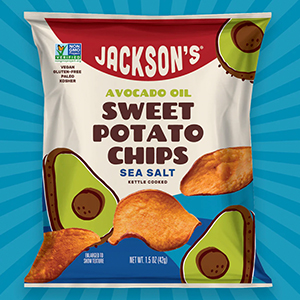
[00:30:58] Jacqui Brugliera: I have to give a shout out to Jackson chips. So they saw my one chip challenge and they felt really bad for me. So they slid into my DMS and offered me up some delicious sweet potato chips with all the flavor. I have been eating them all week. They're really tasty. They come in a couple of varieties and their main thing is that they are really clean ingredients and they use non-GMO sweet potatoes. And then they also use a variety of premium oils. So they have some varieties that use avocado oil and also some that use coconut oil and they have a slightly different flavor profile based on the oil. But it's been nice to eat them pain-free. I will say that.
[00:31:40] John Craven: I'm so glad that that terrible story has a happy ending. Thank you, Jackson's Chips. That's incredible.
[00:31:47] Jacqui Brugliera: Made my day. They even wrote me a nice little note saying that they felt bad.
[00:31:52] Ray Latif: Folks, keep sliding into Jackie's DMs. If you're a brand, that is. If you're a weirdo, do not do so.
[00:31:57] Jacqui Brugliera: Yeah, leave me alone. Oh, another product that came into the office is can era. It's a line of mini breakfast biscuits. And it's great to see that it's very clean ingredients gluten free flour blend, and they use. South Asian ingredient profiles. So this one's turmeric and ginger. They also have a chai spice. I know that we're starting to see a bit of innovation on the breakfast biscuit front. Aaliyah is another great example of a breakfast biscuit. So I've been eating these for breakfast. It is really convenient for just grab and go, and it's cool to have these different flavors that they offer. But yeah, very clean ingredient profile. Also climate smart ancient grains, which is another thing that seeing as a call out is climate smart or climate friendly. So
[00:32:46] Ray Latif: I have a feeling that there are a couple of those that you shoved into your mouth on the way over to the office at 8 AM this morning.
[00:32:54] Jacqui Brugliera: Quick breakfast.
[00:32:55] Ray Latif: Nice. Now I'm a big fan of a product that was sent to me that is not a food or New Beverage, but it's to be used Nitro Beverage. This is from a brand called Siligrams. Siligrams is spelled S-I-L-I-G-R-A-M-S. They make customizable silicone ice cube trays that are crafted with your monogram or logo. My monogram or logo in this case is that of Taste Radio. So if you look at the inside, if you're watching the video, if you look at the inside of this silicone ice cube tray, you'll see the Taste Radio logo at the base of every ice cube quadrant. I love this product. Now, every time I have a cocktail, I will be thinking about our beloved podcast. So thank you once again, Siligrams, S-I-L-I-G-R-A-M-S.
[00:33:44] Bang Energy: Do you want more repeat buyers on Amazon? Well, this free resource in collaboration with Straight Up Growth will help your brand turn first-time buyers into long-term subscribers. Download Winning the Repeat Purchase Game on Amazon now at Taste Radio slash SUG. That's Taste Radio slash S-U-G to start building retention-driven growth for your brand on Amazon. Scaling New Beverage brand into major retail comes down to operational readiness. From packaging lead times to co-manufacturing strategy, the details can make or break a launch. In a new e-book in collaboration with Octopi and Asahi Beer USA, industry leaders share what they've learned in helping brands scale. Download it now at Taste Radio slash octopi.
[00:34:34] Ray Latif: All right, it's time to get to our featured interview for this episode. As I mentioned at the top of the show, Marshall Rabil is the co-owner of Hubs, a super premium brand of Virginia-grown peanuts. Hubs is the brand name for Hubbard Peanut Company, which was founded by Marshall's grandparents, Dot and H.J. Hubbard, in 1954, and has since become the standard bearer for specialty peanuts in the U.S. Known for its extra-large, blister-fried peanuts, Hubs is primarily sold direct-to-consumer, but in recent years the brand has gradually expanded distribution into brick-and-mortar retailers, including Wegmans. As Hubs nears its 70th anniversary, Marshall Rabil leading the company's efforts to reach new and younger consumers by way of new products, brand partnerships, and creative marketing initiatives. In the following interview, I spoke with Marshall Rabil the origins and development of Hubs, the brand's evolving retail strategy, and the duality of his role as a steward and modernizer of his family's business. Hey folks, it's Ray with Taste Radio. Right now, I'm honored to be sitting in front of Marshall Rabil, who is the co-owner of Hub's Peanuts. Marshall, thank you so much for coming out here. Thank you for having me. It really is an honor. I appreciate it. Yeah, we're here in our studio in Newton, Massachusetts. You've been to Boston a few times, but you came up specifically for this interview, which I really appreciate. And it's an honor to have you.
[00:36:03] Marshall Rabil: Yeah, it's really great. Great to Been Here and excited to explore Boston this afternoon. Yeah, for sure. Where are you coming up from? From Southampton County, Virginia. Took a flight from Richmond, which is about an hour and 15 minutes from where we are. And yeah, got in last night. Late. Good travel day.
[00:36:18] Ray Latif: We were talking about some places you can visit in Boston. You mentioned Salty Girl, which for folks listening is a high-end seafood restaurant, small place. I think on Newbury or just off of Newbury Street in Boston, it's definitely a place to check out. And if you're interested in seafood in Boston, obviously these people are like, oh yeah, you can get great seafood anywhere. No, that place is particularly good.
[00:36:40] Marshall Rabil: Yeah, I'm a big fan of seafood. I'm from the coast of Virginia and we live right in between two watersheds. So the Albemarle watershed and the Chesapeake Bay watershed. So we are in between amazing seafood. And so I wanted to check out some New England seafood and was searching and obviously Salty Girls seemed to pop up. So looking forward to checking that out.
[00:36:57] Ray Latif: For some reason, I'm a little surprised about, you know, I shouldn't be, the fact that there is a big seafood I guess, seen in Virginia.
[00:37:06] Marshall Rabil: What kind of seafood are we talking about? Well, absolutely. I mean, so the Albemarle Sound, the Chesapeake Bay has incredible blue crabs and oysters. Obviously, the same fish that are migrating from the Northeast come through the Carolinas and Virginia as well. So we really have access to everything there. But even when you're in Charleston, I see Virginia oysters on the menu in Charleston. We think of Charleston as like this this foodie capital of the South. But really the seafood or the oyster game in particular is very strong on the eastern shore of Virginia. So I think we've got a great variety from the rivers all the way to the ocean. So you kind of get the nice like subtle flavors of the river And Todd the bay side and then really salty on the seaside.
[00:37:52] Ray Latif: I'm sure people listening are like, Hey, wait a minute. I thought we were going to talk about or hear about peanuts. Why are these guys talking about seafood? But, you know, in the same way that Virginia has a deep history in seafood, it has an even deeper history in peanuts. But where do peanuts really come from? As in, you know, is there a country or region of the world where peanuts are indigenous?
[00:38:11] Marshall Rabil: Yeah, so Arachis hypogea is the Latin name for peanuts, and it was a cross-pollination between two crops in the Andean mountains of Peru. And so the Incas really used peanuts in their daily lives, and even you have some burial grounds where you had peanuts that were in the tombs, which is pretty cool. But it was the Portuguese that really took the peanut from South America around the world. And they took them from Peru and Brazil into Africa and then into Asia. And so it wasn't until the 1700s when peanuts made their way from West Africa on slave ships to Virginia. And so they landed in Virginia around the 1700s. And it was fascinating because peanuts were really just a food for slaves, really. They grew them for substance around the quarters there, but also as a food for pigs. So it's fascinating that white people really weren't even eating peanuts in the 1700s, and it wasn't until the Civil War. when the Confederate soldiers really needed some food, and so that was kind of what the soldiers subsisted on. There was even a song called Goober Peas that was written about soldiers eating peanuts during the Civil War, and even Johnny Cash did a tune about Goober Peas. So it took a while for peanuts to get to Virginia and for them to become a staple, but their history goes from pigs to presidents to where we are now. So there's a lot of fascinating tidbits from the mid-1800s up until hubs, really.
[00:39:43] Ray Latif: So when did peanuts really go from a substance food for soldiers to this well-respected or at least commonly eaten food? Because you told me the last time we chatted that even in the 1800s, I think, the term peanut eater was considered a derogatory term.
[00:40:03] Marshall Rabil: Yeah, peanut eater was considered a derogatory term, as well as like the peanut gallery. The peanut gallery was for cheap seats, right? And so it was for the hecklers. And so Amadeo Obese was the founder of Planters. And he came to Virginia in 1913 and started Planters Peanuts, because in Virginia, we have great seafood, but we also have great sandy soil for growing peanuts. So There are a variety of peanuts, the Virginia type, the Georgia runners, the Valencia, but the Virginia type, which is kind of the famous cocktail peanut that Amadeo Obese made famous with planters, was perfect for snacking, as opposed to the runner, which is a great peanut for pressing into oil or for butter. And so Virginia obviously recognized that the soil in Virginia was ideal for growing that type of peanut. And so he partnered with a shelling operation in Suffolk, Virginia in the early 1900s. And that's what really put Virginia peanuts on the map nationally. And it wasn't until the 1950s when Dodd-Hubbard created the specialty peanut category that kind of created a specialty gift business. It is a fascinating history. Your family has a huge hand in that history. So Dot Hubbard created the super extra large category of peanuts by hand picking the largest peanuts out of her father's farm. And she had a unique way of cooking them. And it's called blister fried cooking, but she would soak them in hot water and then fry them in oil. And so prior to Dot picking the largest peanuts that she could out of her father's farm, the USDA did not have this category. So she really took a commodity product like planners and turned it into a specialty product by by being very selective in what she was cooking and then the cook process itself. And then it goes into how we package them and our service and all of that. So that's what really created this gift category.
[00:41:54] Ray Latif: Now I'm holding in my hand a 20-ounce tin of your flagship home-cooked salted Virginia peanuts. Let's talk about your current business model and retail footprint. For a long time, Hubs was only available direct to consumer, but that has changed in recent years. Talk about how and where you guys are sold.
[00:42:16] Marshall Rabil: Well, my grandfather was kind of our first salesman and he did start, he initially took them to like the pharmacies and the hardware stores that were local. And it's kind of a funny story. They were selling planners and these hardware stores and pharmacies. And he said, you know what, they're a nickel for a bag of planners. Well, hubs are twice as big. They taste twice as good and they command twice the price. So he started selling dime bags of Hubs next to nickel bags of planners, literally. But he also worked for the paper mill union camp. And there was a lot of different people that came through our small town of Franklin in Southampton County. And he started giving peanuts away and then they started spreading the word. And so we started building a little mail order business. based on a lot of the travel and salespeople that came through our community. And so, you know, from 1954 to the mid-90s, really, we only had very select retail stores. Colonial Williamsburg, there were a few places, but for the most part, and still to this day, we're a direct-to-consumer brand, and that's kind of been our model since our inception. But a lot of the expansion into wholesale was because people came to us asking if they could have them. So we have a partnership with Wegmans, for example, And Todd my knowledge, Danny Wegman received a can of Hubs peanuts and said, you know what, I want those as my peanut in our store. And so now we're a private label for Wegmans. Same thing with the Fresh Market, they came to us. And then we started to make an effort to find more regional grocery and specialty stores to partner with, just to diversify some of the seasonality of our business. So we work with a lot of companies and corporations that use our product as gifts during the holidays. And that's the Christmas and Thanksgiving is a very busy time for us. But diversifying into grocery kind of helps diversify the seasonality of our business. So we're able to do things for the first six months of the year as opposed to the last. And so now we have partners like in Oregon, we have Zoopans or Central Market in Texas, Natural Grocers in Denver. And so we try to find markets that are a good fit for our brand. Even Orvis, the fly fishing apparel company, we're a co-branded product with them. And so we look for retail stores that have kind of a similar Brandt Gehrs that we do. But we're not intended to sell to every market or to be on every shelf across the country. We really are selected with who we want to work with. And I think that's been a good model for us so far.
[00:44:49] Ray Latif: Now, I was surprised to hear that Hubs and Wegmans is a private label product. Wegmans, obviously known as this sort of cross-channel retailer, you have natural, you have conventional, you have specialty, in some ways club, all sort of converging in this one place. They do have a ton of private label products, but given the stature of a brand like yours, I would assume that more people would be interested in
[00:45:18] Marshall Rabil: looking for and finding and buying hubs. Well, Wegmans does have a great stature, I think, across the country as a well-respected grocery chain. And when they asked us to be the private label for the foods you feel good about, it was really an honor for us to be able to work with them on that project. Because if they're putting their name on something, And they're in a region where we don't have as much exposure as we do in the Southeast. It gave us an opportunity to to have some annual grocery business as well as be a part of diversifying our business as well. So and they have made us a better company. I think even just we're now BRC certified. We're doing things that traditionally we hadn't done because we hadn't needed to in the grocery space. Now we've always been Conscious of food safety programs, but we have it's a lot more of a stringent process now working with them and we really are just honored to be their partner, but as they've moved into The South and into Virginia and North Carolina. They're bringing in hubs brand products and some of our other flavors So we just do their salted and their chocolate covered But they are bringing hubs brand because they recognize our brands value in the South as well and so hopefully they're gonna help us expand our name as well as their product and their entire footprint.
[00:46:37] Ray Latif: And then Orvis was interesting. That's an interesting retail for you. And you have a co-branded product in their stores. Talk about that relationship.
[00:46:43] Marshall Rabil: Did they approach you or did you approach them? So I met with Orvis at the fancy food show in New York several years ago. And it's, it's, I've obviously always been familiar with that brand. I'm an outdoors person. And really, I think that they, have wonderful markets. They have like 65 to 70 locations in really nice areas. And so they have beautiful stores and they don't carry a lot of food products. And so they recognized Hub's quality and Hub's brand. And so they wanted to do kind of a co-branded product that recognized who we were. So they tell our story on the side of the can. as well as theirs. And so that's a fun project because it puts us in markets and in great locations across the country. And so very excited to work with them. And they carry our Sweet Heat and Honey Kiss chocolate and salted as well.
[00:47:31] Ray Latif: I don't know if you can answer this, but is it a significant part of your business or is it something where it's, you know, being in Orvis is more about awareness and sort of filling those pockets where you're not typically retails?
[00:47:43] Marshall Rabil: Yeah. I mean, I think all of our accounts are significant to our business on a variety of reasons, whether it's regional footprints that we have or just being able to say, yeah, we're in Orvis as one of the only food products that they sell. So. I think the partnership is, is valuable and in many ways beyond the cans that they are buying for sure.
[00:48:02] Ray Latif: Uh, 10 of your 20 ounce hubs, classic peanuts, your flagship product is how much?
[00:48:08] Marshall Rabil: Most stores it's going to be 12 to $15 shipped. It's going to be about $25 if you're buying one can. That's why I would encourage you to go with four or 10 to get it down to 12 for sure. But that that's still an, that's an attainable upgrade in your life.
[00:48:23] Ray Latif: You know, I think. I think for some people, yes. I think, you know, it's not, not everyone is going to be buying your tins, but I think in some ways that's very intentional, right? I mean, to decrease the price might be to decrease the image of hubs.
[00:48:39] Marshall Rabil: For sure. I mean, our packaging is a big part of the expense that goes into it and the craft cooking process that we use. But I mean, we have a key on the top of the can. I mean, that alone is part of the brand experience. When you open up, you take the key, you pop open the can, you cut the foil. That's an enjoyable part of the brand experience as well. And yes, there are definitely ways to make that less expensive. If we wanted to put a plastic top and a pull top or use composite cans as opposed to lithographed, I mean, we try to maintain quality across the entire experience with our brand. So, for sure, it's not for everybody, but we think it's for a lot of people, for sure.
[00:49:21] Ray Latif: Yeah. My dad was in retail, I guess my whole family has been in retail for a long time, and he always liked to use the term specialty food for all people, which essentially meant that, look, We serve quality and we sell quality that is attainable, that is accessible. But it's kind of hard sometimes convincing people that specialty food, number one, will fit into their lifestyle and number two, that they can afford it. So when you're talking to new customers or you're trying to bring new customers into the fold, you know, what is your strategy? How do you communicate that to new customers?
[00:49:53] Marshall Rabil: Ask them to try it. You know, that's, that's pretty much it. Try that compared to how you've experienced a peanut in the past. And usually that that's enough.
[00:50:03] Ray Latif: Do you do a lot of demos in retail? And I mean, when you're not doing retail, I mean, how do you get products into people's mouths, direct to consumer?
[00:50:11] Marshall Rabil: Well, we have a one ounce bag that is an edible business card. And so we ship those to a lot of different people. And right now, the golf space is really big for us. And so we've been at a number of different PGA events where we're putting our product out in the corporate suites and we're in the concession stands. And so if people can experience the one ounce bag and kind of associate our brand, with higher quality products. That way, that helps to convert customers to our larger can sizes. So, we're really just putting these one-ounce bags that have gone to many different homes. And for a while, we were partnering with people like Snack Nation and Carew that were taking the products into a lot of different homes, and it was less expensive than a stamp. And so, it's a good way to do that. Yes, we also did demos at Whole Foods and at Central Market and Natural Grocers and things of that nature as well. And that's always a good way to convert because you're able to interact with people and show them how it's different. That's changed a little bit, obviously, over the last couple of years. So we'll have to kind of rethink the demo strategy. But using these little one ounce bags to really flood certain markets has been a good strategy for us.
[00:51:19] Ray Latif: Yeah, I love that you called the one-ounce bags a portable business card. Is that what you said?
[00:51:24] Marshall Rabil: An edible business card. An edible business card, yeah.
[00:51:26] Ray Latif: Obviously it's portable. An edible business card. I was just thinking as you were talking, I was like, there's probably 25 or 30 brands I can think of literally right off the top of my head that are probably listening or would be interested in partnering with a PGA or getting some of those one-ounce bags out and flooding corporate suites and just getting those into the hands of influential people. Probably easier said than done. How do you get something like that? How do you get a relationship like that with a PGA where, you know, you can get your product into the hands of people who not only matter, but will become customers of your brand?
[00:51:59] Marshall Rabil: A lot of unanswered emails, a lot of DMs, some mostly unanswered. Occasionally you'll get a hit and then you'll get a sample and just persistence really. We've been trying to work that angle for quite some time. We were fortunate to partner with Mark Hubbard, no relation actually, on the PGA Tour and That's helped us. He wears our logo on his on his left sleeve and we're able to go into some of these other we've always had good relationships with country clubs around the country because it's a natural fit for our clientele and it's a great snack on golf courses and the locker rooms and so forth. But so we've, we've had these relationships with really nice clubs, but then partnering with an actual PGA tour player, I think has helped open up the door to figuring out who the caterers are at certain events. And because all of them are managed by, by different organizations. And so trying to navigate that has been a challenge.
[00:52:54] Ray Latif: What strategy has worked when you are doing that cold email, when you are doing that cold outreach, what's Been Here most effective way to reach the person you're trying to get to?
[00:53:03] Marshall Rabil: Once you get somebody on the hook, just being persistent. I mean, I've got to know the hook means they responded. They've responded once and then said they'll receive samples. And then, you know, the sales cycle for anything can be years. I mean, I've worked on certain accounts, whether. Individual customers are easier than grocery chains. There's just shelf space is a premium. And once you get on the shelf, I mean, on your, many people have talked about how it's not, that's not the win, getting on the shelf, you get excited about staying on the shelf is where it's tricky. And then you have to support that through a variety of marketing. initiatives in those stores, and so that piece of it is really challenging. But I find it persistence and trying to just massage relationships, continue to send samples, and sometimes the timing's right. If they have a current opening, then they might bring us on.
[00:53:58] Ray Latif: you have some products in the works, including this one I'm holding my hand, this is in the works, this is already on the market, which is your Single Origin Chocolate and Peanut Bar, or more specifically, as on the front of the label, it's a 50% dark chocolate and Hubs Single Origin Peanuts. And it's a one ounce chocolate bar made in collaboration with a brand called Kaya Chocolate. How does something like this factor into the future of Hubs?
[00:54:25] Marshall Rabil: I really like collaborating with other people on small batch projects. We've got this chocolate bar with Kaya. We are now the crunch to Big Spoon Roaster's crunchy peanut butter. And so we have Hub's Peanuts on the label, so he has Big Spoon. Mark does an incredible job making nut butters. But now we're able to get in front of their audience with this small collaboration. We've partnered with a brewery in Suffolk, Virginia called Nanceman Brewing, and we have the hub's peanut butter brown ale, and so now we've got a craft beer. I want to continue to work with people that are in our space, but where we can collaborate on limited products, small batch release things, I think is an exciting way to keep things fresh and innovative while maintaining our core business. pops of freshness, but we don't really want to, you know, we're not going to create 17 different flavors of every year. We want to, we want to sell salted peanuts and our chocolate covered peanuts, but then to give our customers a little something new And Todd collaborate with others is a lot of fun. So that's something that I look forward to continuing to do. Like this project with the, with Kaya chocolate or with Big Spoon Roasters or Nanceman Brewing and some of these.
[00:55:39] Ray Latif: All right, I'm going to put something on the table here. And so if this happens, I want to get a little bit of credit for it. I don't want anything beyond just be like, hey, Ray suggested this on Taste Radio. You know Van Leeuwen Ice Cream? Okay. So Van Leeuwen Ice Cream, a New York City-based ice cream brand, premium craft ice cream, fantastic. They just make some of The Best ice cream you'll ever have. And they've done a ton of... Well, not a ton. They've done a bunch of collaborations with other brands over the past year. The most recent one I think is with Tapatio, the hot sauce. They've done one with coffee companies. They've done one with, I think they did a pizza flavored one, which was kind of interesting. Yeah, don't, Marshall looked like he was about to puke. No, I'm all in.
[00:56:24] Marshall Rabil: I'm all in on this, on this. Okay.
[00:56:26] Ray Latif: Yeah. So folks from Van Leeuwen, if you're listening, or if there's anyone with a connection, Please reach out to Marshall, because I think that would be pretty darn phenomenal.
[00:56:34] Marshall Rabil: It would be phenomenal. And we've worked with a couple of different ice cream companies. We have at the Hubs Von and at Richland's Dairy, which is a small dairy farm in Virginia. It's not nearly the same scale as Van Leeuwen, but we do a Hubs Brittle, peanut brittle swirl ice cream that's phenomenal. And it's just they have the cows and they're making the ice cream right there on site. And so we do have a really small ice cream Uh, the flavor as well, but I do like the national footprint there of Van Leeuwen and what we could do there. I think that makes a lot of sense. So yes, Van Leeuwen, I'm all in.
[00:57:08] Ray Latif: There you go. You don't even need to send a cold email. I'll connect you with, uh, with the team out there with Ben, Ben Van Leeuwen. And those guys are amazing. Nice. Marshall, you know, it's been a long time coming. We've chatted a number of times, we've emailed a number of times. Obviously, I'm a big fan of your products, and I'm so happy you came out here today. This has been a great conversation, and not only did we cover a lot and learn a lot about your brand and your family's history, But I feel like, you know, we learned a lot about how legacy brands and specialty brands can evolve. Talking about the future of the company and where it's going. I'm so excited for you guys.
[00:57:44] Marshall Rabil: I really am. Well, those are really incredible words. And I'm so appreciative of the opportunity, honestly, and grateful to Been Here with you today, Ray. We are honored and super grateful. So thank you very much.
[00:57:56] Ray Latif: Thank you. Now, to share some of these peanuts with my colleagues who always complain I don't share enough. I think they're going to be on cloud nine. Will you bring those upstairs? I hope so. Thanks again.
[00:58:07] Marshall Rabil: Thank you.
[00:58:11] Ray Latif: That brings us to the end of this episode of Taste Radio. Thank you so much for listening. And thanks to our guest, Marshall Rabil. As always, for questions, comments, ideas for future podcasts, please send us an email to askattasteradio.com. Our audio engineer for Taste Radio is Joe Cracci, our technical director is Joshua Pratt, and our video editor is Ryan Galang. On behalf of the entire Taste Radio team, thank you for listening, and we'll talk to you next time.