[00:00:10] Ray Latif: Hey folks, I'm Ray Latif and you're listening to the number one podcast for the food and beverage industry, Taste Radio. This episode features an interview with Yanni Hufnagel, the founder and CEO of fast-growing enhanced water brand, Lemon Perfect. Just a reminder to our listeners, if you like what you hear on Taste Radio, please share the podcast with friends and colleagues. And of course, we would love it if you could review us on the Apple Podcasts app or your listening platform of choice. It's rare for a beverage brand to achieve a billion dollars in annual revenue. It's rarer for an entrepreneurial-led brand to reach that mark. The scarcity of these companies, however, hasn't kept ambitious founders from envisioning a billion-dollar future of their own. Yanni Hufnagel is one of those aspiring leaders. And based on the trajectory for Lemon Perfect, he has a realistic shot. Launched in 2018, Lemon Perfect is, as the name suggests, a brand of lemon-flavored water. Positioned as hydration beverages, the USDA-certified organic drinks come in seven varieties, each sweetened with a blend of erythritol and stevia and containing five calories per 12-ounce bottle. Available nationwide at Publix, Kroger, Whole Foods and Ralph's, Lemon Perfect anticipates over $60 million in sales and a retail footprint of over 40,000 doors by the end of 2022 as the brand expands into Costco, CVS, Walmart and Target. Earlier this year, the company closed on a $31 million Series A funding round that included a high-profile roster of celebrity investors headlined by music icon Beyonce. The recent funding brought Lemon Perfect's total funding to $42.2 million, an evaluation of over $100 million. In the following interview, I spoke with Yanni about his overarching vision for Lemon Perfect, how he has applied his experience as a college basketball coach to running a beverage company, why nailing, quote, the big decisions has been critical to the brand's development, and how his perspective on gross margin has evolved. He also explained why Lemon Perfect has invested heavily in field sales, how he cultivated a culture of hustle and commitment at the company, and why he says that he's never sold the brand to an investor. Hey folks, it's Ray with Taste Radio. Right now I am in New York City and sitting in front of me is the one and only Yanni Hufnagel, the founder and CEO of Lemon Perfect. Yanni, how are you?
[00:03:03] Yanni Hufnagel: I'm doing great. Thanks so much for having me on.
[00:03:06] Ray Latif: And thanks so much for joining me. It's an exciting time to be in the city, a lot going on. BevNET Live Summer 2022 is happening tomorrow and Thursday. You geared up, you're ready?
[00:03:16] Yanni Hufnagel: I can't wait. I've been counting down the days for quite some time now.
[00:03:20] Ray Latif: You know, I gotta, I gotta ask you something. The amazing thing about your name is that it's five characters. It's easily recognizable. Like you not only have the wonderful name, Yanni, you have the Instagram handle, Yanni, Y-A-N-N-I. How did you get that?
[00:03:39] Yanni Hufnagel: Well, Ray, I'd like to tell you that I had the foresight to go get the name in what, October of 2010, when Instagram launched. The truth is, is that this was an inside job a few years down the road, taking over an account that was inactive. That's the story. That's the story. And look, I think right now the name Yanni is largely associated with the musician. I wasn't going to say it. The pianist. I guess I do hope, at least through the lens of Lemon Perfect, that there's a day where maybe Yanni is known as the founder of this great brand, Lemon Perfect.
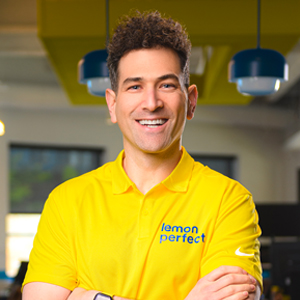
[00:04:16] Ray Latif: Yeah, I think we're getting closer to that. Well, we've got some work to do. You just gotta keep wearing the golf shirt that you've got on. This is like a neon yellow golf shirt, and it's fantastic. Like you could spot Yanni, who I'm sitting in front of, from, I don't know, 1,000 yards away easily.
[00:04:32] Yanni Hufnagel: You know, Ray, if it was appropriate, I'd paint my face yellow and walk around. Listen, I coached college basketball for 10 years, and we wore gear every day representing our school. And so I look at this the same exact way.
[00:04:45] Ray Latif: That being said, I think college basketball coach to beverage entrepreneur is a first for me. I haven't come across that yet. What inspired you to get out of the business of coaching basketball and into the beverage industry?
[00:04:58] Yanni Hufnagel: You know, Ray, here's the truth. I coached, like I said, I coached college basketball 10 years. My last year, I was at the University of Nevada in Reno. And the short story is a friend of mine wrote a book on the ketogenic diet. And in the back of Matt's book were all these sample meal plans. And every day started by drinking organic lemon water. And I was searching a little bit at the time for some structure around my workout plan, my diet plan. And I said, Matt, I'm in A through Z, let's do this. And lemon water or organic lemon water in the morning became a non-negotiable part of my daily routine, but a painful one, right? There's one Whole Foods in Reno, go buy organic lemons, cut the lemon, squeeze the lemon, juice all over, bland taste. I mean, the cleanup process, most mornings I just threw my hands up in the air, right? Yelling and screaming, but I stuck with it. And I felt great. I got into a rhythm. The team was playing well. And fast forward, and we're getting towards the end of the season. I'm in the locker room. And all of our coaches and players are drinking bye. Right? And I really liked the product. This was the first quarter of 2017. So really, I mean, at the very height of their growth story. And I just had a moment. I said, hold on. can you take organic lemon water and give it the flavor profile of bi? And that seed, this idea of great flavor that's also good for you, has been the bedrock of our brand from day one. It's not like I ran in a locker room and said, I'm gonna go start a beverage brand, right? Like the season ends, I'm in Santa Monica actually, and I'm having lunch with a friend and very entrepreneurial minded friend. And he said, I was talking about this idea with him and he said, I love it. Anything that you can do that can capture a piece of someone's daily routine, what they do in the morning when they first get up, what they do at night when they go to sleep, or any point B, C, D, E in between is worth going for, right? True story. I jumped up and that night I Googled how to start a beverage company. And what I'll say is the skill set between coaching college basketball and recruiting at that level, and building a beverage company, they're very harmonious. And I had a fascination with consumer brands, even when I was coaching, especially those like in the natural channel. And so there's been real utility in my coaching skillset now as we're building this business.
[00:07:22] Ray Latif: Where'd the name come from? Because Lemon Perfect is a great name. Yeah.
[00:07:26] Yanni Hufnagel: You know, I was searching. My dad's from France. And, you know, look, when you coach college basketball, you don't get a lot of time off. So for 10 years, I was very limited in, you know, where I could go and what I could do. And I took a trip with my mom and dad to France. And this is a true story. I was stuck. I was stuck on a name. My mom and dad and I on a gorgeous, gorgeous day in Paris, we're having drinks at the Peninsula Hotel. And we walked out, and as we're walking down the street, right, the name just boom. And true story, I went to godaddy.com, I registered the domain name on a street corner in Paris for $12. That was June 13th, 2017, what I consider the day Lemon Perfect was really born.
[00:08:17] Ray Latif: Amazing, amazing. Now, did you register for the trademark as quickly as you had for the website? Because you know there are people out there who go and see that you registered for the website and then will go and usurp or at least go and steal your trademark. I guess if steal, steal is not the right term, which you don't mean.
[00:08:33] Yanni Hufnagel: I have to tell you, Ray, I've been obsessive about protecting our IP, really from second one. So I think the registration was not that far behind, yes. And when I speak with other founders, not only in food and beverage, the first thing I always ask is, have you filed to trademark your IP, your name? Right. Because without that, generally speaking, you're back to zero. Yeah. Right. I mean, a name change after you launch is very challenging, if not impossible. And so one of the really one of the first things I ask after, are you well capitalized? Right. And let me try the product. How does it taste? Would be, do you own your IP?
[00:09:14] Ray Latif: Yeah. And you could get sued if you try to trademark or try to use the IP of someone else. That's also a problem where people don't do their research as much research as they should be doing.
[00:09:24] Yanni Hufnagel: it is a major must would be, you know, making sure that you've got a mode around your intellectual property. Absolutely.
[00:09:32] Ray Latif: Yeah. The formulation is pretty fantastic too. You know, it's something so, I don't know why this is so different in the beverage industry today, but it's such a simple formulation. It's lemon and water. And, you know, I feel like that's kind of a refreshing thing these days. I mean, we see so many beverages on the Bevinette side that are really complicated and complicated to explain. Yours is not. How much did that factor into your mindset for Lemon Perfect? Is that you wanted to keep it as simple as possible?
[00:10:05] Yanni Hufnagel: You know, Ray, the truth is it was probably less about simplicity early on as it was about taste. Like, for me, Taste Radio the nutritional deck were one and two and everything else. was further down the road, I knew enough to know that we needed to win on what I consider or call Main Street USA. How do you create a product that will have broad appeal? Listen, 83% of US consumers prioritize taste above all else when they make food and beverage decisions. So you better start there. And then I said, OK, well, what are the consumer boxes that are prevalent today, as in, you know, almost five years ago now, and will be going forward. So zero sugar was a big one for me, right? Low calorie was a big one for me. And then, yes, then the simplicity of the ingredient deck became, you know, important. And, you know, with water, organic lemons, and a unbelievable sweetener and flavor system, we got there.
[00:11:11] Lemon Perfect: guessing your margins, that's risky. Belay Financial gives CPG brands the clarity to scale smarter, faster, stronger. Get your free inventory ebook by texting TASTE to 55123 and start making data work for you. Vibrant Ingredients is the natural ingredient partner powering food and beverage innovation, delivering flavor, function, and protection through a science-backed portfolio. Vibrant delivers purpose-driven solutions that help brands create extraordinary experiences. Discover what's possible with Vibrant today. Visit VibrantIngredients.com.
[00:11:58] Ray Latif: This is not an easy business, the beverage industry. We're talking about this right now. And I thank you so much for talking about and telling me before we got on the mics that you got a lot of your education in the beverage business through Taste Radio. And it means a lot. To me, it means a lot to the team. And I thank you once again for saying that. Nailing the fundamentals can go a long way. It's easier said than done, but how did you get up to speed on the beverage industry aside from, you know, listening to Taste Radio?
[00:12:25] Yanni Hufnagel: Well, that was a big part of it. I mean, I'll be candid. I don't think there was much else that I did in my waking hours where I wasn't in a store or thinking about Lemon Perfect, where I wasn't listening to Taste Radio. That's the truth. I mean, when I came up with the idea, I moved back in with my mom and dad. into their apartment in Manhattan. And for the first almost year, I sat in front of a computer and I just tried to learn everything I could. And then the ball has to bounce your way, especially early on. My college roommate, his dad was a former leadership team member at Bristol Farms, right? So I said, Great, like I've got one authorization, I think, right? So I moved out to Southern California on just the heels of thinking that we could get into 12 stores, right? Because I didn't know anybody. But if I don't do that, I don't meet Dan Morad and Rob Alschiller from Critical Mass Group. At the time, they were a beverage incubator specifically focused on winning in Southern California. And Ray, for me, that was being a mile deep and an inch wide. That was a learning from Dan Morad or part of his fundamental psychology on trying to build a brand. And so we really did. I mean, we got into Bristol Farms, right? And then from there, it was Lazy Acres and Erewhon and Gelson's, dot, dot, dot. But between Taste Radio, Dan, Rob, and then just spending time in the stores, right? Just looking, not only at beverage, up and down every aisle. I mean, when I go in, my team, they get really irritated at me even today. Because they'll be out talking to the assistant grocery manager or shoot back in the car after we hit a store, and I'll be walking the aisles. Because I'm always, my head's always on a swivel. I always want to see what's out there because you never know where you're going to learn. And so, but the truth is, is that I also, I just had to get started, right? We launched as a key refrigerated item. I think that's been well-documented. You know, that was mistake number one, right? But what it did allow us to do was test and learn and spend time listening to consumer feedback and really going from there.
[00:14:37] Ray Latif: Yeah, we'll talk about the mistakes, including HPP at the outset. But, you know, how did you learn how best to focus your time, resources, money early on? Because that's also one of those things where if you can get that right, you could probably cut down on a few mistakes.
[00:14:56] Yanni Hufnagel: You know, Ray, the truth is, is I think for me, I just went. Every day I got up and I just tried to put one foot in front of the other and get a little bit better. And get closer to being able to really wake up in the morning and dream big in a realistic way, right? At the beginning, sure we had big dreams. I don't know how realistic they were, right? I knew we had a product that, from a taste perspective, had really big TAM, really big addressable market, right? I knew enough to know that margin didn't mean anything early on. Zero. Zero. Now, look, I was very lucky in that we always were able to tell a great story. And so we raised, you know, before we were even in stores, we raised over a million dollars, right? And that process was interesting. I mean, I didn't know how to raise a dollar, right? I go to one of my friends in VC. He says, you're going to raise this as a safe. I said, a what? Right? I didn't even, he said, well, are you a Delaware C or an LLC? I said, a what or a what? I mean, that's where this thing started, right? But the truth is, is that I just, I just put one foot in front of the other and was not that capital efficient early on, early on. But I guess the four P's that I consider paramount to winning in beverage, right? Product, price, packaging, people. Product, price, packaging, people. We got that right early on, and then we've since made adjustments, but we've just been able to figure it out on the fly, if you will.
[00:16:33] Ray Latif: I wanna talk about the last two piece, price and people. We'll start with price for a second, because you said something there, margin doesn't matter at the beginning. Is that, am I getting that right? I think that probably goes against anything that a lot of folks would hear on Taste Radio from other folks. Why do you say that?
[00:16:51] Yanni Hufnagel: There's nothing more important then share, nothing. Getting your product in as many people's hands early on is the most important thing that there is. Now, look, you better have a path. Right? You better have a path. I mean, from day one, you better know that when you go from contract manufacturer A to contract manufacturer B to contract manufacturer C, that you have a path. Let me tell you, I'm negotiating with what will be our last contract manufacturer. I mean, we are in a 10 round, drag it out, fist fight right now. I was in their office for the first time in 2019. Wow. I don't even know if we had just launched the product. So I've always had vision. Right now, all of our investors have just had to come with me on that journey. And you have to believe. that share and scale will ultimately drive your unit economics. And listen, it's happening for us. It's happening for us. Now, beverage is different because our category, I mean, it is, it's a street fight. I mean, if you just look at our category, vitamin water, buy, Hint, Vitacoco, right, what we would consider the enhanced water category, who were merchandised around. I mean, you know, those brands, with the exception of Hint, I mean, they're being run in there by Big Soda, right? Coke runs vitamin water in there. KDP has Buy, KDP has Vitacoco. And so the truth is, is that, listen, the American consumer is still shopping price. They're shopping tags. Our barrier to trial is low. One of our best accounts in America is Publix, and that's a whole story on itself in terms of how we got in. We run six BOGOs a calendar year. We're a dollar a bottle, but we're 5X. our everyday non-promoted retail versus the prior period a year ago, right? So our baseline is 5X, but we're bringing people into the brand with very, very low barrier to trial. And so for me, you have to be able to compress your margin story early to build a great margin story late. And yes, now for us, there's black and white math. that will lead to category-leading unit economics in the not-too-distant future. So everyone that looked at me like I had nine eyes, I think maybe they're starting to look at me like I have two, because everything that we said could happen is starting to happen. because we're putting scale behind the business, but Ray, like also fundamentally, you have to know, like, who are you? I look at myself, my heart, I got a heart that wants this brand to be ubiquitous, whether you're shopping at a Whole Foods in Beverly Hills or a Dollar General in Baton Rouge and everywhere in between. And so when I see story like our number one Publix in America is in Palm Beach, one of the most affluent zip codes in America. And our fourth best Publix, fourth out of almost 1300 stores, is in Lakeland, Florida, with a much lower median household income. So think about that, right? Like when you have that kind of stretch, I mean, how amazing is that? It doesn't matter how much money you make, what you look like, where you shop, where you live, flavor knows no boundaries, right? And so I've been principled or guided by the belief that I'm never gonna put a wall up and make Lemon Perfect not accessible. Like we're gonna be accessible. We're gonna change the way that people drink water. And to do that, you gotta be able to play on price.
[00:20:35] Ray Latif: So maybe there's a fifth P as well, is that Publix? I wanna hear that story, you really piqued my interest.
[00:20:41] Yanni Hufnagel: Yeah, it could be, certainly could be, 2020, okay?
[00:20:46] Ray Latif: A few things happened that year.
[00:20:47] Yanni Hufnagel: A few things happened. And I'll back up, which leads into the Publix story. We launched the brand, Keep Refrigerated, right? We were selling the product into produce buyers.
[00:21:00] Ray Latif: It was a cold chain product. It was a cold chain brand at the time.
[00:21:03] Yanni Hufnagel: It was, Ray, the horrors of the kitchen. I think you would call it that we were batching in, filling in. I think it was a six head filler that may, I don't know. I mean, I think we were probably doing like 10 bottles a minute. I mean, that's, I mean, you know, but, and then they were loaded up on a truck. They got sent down the street to an HPP facility, sent back. Listen, you know, I'll say this now, our gross margin in 2019, I think was negative 100%. I mean, yeah, but it didn't matter because what it did is we got the product into the stores, right? And then the velocity. And so it starts happening. But then what I realized is, oh my God, we're driving a really, really nice car down a one lane road and it's gonna crash. Because to win in beverage, you have got to be able to build the incremental display space on the floor, right? Especially with the way our bottles look. I mean, we create a fashion show on the floors of retailers across America. And so between our retail promotional strategy and the way that our bottles look, we're drawing people in. But if you have to live in a refrigerator, you don't get that. There's no option to build that incrementality to go attack and go get that display. And the way I'm wired, like now I get to go build this field organization that just puts gloves on every day, right? Sometimes we take off the gloves and we just go bare knuckles. Okay, but what I knew is that we want to fight for cold and we want to fight for cases. But you can only fight for cold unless you're shelf stable. Now we get to fight for cases and cold, right? And we say execution drives velocity, E equals V. But you get there with cold and cases. And then on top of that, well, who's buying us? Coke's not buying us. Pepsi's not buying us. KDP's not buying us. They don't want to deal with code distribution. You were thinking about this in 2020. Ray, I was thinking about how to find liquidity before I even came up with a name. I mean, I knew we were going to have to take dollars from investors. So my number one job every day is to drive this thing to a liquidity event. There are two ways out of my office. One's in a box and two's with some coins in my pocket. So I'm gonna take option number two. And then maybe we get to go do this thing again. And maybe I can come on your podcast down the road with it. But the point is, is that you need to know where you're headed. And so, I mean, remember, this was at the time when we launched the product, Suja, watermelon water, right? Rebel, I mean, you had these, cuz I was shopping, you had these brands that were on fire. I didn't know what was behind the curtain. I didn't know that those were impossible businesses. Right. And so, you know, for me, there became a point where I told I don't even think we had an internal person at the time. It was still, I think, critical mass group. I said, we're not coming out of our cave until we figure out how to go shelf stable. And I said, whatever we come up with is gonna be as good or better than the original product. And so we basically stopped, right? We basically stopped selling the product. We handled the business that we had. And we had actually just gotten into the Northeast region of Whole Foods, keep refrigerated. So like it was, listen, when you get a little momentum and then you got to make a big decision like this, think about that. And I already flipped it on the investors at the beginning because we were about to launch. And when the first bottles came off the line, I looked at the packaging. I said, my God, this doesn't work. So we had already delayed the thing six months at the beginning because I completely rebuilt the brand, right? Before we went into Bristol Farms. And now I'm gonna go back to those same investors and say, hold on, we're gonna completely pivot.
[00:25:11] Ray Latif: Investors love when you do that, don't they?
[00:25:13] Yanni Hufnagel: Well, they like it now, right? That's the most important thing. I think so, but it wasn't easy. Listen, I'll tell you, I lived in incredible darkness for the first couple of years, incredible darkness. Only now am I starting to see some light around the corner because we've put together such an incredible team. But going back to Publix, so we just pivoted to Shelf Stable. shelf-stable purchase order was high touch for Whole Foods Southern Pacific. Chuck and Czar are awesome. January 2020, then you have the COVID-19 pandemic, right? And everything shuts down. And we had just launched on Amazon. And then Amazon, as soon as you started getting the shutdown, they stopped taking new brands. So we were like two weeks before that happened. Ray, if we're two weeks later, I don't know if I'm in this chair today. That's how fragile it is, right? If we were keep refrigerated and COVID-19 happens, game over, game over, right? Instead, We launch on Amazon, you know, you had a run on like water. So no one knew what Lemon Perfect was at the time, but we were like the next option, right? So, I mean, think about that, right? I mean, there's no, right, there's no essential on the shelf. Well, okay, what the hell is this thing? And so we were able to sell some- It's liquid. Hey, listen, fine, great. I'll take it, right? I mean, we were literally just throwing products, I mean, pallets and people were buying and there was nothing else to buy. We were like, I think we were like the last thing in the store at the time, but shoot, there was nothing else left, right? It's like, there's no toilet paper, right? There's no Essentia. Well, let's go get whatever the heck this thing is.
[00:26:59] Ray Latif: You know, that's one way to get trial, right? There's nothing left.
[00:27:02] Yanni Hufnagel: There's nothing left, right? And I'm telling you, that's what it was for us, right? So we had enough, but we sent our sell sheet and a case of product to Publix, right? And this is a true story. And the great broker, Bayfruit Brokerage, and he walked our product and our sell sheet into the buyer's office. And the truth is, is the buyer thought it was too early. The buyer's boss saw our bottles on the little table there. And he said, oh, this is, I'm going to bring it home to my wife. And Jeff Smith, his wife tried the product and she said, this is the best thing I've ever had, the best thing you've ever brought home. Jeff walks in the next day and says, we're taking this and we're going everywhere, all 1,200 plus stores. And listen, Ray, again, you have to get very fortunate along the way. Publix has been such an incredible driver of our business. The brand's on fire in the Southeast. It's allowed us to now open up other doors, not only in the Southeast, but across America. We've used that playbook, right? But we really supported it early on. I mean, we got the authorization. I put seven people in the market on day one. I said, we've got to win. And it took some time, but we have BOGO activity where, I mean, we can't keep the product on the floor. So anyway, that's the Publix story. And, you know, then, you know, you probably have four or five months where we couldn't get an appointment with any retailer. Right. And then all of a sudden you've got you really have this incredible V shaped recovery fast. And we were able to take advantage of that wave. And listen, if you think about the emerging brands over the last couple of years, we've all had to deal with the COVID-19 pandemic and, you know, followed very quickly by geopolitical unrest, right? And now 40-year high inflation. I mean, you just had a print of a 8.6% CPI number on Friday. I mean, it's like the S&P down nine in the last 10 weeks. It's going to be 10 of 11 unless there's a remarkable recovery this week. So just think about what we're having to deal with. But it's also tantalizing to think about us just fighting through this storm for what could be left on the other side.
[00:29:21] Ray Latif: Absolutely. You know, going back to Publix for a second, it feels like the lesson is you got to take your shot. And if you hit, you've got to follow through on what you intended to do in the first place. You know, getting into Publix is one thing. Supporting 1,200 stores and making sure that you adequately have service in all those stores is not easy to do, but you did it. And I think the results speak for themselves. Going to shelf stable was one of three big decisions that you talked about. And the last time we spoke, you talked about the importance of nailing the big decisions and Lemon Perfect is 3-0 in those decisions. Let's talk about how each was significant in terms of where Lemon Perfect right now in 2022. The packaging is something, as you mentioned, really was attractive to the boss's boss, the public's boss's boss. So there was something about that that he was really drawn to. But that almost wasn't the packaging, right?
[00:30:23] Yanni Hufnagel: That's right, Ray. I mean, we ran our first production into six packs, right? And I'll tell you, I'll never forget it. The first bottles came off that line, if you even call that a line. And I looked at them in my hands and I said, my God, this looks like a medicine bottle, right? And it was the first great realization for me around packaging and packaging design. What something looks like on a computer screen or even on a digital render is so different than what the packaging looks like on the finished good. I knew right then that we would have to pivot. And remember, I had sold our entire pre-revenue seed round on this bottle that, you know, I talked everyone into loving. I said, my God, how good does this look, right? And it was, but it was really a medicinal white bottle, pressure sensitive label.
[00:31:22] Ray Latif: And it just, it didn't work. It was a white bottle. It wasn't a clear bottle. It was a white plastic bottle.
[00:31:27] Yanni Hufnagel: It was a clear bottle with a white, almost like if you think about a Suja label, a pressure sensitive label, right? So that wraps around, that's what we had, right? Because that was the norm for HPP juices, right? Again, I mean, I just was kind of going off of what I saw in the marketplace. And invariably, I think the first really big decision that I made was to call 40 investors who all wrote checks between $5,000 and $100,000. We raised $1.2595 million. And I called all 40 of them. And I said, we're not going to launch the product until I figure out the packaging. And there's nothing more important, Ray, than what you look like, right? Because to drive- What your brand looks like. Yeah, I mean, that's exactly right. What do you look like on the shelf, in a refrigerator, on display? You have to draw people in. You have to drive trial through the visual aesthetic of the brand. And now, right, fast forward, our bottles allow our consumers to be a walking billboard for the brand. Think about it, we came out of it with a package. that makes people feel good, look good. And it captivates the eye. And so that coupled with our retail strategy, our promotional strategy, our pricing architecture, it really has become a magic formula. So it was painful. I mean, I remember exactly where I was. I was driving down the 405 from Santa Monica Watrous Hermosa Beach on a Friday. And you know what that traffic is like. And as I'm banging my head against the steering wheel, I said, I have to do this. It was nice in some ways. I get to, you know, I got to wake up in the morning, go work out. There weren't many, like my whole life was around this packaging, right? But that was the first big decision. Going shelf stable was number two.
[00:33:36] Ray Latif: Calling those 40 investors, that had to be kind of a harrowing experience, I would assume anyway. I assume some took the news better than others, but how did you ultimately get everyone on the same page?
[00:33:47] Yanni Hufnagel: You know what, you build trust by just being transparent and having great accountability. And Ray, from the first check that came in, January 31st, 2018 until now, and it's been well documented that we've raised significant capital. I think the reason why we've been able to do it is yes, we've got a great story. Yes, we have big TAM. Yes, we have scarcity value. Yes, we have unity economics that can be category leading, but At the core of it all, I've just tried to be really transparent. I've tried to be unbelievably accessible. And I just think that you build equity over time if you just are upfront and transparent and a good fiduciary of our capital. And I felt like that was the right investment to make. And it cost us $100,000. I mean, that exercise was $99,750. And we had call it a little over a million dollars in the bank. But I decided that seven or 8% of our balance sheet was worth this exploration. And we've continued to make outsized bets. And I would say we haven't gotten them all right, but we've gotten most of them right.
[00:35:10] Ray Latif: You remember numbers really, really well. Why is that? This is my whole life.
[00:35:16] Yanni Hufnagel: Yeah. I could coach college basketball. I could recruit my tail off. and I can build a beverage business. I don't know if I can do anything else. I'm being serious. When I was in college, there was pressure around me to go work on Wall Street. And I remember it like it was yesterday. I went to go interview with the fixed income desk at UBS. And in the first round of interviews, the last person I interviewed with, they brought the math guy in. And this guy sits down, he says, it was during the NCAA tournament. And this guy sits down and he says, the question that we've been asking today has been challenging for everyone. You have this thing called the NCAA tournament that's going on right now. And you have 64 teams. He said, don't include the four playing teams. And he said, how many games does it take to determine a champion? And I knew the answer, right? So I looked up the sky for a 10th of a second, like I was processing the math, and then I go 63. And this guy goes, well, we've never had a candidate answer that question that fast, right? And so then they brought me in for the follow-up interview. They kept that, right, I've never sweat more through my, I couldn't get one question right the next time. I mean, the truth is, is that I believe I was built for this mission. I really do. I mean, I mean, just, you know, I wake up every day and I get to coach our team. and build a story that I think could be as good as food and beverage is ever seen and truly impact the health of the American consumer. I mean, think about that duality. Get to wake up every day, build a business that can deliver return for your investors, right? That's cool. be a trampoline for our people, right? We have an incredible group of young, hungry, high energy talent. This won't be the last job they have. So we look at this as a trampoline for them, right? I want them to bounce higher every day, every week, every month, every year, higher, higher, higher, right? We want them to go chase their own dream. And then on the third piece of that is when the consumer drinks a bottle of Lemon Perfect. they're making a decision that's better for them. We live in a beverage ecosystem that's dominated still by high calorie, high sugar options. Lemon Perfect can disrupt that. And so those three things that I get to wake up for every single day, I mean, it's awesome. This is what I was put on this earth to go do. And I'm still coaching. The numbers are bigger. The scoreboard's different. College basketball was easy because it was 13 players in a locker room. We were on the floor together every day. Now we've got 71 people here today all over, fully distributed across America. So how do you build culture when everyone's not in one place? But I think we've done a really good job of that. I mean, you cut our people open, they bleed yellow, man. I'm telling you, Ray, it is awesome to see what's happening right now.
[00:38:10] Whole Foods: Do you want more repeat buyers on Amazon? Well, this free resource in collaboration with Straight Up Growth will help your brand turn first-time buyers into long-term subscribers. Download Winning the Repeat Purchase Game on Amazon now at Taste Radio slash SUG. That's Taste Radio slash S-U-G to start building retention-driven growth for your brand on Amazon. Scaling a beverage brand into major retail comes down to operational readiness. From packaging lead times to co-manufacturing strategy, the details can make or break a launch. In a new e-book in collaboration with Octopi and Asahi Beer USA, industry leaders share what they've learned in helping brands scale. Download it now at Taste Radio slash octopi.
[00:39:01] Ray Latif: There was a time when you were almost not the leader of the company, not the CEO of the company, and that's the third big decision that you nailed. We talked about this. You were on the cusp of hiring someone that would take over, and at the last minute, you decided against it. Can you talk about that story?
[00:39:17] Yanni Hufnagel: Sure. That's the third one. You know, I told you, I was in a really dark place for the first, call it two and a half, three years of this journey. there's probably not many things more challenging than building a beverage business, right? I mean, what, 3% of beverage brands ever get to $10 million in revenue, right? So, I mean, you've got long odds. And at the beginning, whether it was the packaging or the shelf stable journey, or retailers telling us no, or me not knowing, you know, how to go sign distributors, right? Like, I mean, it was just, it was hard, right? What was our pricing architecture? Where should we allocate capital? And there was a moment in late 2019 where I was at my lowest. We had just raised 1.2 plus million. We were getting low, and there were challenges, right? There were real challenges in the business. And I just felt like I didn't know what I was doing. As much as I tried to learn from whether it's Taste Radio or Dan or Rob or other people I put around me, at the end of the day, I just didn't feel comfortable at that point running a business. And it was like probably a two or three week stretch. I would call my mom every night crying. I gotta go back and coach college basketball. That's where my heart is. That's what I was built to do. This just isn't for me. And in all of that, I almost removed myself. I mean, I was gonna be like chief brand officer or something like that, but I was gonna go hire a CEO. And Ray, I'll never forget exactly where I was. He signed the docu sign, the deal was done. And I was in Dallas, Texas, and I could not sleep that night. And I remember I was at a snooze AM eatery, great spot, hot day. And I got up, I walked around and I called this particular candidate and I said, I can't do it. I got to finish what I started. And look, we were fundamentally divided on some things like price. We both believed that we needed to go shelf-stable at the time. He actually wanted to raise the price and go shelf-stable. I wanted to lower the price. So we were $249 HPP. This candidate wanted to go $299. I wanted to go $199. So I wanted to compress. And again, it goes back to the philosophical belief in margin early versus margin late and being able to absorb the negative cash flows, if you will, that come as a result. It was the moment where I just took a few breaths and I just said, let's go. And we haven't looked back since.
[00:42:27] Ray Latif: Well, ultimately it turns out that you were right about the price point because it seems that that $2 price point, that's the magic mark. That's the magic price for your brand. Now, I think this is something that a lot of people want to hear about. How do you get to a $2 price point while having a gross margin that is at industry level or significantly better in your case?
[00:42:52] Yanni Hufnagel: That would be an ingredient cost. So, you know, look, I mean, as we were building the product, I really wasn't sensitive to the cost of the ingredients inside the bottle, but we've been able to create a product that is better for you with real fresh squeezed organic lemon juice. and organic plant-based sweeteners and flavors with a combined ingredient cost that, I'm not gonna share what that is, but it is in the strike zone to allow us to really be able to drive down our unit economics through scale and contract manufacturing and tolling levers rather than, ingredients are really hard to drive down over time. You can drive down your cogs with scale from just a contract manufacturing perspective. That released in beverage were aseptically produced, filled. So when you get to the top tier of contract manufacturer, there are unbelievable improvements in our cog structure. What's hard to cure is if you have an expensive ingredient deck, right? And so that was, you know, I guess the dumb luck. But look, I mean, it's an interesting time today, Ray, more than ever, because You know, do I dig my heels in and draw a line in the sand and say, hold on a second, I don't care about 40 year high inflation. I don't care about what everyone's doing around us. The hell with it. Like we're going to stick to the plan. Or do I now go take price? Do we now go take price? We have some innovation, vessel size innovation that will be the great unlock for us as we scale the brand. You know, that'll ultimately be where the blended margin of our business starts to really become golden, if you will.
[00:44:49] Ray Latif: Can you share your gross margin at this point? Because earlier in the conversation, you said you started out and it was negative 100. So I assume things have improved quite a bit since then.
[00:44:57] Yanni Hufnagel: Far improved. Here's what I'll say. We have vision for where we want to go, and now it's black and white in terms of our ability to get there, right? In 2027, we want to be a $200 million plus top line business that generates free cash flow, right? To be able to do that, the gross margin of our business will be north of 50%, okay? So very, very healthy. Beyond that, by 2030, we want to be a billion dollar sales business, right? And you can just do the math on what that could ultimately be below the line. But look, We need to build a profitable business. We're on our way there. It's unbelievably exciting for the first time. It's like, boom, we've got it, right? Like we've got pricing. We're going to very likely sign a multi-year agreement here that will take us all the way through 2030.
[00:45:53] Ray Latif: And you're talking about copacking.
[00:45:55] Yanni Hufnagel: Yes, I am. Yeah. And the North Star is to be the enhanced water category leader by dollar share. by 2030, that's the goal. And we feel like we're on the path to get there. It's like a horse race. And to be honest, it's like the Belmont, like a mile and a half. I mean, you gotta have a horse that's built to withstand a long race, right? But like, I love where our horse is right now. We looked at 13 competitive brands in our category, every Friday at the All Hands. So we have an All Hands Zoom every Friday morning. And the last slide, is one through 13. And right now we're in the seventh spot. We have a little over one share of the category. Okay. It's a great place to be, you know, two years in from shelf stable. Vitamin water has a 44 share of the category. So we're looking up at six other brands, and we wanna be in that sixth spot. I'm not gonna call out the brand right in front of it, but we wanna be in the sixth spot by the end of the summer. And then we're just looking up at brands that have big soda, with the exception of Hint, distributing them, and brands that have been on the shelf. Ray, I mean, think about it, vitamin water is 2000, I mean, it's 20 plus years, Bi was, Ben was like, that's 2009, so you're coming up on 15 years there. Karen Theo at Hint, that's 15 plus years. I mean, Propel we consider in our category, God knows how old that brand is, right? Vita Coco mean, Mike, that's what, early 2000s. I mean, the category is thirsty, pun intended, for innovation. And we're delivering in a way that's never been done before. Remember vitamin water, full of flavor, full of sugar. Then comes by, genius brand, full of flavor, one gram of sugar. Now comes Lemon Perfect, real ingredients, full of flavor, zero sugar, right? So everything tracks over time, but we're really excited about the noise that we're making in the category.
[00:48:01] Ray Latif: Iterative improvements on the category are great. And we've seen that play out really well for other beverage categories, other food categories as well. Success happens in that way. For you guys, the investments that you've made in co-packing and that you will continue to make in co-packing are just as important as the investments that you've made in field sales.
[00:48:24] Yanni Hufnagel: We got to sell products, right? So now we've put ourselves in a position where I can start to prioritize or think about brand marketing because now we've built the distribution, we've got Velocity Store. But culture is always going to be built on the bulk of your organization, right? And so when you talk about having 80% of your organization in sales, We are a scoreboard, results-driven business. And that's what we think about. But look, we sprint really hard, really hard, and then we take a breath, right? Like I talk about this concept all the time of clear minds and fresh legs, right? Tommy Amaker, who was my boss at Harvard, he always said, we gotta make sure our guys have a clear mind and fresh legs, right? Because that's how you play your best. So we demand a lot out of our team, but then we also make sure that they take a breath. Now, look, This journey isn't forever, but it also wasn't built for the common man or woman. I mean, that's what we say all the time. And it's fine, fine. There are other great places out there. But if you don't have uncommon DNA and hunger and want to go disrupt a multi-billion dollar category, it's not for you, right? I'm telling you, our organization, is all in, all in. And I think we can get there because we're so obsessed with best in class field execution and being able to support the activity that we have. We have a bunch of acronyms that are like field sales specific. We have WTSF winning the street fight. So like on our Slack, what we call the yellow board, There's so much action. I don't have time to do anything else besides just write acronyms. WTSF, winning the street fight. SSR, seven second rule. Within seven seconds of walking into a retailer, I want you to see yellow. FFC, fight for cold, right? Like we have all these fun, cool. ES, extra shots. We ask our people to put in extra shots, extra shots. So like when I was coaching, the players, our best players were the ones that stayed after practice. We're the ones that got there early, right? It's what you do in the dark that ultimately comes to light. And so we've built this organization where people are getting up extra shots. I mean, it's amazing. On Saturdays and Sundays, we got our field team out there demoing. I love them all. I text with them every week, and we yell, and we scream, and we hug, and we laugh. And it's really become, you know, Ray, for me, full circle because we have an incredible team, and that's given me great joy.
[00:51:12] Ray Latif: When you're hiring these people, are you hiring them a little green? Do they know what they're signing up for? Or are they already ready to bite the ass off a bear?
[00:51:20] Yanni Hufnagel: I think within a few minutes of a Zoom with me or an in-person, I think you probably know what you're getting yourself into. You know, look, it starts with genuine love of the product. You can't fake that. I start every interview with, What do you think of the product? Because that's what I know. If you have inflammable enthusiasm for what's inside the bottle, if you believe that the liquid is magic, all the puzzle pieces will fall into place. But it has to start there, and then you just have to have an unbelievable approach to sales, right? Like kick down every door, you just gotta fight through adversity. And so it's like when I was coaching college basketball. I mean, I looked at motor. I looked at shot making. I looked at, is this someone I want to be around? Is this someone that when it's not going well is going to fight with me? I didn't really look at defense that much back in the day. So, you know, I don't look at everything when we evaluate, you know, who we want to bring to the org. But if you have a passion for the product and a tenacity to sell and to build great relationships underneath the roof of the retailer, that's what you need to be a great, you know, field sales teammate.
[00:52:42] Ray Latif: Let's talk about funding for a second, because earlier you had said that you've got to be well capitalized to be a successful beverage brand. You've raised $42.2 million to date. I love when you said this the last time we spoke, you said, I've never sold our product. I've always presented it. I think I know what you mean, but let's hear it from you. What do you mean by that?
[00:53:06] Yanni Hufnagel: When I raise capital, I don't sell. I haven't made one outbounds call on the capital needs of this business. It's been inbounds and a friend who says, you need to meet George. And then George says, you need to meet Bob. And then Bob says, you need to meet Lindsay. And then it just, I think we've got an incredible story to present, right? I don't sell Lemon Perfect. I present our vision. I talk about how big this can become. I talk about our union economics and our future-looking margin profile. But Ray, at the end of the day, what's inside that bottle has captivated a network of investors. And then when people peel back the layers and they go into the data room and they see how buttoned up we are and how authentic I am, and I've never wavered. I've never wavered. From day one, I've said it's gonna take $100 million of capital to build a billion dollar business. And we're on track. We're on track in a big way. And in high-velocity beverage, I really believe that that's the ticket. I think that's the ticket. So I'm not salesy. Like, we sell our product in stores. That we do. We don't present our vision. We go get after it. We go sell. But when I'm at my desk, or I'm in a conference room, or I'm on the phone, I present. I'm not a salesman, I just present what we can go do together. And in the last financing, we had 41 notices of pro rata participation, 37 full or more than full pro rata. That's the greatest endorsement of all, right? And that's the signaling and listen, even in this environment, we have significant interest in the business. And, you know, the truth is, with some of the conversations that I'm having right now, we might only be one more capital raise away from never having to raise dilutive capital again. So some really interesting conversations. And for me, Ray, there are two ways that we don't win. One is we don't grow. Two is we run out of capital. That's it. And they go hand in hand, right? They're very complimentary. So I've never shied away from taking a little bit more dilution to put more capital in the bank. I guess I'm fortunate in that I'm a single founder and all I want to do is win, right? So I don't have to split my pie in two or three from day one. So that's helped. All I care about is winning. All of our people have upside. All of our people are owners in the business. How cool is that, right? And now we have, believe this, 300 entities on our cap table. So maybe that's who's buying the product. But listen, it has been an incredible ride. And the great thing is that while they're, in these conversations, look, maybe there's some multiple compression because of the environment, but we're a very investable business. Right? We're a very investable business. We're one of a few. And I feel fortunate that we've been able to get it to this place.
[00:56:18] Ray Latif: You're a very investable business and you're a great brand. Lemon Perfect has kind of come out of nowhere in so many ways. I think, you know, when I think about first seeing the brand in 2019, especially as an HPP brand, I said, okay, well, you know, there's a limit for this. You know, there's a limit to how big this can grow. We've just seen it. I mean, just look at, the HPP brands and they just don't get very big and making that big decision to go to shelf stable and then executing in the way that you have has been remarkable to see. And I'm so glad we had the time to speak, Yanni, because you've shared so much and you shared so much insight, knowledge, passion, vulnerability with us. with our audience. It's a great one. Thank you so much.
[00:57:03] Yanni Hufnagel: Well, thank you. Listen, this was another great moment on this journey for me. I mean, really, like I can't tell you enough how helpful Taste Radio was for me as I was learning about the business. And I'm still learning. I mean, I'm still a long way away from where I ultimately want to be. But we're very fortunate that we surrounded ourselves with great people, not good, great, best in industry people that have been unbelievably helpful. And it's all about the team, right? Our product is really our people at the end of the day. I'm proud of what we've built, but I'll leave it with this, right? There's only one number that matters, and that's the last one. That's the truth. And so how do you get from A to Z? You know, we're in the game for sure, but we still have to punch it over the goal line. And moments like this are such an amazing part of the journey. And thank you for having me on.
[00:57:57] Ray Latif: Well, thank you so much, Gianni. And I feel like for as much as Taste Radio helped you, this interview will help a lot of folks too. So thanks for paying it forward. Thank you so much for having me. That brings us to the end of this episode of Taste Radio. Thank you so much for listening, and thanks to our guest, Yanni Hufnagel. As always, for questions, comments, ideas for future podcasts, please send us an email to ask at Taste Radio. On behalf of the entire Taste Radio team, thank you for listening, and we'll talk to you next time.