[00:00:00] John Craven: BevNET Live, the premier event for beverage industry executives, is coming up fast on June 10th and 11th in New York City. Hundreds of beverage founders, investors, and retailers are already confirmed. Don't miss your chance to build momentum mid-year and set yourself up for a strong finish. Early registration pricing ends Friday, April 24th. Register now and save $100 at BevNetLive.com.
[00:00:39] Ray Latif: Hello, friends. I'm Ray Latif, and you're listening to the top podcast for the food and beverage industry, Taste Radio. This is a special edition of the podcast, which highlights interviews with six founders, creators, and innovators who joined us on the show during the second half of 2023. Let's kick things off with John Fieldly, the chairman and CEO of fast-growing energy drink brand, Celsius. In this clip, pulled from an episode published on September 19th, John spoke about how financial discipline is embedded in company culture, why ambition is key to maintaining the brand's momentum, and how he navigates disagreements with investors and shareholders. One of your colleagues at that Steeple event had told me something kind of funny about you. Even though you're the chairman and CEO of a multi-billion dollar company, when it comes to your travel habits, you're pretty frugal. You fly inexpensively, is what he told me.
[00:01:45] John Fieldly: Yeah, absolutely. I mean, I'll go tit for tat on any teeny expense report in the company. I think you got to lead by example. And that is what it is. I work for shareholders. I'm not a founder. I'm an operator. And we're here to run the best efficient company in the world. And that's, I think, to drive shareholder return. I mean, that's what it's all about at the end of the day. You know, being frugal is really important. It's not only in travel, it's everything we do, right? How do we be more efficient? Operations, sales, marketing, finance, HR, everything we do. So you got to have that mindset. I think it starts from the top and that trickles down. You know, some people don't think that every dollar is coming out of their pocket. And that's, you know, this is our company. And you really got to have that mindset, I think, is really important. And I think that's important that you also build culture. We pride ourselves on being efficient, driving profitable growth, and reinvesting in the business in the right way, in the right manner. And I think if you look at a lot of public companies and private companies out there, a lot of them do $100 million in revenue and lose money doing it, right? So that's been cognizant. It's in the DNA. I used to be the CFO of the company. It's extremely important. You got to continue to invest where you're seeing returns. You got to continue, even if you're seeing returns, you got to second guess yourself, right? Re-evaluate your initiatives, re-evaluate your strategies. I think one thing we're hyper paranoid here at Celsius, which is, which I think is important. And yeah, we did something great and it worked, but did it really work the way we wanted it to work and how do we make it work better? Every investment we make, we have financial statements that have to back it up and playbooks. And when you invest a dollar, you need to get a certain return on that dollar. And I think you got to have that mindset when you look at returns on marketing spend. And you can spend money really quickly. In consumer products. I think we all know that it can it can go extremely quickly. So you know if you set goals and expectations did you achieve those goals. Did you exceed those goals. Why. And do we want to make another bet. Right. I think when you look at investments at all. of the business and you're really looking at a roulette table, right? There's strategies on roulette on how do you place your right bet, how do you bet so you have a better edge against the house, even though at the end of the day, probably roulette doesn't have the best odds at all against the house. And I mean, consumer products is really that way as well. When you think about that, it's very difficult to get consumers to pick up a product, to try a product and then purchase it again. I mean, it's very, very difficult and you're up against the house. And a lot of times, you know, these large, more established brands have the house advantage, and you're trying to come up against that. And so just re-evaluating your playbook, re-evaluating your bets, really having the opportunity, the initiative to double down when the numbers are hot and they're in your favor, and kind of have that mindset always on making sure you're trying to make calculated bets versus on kind of like making bets from the gut. Individuals, rightfully so, it's just human instinct, will kind of want to do something that's maybe comfortable to them or something they've experienced in the past. And a lot of times when you second guess yourself or you second guess the team, it allows that critical thinking to step in and to make sure it's the right move for the brand, right move for the retailer and the consumer.
[00:04:54] Ray Latif: You use the term hyperparanoid, and I hear from a lot of entrepreneurs and founders that it's important to be cognizant of your competition and cognizant of what could be around the corner. On the flip side of the coin, ambition is such an important part of building a strong and healthy and scalable company. But I wonder which is more important, or at least which, I guess, takes precedent. when it comes to how you've gotten to where you are and where you're going in the future?
[00:05:25] John Fieldly: Ambition, I think, is your priority number one. Without ambition, you'll go nowhere. Ambition drives the paranoia to try to drive better. And when I say paranoia, I'm not sure it's really focusing on competition. It's that strive, that internal drive that you want to get better, you want to do better. You want to continue. There's external forces each and every day. Some are competition, some aren't. It's consumer changes, consumer shifts. You've got government, regulatory. You have supply chain challenges. You have macroeconomical changes. You have recession, non-recessions, pricing. You've got a lot of different things to think about when you're running a business or thinking about go-to-market strategies and, you know, human resource capabilities and investing in the future. Or maybe, you know, you're not investing and you have to, you know, make some cuts that are hard decisions as well. And how does that impact? What is that impact? And how's that going to affect the overall business as well? And most importantly, the morale of the teams, right? How do you keep teams motivated? You can't do it on your own. You got to be able to motivate your teams. And that's extremely critical. You can have, you know, the best drive, the best strategy, but If you can't convince your team members to come along with you, you're not gonna achieve anything.
[00:06:39] Ray Latif: When you're making those bets on the future of the company and evaluating where you could take the brand, how much of the conversation is about risk? How much of the conversation is about, you know, if we do this, how will it affect brand perception and positioning versus what incremental value will it bring to the company?
[00:07:03] John Fieldly: I think that's an equal weight. There's initiatives, there's opportunities, but you need to understand the risk factor. And I think, you know, being a public company like Celsius, you know, we have an even greater risk. You know, we're really running, when you think about it, we run three businesses here at Celsius. You have an amazing energy drink and an amazing beverage that we're running, that we're activating and building upon. We're also a B2B sales and marketing organization that we need to sell our B2B customers. And then we also run another business, which is a public company business and is a whole other animal on different types of needs. And each of those three businesses have different risks associated with them. So when you think about risk, you really need to think about risk within those three elements on how each and every single one can be uniquely affected by that. So risk is definitely A priority within those discussions when you're thinking about opportunities and initiatives and pass forward, you know, the most important is have an open mind right you need to learn you know why why do they have that priority. When friends and influence others is extremely important as well right, I mean everyone should read that book I think that's very important you gotta. understand everyone's perspective. Everyone has a different perspective in life, and then you need to be able to digest that and look at yourself in the mirror and make sure that you have the right strategy and perspective. I think always second-guessing yourself is important. Then if you still feel you have that right strategy or the right importance of prioritization that's needed, how do you win them over? You need to win them on your team and work through those challenges. I've had disagreements with investors. We work through those. and disagreements with employees as well, right? And sometimes you're wrong, sometimes you're right. And I'm sure if you both have the same passion, the same drive, you want the same outcome, there's multiple paths to get there. And you need to evaluate those accordingly and work through that.
[00:08:59] Ray Latif: I feel like everything that Celsius has launched over the last few years has done really, really well. And then again, is in line with what consumers are asking for. How do you do your research? How do you use data to influence and build an innovation strategy where you know, or at least you have a strong feeling that when this product hits the market, it's going to be a success?
[00:09:24] John Fieldly: And I think for a lot of entrepreneurs out there, I mean, it's part of the journey. It's part of constantly trying to follow the consumer, trying to understand where you are within the brand cycle, understand who your buyers are, your consumers are, your investors are. The early positioning, I don't know if this brand would be here. I probably it wouldn't be here. You know, we started off as a many of you may not know, we started off as a diet drink with burning calories and and body fat. And, you know, that's very unique. and very unique for investors. They see it as a disruptive technology within food space. And we learned that consumers maybe don't see it as attractive. So the company has, you know, evolved from that to different strategies along the way. So I think for entrepreneurs, you know, it would be great if you hit a grand slam, but, you know, keep in mind, it's a lot of base hits and sometimes you strike out and you need to get back in line to get back on the plate and continue to try it.
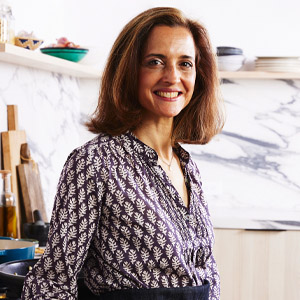
[00:10:26] Ray Latif: Next up, we have Maya Kaimal, the founder and chief creative officer of Maya Kaimal Foods, a groundbreaking brand of Indian-inspired sauces, condiments, and ready-to-eat dishes. In a clip pulled from an episode featured on November 28th, Maya explained how the company operates and innovates at the intersection of data, trends, and retailer needs, how she aligned with an investor that could support her vision, and what she's learned about hiring the right, and wrong, people. How do you operate at that intersection of, you know, data trends and your own vision for the company when not everything is as defined as it might, you might want it to be?
[00:11:08] Maya Kaimal: Ah, yeah. Well, it's funny, right? Because if we looked at data when we launched this company, we never would have launched a fresh sauce business. So I think you have to do that combination of looking at the numbers of what's trending and listening to your gut about what you believe in and what and what you see is is missing. So we have these tailwinds which have been there all along and And it's because this, you know, the makeup of this country is changing and diversifying and social media has completely changed the way we're exposed to other cultures, other cuisines, and created an excitement around it. So I think for us, it's taking our knowledge base of the cuisine and marrying it up with, you know, how do Americans eat? What do they want to eat? Where are they ready for some Indian flavors? We know they're ready for them in their kind of entree, right? Dinner, use a tikka masala sauce with your chopped up chicken and have some rice and there's your dinner. We've played in snacks and actually had some success in the snack space. We're playing in soups right now and finding success there too. So I'm taking the overall sort of trend of. interest in ethnic growing as permission to play in a lot of different parts of the store. And we'll see what, you know, we'll see where we end up. It really does for me come back to like, you have to trust your gut. It's funny. It's like you have to trust your gut, but you can't be in an echo chamber. And that's something that we have to check ourselves on too, because we get so like We can sometimes get caught up in an idea, but that's why I think their panel testing. What does my friend call it a disaster check? Right? Like, you make sure that, you know, like, really go down the wrong road and it's good to have that as a sort of safety measure.
[00:13:21] Ray Latif: It seems like you could use that term for a lot of things in the food and beverage industry, disaster check. I feel like some entrepreneurs wish they would have done that when they were vetting investors.
[00:13:31] Maya Kaimal: Oh yeah.
[00:13:32] Ray Latif: Because there has been a few of those disasters, at least for entrepreneurs who've lost control of their company. And I bring this up because it seems like. Maya Kaimal Foods has a pretty solid partner in Northcastle Partners, which invested in the brand in 2019. How did you know that that was going to be a good alignment with you personally and with the company?
[00:13:56] Maya Kaimal: Yeah, it has been a great partnership. I'm so happy that we have partnered with them because, well, first of all, to answer your question, I met them, you know, years before and it was, through the shows as you do, right? But there was sort of a personal connection with one person there that made me really stop and talk to them more. And so we didn't want to take any investment for a long time. We bootstrapped it just as long as we possibly could until we couldn't anymore. And at that point, they were the ones that we reached out to. They see the potential in this space, this category. They want to be a part of it. And, you know, I'm grateful they felt like I was the right one to take a chance on. But we had some experience with some much smaller investors in the past, and it didn't go well. And so it's very, it's a very, it's a tricky thing. You know, when it doesn't go well, it's like everything's on the line. You feel, Like, we had no thoughts of, like, oh, my God, we might have to sell our house. Like, we were really, like, right up against, like, are we going to go bankrupt? Like, you know, we've been through all of it. Like, it's, it's been a ride. But it makes me that much, you know, more grateful when that we did land the right investor and found the right home.
[00:15:28] Ray Latif: You said you had bootstrapped as long as you could before you couldn't anymore. And, you know, thoughts about selling your house or concerns about going bankrupt, you're certainly not the first nor going to be the last entrepreneur with those concerns. But did you ever find yourself in a place where you were desperate for money? And I ask that because it seems like that's a bad place to be. And if you got into that place, I mean, you know, how do you avoid it if you can?
[00:15:57] Maya Kaimal: Boy, oh boy. I think for us, in our case, you know, so my husband and I, neither of us were business people. My husband's a journalist, great at his work. And, you know, I was like an art major. So, you know, we tended to have a narrative in our heads that like, oh, we don't really know what we're doing. We're just sort of going through this and it seems to be working, but it's all kind of lucky. And then, you know, and after, that for a few years, this company got to a certain size. And we're like, well, we really need some management in here. And I think that we reached, like, kind of grasped for people who had the, like, more big corporate company experience, thinking that that would be helpful and relevant, when in fact, it was not. It was, you know, the playbook for a massive corporation that had nothing to do with a small, just scrappy little business that had to had to spend really super smartly and not spend on like big salaries for, you know, a whole new team. So when you need help, I think the important thing is to find someone who understands your size business and the needs of that business, because otherwise, you get way over your skis and you start spending money as if you're bigger than you are. And that's when the trouble starts, right? That's when you've kind of lost control of things. And yet you sort of trusted that this person was much more experienced than you knew what they were doing. And maybe they don't, you know, maybe they've got the exact wrong approach and end up like, you know, spending all the money.
[00:17:50] Ray Latif: Even the money you don't have.
[00:17:53] Maya Kaimal: Yeah, yeah, you don't have exactly.
[00:17:56] Ray Latif: It sounds like there were some pretty raw times, but I'm happy you've gotten past them. And I just want to go back to one point you made earlier in our conversation, which is about not wanting to be a boss, wanting someone to tell you what to do, sort of not being comfortable as an entrepreneur at the outset. What's given you confidence in your ability to lead a company? Was there a specific moment when you realized that you had to take the reins and you had to get control of it and that no one was going to tell you what to do except for you?
[00:18:29] Maya Kaimal: Well, there was definitely that point when I realized we absolutely had to get rid of the management that we had. And it was just it was going to be me like there wasn't some other person that was going to do this for us. But this has been one of the like issues, challenges, you know, it's just I know my skill set. Right. And I feel really confident about the fact that I can make great food and I can make packaging that pops and I can tell the story of the brand and communicate what we're all about. But, but I do need support in the running the other parts of the business and connecting the dots between, you know, ops and sales and marketing. And like, I need help with the strategic vision. So I don't, I've never felt like I can do it all, you know, I'm a born CEO and I see how it all needs to go. I need a partner in that. I need like another cohort that kind of completes me. So we figured out early on, like, you know, wasn't going to be my husband and me, like he needed to have his career and I needed to run the business and we need to find someone for me to partner with. So through the years, we've had these different sort of partner relationships. Some have been successful, some have been really unsuccessful. And when I say partner, I don't mean that they were a part owner. I mean, that they were like, you know, we brought them in to work for us with us. But I also, I think, gained some confidence in myself through some of the less successful partnerships, realizing that, you know, really, I know what this can be and I know how we need to get there. And that's why finding North Castle was the biggest boon possible because then I had their help in kind of building out the team and people were drawn to being a part of it in a different way because we had private equity investments. So it's like, you can attract a different level of talent and there's a different kind of promise. When you have a backer, right? It's like, okay, there's, there's gonna be an exit here, you know, and it's, it's a, it's an exciting proposition to people. And so so with them, we really brought in, I mean, we had some great people here, but we needed some more great people.
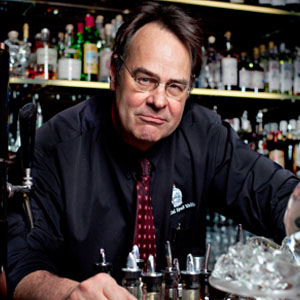
[00:21:05] Ray Latif: Let's keep it going with actor, comedian, and entrepreneur Dan Aykroyd, who is the co-founder of Crystal Head Vodka, a globally distributed, ultra-premium spirit brand identified by its distinctive skull-shaped bottle. In this clip from our episode published on August 22nd, Dan spoke about what makes him an effective salesman and why he believes that his celebrity has a limited impact on the brand's past and future. You know, I'd read in an article profile about you that you have a reputation as being a good salesman, a great salesman.
[00:21:42] Dan Aykroyd: How am I doing?
[00:21:45] Ray Latif: Well, it's interesting because not everyone is a great salesman and sometimes a brand on its own can be its best salesperson. But I mean, I feel like it's really helpful when someone enjoys the process and like you said, develops the kind of relationships that are the long-term backbone of a brand. How do you become a good salesman? And I guess, would you agree that with a premise that you are a great salesperson and how do you become one?
[00:22:15] Dan Aykroyd: Well, there are a lot of techniques that other people have written about more convincingly than I might be able to, but I think an ebullient personality helps, and a good voice that can be heard in a room of three or four hundred people. I guess confidence in yourself and no wandering of the eye, look people in the eye. A really good salesman can basically sell anything. A good salesman, it doesn't matter what you give them, they can sell anything. I don't think I can sell anything, but I know I can sell this product and this vodka because I have confidence and faith in it. Some salesmen out there might not have confidence or faith in their products and kind of doubt that they're of quality and they're selling them anyway and they're doing a good job over history's time. But what makes me, I think, effective is that you can see that I know about the industry and what was added to these fluids in the past and what I have taken out of it and the impact that it's had on the consumer. I'm aware that I'm vindicated by removing these fusel oils, having a pure spirit and a great package, and winning awards and being worldwide. I can sell all of those as attributes and as real benefits to publicizing the product. So I've got a lot of help here.
[00:23:36] Ray Latif: Yeah. Well, and publicize that you have. You, you are promoting the brand on social media. I think if you Google Crystal Head Vodka, your name comes up pretty quickly. Although, and maybe I'm wrong here, I feel like the association between Dan Aykroyd and Crystal Head Vodka isn't as, I guess, apparent as that of say, Casamigos and George Clooney or... No. the rock in Taramana.
[00:23:57] Dan Aykroyd: Am I accurate in thinking that? It's not. It's not. And that's good because if you ask our consumers, Many of them, I would say two thirds of the consumer does not know I'm associated with the brand. So that tells you that it's selling itself. The package is selling, the fluid's selling. As company, one of the senior manager, one of the managing partners, I'm a good effective spokesman for my brand and my company, but the brand is not relying on me to do that. I could step away completely, although I'm enjoying it, I could step away completely and it would not hurt the brand, you know, because it's, It's selling itself by virtue of its quality and then package appeal.
[00:24:39] Ray Latif: But when you are promoting it, I wonder, how do you use your celebrity and promote the brand in a way that comes across as authentic to consumers?
[00:24:52] Dan Aykroyd: By meeting the consumer, by actually going out and saying hello to them, meeting them. We go to government liquor stores, we go to big chains and we'll do a signing and we'll publicize it. And I will sign bottles for as long as it takes to go through a line of between 600 and 1,000 people. And I'm able to see what other beverages they're buying, whether they're older. I get my full demographic array there. They bring memorabilia for me to sign, you know, and that. And they're coming because of the celebrity value of being there. But I'm able to actually interface directly with them and see who is buying my product. Professionals, what economic range, gender, all of it is available to me as an active survey when I do these signings. So that's how I use the celebrity is to go and actually meet the consumer, find out who they are, and then we can go and target a little better. We have a big following in sort of the heavy metal community, the skull, I guess. And so, You know, we know that we've got some good friends in the bar business and heavy metal bars around the country that have consistently consumed us and supported us. And so that's where we're going to send our love to the people who love us.
[00:26:13] Ray Latif: Next, we have Allison Luvera and Lauren De Niro Pfeiffer, the Founders of Juliet, a premium brand of multi-serve wine encased in an innovative cylindrical container. In the following clip, pulled from an episode published on August 1st, Allison and Lauren explain why developing a unique package was central to the planning process and their challenging but ultimately correct decision to change package designers. Now, certainly there have been premium and super premium versions of boxed wine prior to the debut of Juliet, and at that price point of $35 and up, I've had some good boxed wine, but I've never had a boxed wine that was as beautifully packaged and felt as luxurious, I would say, as what Juliet offers. So when you're thinking about the opportunity Were you thinking about the liquid first? Were you thinking about the brand or the package? In my mind, it starts with a package, but Allison, where did you guys start?
[00:27:19] Crystal Head: You're exactly right. We started with the packaging because we recognized very early on that in order to really achieve our goal of kind of transcending the category and being this truly luxury product, that we needed to create something that was unlike anything else on the market. And so we did focus on the packaging first, but hand in hand with that was the focus on the brand, and in particular, the creative direction behind the brand. Because as you mentioned, there are some good box wines here or there, but none of them have this sort of commitment to design and this beautiful exterior like we do. And we didn't really see that combination out there of a box wine that had very high quality liquid, but then also had a really eye-catching, beautifully designed packaging. And so we knew that in order to kind of achieve our goal of crushing this stigma, this negative stigma against boxed wine, we had to nail the packaging first and in turn the brand and the creative design.
[00:28:26] Ray Latif: It's one thing to say, okay, we're going to create this different, disruptive, beautiful looking package and another thing to actually execute upon that. Lauren, I'm curious how many iterations you went through before you landed on what is now your package?
[00:28:42] Crystal Head: Oh, many. You know, I'll be very honest, as we always will be. We started working with a design agency and we had some frustration there because we had really spent a lot of time developing a clear vision for the brand and really understood that we wanted this strong aesthetic of femininity, something that conveyed energy, elegance, something that was inspiring and something that transported the consumer to one of mine and Allison's favorite places in the world, which is the Mediterranean coastline. And we wanted to have this classic timelessness that was inspired by the South of Italy and France. And we also knew that the vessel itself needed to convey our position in the market, which is truly bridging the gap between boxed and bottled wines. So we did originally start with a design agency to help us to crystallize this vision into a reality. It ended up not working out. We very fortunately were introduced to two young female independent graphic designers in Los Angeles working together for many many late nights. They were able to take our ideas, our vision, and turn them into a reality. And we ended up with this beautiful cylindrical package design, and the aesthetic, and the color palette, and the art deco inspiration of the label is really exactly what we wanted. And I am very, very proud to say that I don't think we could have asked for more, honestly. And I think that's unusual, coming from a creative person, that someone actually managed to to bring your dream to fruition from a design perspective. And I think that we nailed it.
[00:30:27] Ray Latif: Yeah, you know, in CPG and particularly in food and beverage, it feels like coming out of the gate with a great package and a great label design is table stakes. You don't have time to get that second opportunity for a consumer to look at you and say, oh yeah, I remember now you have better packaging. You've got to have that great packaging to start with. But great packaging and hiring design agencies and finding the right people can be tedious and expensive. And it sounds like it didn't work out with your first design firm, but it worked out with the two women that you worked with in Los Angeles. That can be a tough call to say, OK, we've already paid all this money out to a design firm, but we don't accept anything that you're offering us at this point. How tough of a decision was that to make?
[00:31:07] Crystal Head: there was apprehension involved. It was I believe it was the first check that we had written as a company or one of the very first checks that we'd written. But we felt really strongly in the vision that we had for how we wanted this brand to turn out. And after providing clear direction and just not seeing that come to fruition on the page and renderings. Allison and I trust each other enough that We made the decision together and it was a pretty clear decision. And I think something else that we knew is we didn't need this package design and label design to follow the trends. We didn't need this to look like what the most popular other brands and especially other beverage and Bev Alk brands were doing today. We knew how we wanted this to turn out and we stuck with it. And I'm pleased that we did.
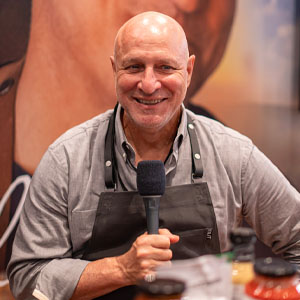
[00:31:58] Ray Latif: We continue with renowned chef, restaurateur, and Top Chef judge Tom Colicchio, who is also a partner with premium sauce and condiment brand Colicchio Kitchen. In this clip, both from an episode aired on July 18th, Tom spoke about how he defines quote good food and why he's hesitant about adding an ethnic-themed line. Tom, I got to ask you, because you have been a chef, you have been part of Top Chef now for 20 years, you've seen a lot, you've tasted a lot. And I think in our business, sometimes great taste gets forgotten. And I don't know why. Great taste gets forgotten in lieu of functional ingredients and, you know, better for you ingredients and things like that. So in this day and age, in 2023, how do you define Good food. Well, I'm sure everyone here would say that their food tastes great.
[00:32:52] John Fieldly: Sure, yeah, I hope so. You know, good food, I think that if you look at what's gone on in the last 20 years in food, we've gone from farm-to-table exploding and people wanting to understand their ingredients, where they come from, who produces them, who's the people behind them. I think that's always important. We've also, at the same time, you saw the advent of molecular gastronomy. And at the same, you know, during this time, you see things that are a little more out there, people pushing the envelope, but also at the same time, people going back and doing more homey things. So there's room for everything. I think good taste starts with great ingredients, like the Jersey tomato, but then having an understanding of what you're going for. And my personal opinion is that I don't want food that is over-touched. I want the ingredients to speak for themselves. You still want a certain amount of craftsmanship that you see the chef's hand, but I think when you start torturing food to create shapes and to create an effect, for me, that goes too far. Now, other chefs that do that, do it really well, that's their signature, and I'm not saying that there's no place for that. There certainly is. It's just not something I'm comfortable doing. You know, my pet peeve is like risotto. Your risotto should spread on a plate. It shouldn't be molded into a ring mold so you can put something on top of it. You're torturing the risotto to get that effect, not the best thing for the risotto. So that's an example that I can provide. You really just want to let food really speak for itself. And I think you see a lot of people going back to that now. The home consumer, I think that's a whole completely different thing. The home cook, and there are a lot of really good home cooks, and I've run into some home cooks that have every gadget better equipped than most restaurants, and they're really into that side, especially people that are in the tech world. But there's a certain understanding, if I'm going to cook sous vide, why I'm doing it, how it actually works, and the advantages of sous vide cooking versus conventional cooking. I don't think there's a right or wrong. I mean, I know I'm going around in circles here.
[00:34:43] Crystal Head: No, no.
[00:34:44] John Fieldly: But there's no right or wrong. There's a place for everything. And I don't think one is better than the other. A lot of it is personal preference. When I cook at home, it's very different than how I cook in restaurants. It's very simple, straightforward, you know, a protein and a couple sides.
[00:34:59] Ray Latif: And that's how I eat at home. I mean, simple is usually the best.
[00:35:03] John Fieldly: Simple is good. It's good. But, you know, if you go to a certain restaurant... You choose your restaurant based on what the expectations are. And so if you go into a restaurant and you're expecting a simple home meal, don't go into a restaurant where a chef is doing high-touch, avant-garde food. You're not going to get that. And so you have to understand where you're going and what you're really looking for. But the great thing is that you know, in a city like New York that we're in right now, you could find all of that. You know, going up to Queens, you could find probably within, you know, five blocks, probably, you know, a hundred different ethnic cuisines. And so that's what's great about food. It's, there's so much, there's so much to offer. There's so much to explore and it changes all the time.
[00:35:51] Ray Latif: You mentioned ethnic cuisine, and I feel like that is really the next evolution of American cooking, American food in general. When you're thinking about ethnic cuisines, do they fit into Tom Colicchio Kitchen? Do they fit into the future of what you're doing? That's a good question.
[00:36:05] John Fieldly: I mean, right now we're focused on Italian, but I could see us branching out. The problem is, though, that somehow may not be authentic to me. True. You certainly don't want to be accused of cultural appropriation. So be very careful. And I understand that too. So I think we may stick to Italian, but we'll see.
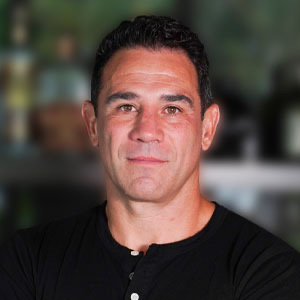
[00:36:26] Ray Latif: Finally, we hear from Chris Hunter, the co-founder and CEO of plant-based beverage company Koya. In the following clip pulled from an episode published on November 14th, Chris spoke about the importance of setting goals in both his personal life and in business, the company's first month of profitability, and why he warns entrepreneurs about short-term trends within the investment community. You know, I think entrepreneurs often see headlines on LinkedIn or on BevNET and Nosh, and they're like, wow, you know, this company did this or that company did that. And, you know, look at all the revenue they generated, look how much money they raised and so on and so forth. And it almost feels like they're losing sight of their own vision and their own goals and their own hopes and dreams for their brands and for themselves. And I want to talk to you, Chris, cause I know goals are important to you. How do you goal set? as a father, as a husband, in your personal life? And how do you do it in your professional life? And how do both impact the way you lead, Koya?
[00:37:31] John Fieldly: Great question. Look, I think Myself, like probably many entrepreneurs, life just feels so busy, right? And I can get wrapped up in the day-to-day. I have three young kids running a business. There's a lot going on. We're growing fast. And so what we have found as a family is taking the intentional time to set goals at the beginning of each year. And so how that looks for me personally is my wife and I will take an overnight trip that can be to a local place or or traveling somewhere with the sole focus of recapping the prior year and planning the next year. And that looks like what do we want to do together? What are my personal goals? What are my personal growth goals? What are my business goals and hers, right? And it starts there. And I think the parallel there is like, It takes time and intention, intentional focus to establish goals for the company as well. And much like I'll keep you on the parallel between personal life and the business life, much like personal life, you know, there are seasons or phases and recognition of that is really important. So I'll give you an example for me right now. the recognitions that my 5 will only be 11 9 and 5 to kind of solidify the s right? And so keeping tha is really important to e do. Well, it's all that p You know, early on, we we macro environment, but also like phase of our company. And the macro environment has changed, right? I would say about two years ago, it really focused on hunker down profitability. You need to prove it out, not just have a model to show how you can become a real sustainable company. And so we're now in that phase of the company. That doesn't mean we're not trying to grow. That doesn't mean we're not trying to generate awareness. It just changes the way you do things, right? And so Back to your original question around goal setting. For me, it starts with the highest level lens that you're going to set on whatever it is you're looking at. So for family, it's like this is the season, right? It's about optimizing while the kids are a certain age and maximizing that. And in the business right now, it's about like making sure we're a long term, sustainable and break even or profitable company, right? Versus growth at all costs. And, you know, we'll just go raise more money if we need it. So that's where I would start. I would say digging in deeper, the next level for me personally is like, how do you check in on that? And I'll start this time with the business perspective. But we have an amazing team. Our president, Mike, has done a really good job of setting a culture of transparency to really hone in on ownership. And so what we do is every Monday morning, we do a leadership call, and we have our leadership notes. And it starts out with our quarterly goals. Which are individual, right? So my quarterly goals are going to be different than, let's say, the VP of operations, but it's going to be that it's going to be our priority accounts. So, for me, I'll list out the top priority for the company, but another person may have whichever ones they cover. And then we go through our open items. And the point of that is there's a weekly check-in and accountability to where I'm sharing it with the team and they're sharing back if there's misalignment or if they feel like we're operating kind of out of alignment with what we're saying. Our goal is this, but we're doing this. So I think that frequency of check-in is how we help maintain kind of the the GPS towards our goals. And it would be the same with family life. We're not perfect at it, but the idea is on Sunday afternoons, we sit down and look at kind of the prior week and the future week and see if we're still heading in the direction we want to be.
[00:41:16] Ray Latif: That type of reflection is so important to know that you are either ahead of what you're trying to do or behind or right on target. When you talk about quarterly goals, can you give an example of one of those goals? I mean, is it revenue based? Is it distribution based? How do you think about the kind of goals that you do want to set for the company?
[00:41:39] John Fieldly: So it'll be all of the above. Right. And there is no right or wrong goal in our eyes. Right. So for me, as an example, one of the goals for the last quarter would be to move 100 percent of production in-house. And as you know, a year ago, we vertically integrated. And as you're probably aware, that doesn't immediately mean day one, you produce all of your product. But there's a transition phase to that. So that's an example of a goal. It's like, how do we get a high 100% of our production coming out of our own facility. Another may be revenue or velocity growth in a particular retailer or channel. Another may be successful execution of a marketing program. So it's really For me, it's company wide, because I view my job as the co-founder and CEO as really the problem solver for the top priorities. And so, as I always tell my team, sometimes I'm going to be really deep in ops, and I'm going to be on calls that I'm normally not on, and I'm going to be digging in, and that may feel uncomfortable to me and to them, right? The next month, I may be on none of those calls because it may be a marketing focus and we may be exploring big initiatives there. And so they can be pretty broad and diverse in terms of what the goals are.
[00:42:53] Ray Latif: You had mentioned that Koya had its first profitable month recently. And, you know, you talked about the importance of your margin structure and how vertically integrating fits into that. You know, it's interesting because I think in the past, it really was about top-line growth and to attract certain investors. But it seems like those investors do want to see healthy margins, solid fundamentals.
[00:43:19] John Fieldly: Yes, I think one of the dangers for entrepreneurs is getting too wrapped up in whatever the mentality of the day is from investors or from strategics. It's like high growth at all costs, all top line. Now it's all about profitability. The reality is that they always want both. And there's going to be a few degrees of fluctuation of how important growth is versus profitability, or at least a path to it. So what I've come back to, and believe me, I've meandered in this train of thought over the years, what I've come back to is like really just doing what we feel is best for the fundamentals of the company. Sustainability of the company is what's best. And if we're running a business that we really believe in and that we're really showing has success in the market, and that the consumers are demanding any of that stuff, meaning investment or acquisition or partnerships will come. Right. And I think, look, I think it's proven to be true. Let's call it six months ago. We made the comment maybe eight months ago. We made the comment to our internal investor base and to some other potential partners that we are talking to that we're going to go heads down. We're not going to distract ourself with anything except for executing on our plan. We're not going to talk about getting profitable and show you a model that gets us the profitability. We're going to get profitable. And fortunately, in July, we were able to show that we had our first profitable month. Now, I'm not going to suggest that it's all roses from there, right? It's a business. There's ups and downs. But we proved it. We wanted to not talk about the idea that we were going to launch in Starbucks, let it happen. Right. And so what happened since then is some of these things start to happen. And then all of a sudden you're getting a lot of inbound calls and requests and congrats and things like that. But but it's because we were focusing on the business, not because we were focusing on what investors or strategics told us was the was the key.
[00:45:22] Ray Latif: That brings us to the end of this episode of Taste Radio. Thank you so much for listening. Taste Radio is a production of BevNET.com Incorporated. Our audio engineer for Taste Radio is Joe Cracci. Our technical director is Joshua Pratt, and our video editor is Ryan Galang. Our social marketing manager is Amanda Smerlinski, and our designer is Amanda Huang. Just a reminder, if you like what you hear on Taste Radio, please share the podcast with friends and colleagues. And of course, we would love it if you could review us on the Apple Podcasts app or your listening platform of choice. Check us out on Instagram. Our handle is bevnettasteradio. As always, for questions, comments, ideas for future podcasts, please send us an email to ask at Taste Radio.com. On behalf of the entire Taste Radio team, thank you for listening, and we'll talk to you next time.
[00:46:12] Dan Aykroyd: you